Why North Carolina Watermelon Leaves Turn Crispy Around The Edges In Summer Heat
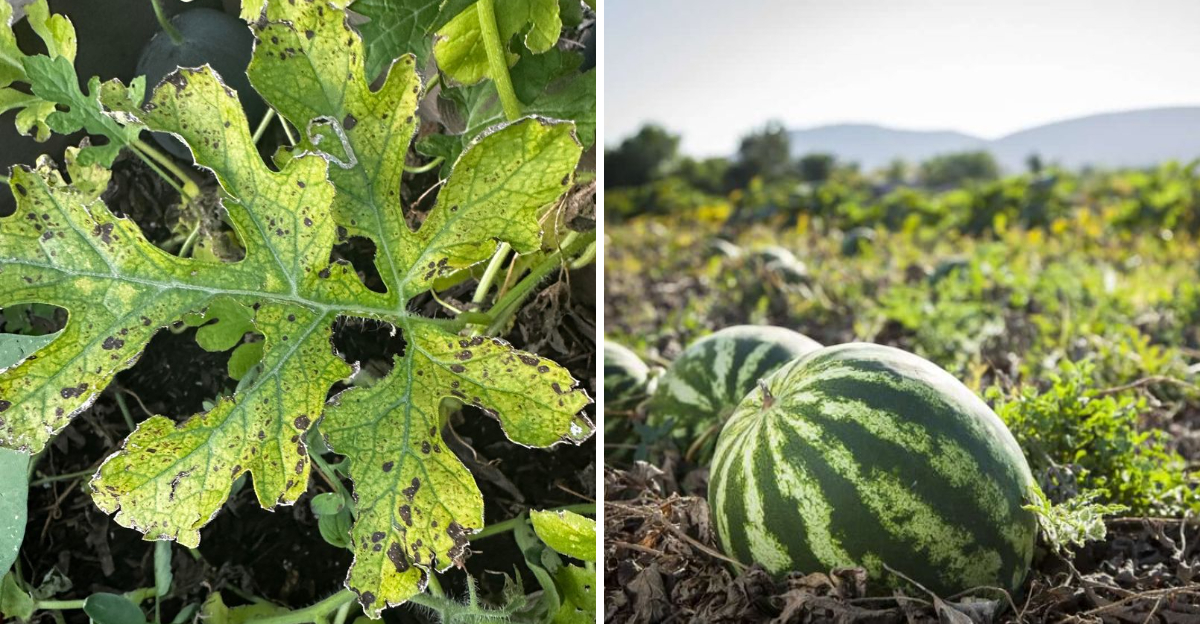
North Carolina watermelon vines can look bold until July starts testing them.
The leaves are huge. The vines run across mulch like they own the bed. The fruit begins swelling under the canopy, and everything feels promising.
Then the edges turn brown.
At first, it may be a thin tan line around one leaf. A few days later, more leaves look scorched, crisp, and dry, almost like the summer heat took a bite from every margin.
That damage can feel confusing because several problems create nearly the same look.
Dry soil can do it. Hot wind can do it. Mites, disease, shallow roots, heavy fertilizer, and bare soil can all leave brown edges behind. The trick is reading the whole vine before reaching for the hose, fertilizer, or spray bottle.
So what are crispy watermelon leaf edges really telling North Carolina gardeners?
Start with water stress, then check heat, wind, roots, pests, disease patterns, and recent feeding.
The faster you match the symptom to the cause, the better your odds of keeping those vines productive through the hottest part of summer.
1. Drought Scorches Leaf Margins
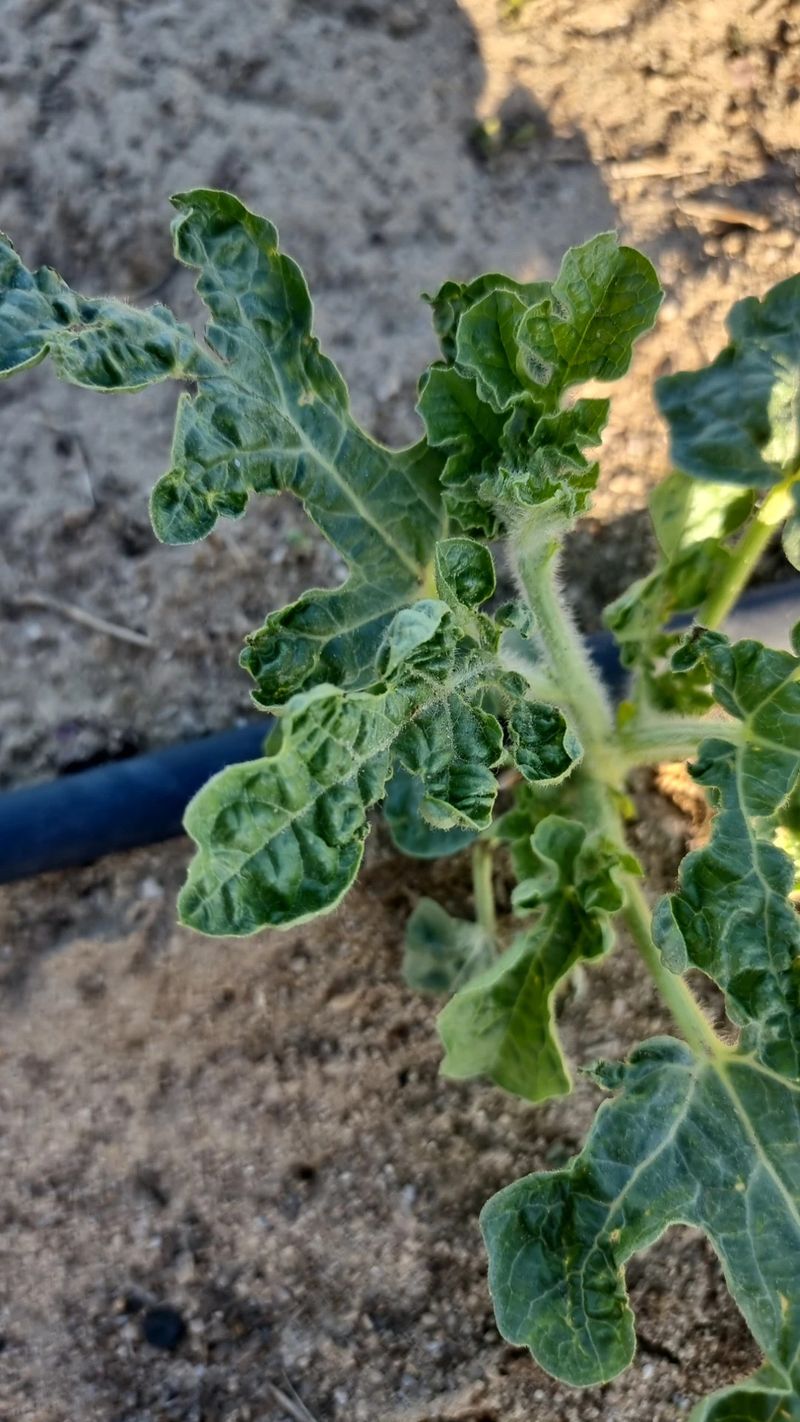
A clean brown rim around a watermelon leaf often starts with dry soil.
The leaf edge is one of the first places to show moisture stress. Water moves from the roots through the plant, and the outer margins are far from the main supply line.
During a dry North Carolina stretch, those edges can lose moisture faster than the plant can replace it.
The pattern is usually even.
Look for a tan or brown band around the leaf margin while the middle stays mostly green. The browning may look crisp, but it does not usually race inward in round spots or blotches.
Vines may also look limp during the afternoon, then recover overnight.
That morning recovery is an important clue.
A plant that perks back up by sunrise is often battling daytime water stress rather than a permanent root problem. A plant that still looks wilted early in the morning needs closer attention.
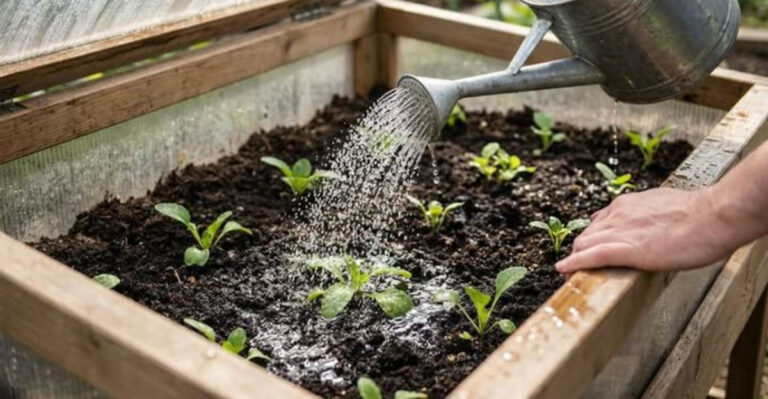
Check the soil before watering.
Push a finger two inches down near the root zone. Dry soil at that depth means the vine needs a deep drink. Damp soil points you toward another cause.
Water at the base in the morning.
A slow soak two or three times a week during dry weather is usually better than shallow daily splashes. The goal is moisture where roots can use it, not wet leaves and dusty roots.
Crispy edges are often the vine’s first drought complaint.
Listen before the whole patch joins in.
2. Heat Pulls Moisture Fast
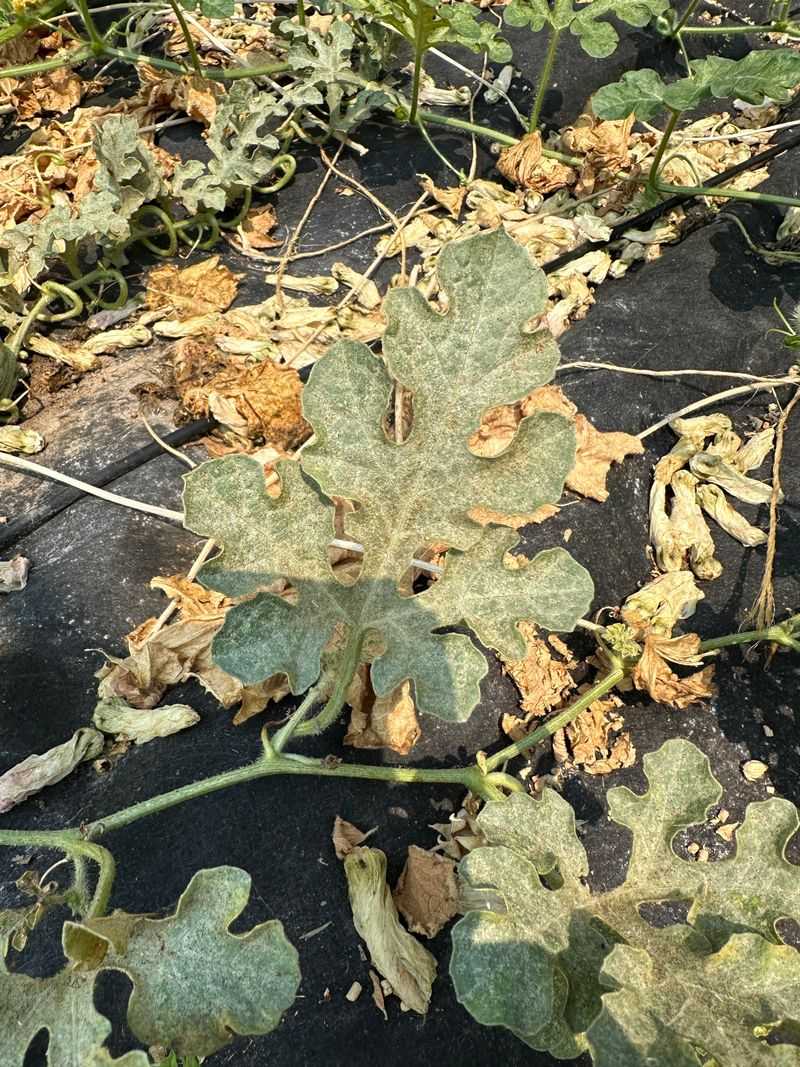
A hot afternoon can overwhelm even watered vines.
Watermelon leaves are large, which helps them gather sunlight but also gives them a lot of surface area for moisture loss. During intense North Carolina heat, those leaves can release water faster than the roots can deliver it.
That creates afternoon scorch.
Leaves may look decent in the morning, then start wilting or crisping around the edges by midafternoon. The soil may not be bone dry, but the plant is still losing the heat battle for several hours each day.
Your North Carolina Garden Changes Every Week. Your Plan Should Too.
Gardening in North Carolina changes quickly throughout the season. Every Friday you’ll receive a simple weekly plan showing exactly what to plant, prune, fertilize, harvest, and protect so you never miss the right timing.
This is especially common during stretches above the mid-90s.
Mulch, soil, walkways, and raised beds can all heat up around the vine. Dark containers, black plastic, and bare soil make the root zone even hotter, which slows the plant’s ability to keep up.
Morning watering gives the vine a better start.
Moist soil stays cooler than dry soil, and a deep morning soak gives roots water before the worst heat arrives. Avoid light sprinkles that wet the surface but fail to reach the working root zone.
Temporary shade can help during extreme heat.
A 30 percent shade cloth over the hottest part of the afternoon can reduce stress without blocking too much light. Melons still need sun, so the goal is relief, not deep shade.
Heat scorch looks dramatic, but the fix is usually steady support.
Cooler roots, morning moisture, and a little afternoon protection can keep leaf edges from turning into burnt toast.
3. Shallow Roots Lose Ground
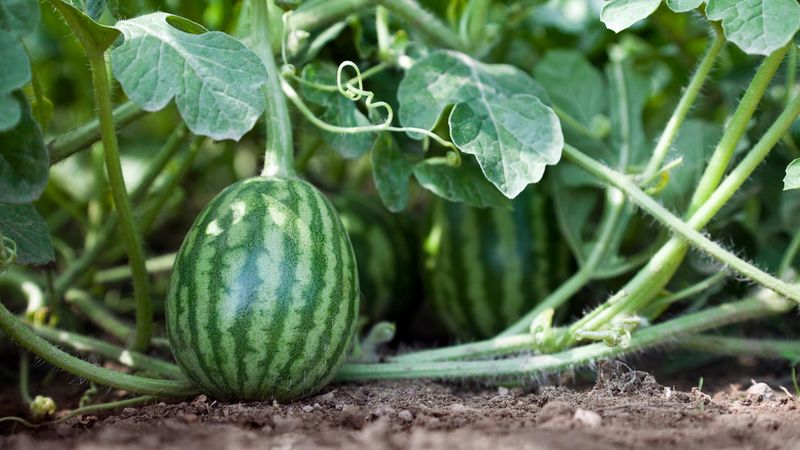
Weak roots make crispy edges show up faster.
Watermelon vines need a strong root system to support all that sprawling top growth. Roots stuck near the surface lose access to moisture quickly because the top layer of soil dries first during hot weather.
Watering habits can cause this.
Frequent light sprinkling keeps moisture near the surface. The roots learn to stay where the water appears. Then a North Carolina heat wave dries that shallow layer in hours, and the vine has no deeper reserve to draw from.
Soil type matters too.
Sandy soil drains quickly and can leave roots chasing moisture sideways. Heavy clay can compact and make deeper root growth harder. Both situations leave vines more vulnerable to leaf-edge scorch during July heat.
The watering routine needs depth.
A slow, thorough soak encourages roots to grow downward toward steadier moisture. Let the surface dry slightly between waterings, then water deeply again. That rhythm builds a stronger plant than quick daily sprays.
Organic matter helps before planting.
Compost worked into the bed improves structure so roots can move more easily. It also helps sandy soil hold moisture longer and clay soil drain with less drama over time.
Mulch supports the process.
A thick layer over the root zone keeps the topsoil cooler and slows moisture loss, giving feeder roots a better working environment.
Crispy leaf edges may look like a leaf problem.
Often, they are a root system asking for a better foundation.
4. Wind Speeds The Crisping
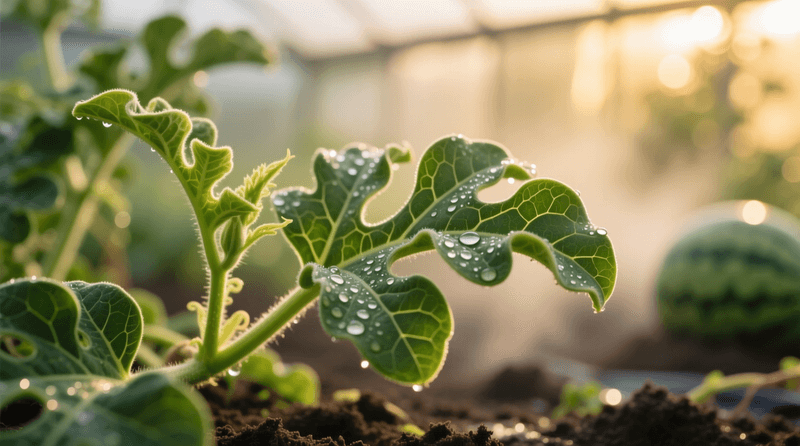
Hot wind can turn mild stress into a crispy mess.
A steady summer breeze may feel helpful to people, but watermelon leaves experience it differently. Moving air pulls moisture from leaf surfaces faster, especially during dry, hot afternoons.
The edges take the first hit.
Leaf margins are already vulnerable because they dry quickly. Add wind, and the plant has to replace moisture even faster. The result can be brown, crisp edges that look almost identical to drought scorch.
Direction gives the clue.
Damage may be worse on the side of the vine facing the prevailing wind. Leaves on the exposed edge of the patch may crisp more than leaves tucked behind taller plants, fencing, or a slight rise in the bed.
Open gardens are more vulnerable.
Melon patches in wide, sunny spaces with no windbreak can lose moisture rapidly. Raised beds, hilltop gardens, and fields near open lawns may show more edge burn than protected spots.
A temporary windbreak can help.
Use stakes and lightweight row cover, shade cloth, or garden fabric on the windward side. Keep it breathable and avoid blocking all airflow. The goal is slowing the wind, not trapping humid air around the vines.
Water matters more during windy spells.
Soil that stays evenly moist helps the plant replace what the wind pulls away. Dry soil plus hot wind is a rough combination for watermelon leaves.
Wind rarely works alone.
It usually teams up with heat and dry soil like a very annoying summer committee.
5. Mites Can Add Stippling
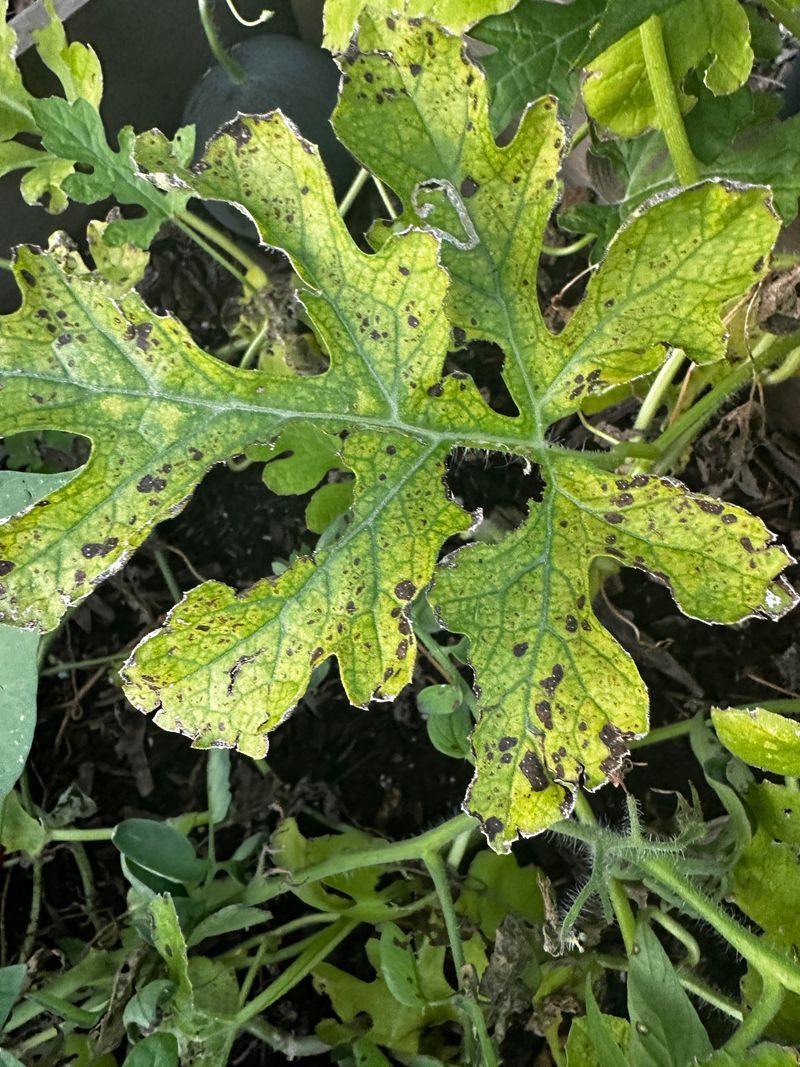
Tiny pests can make heat-stressed leaves look even worse.
Spider mites thrive during hot, dry weather, which means North Carolina watermelon patches can become especially vulnerable in midsummer. These pests are small enough to hide under leaves while the damage builds above them.
The first clue is stippling.
Look for tiny pale dots across the leaf surface, often yellowish or bronze. This speckled look comes from mites piercing plant cells and feeding. As the problem grows, leaf edges may dry, curl, or turn brown.
Webbing may appear too.
Fine silky strands on leaf undersides, along veins, or near stems can point toward a larger mite population. The damage often looks dusty or bronzed before it becomes obviously crispy.
Use the paper test.
Hold a white sheet of paper under a suspicious leaf and tap the leaf firmly. Tiny moving specks on the paper suggest mites are present. They may look like pepper dust with legs.
Start with water pressure.
A strong spray aimed at leaf undersides can knock mite numbers down. Morning is best so foliage dries quickly. Repeat checks matter because mites can rebuild fast in hot weather.
Insecticidal soap or horticultural oil can help when needed.
Apply during cooler parts of the day and follow the label carefully. Stressed plants can be sensitive, so avoid spraying during peak heat.
Mites are easy to miss because they are tiny.
The leaf pattern gives them away. Stippling plus crispy edges deserves a closer look under the canopy.
6. Disease Spots Spread Differently
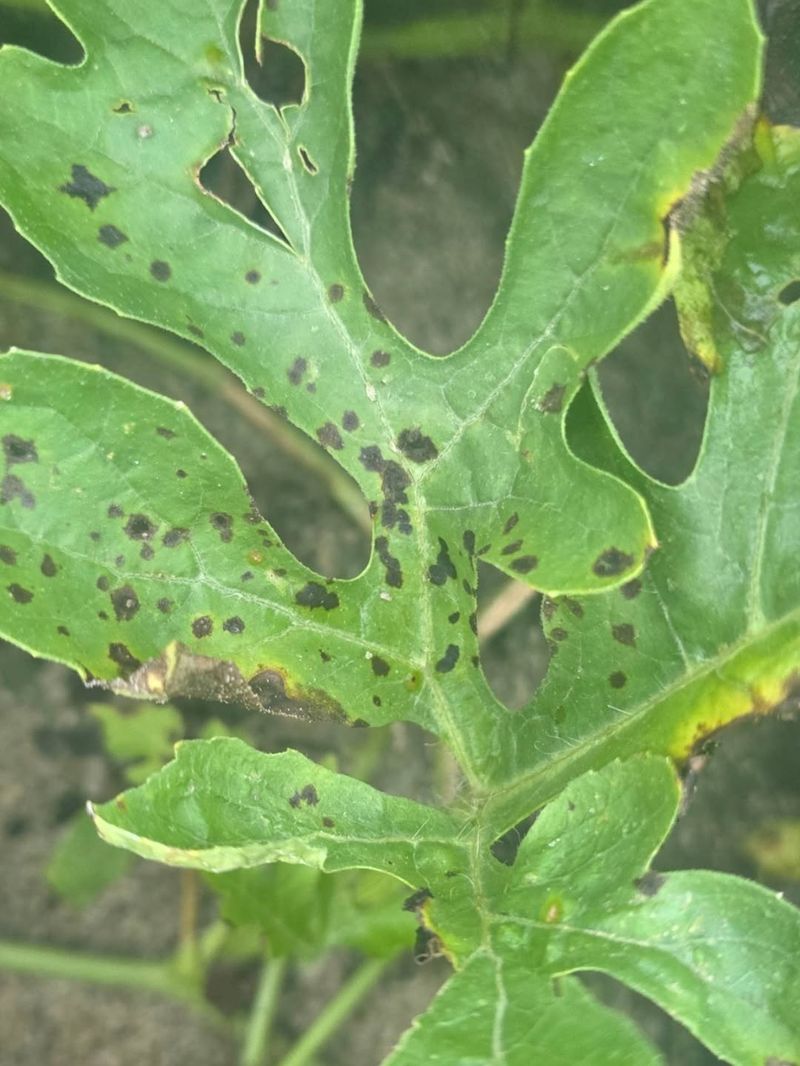
Disease usually does not behave like simple edge scorch.
Heat and drought often create a fairly even brown margin around leaves. Leaf diseases tend to create spots, blotches, halos, or lesions that appear in scattered areas and expand over time.
That pattern matters.
Alternaria-type leaf problems may begin as small brown spots with yellowish halos. Anthracnose can create darker, water-soaked-looking lesions. Gummy stem blight can affect leaves and stems, not just margins.
Look beyond the edge.
Damage that starts anywhere on the leaf surface, spreads in circles, or moves into stems points away from simple drought scorch.
Leaf tissue between spots may yellow, and the problem may appear after warm, wet weather rather than dry heat.
Wet foliage raises the risk.
Overhead watering, crowded vines, and humid stormy stretches can all help disease spread. Splashing soil onto leaves can move spores right where they can cause trouble.
Remove badly affected leaves.
Bag them instead of leaving them in the patch. Do not compost diseased material from an active problem. Clean pruners afterward so the issue does not hitchhike to healthy vines.
Water at soil level.
Drip irrigation or careful base watering keeps leaves drier and reduces splashing. Give vines enough space so air can move through the patch.
Disease diagnosis is about movement.
A brown edge that stays on the edge tells one story. Spots that march across the leaf tell another.
7. Fertilizer Burn Mimics Heat
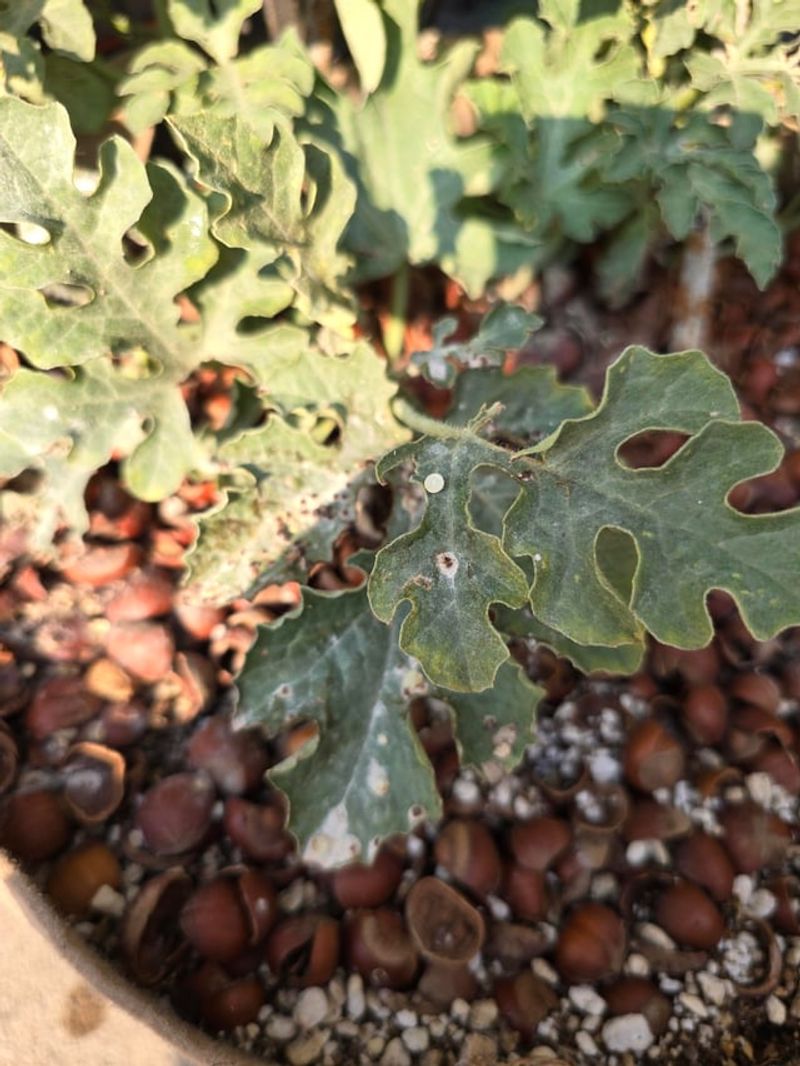
Too much fertilizer can make a vine look thirsty.
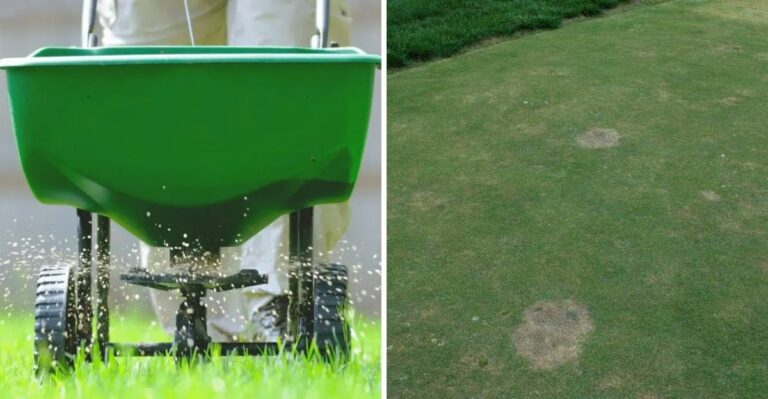
Excess salts from fertilizer can pull moisture away from roots, leaving the plant stressed even when the soil looks damp. The result can be crispy brown leaf edges that look frustratingly similar to drought damage.
Timing is the giveaway.
Leaf edges that brown soon after a heavy fertilizer application deserve suspicion. The risk rises when fertilizer is applied to dry soil, used at too high a rate, or not watered in properly.
Look for crust too.
A whitish residue on the soil surface can point to salt buildup. Containers, raised beds, and poorly draining areas may show this faster than open ground.
Watermelon plants do need nutrients.
They just do not need a panic dose in the middle of heat stress. Heavy nitrogen can push lots of leafy growth, which then demands more water during hot weather. That can make the vine less resilient when conditions get rough.
Flush gently when fertilizer burn seems likely.
A deep watering can help move excess salts below the active root zone, provided the bed drains well. Do not keep saturated soil around the roots for days. The goal is dilution, not a swamp.
Switch to steadier feeding.
Slow-release or organic options reduce sudden salt spikes. A soil test before adding more nutrients is the smartest move, especially in beds that have been fed repeatedly.
A crispy edge does not always mean the plant needs more.
Sometimes it means it already got too much.
8. Mulch Keeps Soil Steadier
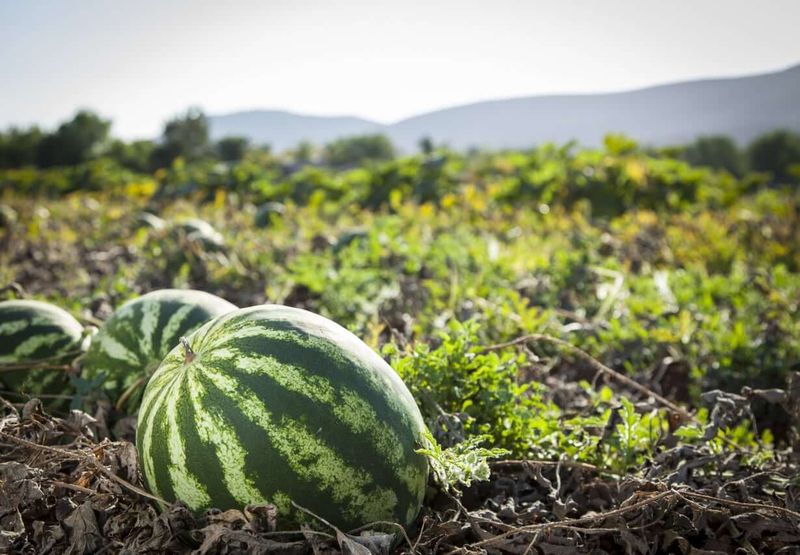
Bare soil makes watermelon vines work harder.
During a North Carolina summer, exposed soil can heat quickly, dry fast, and swing from wet to dusty in a short time. Those swings stress roots, and stressed roots show up as crispy leaf edges.
Mulch smooths out the extremes.
Straw, shredded leaves, untreated grass clippings, or wood chips can shade the soil surface and slow evaporation. A three to four inch layer gives roots a cooler, steadier environment during hot stretches.
That steadiness matters.
Watermelon vines need consistent moisture to keep large leaves hydrated. Mulch helps watering last longer, which reduces the feast-or-famine pattern that leads to scorch.
Straw is especially useful.
It is light, easy to spread, and gentle around sprawling vines. It also keeps fruit cleaner by reducing soil splash during rain. Shredded leaves work well too when spread loosely rather than packed into mats.
Keep mulch away from the crown.
Leave a small open space around the main stem so moisture does not sit directly against it. The root zone needs cover, but the crown needs air.
Spread mulch wider than expected.
A mature watermelon vine has roots extending well beyond the center of the plant. Covering only a tiny ring near the stem misses much of the working root zone.
Mulch is not exciting.
That is fine. It is the quiet layer that keeps soil from turning into a skillet while your melons are trying to size up.