Why Arizona Palm Trees Develop Brown Fronds And When To Actually Worry
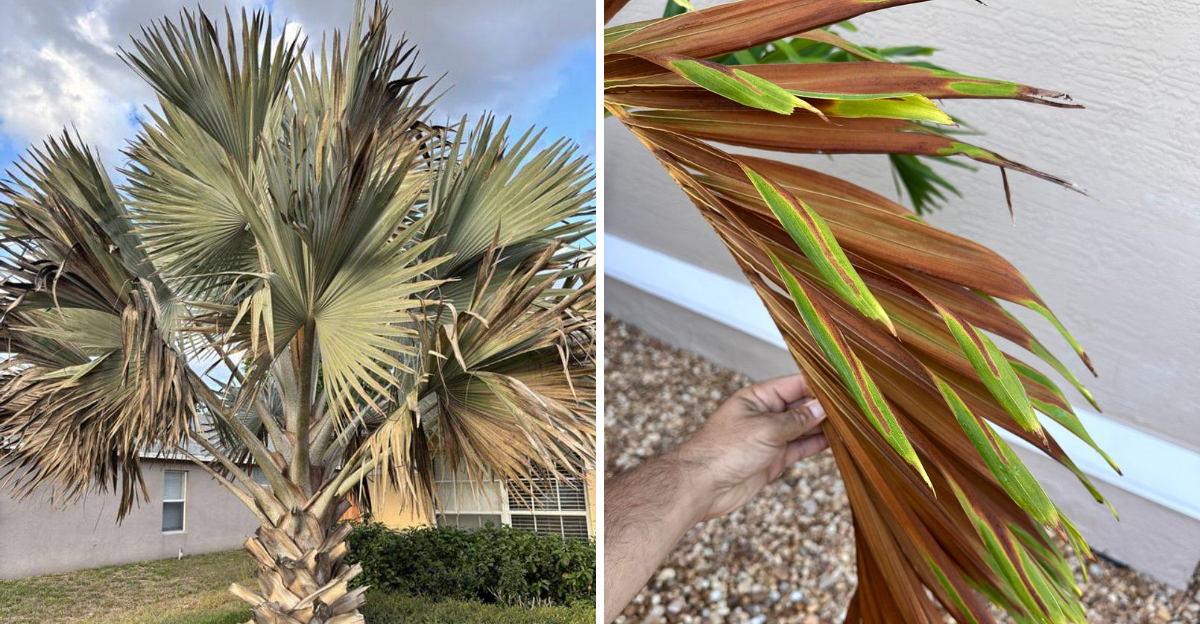
Brown palm fronds have a way of making an entire yard look stressed even when the rest of the landscape still looks healthy.
A few dry tips can suddenly turn into large faded sections that become impossible to ignore once summer sun starts hitting the canopy every day.
Arizona palms go through visible changes during hot weather, but not every brown frond points to a serious problem.
Some changes happen naturally as older growth cycles out while others signal that something deeper is affecting the tree.
The hard part is knowing which signs deserve attention and which ones cause unnecessary panic. Trimming too early or reacting the wrong way can sometimes create even more stress during extreme heat.
That confusion is exactly why palm problems become frustrating for so many homeowners once temperatures stay high for weeks at a time.
1. Older Fronds Naturally Turn Brown Near The Bottom
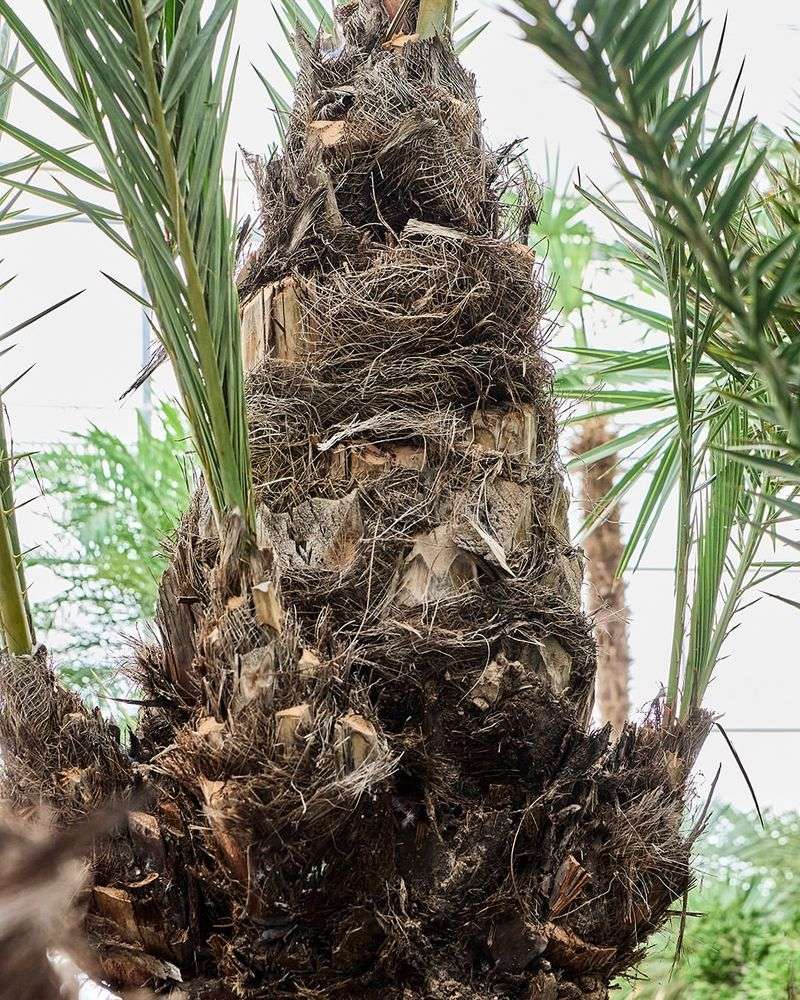
Brown fronds at the very bottom of a palm are almost never a bad sign. Palms shed old growth from the lower canopy as part of their natural life cycle.
It happens steadily, regardless of how well you care for the tree.
Older fronds lose their green color and droop downward before fully browning out. New fronds keep pushing up from the crown while the oldest ones fade below.
That upward growth pattern is healthy and expected in mature palms.
Most palms grown in desert climates drop between 10 and 20 old fronds per year. You’ll notice the browning happens in a ring around the lower trunk.
That consistent pattern is a strong clue that nothing serious is going on.
Removing naturally brown fronds too early can actually stress the tree. Palms pull leftover nutrients from old fronds before letting them go completely.
Cutting them off too soon interrupts that process.
Wait until a frond is fully brown and pulls away easily before trimming. If it resists with any tension, leave it alone a little longer.
Forcing removal before the palm is ready can leave small wounds on the trunk.
2. Extreme Heat Can Dry Out Palm Leaves Faster Than Expected
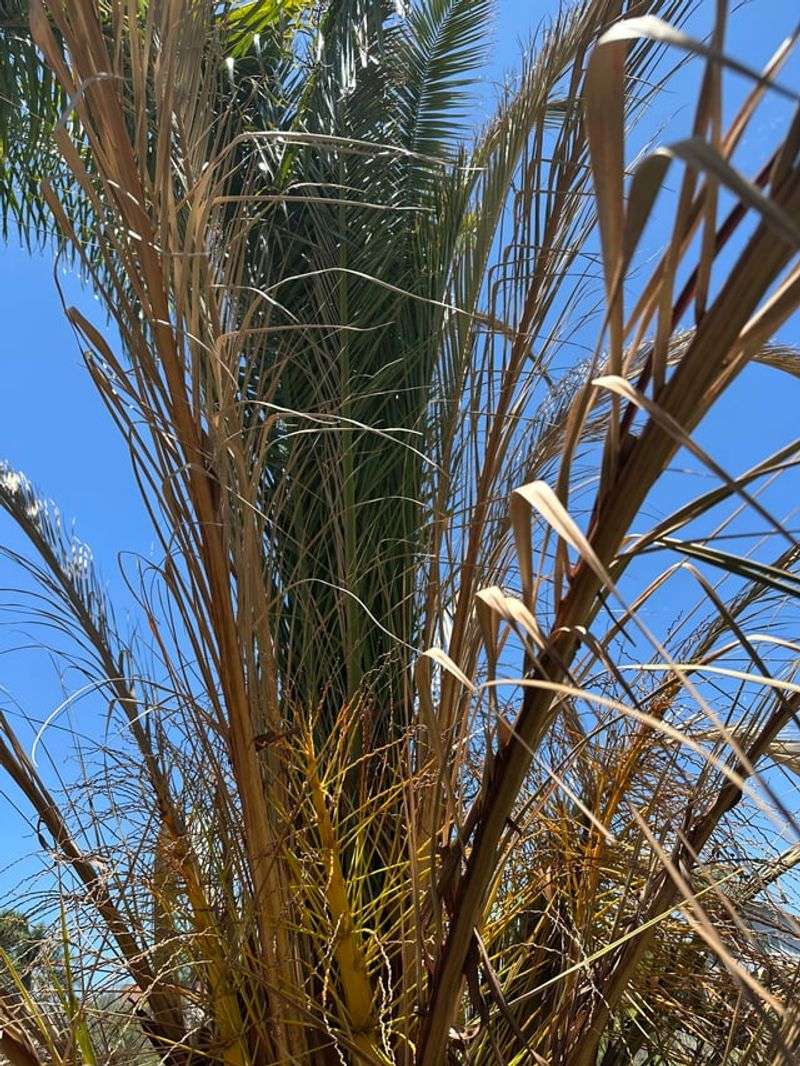
Summer heat in the Southwest hits differently than most people expect. Temperatures regularly push past 110 degrees Fahrenheit, and that kind of sustained heat pulls moisture right out of palm fronds faster than roots can replace it.
Brown tips and crispy edges on fronds are classic heat stress signs. You’ll notice them more on younger fronds than older ones.
Young growth hasn’t fully hardened off yet and burns more easily under peak afternoon sun.
Watering schedules matter a lot during extreme heat stretches. Palms in sandy desert soil can lose soil moisture within a day or two during a heat wave.
Skipping even one deep watering cycle during triple-digit temps can push fronds toward browning quickly.
Deep watering beats shallow watering every single time. Wetting only the top few inches of soil encourages surface roots instead of deep anchoring roots.
Deep roots reach cooler, more stable moisture levels underground.
Mulching around the base helps hold soil moisture longer between watering sessions. A two to three inch layer of organic mulch can noticeably reduce soil temperature near the roots.
Your Arizona Garden Changes Every Week. Your Plan Should Too.
Gardening in Arizona changes quickly throughout the season. Every Friday you’ll receive a simple weekly plan showing exactly what to plant, prune, fertilize, harvest, and protect so you never miss the right timing.
Keep mulch a few inches away from the actual trunk to avoid moisture buildup against the bark.
3. Improper Trimming Often Leaves Palms Looking Stressed
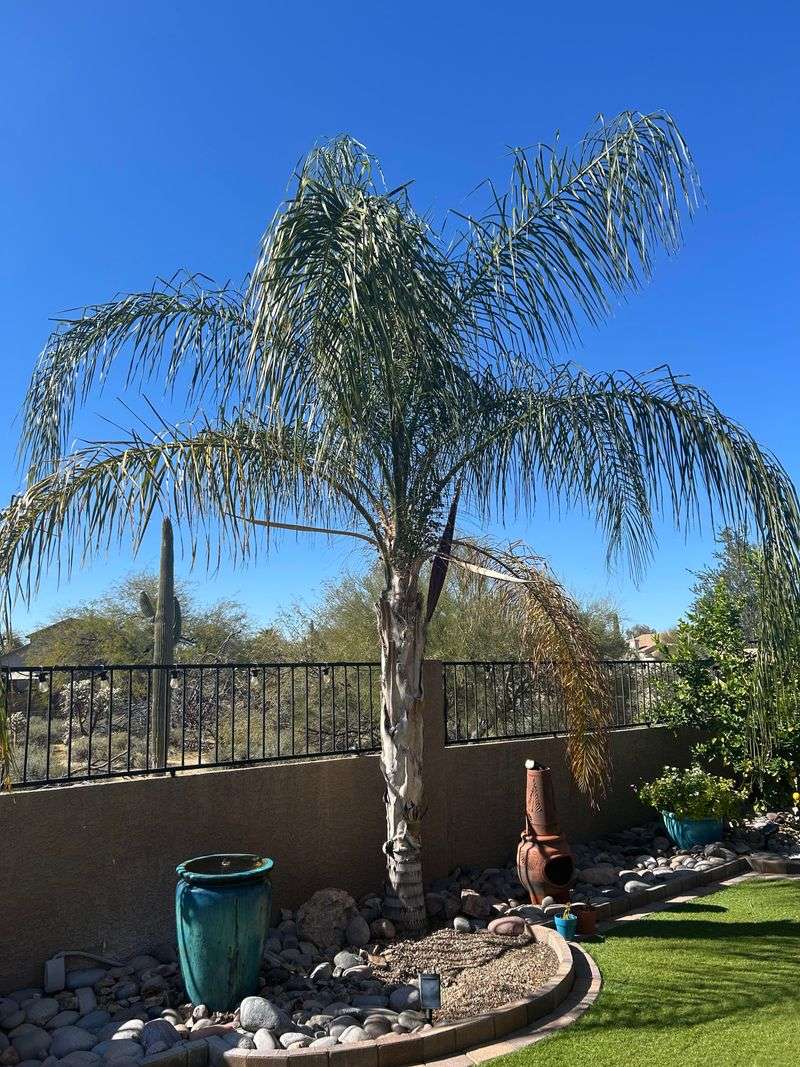
Over-trimming is one of the most common mistakes palm owners make. It looks tidy in the short term but causes real problems over time.
Palms need a healthy number of green fronds to produce enough energy through photosynthesis.
Cutting too many fronds at once forces the tree to work harder just to maintain basic functions. A palm stripped down to just a tight tuft at the top, sometimes called a hurricane cut, is actually a weakened tree.
It becomes more vulnerable to wind damage, nutrient stress, and slow recovery.
Only remove fronds that are fully brown, dried out, or hanging below horizontal.
Green fronds, even slightly yellowing ones, still contribute energy to the tree. Removing live fronds unnecessarily stresses the palm without giving it any real benefit.
Trimming tools need to be sharp and clean before touching any palm. Dull blades tear tissue instead of cutting cleanly.
Torn cuts invite fungal issues and slow the healing process considerably.
Sanitizing cutting tools between trees prevents spreading any potential issues from one palm to another. A simple wipe-down with a diluted bleach solution works well.
Skipping this step is an easy mistake that can create bigger problems across a yard.
Trimming once a year is usually enough for most residential palms.
4. Strong Desert Winds Can Damage Tender Frond Edges
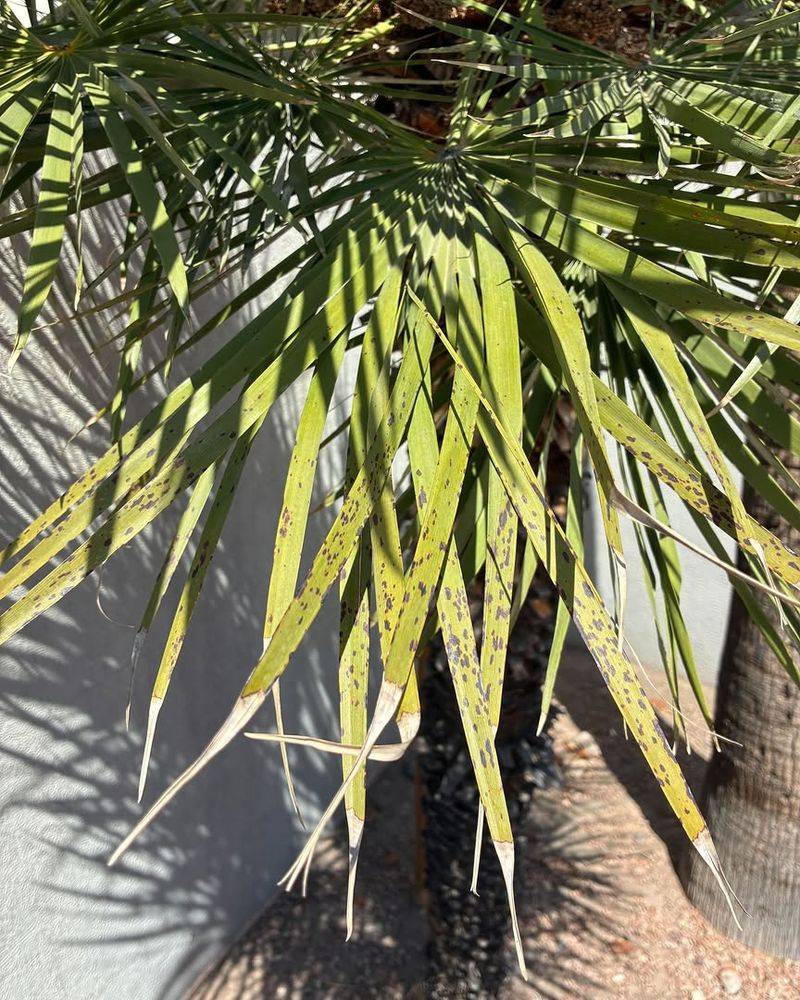
Wind does more damage to palms than most people realize. Hot, dry desert winds pull moisture from frond surfaces faster than roots can replenish it.
The edges and tips brown out first because they’re the most exposed parts of the leaf.
Haboobs and sustained summer wind events hit palm fronds hard. Fronds whip against each other and against the trunk during strong gusts.
That physical contact causes small tears and bruising that eventually turn brown as the tissue breaks down.
Wind damage usually shows up as ragged brown edges rather than clean tip browning. That tattered look is different from heat stress browning or nutrient issues.
Identifying the pattern helps narrow down the cause quickly.
Younger palms with smaller root systems are more vulnerable to wind stress. Their roots haven’t spread wide enough yet to anchor the tree firmly or supply fast moisture recovery.
Staking young palms during their first two years can reduce both physical movement and moisture loss.
Established palms handle wind better once their root systems are deep and wide. Proper deep watering before known wind events helps keep frond moisture levels higher going in.
A well-hydrated frond holds up significantly better than a dry one under stress.
Removing wind-damaged fronds once they’re fully brown cleans up the look without stressing the tree.
5. Poor Drainage Creates Hidden Root Problems Underground
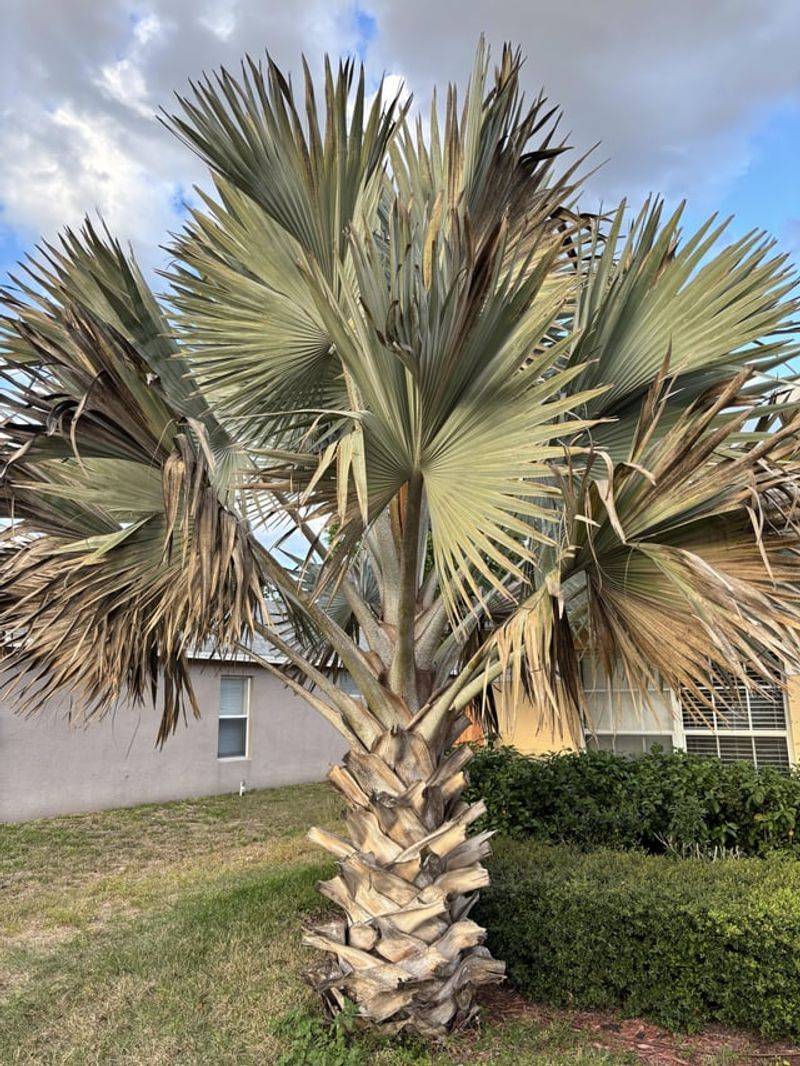
Standing water around a palm’s base is bad news, even in a dry climate. Desert soils are usually fast-draining, but compacted caliche layers or clay pockets can trap moisture underground where you can’t easily see it.
Waterlogged roots can’t absorb oxygen properly. When root oxygen levels drop, the tree struggles to move water and nutrients upward efficiently.
Fronds start browning from the tips inward as the tree shows signs of stress from below.
Root rot is a real concern when drainage stays poor for extended periods. Fungal pathogens thrive in consistently wet, oxygen-poor soil.
Once root rot takes hold, recovery is difficult and often slow.
Check your irrigation setup carefully. Drip emitters placed too close to the trunk can keep the soil around the base constantly saturated.
Moving emitters outward encourages deeper, more spread-out root development.
Raised planting beds help in spots with known drainage problems. Elevating the root zone even six to eight inches above the surrounding grade can make a significant difference.
Good airflow around roots keeps fungal pressure low.
Gypsum amendments can help break up compacted caliche layers over time. Work them into the soil around the drip line, not right against the trunk.
6. Sudden Browning Near The Crown May Signal Serious Trouble
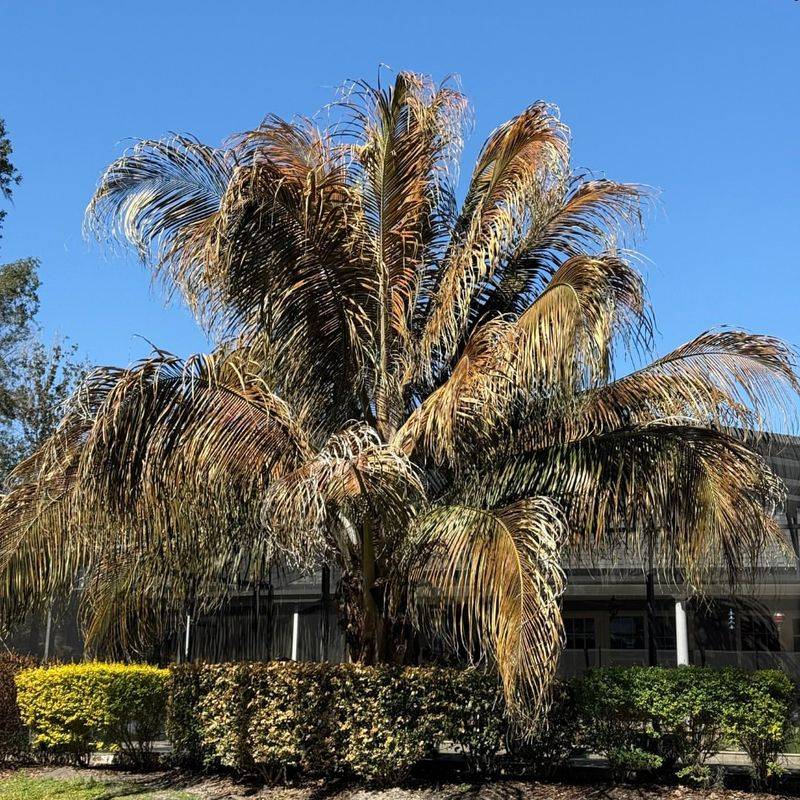
Crown browning is the one situation where you should stop and pay close attention. When new fronds near the very top of the palm start browning before they even fully open, something significant may be happening.
This is not normal aging or wind damage.
Fusarium wilt is a serious fungal condition that works its way up through the vascular tissue of the palm. It causes one-sided frond browning that moves upward toward the crown over time.
There’s no cure once it’s established, and infected trees can spread it through contaminated cutting tools.
Ganoderma butt rot attacks the lower trunk but shows symptoms in the crown. Fronds lose color and collapse as the internal tissue breaks down.
A shelf-like fungal conk sometimes appears near the base of the trunk as an outward sign.
Bud rot caused by Phytophthora fungus is another crown-level threat. It moves fast and can collapse the entire growing tip within weeks.
The spear leaf, which is the newest unopened frond, is usually the first to show signs.
Call a certified arborist if crown browning appears suddenly and spreads quickly. Early professional assessment gives you the best chance of understanding what’s happening.
Waiting too long limits your options significantly.
7. Nutrient Deficiencies Cause Discoloration Across New Growth
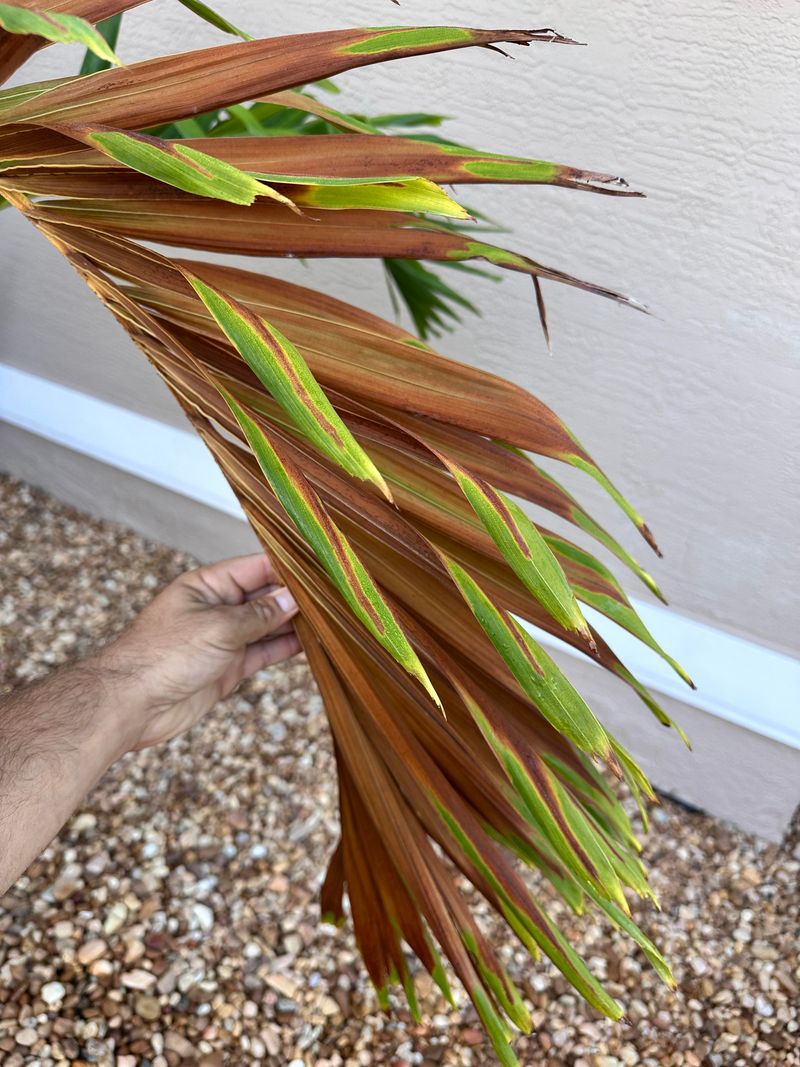
When browning shows up on new fronds near the top of the canopy, that’s a very different story than lower frond aging. New growth discoloration usually points to a nutrient problem, not natural shedding.
Palms in sandy desert soils are especially prone to this.
Potassium deficiency is one of the most common culprits. It shows up as brown or orange spotting on older fronds first, then gradually moves toward newer growth.
Left unaddressed, it weakens the overall structure of the tree over time.
Magnesium deficiency creates a different look. Fronds turn yellow-green with darker green staying near the center rib.
That contrast pattern is a useful clue when trying to figure out what’s missing.
Manganese deficiency hits new fronds hardest. Young fronds emerge looking streaked, frizzled, or brown at the tips before they even fully open.
In severe cases, new fronds can emerge almost entirely brown.
A soil test takes the guesswork out of diagnosing deficiencies. Test results tell you exactly what’s missing so you can apply the right fertilizer instead of guessing.
Applying the wrong nutrients wastes money and doesn’t help the tree.