What It Really Means When Blue Jays Keep Visiting Your Connecticut Yard In November
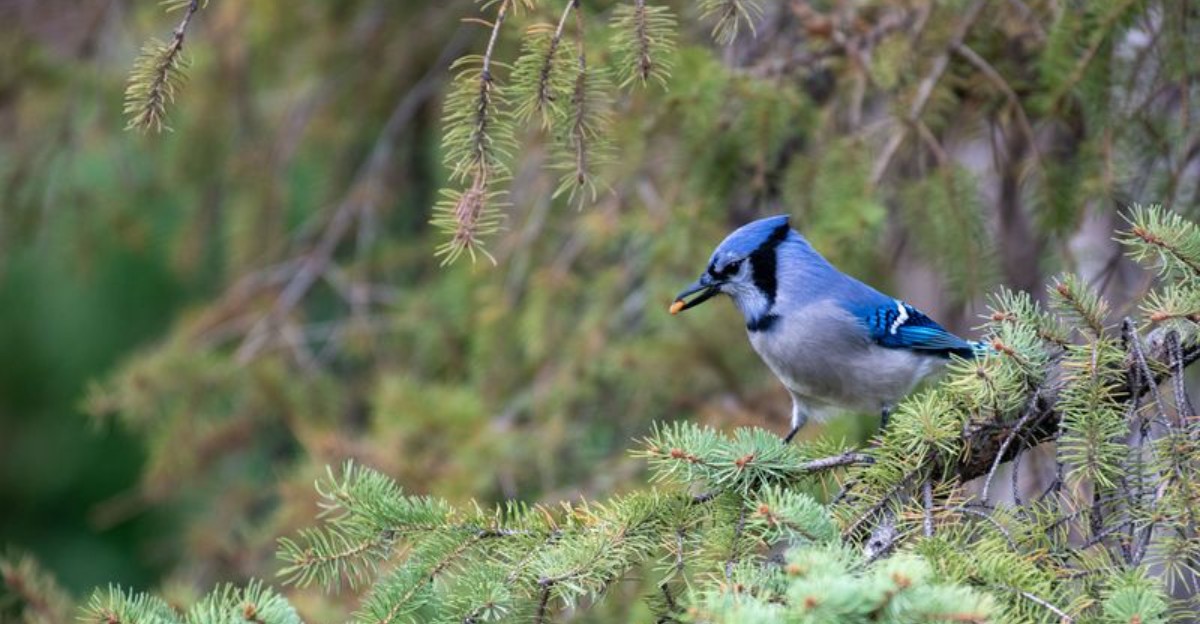
That sharp electric-blue streak flashes past your porch again, and this time it stops. A blue jay drops onto your bird feeder, cocks its head, and studies you like it’s grading your yard on a scale of one to ten.
This isn’t random. If a blue jay keeps raiding your Connecticut feeders and oak trees this month, something specific is drawing it in.
Acorns have mostly dropped, winter is coming, and every jay in the neighborhood is racing to stockpile food before the cold sets in.
Once you know what is behind the activity, you’ll never look at your backyard the same way again. Blue jays are sharp, social, and surprisingly strategic.
They remember faces, respond differently to people they recognize, and mimic hawk calls just to clear out the competition at a feeder. So when one picks your Connecticut yard as a regular stop, it’s not luck.
It’s a calculated choice, built on food, shelter, water, or something else your outdoor space is quietly offering. Figuring out what that is turns a passing visitor into a pattern worth understanding.
Reliable Food, Water, And Shelter Behind The Return Visits
Blue jays do not wander randomly. When they keep returning to your yard in November, it almost always comes down to three basics: food, fresh water, and a safe spot to rest.
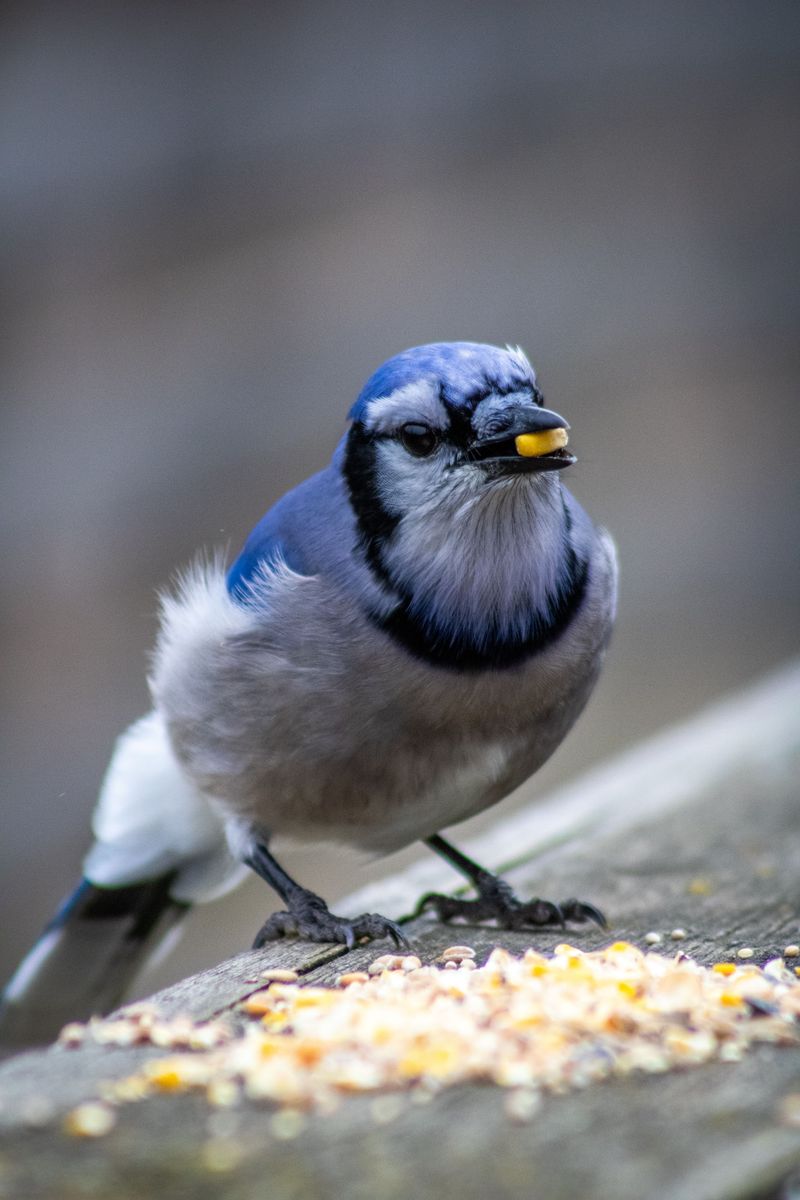
Peanuts are basically blue jay currency. Whole or shelled, they will grab them fast and stash extras nearby for later.
In-shell peanuts are especially popular right now, since jays can carry several off in a single trip.
Sunflower seeds and corn also rank high on their list. If your feeder offers any of these, you have already rolled out the welcome mat.
Water is just as important as food, even in cold weather. Puddles and ponds freeze overnight in Connecticut, so a clean birdbath with a heater keeps open water available when little else is. Jays notice that quickly.
Shelter matters more than most people realize. Dense shrubs, evergreen trees, and thick hedgerows give blue jays a place to escape hawks and a windbreak on frigid nights.
With deciduous trees now bare, evergreens like white pine and eastern red cedar become prime real estate.
Once a jay finds reliable resources in one spot, it remembers. These birds have impressive spatial memory, which means your yard gets mentally bookmarked for future visits.
Consistency is the key factor here. If food disappears for days or the birdbath freezes solid, jays will simply redirect their energy to another yard nearby.
Keep things steady, and the blue jays keep showing up. That loyalty reflects how well your yard meets their daily needs.
Connecticut’s Population And Seasonal Movement Patterns
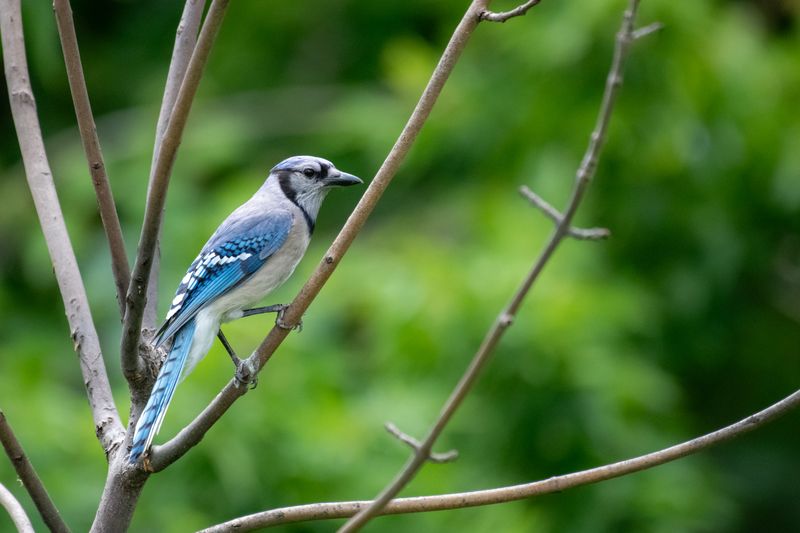
Blue jays in Connecticut are a year-round presence, but their numbers shift noticeably with the seasons. Some migrate south in fall, while others stay put through the harshest winters.
By November, the main push of fall migration has mostly passed. Interestingly, scientists still debate which individual birds migrate and which ones stay, so the jays at your feeder today may not be the same ones you saw in September.
Earlier in the season, large flocks moved along the Connecticut coast and river corridors. Watching dozens of jays stream through the treetops is a striking sight, and a few late stragglers may still pass through this month.
Spring brings a second wave of movement as northern-bound birds pass through, but that is months away. Right now, the birds you see are settling in for winter, and the nesting season is a distant memory.
The birds you see in November are often the toughest, most resourceful individuals. They have chosen to ride out cold temperatures rather than make the long journey south.
Connecticut’s mix of forests, suburbs, and open land makes it ideal blue jay habitat. The state supports a healthy, stable population across most counties.
Urban and suburban yards can even support higher jay densities than deep forest in some areas, since human-provided food sources play a big role.
Knowing the seasonal rhythm helps you understand why your yard gets busier at certain times. The blue jays are simply following a schedule written into their biology, and November is especially busy.
Oak Trees, Feeders, And Winter Roosting Sites That Draw Them In
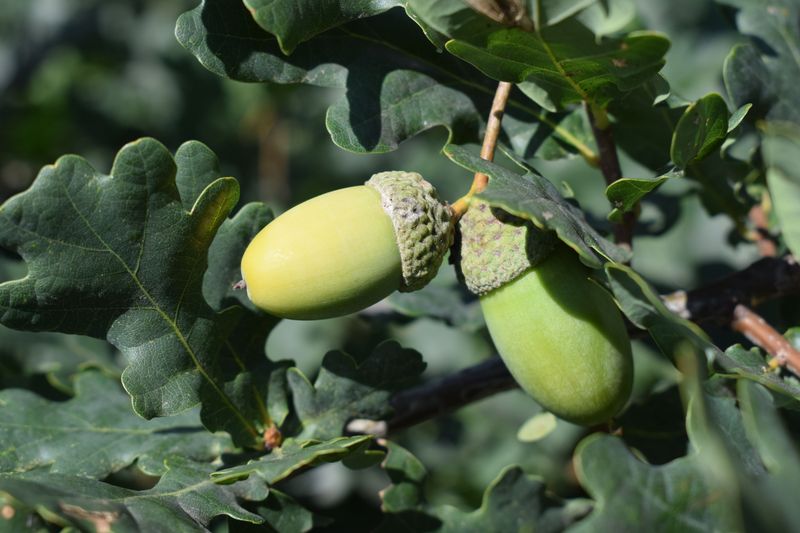
Oak trees are the single biggest magnet for blue jays in any yard. Acorns are their favorite wild food, and a mature oak can produce thousands of them each fall.
Many acorns have already dropped by November, but jays are still hauling them off at a frantic pace.
Blue jays have helped spread oak trees across North America. They bury acorns as a food cache and forget some, which then sprout into new trees.
If your property has even one large oak, you have a built-in jay attractor. Add a feeder nearby, and you have created a near-perfect blue jay destination.
Platform feeders work better than tube feeders for jays because of their size. They need room to land, grab food, and pivot without bumping into tight spaces.
Peanut feeders designed for larger birds are another excellent option. Hanging one within sight of a window gives you a front-row seat to some entertaining behavior, especially now that jays are working overtime.
Roosting sites are the third piece of the puzzle. Nesting is long over, but blue jays still need shelter on cold nights, and they favor dense evergreens like pines, spruces, and hollies that block wind.
Unlike some birds, blue jays do not use nest boxes, so natural tree and shrub cover is the best way to encourage them to settle in.
A yard with oaks, a reliable feeder, and thick evergreens is basically ideal blue jay habitat. That combination explains a lot of repeat visits you see this month.
How Yard Use Shifts Across The Seasons
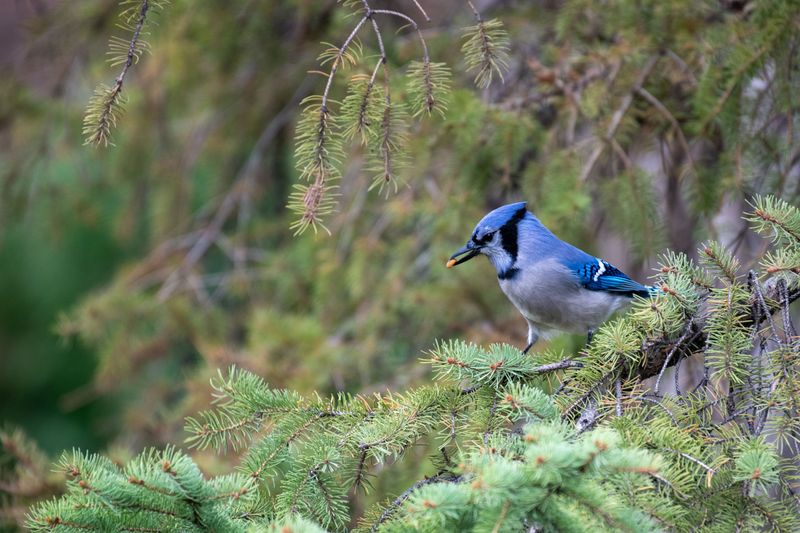
Blue jays do not use your yard the same way in March as they do in November. Their behavior, diet, and even their personality shift dramatically with each season.
Spring is the noisiest time. Jays call loudly to establish territory and attract mates, filling the yard with a mix of harsh screams and surprisingly musical notes.
Once nesting begins in late spring, things go quiet fast. A jay that was bold and loud suddenly becomes secretive, slipping in and out of trees without drawing attention.
Summer feeding slows down at the feeder because natural food is everywhere. Insects, berries, and wild seeds give jays plenty of options beyond what you put out.
Fall, and November in particular, triggers a dramatic shift in energy. Jays become highly active, caching acorns and seeds at a rapid pace before winter sets in.
You might notice jays filling their throat pouch, which can hold several acorns at once. Watching them work is like watching a tiny, feathered grocery run in real time.
Winter brings the most feeder activity by far, and it begins in earnest this month. Cold temperatures burn calories fast, and your peanuts or sunflower seeds become an important food source for resident birds.
Snow-covered yards actually make foraging harder, which pushes jays to rely more heavily on human-provided food. A well-stocked feeder in January earns serious loyalty.
Tracking these seasonal shifts helps you support blue jays at exactly the right moments, because your yard becomes part of their winter survival strategy.
Their Role In The Local Ecosystem
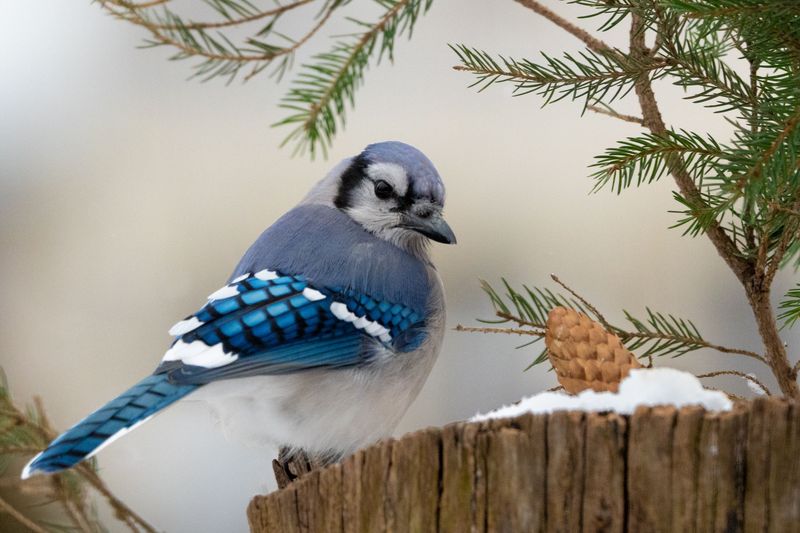
Blue jays are not just pretty birds to watch. They play a surprisingly important role in the health of Connecticut’s forests and suburban green spaces.
Acorn caching is their most famous ecological contribution, and November is prime time for it. A single jay can carry and bury thousands of acorns each fall, some of which sprout into new oak trees.
Some researchers believe blue jays played a role in helping oak forests spread northward after the last ice age. That is a remarkable legacy for a bird many people see mainly as a dominant feeder visitor.
Jays also act as alarm systems for other wildlife. Their loud, piercing calls warn nearby animals when a hawk, fox, or other predator moves into the area.
Smaller songbirds often follow the sound of an agitated jay and take cover immediately. Your blue jays are essentially running a free neighborhood watch for the whole yard.
On the flip side, jays occasionally take eggs or nestlings from the nests of other birds. This behavior upsets many backyard birders, but it is a natural part of their omnivorous diet, and it is not a concern in November when nests are empty.
They also eat large numbers of insects, including beetles, grasshoppers, and caterpillars, though in winter their diet shifts toward nuts, seeds, and the stashes they buried earlier.
Supporting blue jays in your yard means supporting a hardworking species. The ripple effects of their presence reach far beyond what you can see from your own window.
Natural Ways To Attract Or Discourage Them
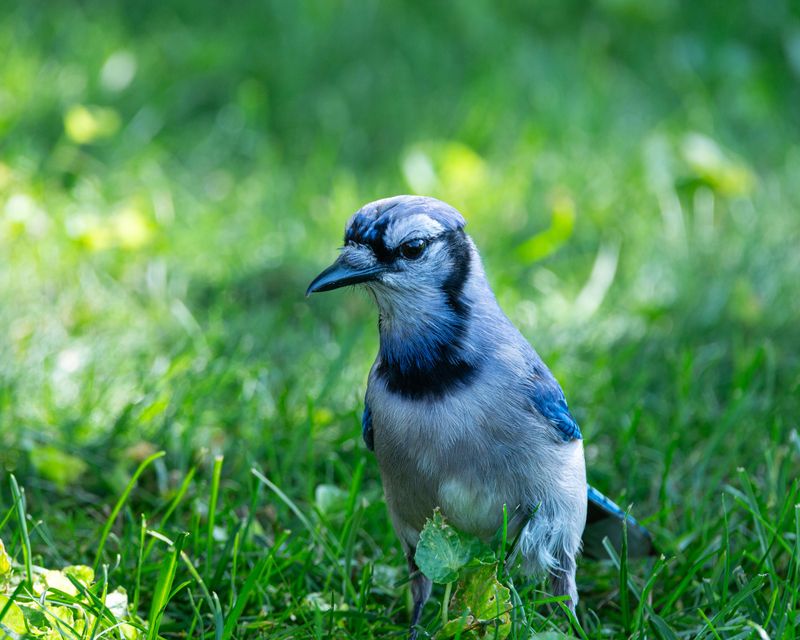
Whether you want more blue jays or fewer, the same basic principle applies: control the resources, and you control the visits. It is that straightforward.
To bring in more jays, start with a platform feeder stocked with whole peanuts in the shell. Place it near a tree or evergreen for quick escape cover and watch how fast word spreads.
Adding a birdbath with a heater dramatically increases your yard’s appeal once temperatures drop. Open water is hard to find on freezing mornings, and jays will remember where to find it.
Planting native oaks or leaving existing ones intact is the most powerful long-term strategy. A mature oak does more for local jays than any feeder ever could.
Leaving fallen acorns on the ground rather than raking them all away gives jays a natural pantry.
Holly bushes, dogwoods, and serviceberries offer additional food sources that jays appreciate. Native plantings also support the insects that jays eat during warmer months.
If you want fewer jays around, the approach is almost the reverse. Switch to tube feeders with small ports that physically exclude larger birds like jays.
Safflower seeds are a smart feeder swap. Some blue jays pass over safflower, while cardinals, chickadees, and nuthatches eat it happily.
Removing dense brush near the feeder reduces the sheltered staging areas that jays prefer. Without cover close by, they often move on to another yard.
Understanding what blue jays want gives you control. A few small changes can shift the dynamic in your favor.