Why California Avocado Leaves Curl As Fall Nights Cool
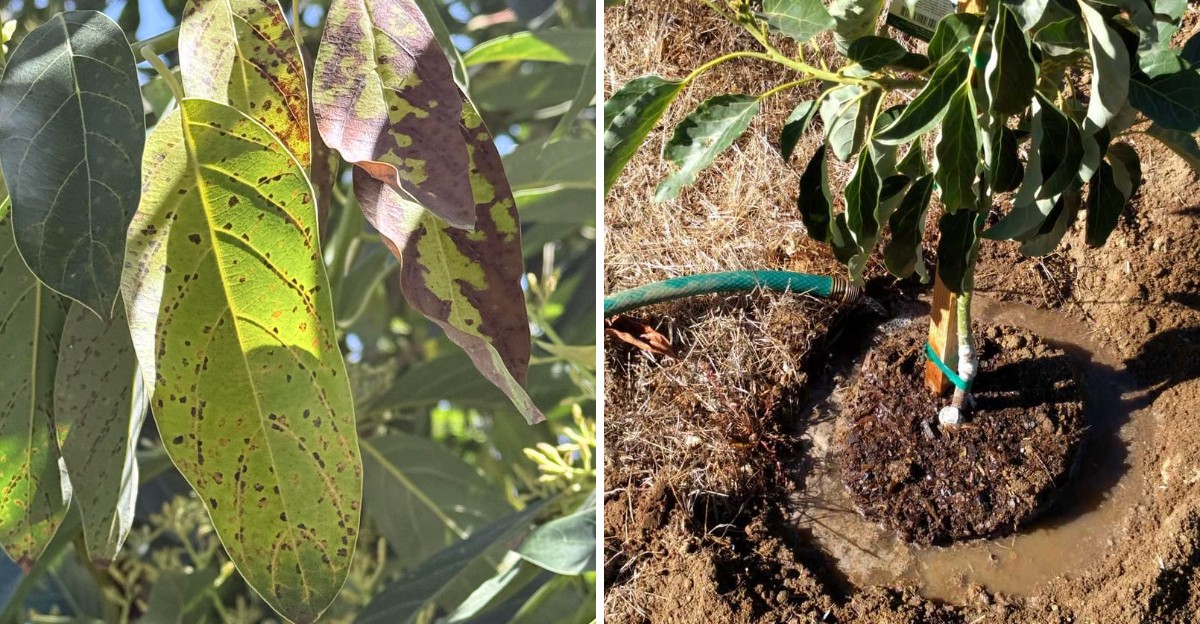
Fall in California brings welcome relief from summer heat, but it can also bring a puzzling change to backyard avocado trees.
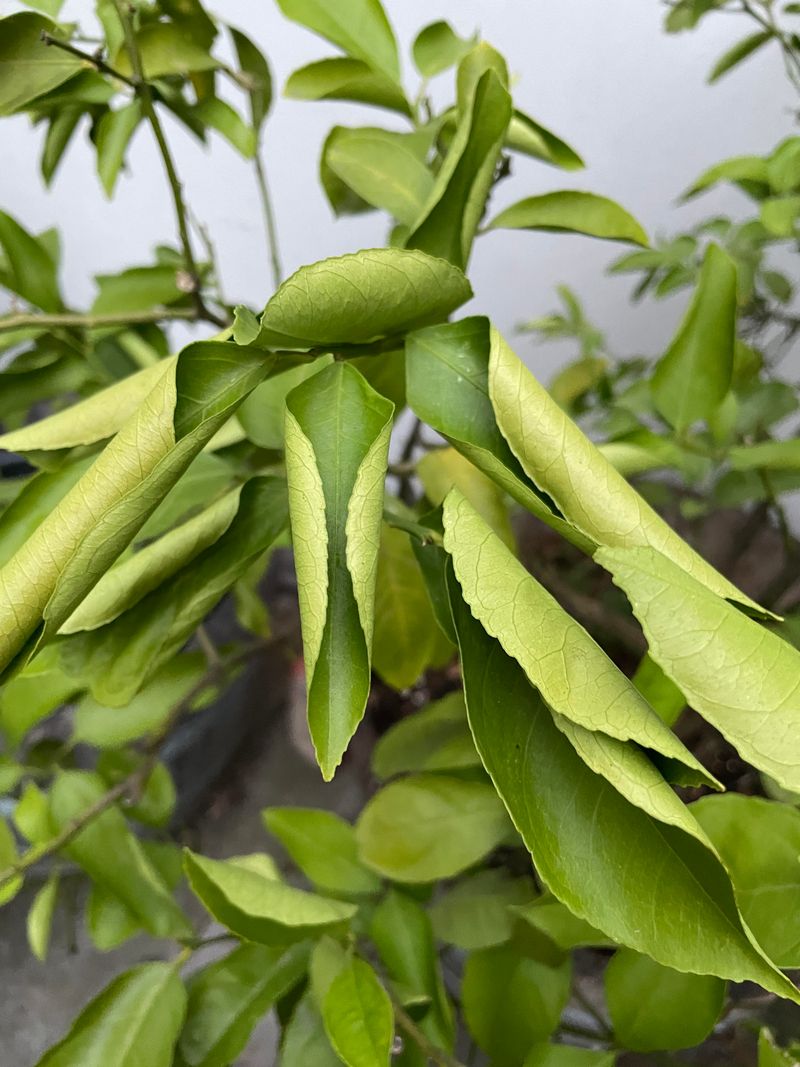
Leaves that looked glossy and flat in August may suddenly cup, twist, or fold along the middle.
That change works more like a signal than a diagnosis. Several different stresses can trigger it, and many tend to appear around the same time of year.
Guessing the cause can waste money and even weaken the tree further. A little detective work in the soil, on the leaves, and around the roots usually reveals what’s really going on.
Most trees bounce back nicely once the true source of stress is found and addressed.
Cool Nights Can Stress Tender Leaves
Frost cloth season sneaks up fast in California. Avocados come from warm regions of Mexico and Central America, so their leaves never adapted to cold.
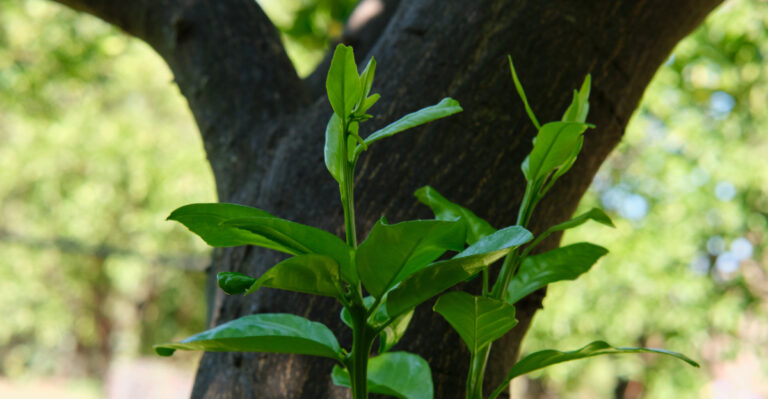
A sudden drop from warm days to chilly nights can make soft new growth cup, droop, or look limp by sunrise. Young flushes take the hardest hit.
Fresh leaves are thin and tender, a bit like a sunburned nose in winter. Older, darker leaves are tougher and usually ride out cool nights without much fuss.
Cold also slows root activity, so roots pull up water more slowly even when soil is damp. That lag adds to the stress on new foliage.
True frost tells a different story. UC ANR notes that avocado varieties differ in cold tolerance, and temperatures near or below freezing can brown leaves and damage twigs.
Mild fall chill, by contrast, usually causes temporary curling that relaxes as days warm. Watching the pattern before reacting helps a lot.
Curling that appears after cold nights and eases by afternoon points toward temperature stress. Leaves that stay curled on warm days suggest something else entirely.
Frost cloth draped over young trees at dusk and removed in the morning offers protection during cold snaps. Heavy fall pruning and nitrogen feeding are best avoided, since both push out tender growth right before winter.
A tree that enters the cool season calm and hardened handles the chill far better.
Salt Buildup Burns Leaf Tips And Edges
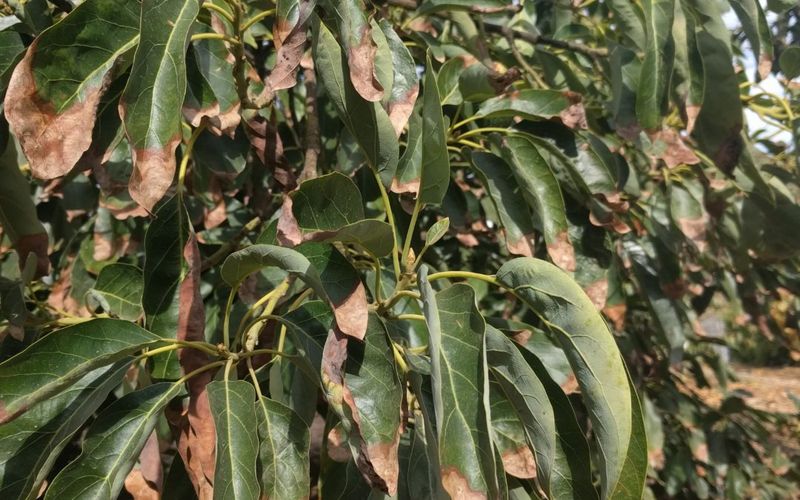
Brown, crispy tips with a sharp line between brown and green tissue tell a salty tale. Avocados rank among the most salt-sensitive fruit trees grown in California.
UC ANR identifies salinity, especially chloride and sodium in irrigation water, as a leading cause of leaf tip and edge burn. The process builds slowly.
Many California water supplies carry dissolved salts. Each watering leaves a little behind in the root zone, season after season.
Over a dry summer, salt piles up, and the tree moves it into the leaves. There it collects at the tips and margins.
Fall often reveals the damage. By late season, salt has had months to build, and the first rains haven’t yet flushed it away.
Burned leaf edges can shrink and pull, making leaves look curled or cupped. Curling and tip burn, however, aren’t the same thing.
Your California Garden Changes Every Week. Your Plan Should Too.
Gardening in California changes quickly throughout the season. Every Friday you’ll receive a simple weekly plan showing exactly what to plant, prune, fertilize, harvest, and protect so you never miss the right timing.
Curling alone has many possible causes, while tip and edge burn on older leaves strongly suggests salt.
Leaching offers the main fix. UC ANR recommends occasionally applying extra water beyond normal needs to push salts below the root zone. Deep, less frequent irrigation helps more than frequent light sprinkles.
A water quality report from the local district, or a water test, reveals salt levels. Thick coarse mulch keeps soil moisture steady.
Winter rains provide some free cleanup, though dry years leave that job to the hose.
Root Rot Shows Up As Wilting Leaves
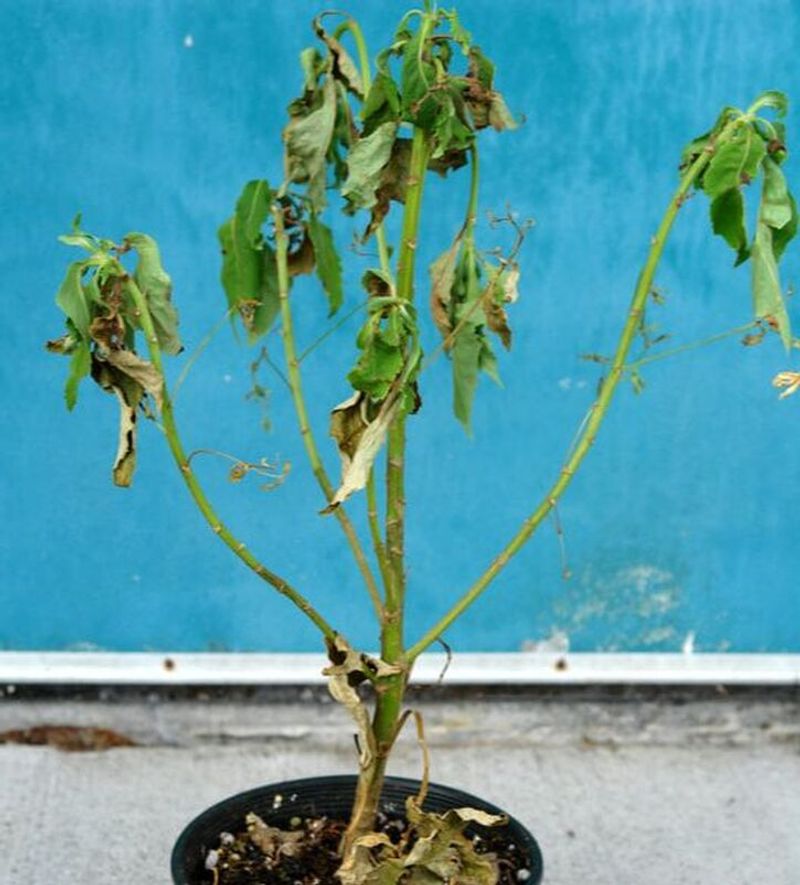
Soggy soil paired with a sad-looking canopy makes a worrying combination. Root rot caused by a soil-dwelling water mold ranks as the most serious avocado disease in California, according to UC ANR.
This disease attacks the small feeder roots that absorb water. Without healthy feeder roots, the tree can’t take up water well.
Leaves may wilt, turn pale yellow-green, and stay smaller than normal. Some curl or droop even when the ground is wet, which leads many owners to water more.
That extra water only feeds the problem.
Other clues build over time. The canopy thins, branch tips may wither, new growth slows, and fruit often stays small.
Gentle digging near the drip line reveals the fine roots. Healthy feeder roots look creamy white, while infected ones turn dark, brittle, and easy to snap.
Poor drainage is the biggest risk factor. Heavy clay, low spots, and overwatering all help the water mold spread.
Fall can be especially tricky. Cooler weather slows evaporation, yet many sprinkler timers still run on summer schedules.
Prevention beats cure. Planting on mounds in well-drained soil, using coarse mulch, and watering only when soil needs it all reduce risk.
UC ANR also discusses gypsum and registered fungicide treatments in orchard settings. Root rot is hard to confirm by eye, so a lab test arranged through a certified arborist is well worth the effort.
Thrips And Mites Can Distort New Growth
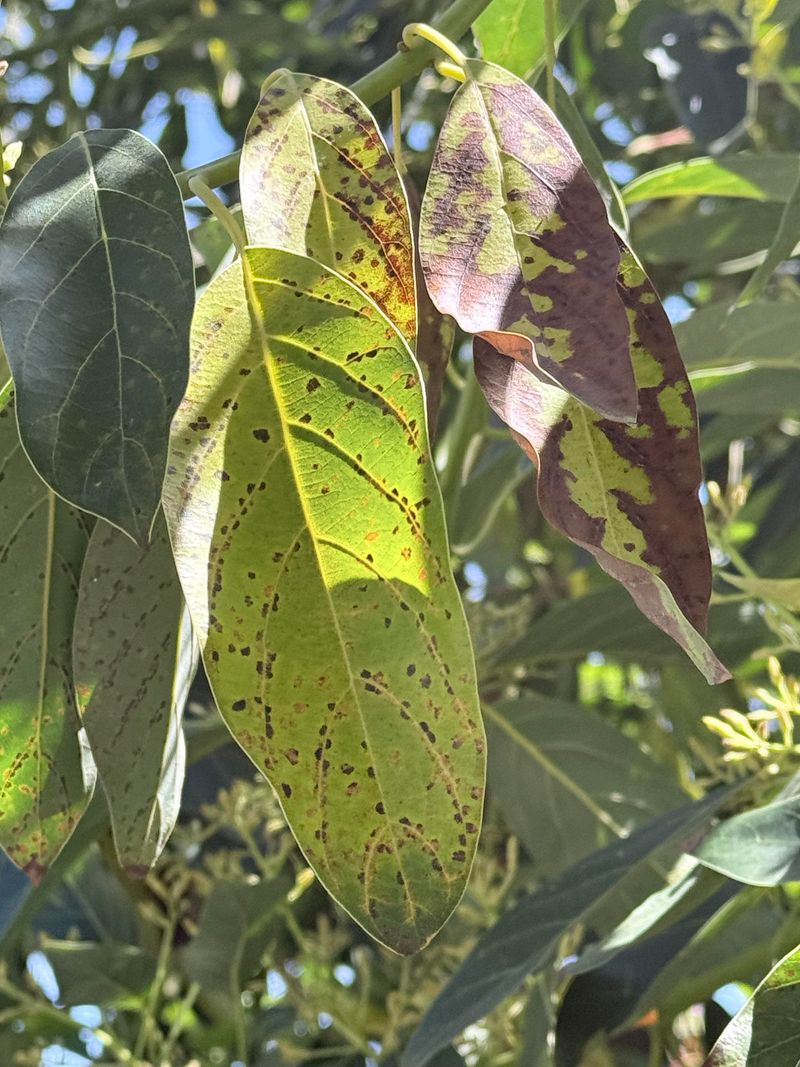
A hand lens and a flipped leaf often reveal what the naked eye misses. Thrips and mites are small enough to overlook, yet they can leave avocado leaves scarred, bronzed, or bent out of shape.
Avocado thrips feed on young leaves and fruit. UC ANR notes that they scrape the surface and suck out cell contents, leaving brown scarring.
Tender leaves damaged early can grow unevenly and curl or twist as they expand. The distortion often becomes more obvious with time and growth.
Mites leave different calling cards. Persea mites live in small webbed colonies along underside veins, creating round brown spots, and heavy infestations can cause leaf drop.
Avocado brown mites tend to bronze the upper leaf surface. Mite numbers often peak in warm, dry stretches, so damage may stand out by fall.
A close look before spraying makes sense. Moving specks, fine webbing, or scraped patches confirm pests, while curl from cold or water stress usually lacks these marks.
Chemicals deserve a light touch. UC ANR emphasizes that natural enemies, such as predatory mites and lacewings, often keep these pests in check.
Broad-spectrum sprays can sharply reduce those helpers and trigger flare-ups.
Dusty leaves also favor mites, so a gentle rinse of the canopy helps. For serious problems, current UC IPM guidelines offer the best recommendations.
Small steps usually handle these small bugs just fine.
Uneven Watering Causes Curling Too
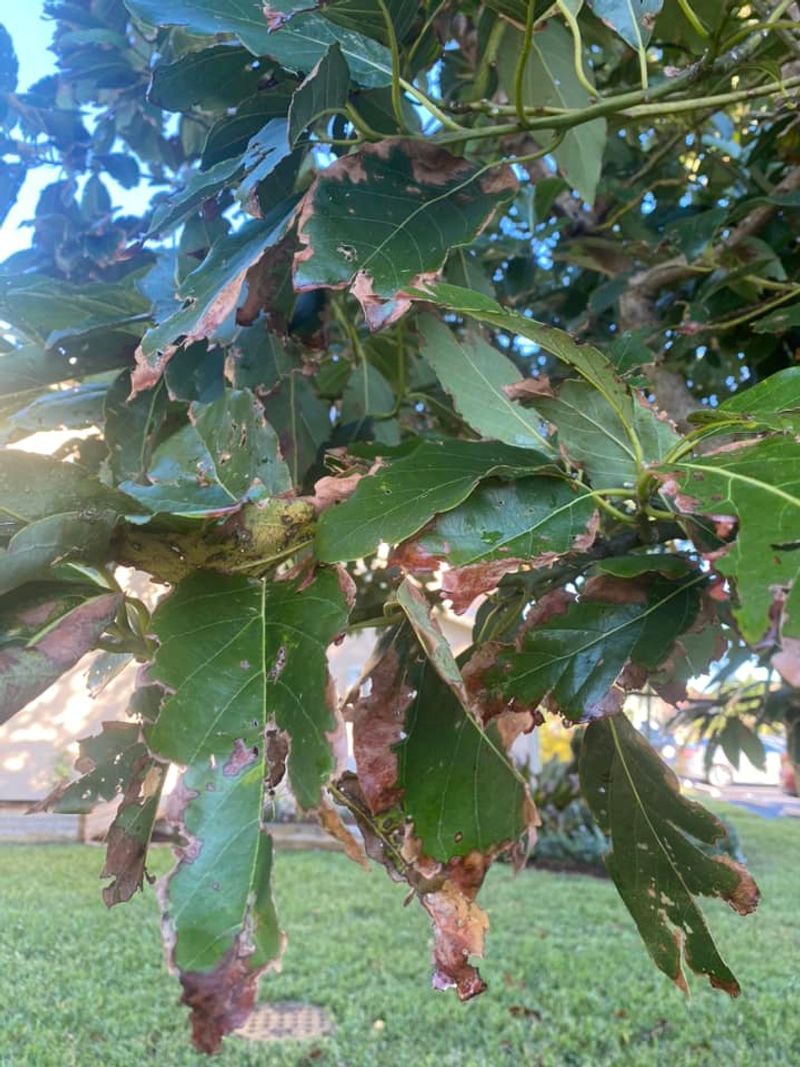
Feast or famine works poorly for avocados. A tree that goes bone dry, then gets flooded, then dries out again rides a stressful roller coaster.
Leaves often respond by curling, folding upward along the midrib to save moisture. That reaction is a clear sign of trouble with the watering rhythm.
Avocado roots are shallow, with most feeder roots in the top six to twelve inches of soil. That layer dries quickly, and UC ANR guidance stresses keeping the root zone evenly moist without waterlogging it.
Fall throws timers a curveball. Shorter, cooler days reduce water use, yet hot, dry spells still pop up.
A summer schedule can soak roots in October, while a cut-back schedule might leave them thirsty during a sudden warm week. Both swings stress the tree.
Thirsty leaves usually look dull, droopy, and curled during the heat of the day. Overwatered trees can show similar wilting, which explains why guessing so often fails.
A soil probe, trowel, or simple finger test reveals what the leaves can’t. Deep watering followed by letting the top inch or two dry slightly before the next round keeps moisture steady.
Monthly timer adjustments and an eye on heat-wave forecasts help, too. A three to six inch layer of coarse wood chips, kept away from the trunk, buffers temperature and slows evaporation.
Consistency may sound boring, but avocados find it refreshing.
Wind Dries Leaves Quickly
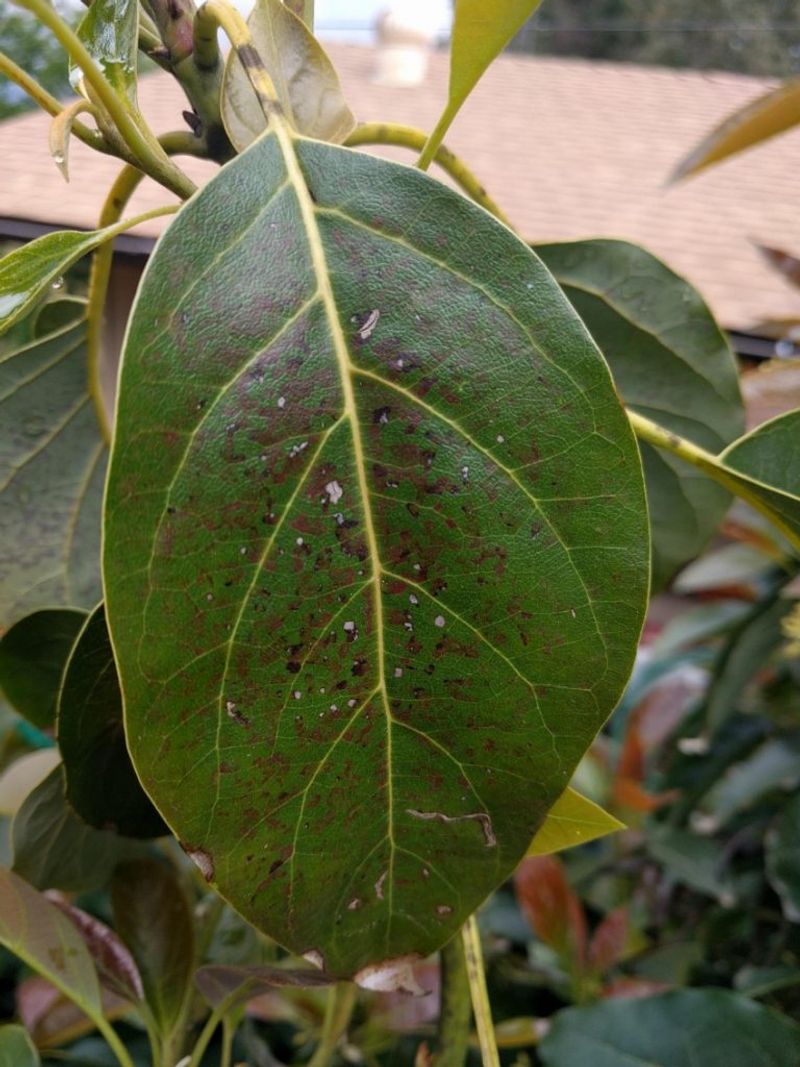
Santa Ana season has a way of rearranging patio furniture and avocado leaves alike. Hot, dry fall winds sweep across Southern California, pulling moisture from leaves faster than roots can replace it.
Leaves lose water through tiny pores, and dry wind speeds that loss dramatically. To protect themselves, leaves may curl, fold, or droop.
After a strong windy spell, edges can brown and crisp. That damage can look a lot like salt burn at first glance.
Timing offers a helpful clue. Curling that shows up during or right after a wind event points strongly to wind stress.
Damage often appears on the side of the tree facing the wind.
Young and newly planted trees suffer most because their roots are still small. Wind also shreds and bruises leaves physically.
Torn leaves may lose water even faster than intact ones. As a result, damage can stack up over several days.
Preparation helps a lot. A deep watering a day or two before a forecast wind event leaves the soil with a good reserve.
A moisture check afterward confirms the tree has what it needs.
For young trees, a temporary windbreak of shade cloth or burlap on stakes softens the blast. A sheltered planting spot or nearby hedge helps long term.
Skipping fertilizer before windy stretches protects tender shoots and keeps the tree from getting blown away by the weather.
Check Soil And Roots Before Treating
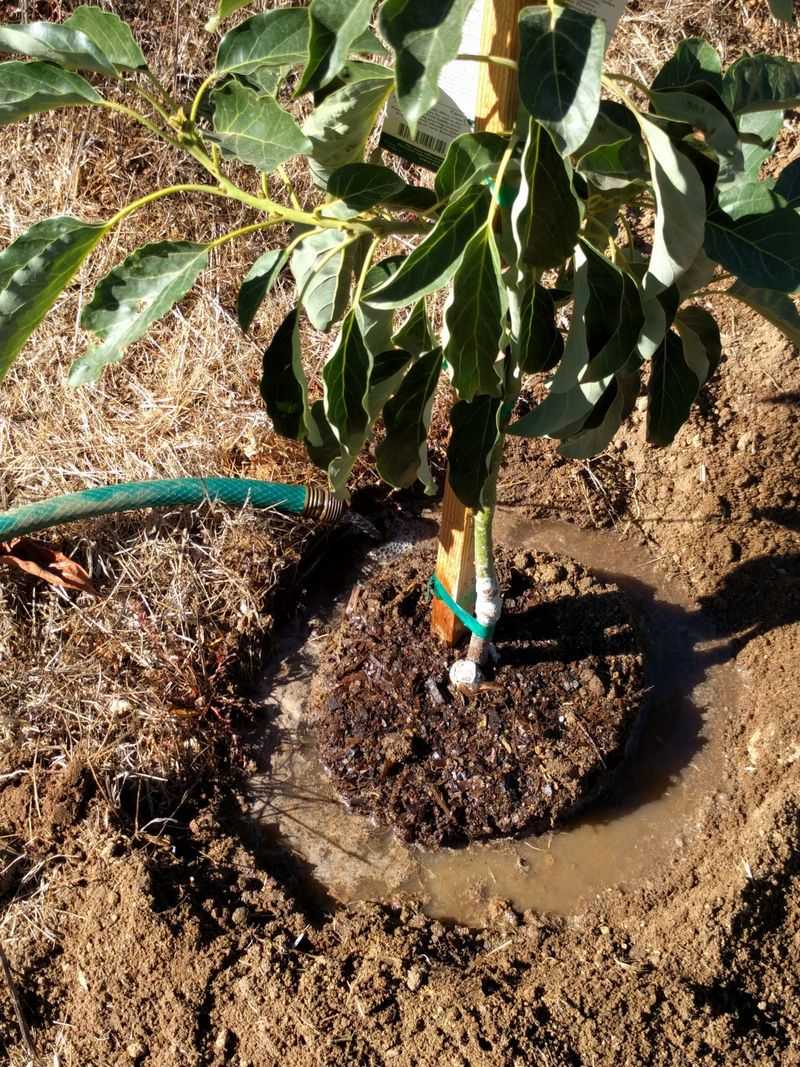
Spraying first and asking questions later ranks among the most common mistakes avocado owners make. Fungicide or fertilizer won’t fix curling caused by cold, salt, or thirst, while detective work costs less and works better.
Soil moisture comes first on the list. A soil probe or long screwdriver pushed into the ground near the drip line can bring up a sample from four to eight inches deep.
A quick squeeze tells a lot. Dripping soil is too wet, dusty soil is too dry, and a ball that holds together and then breaks apart is about right.
Roots come next. Gently scraping back mulch and soil in a few spots reveals feeder roots, which should look white or cream colored and feel firm.
Dark, brittle, or mushy roots suggest root rot and deserve a lab test. That step prevents guesswork with an expensive, unnecessary treatment.
The leaves themselves offer more clues. Brown tips and edges point toward salt, while scarred or bronzed new leaves suggest thrips or mites.
Curling that followed a cold night or windy day likely traces back to weather. Each pattern narrows the possibilities considerably.
Water quality deserves a check, too, since many California districts publish annual reports listing salt levels.
Notes on findings, dates, and weather make patterns clear quickly, so the real problem gets treated instead of the loudest symptom.