Why California Pomegranates Split Open Just Before They Are Ready To Pick
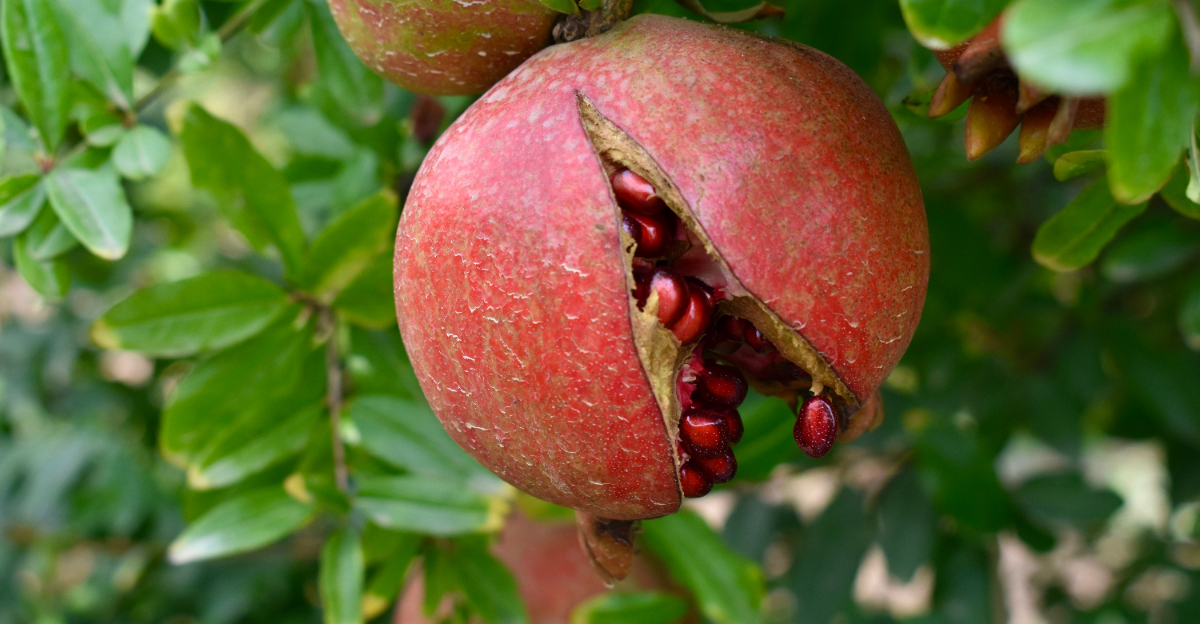
Few garden moments are more frustrating than finding a nearly perfect pomegranate cracked open right when harvest finally feels close.
After weeks of watching the fruit swell and color up, that sudden split can feel downright personal.
California growers often notice the problem late in the season, when the fruit looks almost ready and anticipation is high.
One day the rind appears smooth and intact, then a deep crack shows up seemingly out of nowhere. Great timing, pomegranate.
The confusing part is that the rest of the tree may look perfectly healthy. Leaves can stay green, branches may be loaded with fruit, and nothing obvious seems wrong until those frustrating splits begin to appear.
Several seasonal factors can influence what happens during this final stretch, and the timing of the cracking can offer useful clues. Small changes in conditions may matter more than they did earlier in the year.
If your pomegranates keep bursting open just before picking time, the answer may lie in what happened during the weeks leading up to harvest rather than the moment the fruit finally cracked.
1. Sudden Watering Changes Are Often The Main Cause
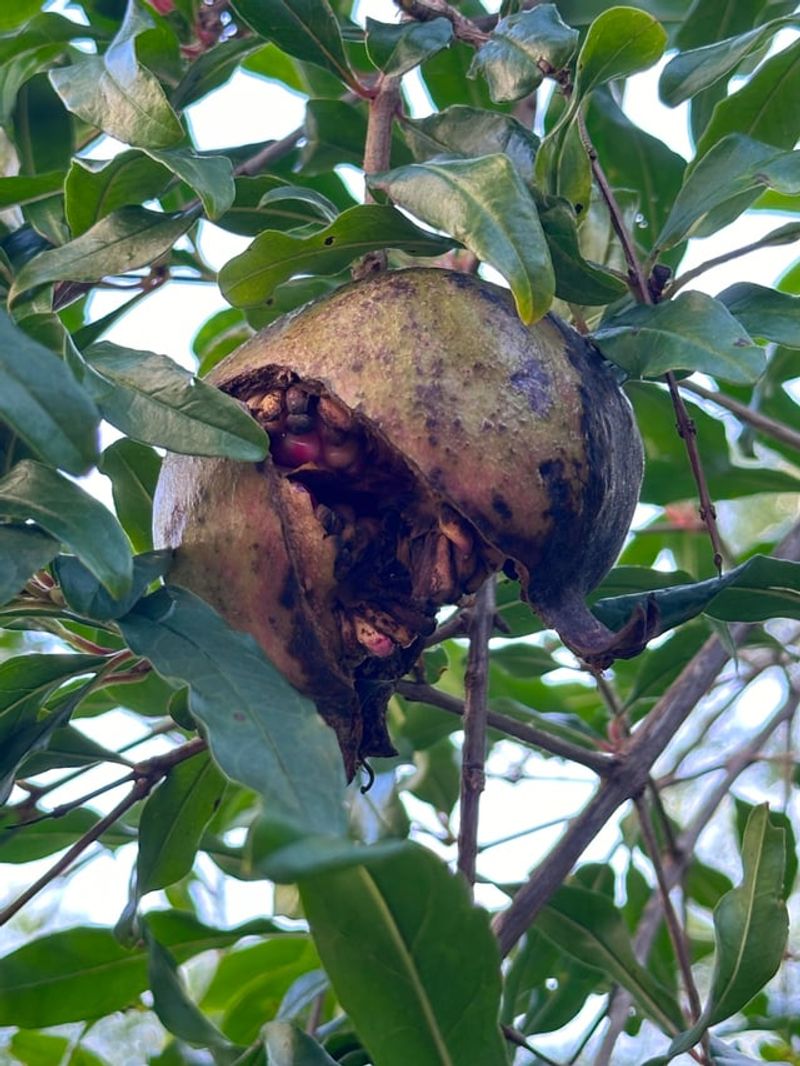
Here is something that surprises most first-time pomegranate growers in California: the fruit does not split because of heat or cold. It splits because of water changes.
When a tree goes without water for a while and then gets a big drink, the fruit reacts almost immediately.
The seeds and juice inside the pomegranate absorb that water fast. Too fast.
The inside of the fruit expands quickly, but the tough outer skin cannot keep up with the growth. The pressure builds up inside, and the skin gives way.
That is when you see that familiar crack running across the fruit.
Consistent watering is the best way to stop this from happening. When the soil stays at a steady moisture level, the fruit grows at a steady pace.
The skin and the inside develop together, which means there is no sudden pressure buildup.
Even one or two days of skipped watering during the final weeks before harvest can set the stage for splitting. A hot afternoon, a forgotten irrigation cycle, or a broken sprinkler can all lead to the same result.
Checking your watering schedule regularly during late summer is a simple habit that can save a lot of fruit. Steady and consistent is always better than occasional and heavy when it comes to keeping pomegranates whole.
2. Dry Soil Followed By Heavy Water Can Split The Fruit
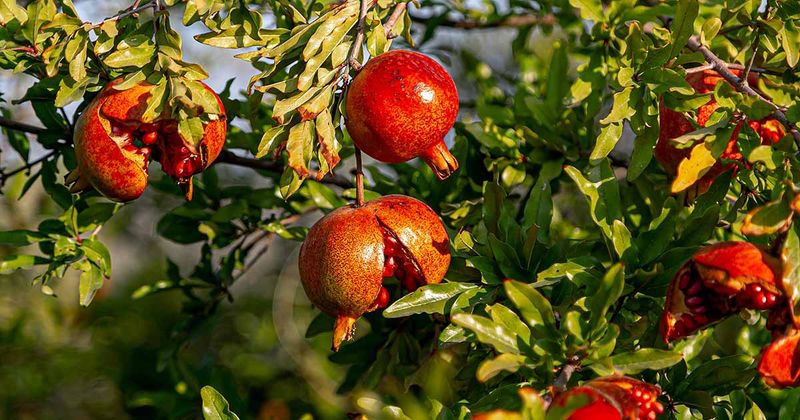
Dry soil is one of the biggest setups for cracked pomegranates. When the ground gets really dry around a fruit tree, the roots start to struggle.
The tree still pushes energy into the fruit, but without enough water, the fruit grows slowly.
Then rain comes. Or a gardener finally waters after a long pause.
Suddenly, the roots pull in a large amount of water in a short time. That water rushes up into the fruit.
The inside of the pomegranate swells up fast, and the skin, which has been tough and dry, cannot stretch to match the new size.
Your California Garden Changes Every Week. Your Plan Should Too.
Gardening in California changes quickly throughout the season. Every Friday you’ll receive a simple weekly plan showing exactly what to plant, prune, fertilize, harvest, and protect so you never miss the right timing.
Think of it like a balloon that has been sitting in the sun. If you try to inflate it quickly, it is more likely to pop than a balloon that was slowly and gently filled over time.
The same idea applies to pomegranate skin under stress.
To avoid this, never let the soil around your tree get bone dry during the growing season. Check the soil a few inches down with your finger.
If it feels very dry, your tree needs water. A slow, deep watering session done regularly is far better than waiting until the soil cracks and then flooding it.
Keeping the ground consistently moist, not wet, is the real goal here.
3. The Inside Can Swell Faster Than The Skin Can Stretch
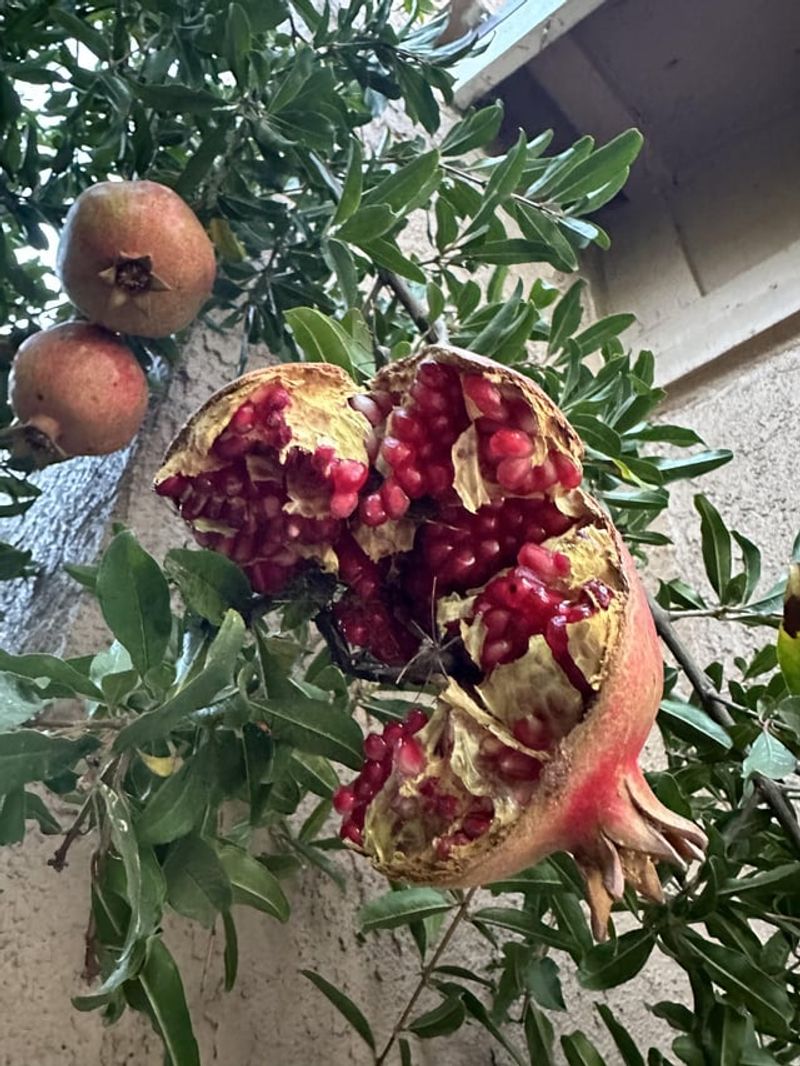
A pomegranate is packed tight with juice-filled seeds called arils. As the fruit matures, those arils grow bigger and fill in every bit of space inside the fruit.
By the time harvest gets close, there is almost no room left inside the rind.
When extra water enters the picture at this late stage, the arils have nowhere to go. They keep swelling, and the pressure inside the fruit keeps building.
The skin, which has been hardening and drying out as the fruit ripens, is not flexible enough to stretch any further. So it splits.
This is actually a sign that the fruit is doing its job. The arils are full, ripe, and ready.
The problem is just the timing and the sudden surge of moisture. Understanding this helps you see that splitting is not about a sick tree or bad fruit.
The fruit is healthy. The conditions are just not quite right.
One useful trick is to tap the outside of the fruit gently. A ripe pomegranate makes a slightly metallic sound.
If the skin already looks tight and shiny, that is a sign the fruit is very close to ready. At that point, be extra careful with watering.
Reducing water slightly in the final days before picking can help the skin and inside stay balanced and avoid a last-minute split.
4. Late-Summer Irrigation Swings Make Cracking More Likely
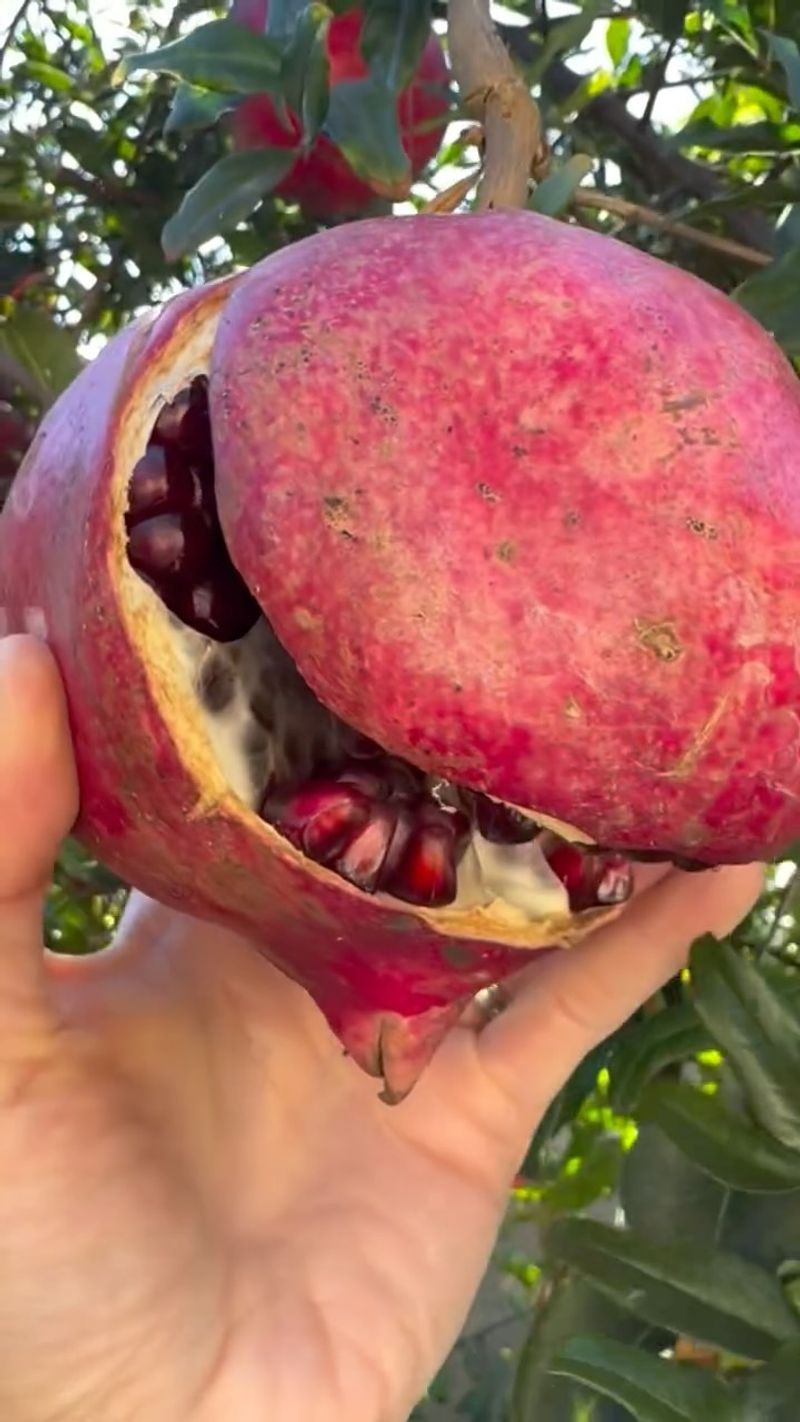
Late summer in California is a tricky time for pomegranate growers. The weather is hot, the days are long, and the fruit is getting close to its peak.
At the same time, irrigation habits often get inconsistent. Some days the trees get plenty of water.
Other days, the heat or a busy schedule means watering gets skipped.
Those swings in irrigation are a major reason pomegranates crack during this time of year. The fruit is at its most sensitive stage.
The arils are almost fully developed, and the rind is starting to firm up. Any sudden change in water supply sends a signal to the fruit to absorb as much moisture as possible, as quickly as possible.
Setting up a drip irrigation system with a timer is one of the smartest things a pomegranate grower can do. A timer removes the guesswork.
The tree gets the same amount of water at the same time every day, no matter how busy life gets or how hot it is outside.
If a drip system is not an option, try to water at the same time each day, even if it is by hand. Early morning is best because the water soaks in before the heat of the day causes it to evaporate.
Keeping irrigation steady through late summer is one of the most effective ways to bring in a crack-free harvest.
5. Uneven Soil Moisture Is Hard On Nearly Ripe Fruit
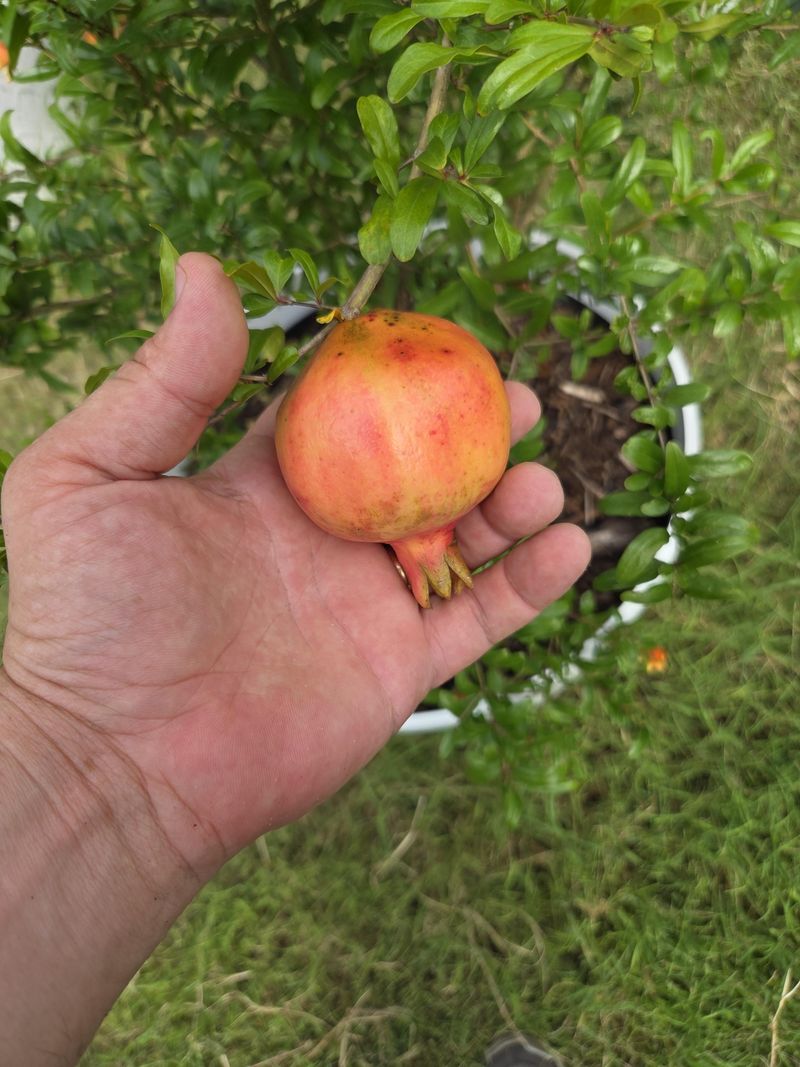
Not all parts of the soil around a tree hold water the same way. Some spots drain fast.
Others hold moisture for a long time. When the moisture level is uneven around the root zone, the tree gets mixed signals.
Some roots pull in lots of water while others get very little.
That uneven intake creates an uneven response inside the fruit. Parts of the pomegranate may swell while others stay the same size.
The stress on the skin is not spread out evenly, which makes it much easier for a crack to form. Nearly ripe fruit is especially sensitive to this kind of imbalance.
One way to check for uneven moisture is to dig a few small holes around the tree at different spots. Check how wet the soil is at each spot.
If some areas are very dry and others are soggy, you have an uneven moisture problem.
Fixing the issue often starts with how you water. Drip lines should circle the entire root zone, not just one side of the tree.
Soaker hoses work well for spreading moisture evenly. You can also add organic matter like compost to the soil to help it hold water more consistently.
When the entire root zone gets the same steady supply of moisture, the fruit grows evenly and the skin stays intact all the way to harvest.
6. Mulch Can Help Keep The Root Zone More Consistent
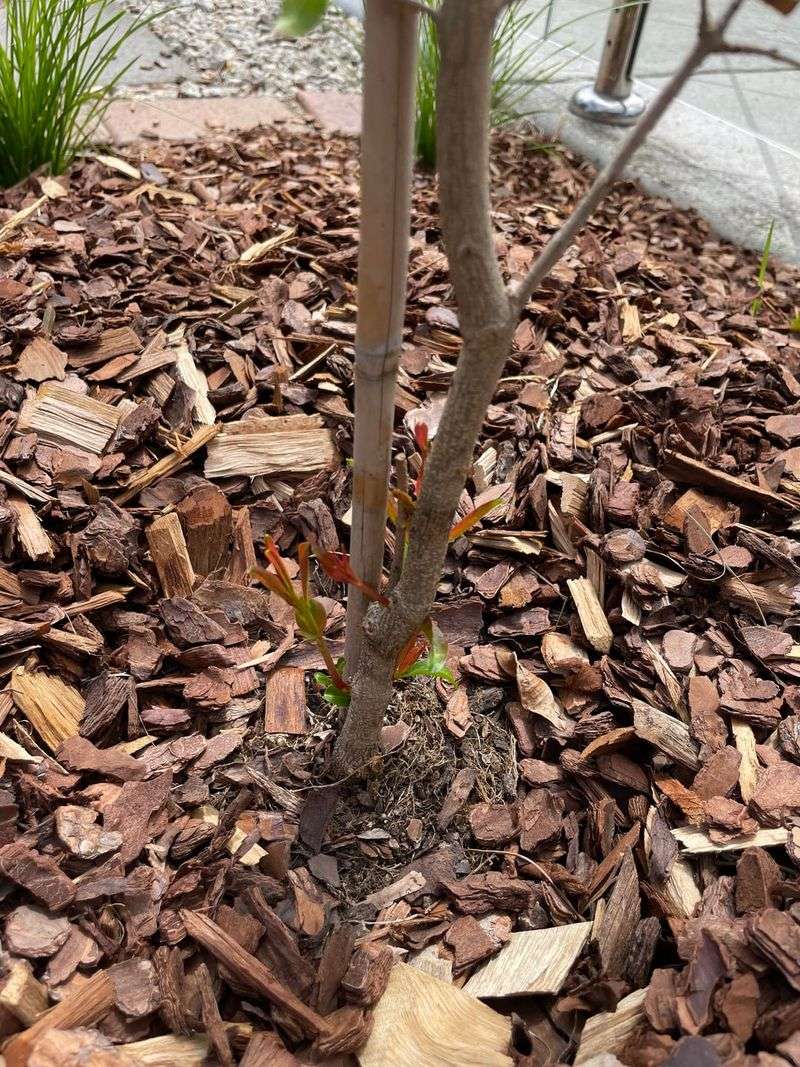
One of the simplest and most overlooked tools for preventing pomegranate splitting is a good layer of mulch. Mulch acts like a blanket over the soil.
It slows down evaporation, which means the soil stays moist longer after each watering session. That extra moisture retention helps keep the root zone at a steady level between waterings.
Wood chips, straw, and shredded bark all work well as mulch. Spread a layer about three to four inches thick around the base of the tree.
Keep the mulch a few inches away from the trunk itself to prevent moisture buildup right at the base, which can cause other problems.
Mulch also helps regulate soil temperature. During hot afternoons, the ground under mulch stays cooler than bare soil.
Cooler roots are calmer roots, and calmer roots mean more even water absorption. That evenness is exactly what pomegranates need during the final weeks before harvest.
Another bonus of using mulch is that it breaks down slowly and adds organic matter to the soil over time. This improves the soil structure and helps it hold water more evenly.
Many California gardeners skip this step, but adding mulch is one of the easiest ways to protect nearly ripe fruit from cracking. It takes about fifteen minutes to apply and can make a noticeable difference in how many fruits survive to harvest in one piece.
7. Deep Regular Watering Works Better Than Sudden Soaking
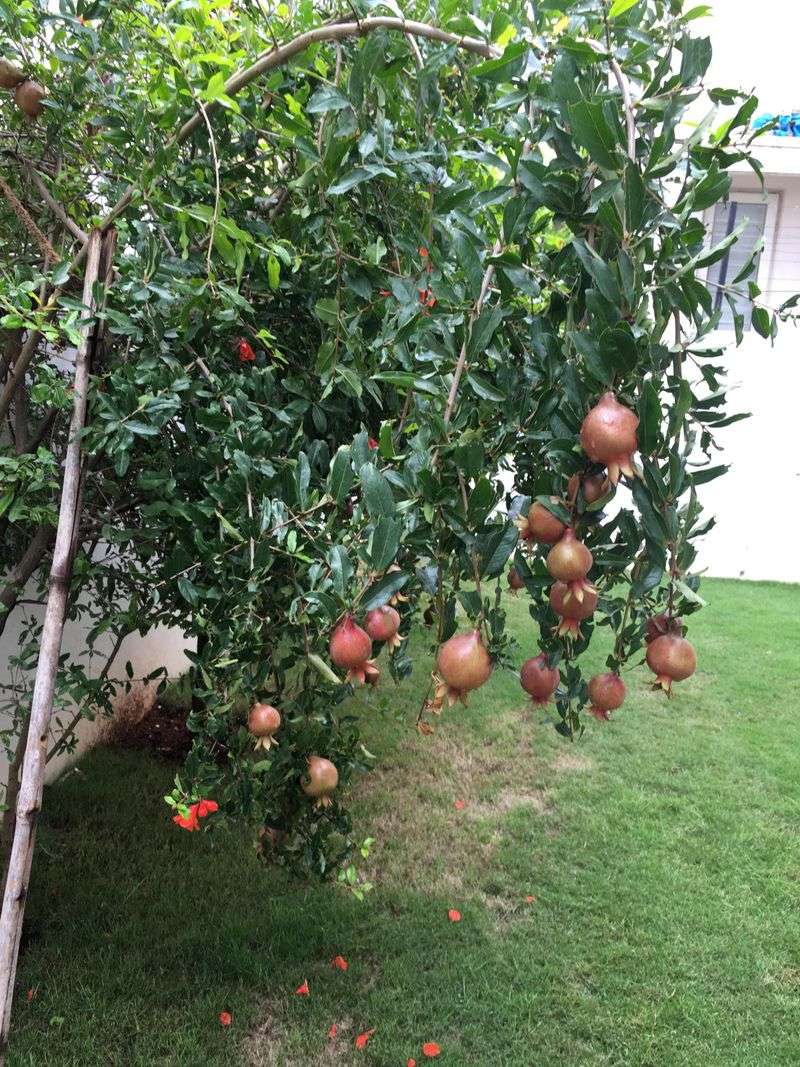
California gardeners make the mistake of watering their pomegranate trees too quickly or not deeply enough. A quick sprinkle on the surface does not do much for the roots.
The roots of a mature pomegranate tree go deep into the ground. They need water that soaks down to where they actually live.
Shallow watering encourages roots to stay near the surface where they are more affected by heat and dry spells. Deep watering encourages roots to grow down, where the soil stays cooler and more consistently moist.
Trees with deep root systems are much better at staying stable when surface conditions change.
The goal is to water slowly and deeply, letting the water soak several inches into the soil before stopping. A slow drip system or a soaker hose left running for an extended period works much better than a quick blast from a garden hose.
You can check if the water is reaching deep enough by using a moisture meter or digging a small test hole after watering.
Watering deeply two to three times per week during hot weather is usually better than light watering every single day. This schedule gives the roots time to draw in moisture steadily and helps the fruit grow at a calm, even pace.
Pomegranates that get deep, regular water from the start of the season are far less likely to split open right before harvest time.
8. Overripe Fruit Is More Likely To Crack Open
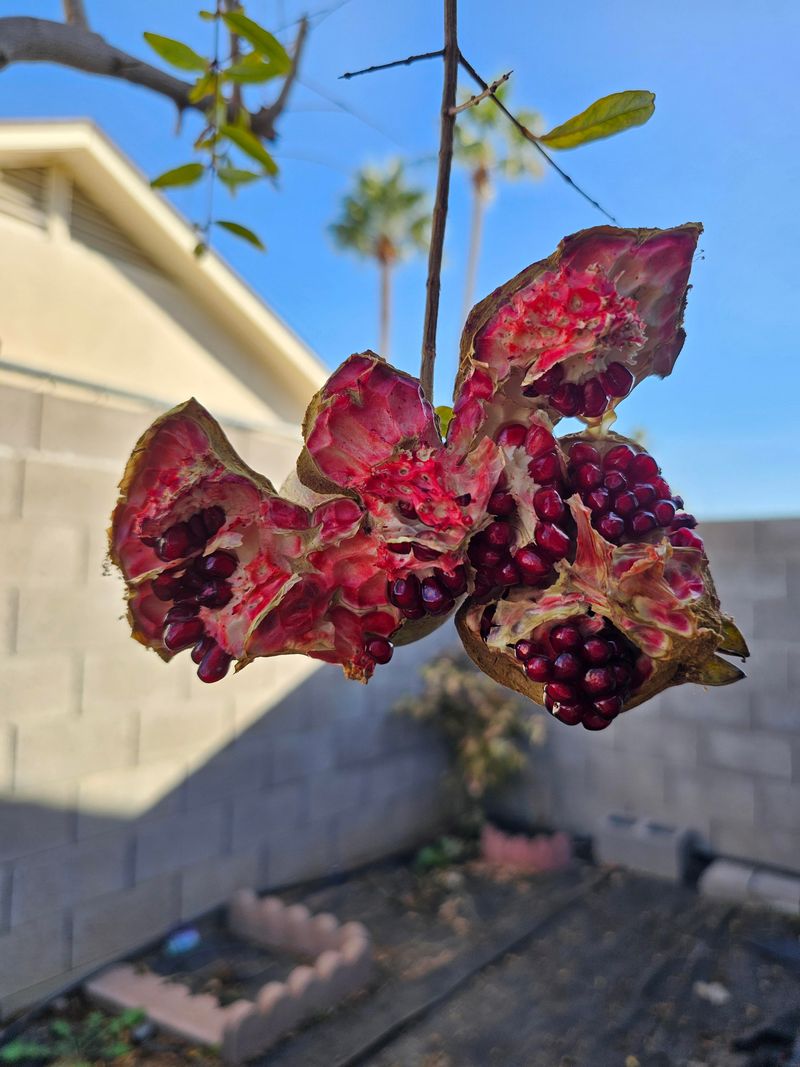
Timing your harvest matters more than most people realize. A pomegranate that stays on the tree too long after it is ready will almost always crack open on its own.
The fruit keeps taking in moisture from the tree, even after it has reached full ripeness. The arils inside get bigger and bigger until the skin simply cannot hold them anymore.
Knowing when to pick is a skill that gets easier with practice. A ripe pomegranate feels heavy for its size and has a slightly flat, squared-off shape on the sides rather than being perfectly round.
The skin often loses its bright shine and takes on a more matte look. Tap it gently and listen for that slightly hollow, metallic ring.
Leaving fruit on the tree past this point is one of the most common reasons backyard growers end up with cracked pomegranates. It can be tempting to wait, thinking the fruit will get even sweeter.
But once the signs of ripeness are there, picking promptly is the right move.
In warm growing regions, pomegranates typically ripen between late September and November. Check your fruit regularly during this window.
If a few begin to crack, that is actually a signal that the rest of the crop is very close to ready. Harvest those that are ripe right away and enjoy the full, sweet flavor you worked all season to grow.