Why California Rosemary Hedges Grow Leggy (And How To Keep Them Full)
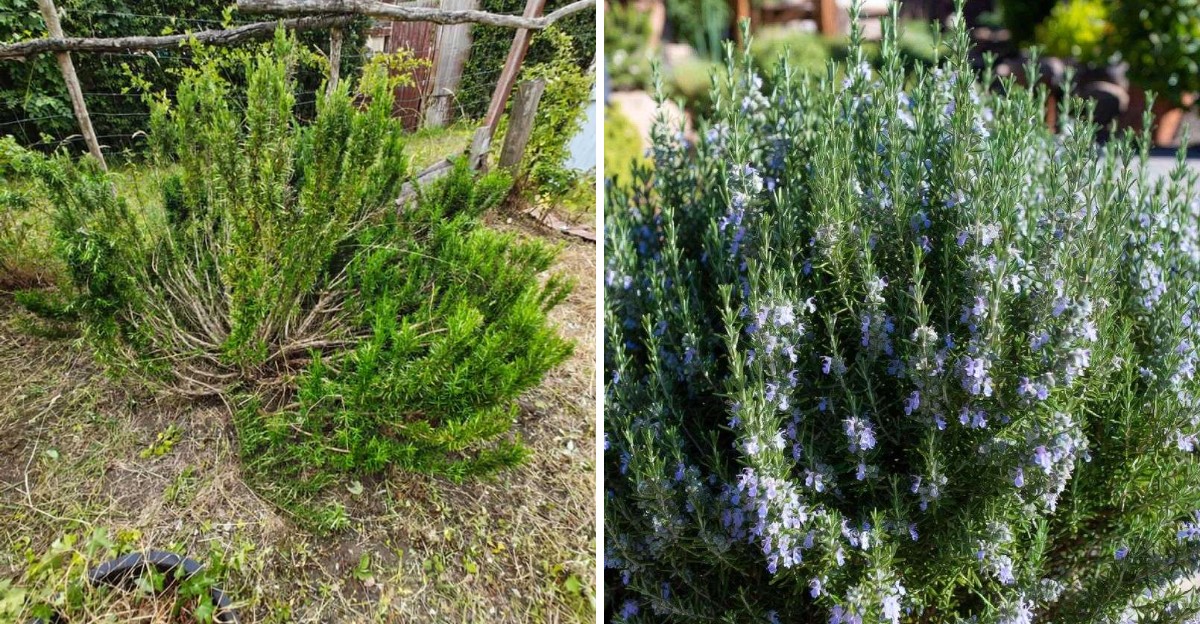
A few years ago, that rosemary hedge was thick, green, and full all the way down to the ground.
Now the bottom is a tangle of bare brown sticks, with all the leafy growth crammed on top like a messy hat nobody asked for.
This happens to a huge number of California gardeners, and the cause is usually simple once you know exactly what to look for.
The plant isn’t sick. It isn’t dying off or struggling with the wrong spot in the yard.
It’s just doing what every woody shrub eventually does when nobody steps in with a pair of shears at the right moments.
A few smart habits, applied consistently, can keep a hedge full, fragrant, and genuinely good looking for years instead of watching it slowly hollow out from the bottom.
1. Skipped Pruning Lets Stems Turn Woody
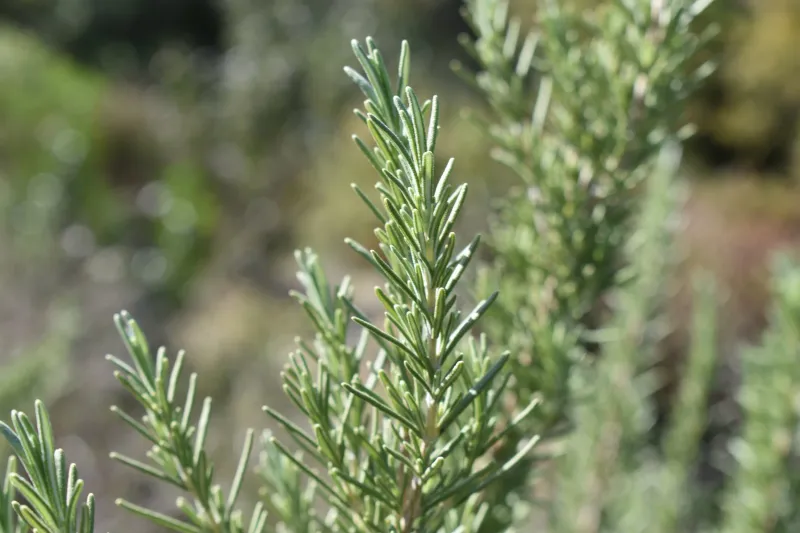
Rosemary behaves a bit like a tiny tree in a hurry, with every stem constantly stretching toward the sky. As it grows, the older lower parts slowly harden into brown, bark covered wood, a natural change that happens to every rosemary plant sooner or later.
Pruning is what slows that process down considerably. When soft tips get snipped off, the plant responds by sending out side shoots from buds lower on the stem, not unlike pinching a basil plant to encourage bushier growth.
Skip a season or two, though, and the story changes fast. Stems grow long and heavy, shading their own lower leaves until those leaves eventually drop off entirely.
What remains is a bare, twiggy base topped with a puff of green, a shape many gardeners simply call leggy.
California’s mild climate makes this happen faster than most people expect. In many coastal and valley areas, rosemary keeps growing for much of the year, so a few missed trims add up quickly without much warning.
UC Master Gardener programs describe rosemary as a woody shrub that benefits from regular trimming to stay tidy and full over time.
Think of each skipped pruning session as a small loan the plant takes out against its future shape. The longer the wait, the more green growth moves upward and away from the base permanently.
A quick trim now, even of just a few inches, saves a much bigger problem down the road later on.
2. Full Sun Keeps Growth Naturally Compact
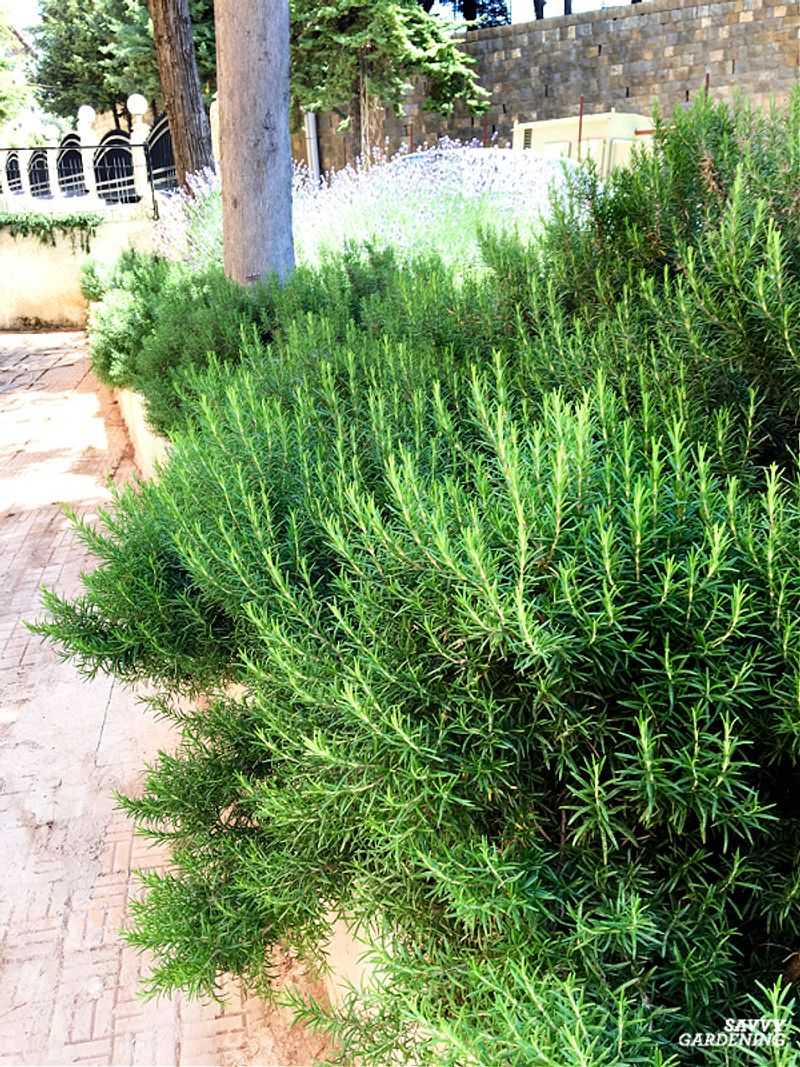
Rosemary grows wild on sunny, rocky hillsides around the Mediterranean Sea, and it still remembers that original home well. Give it six to eight hours of direct sun a day, and it tends to stay tight, bushy, and loaded with fragrant needles from top to bottom.
UC ANR guides list rosemary among plants that need full sun and well drained soil to perform at their best.
Shade works against all of that entirely. When light is weak, the plant stretches its stems farther apart as it reaches for brightness, a process gardeners call stretching that leaves bigger gaps between leaves along every branch.
Your California Garden Changes Every Week. Your Plan Should Too.
Gardening in California changes quickly throughout the season. Every Friday you’ll receive a simple weekly plan showing exactly what to plant, prune, fertilize, harvest, and protect so you never miss the right timing.
Sun also affects how the plant spends its energy day to day. Strong light helps rosemary build short, sturdy shoots with lots of leaves packed close together, while dimmer spots push growth that turns soft, thin, and floppy.
That kind of growth makes the hedge look open and weak rather than dense and healthy.
A simple test works well here. Walk past the hedge at different times of day, and notice where shadows fall from trees, fences, or the house itself.
If part of the hedge sits in shade for most of the afternoon, that section will likely end up the sparsest one over time.
Planting location matters most at the very start, since rosemary doesn’t love being moved once established. Choose the brightest open spot available, and skip heavy watering and rich fertilizer too, since extra nitrogen pushes fast, lanky growth instead of compact stems.
3. Shear Lightly Right After Each Bloom

Those tiny blue flowers act as a signal, and not just for the bees working them. Once a flush of blooms fades, rosemary is genuinely ready for a haircut, and trimming right after flowering lets you shape the plant without cutting off next season’s buds.
In much of California, rosemary blooms heavily in late winter and spring, with some plants flowering on and off through much of the year.
The best rhythm stays simple: when a round of flowers finishes, grab the shears and get to work. Light trimming after bloom is a common recommendation from UC Master Gardeners, though exact timing can vary somewhat by variety and region.
Light means exactly that and nothing more. Remove only the top one to two inches of soft, green growth, or roughly the newest growth accumulated since the last trim.
Always cut where leaves still remain below the cut point, since those leafy areas hold the buds that will actually sprout new growth.
A good rule many gardeners follow is never removing more than about a third of the green foliage at any one time. Taking too much stresses the plant considerably, especially during hot weather stretches.
Avoid heavy shearing at the peak of summer heat or right before a frost, when tender new shoots could get damaged badly.
Sharp, clean hand shears or hedge clippers work best for this job. Dull blades crush stems instead of slicing them cleanly, which can invite disease into the wound afterward.
4. Cutting Into Bare Wood Rarely Helps
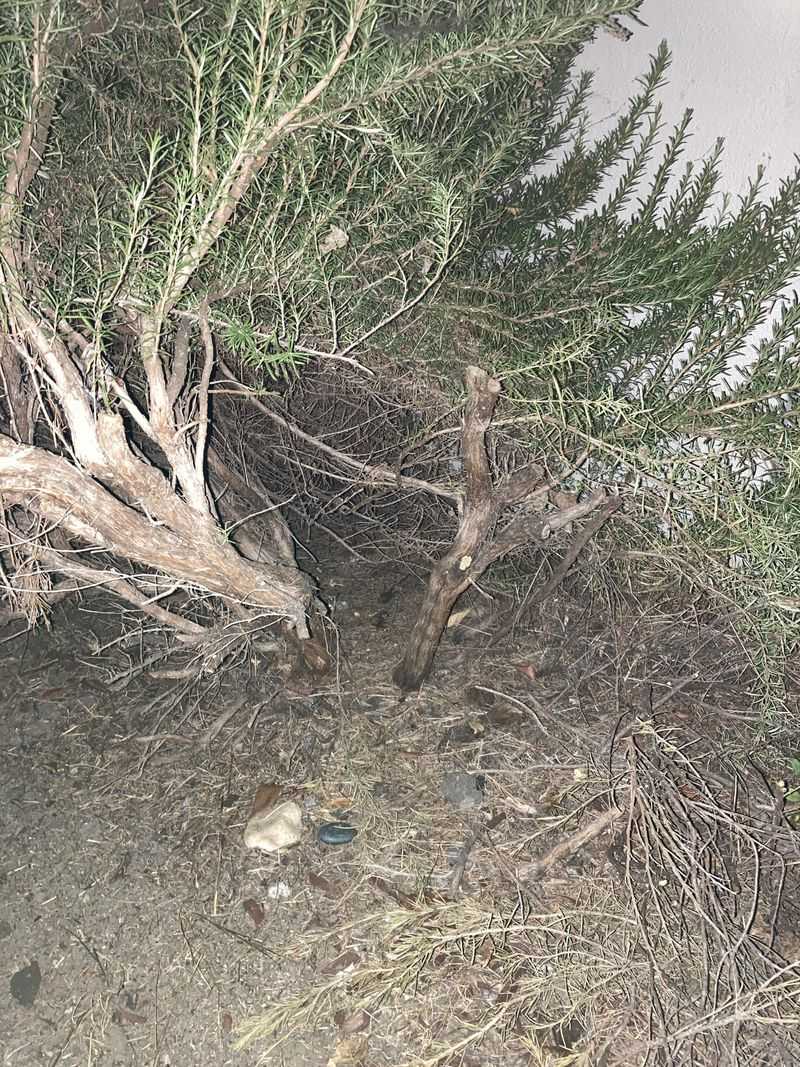
Here’s the hard truth that many gardening tips skip over entirely. Cutting a rosemary stem back into the old, brown, leafless part often means it just sits there and never grows again.
Unlike some shrubs, rosemary usually doesn’t wake up sleeping buds on bare old wood very well at all.
New shoots come from buds, and on rosemary, the healthy active buds are mostly found where leaves are still growing or recently grew nearby. Once a section has been bare and woody for years, those buds may be gone entirely or too weak to sprout.
Some gardeners report success with hard cutbacks, and results genuinely vary with plant age, health, and variety. Treat those stories carefully, since a hard cut is more of a gamble than a sure fix for a struggling hedge.
UC ANR guidance generally warns against cutting rosemary back into old wood without any foliage remaining.
If a hedge is already woody, a gentler plan works better. Cut each stem back only to a point where some green leaves remain, and spread the work over a full season or two rather than rushing it.
Watch for new growth before cutting further into the plant.
Sometimes the most honest answer is replacement rather than rescue. A very old, mostly bare hedge may look better and fill in faster with young rosemary planted fresh, paired with a good trimming habit started from day one.
5. Uneven Light Causes One Sided Growth
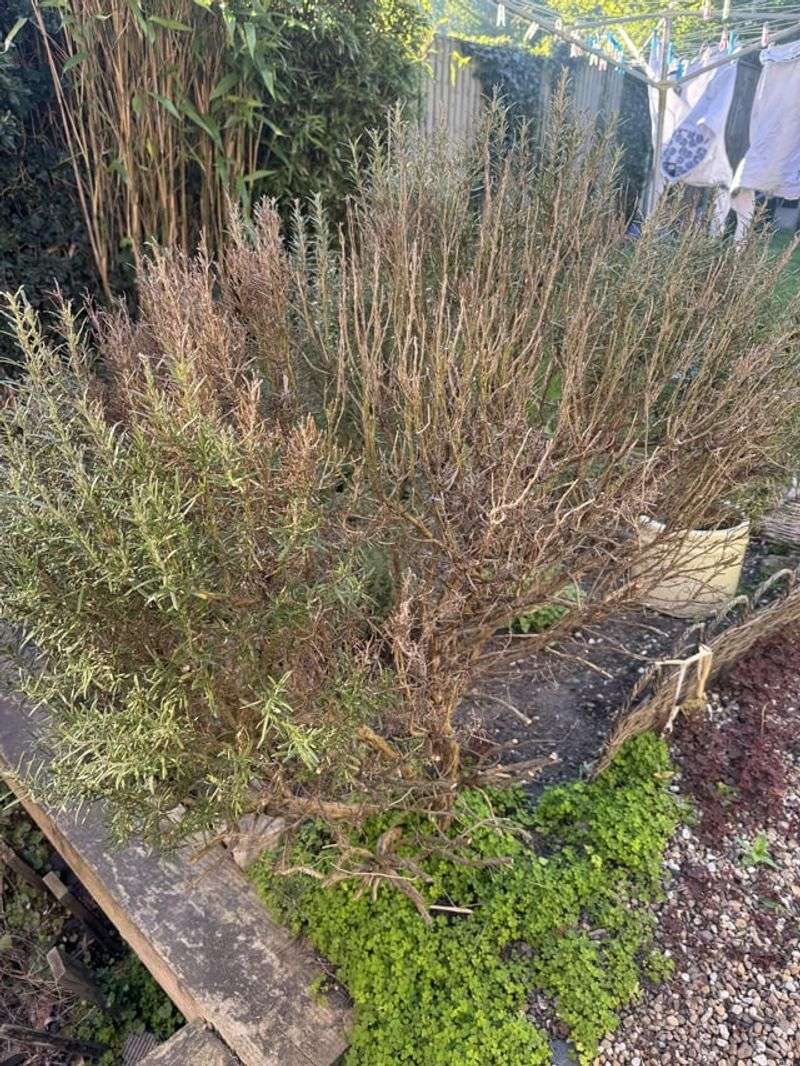
Ever notice a hedge that looks like it’s leaning away from the house, almost like it wants to escape entirely. That lopsided look usually traces back to light, since plants grow more strongly on whichever side gets the most sun.
A rosemary hedge along a fence, wall, or tall tree often gets bright sun on one face and shade on the other. The sunny side grows thick and leafy, while the shady side thins out and turns woody considerably faster.
Over time, the whole hedge can tilt or bulge noticeably toward the light source.
Long hedges have another quirk worth watching for. One end may sit in full sun while the other end hides under a neighbor’s oak or a shady corner of the house nearby.
That’s why a hedge can look lush on one side and sparse on the other, even though every plant started out identical when first planted.
The shade itself can’t always move, but the response to it can. Trim back branches from nearby trees where possible, and keep taller plants from crowding the hedge unnecessarily.
When shearing, trim the sunny, fast growing side a little more so the shaded side gets a chance to catch up in shape over time.
Shape helps considerably too. Many hedge experts suggest keeping the base slightly wider than the top, since a hedge wider at the top ends up shading its own bottom, which speeds up legginess.
6. Regular Light Trims Beat One Big Cutback
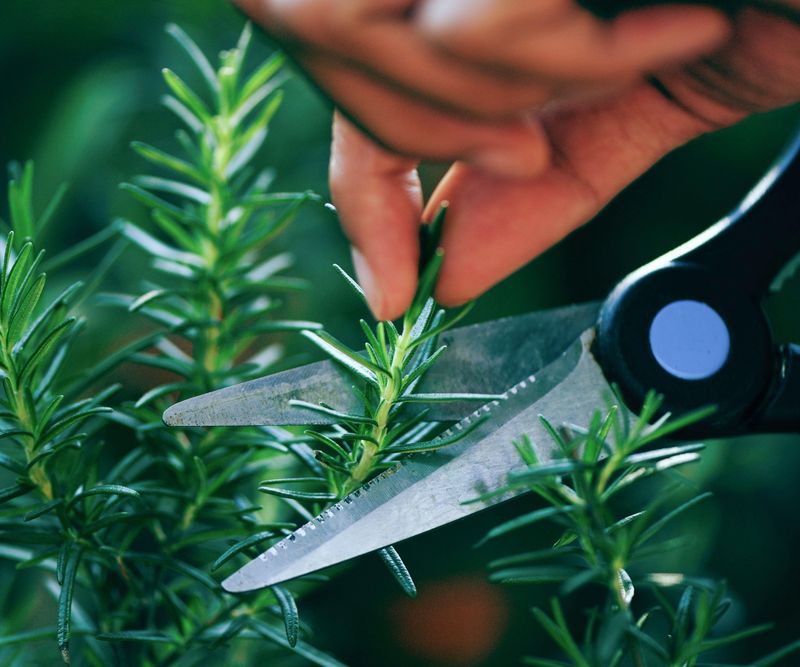
Consider the difference between a small trim every few weeks and one dramatic cutback once a year. The small trims keep things neat and manageable, while the big cutback comes as a genuine shock to the plant.
Rosemary feels much the same way about pruning as most people would about that comparison.
Frequent light trims keep cuts inside the green, leafy part of the plant, right where new shoots can actually grow back. Each cut makes stems branch, and those branches branch again the next time around.
After a few rounds of this, the hedge becomes genuinely dense, like a thick carpet of needles covering every inch.
A hard cutback, on the other hand, often reaches down into older wood that won’t respond well. As covered earlier, that bare wood may not sprout at all, leaving holes and dead stubs scattered through the hedge.
Even when it does regrow eventually, the plant spends considerable energy recovering instead of filling in evenly across the whole shape.
Light trimming is also considerably easier on the gardener doing the work. A few minutes with hand shears after each bloom beats a full weekend battling overgrown, woody branches by a wide margin.
It also means fewer piles of woody debris heading to the green waste bin afterward.
A practical routine works well here. After each main bloom, shear off the soft tips, then pinch or snip any stray shoots poking out of shape in between rounds.
7. Consistency Each Year Prevents Legginess
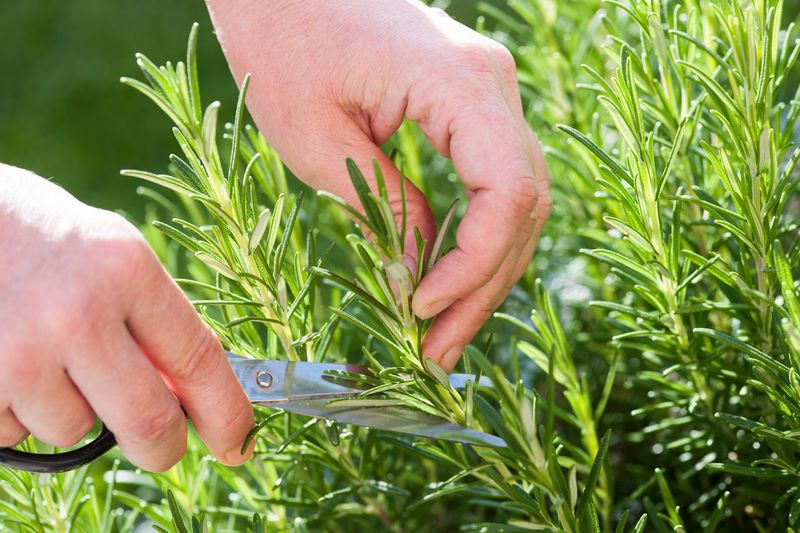
Gardeners who grow the fullest rosemary hedges are rarely doing anything particularly fancy or complicated. Their secret stays boring but genuinely powerful: they trim a little, often, every single year without fail.
Rosemary never stops wanting to turn woody, so the pruning routine never really stops either.
Consistency matters because legginess develops slowly over time. A hedge won’t go bare in one single month, but instead creeps toward that state over two or three seasons of missed trims.
By the time the problem becomes obvious, much of the lower growth may already be gone for good.
A simple yearly calendar helps considerably with staying on track. Set a reminder for a trim after the spring bloom, another after any later flowering, and a quick shape check in early fall each year.
Skip heavy cuts during the hottest summer weeks and during any frost periods.
Starting the habit early matters too, since young plants trained from their first year stay full at the base much longer than plants left alone until they already look messy. Even with perfect care, most rosemary slowly ages regardless.
Many gardeners replace plants after several years, though lifespan genuinely varies by growing conditions and care.
Keeping notes along the way helps build a real sense of the hedge’s own rhythm. Write down when it bloomed, when trimming happened, and how the plant responded each time.
8. Companion Plants Can Steal The Light
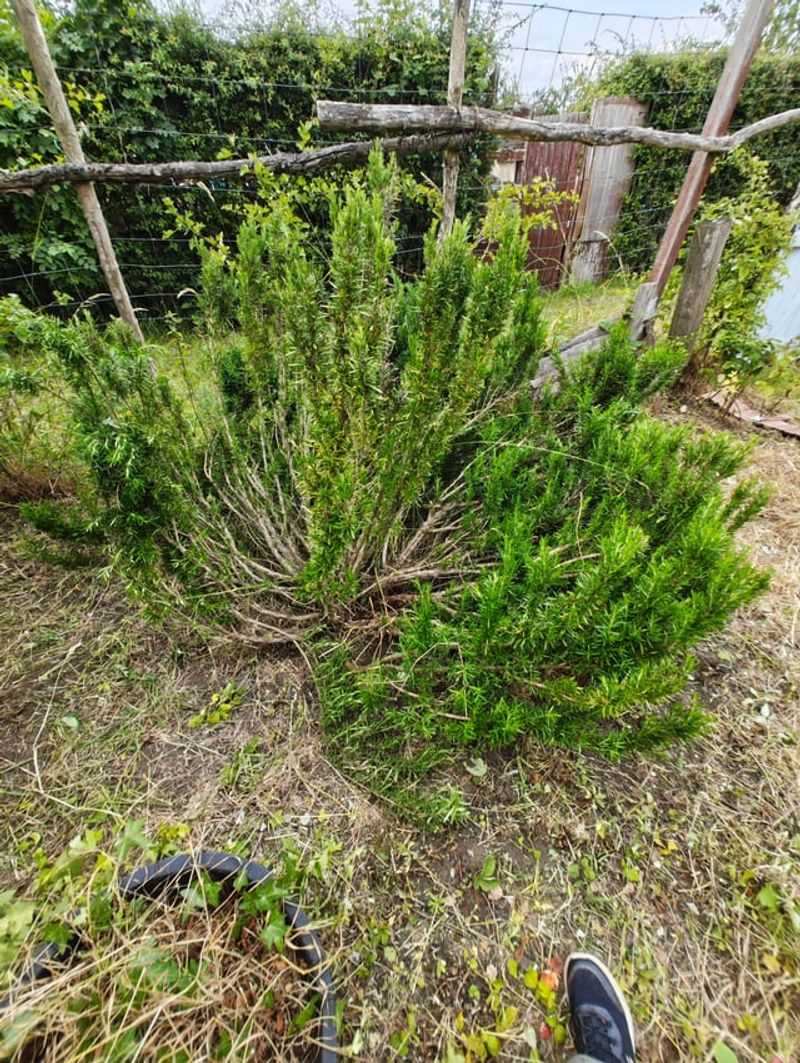
A rosemary hedge doesn’t exist in isolation, and whatever grows nearby often plays a bigger role in legginess than most gardeners realize.
Fast growing neighbors like a spreading bougainvillea, an unpruned citrus tree, or even an ambitious ornamental grass can slowly creep into the space rosemary depends on for full sun.
The change happens so gradually that it’s easy to miss entirely. A hedge planted five years ago in wide open sun might now sit partly shaded by a tree that’s simply grown taller and wider in that same stretch of time.
Rosemary responds to that shift exactly the way it responds to any other light reduction, stretching and thinning wherever the shade falls heaviest across the hedge.
Walking the property once a season with this specific question in mind pays off considerably. Has anything nearby grown enough to start blocking afternoon sun from reaching part of the hedge that used to get it freely.
Trees and larger shrubs benefit from regular pruning of their own for exactly this reason, keeping their canopy from slowly encroaching on lower growing plants nearby.
Spacing matters just as much at planting time, long before any competition becomes a real problem.
Give rosemary enough distance from anything that will eventually grow tall, generally several feet at minimum depending on the mature size of whatever’s planted nearby.
Raised beds or containers offer one more option worth considering. Lifting rosemary above ground level and away from encroaching neighbors keeps the light access more predictable and considerably easier to manage over the years ahead.