Why Florida Crape Myrtles Get A Sticky Black Coating By Late Summer
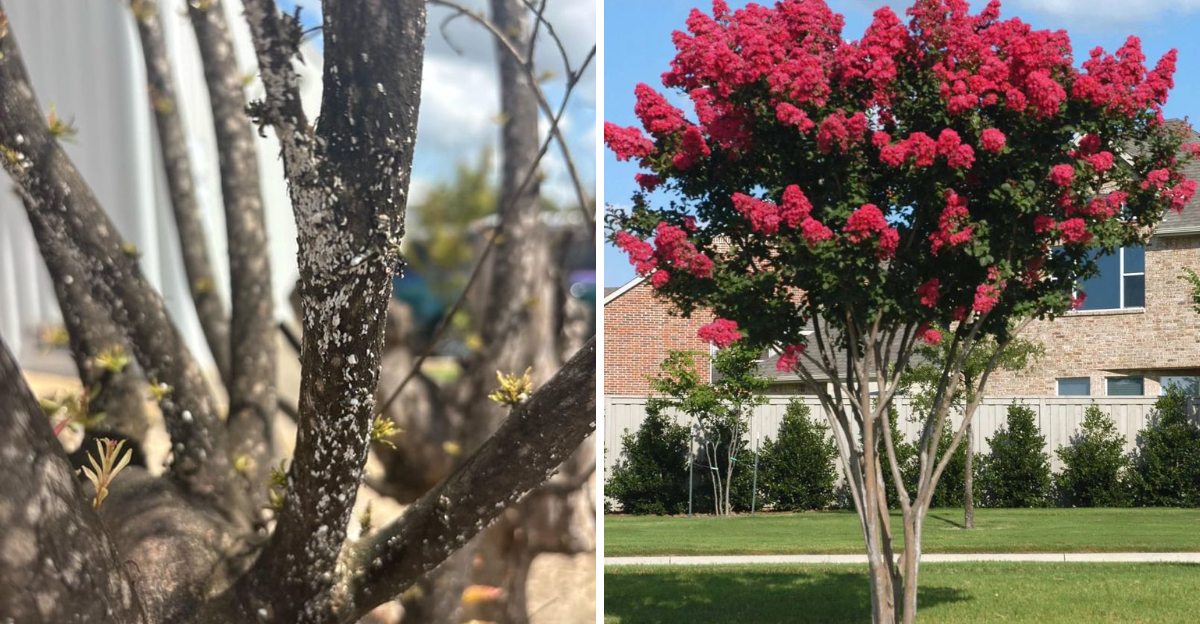
That sticky black coating creeping across your Florida crape myrtle didn’t come from dirt, mold, or anything in the air. Look closer at the leaves and stems and you’ll usually find the actual cause still sitting there, small and easy to miss if you’re not looking for it.
That coating shows up as a direct result of something else happening on the tree, not as the problem itself.
Late summer heat and humidity push the real cause into overdrive, which explains why this shows up like clockwork on so many Florida crape myrtles around the same time every year.
Scrubbing the bark treats the symptom and leaves the actual source untouched. Your crape myrtle’s sticky coating is telling you something, and it has nothing to do with cleaning.
1. That Black Coating Is Growing On Something Sticky
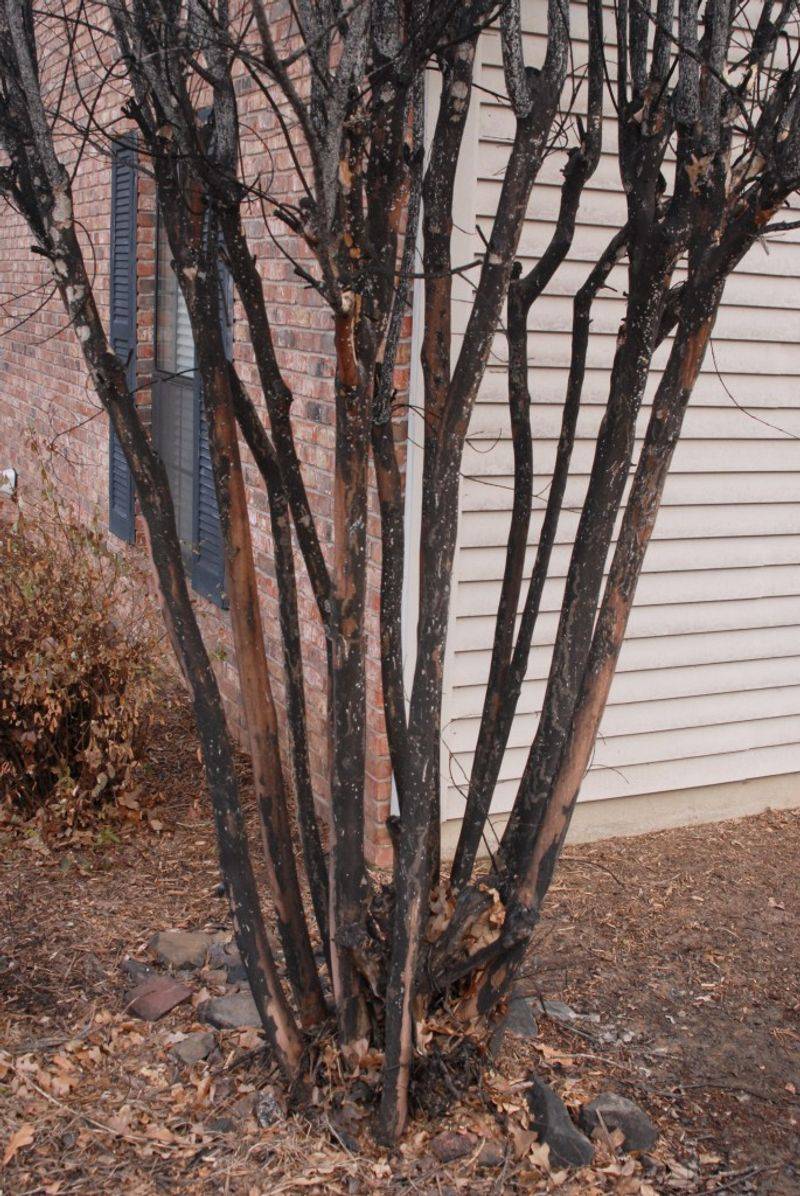
Sticky leaves are usually the first clue something is off. Before that unmistakable black coating ever appears, a sugary liquid called honeydew has already been collecting on every surface below the canopy.
Honeydew is produced by sap-feeding insects as a byproduct of their feeding. It drips onto leaves, twigs, patio furniture, parked cars, and sidewalks.
Sooty mold is the black coating that follows. It is a group of fungi that colonize the honeydew as a food source.
The mold is not boring into bark or invading healthy leaf tissue. It is simply growing on top of the sugary film left behind by insects above.
Calling it a leaf disease would be misleading. Sooty mold does not spread from plant to plant the way a true leaf pathogen does.
It spreads where honeydew lands. That is why you might see it coating a garden bench sitting beneath the tree just as heavily as the lowest branches.
Separating the black coating from its actual cause matters for two reasons. Scrubbing the mold off a leaf does not stop fresh honeydew from landing on that same leaf tomorrow.
And blaming the tree itself for producing the problem sends a homeowner looking in entirely the wrong direction. The mold is the visible result, but the insects producing the honeydew are where the real story begins.
2. Crape Myrtle Aphids Are Usually Behind The Mess
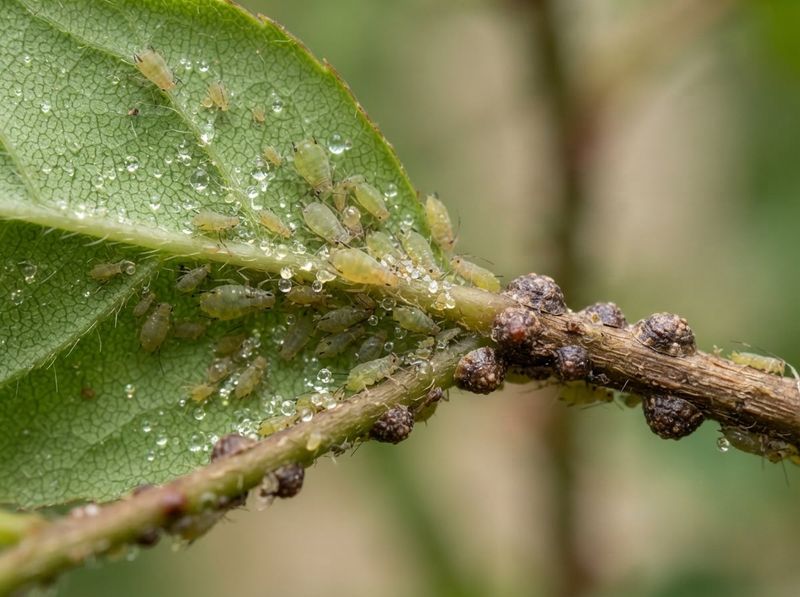
Soft, pale, and barely the size of a sesame seed, crape myrtle aphids are easy to overlook until the damage they leave behind becomes impossible to ignore. According to University of Florida IFAS Extension, the crape myrtle aphid is specific to crape myrtles.
It can remain active from late spring through the growing season. They feed by piercing tender leaf tissue and drawing out plant sap.
Homeowners often spot the sticky leaves or black mold long before they ever notice the aphids themselves. That is partly because aphids tend to cluster on new growth and the undersides of leaves, staying out of easy view.
A quick flip of a leaf near the branch tips often reveals them grouped together in pale yellow-green clusters.
Not every blackened crape myrtle has an aphid infestation. Other sap-feeding insects can produce honeydew too, and the mold alone does not confirm which pest is responsible.
Your Florida Garden Changes Every Week. Your Plan Should Too.
Gardening in Florida changes quickly throughout the season. Every Friday you’ll receive a simple weekly plan showing exactly what to plant, prune, fertilize, harvest, and protect so you never miss the right timing.
Checking the actual foliage is the only reliable way to know.
Aphids are such a common explanation for this problem because crape myrtles are their preferred host. A single tree can support large populations through the summer months.
The more aphids feeding, the more honeydew falls, and the more surface area sooty mold has to colonize as the season moves forward.
3. Late Summer Gives Honeydew Time To Build Up
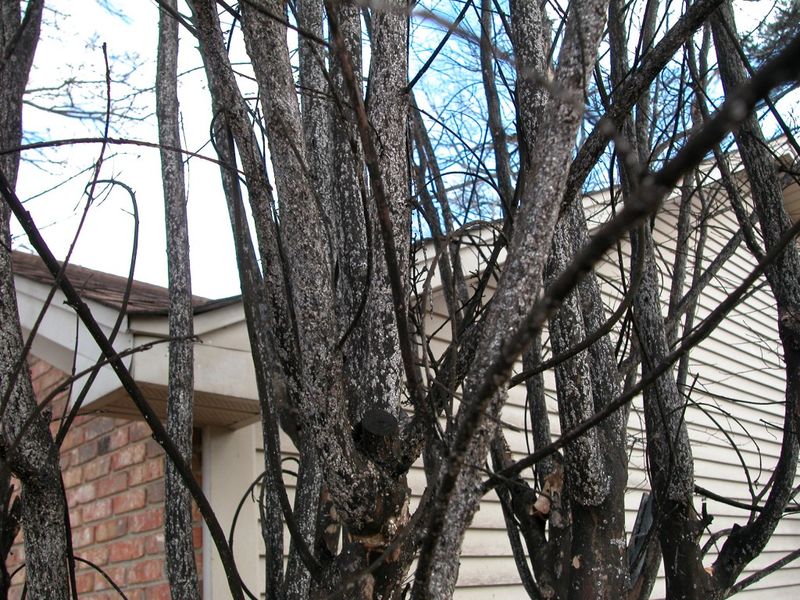
Noticing the black coating in August does not mean something new started happening in August. Sap-feeding insects may have been active since late spring, quietly depositing honeydew week after week.
By late summer, that cumulative buildup has had months to thicken and spread across more of the canopy.
Sooty mold colonizes honeydew progressively. Early in the season, deposits may be light enough that the mold barely registers.
As feeding continues and more honeydew accumulates on leaves, twigs, and bark, the mold finds more surface area to grow across. What looked like a faint dusty smudge in June can look like a full black coating by late July or August.
Late summer heat and humidity in Florida also create conditions where mold can persist on surfaces longer between rain events. A dry stretch gives the honeydew time to concentrate before it is washed away.
That means the visible problem can intensify even if the insect population itself has not dramatically increased.
Recognizing this buildup pattern helps homeowners avoid misreading the timing. The late summer appearance is not the start of a new problem.
It is the accumulated result of a season of insect activity finally reaching a visible tipping point. Addressing the issue earlier in the season, before heavy deposits form, makes management considerably more straightforward.
4. Ants Crawling Up The Trunk Can Give The Problem Away
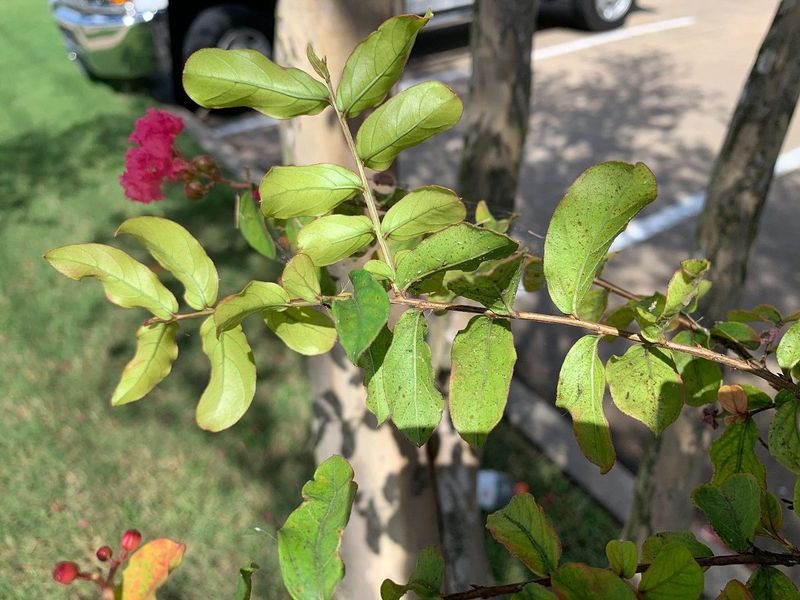
Spot a steady line of ants marching up a crape myrtle trunk and that is worth a closer look. Ants are strongly attracted to honeydew, and trees with active sap-feeding insect populations often become regular stops on their foraging routes.
Heavy ant traffic on the bark is a practical signal that something above is producing a sugary food source.
Some ant species actually protect aphid colonies from predators in exchange for access to honeydew. They will chase away or interfere with beneficial insects that would otherwise help reduce aphid numbers naturally.
This relationship can allow aphid populations to grow larger than they might without ant activity nearby.
Ants are a clue, not a diagnosis. Seeing ants on the trunk means it is worth inspecting the leaves, new shoots, and branch crotches for the insect actually producing the honeydew.
That inspection might reveal aphids, scale insects, or possibly another sap-feeder. The ants themselves are not causing the black coating.
Checking for ants is a practical first step when a homeowner suspects something is wrong but has not spotted any obvious insects yet.
If ants are present in noticeable numbers and the foliage feels sticky, the next move is a careful look at the undersides of leaves and tender growth tips.
The pest responsible is usually not far from where the ants are heading.
5. White Crusty Spots Point To A Different Sap Feeder
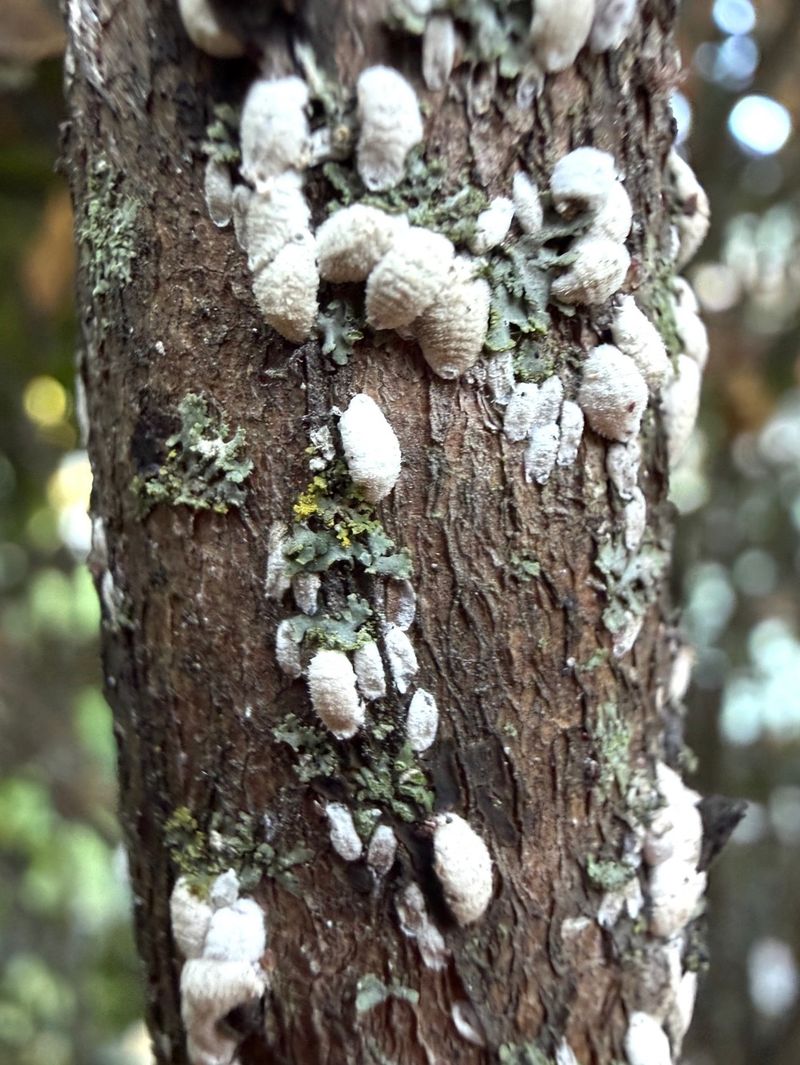
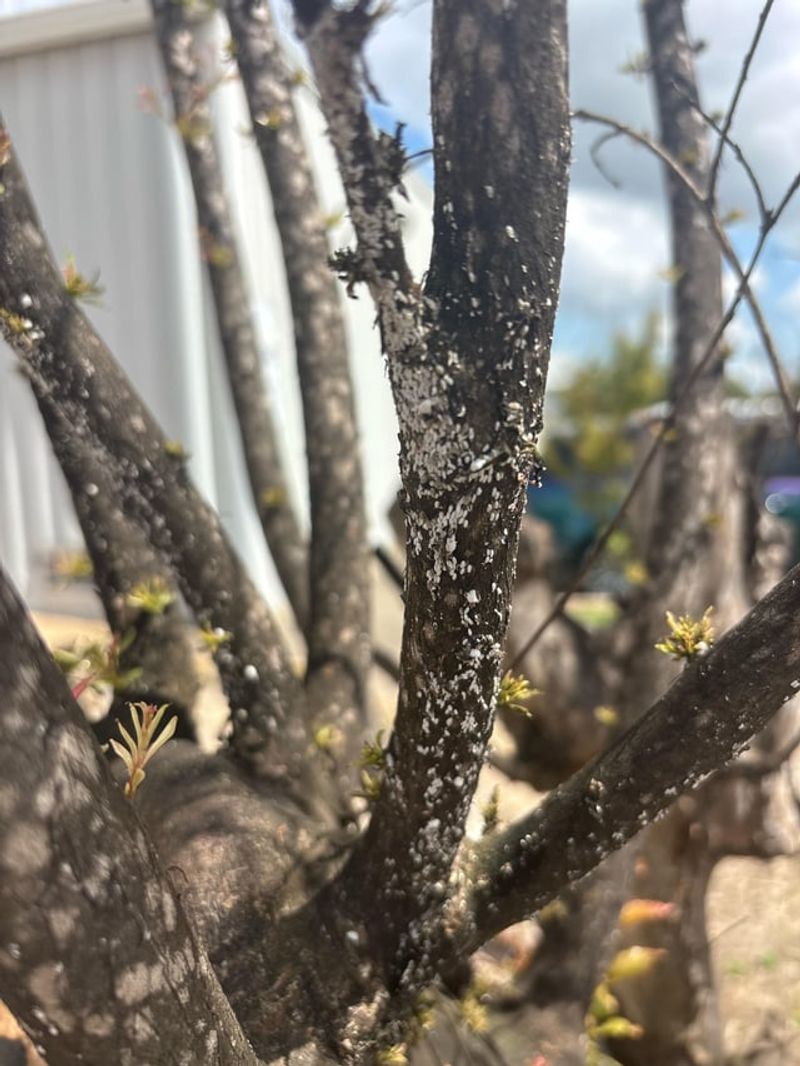
White or grayish crusty patches on the bark are a different story than aphids. Crape myrtle bark scale is an introduced pest that has been spreading in parts of the southeastern United States, including portions of Florida.
According to UF/IFAS guidance, this scale insect produces a white to gray waxy coating and tends to cluster on the bark, especially in branch crotches and on older wood.
Like aphids, bark scale feeds on plant sap and produces honeydew. That honeydew supports sooty mold growth, so the black coating that follows a bark scale infestation can look similar to what aphids cause.
The key visual difference is in the pest itself. Aphids are soft-bodied and found on leaf undersides and new growth.
Bark scale forms hard, waxy encrustations directly on the bark.
Correctly identifying which pest is present matters before choosing any management approach. A treatment aimed at soft-bodied aphids may not be appropriate or effective against armored or soft scale insects.
Misidentification wastes time and resources and leaves the actual pest undisturbed.
Bark scale is not equally established across every part of the state, and its spread is still being monitored. Homeowners who find white crusty material on the bark should contact their local UF/IFAS Extension office before taking action.
Extension staff can provide current identification guidance and regionally appropriate management recommendations.
6. The Black Mold Looks Worse Than It Usually Is
Standing beneath a Florida crape myrtle draped in black can feel alarming. The coating looks severe, and it is natural to assume the tree is in serious trouble.
For most cases, though, sooty mold is primarily a cosmetic problem. It grows on honeydew deposited on the outside of leaves and bark rather than invading living plant tissue from within.
That said, very heavy mold coverage is not completely harmless. A thick black layer across a large portion of the leaf surface can reduce the amount of sunlight reaching the leaf cells below.
Less light means reduced photosynthesis. A moderately affected tree can usually compensate, but a tree with most of its canopy blackened over an extended period faces more stress than one with minor deposits.
Sooty mold is best understood as a signal rather than the primary threat. Its presence tells you that honeydew has been falling somewhere above, which means a sap-feeding insect is likely active in the canopy.
The mold itself is pointing toward a problem that needs to be located and assessed.
Ignoring a heavily coated tree because the mold is not directly attacking tissue would be missing the point. The coating is evidence of ongoing insect activity.
Addressing that activity is what eventually reduces the mold, because once the honeydew supply slows down, the mold loses the food source it depends on to keep spreading.
7. Spraying The Black Coating Misses The Real Problem
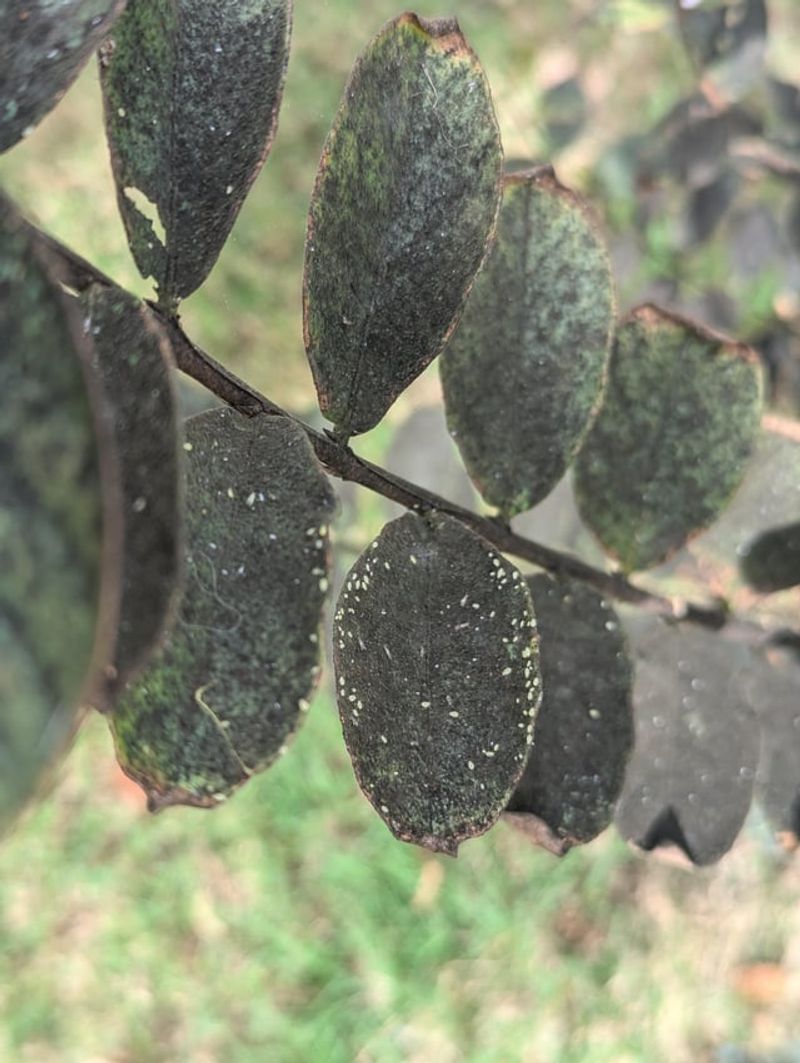
Reaching for a spray bottle aimed at the black coating is an understandable first move, but it addresses the symptom rather than the source. Washing or treating the mold on leaves does not stop fresh honeydew from landing on those same leaves the next day.
As long as sap-feeding insects remain active above, the cycle continues regardless of what is applied to the mold itself.
A better first step is a careful inspection of the tree. Check the undersides of leaves, especially near new growth and branch tips.
Look at bark surfaces and branch crotches for any white, waxy, or crusty material. Examine tender shoots for clusters of small soft-bodied insects.
Identifying what is actually present shapes every decision that follows.
Beneficial insects are worth considering before any treatment. Ladybugs, lacewings, and parasitic wasps can help suppress aphid populations naturally.
Broad insecticide applications can reduce these natural enemies along with the target pest, which sometimes makes the problem worse over the following season.
UF/IFAS integrated pest management guidance emphasizes using the least disruptive approach appropriate to the pest and severity.
Treatment decisions should be based on pest identity, population size, and the overall health of the tree. A light aphid presence on an otherwise healthy tree may not need intervention beyond monitoring.
A heavy infestation, especially one involving bark scale, warrants a closer look at targeted, evidence-based options rather than a broad chemical response.
8. Stop The Honeydew And The Black Coating Loses Its Fuel
Sticky sidewalks, blackened branches, and trails of ants all point back to the same source. A sap-feeding insect is producing honeydew somewhere in the canopy.
Managing that insect is the step that breaks the cycle. Sooty mold cannot keep spreading once its food supply slows down or stops arriving on leaf surfaces.
Aphids and bark scale follow different life cycles and respond to different management approaches. Aphid populations can sometimes be reduced with a strong spray of water that dislodges them from foliage.
Beneficial insects already present in the landscape can also help. Bark scale typically requires a more targeted treatment approach.
UF/IFAS Extension resources can help homeowners choose an appropriate method for their region.
Ants protecting aphid colonies add another layer to consider. Reducing ant access to the canopy can allow natural predators more opportunity to work.
Some homeowners use sticky barriers on trunks to interrupt ant movement, which can shift the balance toward beneficial insects over time.
Once fresh honeydew production drops, existing mold deposits may weather away gradually with rain and time. The coating will not vanish overnight, and patience is part of the process.
The central point is the same regardless of which pest is involved. The black coating is only the visible symptom; the sap-feeding insects producing honeydew are the real problem to address.