Why Florida Ficus Hedges Suddenly Become Sticky and Thin
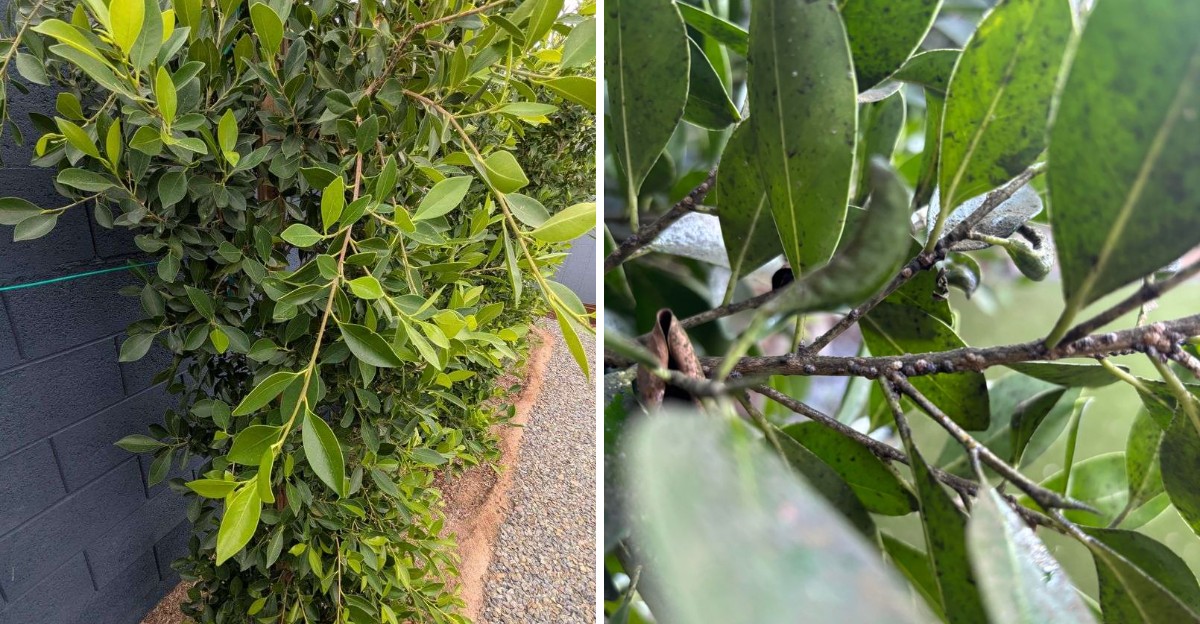
A bug smaller than a sesame seed can strip a ten-foot privacy hedge nearly bare in a few weeks. I find that wild, and so do plenty of homeowners who wake up to a see-through hedge.
The first clue is often underfoot. Patio chairs, car hoods, and sidewalks get a shiny, tacky film that feels like spilled soda. Then the leaves start dropping in yellow piles you can rake every morning.
Here’s something worth knowing about Florida yards. Many of the tall green walls lining streets and pool cages are planted with one popular tropical tree, and a tiny invader found it years ago.
You may be living next to the problem without realizing it.
So what turns a lush, private hedge into a sticky, thin mess? The answer hides under the leaves, and it can be managed once you know where to look.
1. That Shiny Film on Ficus Leaves Is a Clue From Hidden Bugs
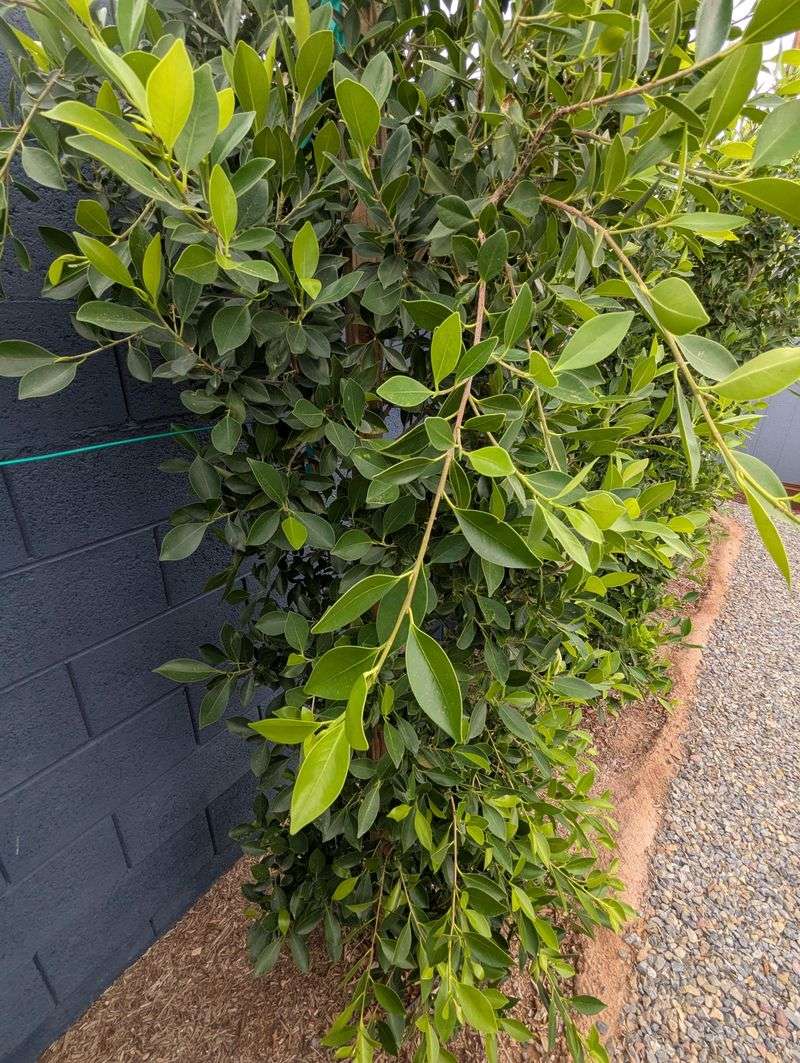
Run your fingers over a leaf and feel that tacky gloss. That stuff is honeydew, a sugary liquid that sap-sucking insects release as they feed.
The bugs drink far more plant sap than they can use. They pass the extra sugar as waste, and it rains down on leaves, cars, pool decks, and outdoor furniture.
Ants often show up next, marching up and down the trunk to collect the sweet treat.
Give it a little time, and a black, powdery coating may appear. That coating is sooty mold, a fungus that grows on the honeydew rather than on the plant itself.
It does not feed on your ficus, but it can block sunlight from reaching the leaves.
Less light means less food made through photosynthesis. A hedge already losing sap to pests now has a harder time making energy too.
You can see why the plant starts looking tired so quickly.
I like to think of honeydew as a smoke alarm. The sticky film itself is a symptom, not the true cause.
Wiping it off helps a little, yet the real fix means finding the hungry insects hiding nearby.
2. Ficus Whiteflies Are Usually Behind the Sudden Leaf Drop
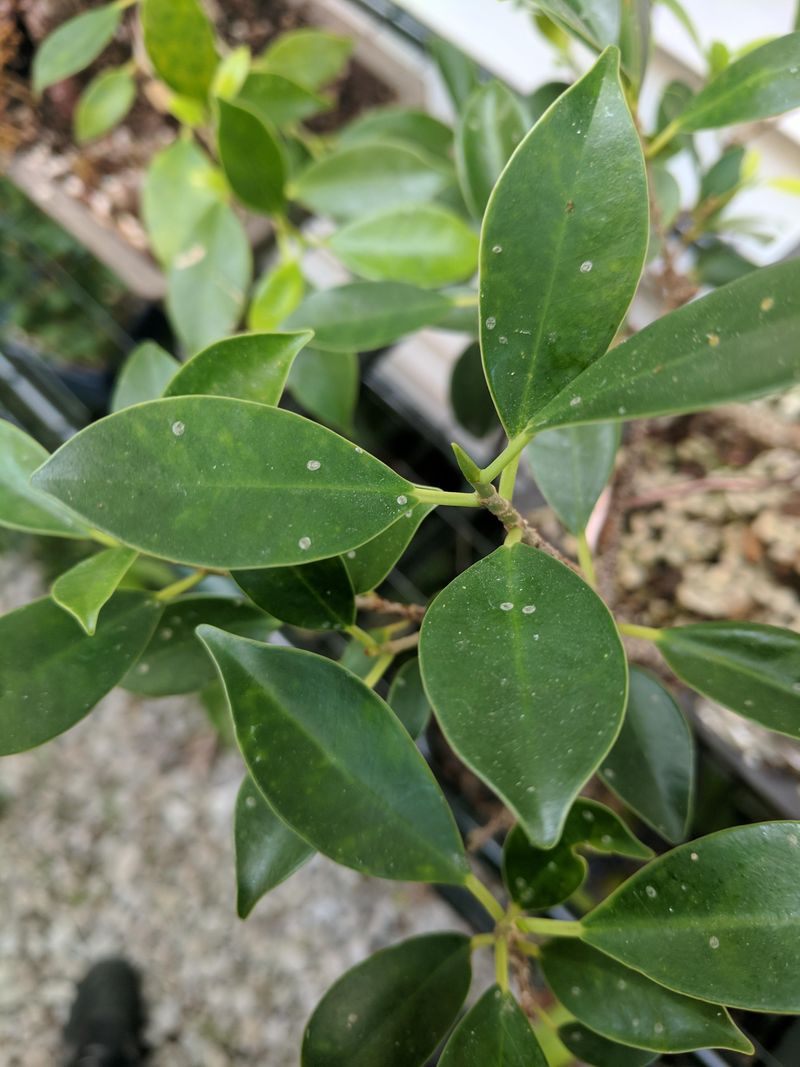
Back in 2007, a small pest called the ficus whitefly was found in Miami-Dade County. Its scientific name is Singhiella simplex, and it has since spread across much of South and Central Florida.
According to University of Florida IFAS Extension, this insect feeds mainly on ficus plants. Weeping fig, Ficus benjamina, is the hedge plant hit hardest, and it is the one most people grow as tall privacy screens.
Other ficus types can be affected as well.
Adults and young whiteflies sit on leaf undersides and pull sap with needle-like mouthparts. A heavy crowd drains the plant fast.
Leaves turn yellow and fall, sometimes in huge numbers, which is why a thick hedge can look see-through almost overnight.
Many homeowners describe the change as sudden. In reality, the population often builds quietly for weeks before the leaf drop becomes obvious.
Not every sticky hedge has whiteflies, of course. Still, if you live in a warm part of the state and your weeping fig hedge is shedding leaves while dripping honeydew, this pest should top your suspect list.
Checking leaf undersides is your best first move.
3. Flip a Ficus Leaf Over to Spot Whiteflies and Their Pupae
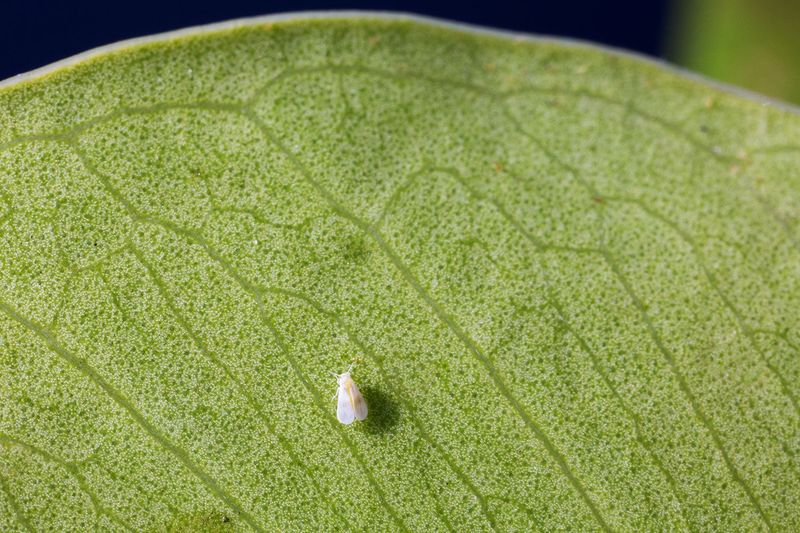
Grab a branch and give it a gentle shake. If a puff of tiny white specks flutters out, you have probably found adult whiteflies.
The adults are roughly 1.5 millimeters long, with a faint dark band across their white wings. They look like flecks of dandruff with wings, and they settle back down within seconds.
Now turn a few leaves over. Look for flat, oval, see-through scales stuck to the surface.
These are nymphs, the young stage, and they stay put while they feed. You may also find empty pupal cases with a small T-shaped split where an adult popped out.
A cheap hand lens makes this job much easier. I keep one in my garden apron because so many leaf problems hide on the underside.
Check several spots around the hedge, including the inner, shadier branches. Write down what you see and when, since that record helps you decide whether treatment is working later.
Fallen leaves on the ground can also carry nymphs, so peek at those too.
4. Little Brown Bumps on Ficus Stems Could Mean Scale Insects
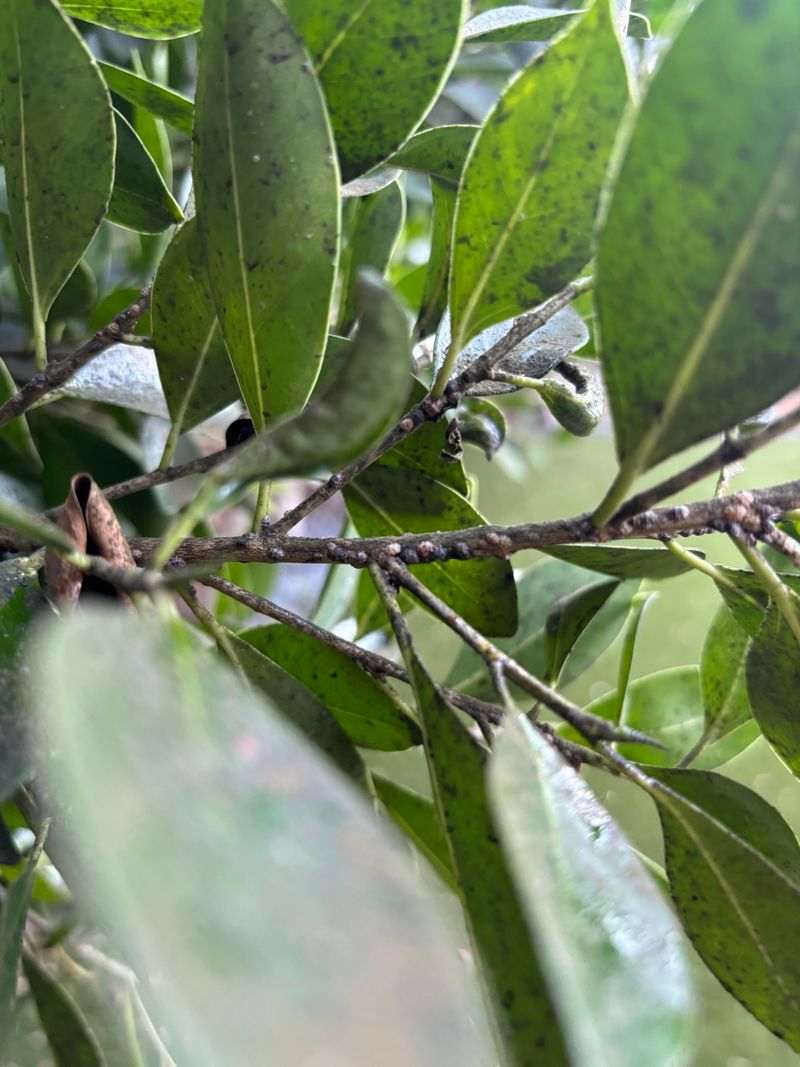
Some pests are masters of disguise. Scale insects look like tiny brown, tan, or white bumps glued to stems and leaf veins, and many gardeners mistake them for part of the bark.
Soft scales are especially good at making honeydew, so they can cause the same sticky mess as whiteflies. Mealybugs, which look like small cottony tufts, may join the party in shaded, crowded growth.
Aphids sometimes feed on tender new shoots too.
Try this simple test. Scrape a bump gently with your fingernail.
If it pops off and leaves a smear or a little hollow shell, you are looking at scale.
Scale tends to cause slower decline than a heavy whitefly attack. You may notice yellowing leaves, weak twigs, and branch tips that thin out rather than a sudden leaf storm.
Still, a big population can weaken a hedge over time.
Knowing which pest you have matters because timing and products differ. If you are unsure, snap clear photos or bag a few leaves and take them to your county UF/IFAS Extension office.
Staff there can often help identify the culprit at no cost.
5. A Strong Hose Spray and Soap Can Calm a Light Ficus Infestation
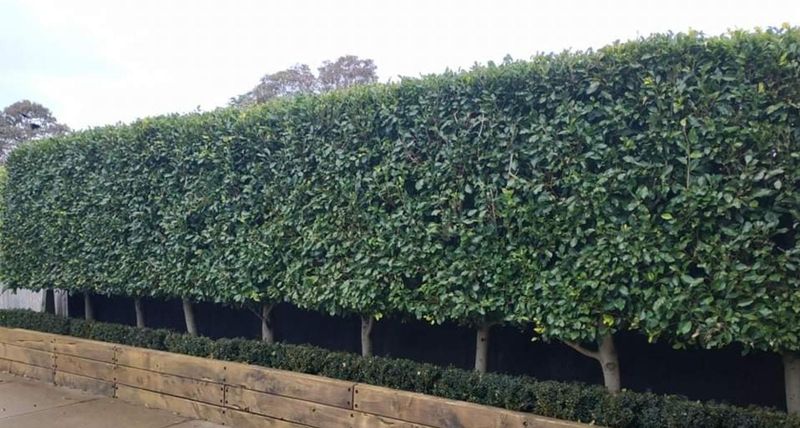
Sometimes the simplest tool works surprisingly well. A firm blast of water from your hose can knock many whiteflies and nymphs off the leaves and rinse away honeydew.
Aim at the undersides, since that is where most pests feed. Do this in the morning so the leaves dry before evening, which lowers the chance of leaf disease.
For light problems, insecticidal soap or horticultural oil can help. These products work by contact, so they must coat the insects directly.
Missed spots mean surviving bugs, and survivors bounce back fast in warm weather.
Plan on repeat sprays, often every 7 to 10 days, following the label. Avoid spraying oils in the heat of midday, because hot sun can burn leaves.
I wouldn’t necessarily expect a hose and soap to rescue a 12-foot hedge loaded with pests. Reaching the middle of a dense, tall screen is tough.
These gentle methods shine on small hedges, early infestations, or as follow-up care after stronger treatment.
A bonus here is that soaps and oils break down quickly, leaving fewer residues behind.
6. Systemic Treatments Help Tall Weeping Fig Hedges Fight Back
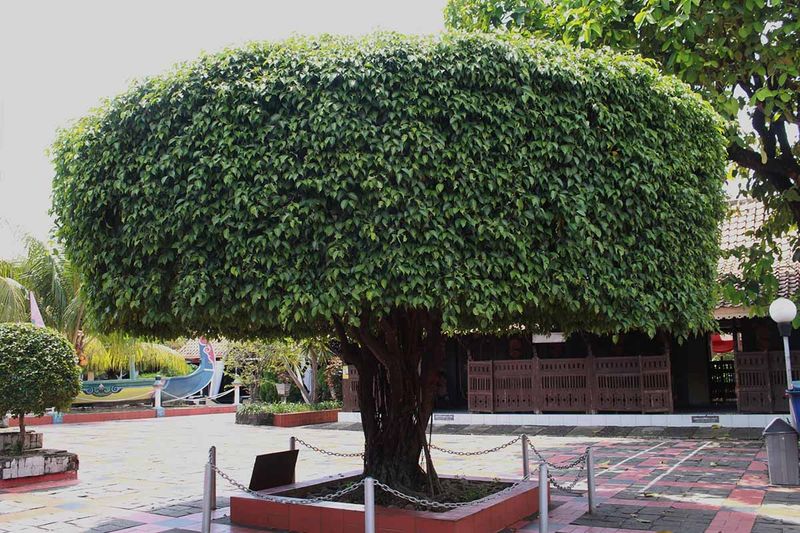
Tall hedges call for a different plan. UF/IFAS Extension notes that systemic insecticides applied as a soil drench are often the most effective option for heavy ficus whitefly problems.
The plant takes the product up through its roots and moves it into the leaves. Feeding insects then swallow it, even those hiding deep inside thick growth where sprays struggle to reach.
Products containing imidacloprid or dinotefuran are commonly used for this purpose. Dinotefuran tends to work faster, while imidacloprid can take several weeks to reach full strength in a large plant.
Always read and follow the label, which is the law for pesticide use.
Systemic products can harm pollinators, so keep that in mind. Ficus hedges rarely depend on bees, but nearby flowering plants might, so apply carefully and avoid drift onto blooms.
For very large or valuable hedges, hiring a licensed pest control pro can save time and reduce mistakes. They have the right equipment and know how much product suits your hedge size.
Patience matters after treatment. New leaves can take weeks to fill in, so do not panic if your hedge still looks thin for a while.
7. Gentle Pruning and Ladybugs Help a Thin Ficus Hedge Recover
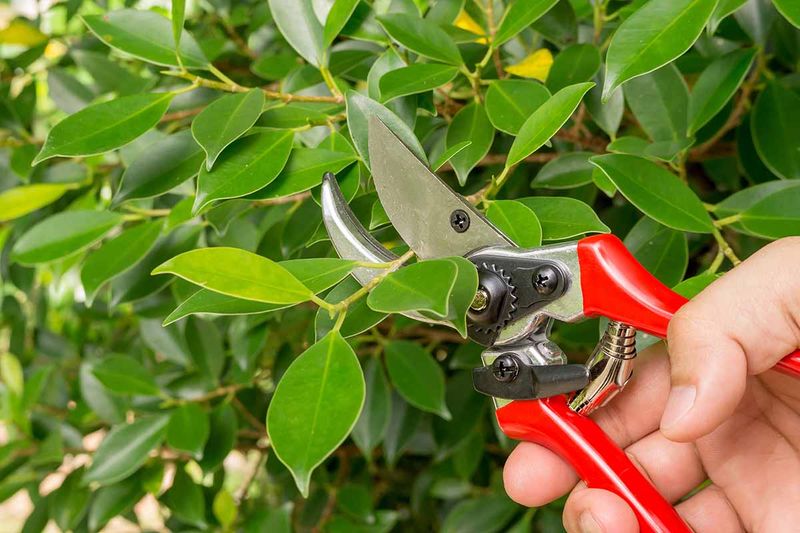
Recovery is the part people tend to rush. A stressed hedge needs steady, calm care rather than a dramatic makeover.
Hold off on heavy shearing while the plant is weak. Cutting away lots of foliage removes the leaves it needs to make food.
Trim only branches that are clearly bare and brittle, and save shaping for later once new growth fills in.
Water during dry spells, especially in spring when rain is scarce in much of the state. Soggy soil causes its own trouble, so let the top layer dry slightly between soakings.
A light feeding with a balanced slow-release fertilizer can support fresh leaves once pests are under control.
Helpful insects deserve a warm welcome too. Lady beetles, lacewings, and tiny parasitic wasps attack whiteflies and scale.
In fact, a small parasitic wasp has been found attacking ficus whiteflies in South Florida.
Broad sprays of harsh insecticides can harm these allies. That is one reason targeted treatments make more sense than spraying everything in sight.
Give your hedge a few months, and many bounce back with surprising vigor.
8. Regular Hedge Checks Beat Surprise Leaf Piles on the Lawn
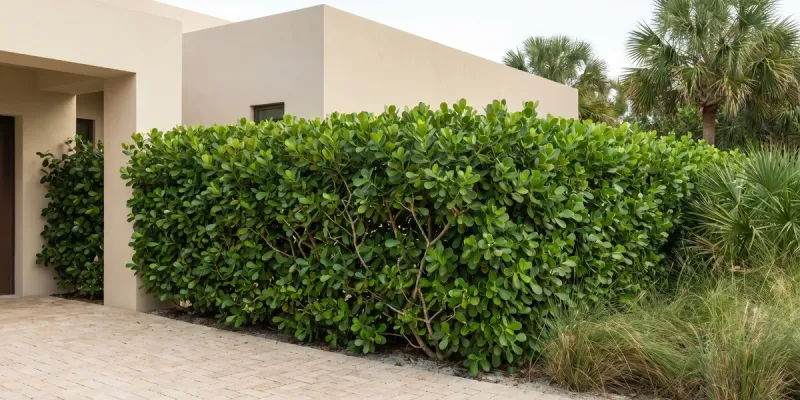
A five-minute walk along your hedge each week can spare you a big headache. Flip a handful of leaves, shake a branch or two, and touch the leaves for stickiness.
Whitefly numbers often climb in warm months, so pay extra attention from spring through fall. Catching a small outbreak early means easier, gentler control.
Healthy plants handle pests better. Proper watering, decent sunlight, and sensible fertilizing all help your hedge keep its strength.
Avoid piling mulch against the trunk, and keep the base clear so you can spot trouble.
If your ficus keeps getting hit year after year, you might want to think twice about replanting the same thing. Weeping fig also grows huge roots that can crack sidewalks and pipes.
Many Florida gardeners now switch to options like native cocoplum, Simpson’s stopper, or wax myrtle, depending on light and salt exposure.
Your county Extension office can suggest hedge plants suited to your zone and soil. Local advice beats guesswork every time.
Sticky leaves are a message from your hedge. Listen early, act wisely, and that green wall can stay thick and private for years.