10 Holiday Plants Besides Poinsettias Worth Growing In Georgia
One popular holiday bloom sold across America actually comes from a South American genus, not its famous namesake.
Even some florists mix up the names, which tells you how sneaky holiday plants can be with their identities.
Another festive favorite produces colorful blooms indoors just as winter settles in. Meanwhile, a few winter shrubs in Georgia bloom so sweetly that you can smell them from the driveway.
I’ll admit, the holiday season makes everyone crave color, yet most of us stop at one red plant. To me, gardeners deserve more variety, especially with mild winters and long growing seasons.
Some of these picks live happily indoors, while others shine outside long after the decorations come down. Which one will earn a permanent spot in your yard or on your sunny kitchen windowsill this year?
1. Christmas Cactus
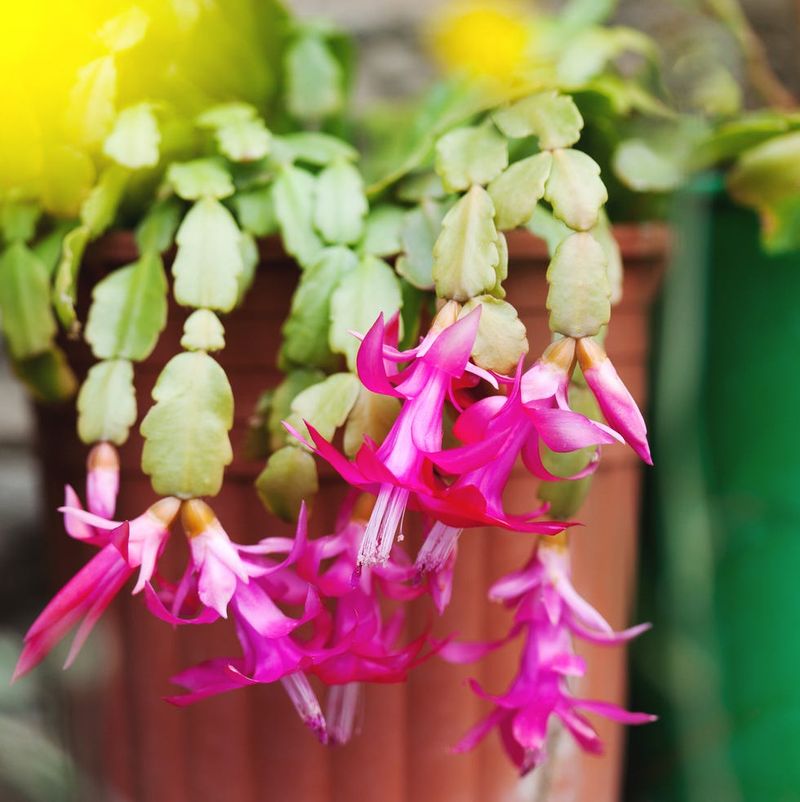
Those flat, jointed stems look like a stack of green dominoes, and they burst into tubular blooms around the holidays. The plant started life in Brazilian mountain rainforests, clinging to tree branches instead of baking in a desert.
Because it grows on trees in the wild, this cactus wants bright, indirect light rather than harsh afternoon sun. A spot near an east window works nicely, and I have watched plants thrive there for many years.
Water thoroughly whenever the top inch of soil feels dry, then let the extra water drain out of the pot. Soggy roots cause more trouble than thirst, so pick a loose, fast-draining potting mix and a pot with holes.
You might notice buds forming once fall nights turn cool and the days grow shorter outside your window. Temperatures around 50 to 60 degrees, plus long nights, often nudge the plant into setting plenty of flower buds.
Many plants sold as Christmas cactus are actually Thanksgiving cactus, which blooms a few weeks earlier in the season.
Check the stem edges, since Thanksgiving types have pointy, claw-like teeth while true Christmas types look more rounded.
During warm months, you can move the pot to a shady porch so it enjoys fresh air and gentle rain. Bring it back indoors well before the first frost, because this tropical beauty cannot handle freezing temperatures.
Pet owners can relax a little, since this plant is generally considered non-toxic to cats and dogs.
2. Amaryllis
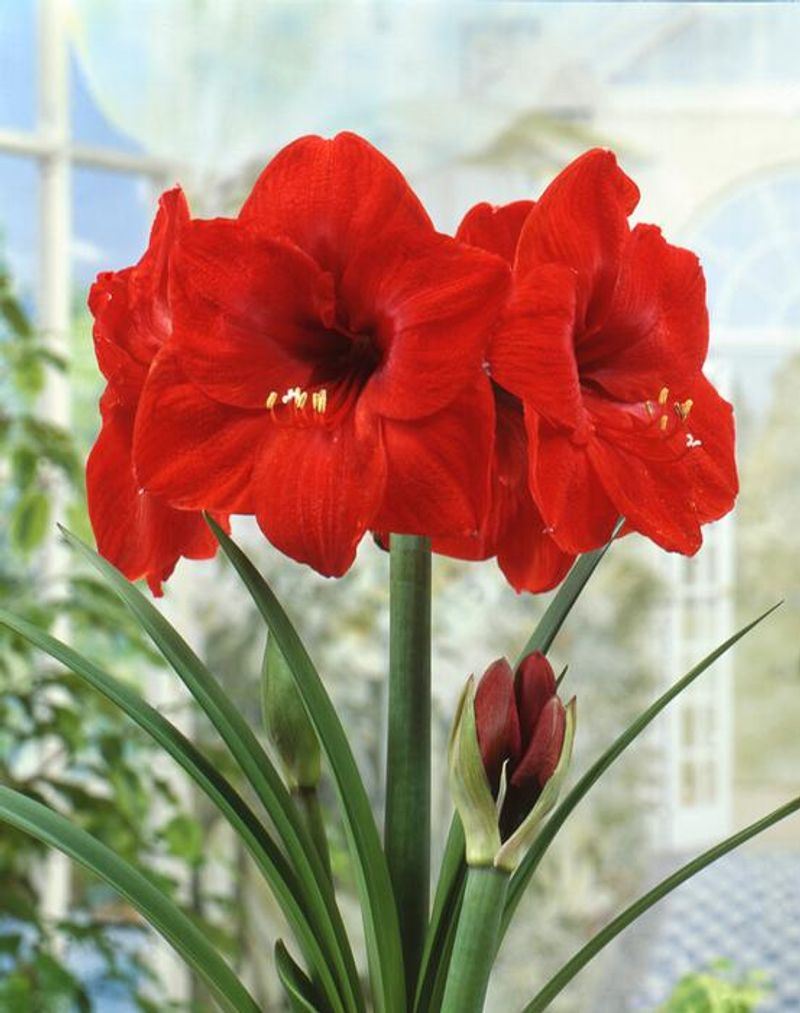
Few things feel as dramatic as watching a fat bulb shoot up a tall stalk topped with giant trumpet blooms.
Holiday amaryllis actually belongs to the South American genus Hippeastrum, while true Amaryllis comes from South Africa.
Planting is easy, and I think that is half the fun for beginners and kids who want quick results. Set the bulb in well-draining potting mix, leaving about one-third of it peeking above the soil line.
Water sparingly at first, because the bulb has stored food and does not need much until growth appears. Once leaves or a flower stalk show up, keep the soil evenly moist but not soggy or waterlogged.
Bright, indirect light keeps the stalk sturdy, and turning the pot every few days helps it grow straight. Blooms come in shades of red, pink, white, and orange, plus striped combinations that look hand painted.
Your Georgia Garden Changes Every Week. Your Plan Should Too.
Gardening in Georgia changes quickly throughout the season. Every Friday you’ll receive a simple weekly plan showing exactly what to plant, prune, fertilize, harvest, and protect so you never miss the right timing.
After flowering, cut off the faded bloom stalk but leave the strappy leaves to feed the bulb for next year.
Those leaves recharge the bulb through spring and summer, which gives you a fair shot at another holiday show.
In the warmer southern and coastal parts of Georgia, roughly zones 8 and 9, bulbs can stay outdoors year-round. Gardeners in colder northern areas should lift the bulbs and store them indoors before the first hard frost arrives.
3. Paperwhites
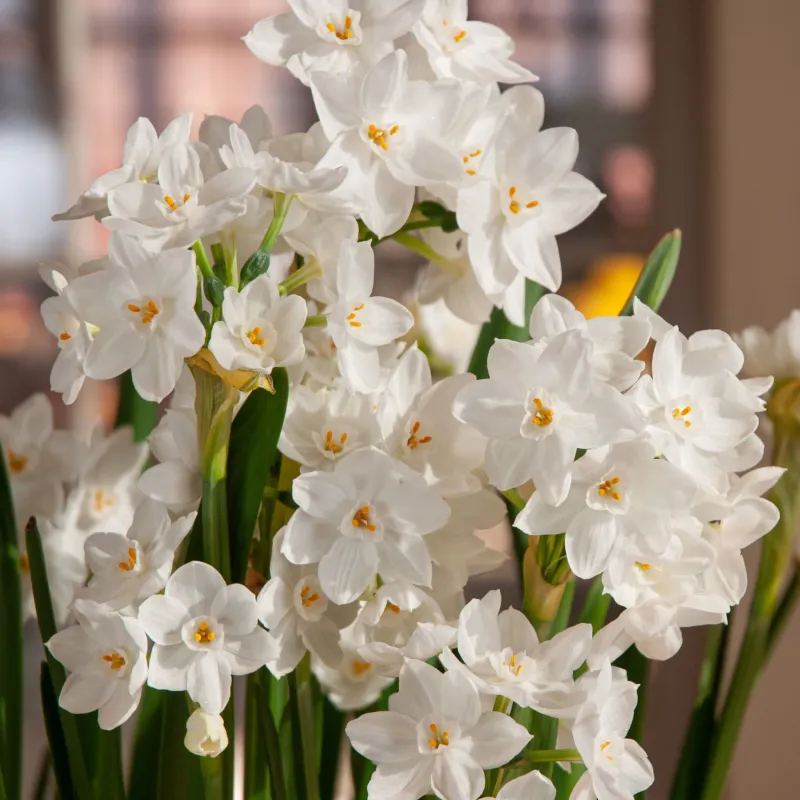
One whiff of paperwhites tells you exactly where they are, since their sweet, musky perfume fills an entire room.
Some people adore that scent and others find it strong, so I suggest testing a small pot first.
Unlike many daffodil relatives, Narcissus papyraceus needs no cold chilling period before it will produce its starry white flowers. That makes paperwhites one of the easiest bulbs to force indoors, even for first-time gardeners.
Set the bulbs on a bed of pebbles in a shallow dish, adding water just up to their bases. Keeping the bulb itself out of the water helps prevent rot while the roots reach down for moisture.
You can also plant them in well-draining potting mix if you prefer a tidier look on the table. Place the container somewhere sunny, and you can expect flowers to open in roughly three to five weeks.
Tall stems tend to flop over, so I tuck a few twigs or bamboo stakes around the pot for support. Cooler room temperatures also help keep the stems a bit shorter and sturdier than in a toasty living room.
Outdoors, paperwhites are hardy in zones 8 through 11, so central and southern gardeners can plant spent bulbs outside.
Forced bulbs may take a year or two to recover, but many settle in and bloom again later.
Keep the bulbs away from curious pets and small children, because they are toxic if anyone eats them.
4. Winterberry Holly
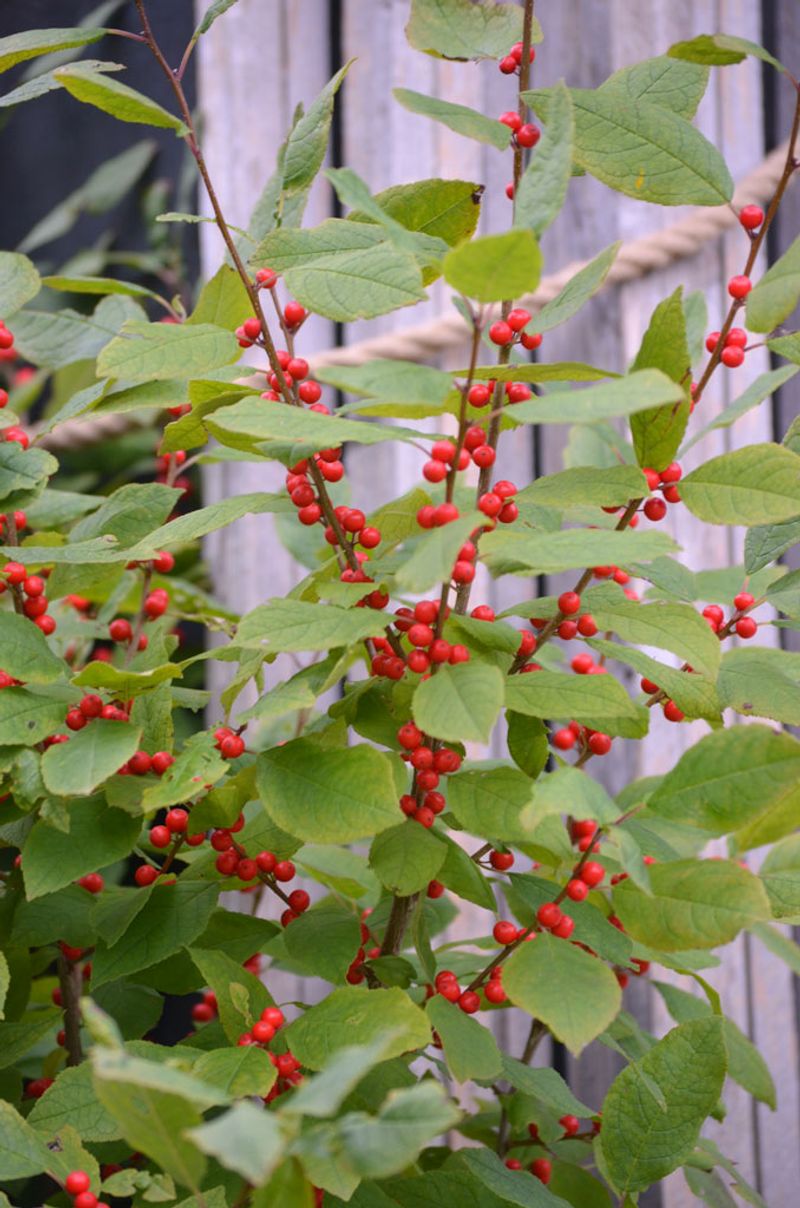
Once winterberry drops its leaves in fall, bare branches suddenly glow with clusters of bright red berries.
It looks like someone strung holiday lights across the shrub, and the show often lasts well into winter.
Unlike its evergreen cousins, Ilex verticillata is a deciduous holly native to eastern North America, including parts of Georgia.
Being a native means it fits our landscapes naturally and supports local wildlife without the risk of spreading aggressively.
Now for the tricky part, because you need both male and female plants to get those famous berries. Only females carry fruit, so plant at least one male nearby that blooms at the same time.
Winterberry handles full sun to partial shade, though more sun usually means a heavier crop of berries. It prefers moist, acidic soil, and I love that it tolerates soggy spots where many shrubs struggle.
Prune in late winter or early spring before new growth starts, removing a few older stems at the base. Cutting berry-filled branches for holiday arrangements counts as pruning, which feels like a sweet bonus to me.
Birds such as robins and bluebirds rely on these berries for food during the leaner months of the year. You might find your shrub stripped by late winter, which simply means it did its job for wildlife.
Compact varieties stay small enough for foundation beds, while larger types make a lovely informal hedge or screen.
5. Camellia
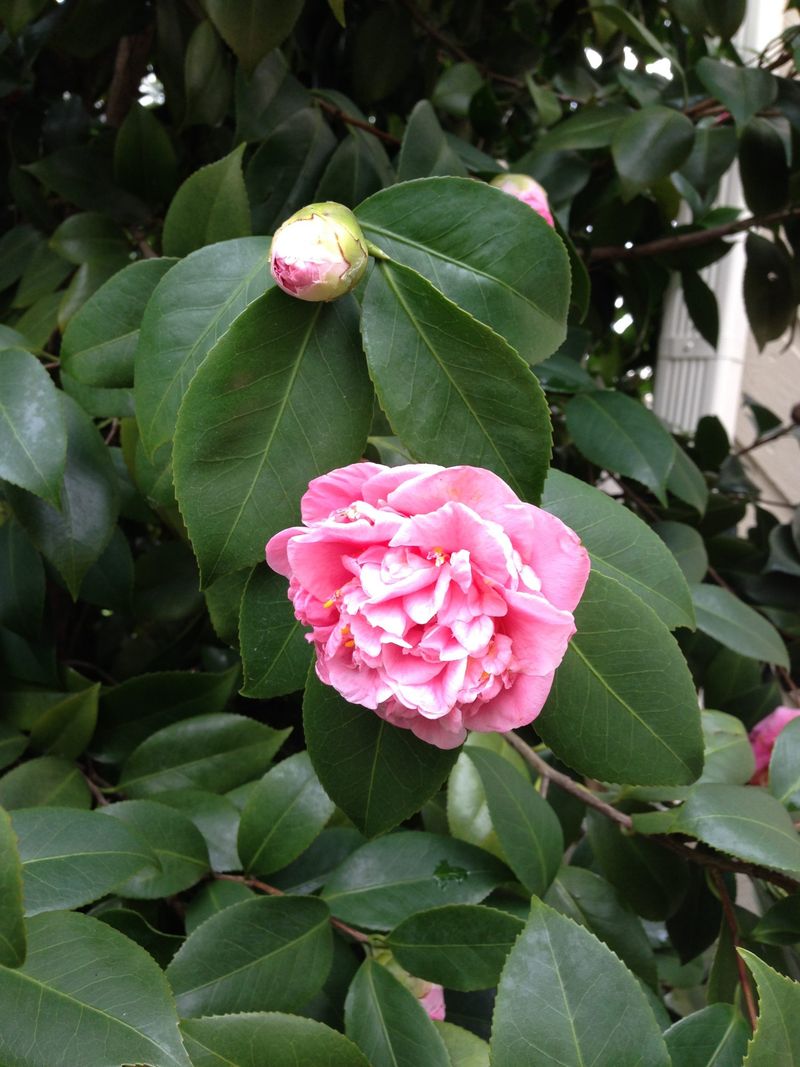
Southern gardens practically hold a winter flower show, and camellias deserve top billing on that seasonal stage. Their glossy evergreen leaves stay handsome all year, so the plant looks polished even when it is not blooming.
Two main types share the spotlight, and knowing the difference helps you plan color for months instead of weeks.
Camellia sasanqua usually blooms from fall into early winter, offering smaller single or semi-double flowers with a light look.
Camellia japonica follows with bigger, more formal blooms that open from winter into early spring in many yards. Planting both gives you flowers right through the holidays and beyond, which I find hard to beat.
Both thrive across most of Georgia, where zones 7 through 9 suit them beautifully in the right spot. Give them partial shade, ideally with protection from harsh afternoon sun that can scorch leaves and fade petals.
Camellias like acidic, well-draining soil rich in organic matter, so mix in compost when you plant them. Set the root ball slightly above ground level, because planting too deep is a common cause of struggling shrubs.
Water regularly during dry spells, especially the first couple of years, but avoid leaving the roots in soggy soil. A layer of pine straw mulch keeps moisture steady and fits right in with the classic Southern look.
Prune lightly after flowering ends, since next season’s buds form during summer and late cuts remove them.
6. Hellebore
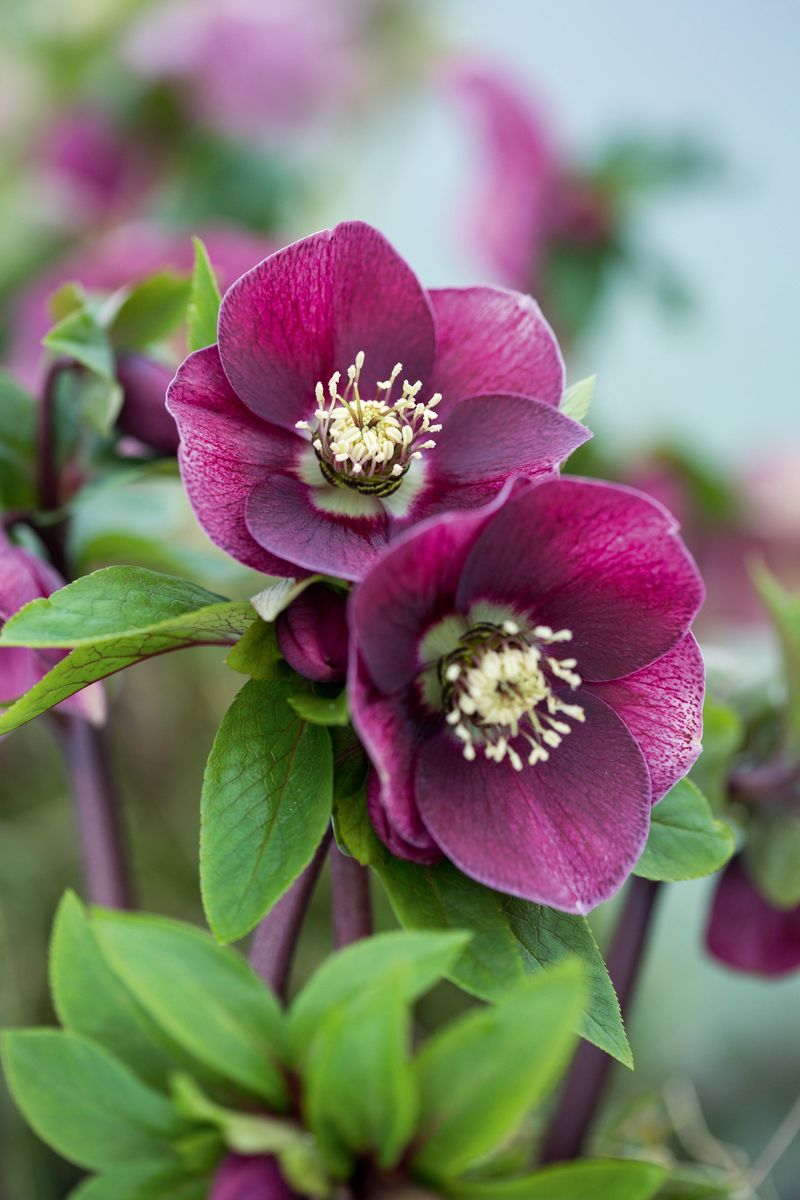
Hellebores have a stubborn streak I admire, pushing nodding cup-shaped flowers up through cold soil when most perennials sleep.
One species, Helleborus niger, earned the nickname Christmas rose because it can bloom near the holidays in mild climates.
The more common Lenten rose, Helleborus x hybridus, usually blooms from late winter into early spring instead. Either way, you get fresh flowers during the gray stretch after holiday decorations have been packed away.
Flowers come in white, pink, purple, green, and speckled patterns, and many last for weeks on the plant. Those leathery evergreen leaves look a bit like small palm fronds, keeping shady beds attractive through every season.
Hellebores grow well in zones 4 through 9, so gardeners from the mountains to the coast can enjoy them. Give them partial to full shade, such as the dappled spot beneath tall oaks or pines.
Moist, well-draining soil rich in organic matter keeps them happy, and they appreciate soil that is not too acidic. Adding a little lime can help if your soil runs very sour, but a soil test should guide you.
In late winter, snip off old or tattered leaves right before flowers appear so the blooms show clearly. That quick cleanup also removes leaves with fungal spots, giving the fresh foliage a healthier start.
Every part of the plant is poisonous if eaten, so plant them away from areas where children play.
7. American Holly
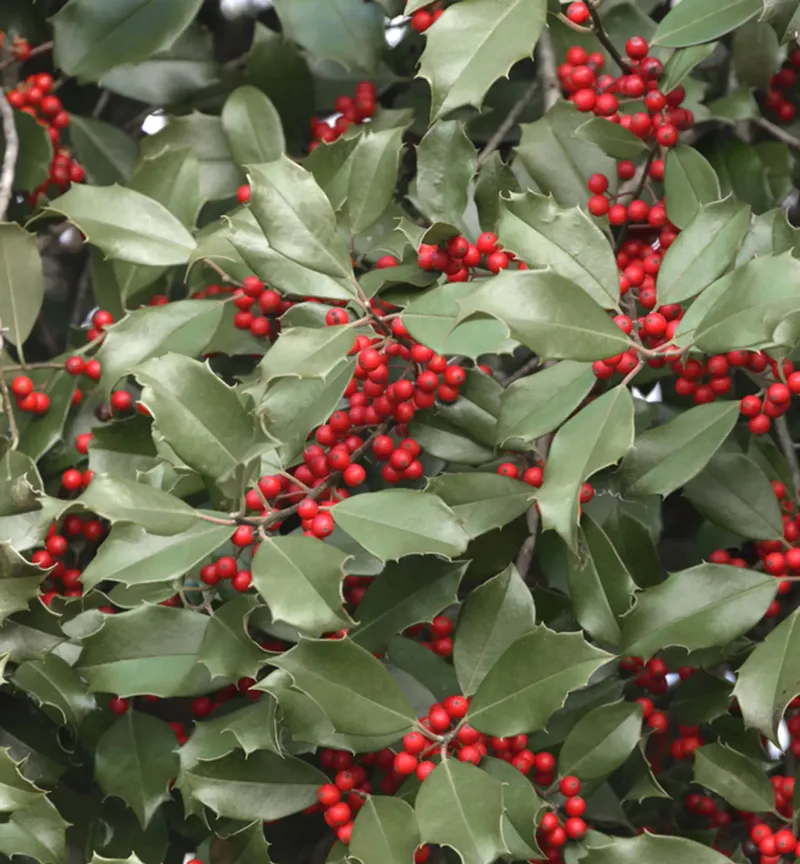
Long before store-bought garland, families decorated their homes with branches cut from wild American holly growing nearby.
That spiny green leaf paired with scarlet berries still says holiday season faster than almost anything else.
Ilex opaca is native to the eastern and south-central United States, including the woods and yards of Georgia. It grows into a handsome pyramid shape, usually reaching 15 to 30 feet tall in home landscapes.
Like winterberry, American holly needs male and female trees, and only the females produce those bright red berries. Buy named cultivars from a nursery so you know which trees you have, and include a male nearby.
Full sun to partial shade works well, though trees in brighter spots tend to grow fuller with more fruit. Acidic, well-drained soil that stays consistently moist suits it best, and alkaline soil can cause yellowing leaves.
Once established, American holly asks for very little, which makes it a smart choice for busy gardeners like me.
Water deeply during the first couple of summers, then let rainfall handle most of the work in normal years.
Clipping a few branches in December gives you free decorations, and light pruning keeps the shape neat. Wear gloves, because those stiff, spiny leaf edges will remind you quickly that holly prefers respect.
Birds visit the berries through winter, and the dense evergreen branches give them shelter from cold wind.
8. Winter Daphne
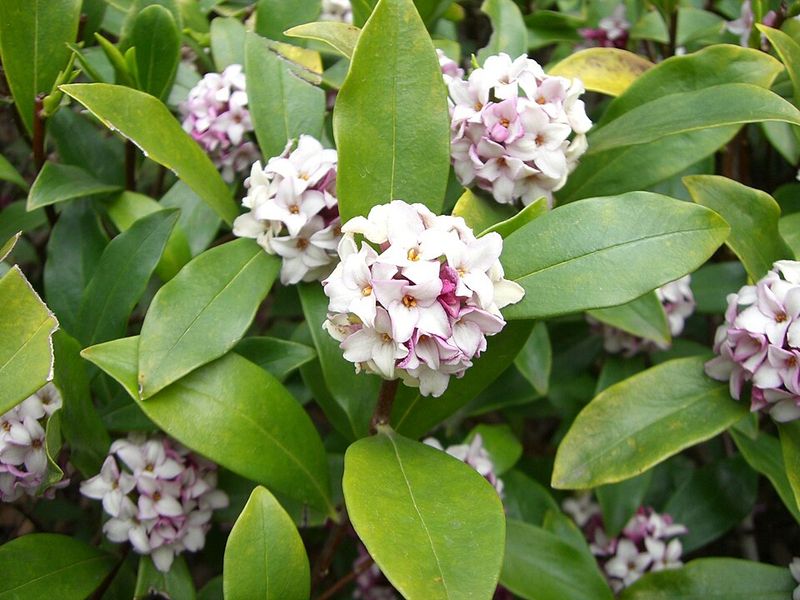
Walking past a blooming winter daphne feels like stepping into a perfume shop, and that scent stops people mid-stride. Its clusters of pale pink to purplish tubular flowers open in late winter, right when the garden needs cheering up.
Daphne odora is a dense evergreen shrub that usually reaches about four feet tall and just as wide.
Some popular forms have creamy-edged leaves, which keep things interesting after the flowers fade in early spring.
I have to admit this plant has a reputation for being fussy, so placement matters more than usual. Pick a spot with partial shade and shelter from hot afternoon sun, especially in warmer parts of the state.
Drainage is the biggest deal, since soggy soil can cause roots to rot quickly and plants to collapse suddenly. Raised beds or slopes work well, and amending heavy clay with plenty of organic matter helps a lot.
Once planted, leave it alone, because daphne strongly dislikes having its roots disturbed or moved to another spot. Plant it near a front walk or doorway, so you can enjoy the fragrance every time you come home.
Water during dry spells to keep the soil evenly moist, but let the surface dry slightly between drinks. Light pruning right after bloom keeps the shape tidy, and cut stems smell wonderful in a small vase.
All parts of the plant are poisonous if eaten, and sap can irritate sensitive skin, so wear gloves.
9. Southern Magnolia
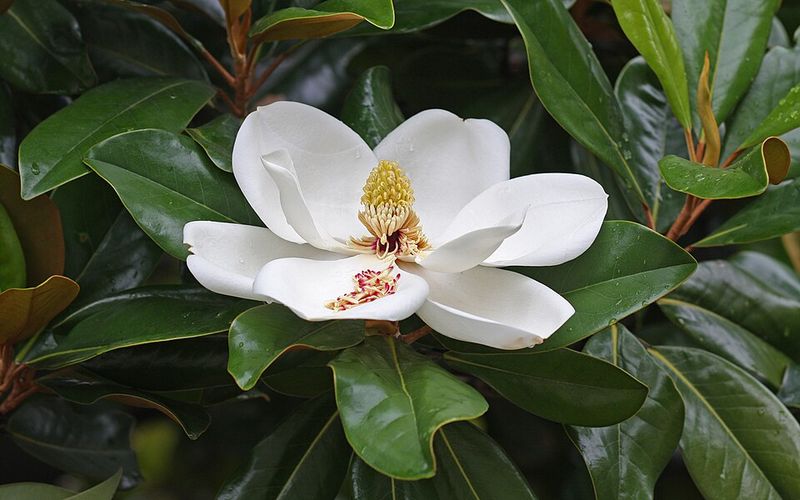
Glossy magnolia leaves, green on top and fuzzy brown underneath, have decorated Southern mantels and doorways for generations.
Personally, I think a magnolia wreath looks more elegant than any plastic version you could buy at the store.
Magnolia grandiflora is native to the southeastern United States, and it thrives naturally in this warm, humid region. The tree is hardy in zones 6 through 10, so it suits nearly every corner of our state.
Make sure you have room, because many varieties grow 60 to 80 feet tall and spread wide over time. Compact cultivars like Little Gem stay much smaller, which works better for city lots and smaller suburban yards.
Plant it in full sun to partial shade with rich, moist, well-drained soil that leans slightly acidic. Young trees need regular water during their first few summers, but mature magnolias handle dry periods fairly well.
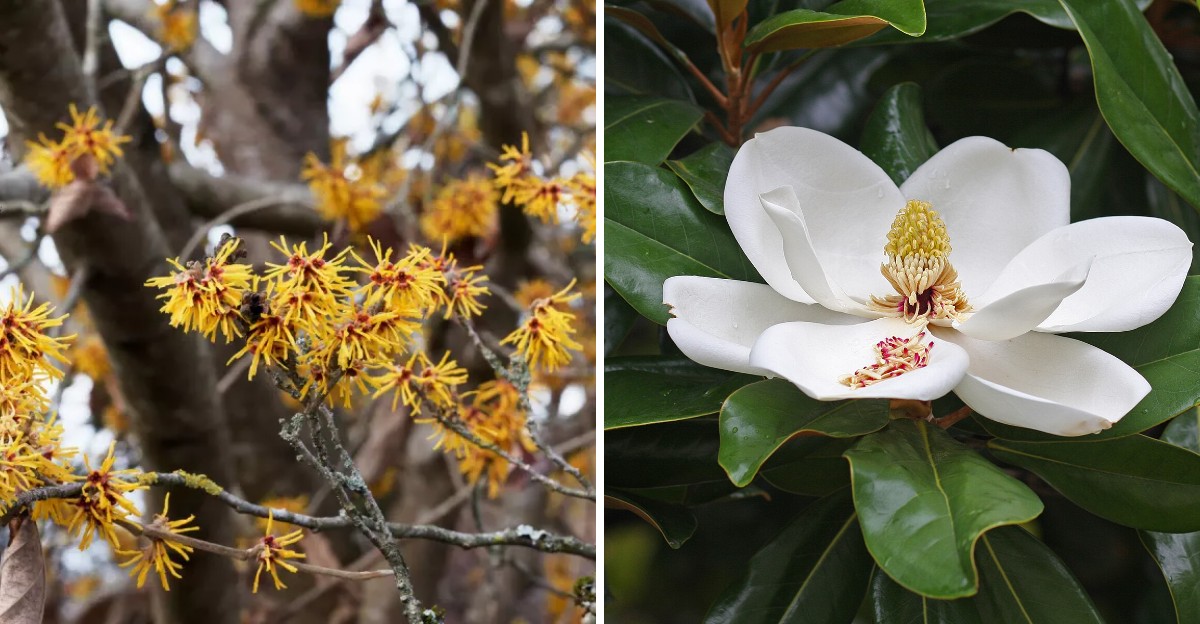
Huge creamy white flowers open in late spring and summer, filling the air with a sweet lemony fragrance. Later, cone-like pods split open to reveal bright red seeds that birds and squirrels eagerly snack on.
For holiday decorating, snip branches from inside the canopy so cuts stay hidden and the tree keeps its shape. Mixing the shiny tops with the bronze undersides gives garlands and wreaths that classic two-toned look people love.
Expect falling leaves year-round under the tree, so many gardeners let lower branches sweep the ground to hide them.
10. Chinese Witch Hazel
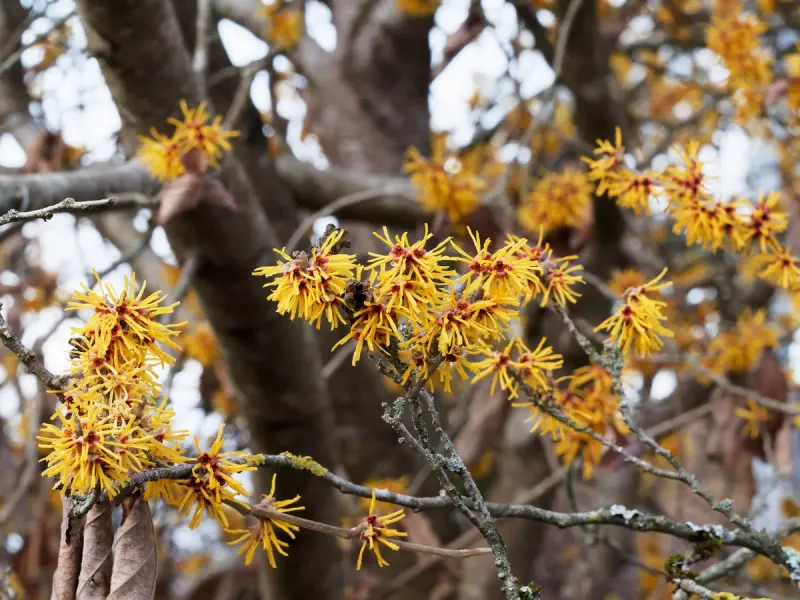
Spidery yellow petals that look like curled confetti appear on bare branches in the coldest weeks of winter.
Chinese witch hazel brings fragrance and color right after the holidays, when the garden usually feels the quietest.
Hamamelis mollis typically blooms from January into March, and each ribbon-like petal can curl up on very cold days. On milder afternoons the petals unfurl again, which feels like a small magic trick happening in your yard.
The plant grows as a large shrub or small tree, usually reaching 8 to 15 feet tall and wide. Its graceful vase shape fits nicely near a patio or path where you can enjoy the scent.
Hardy in zones 5 through 8, it performs best in the northern and central parts of the state. Gardeners in the hottest southern areas may find it struggles with long, steamy summers and very little winter chill.
Give it full sun to partial shade and moist, well-draining, acidic soil enriched with some compost. Some shelter from strong, drying winter winds helps protect those delicate blooms and keeps them looking fresh longer.
Prune after flowering ends in spring, removing crossing branches and any suckers that sprout from the base.
Fall brings another bonus, because the leaves turn bright shades of yellow and orange before they drop.
If you want a native option too, American witch hazel (Hamamelis virginiana) blooms in fall, typically from October into November.