Why Friday’s Strong Winds Are Riskier For Michigan Trees Still Holding Their Leaves
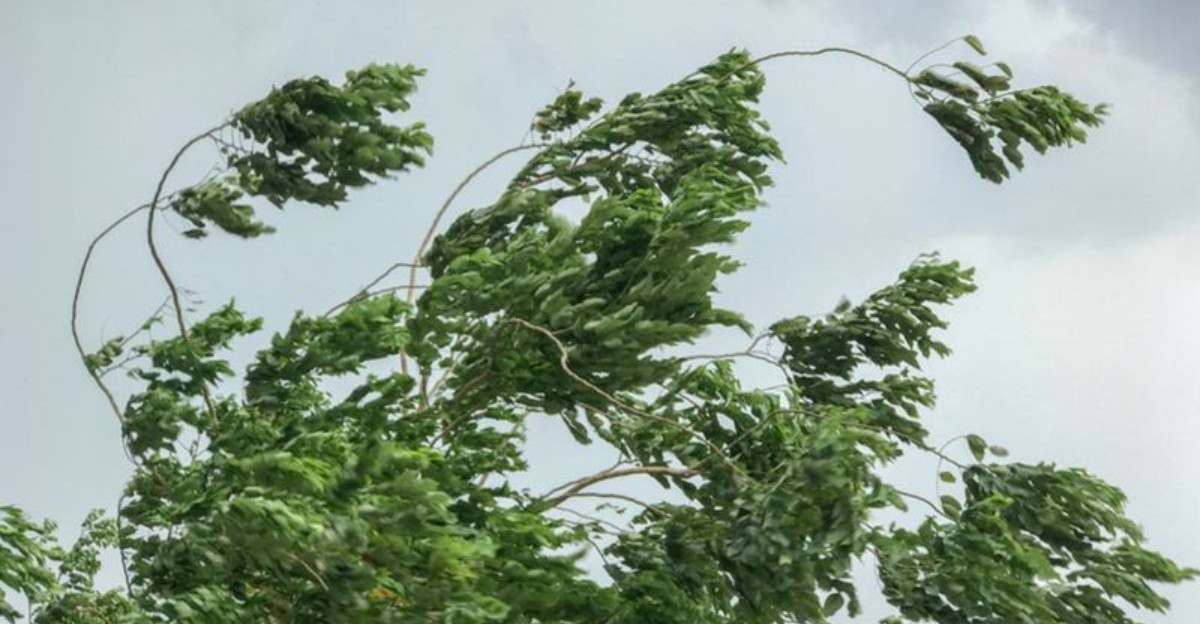
A tree full of leaves catches wind like a sail. In midsummer, that is normal. In mid-October, the same tree faces a different risk. Many Michigan trees still hold most of their leaves because warm weather delayed the turn.
Forecasts call for gusts near 40 miles per hour on Friday as a strong cold front moves through. Soil is also soft after rain, which makes it easier for roots to shift.
Large, leafy crowns put extra strain on branches and trunks. Weak limbs, old wounds, and trees with lean are the most exposed.
A quick walk around the yard today can tell you where trouble might start. A few simple checks now are far easier than cleaning up after a storm.
1. Leaves Catch The Wind Like Sails
Think about a sailboat on a breezy lake. When the sail goes up, the boat suddenly races across the water, because the wind finally has something big to push against.
Trees work in much the same way, and a full canopy of leaves acts like a giant green or golden sail.
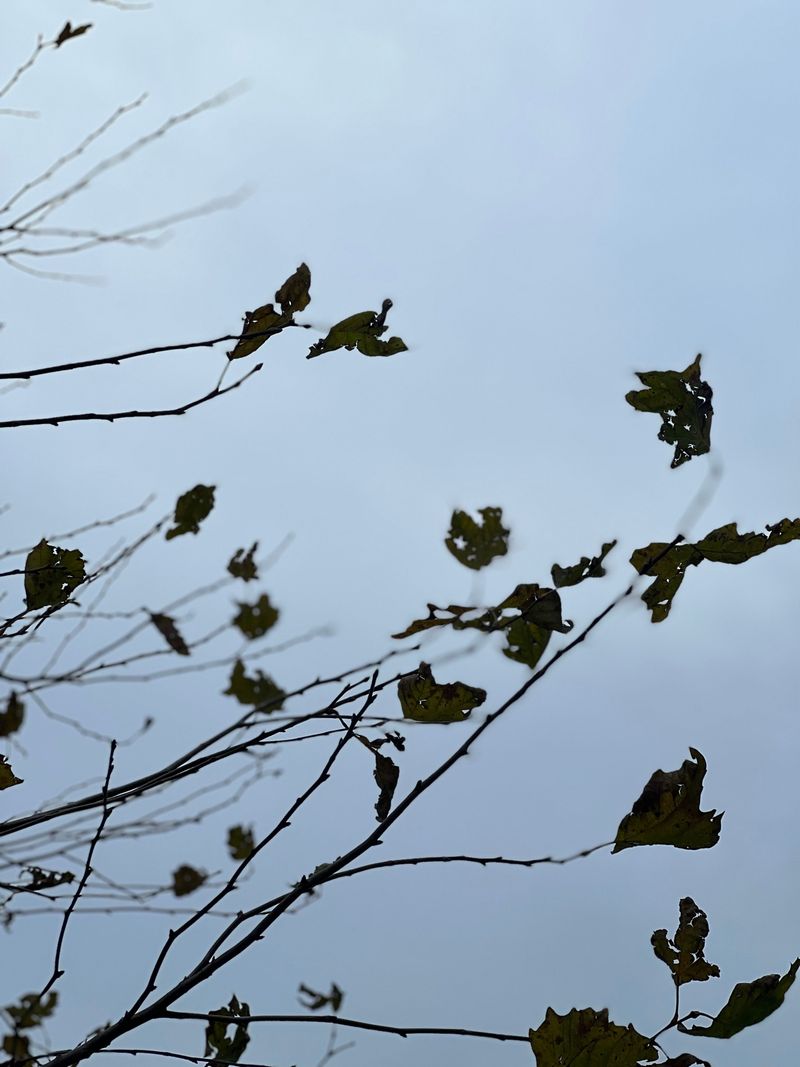
In winter, a bare tree lets wind slip through its branches with far less resistance. Gusts still shake it, but the push on limbs, trunk, and roots stays fairly modest.
Add thousands of leaves, and the surface area grows enormously, so the same wind speed creates much more force on every part of the tree.
That difference matters more than most people realize. A limb that shrugs off a 45 mph gust in January might crack under that same gust in October simply because it is carrying a full load of foliage.
Even healthy trees can bend farther than usual, and older or weaker ones may not bounce back at all.
Michigan is in a tricky spot right now. An unusually warm stretch in mid October 2026 kept many trees from dropping their leaves on schedule, so lots of neighborhoods still have thick, colorful canopies.
Friday’s strong winds will meet those trees at their most wind-catching moment of the year.
So what can you do today? Walk around your yard and notice which trees still hold most of their leaves, especially big ones near your house, garage, or driveway.
Those are the trees to keep an eye on during the storm, and the spots where you should avoid parking or standing when gusts pick up. A few minutes of looking now can save a lot of headaches later.
2. Rain-Soaked Leaves And Soil Add To The Risk
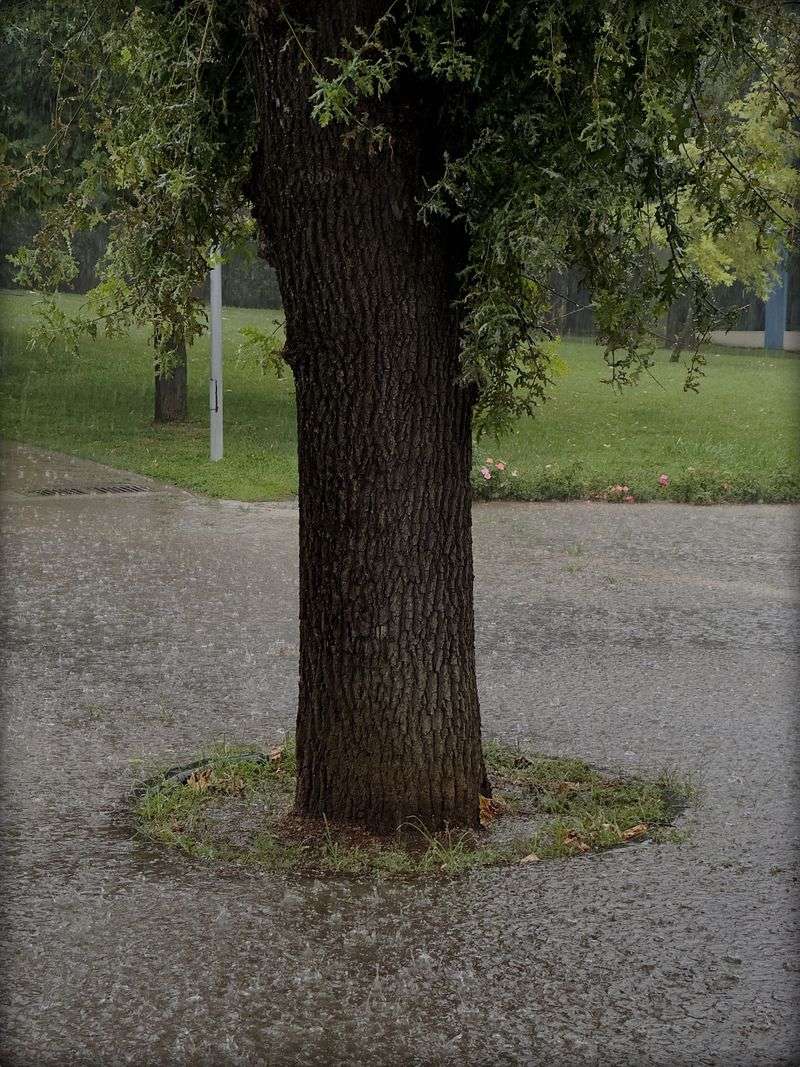
Wet weather has a sneaky way of setting the stage for trouble. Before Friday’s cold front arrives, rain is in the forecast across much of Michigan, and that rain makes trees heavier and less stable at the same time.
Start with the leaves. Every drop that clings to foliage adds a little weight, and across an entire canopy that weight adds up quickly.
Branches that already feel the pull of wind now carry an extra load, which makes them more likely to sag, crack, or snap.
Your Michigan Garden Changes Every Week. Your Plan Should Too.
Gardening in Michigan changes quickly throughout the season. Every Friday you’ll receive a simple weekly plan showing exactly what to plant, prune, fertilize, harvest, and protect so you never miss the right timing.
Down below, the story gets even more serious. Soil soaked by several days of rain turns soft and loose, almost like wet cake.
Roots depend on firm soil to hold the tree in place, and when the ground loses its grip, a strong gust can tip a tree over or push it into a dangerous lean.
Luckily, the warning signs are often easy to spot if you know where to look. Watch for: Trees that seem to lean more than they did last week. Soil cracking, bulging, or lifting near the base of the trunk.
Standing water pooling around trees in low spots of your yard. Any of those clues means the tree may have lost some of its anchor.
Keep kids, pets, and vehicles away from it during the windstorm, and plan to have a certified arborist take a closer look once the weather calms down.
One more tip helps a lot. Avoid driving mowers or heavy equipment over soggy ground near trees, since that can squash roots and loosen soil even more. Giving wet ground a break now helps your trees stay standing tall.
3. Weak Branch Unions Are More Likely To Split
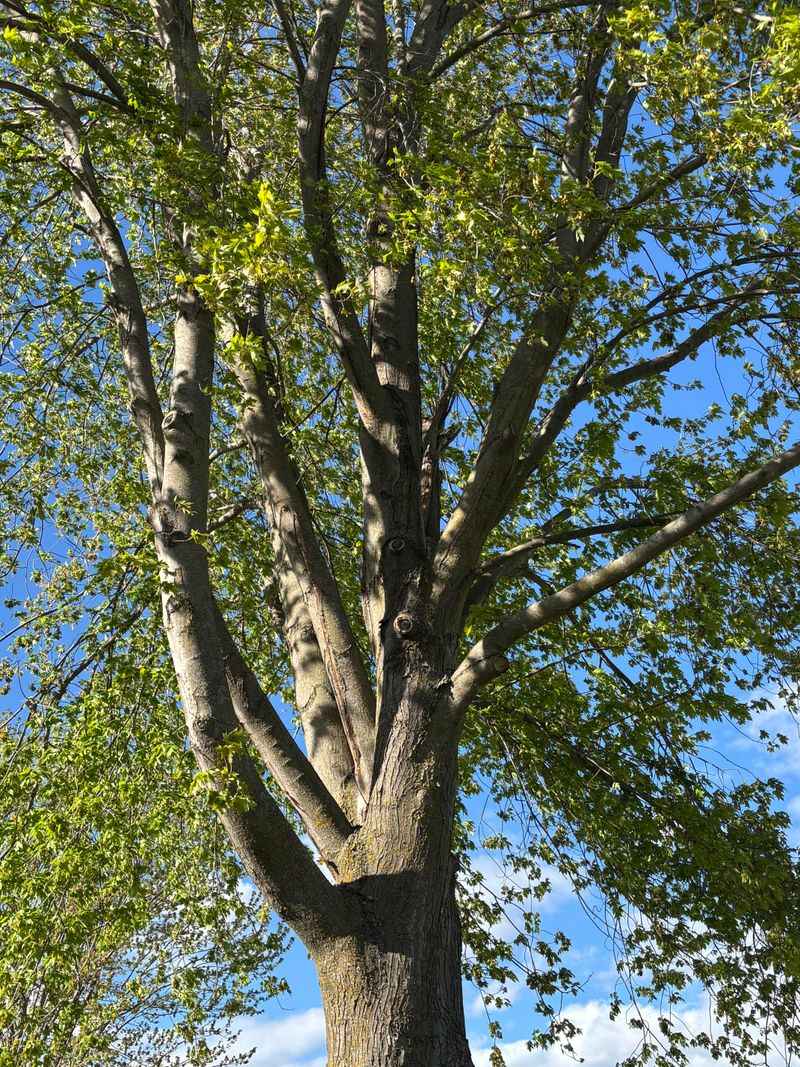
Some trees look strong and sturdy from the street, yet they hide a weak spot right in the middle. The problem often lies where two big trunks or limbs meet, a place arborists call the branch union.
A healthy union usually forms a wide U shape, with solid wood growing together. Trouble starts when two or more main trunks of similar size grow side by side in a tight V shape.
Bark gets pinched between them, and that trapped bark keeps the wood from bonding well, a condition known as included bark.
Picture pulling apart a wishbone. Once wind starts rocking those two trunks in different directions, the weak seam can split wide open.
A full canopy of leaves makes the swaying stronger, so fall storms put extra pressure on these joints.
Michigan yards are full of trees prone to this issue. Silver maples grow fast and often develop several competing trunks.
Bradford pears, popular for their spring blooms, are famous for splitting apart in storms because of their tight, upright branching.
Take a slow walk around trees near your home, driveway, and play areas. Look for narrow V-shaped forks, cracks or seams where branches join the trunk, and old wounds from branches that split during past storms.
Dark staining or oozing near a fork can also hint at a hidden crack. Spotting a warning sign does not always mean the tree must come down.
A certified arborist can judge the risk and may suggest pruning to lighten the load or installing cables and braces for support. Getting expert eyes on a tree with a weak union is one of the smartest moves a homeowner can make.
4. Withered And Decaying Limbs Break First
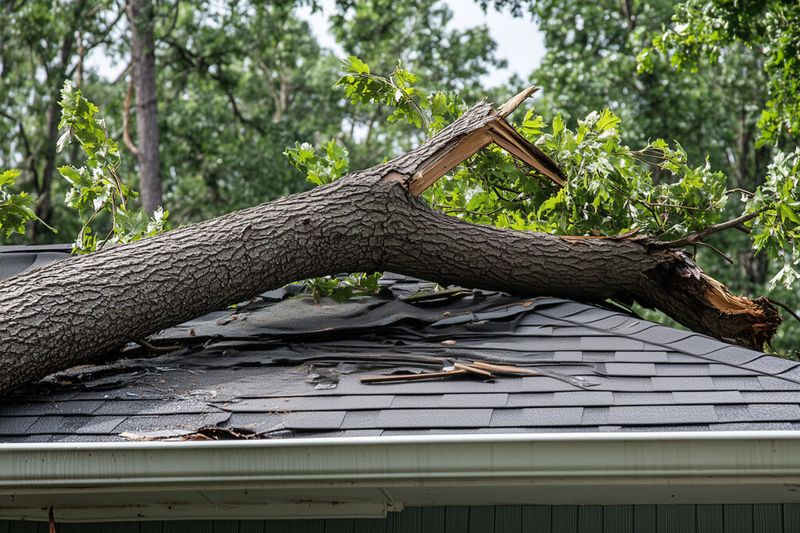
Arborists have a nickname for broken or lifeless branches stuck high in a tree. They call them widowmakers, and the name tells you exactly how seriously to take them.
Wood that no longer has living tissue slowly loses its strength. Over time it may turn dry, hollow, or soft with rot, and it simply cannot flex the way healthy wood does.
When strong gusts hit, those weakened limbs are usually the first to snap, and they can crash onto roofs, cars, power lines, or people below.
Here is the good news. Lifeless limbs are often easier to spot in fall, while the rest of the tree still has leaves. Any branch standing bare while its neighbors are covered in color deserves a second look.
As you scan your trees, watch for a few key clues. Bark peeling away and leaving smooth, gray wood underneath is a common sign.
Mushrooms, shelf-like fungus, or crusty growth on trunks and limbs often point to decay inside, and cavities, deep cracks, or hollow spots signal weakness too.
Many Michigan neighborhoods are shaded by mature oaks, maples, and elms that have stood for decades. Age brings beauty, but it also brings aging limbs that grow riskier with each fall and winter storm.
Resist the urge to grab a ladder and a saw. Cutting heavy limbs high in a tree is dangerous work, even for handy homeowners.
A professional tree service has the training, gear, and insurance to remove hazardous branches safely, so leave the climbing to them and keep your feet firmly on the ground.
5. Ash Trees Damaged By Emerald Ash Borer Become Brittle
Back in 2002, scientists near Detroit identified a tiny metallic green beetle that would change Michigan’s landscape forever.
Emerald ash borer, an invasive insect from Asia, was found in the United States for the first time right here, and it has since spread across the whole state and far beyond.
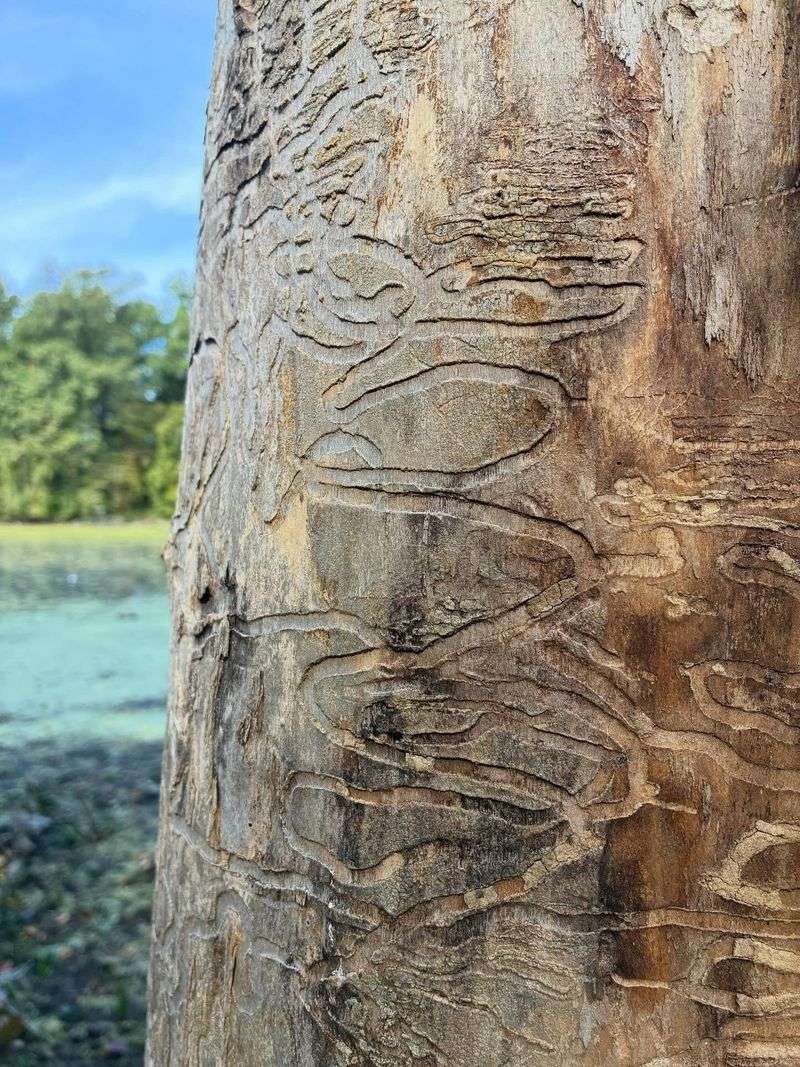
The beetle’s larvae tunnel beneath the bark, cutting off the flow of water and nutrients a tree needs. Ash trees in decline from this damage become dry and brittle surprisingly fast.
Unlike many trees that weaken slowly, a struggling ash can drop large branches or break apart with little warning, especially when wind is strong.
Plenty of ash trees still stand in Michigan yards, parks, and along streets, so knowing the signs really helps. Look for a canopy that looks thin or patchy compared to nearby trees.
Small D-shaped exit holes in the bark, about the size of a pencil eraser, are a telltale clue. Other hints are easy to miss unless you know them. Vertical splits in the bark can reveal winding tunnels underneath.
Woodpeckers love feasting on the larvae, so patches of chipped, light-colored bark often mean the beetles are busy inside.
During Friday’s winds, give declining ash trees plenty of space. Avoid parking cars beneath them, and keep kids from playing nearby when gusts pick up.
Once the storm passes, call a certified arborist to assess any ash on your property. Some valuable ash trees can still be protected with treatments if caught early, while others may need removal before they become a bigger hazard.
6. Shallow Roots And Root Damage Increase The Risk Of Toppling
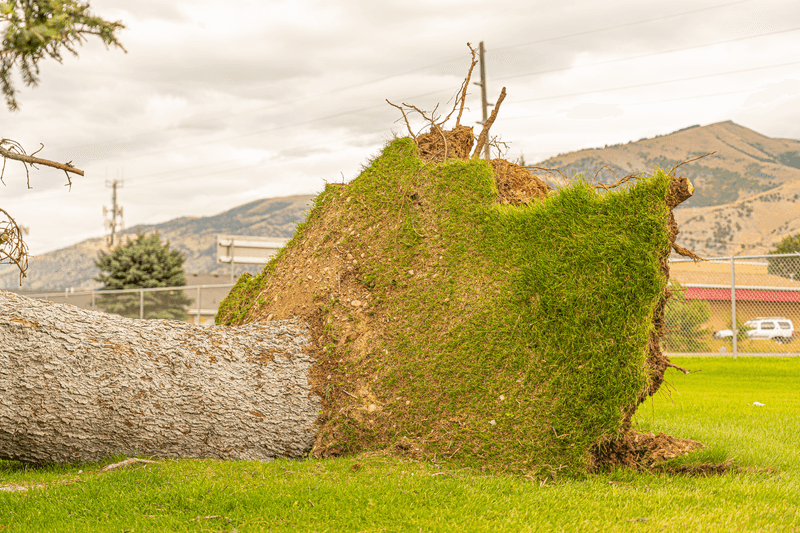
Roots are the unsung heroes of every tree. Hidden underground, they act like anchors and hold up tons of wood and leaves through every storm. When those anchors weaken, even a tree that looks healthy above ground can tip over.
Several root problems can cause trouble. Some trees naturally grow shallow roots, while others lose support when roots get cut during construction, sidewalk repairs, or trenching for utilities.
Girdling roots, which wrap around the trunk and squeeze it, and root rot from fungus can also quietly reduce a tree’s grip.
Now combine weak roots with wet ground and a full canopy of leaves. Wind pushes hard on the crown, soft soil gives way, and the whole tree can lever itself right out of the ground. That is exactly the setup Michigan may face on Friday.
Our state’s soils add an extra twist. Heavy clay, common in much of southeast Michigan, holds water and can stay soggy for days, which loosens roots.
Sandy soils, found in western and northern areas, drain fast but offer less grip, so roots may struggle to hold firm.
Keep an eye out for soil heaving, cracking, or lifting near the base of a tree. Mushrooms sprouting on roots or around the trunk can signal decay below.
Recent digging, new driveways, or construction close to a tree are red flags too, along with any tree that leans more than it used to.
If you notice these signs, a certified arborist can check root health and stability. Some trees can be helped, and catching problems early keeps your family and home much safer.
7. Take Simple Steps Before And After The Wind
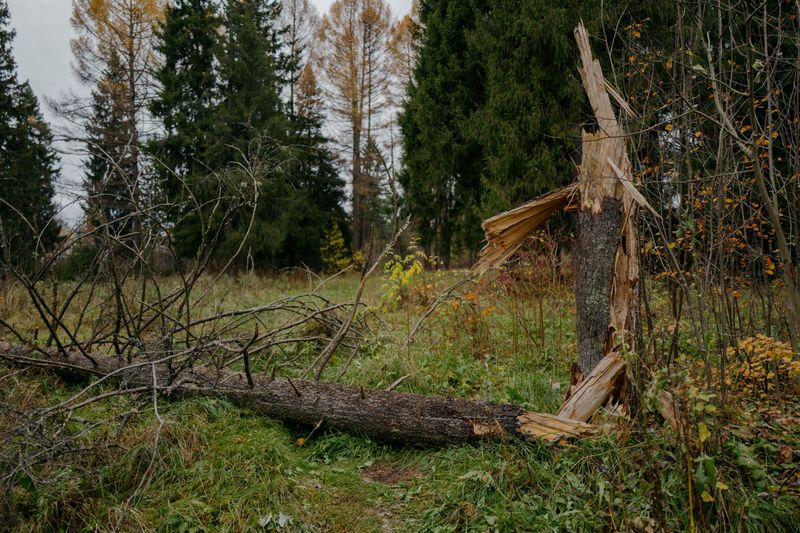
A little planning goes a long way when the wind starts howling. Most storm damage cannot be stopped completely, but smart choices before and after Friday can keep your family safe and spare your property from costly surprises.
Begin by checking the forecast from your local National Weather Service office. Watch for wind advisories or high wind warnings, since those alerts tell you how strong the gusts may get and when they will peak.
Next, look around your yard with fresh eyes. Move cars out from under large trees, ideally into a garage or an open spot.
Bring patio furniture, trash cans, and potted plants indoors or secure them, because flying objects can break windows. Newly planted trees may need loose staking so they can sway a bit without tipping over.
During the storm, stay inside and away from windows facing big trees. Skip walks under tall branches when gusts are strong, even if the trees look healthy.
After the wind calms, cleanup brings its own risks. Stay far away from downed power lines, and treat every line as live, even if it looks harmless. Call your utility company right away to report it, and keep kids and pets well back.
Small twigs and branches are easy weekend chores. Large broken limbs, hanging branches, or trees resting on roofs are a different story, and a certified arborist should handle them safely.
Fall windstorms in Michigan regularly knock out power for thousands of homes. Charging phones, gathering flashlights, and stocking a few snacks ahead of time means you will ride out Friday calm, comfortable, and ready.