Why Geranium Leaves Turn Red on a Cold Windowsill in Michigan
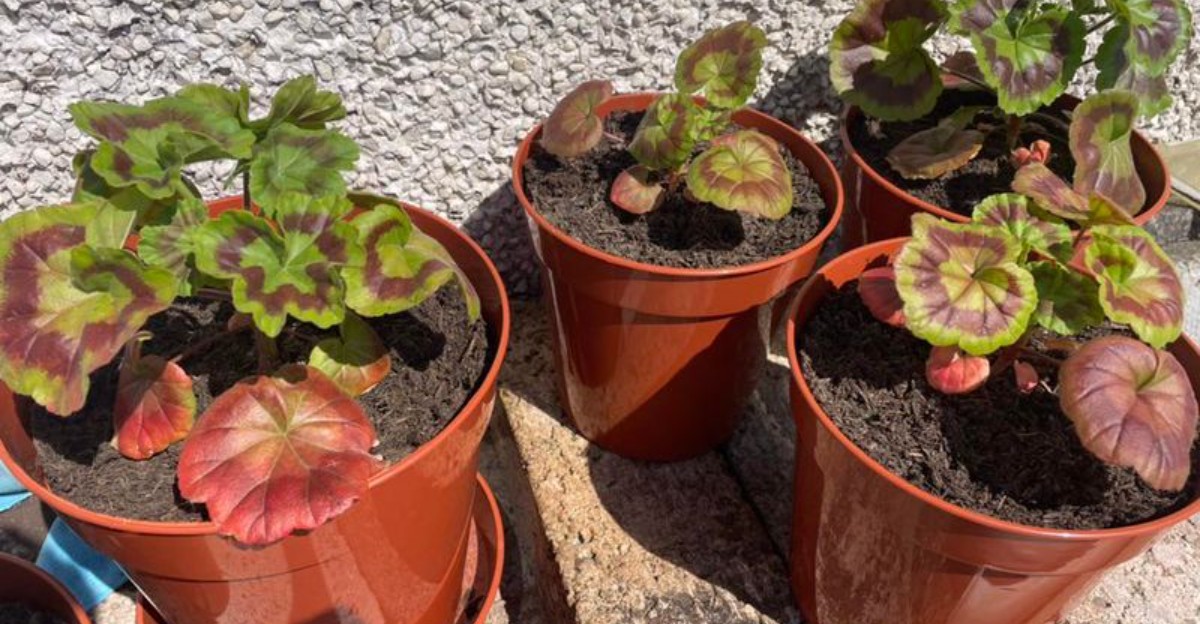
A green leaf can blush red without a single tree in sight, and it can happen right next to your kitchen sink. The color comes from the same family of pigments that paints blueberries and red cabbage.
I first noticed it on a gray January morning in Michigan. One of my favorite potted plants had rosy edges on its lower leaves, like it had been out sledding all afternoon.
I know how frustrating it can be when a plant you rescued from the frost suddenly looks unwell. My first worry was disease, then bugs, then my own watering habits. The truth turned out to be simpler and a lot more interesting.
There’s actually a good reason why a plant would change color while sitting safely indoors. The real question is whether that rosy glow is a harmless quirk or a quiet call for help.
1. Those Rosy Geranium Leaves Are Sending You a Signal
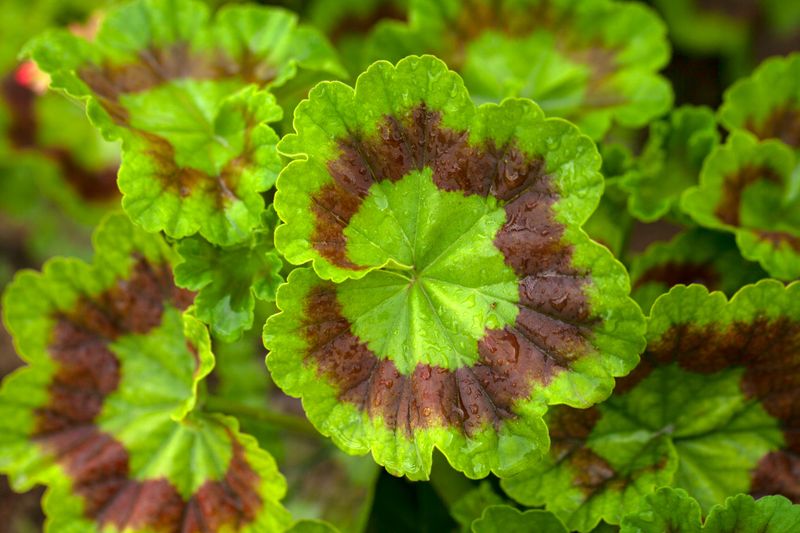
Plants can’t shiver or grab a sweater, but geraniums have their own way of reacting to a chill. That red tint on the leaves is a pigment called anthocyanin, and the plant makes more of it when life gets stressful.
Anthocyanins are the same natural pigments that color red apples, cherries, and the fall leaves of maple trees. Scientists think they act a bit like sunscreen.
They help shield the leaf’s food-making parts while the plant is under pressure from cold, bright light, or poor nutrition.
Green chlorophyll usually hides these red pigments. When conditions turn tough, chlorophyll can fade while anthocyanin builds up. The result is that striking rosy or purplish blush you see along the edges or across the older leaves.
So the color itself is not a disease. It is a response, and it tells you something in the plant’s surroundings has shifted. On a winter windowsill, the most common trigger is simple: the plant is colder than it likes.
Treat the red leaves as a friendly note, not an alarm bell. Most geraniums bounce back well once you figure out what they are reacting to and make a few easy changes.
2. A Drafty Window Can Feel Like Late Fall to Your Pelargonium
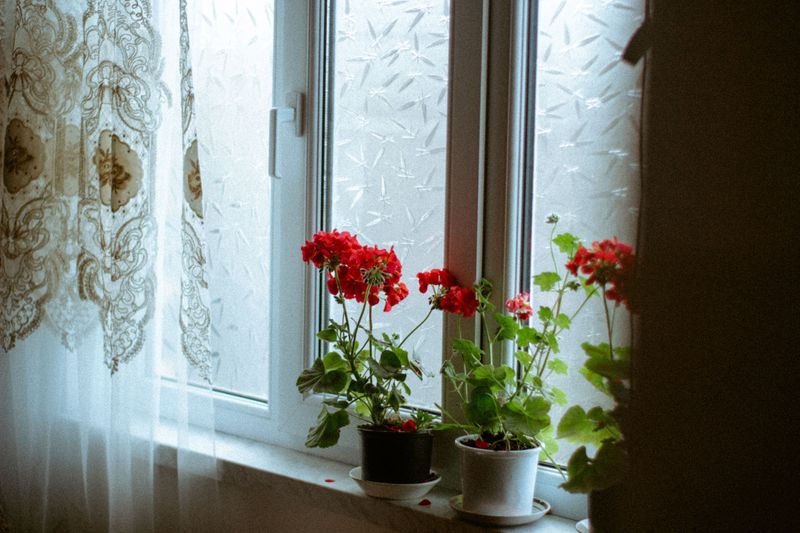
Garden geraniums are really pelargoniums, and their ancestors come from South Africa. That sunny family history explains a lot. These plants enjoy warm days and get grumpy when temperatures slide too low.
Growth slows noticeably once the air drops below about 60 degrees. Glass right against the leaves can feel much colder than the rest of the room, especially at night.
On a January night in Michigan, a windowsill spot can easily dip into the 40s even when your thermostat reads 68.
Leaves that touch the glass often redden first. Older, lower leaves also tend to color up before the newer growth does.
Here’s a quick test I like. Set an inexpensive thermometer on the sill overnight and check it first thing in the morning. You might be surprised by how chilly that little ledge gets.
The fix is often easy. Pull the pot back a few inches from the glass at night, or slip a piece of cardboard between the plant and the window after sunset.
Closing curtains behind the plant, not in front of it, can also trap cold air against the leaves, so watch that setup carefully.
3. Cold Roots Can Leave Geraniums Hungry for Phosphorus
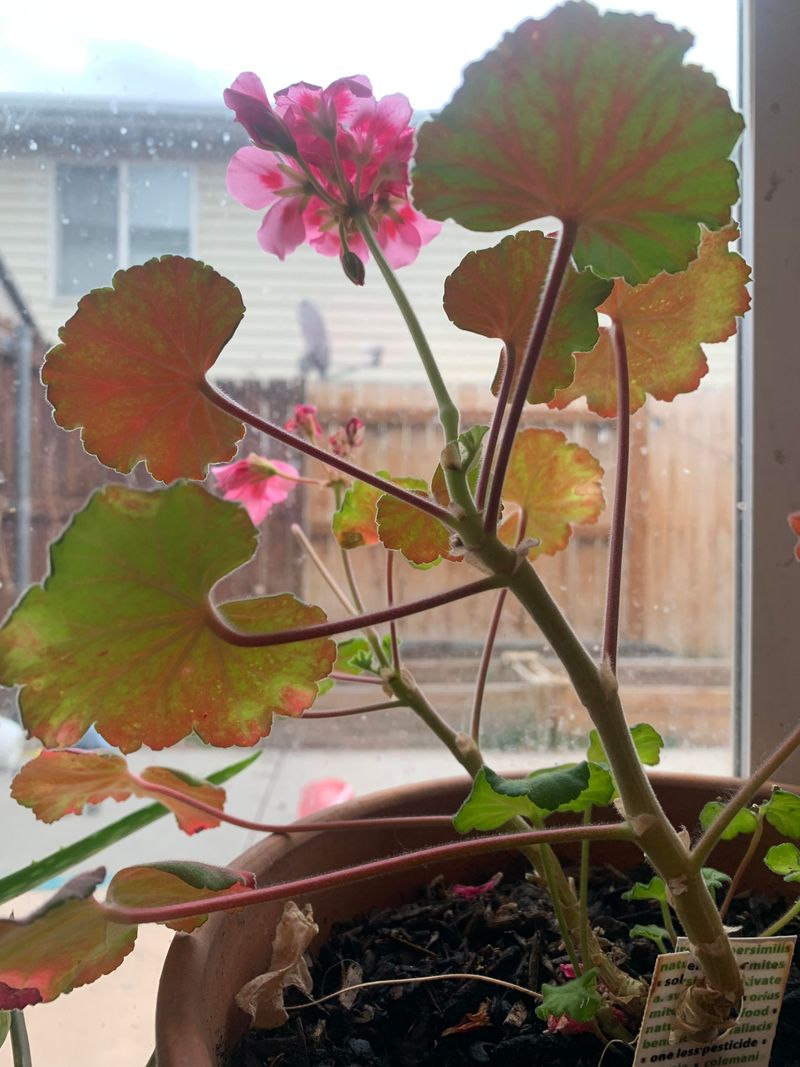
Some of the strangest plant problems happen underground, out of sight. A geranium can sit in perfectly decent potting mix and still act like it is starving.
When roots get chilled, they take up nutrients much more slowly. Phosphorus is one of the first to suffer. Greenhouse growers know that a classic sign of phosphorus shortage is reddish-purple coloring on the lower, older leaves.
That means two things can be happening at once. The cold air reddens the leaves directly, and the cold soil makes it harder for the plant to feed itself.
Don’t rush to the fertilizer bottle, though. Adding more phosphorus to cold soil rarely helps, because the roots still can’t use it well. Warming the roots usually works better.
Try lifting the pot off a cold stone or tile sill. A cork mat, a folded towel, or a small wooden block can make a real difference. I have also had luck moving pots to a plant stand a foot or so from the window.
If your plant has lived in the same soil for years, fresh potting mix in spring is a smart move. Old, worn-out soil holds fewer nutrients for those hungry roots.
4. Soggy Soil in a Geranium Pot Makes the Redness Worse
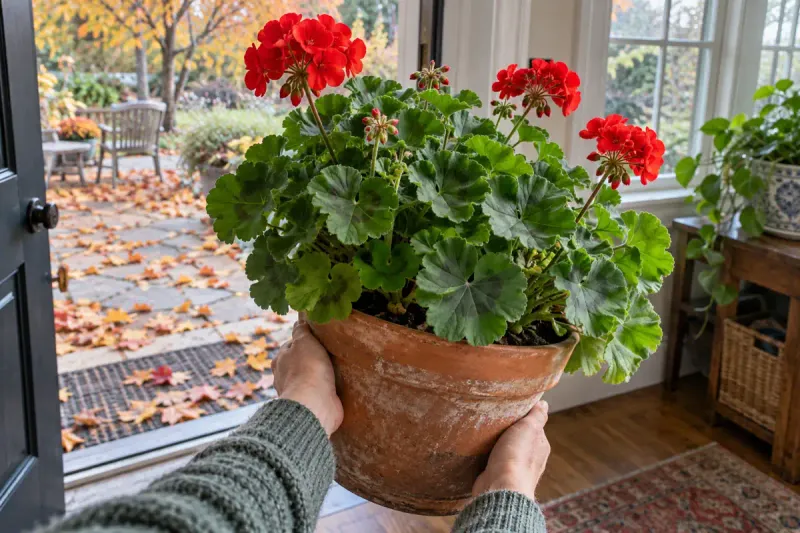
My grandmother had a rule for geraniums. Water them like you are a little forgetful. She was onto something.
Geraniums like their soil to dry out slightly between drinks. In winter, with short days and cool air, they use much less water than they did in July. A pot that stays wet sits cold and heavy, and the roots struggle to breathe.
Stressed roots can’t move nutrients well, so the leaves may redden or yellow. Long-term soggy soil also invites root rot, which is a much bigger headache than a little color change.
Underwatering can stress the plant too, but in Michigan homes during winter, too much water is the more common mistake. The cool sill slows drying even further.
Here are a few easy habits: Push a finger about an inch into the soil before watering. If it feels damp, wait a few more days. Empty any water that collects in the saucer after about 15 minutes.
Use pots with drainage holes. Terracotta helps because it lets moisture escape through its walls. A quick lift of the pot also tells you a lot, since dry soil feels surprisingly light.
5. Bright Winter Sun on Geranium Foliage Plays a Role Too
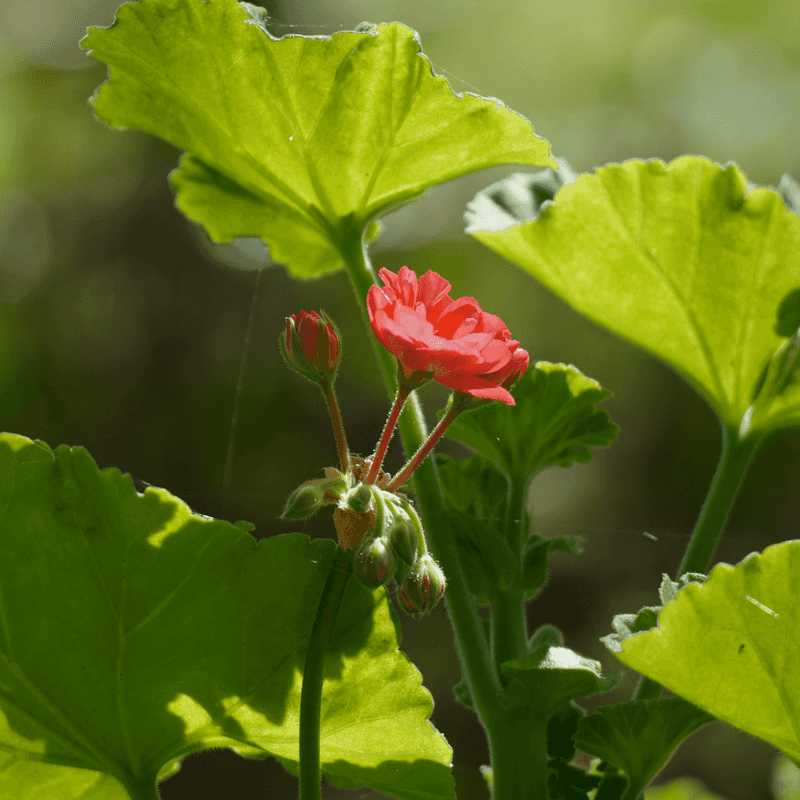
Light is a bit of a puzzle with geraniums indoors. They need plenty of it, yet strong light combined with cold can push the leaves toward red.
Plants use anthocyanins partly as a light shield. When it’s cold, a leaf can’t process sunlight as fast as usual. Bright rays on chilly leaves can overload the system, so the plant adds red pigment for protection.
That explains why a geranium on a sunny but cold south window may blush more than one in a warmer, dimmer room. The sunshine isn’t harmful by itself. The chill just changes how the leaf handles it.
Please don’t move your plant into a dark corner, though. Geraniums kept in low light grow long, floppy stems and pale leaves, which is a different problem altogether.
A bright south or west window is still the best home through a Michigan winter. Just keep the leaves from touching the glass and protect the plant from cold nighttime air.
If your house is short on sunny windows, a simple LED grow light works nicely. Set it on a timer for 12 to 14 hours a day, and keep the light several inches above the foliage.
6. Bringing Geraniums Indoors Before Frost Sets Them Up Well
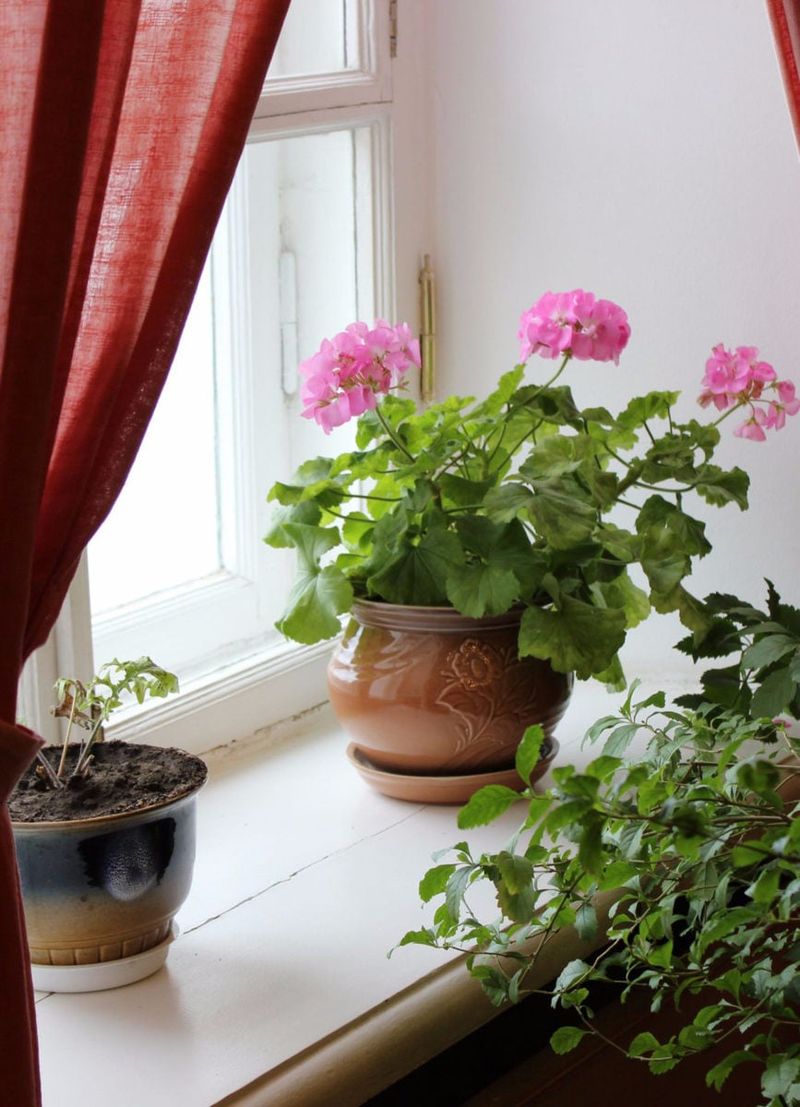
Timing your move indoors can save a lot of winter fuss. Geraniums handle cool nights fairly well, but frost will turn their soft stems to mush.
Across Michigan, the first fall frost usually arrives somewhere from mid-September in the Upper Peninsula to mid-October in the southern part of the state. Watching your local forecast is the best guide.
Many gardeners bring plants in once nights keep dipping into the 40s. Before the move, trim the plant back by about one-third to one-half.
A smaller plant uses less water and fits better on a sill. Check under the leaves and along stems for aphids, whiteflies, or spider mites so you don’t carry pests inside.
Give the plant a little time to adjust. A few days in a bright porch or garage, if it stays above freezing, can ease the shock of moving from outdoor sun to indoor light.
Some reddening after the move is normal. The plant is reacting to new light, temperature, and humidity all at once. Older leaves may also yellow and drop. As long as new growth looks healthy, your geranium is settling in just fine.
7. A Simple Winter Routine Keeps Your Geranium Leaves Greener
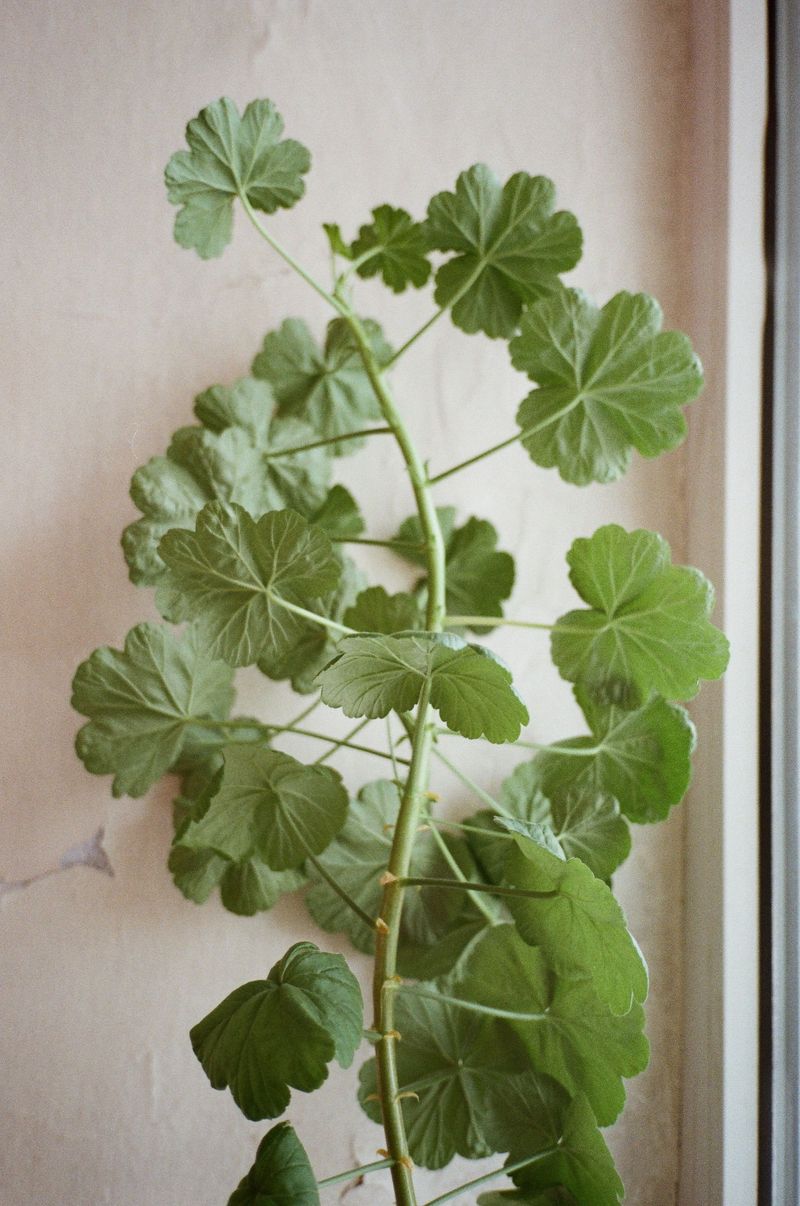
Winter is a resting season for indoor geraniums, and that takes some pressure off you. A light touch tends to work better than lots of attention.
Aim for daytime temperatures around 65 to 70 degrees and nights near 55 to 60. Cooler nights are fine, but steady temperatures in the 40s are when leaf color and growth really suffer.
Keep plants away from blasting heat vents too, since dry hot air brings its own stress. Skip fertilizer through the darkest months. Start feeding lightly again in late February or March, once the days stretch out and fresh growth appears.
Pinch off yellow or crispy leaves now and then. Good airflow helps prevent gray mold, a common fungus on crowded indoor geraniums.
Here’s the reassuring part. Red leaves usually won’t turn green again, but they also aren’t a sign of serious trouble. As conditions improve, the new leaves should come in a healthy green.
By May, after frost risk passes in your part of Michigan, your geranium can head back outside. Ease it into full sun over a week or so. Soon those rosy winter leaves will be a fun story to tell.