Pennsylvania Native Plants That Look Beautiful And Feed More Songbirds Through Winter
A January morning in a Pennsylvania backyard, everything buried under fresh snow, and the only real color anywhere is a cluster of glowing red berries near the fence line.
Within minutes, a flock of robins drops in. Then a pair of bluebirds. They strip fruit while the rest of the yard sits completely silent around them.
That single shrub is doing more for local wildlife than an entire lawn ever could manage.
Most yards go quiet in winter, offering nothing but bare branches and dormant grass until spring finally shows up. A few smart plant choices change that completely, turning a snowy backyard into an actual feeding ground.
Native plants recommended by Penn State Extension are the place to start if you want a yard that stays interesting and keeps songbirds fed from December straight through March.
Here’s what actually earns its keep once the temperature drops.
1. Winterberry Holly
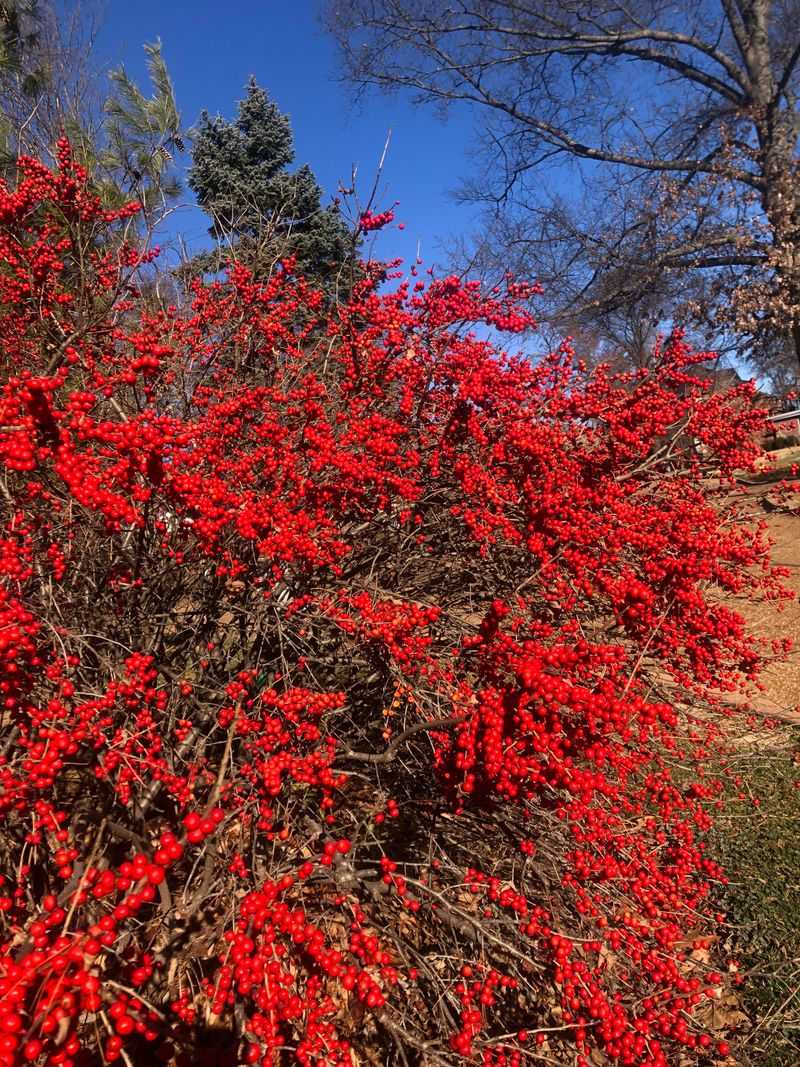
Few native shrubs put on a show quite like this one. After the leaves drop in late fall, bare gray stems are left studded with glossy red fruit that can hang on for months without fading.
Penn State Extension lists it among the top native shrubs for winter bird food, and robins, bluebirds, cedar waxwings, and mockingbirds all show up for it eventually.
The berries run fairly low in fat, so birds often leave them alone until harsher weather arrives, which is exactly when that food matters most.
Here’s the part garden centers sometimes gloss over. This shrub is dioecious, meaning male and female flowers grow on separate plants entirely.
Only female shrubs produce berries, and they won’t fruit at all unless a compatible male grows nearby, usually within about 50 feet.
Don’t assume one lone female shrub will fill up with fruit on its own, because it simply won’t happen. A common ratio is one male for every three to five females, with bloom times that overlap.
It likes moist, acidic soil and tolerates wet spots where other shrubs tend to sulk. Full sun brings the heaviest fruit set, though it handles part shade reasonably well too.
Plant it where you can see it from a kitchen window. Snow, red berries, and hungry birds make one of the best free winter shows Pennsylvania has to offer, year after year without fail.
2. Viburnum
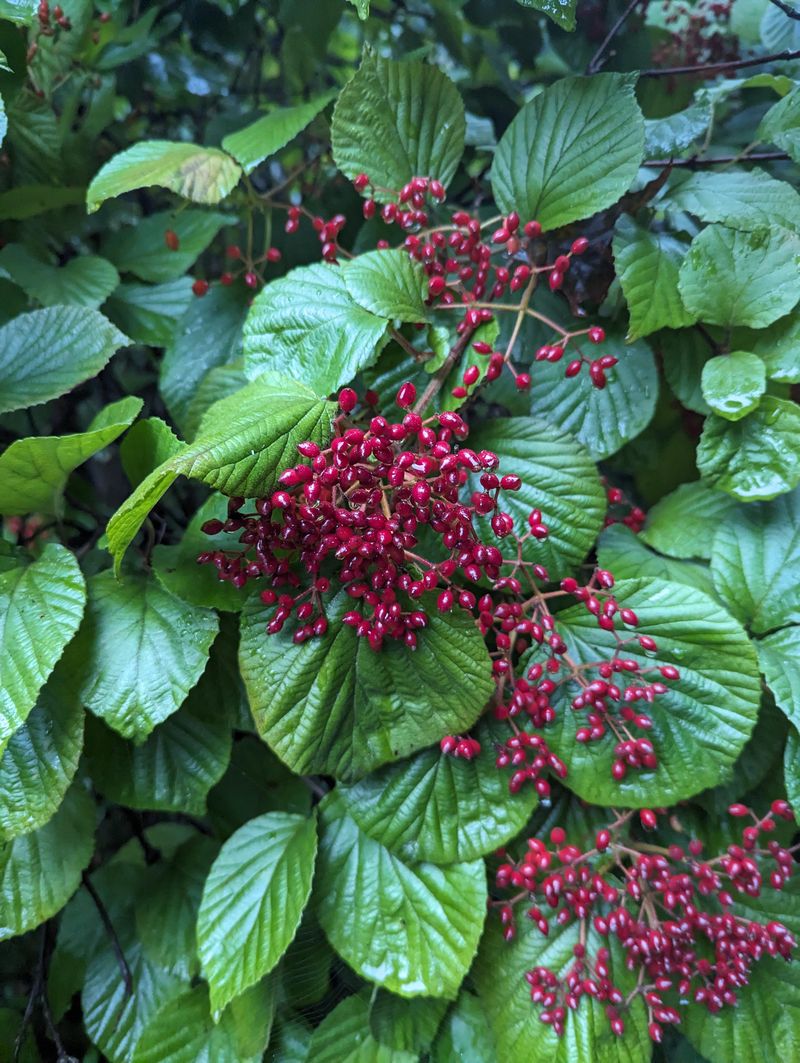
Ask a Pennsylvania gardener for one shrub that earns its keep in every season, and this one comes up fast.
Spring brings flat white flower clusters, summer offers dense green cover, and fall turns the leaves shades of burgundy and gold.
Then come the berries. This species, along with relatives like blackhaw and nannyberry, produces blue-black or dark purple fruit that often clings to the branches long after other shrubs have already been picked clean.
Penn State Extension recommends native viburnums for wildlife value, and the list of visitors runs long: cardinals, thrushes, waxwings, catbirds, and flickers among them.
Nannyberry fruit in particular tends to shrivel into something like a small prune and stays available deep into the cold months ahead.
Your Pennsylvania Garden Changes Every Week. Your Plan Should Too.
Gardening in Pennsylvania changes quickly throughout the season. Every Friday you’ll receive a simple weekly plan showing exactly what to plant, prune, fertilize, harvest, and protect so you never miss the right timing.
Most native viburnums handle a range of conditions, from full sun to partial shade, and they aren’t fussy about soil as long as drainage is decent.
Arrowwood specifically is the workhorse for average yards and takes pruning well if shaping is needed.
One tip worth knowing: fruit set improves when more than one shrub of the same species goes in the ground, since cross-pollination between individuals boosts berry production noticeably.
Skip the non-native ornamental types sold purely for their looks. Sticking with local species means better food value and no risk of your shrub escaping into nearby woods later.
3. Staghorn Sumac
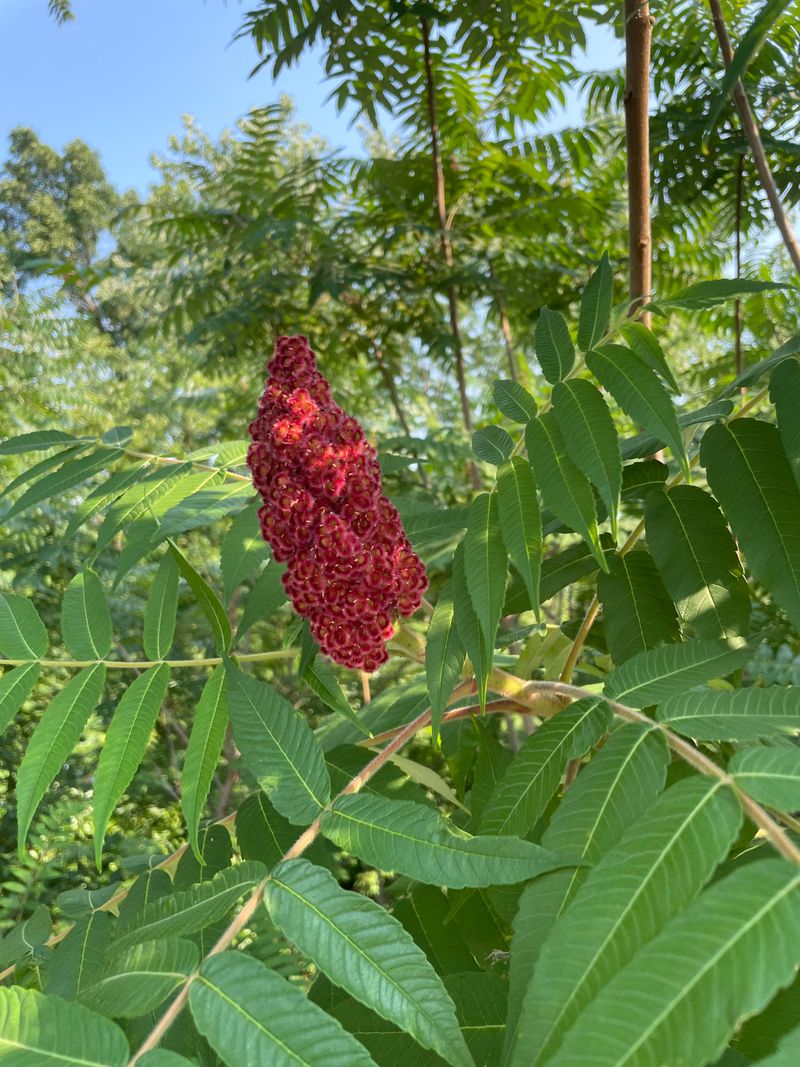
Every good pantry needs something tucked in the back of the shelf for lean times, and this plant plays that role along Pennsylvania roadsides and field edges all winter long.
Its fuzzy, cone-shaped red seed clusters stand straight up at branch tips and stay put through wind, ice, and snow without much fuss.
Birds usually pass them over in autumn when tastier fruit is around, which is precisely what makes this plant so useful later.
By February and March, once berry supplies have run dry elsewhere, those persistent clusters become a genuine lifeline.
Robins, bluebirds, chickadees, cardinals, and ruffed grouse have all been recorded feeding on it, and it appears on Penn State Extension lists of natives that support wildlife through winter.
The plant itself is tough as nails, thriving in poor, dry, rocky soil where little else takes hold at all. Fall color is a blazing orange-red that rivals anything sold in a nursery catalog.
Fair warning: it spreads by root suckers and can form a colony fast if left unchecked. That habit makes it fantastic for a bank, hedgerow, or wild corner of a larger property, and a genuine headache in a tidy foundation bed.
Give it room and let it do its thing. Fun detail behind the name: the velvety young twigs feel like a deer antler in velvet, which is exactly how the plant earned its title.
4. Eastern Red Cedar
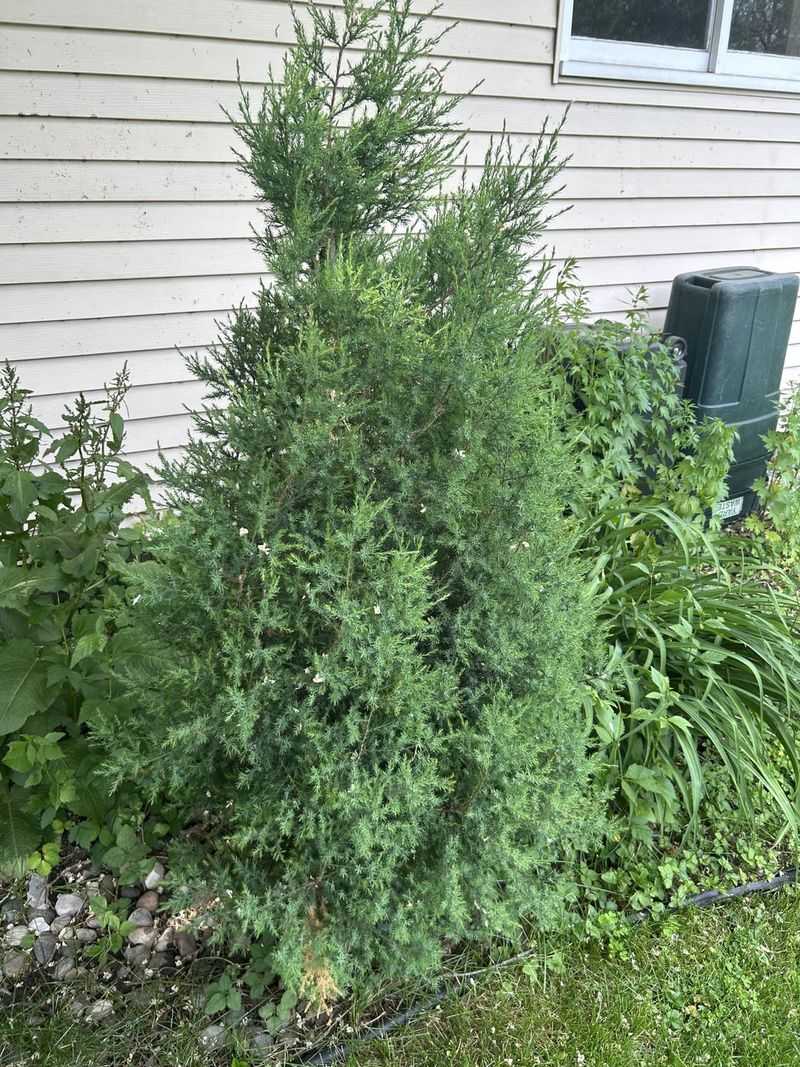
Two jobs, one tree. This species hands songbirds a meal and a warm place to sit out a blizzard, a combination that’s genuinely hard to beat in a winter landscape.
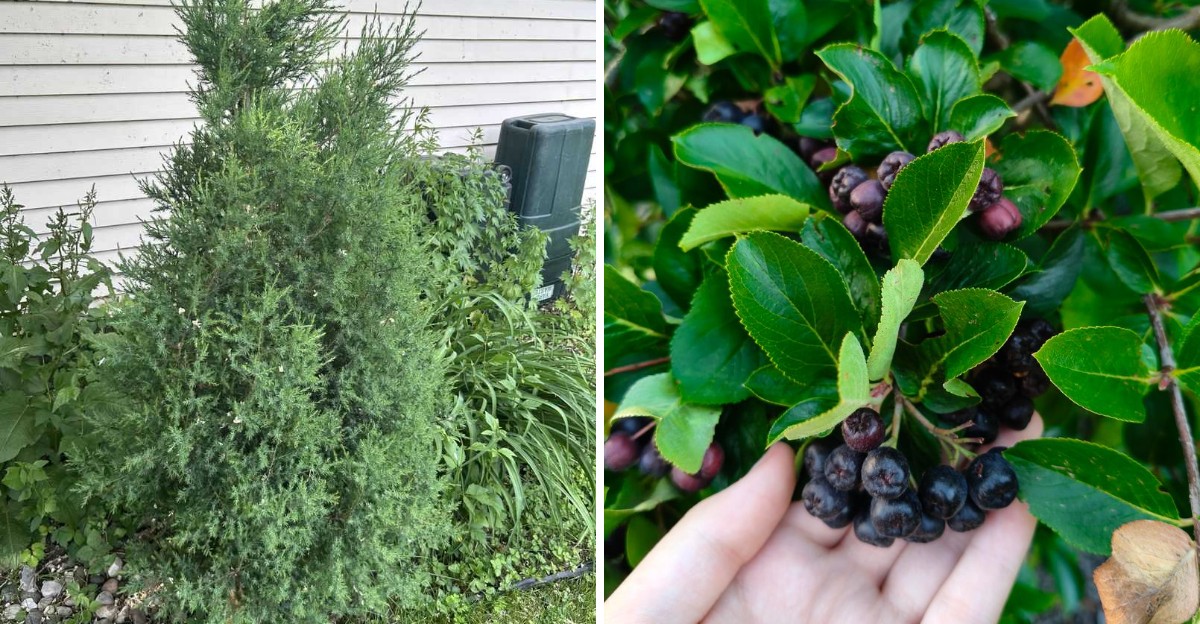
Despite the name, it’s actually a juniper, and its fruit is really a soft, berry-like cone with a frosted blue coating. Cedar waxwings are so fond of it that the bird was named after the tree, and bluebirds, robins, and yellow-rumped warblers pile on too.
The dense, prickly foliage matters just as much as the food supply. On brutal nights, sparrows, juncos, and finches tuck into the interior branches where wind can’t reach them, and that shelter cuts down on the energy they burn staying warm.
Penn State Extension notes this as a native evergreen with strong wildlife value, and it grows happily in dry, rocky, or limey soils that defeat fussier trees entirely. Full sun is really the main requirement it asks for.
One caution before planting: it’s an alternate host for cedar-apple rust, so avoid placing it right beside apple, crabapple, or hawthorn trees you actually care about.
Like winterberry, this species has separate male and female plants, and only females bear the blue cones. Buying a named female cultivar, or planting a small grouping, gives a much better shot at fruit.
5. Gray Dogwood Draws A Steady Crowd
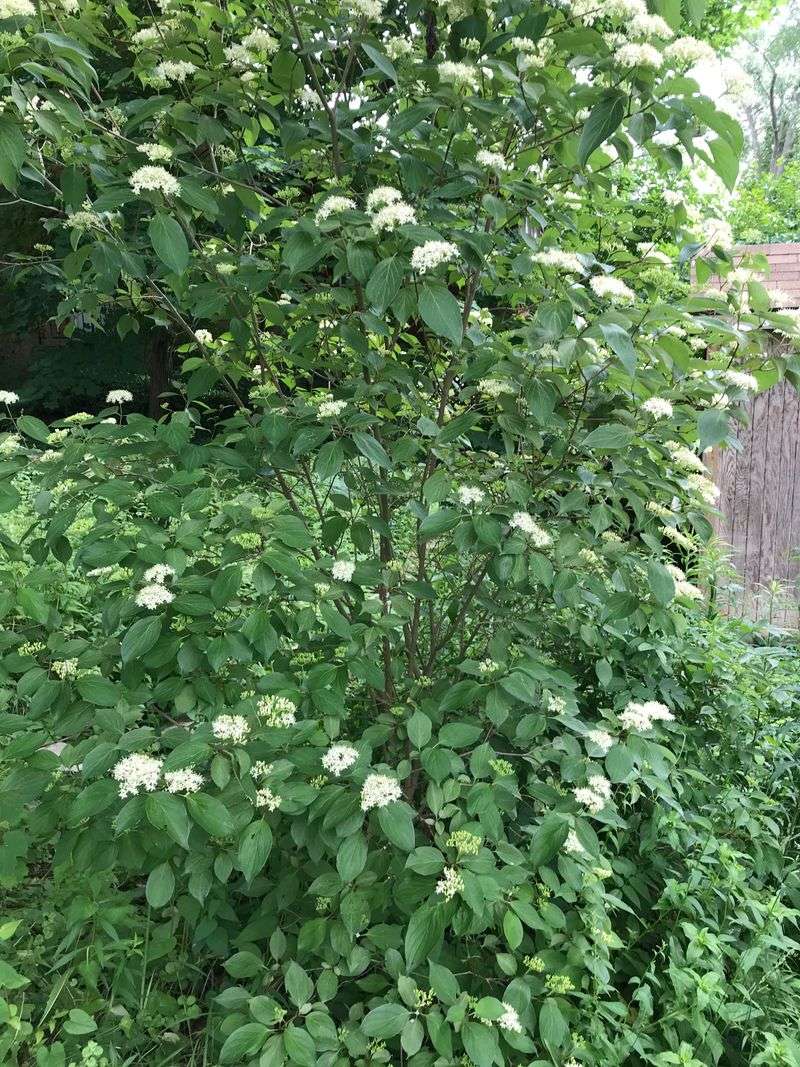
Some plants attract a trickle of birds. This one attracts a crowd, and it does it without asking for much in return.
The white berries sit on bright pinkish-red stalks, and even after birds strip the fruit clean, those colorful stems keep the shrub looking sharp against snow all winter.
More than a hundred bird species are reported to eat the fruit, including bluebirds, thrushes, cardinals, woodpeckers, and flickers.
Because the berries run high in fat, they tend to get eaten earlier in the season rather than lingering until March.
That early feeding still matters enormously, since it helps migrating birds fuel up and gives resident species a strong start heading into winter.
Penn State Extension includes it among recommended native shrubs for wildlife plantings, and its toughness is a big part of the reason why. It tolerates dry soil, wet soil, clay, sun, and part shade with very little complaint.
Left alone, it spreads by suckers into a thicket, which happens to make excellent nesting habitat for catbirds, robins, and sparrows.
For tidy edges, plan on cutting back suckers each spring, or plant it somewhere a colony is genuinely welcome.
Pair it with a viburnum and some winterberry, and you build a layered hedgerow that provides food across several months instead of one short burst.
6. Chokeberry
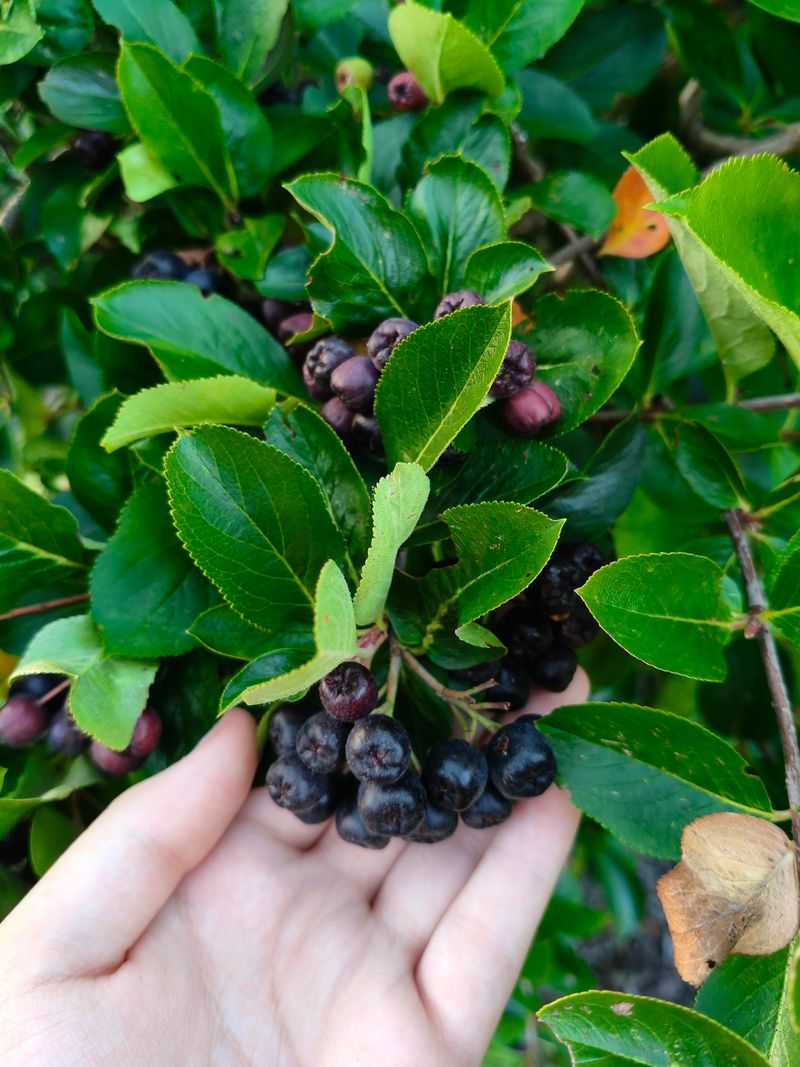
This one has an unfortunate name and a genuinely great resume. Known by its botanical name Aronia, this native shrub delivers white spring flowers, deep crimson fall foliage, and fruit that hangs on when most berries are long gone.
A red-fruited relative keeps glossy scarlet berries into winter, while this darker variety offers deep purple fruit and a lower, neater shape overall.
Birds including cedar waxwings, thrushes, catbirds, and meadowlarks feed on it, generally after frost has softened and sweetened the berries a bit.
The fruit is astringent, which is exactly why it persists so long on the branch. Nothing rushes to eat it in October, so it sticks around as emergency rations for January and February when little else is left.
Penn State Extension lists it among natives worth planting for wildlife interest, and it handles a wide range of sites, from moist streamside soil to average garden beds. Full sun brings the heaviest fruiting and the most intense leaf color come fall.
This variety tops out around three to six feet, making it one of the few bird-feeding natives that fits comfortably in a small suburban bed or along a walkway.
Worth knowing: the berries are edible for people too, loaded with antioxidants, and often turned into juice or jam. Share the harvest if you like, but the birds have first claim once the cold really sets in.
7. American Holly
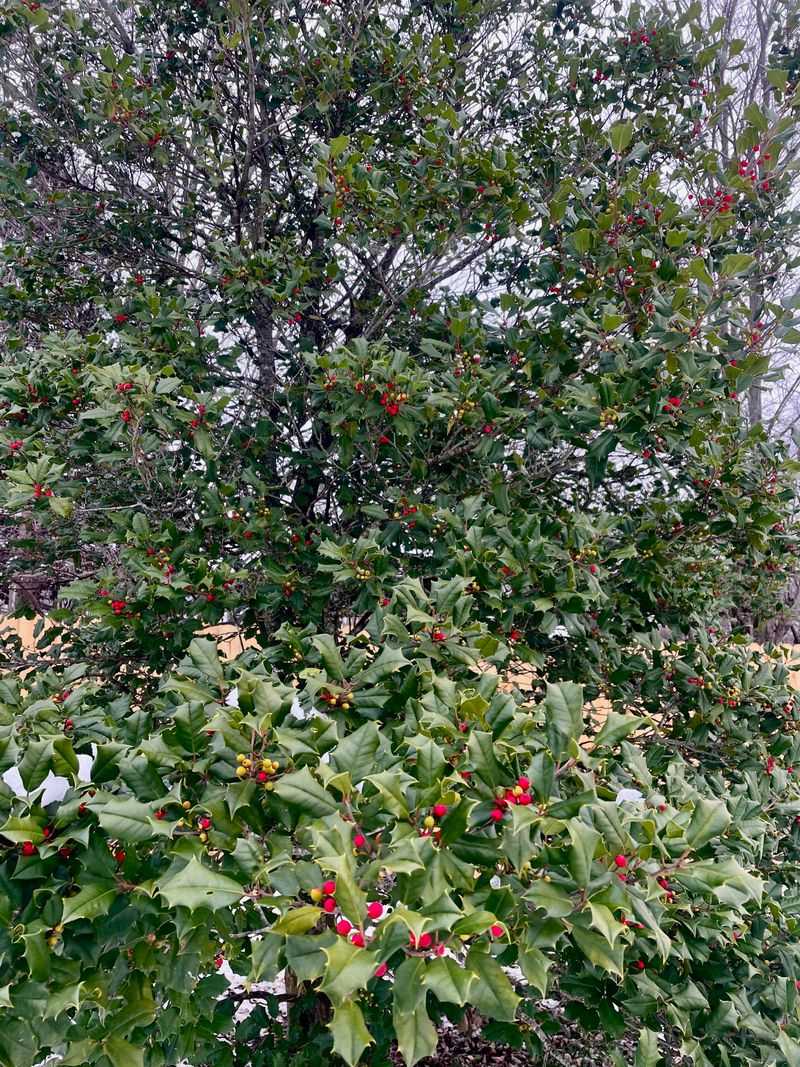
Snow settles differently around this tree than almost anywhere else in a Pennsylvania yard.
Glossy, spiny evergreen leaves stay green all winter, and bright red berries cling to the branches straight through the coldest stretch, giving both food and shelter in a single plant.
Penn State Extension includes it among native evergreens valuable for wildlife, and the reasoning tracks with everything else on this list.
Berries feed robins, mockingbirds, cedar waxwings, and bluebirds, often later in the season once softer fruit elsewhere has already run out.
Like winterberry and eastern red cedar, this tree is dioecious, so only female trees produce the berries everyone’s after.
A male planted within roughly a hundred feet handles pollination, and one male can service several females at once without much trouble.
The evergreen foliage does double duty beyond food. Dense, spiny leaves make excellent cover from wind and predators, and small birds regularly tuck into the interior branches on the coldest nights of the year.
Growth is slow, which surprises a lot of first-time buyers expecting a quick screen. Patience pays off here, since a mature specimen easily lives decades and only gets more valuable to wildlife as it fills out.
It tolerates a range of soils but prefers some moisture and does best with a little protection from harsh winter wind. Underplant it near a fence line or building corner, and birds get shelter on two sides instead of just one.
8. Northern Bayberry
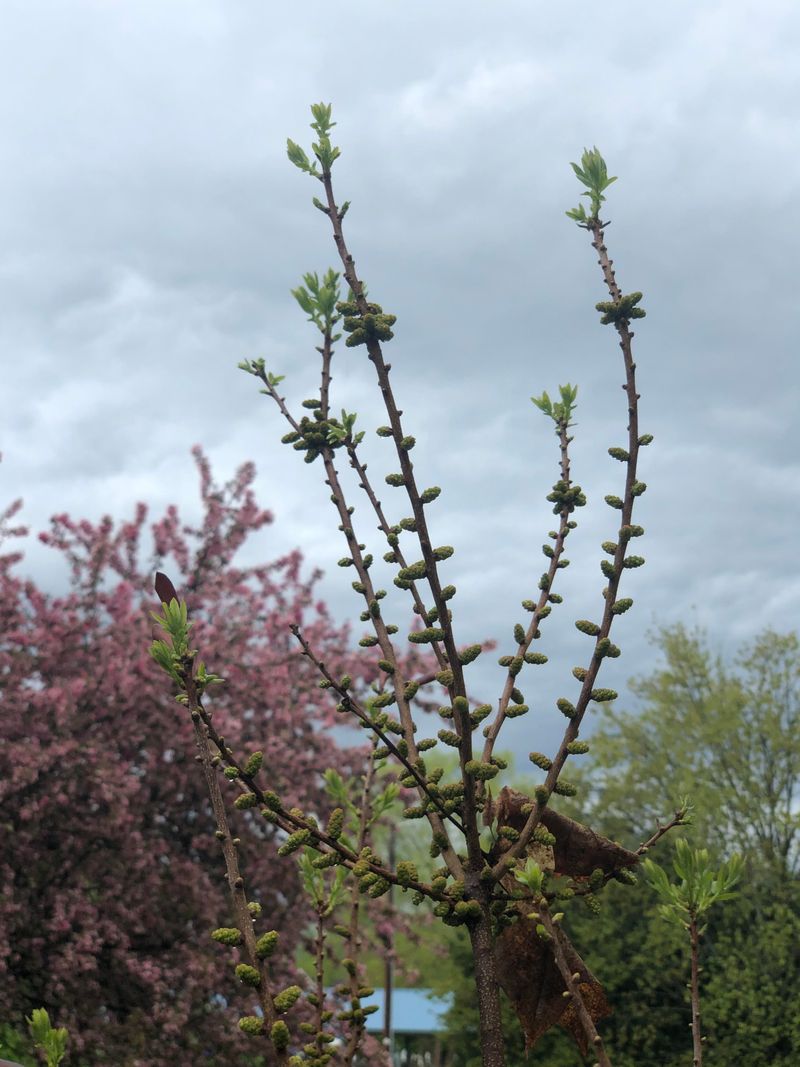
Some plants matter less for how much fruit they carry and more for how long that fruit actually sticks around. This shrub is built entirely around that idea.
Small, waxy, grayish berries coat the stems by fall, and unlike juicier fruit that vanishes fast, these hang on stubbornly into late winter.
The wax coating is exactly why. Most birds can’t easily digest it, and that inconvenience turns into an advantage once easier food runs out.
Yellow-rumped warblers are the headline species here. Few other North American songbirds can process that waxy coating efficiently, which lets this bird overwinter farther north than most warblers manage, largely thanks to bayberry alone.
Tree swallows, catbirds, and bluebirds take advantage too, especially by late winter.
Penn State Extension notes native bayberry as a solid choice for difficult sites, and it earns that reputation honestly.
Sandy, salty, poor, and dry soils don’t faze it, which makes it a natural fit for exposed slopes or spots near a driveway where road salt splashes every winter.
Like several other entries here, it’s dioecious, so a mix of male and female plants is necessary for reliable berry production. Planting several together as an informal grouping solves that automatically.
Semi-evergreen in milder Pennsylvania winters, it holds some leaf cover into the season, adding a bit of shelter alongside the food it’s already providing.