Why Hummingbirds Chase Each Other Away From Georgia Feeders
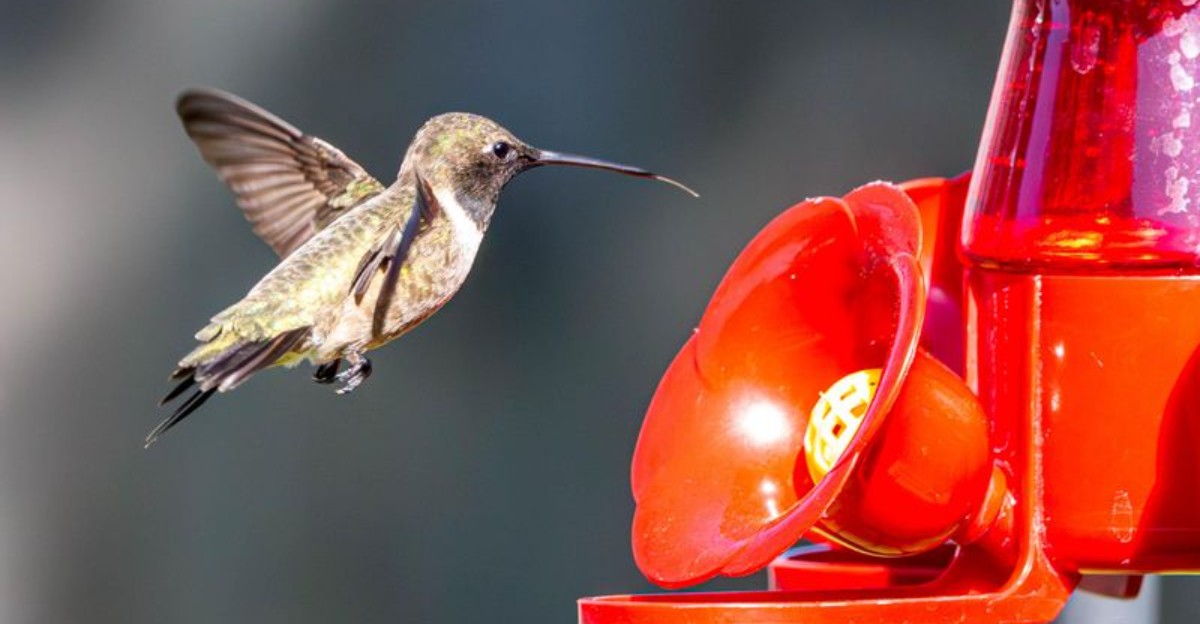
Your hummingbird feeder can go from peaceful to chaotic in seconds when one tiny bird decides nobody else gets a turn. Suddenly, every visitor seems to be chasing another away.
That behavior may look like a fight, but there is a practical reason behind all that commotion.
Hummingbirds depend on reliable food sources and can become surprisingly protective when they find one. Around Georgia feeders, that instinct becomes especially noticeable when several birds arrive in the same area.
One determined bird may even spend much of the day guarding its favorite feeding spot.
Watch closely, and you will start noticing how the chases follow a pattern rather than happening without reason. Understanding that pattern can also help you reduce some of the tension.
Those speedy feeder battles make much more sense once you know what drives them.
1. Those Fast Chases Around Your Feeder Are Normal Behavior
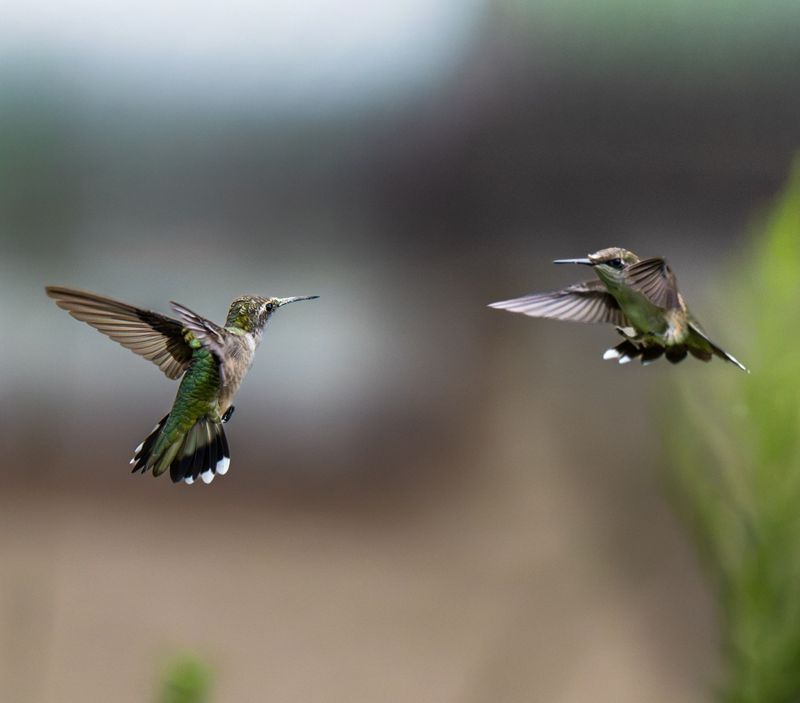
Nobody warns new feeder owners about the noise. Ruby-throated hummingbirds squeak, dive, and buzz past each other all summer long in Georgia yards.
Chasing is standard behavior for the species. Wild hummingbirds defend flower patches the same way, and a feeder simply looks like an unusually rich patch of blooms.
Most of these skirmishes end quickly. One bird backs off, both scatter into the shrubs, and within a minute someone is back at the port sipping again.
Injuries from these chases are uncommon.
The birds are quick, and the goal is usually to push a rival out of the area rather than make contact.
Watching closely helps. You will start noticing the same routes, the same favorite branch, and the same bird returning to the same feeding port again and again.
Sound plays a big role too. The sharp chip notes you hear are part of the argument, and they often start before either bird moves.
Take it as a sign your setup is working. Feeders that stay quiet all season usually are not attracting many birds in the first place.
The squabbling can look rough to people who expected peaceful sipping. In practice, it is just how these birds sort out access to a good meal.
2. Hummingbirds Can Become Very Protective Of Reliable Food Sources
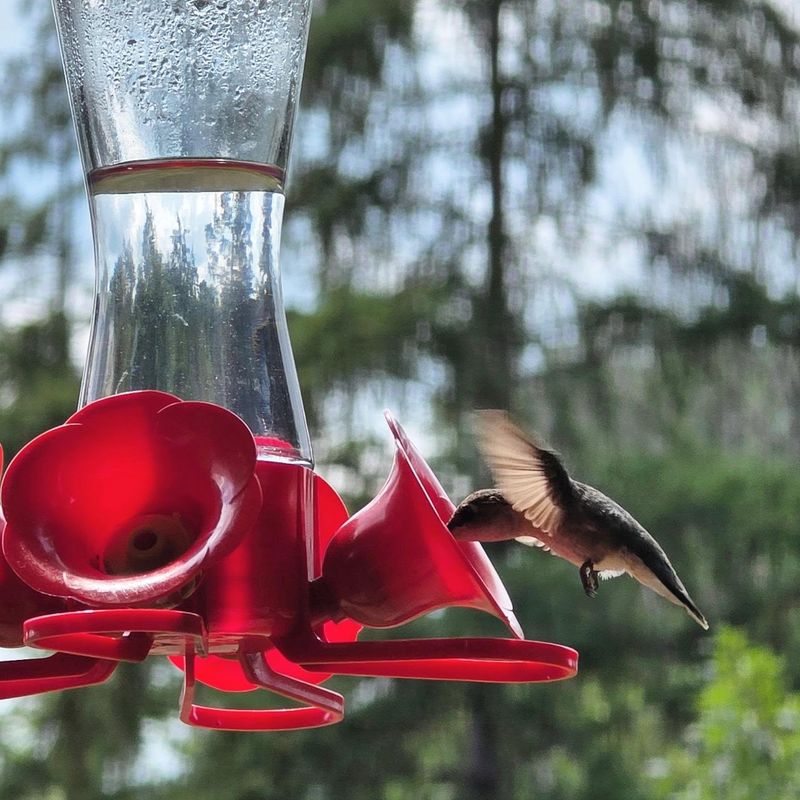
A steady feeder is worth fighting for. Once a hummingbird figures out that your sugar water never runs out, it treats that spot as personal property.
Flowers are unpredictable. Nectar levels rise and fall through the day, and blooms fade, so a refilled feeder becomes the most dependable meal around.
Energy math drives the whole thing. Hummingbirds burn fuel fast, and guarding one rich source costs less effort than searching for scattered blossoms.
That is why the dominant bird at your feeder may spend more time chasing than drinking.
Control of the food matters as much as the food itself.
Consistency on your end strengthens the habit. Feeders that get refilled on schedule tend to attract the same guard bird week after week.
Across Georgia, this shows up strongest in yards with just one feeder. A single station is simply easier to claim and hold.
Your Georgia Garden Changes Every Week. Your Plan Should Too.
Gardening in Georgia changes quickly throughout the season. Every Friday you’ll receive a simple weekly plan showing exactly what to plant, prune, fertilize, harvest, and protect so you never miss the right timing.
You can soften it a little with flowers. Native plants like trumpet honeysuckle, bee balm, and salvia spread the feeding out naturally.
Results will vary by yard, sun exposure, and what is blooming nearby. Still, more nectar options generally means less pressure on one hanging bottle.
Nothing about the behavior is unusual. Protecting a reliable meal is just good sense for a bird that eats almost constantly.
3. Feeder Chases Can Become More Noticeable As More Birds Arrive
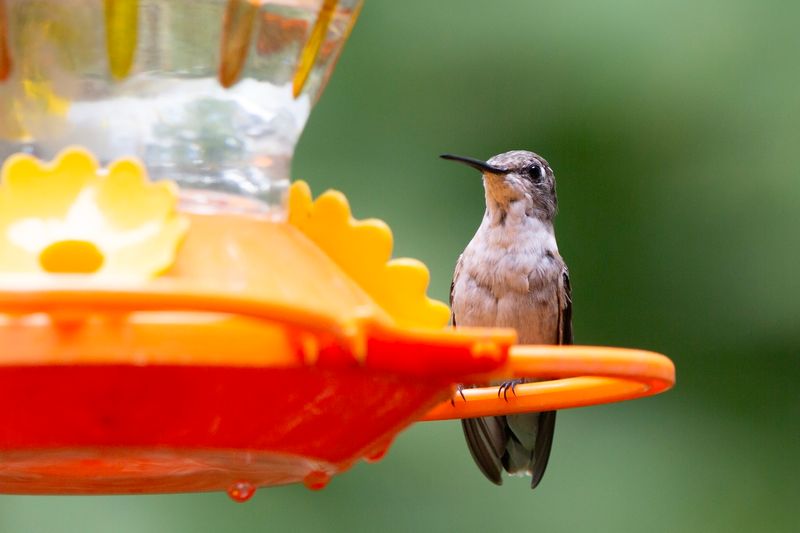
Late summer changes everything. By August, young birds have fledged and southbound migrants start filtering through, so feeder traffic jumps.
More birds means more arguments. A feeder that hosted two regulars in June might see six or seven visitors competing by early September.
Migration timing in Georgia generally runs from mid-July into October, with numbers usually peaking around late August and early September.
Exact dates shift year to year with weather.
Newcomers do not know the local rules. A passing migrant will try the feeder anyway, which sets off another round of chasing.
Fuel is the reason. Birds heading south need to put on weight, and they are not shy about pushing into someone else’s space to get it.
Expect your sugar water to disappear faster during those weeks. Refilling every couple of days keeps up with the extra demand.
Heat matters too. During hot stretches, nectar can spoil within a day or two, so frequent cleaning becomes more important than usual.
Spring brings a smaller version of the same rush. Returning males often arrive first and stake out feeders before females show up.
Busy feeders look messy, but they are a good sign. Heavy traffic usually means your yard sits along a route birds find worth using.
4. Nearby Perches Give A Feeder Guard A Useful Lookout
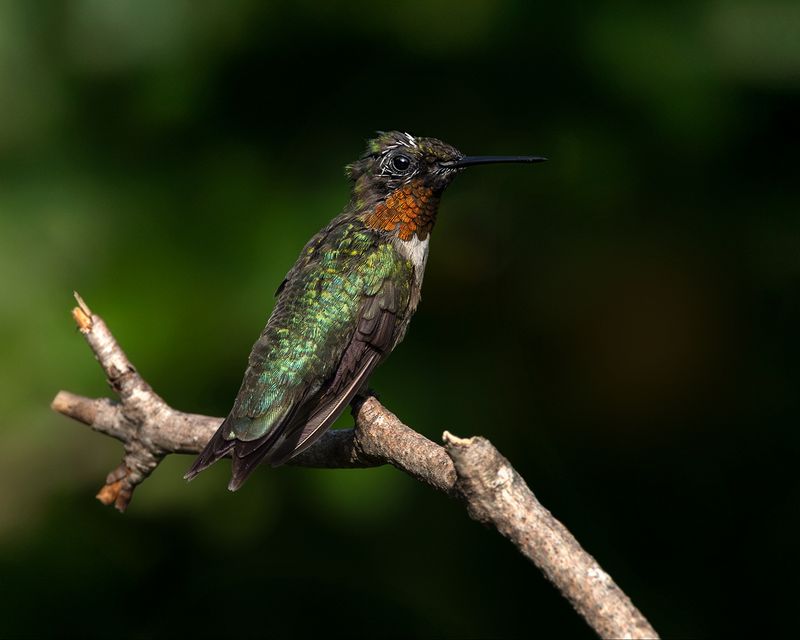
Watch the branches, not the feeder. The bird running the show is usually sitting somewhere above, scanning for intruders.
Hummingbirds do not hover all day. They perch often, and a bare twig with a clear view makes an ideal guard post.
Crepe myrtle tips, dogwood branches, and thin bare limbs get used constantly.
Anything within about fifteen or twenty feet of the feeder works. Removing every perch is not realistic.
Trimming one convenient branch might just move the lookout somewhere else nearby.
A smarter approach involves blocking sightlines.
Hanging a feeder around the corner of a porch or behind a shrub limits what the guard can see.
Hummingbirds also need those perches for normal reasons. Resting, preening, and digesting all happen while sitting still.
Around Georgia yards, shaded perches near the feeder also help birds cope with summer heat. Sun-baked branches get skipped in favor of cooler spots.
Some folks add a small perch right on the feeder. That can help birds sip comfortably, though it may also make guarding easier.
Pay attention for a few days and the pattern becomes obvious. Once you know the guard’s favorite spot, the chases start to make sense.
5. Both Male And Female Hummingbirds Can Defend Feeding Areas
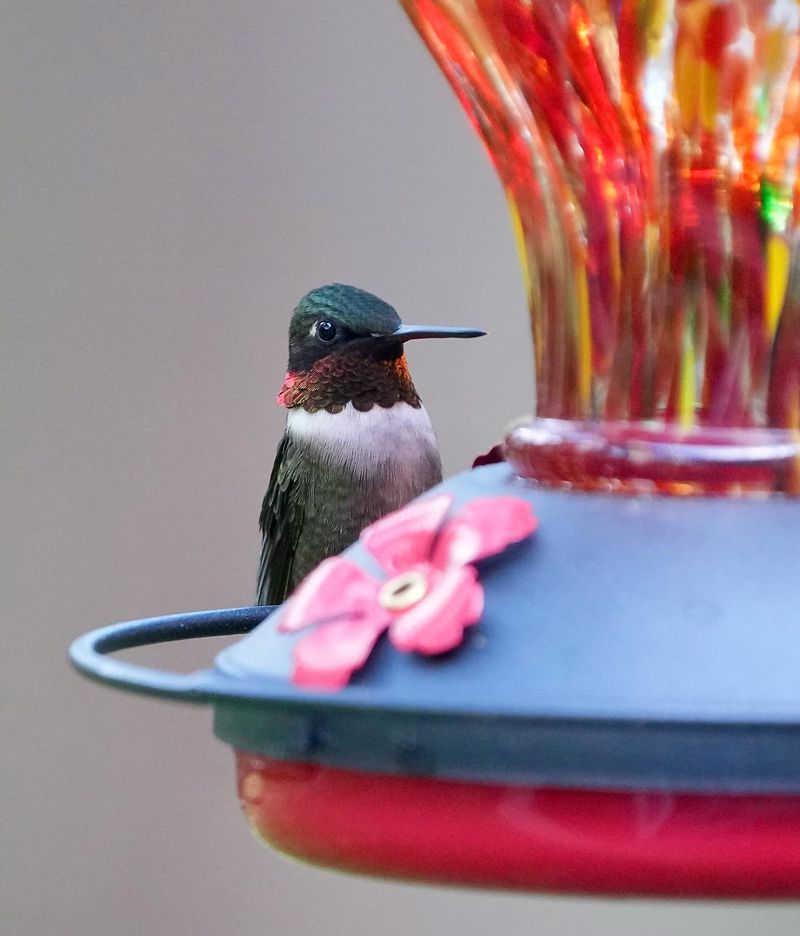
The bully is not always a male. Female ruby-throats defend feeders too, and they can be every bit as pushy.
Males get the attention because of the flashy red throat. That gorget catches light during dives, so their chases stand out more.
Nesting females have real reasons to guard food. Building a nest and raising young takes energy, and a close feeder saves flying time.
Female ruby-throats handle nesting alone. Males play no part in incubation or feeding chicks, which is worth remembering when you watch the action.
Young birds join in later in the season. Juveniles often look like females and will chase each other around the feeder while sorting things out.
Telling them apart takes practice. Adult males show the dark red throat, while females and young birds have pale throats, sometimes with faint streaks.
In Georgia backyards, defended territories usually cover a small area. A feeder, a few flower clumps, and one or two perches is often the whole kingdom.
Dominance shifts through the season.
The bird in charge in June may be gone by September, replaced by someone new.
None of this means the losers go hungry. Displaced birds simply feed at off moments or move to another yard down the street.
6. Adding More Feeders Can Give Other Birds A Better Chance
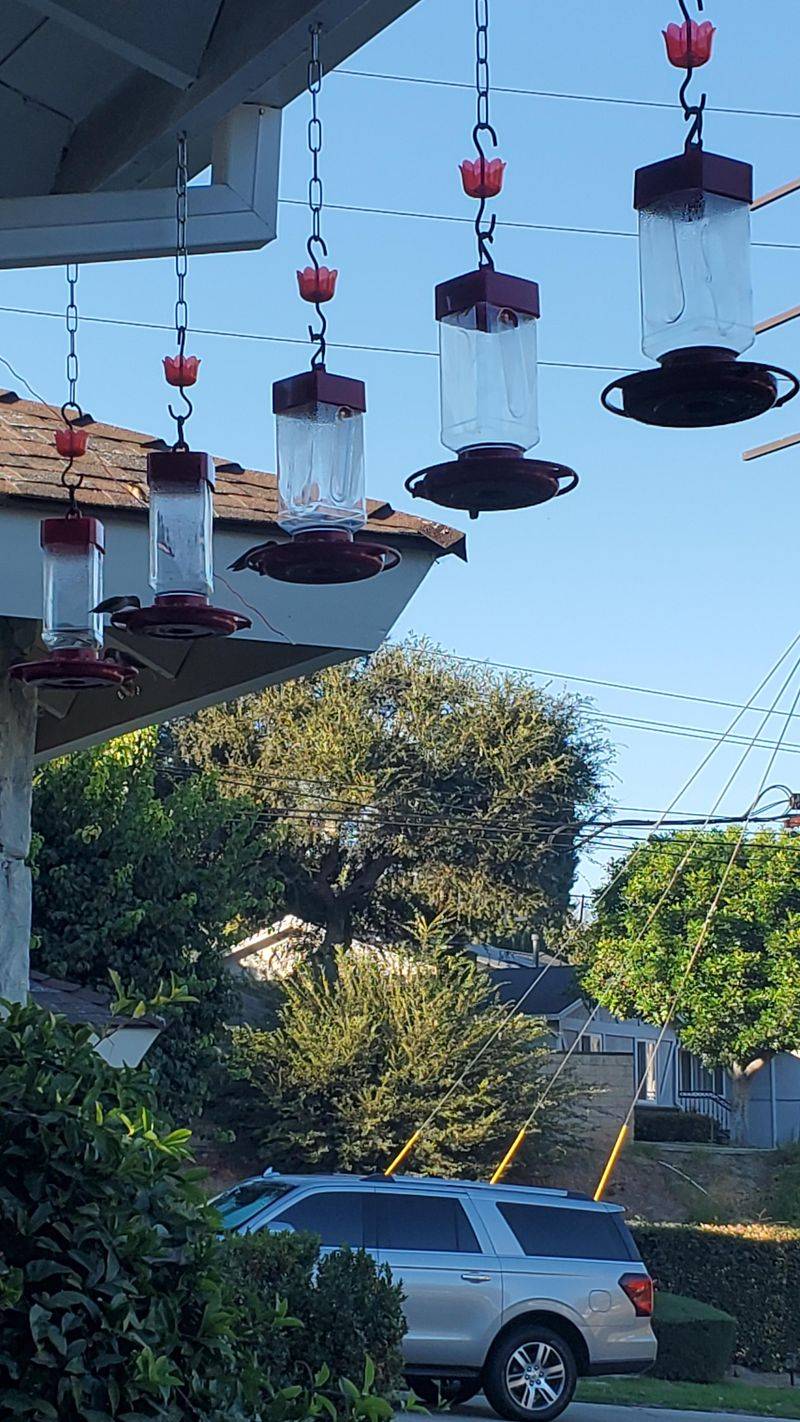
One feeder creates one boss. Add two or three more and the math stops working in the bully’s favor.
A single hummingbird can only defend so much airspace. Splitting the nectar into several stations wears down that control.
Smaller feeders often work better than one large one.
Two modest bottles beat a big reservoir that goes stale before it empties.
Fresh nectar matters more than capacity. A mix of one part plain white sugar to four parts water is the standard recipe.
Skip the red dye. Feeders with red parts attract birds fine on their own, and dye adds nothing useful.
Cleaning gets harder with more feeders, so keep the number manageable. Rinsing every two or three days in hot Georgia summers is realistic for most people.
Placement deserves thought too. Shade slows spoilage and gives birds a cooler spot to sip during July and August.
Results depend on your yard layout. Small lots with open sightlines may still see one bird dominating, though usually less completely.
Give the change a week or two. Birds need time to find new feeders, and the traffic pattern often settles into something calmer.
7. Spacing Feeders Apart Makes Them Harder For One Bird To Guard
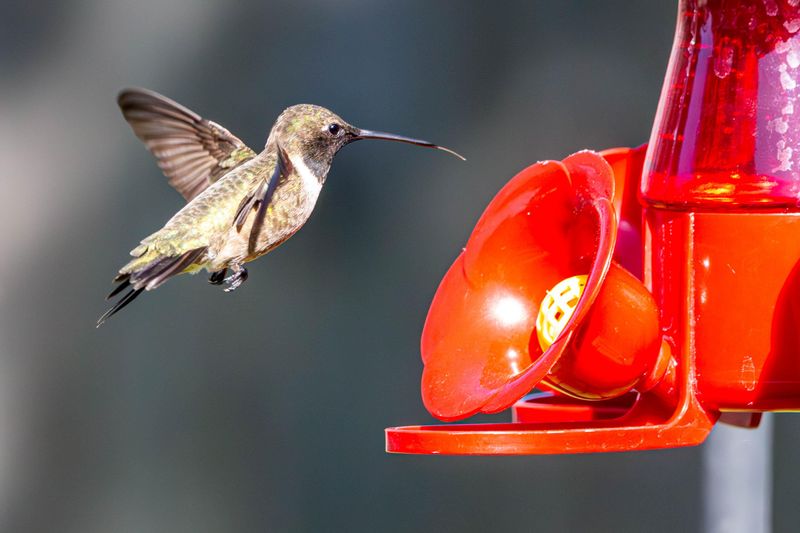
Distance beats quantity. Four feeders clustered on one hook are still one target for a determined guard.
Out of sight works best. Hang one feeder on the front porch, another off the back deck, and a third around the side of the house.
Shrubs, fences, and corners all help. Anything that breaks the line of sight makes patrolling much harder for a single bird.
Even twenty or thirty feet of separation can make a difference.
The guard cannot watch two spots at once.
Chasing burns energy. When defending several scattered feeders costs more than it gains, the dominant bird usually gives up trying.
Peace is never total, and some squabbling continues no matter how you arrange things. That part is just hummingbird nature.
Yards across Georgia vary a lot, so experiment with placement before deciding what works. Watch for a few days after each move.
Keep access easy for yourself. Feeders you cannot reach comfortably tend to go uncleaned, and dirty nectar helps nobody.
Add flowers between the feeder stations if you can. Native nectar plants stretch the feeding area out even further and support birds when sugar water runs low.
Small changes add up, and more birds end up getting a turn.