These Large Caterpillar Nests Can Suddenly Appear In Georgia Trees This September
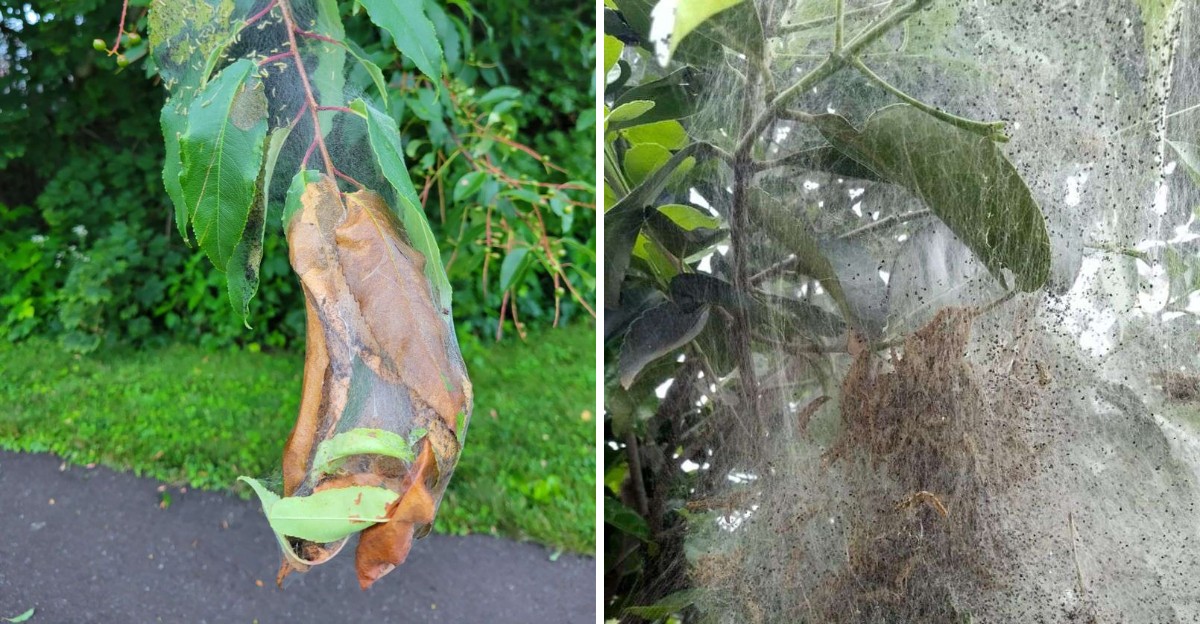
Silky tents stretching across tree branches can seem to appear overnight during September. When several show up together, even a familiar tree can suddenly look completely different.
Those webs are often connected to caterpillars preparing for another stage of their life cycle.
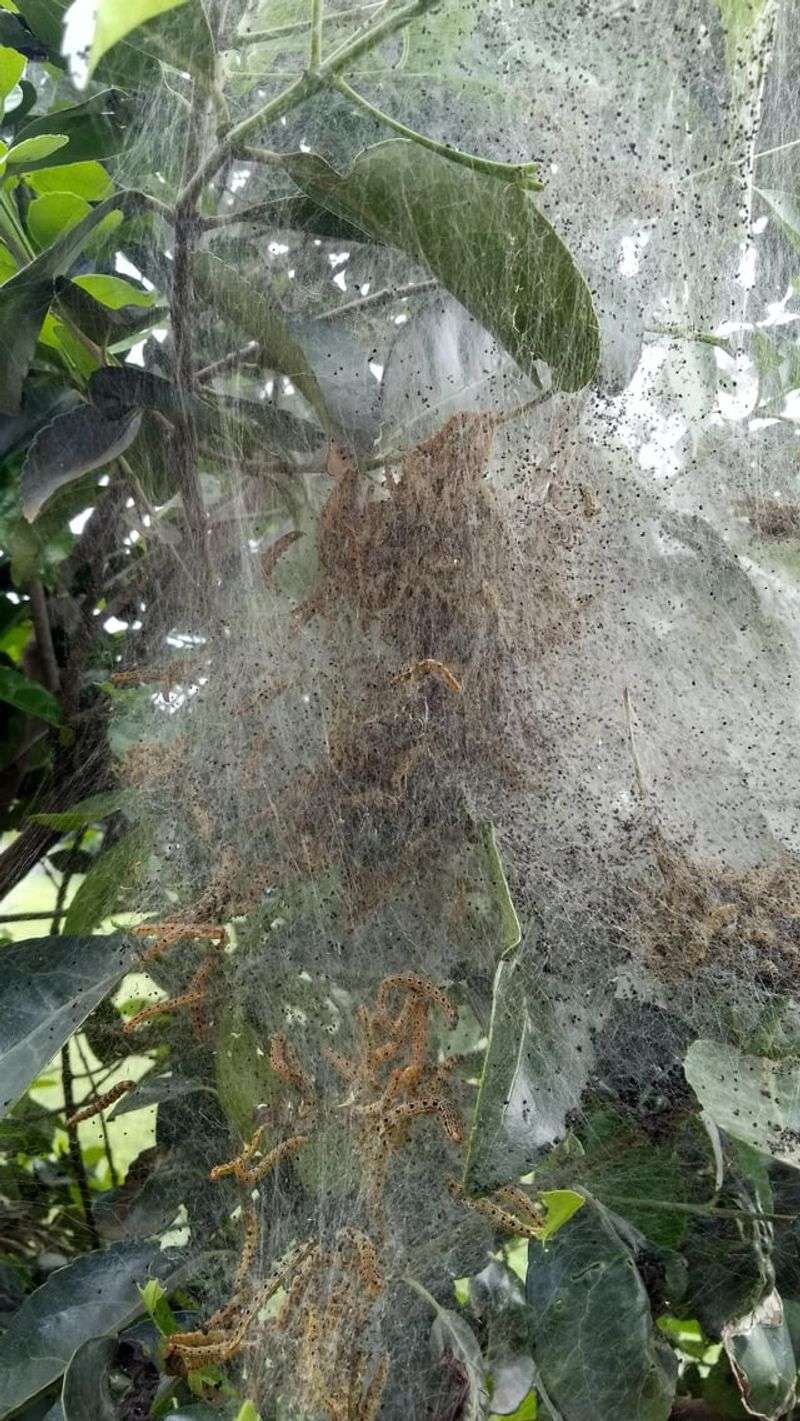
In Georgia, fall webworms can build nests around leaves near the ends of branches. Their webs may look alarming, but appearance alone does not tell you how much attention the tree needs.
Before reaching for tools, consider the size and health of the tree around them.
Established trees can respond differently from small or stressed specimens. Knowing that difference helps you decide whether action is useful or unnecessary.
Learn what these September nests mean first, and you can respond without turning a temporary sight into a larger concern.
1. Those Giant Webs Can Seem To Appear Almost Overnight
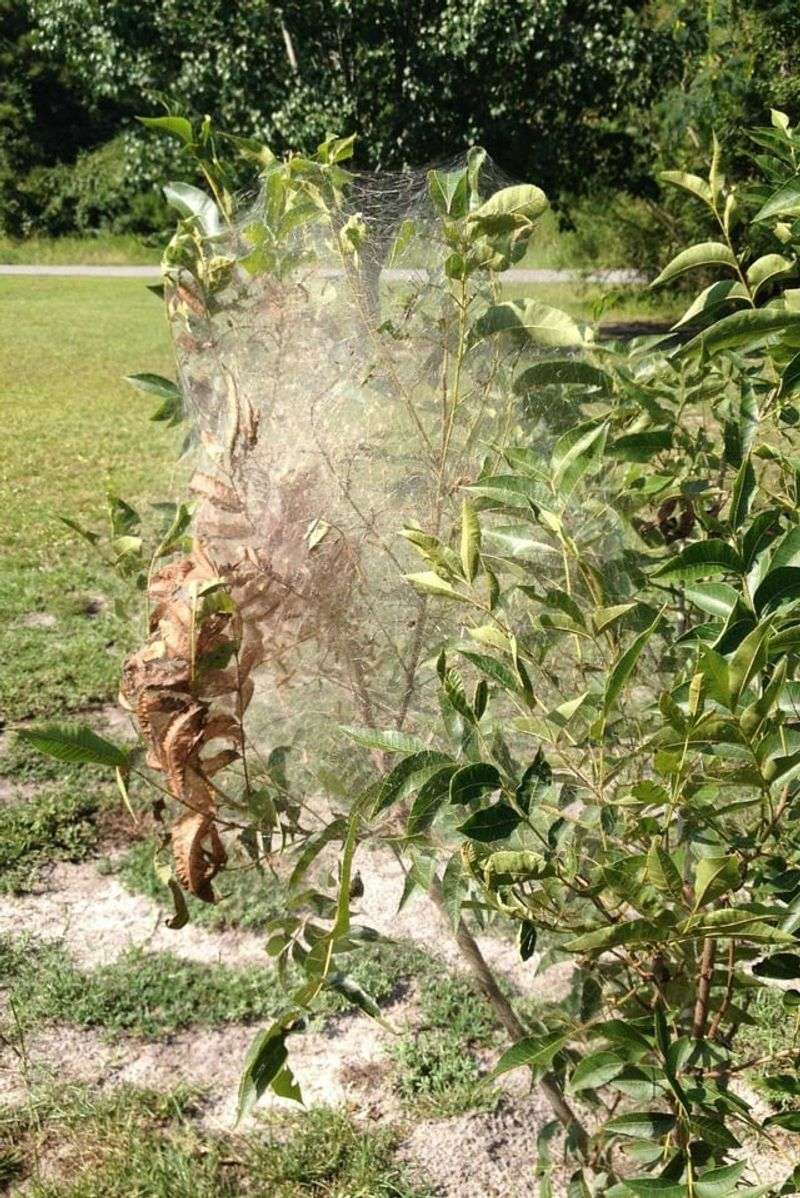
One evening the tree looks normal. Two days later a fist-sized web is stretched across the branch tip, and it seems to have come out of nowhere.
That speed is mostly an illusion of scale. The tiny caterpillars start out feeding under a thin sheet of silk that is easy to miss from the ground.
Once they grow, the webbing expands quickly to cover more leaves.
Warm, humid conditions across Georgia in late summer help the second generation develop fast, so the nests seem to balloon within a week or two.
Height plays a role too, since webs forming twenty feet up rarely get noticed until they catch sunlight.
Homeowners often spot them while mowing or pulling into the driveway, and the reaction is usually the same kind of surprise.
Nothing about the sudden appearance means the infestation is unusually bad. It simply reflects how these caterpillars feed, growing larger and pulling more foliage into the silk as they go.
Checking your trees every couple of weeks in August and September makes the change less startling.
You will often catch the small starter webs on outer twigs, which are far easier to deal with than a nest the size of a beach ball.
A quick walk around the yard with a flashlight at dusk works surprisingly well for spotting fresh silk.
2. Fall Webworms Build Their Nests Around The Ends Of Branches
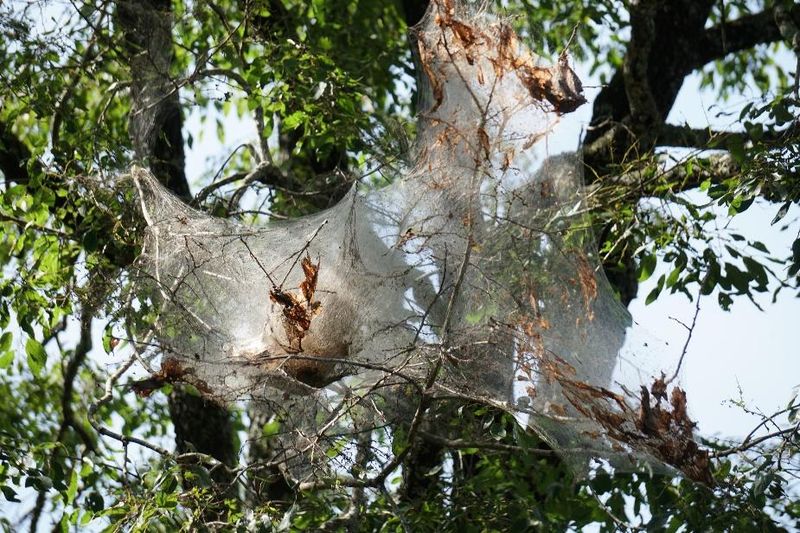
Location is the giveaway. Fall webworm nests wrap the outer tips of branches, enclosing leaves as the caterpillars feed inward.
Eastern tent caterpillars do the opposite, building their tents in the crotch where limbs meet the trunk. They also show up in spring, not the tail end of summer.
Getting the identification right matters because the two pests have different timing and different habits.
Inside the webbing you will see pale, hairy caterpillars, often with dark or orange heads depending on the local form.
They stay within the silk while feeding, which protects them from some birds and predatory insects. That protection is one reason the nests persist for weeks.
Across north Georgia and the Piedmont, you will usually find these webs on sunny, exposed branches rather than deep inside the canopy.
Your Georgia Garden Changes Every Week. Your Plan Should Too.
Gardening in Georgia changes quickly throughout the season. Every Friday you’ll receive a simple weekly plan showing exactly what to plant, prune, fertilize, harvest, and protect so you never miss the right timing.
Adult moths are small and white, sometimes with dark spots, and they lay eggs in clusters on the undersides of leaves.
Two generations per year are common in the Southeast, so the September wave is often the larger, more noticeable one.
If you cut open a nest, expect frass, shed skins, and skeletonized leaves mixed into the silk.
It is messy, but it tells you exactly what you are looking at.
3. The Webs Expand As The Caterpillars Grow And Keep Feeding
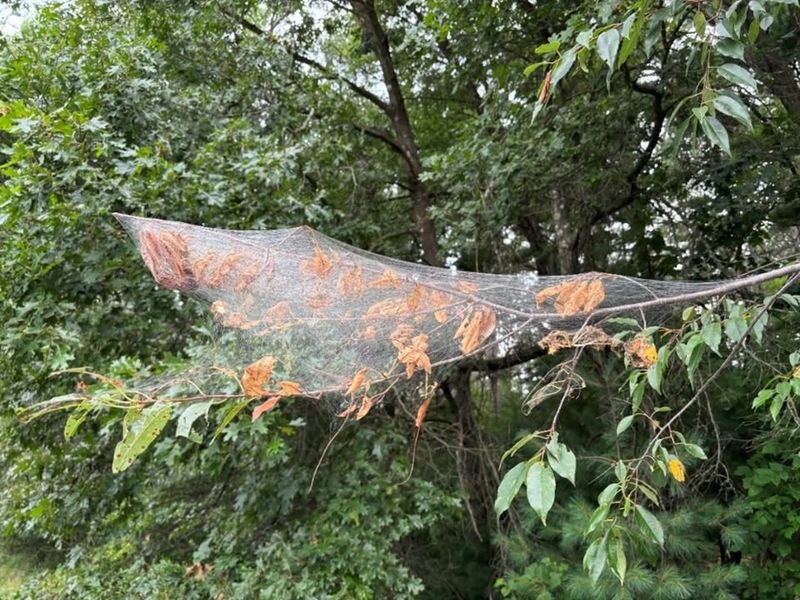
Growth drives the whole thing. As caterpillars get bigger, they eat more leaves and push the silk farther down the branch to reach fresh foliage.
A nest that started the size of a golf ball can end up wrapping several feet of a limb.
Feeding happens entirely inside that tent, which is why you rarely see the caterpillars wandering around until they are nearly full grown.
By the time a nest looks enormous, the larvae inside are usually in their later stages and close to finishing.
That timing matters if you are deciding whether to intervene at all in a South Georgia yard.
Treating a huge, mature nest often accomplishes very little, since the feeding is nearly over anyway.
Late in the season, the caterpillars leave the web to find sheltered spots for pupation, often in leaf litter or bark crevices.
Old webbing can hang around for months afterward, weathered and empty, which confuses people into thinking the problem is ongoing.
Rain and wind eventually break it down.
If a web keeps growing week after week, you are watching active feeding rather than leftovers.
Checking for movement inside the silk on a warm afternoon is the simplest way to tell whether anyone is still home.
4. Pecans And Other Deciduous Trees Are Common Targets
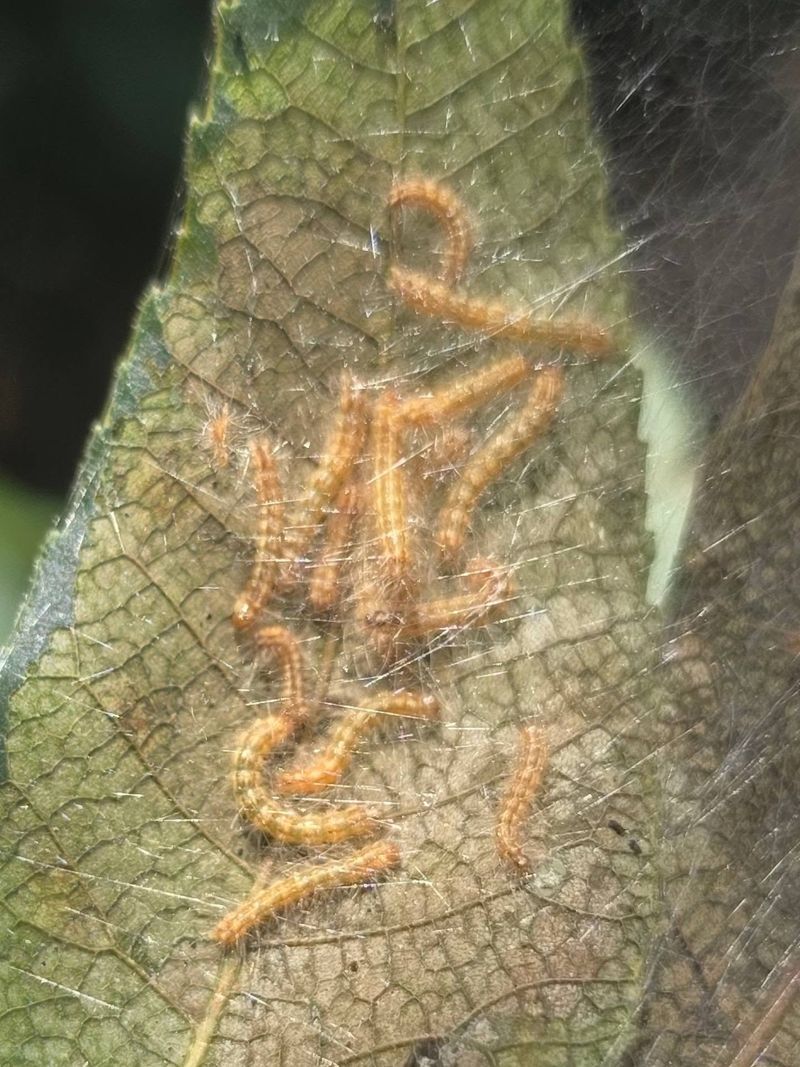
Pecans get hit hard, and anyone with a pecan tree in the yard knows the look.
Fall webworms feed on a wide range of hardwoods, including hickory, persimmon, sweetgum, black walnut, mulberry, and various fruit trees. Their host list is unusually broad for a leaf-feeding caterpillar.
Roadside trees and yard specimens tend to show more nests than trees deep in a woodlot.
Sun exposure seems to play a part, since the moths favor open, warm sites for egg laying.
Georgia pecan growers watch for them, though commercial orchards usually manage the pest as part of a broader spray program rather than treating individual nests.
Backyard trees are a different story entirely.
A single pecan can carry a dozen webs in a heavy year and still produce nuts, because the feeding happens late in the growing season.
Young or newly planted trees deserve closer attention, since they have less foliage to spare and a heavier infestation can set back their growth.
Stressed trees also recover more slowly, especially during dry spells.
Conifers are not hosts, so pines in the yard stay clear.
If you see webbing on a pine, something else is going on and it is worth a closer look.
5. Leaf Loss Can Look Worse Than The Actual Tree Damage
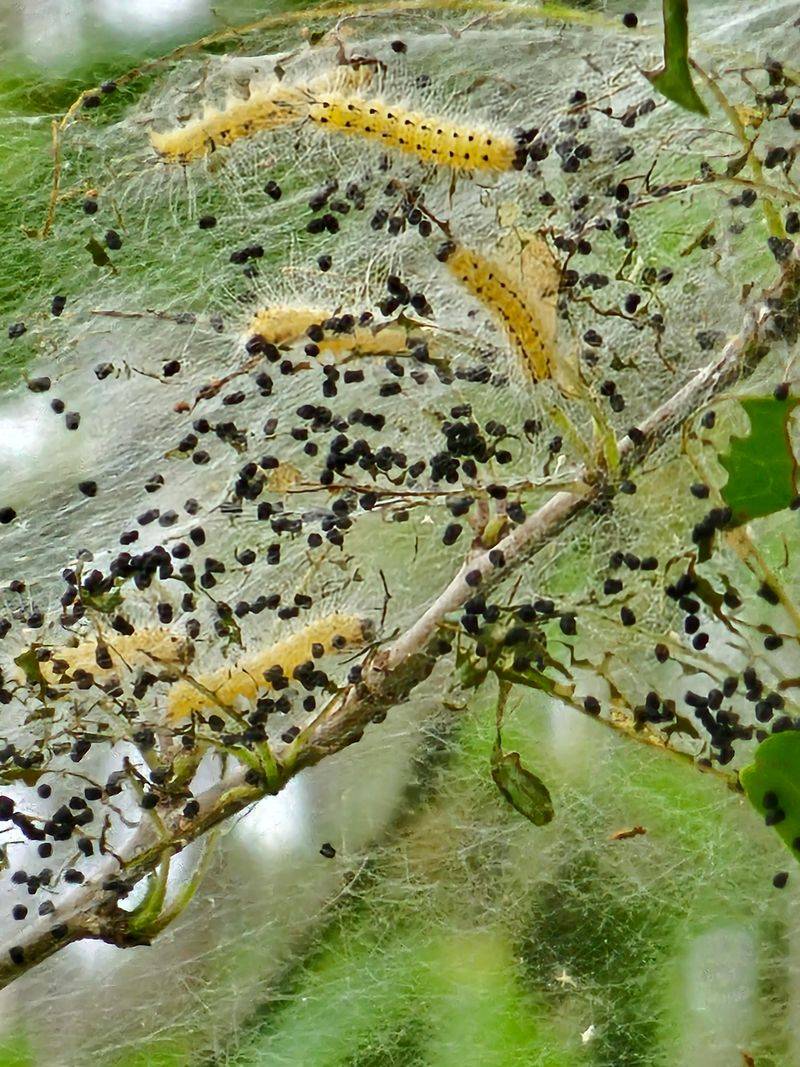
Ugly does not mean serious. Stripped branch tips and browned, skeletonized leaves make a tree look wrecked, but the injury is mostly cosmetic on established trees.
Timing is the reason. September feeding hits leaves that have already done most of their work for the year.
The tree has stored much of what it needed before the caterpillars ever showed up.
Healthy hardwoods across Georgia generally leaf out normally the following spring, even after losing a noticeable chunk of foliage.
Repeated heavy infestations combined with drought or root damage can add real stress, so the situation is not identical for every tree.
Young trees, recent transplants, and specimens already struggling deserve more concern than a big shade tree in good condition.
Watering during dry stretches helps more than any spray in those cases.
Avoid the urge to prune away large sections of healthy limb just to remove webbing.
Cutting off a major branch to reach one nest causes more lasting harm than the caterpillars would.
Consider the tree’s overall condition before deciding anything.
If it leafed out well in spring, held good color through summer, and has no other problems, the webs are likely a temporary eyesore rather than a threat worth losing sleep over.
6. Small Nests Are Easier To Manage When Found Early
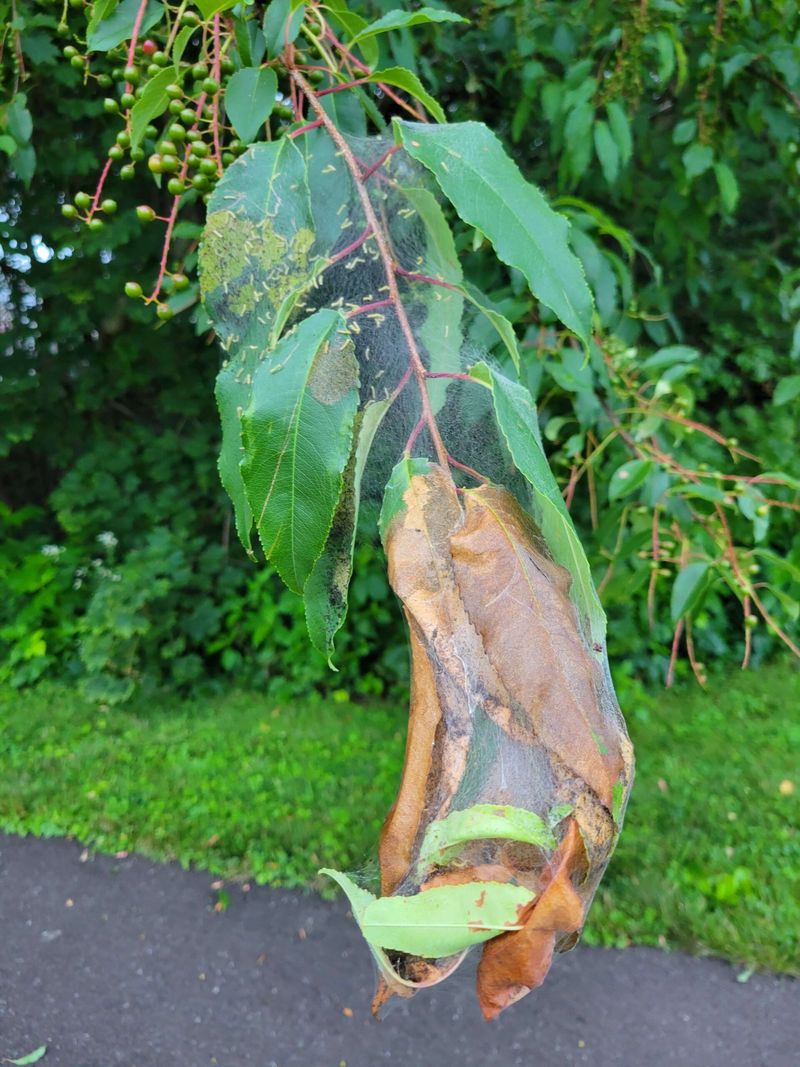
Catch them small and the job takes minutes. A young nest on an accessible twig can be clipped off with pole pruners and dropped into a bag.
Tearing the web open with a rake or long stick also works, since it exposes the caterpillars to birds and wasps.
Skip the old advice about burning nests in the tree, which damages bark and creates a real fire hazard.
Reach limits what most homeowners can do, and that is fine.
Nests high in a canopy are usually best left alone unless a certified arborist is already working on the tree.
Products containing Bacillus thuringiensis subspecies kurstaki can help on small caterpillars, but coverage is the sticking point. Spray has to reach the larvae, and the webbing blocks it, so breaking the nest open first improves results.
Timing matters just as much as the product, since Bt works best on young larvae.
Georgia homeowners who scout their trees in August often avoid the September scramble entirely.
Follow every label direction, and think twice before treating a whole tree for a handful of webs.
Doing nothing is a legitimate choice for a mature, healthy tree, and plenty of experienced gardeners take that route without regret.
7. Natural Predators Help Keep Webworm Numbers Under Control
Plenty of things in the yard are already working on this problem for free.
Paper wasps and yellowjackets pull caterpillars out of opened webs. Birds including chickadees, wrens, and orioles pick off larvae once the silk is torn.
Parasitic wasps and flies attack webworms too, laying eggs in or on the larvae.
Numbers swing a lot from year to year for this reason, which is why one September can bring webs everywhere and the next almost none.
Weather, natural enemies, and local conditions all factor in, and no single explanation covers it.
Broad-spectrum insecticides sprayed across an entire tree can knock back those helpful insects along with the target.
That trade-off is worth weighing before reaching for a hose-end sprayer.
Tearing open a nest and letting predators finish the job is often the more sensible route in a Georgia yard, and it costs nothing.
Keeping some flowering plants around supports the wasps and beneficial insects that patrol your trees.
Native shrubs and perennials give them nectar and shelter through the season.
A yard with decent plant diversity tends to handle outbreaks like this better, though results vary with the site and surrounding land use.