Why Hummingbirds Chase Each Other Away From Texas Feeders
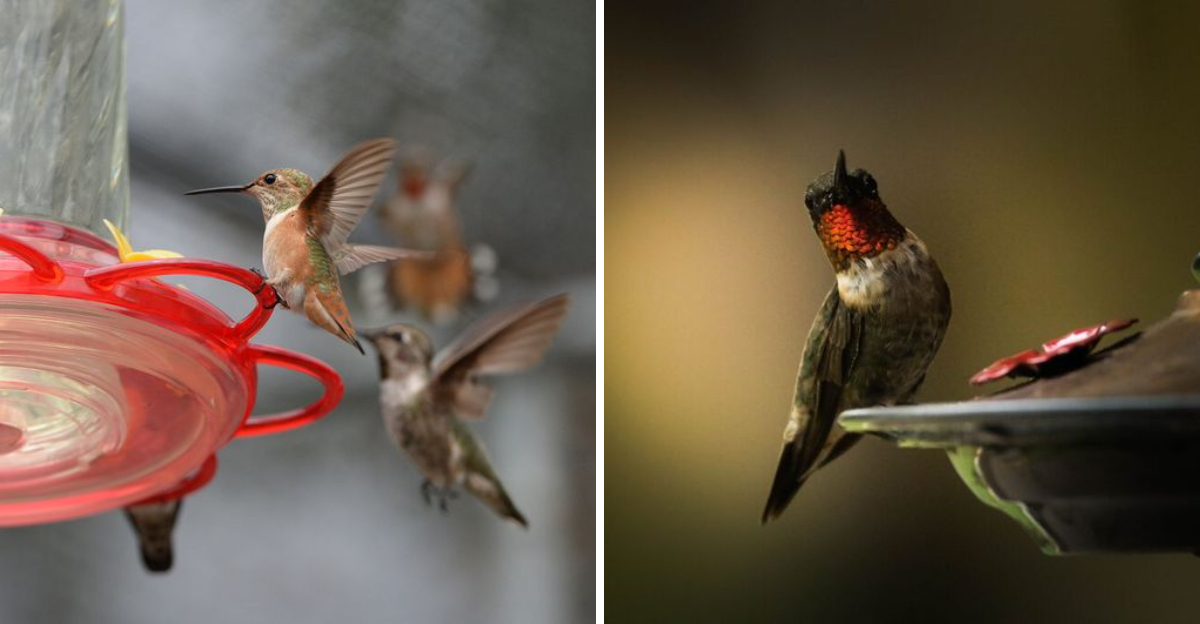
If you’ve been watching your Texas hummingbird feeder lately, you’ve probably seen the drama.
One bird settles in to feed and within seconds another dives in from nowhere, sending the first one off in a blur of wings and high pitched protest. Then a third appears and the whole thing starts over. But there’s a reason behind all of it.
Hummingbirds chasing each other away from feeders is not random aggression. It’s behavior driven by specific biological and seasonal pressures that become particularly intense at certain points in the Texas hummingbird calendar.
Understanding what’s behind it changes how you interpret the feeder activity and, more practically, what you can do to make the situation work better for the birds. Here’s what’s really going on at your Texas hummingbird feeder and exactly what to do about it.
1. Fierce Territory Defense
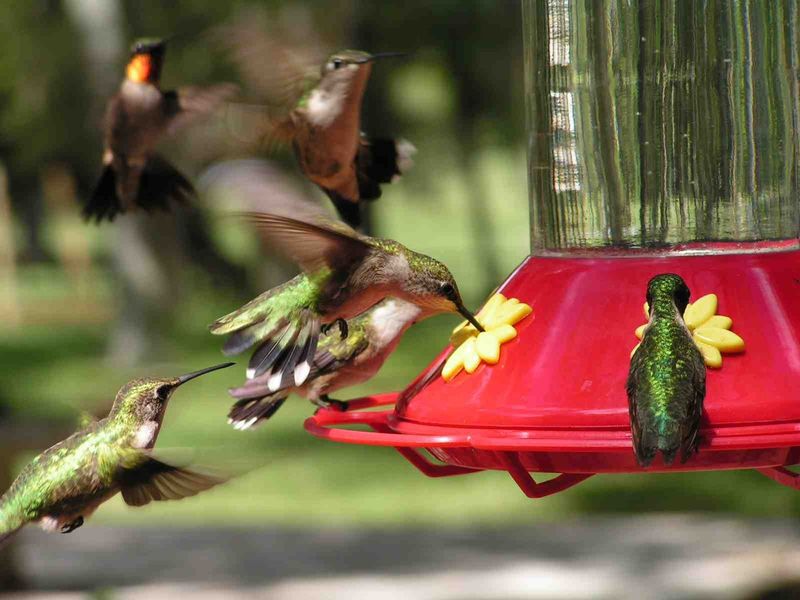
Picture a tiny bird acting like it owns the whole neighborhood. That is basically how a hummingbird treats your feeder in Texas.
Many species, including the Ruby-throated and Black-chinned hummingbirds common across the state, are naturally territorial. A single bird will often claim one feeder as its personal property.
Once a bird picks a spot, it stands guard from a nearby branch or wire. From there, it watches for any intruder that dares to come close.
The moment another hummingbird approaches, the guard darts out and chases it off. These chases can be fast and loud, with sharp chirping the whole way.
This behavior helps the bird protect a food source it trusts. In the wild, guarding a patch of flowers means a steady meal, and feeders trigger the same instinct.
Males tend to be the boldest defenders, especially during breeding season. They want to show strength and hold onto the best resources they can find.
You can ease the fighting by spreading feeders out. Place them around corners or on different sides of your home so one bird cannot see them all.
When a guard cannot watch every feeder at once, more birds get a chance to drink. This simple trick often calms the backyard drama.
Adding several feeding stations rather than one large feeder also spreads out the crowd. More spots mean less pressure on any single perch.
Remember that this scrappy behavior is normal and healthy for the birds. It is part of how they survive in the busy Texas skies.
2. Competition For Limited Food
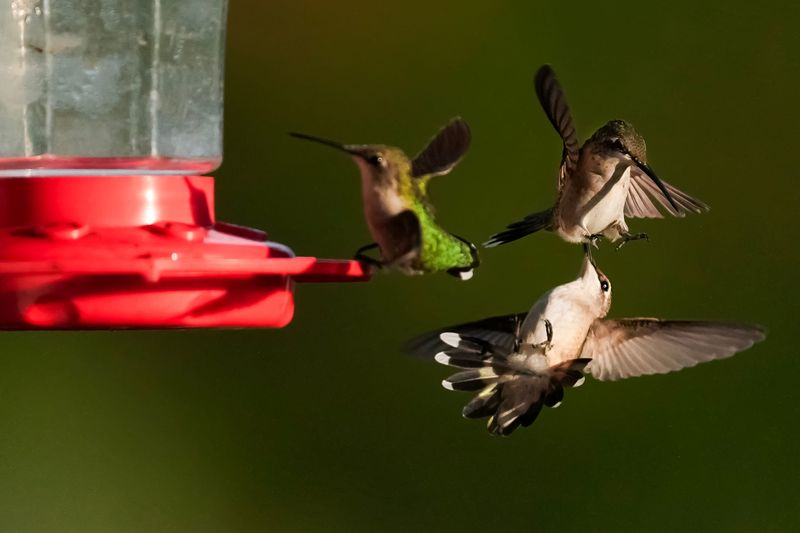
Imagine a bunch of hungry friends and only one plate of snacks. That is what happens when many birds share too few feeders.
Hummingbirds burn energy at an amazing rate. They need to eat often, sometimes visiting flowers and feeders hundreds of times a day.
When food feels scarce, birds get pushy. If your yard has just one feeder, the birds sense that supply is tight and start to compete hard.
Chasing is one way a bird tries to keep more of the nectar for itself. By scaring others off, it lowers the number of mouths draining the sugar water.
Your Texas Garden Changes Every Week. Your Plan Should Too.
Gardening in Texas changes quickly throughout the season. Every Friday you’ll receive a simple weekly plan showing exactly what to plant, prune, fertilize, harvest, and protect so you never miss the right timing.
Texas yards can attract lots of hummingbirds, especially during spring and fall migration. That surge in visitors makes competition even fiercer.
You can lower the tension by offering plenty of food. Set out multiple feeders and keep them filled with fresh nectar.
A good homemade mix is four parts water to one part white sugar. Skip red dye, since it is not needed and plain nectar works fine.
Clean feeders often, especially in the Texas heat, because sugar water spoils quickly. Cloudy or moldy nectar can make birds sick.
When there is more than enough to go around, some birds relax their guarding. They realize chasing everyone off is not worth the effort.
Planting native flowers like Texas sage and trumpet vine adds even more food sources. Extra blooms spread the crowd and reduce feeder squabbles.
With enough supply, your backyard can feel less like a fight and more like a busy diner.
3. Breeding Season Tension
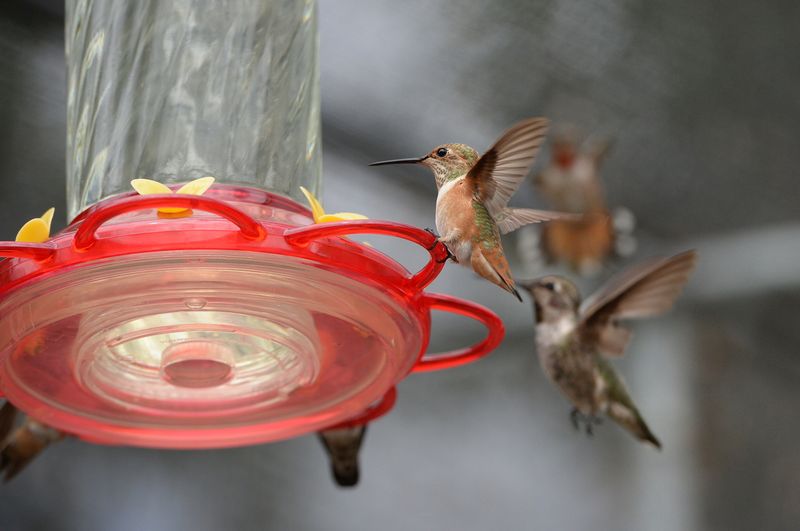
Spring in Texas turns up the heat, and not just the weather. It also sparks a wave of hummingbird romance and rivalry.
During breeding season, males become extra fired up. They want to impress females and push away any competition nearby.
A feeder sitting in a male’s chosen area becomes part of his kingdom. He guards it partly to show off how strong and capable he is.
Females looking for a mate notice which males hold the best territory. A male with a rich food source looks like a good partner.
All this leads to more chasing and showy flying. You might see males dive, zigzag, and buzz past each other in dramatic loops.
Black-chinned and Ruby-throated hummingbirds both breed in Texas, so this drama is common. The action usually peaks in spring and early summer.
Once a male wins a spot, he defends it fiercely against other males. Even harmless visitors can get caught in the aggression.
You can help by spacing feeders far apart around your property. Giving males separate zones lowers the chance of constant clashing.
Placing feeders where they cannot see each other works especially well. Out of sight often means out of mind for a guarding bird.
Keep in mind this fighting fades as the season shifts. After breeding wraps up, the birds tend to mellow out a bit.
Watching these displays can be a real treat. Behind the chaos is a natural push to raise the next generation.
4. Migration Crowds And Stress
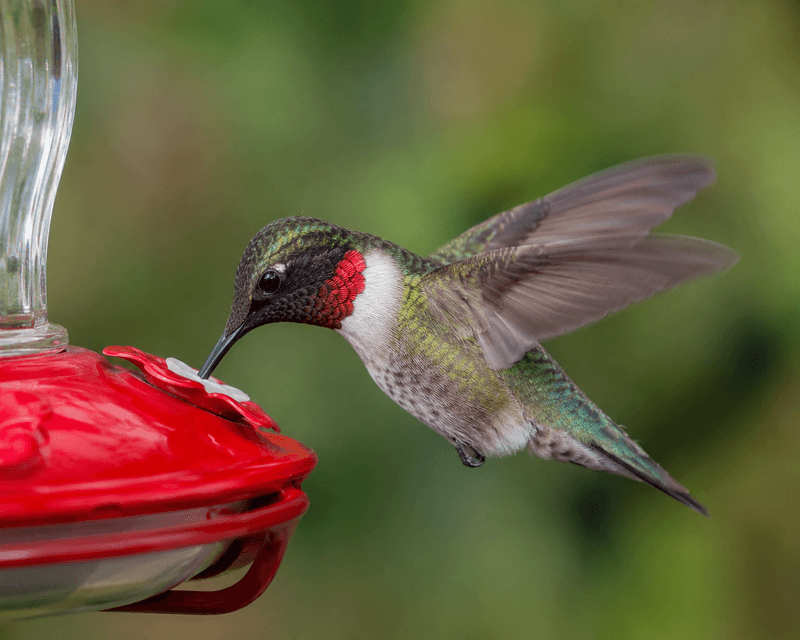
Twice a year, Texas becomes a major highway for traveling hummingbirds. During migration, huge numbers pass through the state.
These journeys are long and exhausting. Birds need to refuel fast, so they arrive hungry and in a hurry.
With so many visitors landing at once, feeders get crowded quickly. That crowding often leads to more shoving and chasing.
Migrating birds are under pressure to store energy for the trip ahead. Every sip counts, so they fight for access to the sugar water.
Fall migration in Texas can bring an amazing rush of activity. Some yards report dozens of birds swirling around at once.
Even normally calm birds may act pushy when the crowd swells. The stress of travel makes them more likely to defend a spot.
You can support these travelers by setting out extra feeders. More stations mean more birds can drink without constant conflict.
Keep nectar fresh and change it every few days in warm weather. Tired birds rely on clean, safe food to keep going.
Large feeders with many ports also help during migration. When several birds can drink side by side, fighting often drops.
Placing feeders in shady spots keeps the nectar from spoiling fast. It also gives resting birds a cool place to gather.
Once the migration wave passes, your yard will quiet down again. The frantic energy is just a sign of birds working hard to survive. Helping them refuel makes your backyard a valuable pit stop along their route.
5. Instinct To Survive
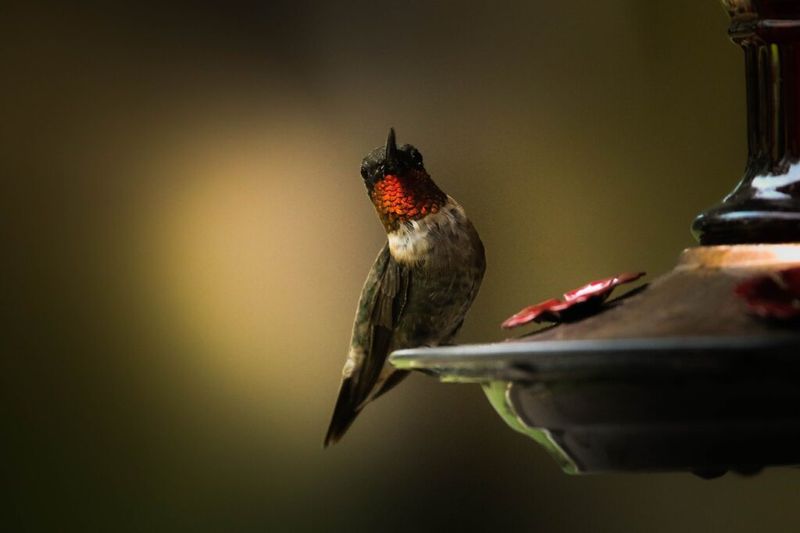
Deep down, every hummingbird carries ancient instincts. Those built-in rules push them to protect food no matter what.
In the wild, a reliable food source can mean the difference between thriving and struggling. Birds evolved to guard these treasures closely.
Your feeder looks just like a super-rich flower patch to a hummingbird. Its instincts kick in, telling it to defend the prize.
Chasing others is not about being mean. It is a survival strategy passed down through countless generations.
A bird that controls a good food spot has better odds of staying strong. That strength helps it survive cold nights and long flights.
Texas heat also raises the stakes, since birds burn energy staying cool and active. Holding onto reliable food becomes even more important.
This instinct runs so deep that even well-fed birds may still chase. Their brains are simply wired to guard what they find.
You cannot switch off this natural drive, and you would not want to. It is part of what makes these birds tough little survivors.
What you can do is make guarding harder to pull off. Spread feeders around so no single bird can control them all.
When a feeder is hidden from the main perch, guarding gets tiring. Many birds give up and let others share.
Understanding this instinct helps you enjoy the show without worry. The chasing is a peek into how wild creatures really live.
Behind every zoom and dive is a bird doing exactly what nature designed it to do.
6. Feeder Placement Problems
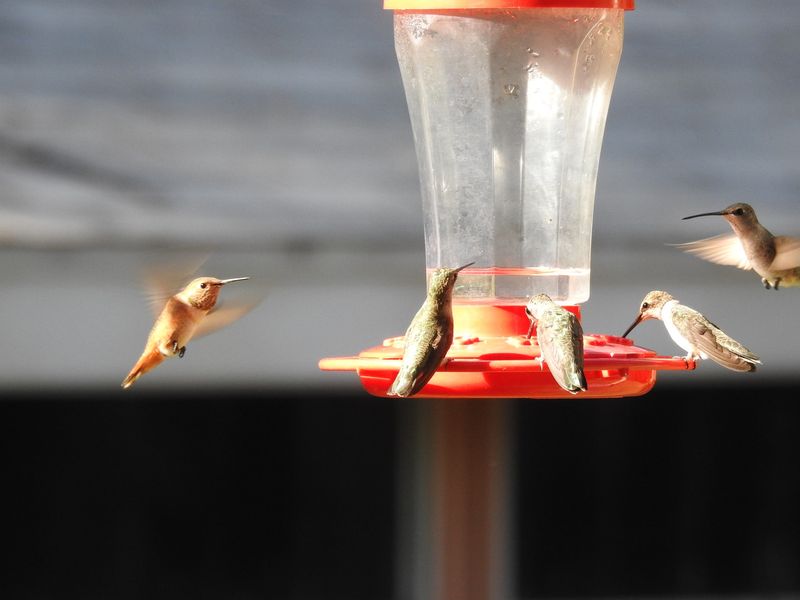
Sometimes the trouble is not the birds at all. It might be where you hung your feeders. When feeders sit close together in one open spot, guarding them becomes easy. A single bird can watch and defend the whole group.
That perfect view gives one bird too much power. It chases off others while sipping freely from its clustered buffet.
Poor placement can turn a peaceful yard into a nonstop chase scene. The birds are just reacting to a setup that favors bullies.
Luckily, this is one of the easiest problems to fix. A few smart changes can spread the peace around your Texas yard.
Try scattering feeders in different areas of your property. Put some in the front, some in the back, and some around the sides.
Break the line of sight between feeders using fences, plants, or walls. When a guard cannot see the other feeders, it stops policing them.
Hanging feeders near shrubs or trees gives shy birds cover. They can dart in for a drink without being spotted right away.
Adding more feeding spots than you think you need also helps. Extra stations overwhelm any bird trying to control everything.
In the Texas sun, choose shaded placement when you can. Cooler spots keep nectar fresh and give birds a comfortable rest.
With thoughtful placement, you spread out the crowd and calm the chaos. More birds get fed, and you get to enjoy the peaceful buzz. A little rearranging can make your backyard a friendlier place for everyone.