These Texas Flowers Look Almost Too Perfect
There are flowers that are pretty, and then there are flowers that make people stop and look twice because something about them seems almost too deliberate.
Too perfectly formed, too richly colored, too geometrically precise to have arrived that way by accident.
These are the flowers that prompt questions from guests, slow people down on a garden walk, and photograph in a way that looks like someone applied a filter when nothing of the sort was involved.
Texas grows some of the most visually striking flowers available anywhere, and the ones on this list represent the upper end of that category.
They’re not difficult to find or particularly demanding to grow. They just happen to produce blooms that look like a florist or a designer had something to do with them, when really it’s just the plant doing exactly what it evolved to do.
1. Texas Bluebonnet
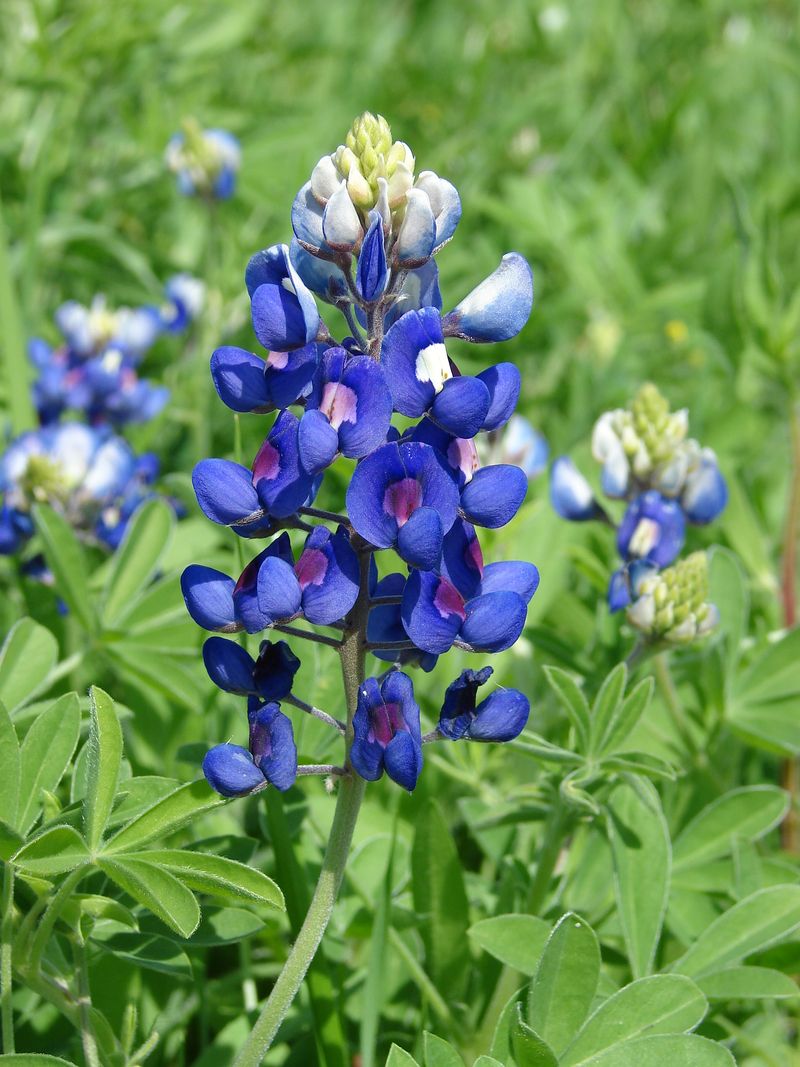
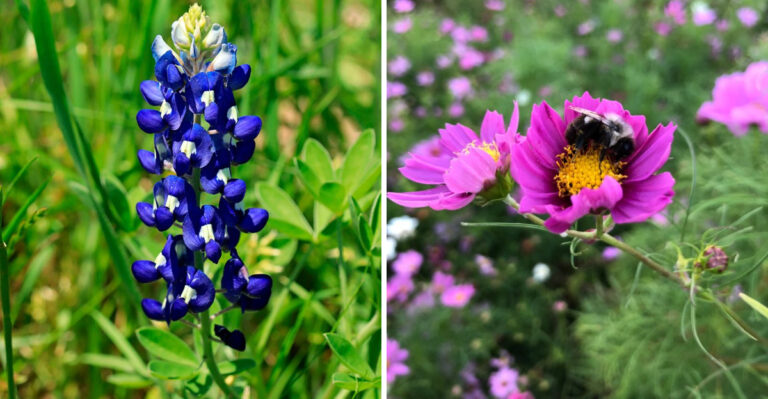
Nothing says spring in Texas quite like a field of bluebonnets stretching as far as the eye can see. This flower is the official state flower, and folks here treat it with real pride.
The blooms grow on tall spikes covered in tiny blue petals with little white tips. When they gather together in big patches, the ground looks like it is wearing a soft blue blanket.
Families love to take pictures sitting in the middle of these flowers each March and April.
Bluebonnets are actually part of the pea family, which surprises a lot of people. They pull nitrogen from the air and put it into the soil, helping the ground stay healthy for other plants nearby.
If you want to grow them yourself, plant the seeds in the fall so they can settle in before winter. They love plenty of sunshine and soil that drains well, so avoid spots where water pools after rain.
Here is a fun bit of history. Lady Bird Johnson, the former First Lady, worked hard to plant wildflowers like bluebonnets along highways.
Her efforts are one big reason the roadsides look so pretty today.
One thing to remember is that picking bluebonnets on public land is frowned upon, though it is not against the law like many believe. Leaving them alone lets everyone enjoy the view and helps the flowers spread their seeds.
Whether you see them in a wild meadow or a home garden, bluebonnets bring a calm, dreamy feeling that is hard to beat.
2. Indian Paintbrush
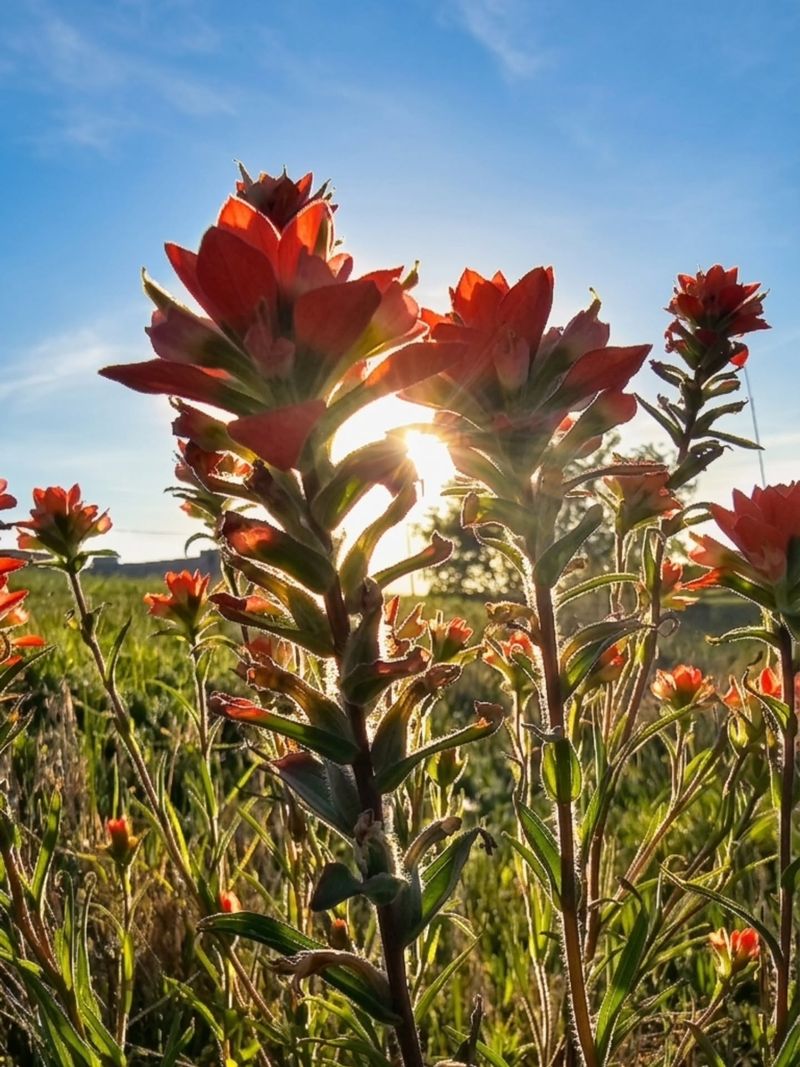
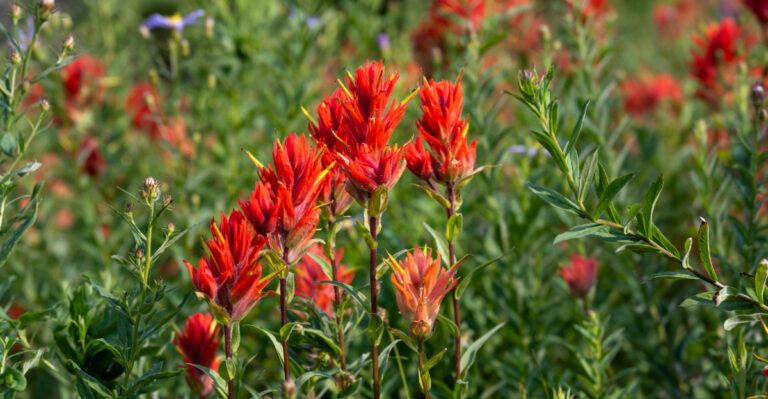
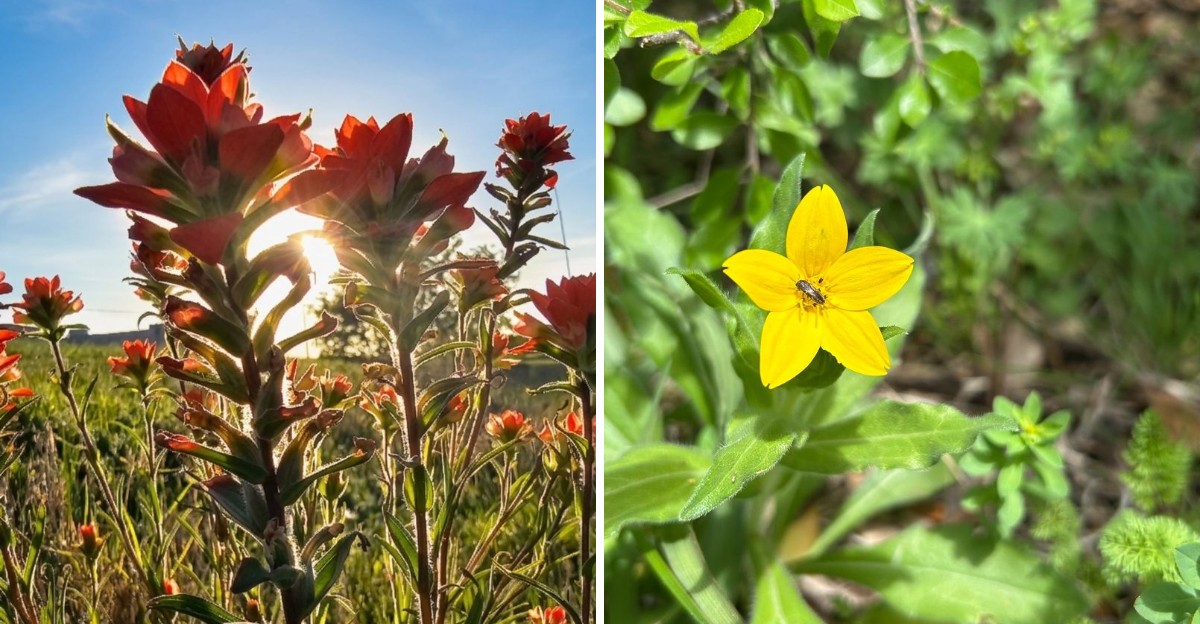
Picture a field where fiery orange and red streaks pop up right beside the blue of bluebonnets. That is the magic of Indian paintbrush, one of the boldest wildflowers in the state.
The name fits perfectly because the top of each plant looks like a brush that has been dipped in bright paint. What most people think are the petals are actually colorful leaves called bracts.
The real flowers are small and hidden inside those flashy tips.
These plants have a sneaky trick up their stems. They are partly parasitic, meaning they tap into the roots of nearby plants like grasses to steal a bit of water and nutrients.
Your Texas Garden Changes Every Week. Your Plan Should Too.
Gardening in Texas changes quickly throughout the season. Every Friday you’ll receive a simple weekly plan showing exactly what to plant, prune, fertilize, harvest, and protect so you never miss the right timing.
That makes them a little tricky to grow in a regular garden.
If you want to try, plant them near grasses or bluebonnets so they have a host to lean on. They enjoy full sun and sandy soil, just like many other natives.
Indian paintbrush blooms around the same time as bluebonnets, usually in early spring. When the two grow side by side, the mix of red and blue creates a scene that photographers dream about.
Native American tribes once used these flowers for different purposes, and the plant carries many old legends about its bright colors. One story tells of a young artist who used the flowers to paint a sunset.
You can spot Indian paintbrush along highways, in open fields, and even in rocky areas where few other plants thrive. Its cheerful color makes any spring drive feel like a trip through a living painting.
3. Texas Lantana
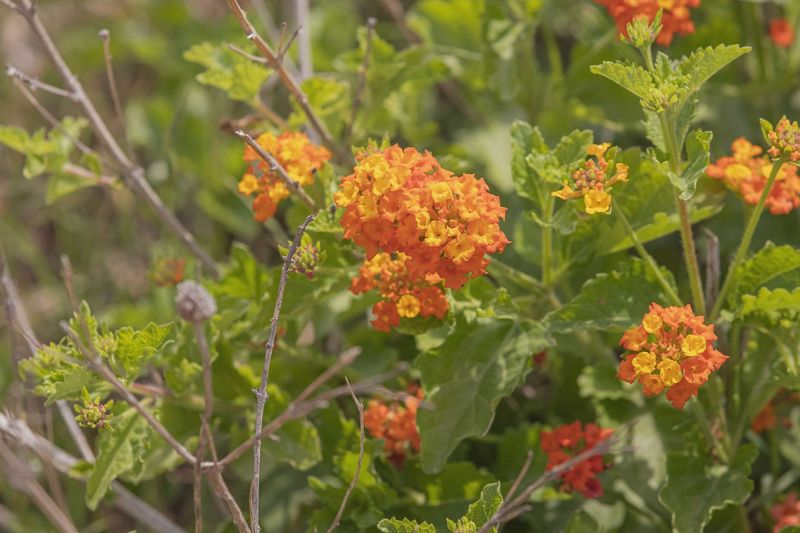
Some flowers just refuse to quit, and Texas lantana is one of them. Even during the hottest, driest part of summer, this tough little plant keeps blooming like it has something to prove.
Each flower cluster is made up of tiny blossoms that mix orange, yellow, and pink all in one spot. As the flowers age, they change color, so a single bunch can show off several shades at once.
This gives the plant a cheerful, patchwork look.
Butterflies absolutely love lantana. If you plant it in your yard, expect to see plenty of winged visitors stopping by for a sip of nectar.
Hummingbirds enjoy it too, making your garden feel busy and alive.
Growing lantana is easy, which is great news for beginners. It handles heat, drought, and poor soil without much fuss.
Give it lots of sun and it will reward you with blooms from spring all the way into fall.
One thing worth knowing is that the berries and leaves can be harmful if eaten, so keep an eye on curious pets and small children. Planting it in a spot away from where kids play is a smart move.
Texas lantana is native to the state, which means it fits right into the local climate and supports local wildlife. Choosing native plants like this helps bees and butterflies find the food they need.
If you want a low-effort plant that brings big color and lots of life to your garden, lantana is a fantastic pick. Its bright clusters look almost too neat and colorful to be growing wild.
4. Black-Eyed Susan
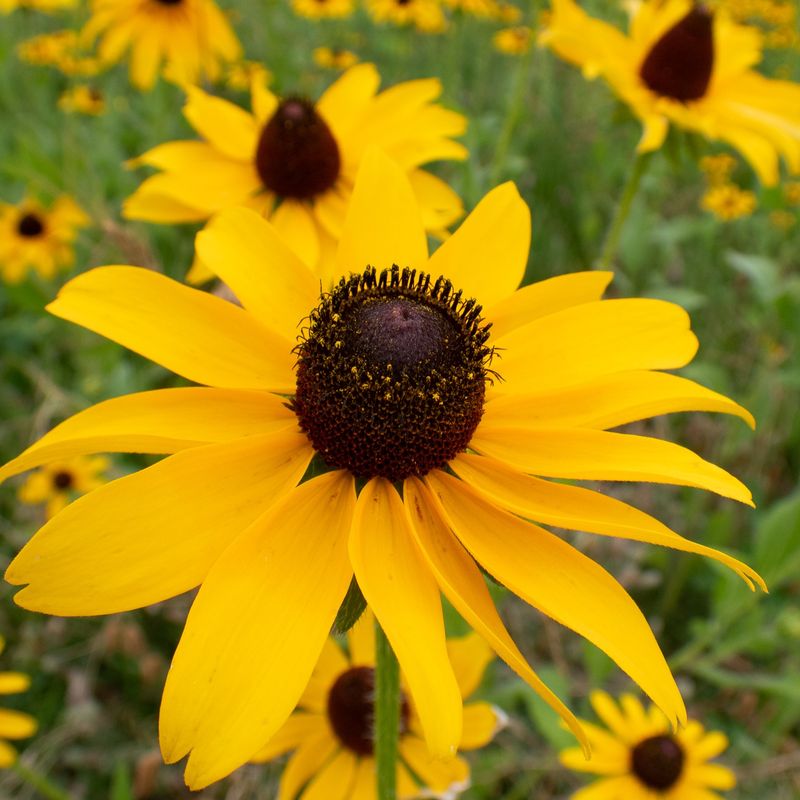
Bright golden petals circling a dark center make the black-eyed Susan easy to spot and hard to forget. These sunny flowers show up across fields and gardens like little bursts of daylight.
The name comes from the dark brown middle that looks a bit like a winking eye. Around it, warm yellow petals spread out in a perfect ring.
Together they create a shape that feels friendly and welcoming.
These flowers belong to the daisy family and grow well in many kinds of soil. They can handle heat, dry spells, and even a bit of neglect, which makes them a favorite for busy gardeners.
Bees, butterflies, and small birds all enjoy black-eyed Susans. After the blooms fade, the seed heads provide food for birds during the cooler months.
Leaving them standing gives wildlife a helping hand.
Planting is simple. Scatter seeds in a sunny spot in spring, keep them watered while young, and soon you will have a patch of cheerful gold.
They also spread on their own, so one small planting can grow into a big cluster over time.
Black-eyed Susans work great in bouquets too. Their sturdy stems hold up well in a vase, and their bright color brightens any room.
Cutting a few will not hurt the plant, since it keeps producing more blooms.
There is something classic about these flowers that feels like summer itself. Whether growing along a fence or filling a wild meadow, black-eyed Susans add a warm, happy glow that seems almost too perfect for a plant that grows so easily.
5. Texas Prickly Pear Cactus Bloom
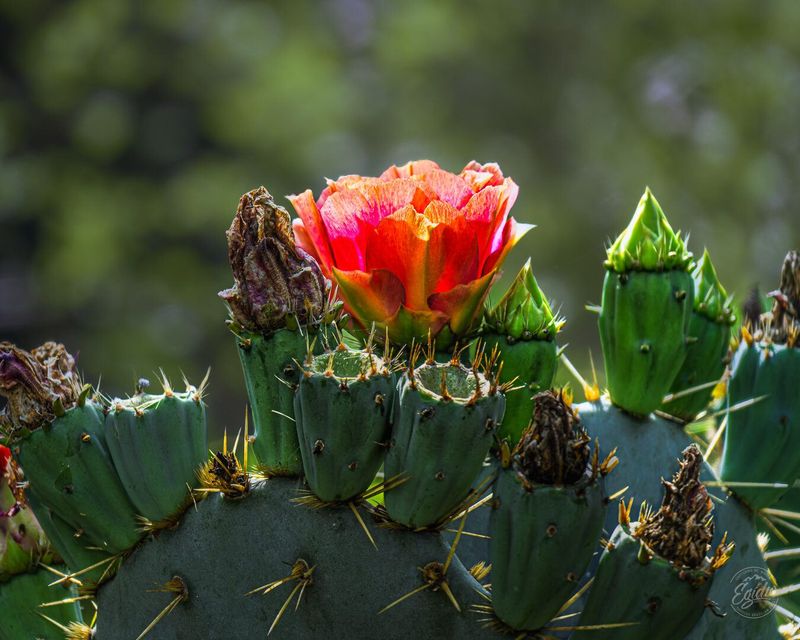
Who would guess that a spiky, tough cactus could produce some of the prettiest flowers in Texas? The prickly pear does exactly that, and the surprise makes it even more special.
Each spring and early summer, the flat green pads of this cactus sprout large, waxy blooms. The petals shine in shades of yellow, orange, and sometimes deep red.
Against the green pads and sharp spines, the flowers look almost jewel-like.
After the blooms fade, the plant grows a fruit called a tuna. People have eaten these fruits for hundreds of years, and they can be turned into jelly, candy, and even drinks.
The pads, known as nopales, are also cooked and eaten in many kitchens.
This cactus is built to survive rough conditions. It stores water inside its thick pads, so it can handle long stretches without rain.
That toughness makes it a symbol of the tough spirit found across the Southwest.
If you plant one at home, choose a sunny, dry spot and be careful of the spines. It needs very little water and almost no attention once it settles in.
Wear thick gloves anytime you handle it.
The prickly pear is even the official state plant of Texas, which shows how much folks here respect it. It supports wildlife too, giving food and shelter to birds, insects, and small animals.
Seeing bright flowers bloom on such a rugged plant reminds us that beauty can pop up in the most unexpected places. The prickly pear proves that even the toughest survivors can put on a stunning show.
6. Mexican Hat
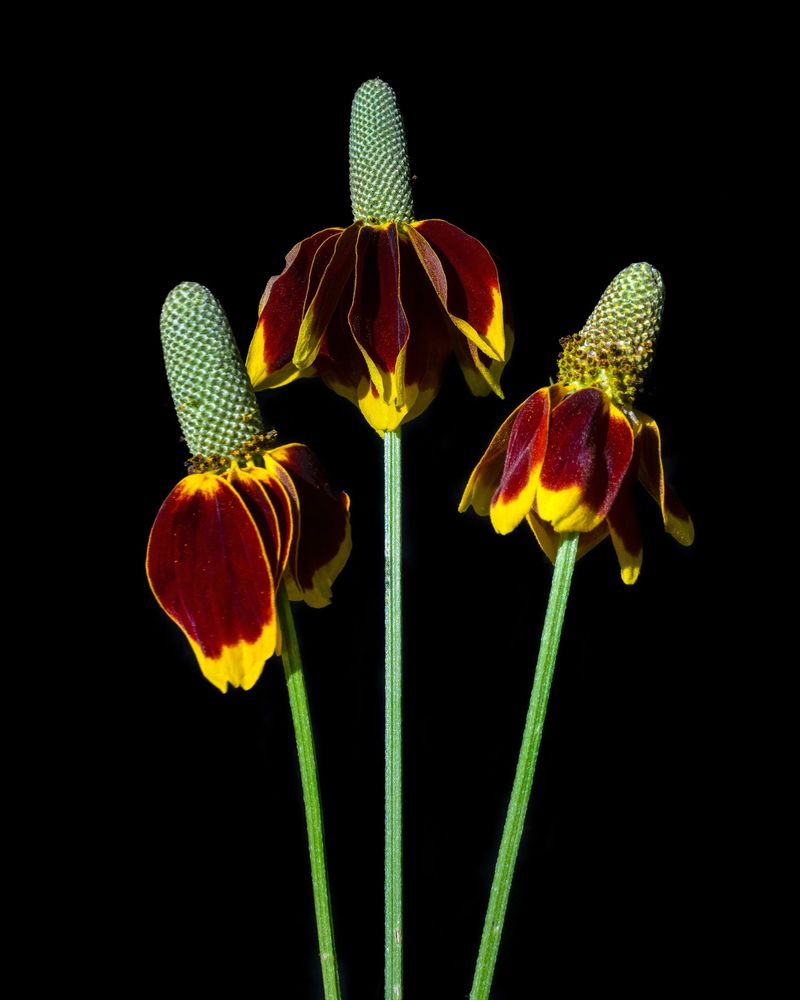
Look closely at a Mexican hat flower and you might just chuckle. Its shape really does look like a tiny sombrero sitting on top of a slender stem.
The flower has a tall center cone that rises up like the top of a hat. Around the base, drooping petals in red and yellow hang down like the brim.
This funny, unique shape makes it stand out from the crowd.
These plants love the wide open prairies of Texas. They handle heat and dry weather with ease, and they bloom for a long stretch from late spring into fall.
That long season means lots of color for months.
Growing Mexican hat is refreshingly simple. Toss the seeds in a sunny spot with well-draining soil, and let nature do the rest.
They come back year after year and often spread to fill in empty patches.
Pollinators find them irresistible. Bees and butterflies visit the blooms all day long, and the seeds later feed hungry birds.
Adding this flower to a garden turns it into a busy little wildlife hotspot.
The plant is also very forgiving, so it is great for people who forget to water or who have rough soil. It thrives where fussier flowers would struggle, making it a smart choice for a low-maintenance yard.
Its playful look and easygoing nature make Mexican hat a joy to grow. Kids especially get a kick out of the funny shape and bright colors.
When a whole field of these little hats sways in the breeze, the sight is honestly delightful.
7. Winecup
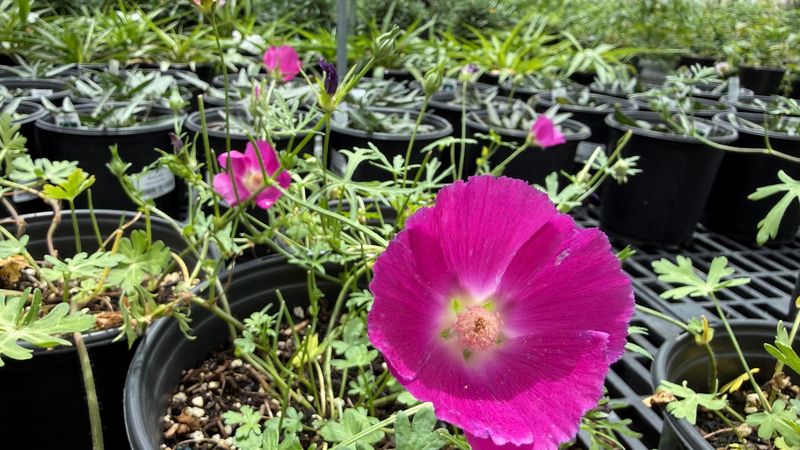
Deep purple-pink blooms shaped just like tiny cups give the winecup its charming name. These low-growing flowers spread across the ground and create a rich splash of color in spring meadows.
Each flower opens into a smooth cup shape with a satiny shine. The color is a bold magenta that catches the eye from far away.
Up close, the petals look almost too silky to be real.
Winecups grow along the ground, trailing outward instead of standing tall. This makes them perfect for filling in bare spots or spilling over the edge of a garden bed.
They form a soft carpet of green dotted with bright cups.
These flowers are native to Texas, so they handle the local weather like champs. They love full sun and can go without much water once they are settled.
Poor soil does not bother them one bit.
An interesting habit of the winecup is that its flowers close up at night and open again with the morning sun. Watching them wake up each day adds a little bit of wonder to the garden.
Bees and other pollinators visit these blooms often, helping your whole garden stay healthy. Planting a few near vegetables or other flowers can boost the number of helpful insects around.
Because they spread nicely without taking over, winecups work well in wild gardens and neat flower beds alike. They give a natural, meadow look that feels relaxed and pretty.
If you want a flower that brings deep, rich color close to the ground, the winecup delivers. Its glowing cups look almost hand-painted against the green Texas grass.
8. Texas Yellow Star
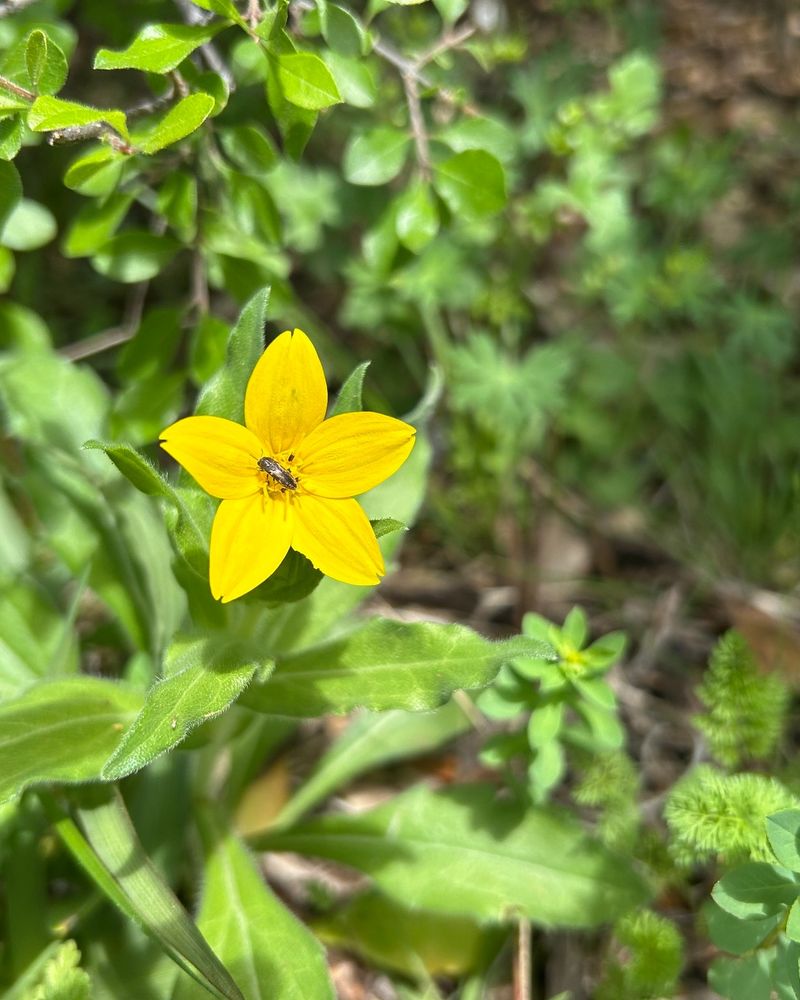
Tiny and cheerful, the Texas yellow star scatters little bursts of gold across fields and lawns each spring. These small flowers may not be huge, but they sure make up for it with charm.
Each bloom has five bright yellow petals arranged in a neat star shape. When many of them grow together, they cover the ground with a twinkling golden glow.
The effect looks like a piece of the night sky landed in a meadow.
This flower is native to central and southern Texas, and it feels right at home in the local climate. It pops up in fields, along roads, and sometimes even in the cracks of sidewalks where few plants dare to grow.
The yellow star is a hardy little plant that handles heat and dry soil without complaint. It does not need fancy care or rich dirt to thrive.
Give it sunshine and it will happily bloom.
Small bees and other insects enjoy visiting these flowers for nectar. Even though each bloom is tiny, together they provide plenty of food for pollinators looking for a snack.
Because they are so low and spreading, yellow stars can act like a natural ground cover. Some folks let them fill in patches of their yard for a wild, sunny look instead of plain grass.
The flowers usually appear in early spring, giving gardens an early splash of color before bigger blooms arrive. Their timing makes them a welcome sign that warm weather is on the way.
Simple, sunny, and tough, the Texas yellow star proves that good things really do come in small packages.