Why Michigan Tomatoes Look Fine In July But Crash After Three Humid Nights
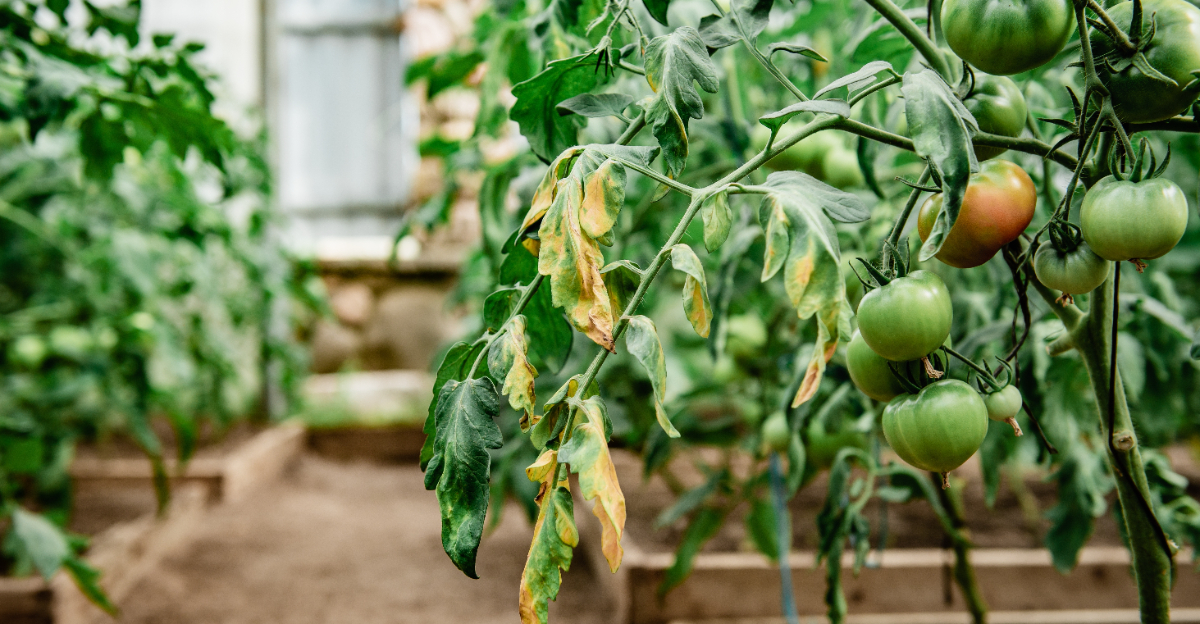
Three consecutive humid nights in Michigan can unravel a tomato plant that showed no warning signs going into them, and the speed of that decline feels completely disproportionate to what the weather actually was.
The crash is not caused by those three nights alone. It is triggered by them, but the conditions that made the plant vulnerable enough to collapse that quickly were building through July in ways that looked like normal summer growth from the outside.
Poor air circulation, uneven watering, and fungal buildup during humid Michigan spells eventually hit a breaking point.
It looks like it happens overnight without warning, but the damage has been quietly building up the entire time. The warning was there. It just required knowing where to look for it.
1. Humid Nights Keep Leaves Wet Too Long
Picture this: a warm July evening in Michigan, temperatures barely dropping, the air thick and sticky. Your tomato plants look perfectly healthy at sunset, but overnight, something quiet and damaging is happening.
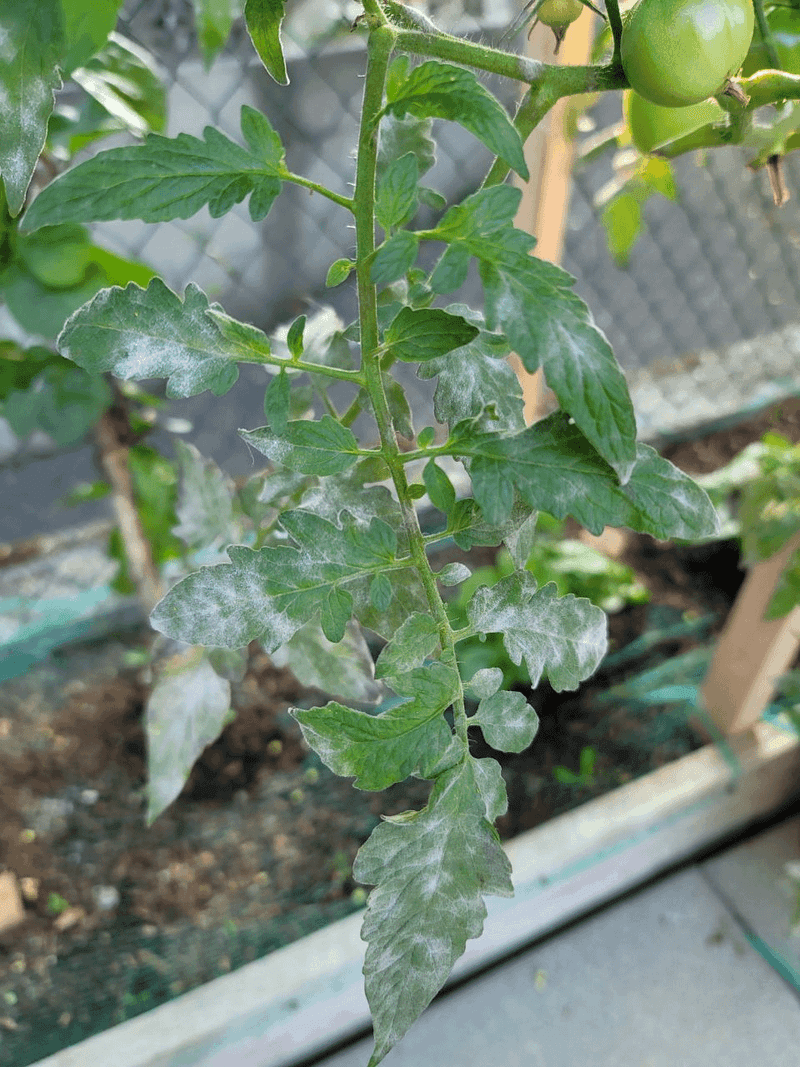
Humidity, dew, fog, or even a light rain shower can leave tomato foliage wet for six to ten hours or more, and that extended wetness is exactly what leaf diseases are waiting for.
Most common tomato leaf diseases, including fungal and bacterial types, need moisture on the leaf surface to spread and take hold.
When nights stay humid and foliage stays damp, spores that were sitting harmlessly on dry leaves suddenly get the moisture they need to germinate and penetrate plant tissue. The warmer the humid night, the faster this process moves along.
Michigan summers are especially tricky because daytime heat can make plants look vigorous and strong, masking what humid nights are setting up. Gardeners often assume their plants are thriving because they look fine in the afternoon sun.
But by the third or fourth humid night in a row, the damage has already started deep in the leaf tissue before any spots or yellowing show up on the surface.
Airflow around your plants plays a huge role in how fast leaves dry after a humid night. Plants in open, breezy spots tend to dry faster in the morning.
Plants tucked into corners, against fences, or surrounded by other tall plants stay wet much longer. Paying attention to where moisture lingers in your garden can tell you a lot about where problems are most likely to start.
2. Disease Pressure Was Already Building Before Symptoms Appeared
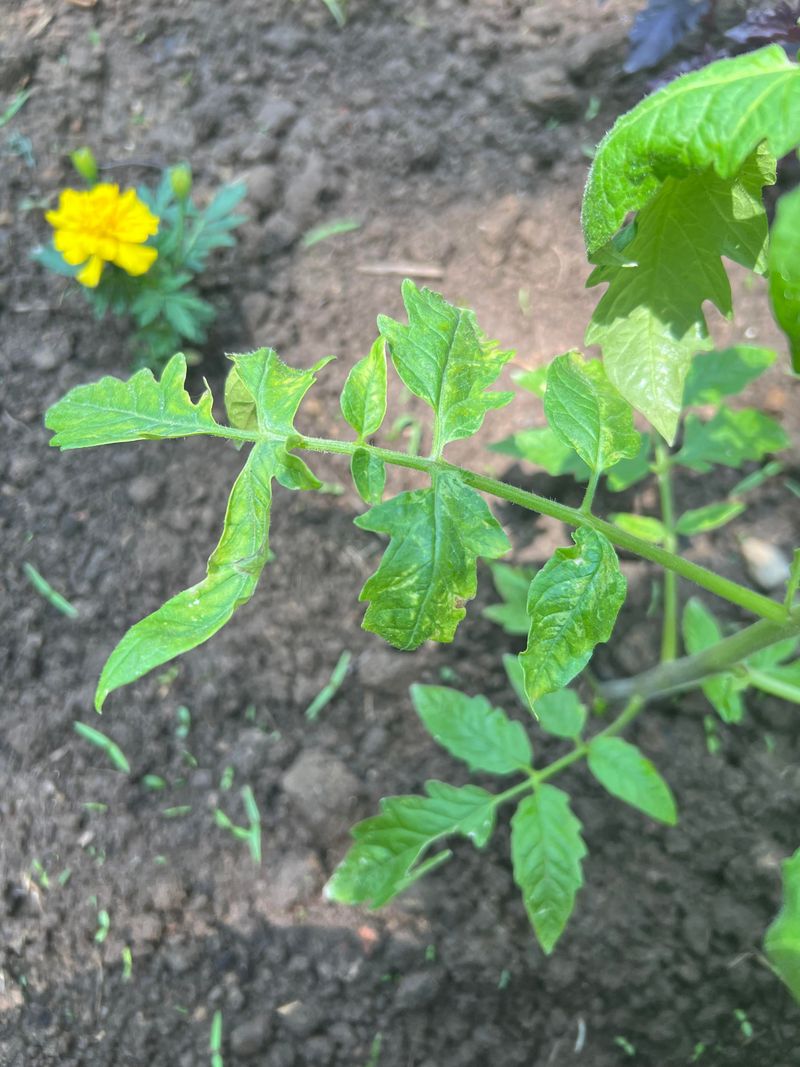
One of the most frustrating things about tomato diseases is how sneaky they are. Your plants can look completely healthy from a distance, even while disease pressure is quietly building on the lower leaves, in the soil, or on nearby plant debris.
By the time you notice spots or yellowing, the problem has usually been developing for days, sometimes even longer.
Fungal spores can land on leaves and sit there without causing obvious damage until the right conditions arrive. Three humid nights in a row create exactly those conditions.
Suddenly, symptoms that seemed to appear overnight actually represent a week or more of slow, invisible buildup.
Your Michigan Garden Changes Every Week. Your Plan Should Too.
Gardening in Michigan changes quickly throughout the season. Every Friday you’ll receive a simple weekly plan showing exactly what to plant, prune, fertilize, harvest, and protect so you never miss the right timing.
This is why experienced gardeners check the undersides of lower leaves regularly, not just the top of the plant where everything still looks lush.
Plant debris on the soil surface is another major source of disease pressure that often goes unnoticed.
Old leaves, dropped fruit, and decaying stems from previous seasons or nearby plants can harbor spores that splash up onto lower foliage during rain or watering.
Keeping the area around your tomatoes clean and clear makes a real difference in how much pressure your plants are working against all season long.
Checking your plants every few days, especially during warm and wet stretches, gives you a better chance of catching problems early. Look at the lowest leaves first.
Small spots, slight yellowing, or unusual discoloration near the base of the plant are early clues that something is developing.
Catching it early means you have more options and more time to respond effectively before the whole plant shows symptoms.
3. Septoria Leaf Spot Often Starts Low And Moves Up
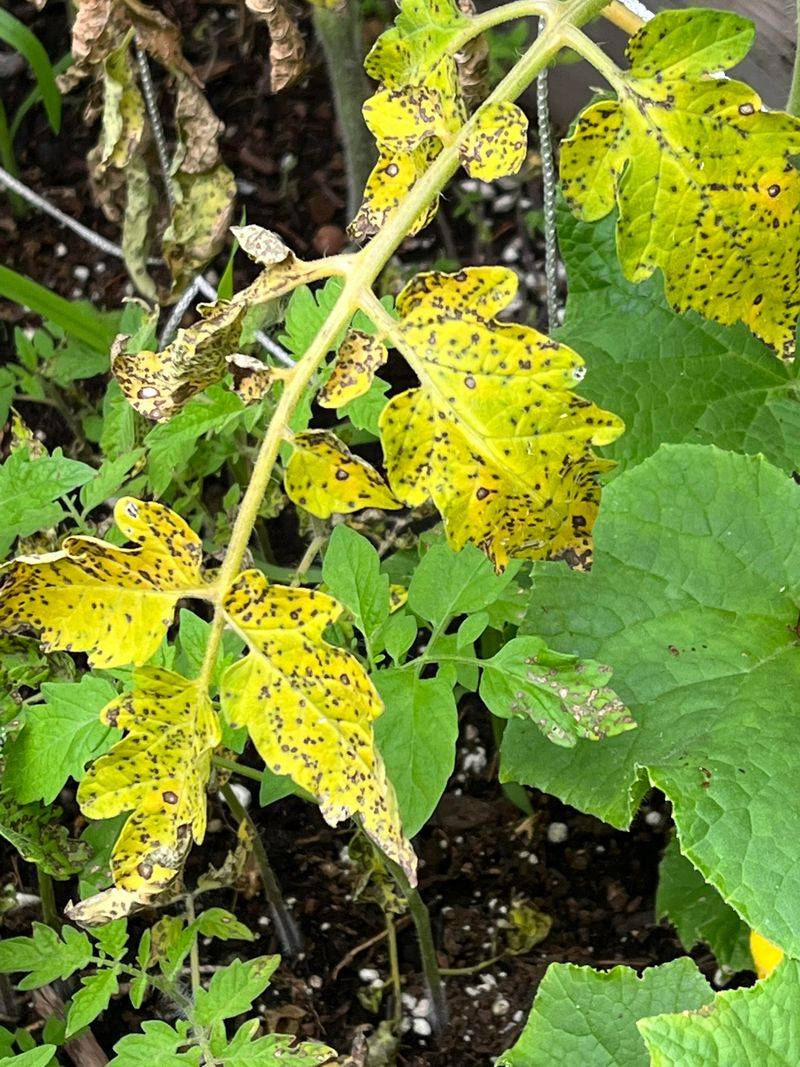
Septoria leaf spot is one of the most common tomato problems Michigan gardeners face in July, and it has a very recognizable pattern.
It almost always starts on the lowest leaves on the plant, showing up as small, roughly circular spots with dark brown or black margins and pale, grayish centers.
Yellowing often develops around the spots, and once those lower leaves start looking rough, the infection tends to work its way upward if conditions stay favorable.
Many gardeners miss Septoria at first because it begins so close to the ground. When you are checking your plants from a standing position and the upper plant looks fine, it is easy to overlook what is happening at the base.
Fruit is usually not affected early on, which adds to the confusion. The tomatoes forming up top look great, so the assumption is that everything is fine, even while the lower half of the plant is already in trouble.
Septoria leaf spot is caused by a fungal pathogen that thrives in warm, wet conditions, which makes Michigan Julys a prime time for outbreaks. The spores spread through rain splash, overhead watering, and even contact with wet tools or hands.
Once the lower leaves are heavily affected, removing them carefully and disposing of them away from the garden can slow the spread upward.
Consistent monitoring is the best tool against Septoria. Check your plants from the bottom up at least once a week during warm and humid stretches.
Catching it when only a few lower leaves are spotted gives you a real advantage in slowing its progress through the rest of the plant before the season is over.
4. Overhead Watering Makes Humid Nights Worse
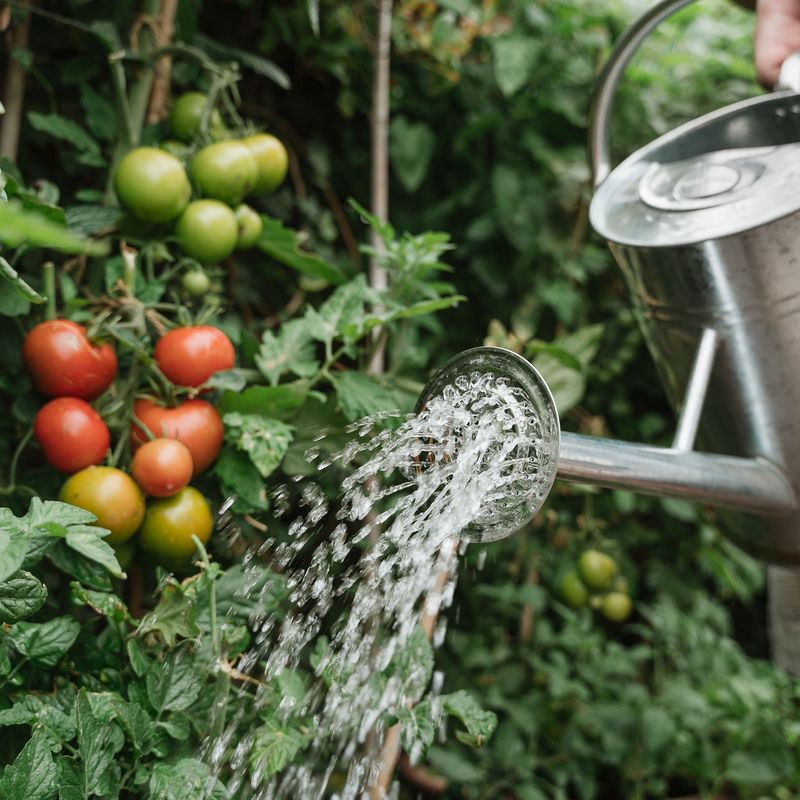
Watering your tomatoes feels like a straightforward task, but the method and timing matter more than most gardeners realize.
Overhead watering, meaning watering from above so water falls onto the leaves and stems, is one of the fastest ways to create the exact conditions that leaf diseases love.
When you combine overhead watering late in the afternoon with an already humid Michigan summer evening, you are essentially setting your plants up for a rough night.
Wet foliage that cannot dry before dark stays damp for the entire night. Add in naturally high humidity and warm temperatures, and those leaves may not fully dry until mid-morning the next day.
That is ten or more hours of wet leaf surface time, more than enough for fungal spores to take hold and begin spreading. Doing this repeatedly across a week of humid weather accelerates the problem significantly.
Switching to ground-level watering makes a noticeable difference. Soaker hoses and drip irrigation deliver water directly to the root zone without wetting the foliage at all.
If you water by hand, aim for the base of the plant and keep the stream low. Even if overhead watering is unavoidable sometimes, doing it early in the morning gives foliage a full day of sun and airflow to dry before evening arrives.
Timing really is everything with tomato watering during humid Michigan summers. Morning watering at soil level is the gold standard.
It keeps leaves dry, delivers water where the roots actually need it, and reduces the overnight moisture that gives leaf diseases their best opportunity to spread and cause visible damage across your tomato plants.
5. Crowded Plants Trap Moisture Inside The Canopy
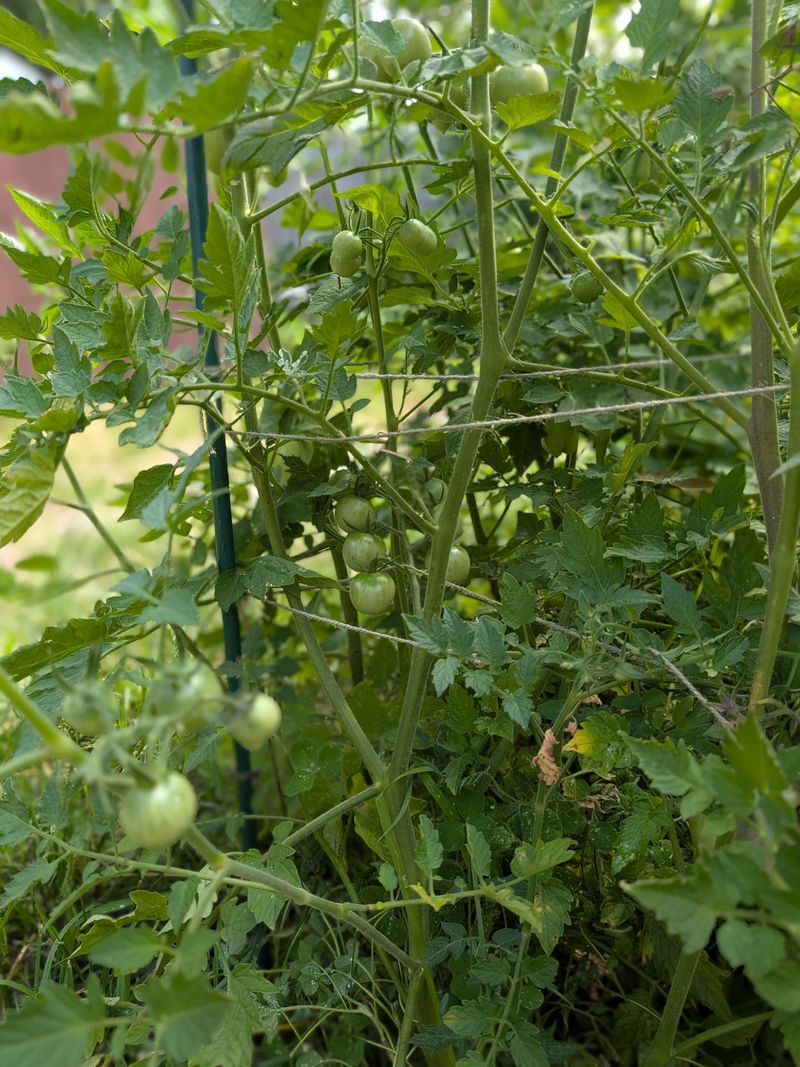
There is something satisfying about a thick, lush tomato garden overflowing with green leaves and heavy vines. But that dense, crowded look can actually work against your plants during humid Michigan summer nights.
When tomato plants are planted too close together, their leaves overlap and create a tight interior canopy where moisture gets trapped and airflow slows to almost nothing.
Airflow is one of the most underrated tools in disease prevention. When a breeze can move through and around your plants, moisture evaporates faster after rain, dew, or watering.
In a crowded planting, inner leaves can stay wet for hours after the outer leaves have already dried in the morning sun. Those persistently damp inner leaves are prime territory for fungal diseases to develop and spread.
Plants that are not staked, caged, or lightly pruned tend to sprawl and pile on top of each other, making the moisture problem even worse.
Indeterminate tomato varieties, which are very common in Michigan home gardens, keep growing all season and can become enormous tangles of foliage if not managed.
Regular pruning of suckers, especially low on the plant, opens up the interior and lets air circulate more freely.
Spacing tomatoes properly from the start is the easiest fix. Most varieties do best with at least two to three feet between plants, and some large indeterminate types need even more room.
Staking or caging keeps vines upright and separated, which helps enormously with airflow and drying. A little extra space between plants at planting time pays off in a big way during those long, sticky Michigan summer nights.
6. Soil Splash Can Move Trouble Onto Lower Leaves
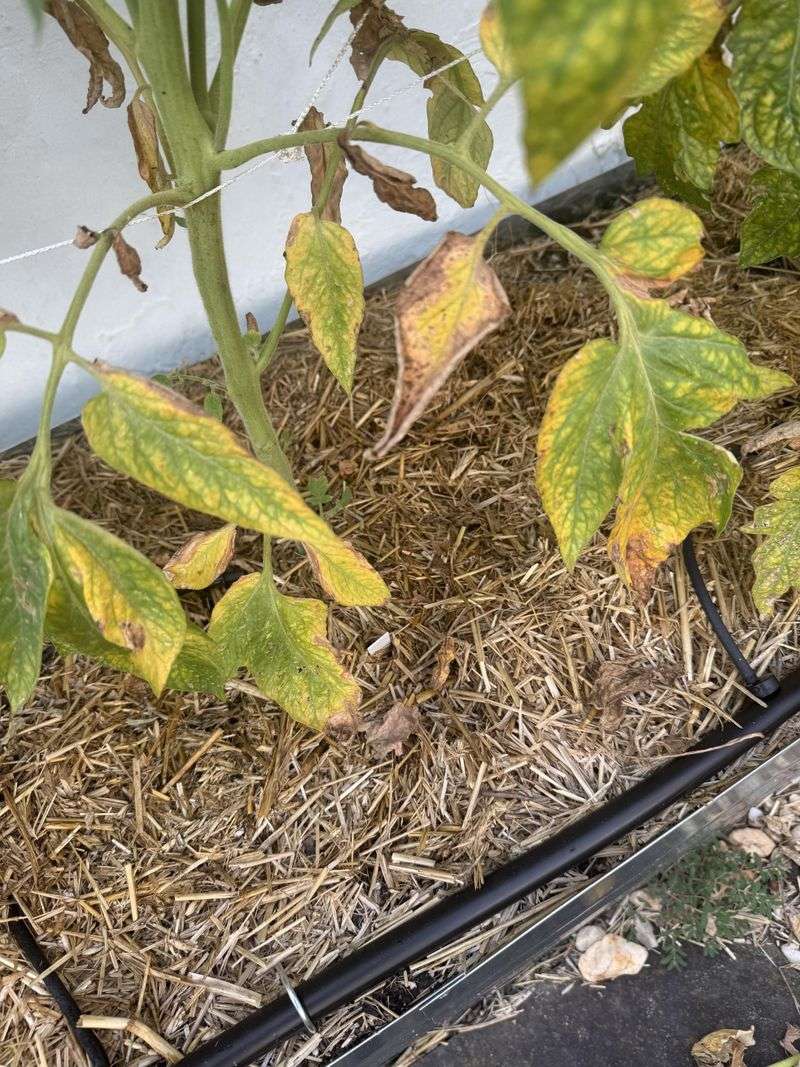
Rain is usually welcome in the garden, but it brings an unexpected downside for tomato plants.
When raindrops or irrigation water hits bare soil around the base of your plants, it splashes tiny particles of dirt, organic matter, and fungal spores upward onto the lower leaves.
This splash effect is one of the most common ways that soil-dwelling pathogens make their way onto tomato foliage, especially during wet Michigan summers.
Lower leaves are the first to catch this splash, which is one reason why diseases so often begin near the base of the plant. Once contaminated soil particles land on a leaf and conditions stay wet, disease development can begin surprisingly fast.
During a stretch of humid nights, each rain event or watering session adds another round of potential splash, building up pressure on those lower leaves steadily over several days. Mulch is one of the simplest and most effective ways to reduce soil splash.
A layer of straw, wood chips, or shredded leaves two to three inches deep around the base of your tomato plants creates a buffer that absorbs water impact and prevents soil from splashing upward.
Mulch also helps retain soil moisture and keeps roots cooler on hot Michigan summer days, so the benefits go well beyond disease prevention.
Removing the lowest leaves on your tomato plants, especially any that are already showing spots or yellowing, is another practical step. Keeping the bottom six to twelve inches of the plant clear of foliage reduces the surface area that catches soil splash.
Combining mulch with careful lower-leaf removal and ground-level watering gives your tomatoes a strong layer of protection against splash-driven disease problems all season long.
7. Late Blight Should Be Checked During Wet Humid Weather
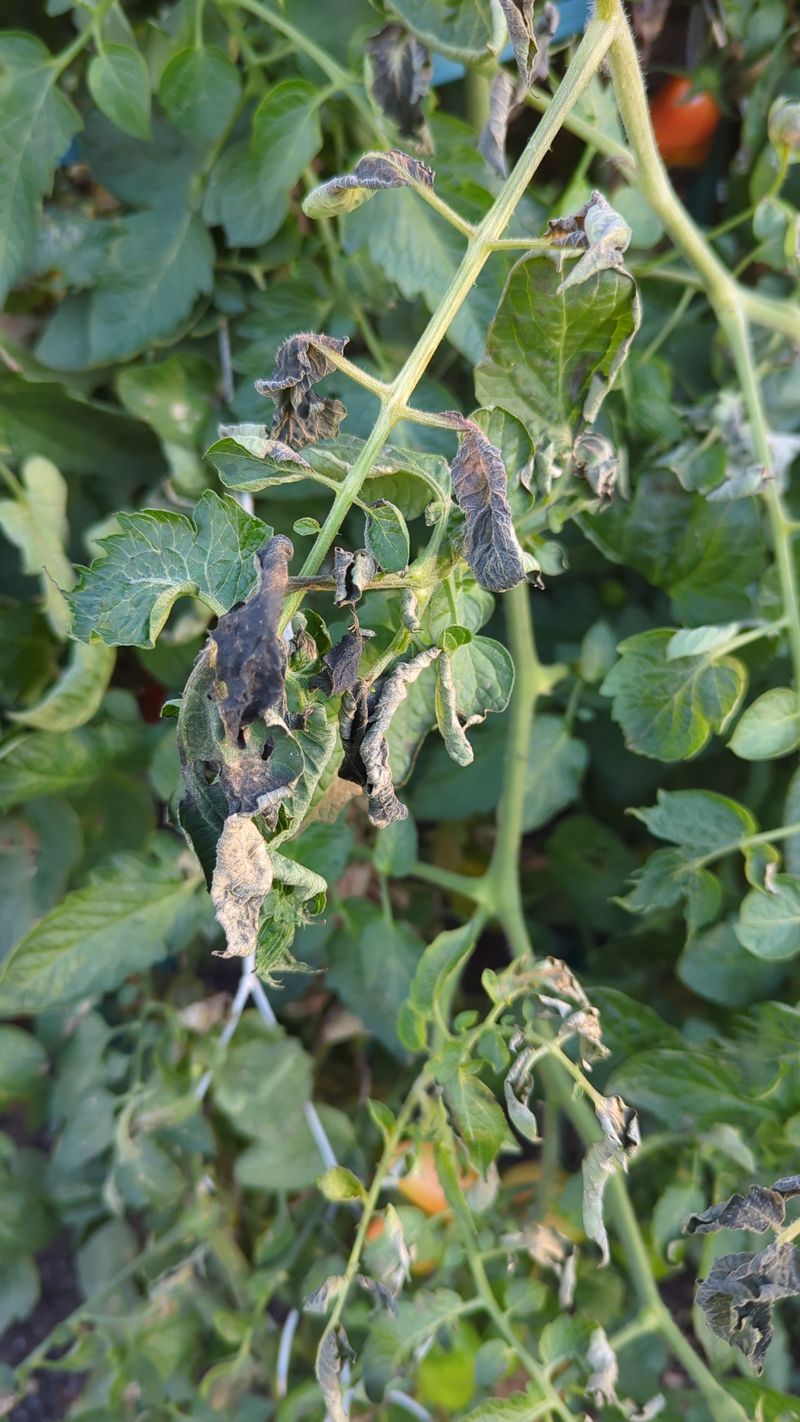
Most tomato leaf problems are manageable with some simple adjustments, but late blight is in a different category. Michigan gardeners need to know what late blight looks like and take it seriously, especially during stretches of wet, humid weather.
This disease can move through a tomato planting with alarming speed once conditions turn favorable, and it looks noticeably different from common leaf spot diseases.
The warning signs of late blight are distinct. Look for large, dark, water-soaked looking patches on the leaves that may appear greasy or oily at first glance.
These patches often turn brown quickly and can have a pale, grayish border when humidity is high. Dark brown to black lesions can also appear on stems, and green or ripening fruit may develop firm, dark, irregular patches that are clearly not normal ripening.
Late blight is caused by Phytophthora infestans, the same pathogen responsible for the Irish Potato Famine, which gives you an idea of how destructive it can be under the right conditions.
It spreads rapidly through spores carried on wind and water, meaning a single infected plant in your neighborhood can become a source of pressure for gardens nearby.
Humid, cool-to-warm nights with temperatures between 50 and 80 degrees Fahrenheit are ideal for its spread.
If you suspect late blight, do not wait to investigate further. Check your local Michigan State University Extension resources or take a sample to your local cooperative extension office for identification.
Acting quickly, removing affected plant material carefully, and keeping it out of your compost pile are important steps. Early identification gives you the best chance of protecting the rest of your garden.
8. The Best Fix Is To Help Leaves Dry Faster
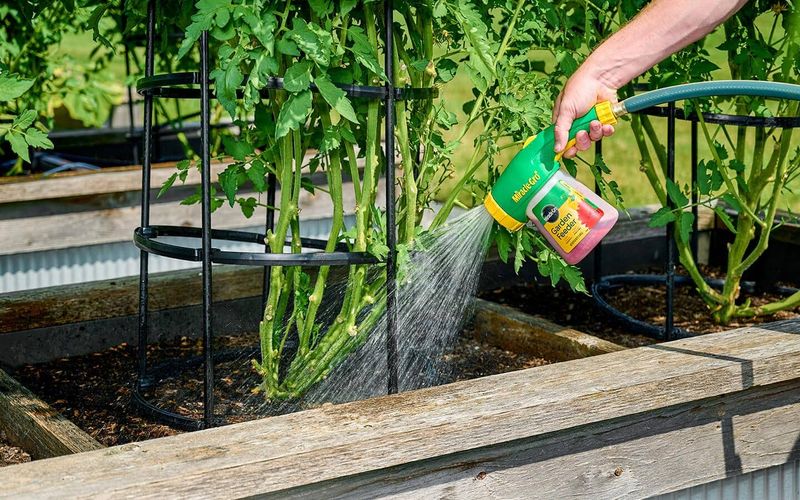
After three humid Michigan nights, it might feel like the damage is done and there is nothing left to do.
But there are real, practical steps that can slow the spread, protect healthy foliage, and set your plants up for a much better second half of the season.
The common thread running through all the best prevention strategies is simple: help your leaves dry faster and stay dry longer.
Watering early in the morning at soil level is the single most impactful habit you can build. Drip irrigation or soaker hoses make this easy and consistent, delivering water right to the root zone without touching the foliage at all.
If you hand water, keep the flow low and directed at the base of the plant. Avoiding late afternoon or evening watering during humid stretches makes a meaningful difference in overnight leaf moisture.
Mulching around the base of your plants reduces soil splash, retains moisture in the root zone, and keeps the lower canopy cleaner during rain events.
Staking or caging your tomatoes keeps vines upright and separated, which dramatically improves airflow through the plant.
When plants are supported and spread out, morning sun and breeze can reach more leaf surface and dry things off much faster after a humid night.
Pruning lower leaves, especially any that already show spots or yellowing, removes sources of continued spread and opens up the base of the plant.
When handling affected leaves, avoid touching healthy foliage with the same hands or tools without washing first.
Spores can travel easily on fingers and pruners, so a quick rinse with soapy water between cuts keeps you from accidentally spreading the problem while trying to fix it.