Why More Georgia Yards Are Adding American Beautyberry And What It Does For Wildlife Too
Some plants seem to stay in the background for years before suddenly appearing everywhere.
One day they are rarely mentioned, and the next they are showing up in more landscapes, more neighborhood plantings, and more conversations about native plants.
That kind of popularity usually does not happen by accident.
A plant has to offer something special to earn that kind of attention. Good looks certainly help, but appearance alone is rarely enough to keep interest growing year after year.
The plants that stand the test of time usually bring several benefits at once, making them useful in ways that are not always obvious at first glance.
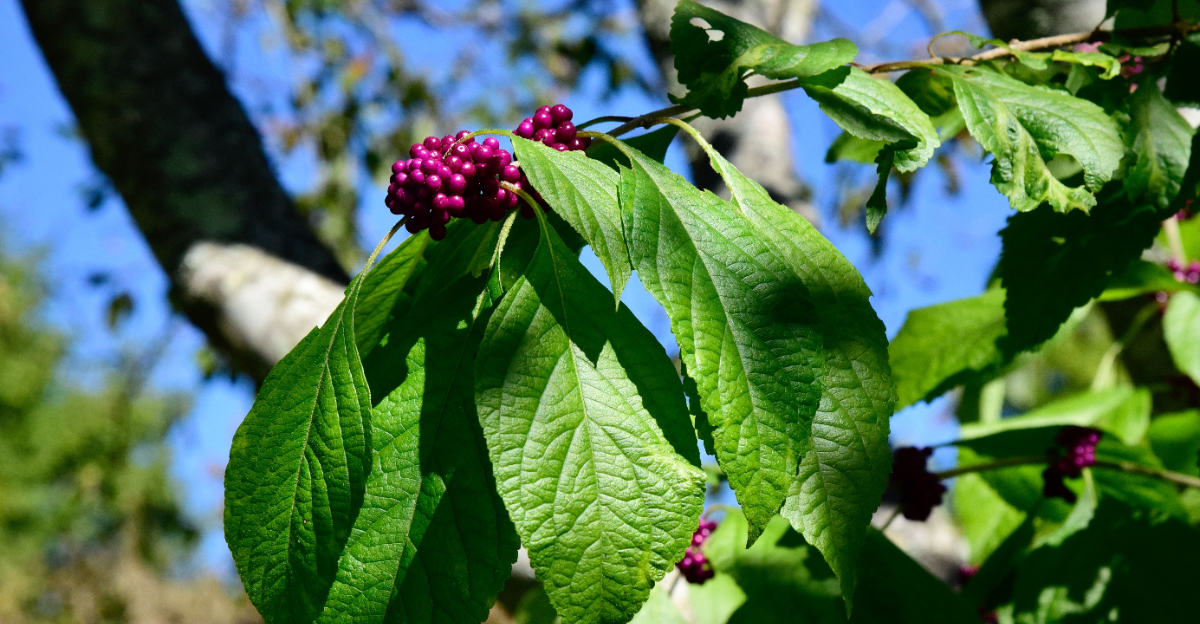
That is exactly what has been happening with American beautyberry in Georgia. Its colorful appearance catches the eye, but there is much more to the story than that.
This native shrub has become increasingly valued for the role it can play in supporting wildlife and adding interest to the landscape at the same time.
1. American Beautyberry Supports Wildlife In Multiple Ways
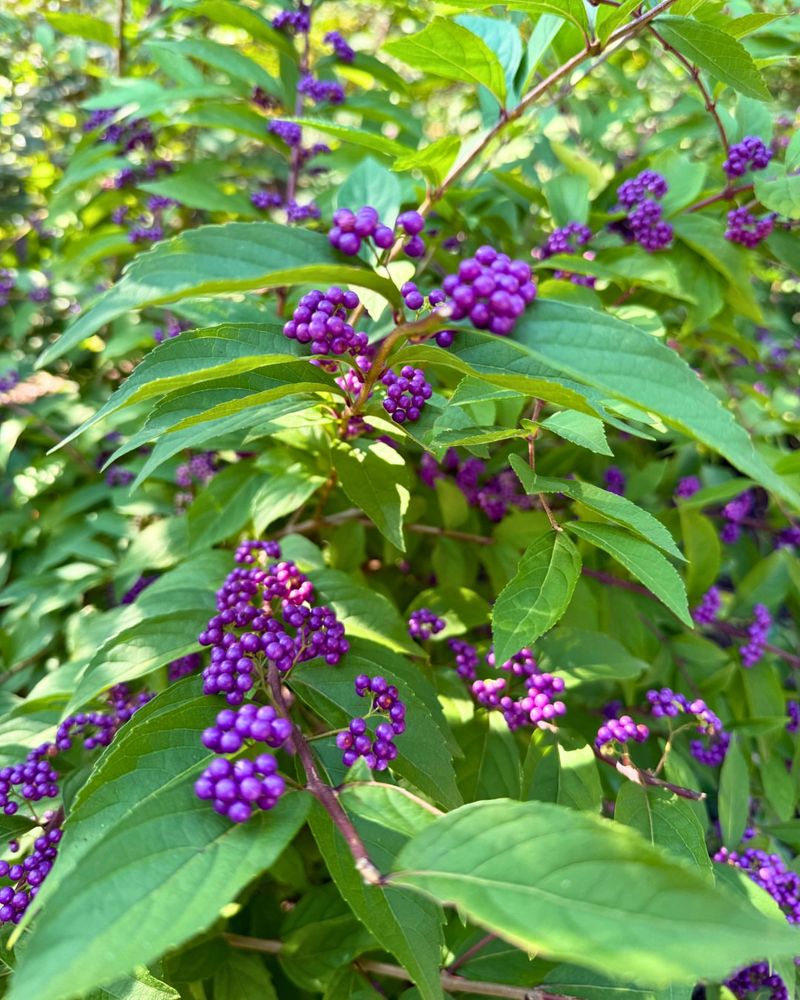
Few native shrubs pull as much wildlife weight as American Beautyberry does in a single growing season. It feeds birds, shelters small mammals, and draws in pollinators without needing much from the gardener in return.
Mockingbirds, brown thrashers, and robins are regulars at beautyberry shrubs during fall and early winter. Catbirds and cedar waxwings also show up once the berries ripen fully.
Watching this kind of activity from a porch or window makes the plant feel almost like a backyard wildlife station.
Beyond birds, white-tailed deer browse the stems and foliage in rural areas. Raccoons and opossums have been spotted eating fallen berries beneath the shrub.
Even box turtles have been observed consuming the fruit near woodland edges.
Insects use the plant too, not just as a food source but as a resting spot. Spiders set webs between branches.
Beetles move through the leaf litter below. All of this activity builds a small, functioning food web around one single plant.
Planting American Beautyberry is not about adding decoration. It is about adding function.
One shrub can quietly support dozens of species across a full calendar year, making it one of the most practical native choices available for yards in the Southeast.
2. The Bright Purple Berries Stand Out For Months
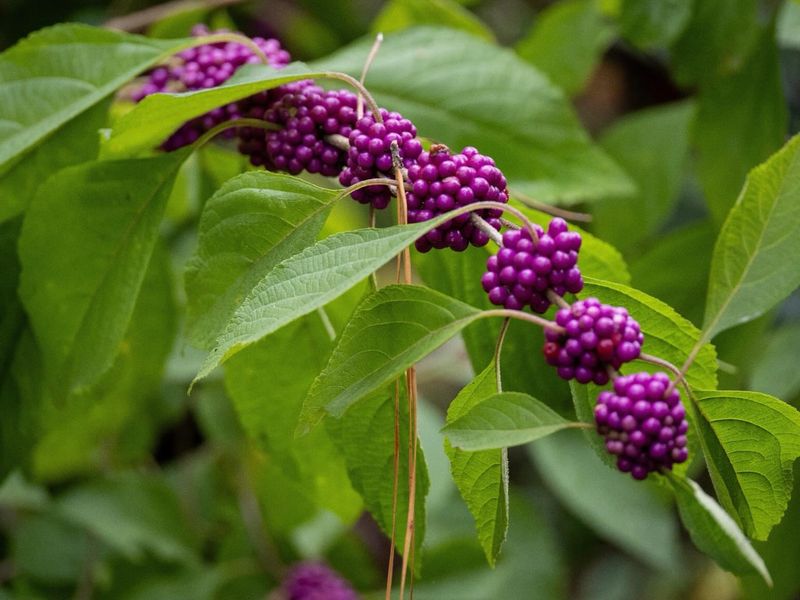
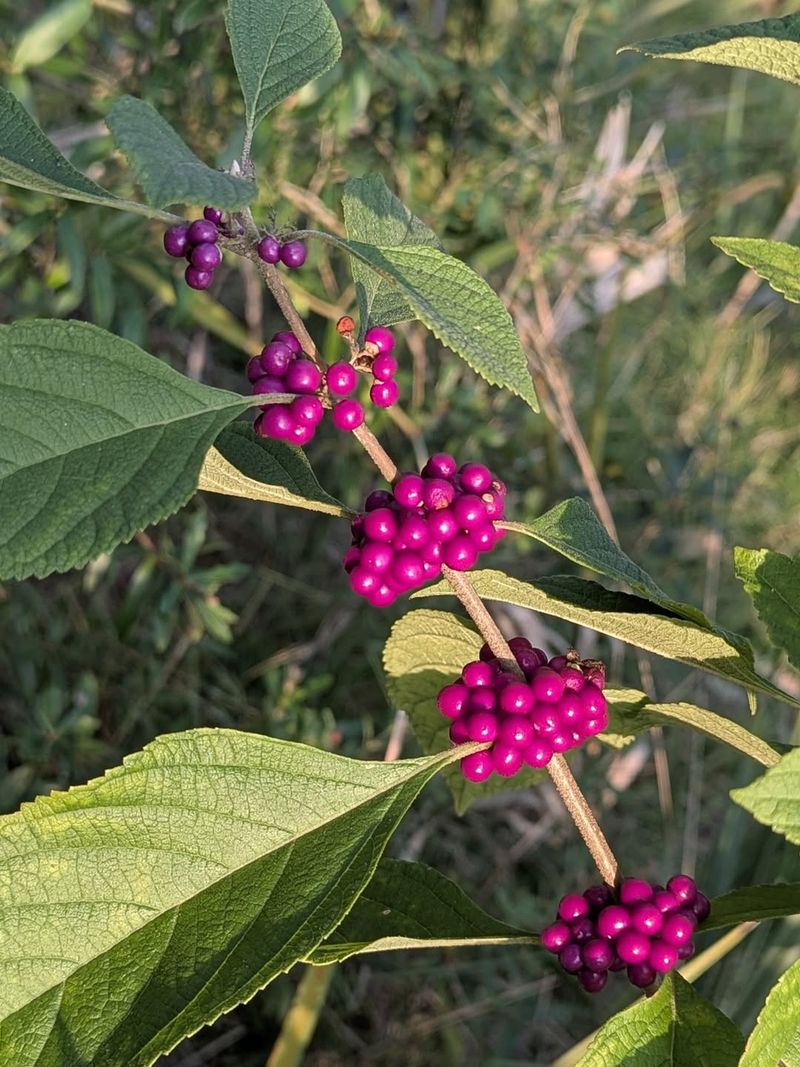
Nothing in the fall garden competes with the color of American Beautyberry berries. That electric magenta-purple is not subtle, and it does not fade quickly either.
Berries typically begin forming in late summer and hit their peak color around September and October across the Southeast.
Even after the leaves drop, those berry clusters cling to bare branches and stay visible well into December in many locations.
The color works well against fences, stone walls, and evergreen backdrops. Landscape designers have started using beautyberry as a focal point specifically because it provides late-season color when most other shrubs have gone quiet.
Berries grow in tight whorled clusters that wrap completely around the stem. That unusual growth pattern gives the whole plant a sculptural look that photographs beautifully and draws attention from across the yard.
Your Georgia Garden Changes Every Week. Your Plan Should Too.
Gardening in Georgia changes quickly throughout the season. Every Friday you’ll receive a simple weekly plan showing exactly what to plant, prune, fertilize, harvest, and protect so you never miss the right timing.
Some gardeners cut branches and bring them indoors for fall arrangements.
The stems hold their color reasonably well after cutting, especially when placed in water. Florists in the region have started sourcing them locally for seasonal displays.
White-berried and pink-berried varieties exist but the standard purple form remains the most striking. Callicarpa americana is the native species, and its berry intensity outperforms most cultivated varieties.
For raw visual impact in fall, no native shrub in the Southeast comes close to matching it.
3. Native Roots Make It Easy To Fit Into Existing Landscapes
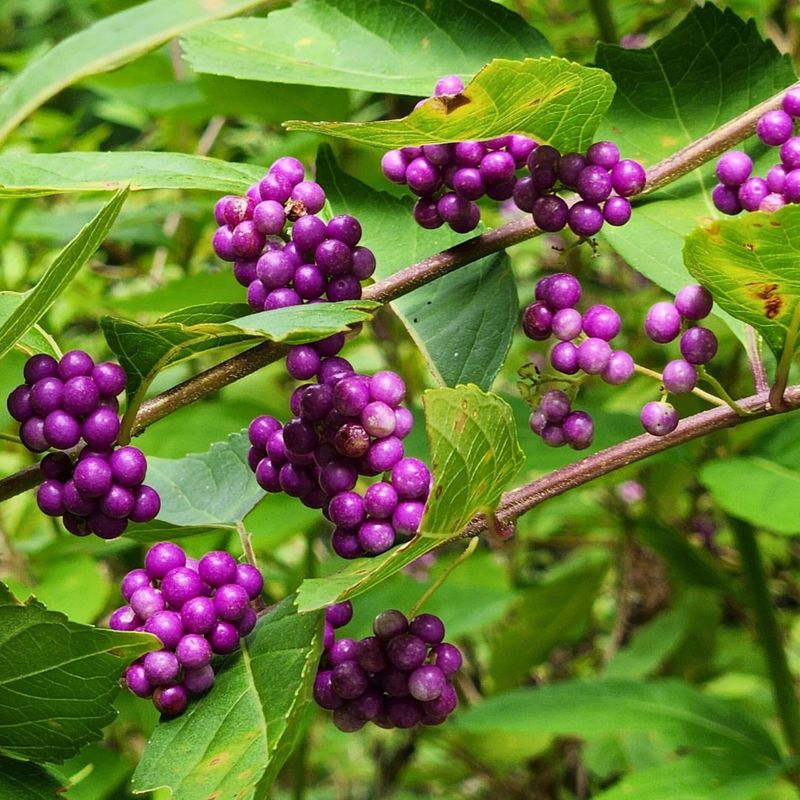
Matching a new plant to an existing yard can feel tricky, but American Beautyberry fits almost anywhere in a Southern landscape without much fuss. It grew here long before anyone started planting it on purpose.
Callicarpa americana is native to the southeastern United States, which means its basic needs match what the region already offers. It handles clay soil, sandy soil, and everything in between.
Partial shade suits it well, though it also tolerates full sun with adequate moisture.
Established plants are drought-tolerant once their root systems settle in, usually after the first full growing season. Supplemental watering during the first summer helps roots develop faster, but the plant is forgiving if conditions are imperfect.
It works as an understory shrub beneath tall pines or oaks, which is exactly where it grows naturally in the wild. That makes it an easy fit for wooded backyards or shaded side yards where other plants struggle.
Pruning is optional but manageable. Cutting plants back hard in late winter encourages fuller growth and better berry production the following fall.
Left alone, shrubs can reach six to nine feet tall and wide over several years.
Fertilizer is rarely needed. Native plants adapted to local soils generally perform better without heavy amendments.
Keep it simple, give it space, and beautyberry will handle the rest on its own terms.
4. Songbirds Return For The Seasonal Berry Crop
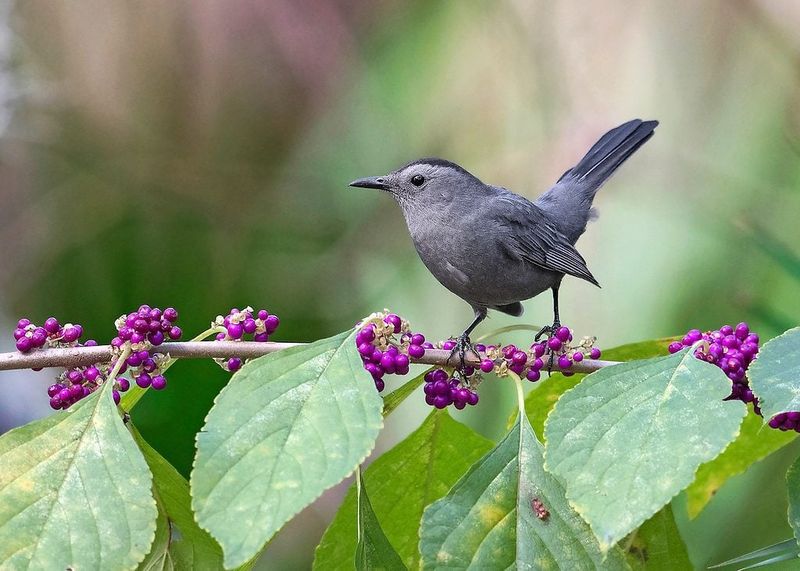
Songbirds have reliable memories when it comes to food sources. Once a yard offers American Beautyberry, certain species come back season after season with almost predictable timing.
Brown thrashers are among the most consistent visitors. They tend to arrive early in the berry season and work through clusters methodically.
Mockingbirds are territorial about the shrub and will chase off competitors when berries are at peak ripeness.
Gray catbirds love beautyberry and often linger near the shrub for extended periods. Eastern towhees forage in the leaf litter below while birds above eat directly from the branches.
Hermit thrushes passing through during fall migration stop to refuel on the ripe fruit.
American robins, which many people associate only with spring, actually move through the Southeast in large flocks during fall and winter. Beautyberry berries are on their list.
A shrub full of fruit can attract dozens of robins in a single afternoon.
Cedar waxwings work beautyberry in groups, stripping clusters fast and moving on. Spotting a flock of waxwings is always a treat, and having the right plants is what brings them close enough to watch.
Not every songbird visits every yard. Habitat, nearby cover, and overall plant diversity all affect which species show up.
5. Pollinators Visit The Flowers During Summer
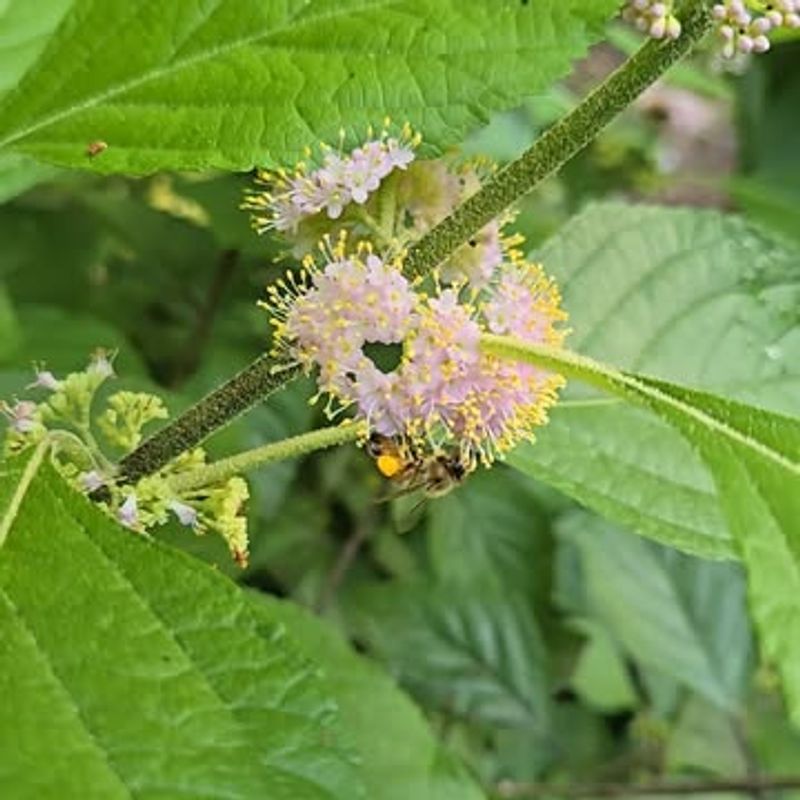
Most people grow American Beautyberry for its fall berries, but the summer flowers deserve attention too. Small, pale pink to lavender blooms open along the stems from June through August depending on conditions.
Native bees find these flowers easily. Small sweat bees and bumblebees visit regularly during the flowering period.
Honeybees also stop by, though native bee species tend to be more consistent visitors throughout the day.
Skippers and small butterflies use the flowers as well. Azure butterflies have been recorded nectaring on beautyberry blooms in the Southeast.
The flowers are not showy by typical garden standards, but pollinators do not need showy to find value.
The blooming period overlaps with summer heat, which is exactly when many other flowering plants slow down or stop.
Beautyberry keeps producing blooms steadily through the hottest weeks, giving pollinators a reliable mid-summer resource when options get thin.
Flower production leads directly to berry production, so supporting pollinators during summer has a downstream benefit for fall wildlife activity. More successful pollination means more berries for birds and other animals later in the season.
Planting beautyberry near vegetable gardens or fruit trees can help improve pollinator activity across the whole yard.
6. Dense Growth Creates Valuable Cover For Small Animals
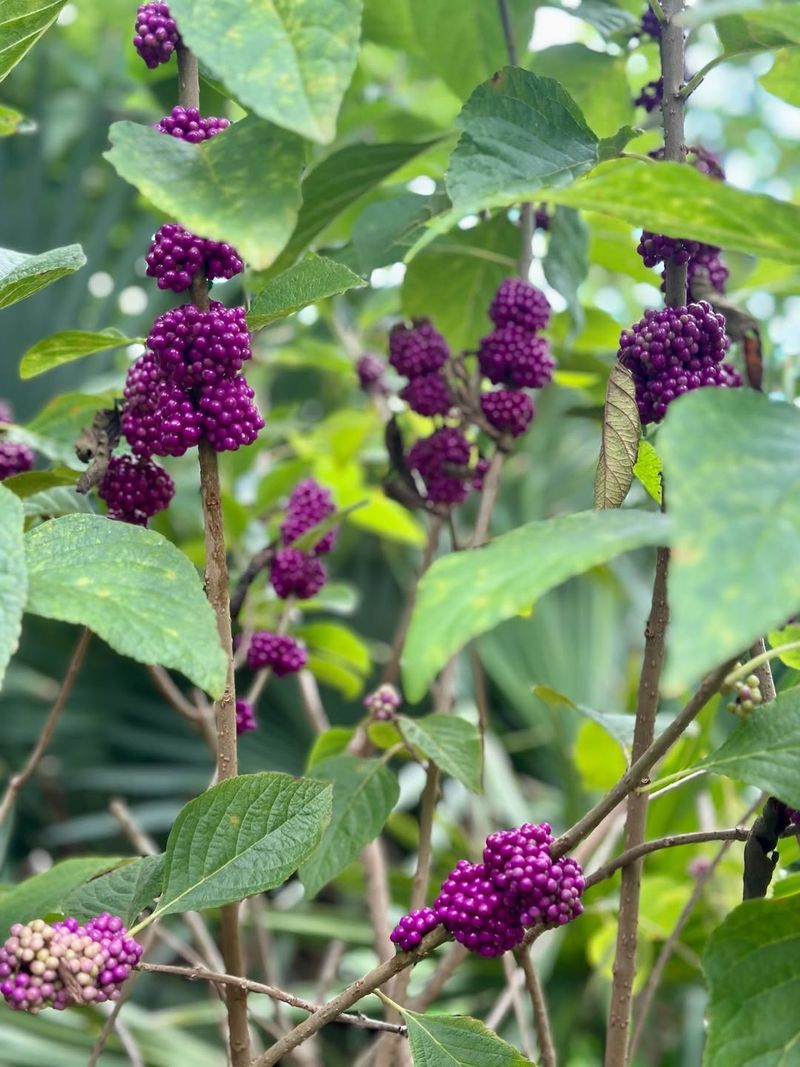
Structure matters as much as food when it comes to supporting wildlife. American Beautyberry provides both, and its dense branching habit makes it especially useful as cover for animals that need protection from predators.
Carolina wrens nest low to the ground and prefer thick shrubby cover. Beautyberry fits their requirements well.
A mature shrub with arching branches that sweep close to the soil creates exactly the kind of sheltered space wrens and other small birds prefer for nesting and roosting.
Eastern cottontails use dense shrubs as daytime hiding spots. Beautyberry’s layered branching gives rabbits a quick retreat when hawks or foxes move through the area.
Cover plants reduce stress on small mammals by giving them options beyond open lawn.
Five-lined skinks and other small lizards move through the base of the shrub looking for insects.
Leaf litter accumulates naturally beneath beautyberry, and that decomposing layer supports ground beetles, earthworms, and other invertebrates that feed reptiles and ground-foraging birds.
Song sparrows and white-throated sparrows scratch through that same leaf litter during winter visits.
Having a shrub that generates both food and cover in the same location concentrates wildlife activity in ways that open plantings simply cannot replicate.
A single well-placed beautyberry can make a noticeable difference in how much wildlife moves through a yard.
7. Local Ecosystems Benefit From Native Plant Choices
Every native plant added to a yard does more than just look good. It reconnects a small piece of land to the broader ecological network that existed before lawns and pavement replaced it.
American Beautyberry supports local food webs from the ground up. Insects that rely on native plants for larval development depend on species like beautyberry being present in yards and green spaces.
Without host plants, certain moth and butterfly species simply cannot complete their life cycles.
Birds that eat insects during nesting season need yards with high insect diversity. Native plants support far more insect species than non-native ornamentals do.
Adding beautyberry raises the insect count, which raises the food supply for nesting birds and their young.
Soil health also benefits. Native root systems tend to run deeper than many ornamental plants.
Deeper roots improve drainage, reduce compaction, and support soil microorganisms that keep the whole system functioning properly over time.
Neighborhood-level impact is real too. When multiple yards in the same area include native plants, wildlife corridors form naturally.
Birds, pollinators, and small animals can move between properties more safely when suitable habitat exists in patches rather than isolated spots.
Choosing beautyberry is a practical step anyone can take regardless of yard size. A small urban garden or a large suburban lot both benefit.