Why North Carolina Okra Leaves Turn Yellow At The Bottom During Peak Summer Growth
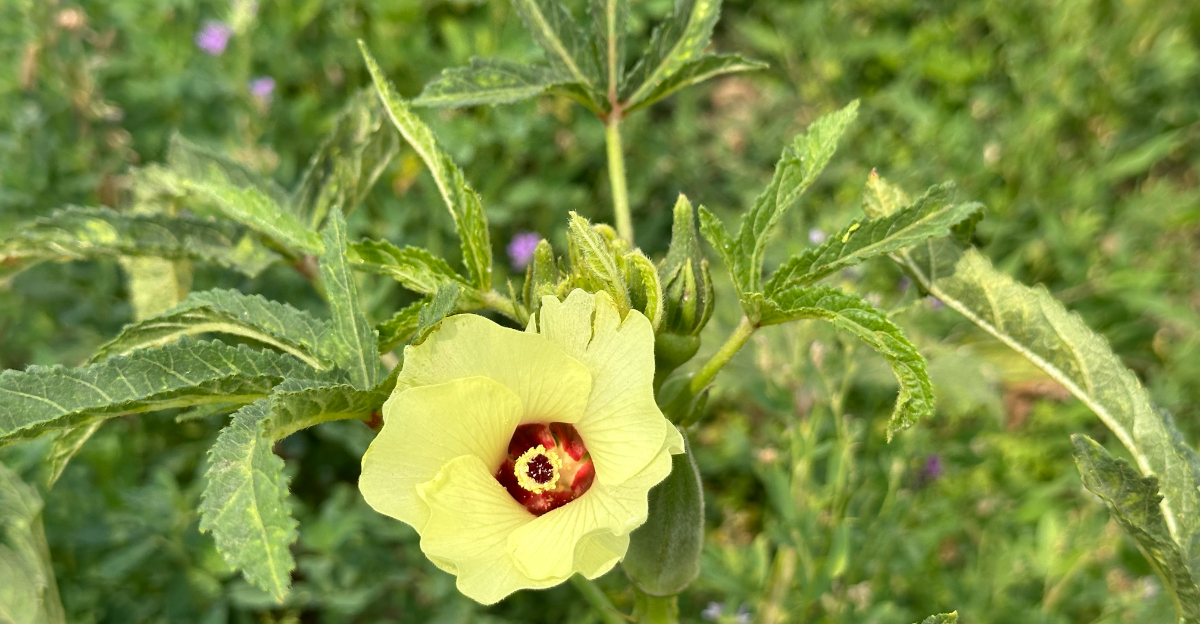
Okra plants naturally shift energy toward new growth and pod production, which explains why lower leaves often turn yellow first during peak summer in North Carolina.
As the plant matures, older leaves become less useful and are gradually sacrificed to support developing pods higher up.
Heat stress can speed up this process, especially during long stretches of intense summer sun paired with high humidity. Nitrogen deficiency is another possibility, since okra is a heavy feeder that depletes soil nutrients quickly through the season.
Checking whether yellowing stays isolated to the bottom or spreads upward helps tell normal aging apart from a nutrient problem. Consistent watering during dry spells supports steady pod production throughout summer.
Adding compost midseason can help replenish nutrients heavy feeding plants use up. In most cases, this yellowing simply reflects okra doing exactly what it’s supposed to do.
1. The Oldest Shaded Leaves Are Aging Naturally
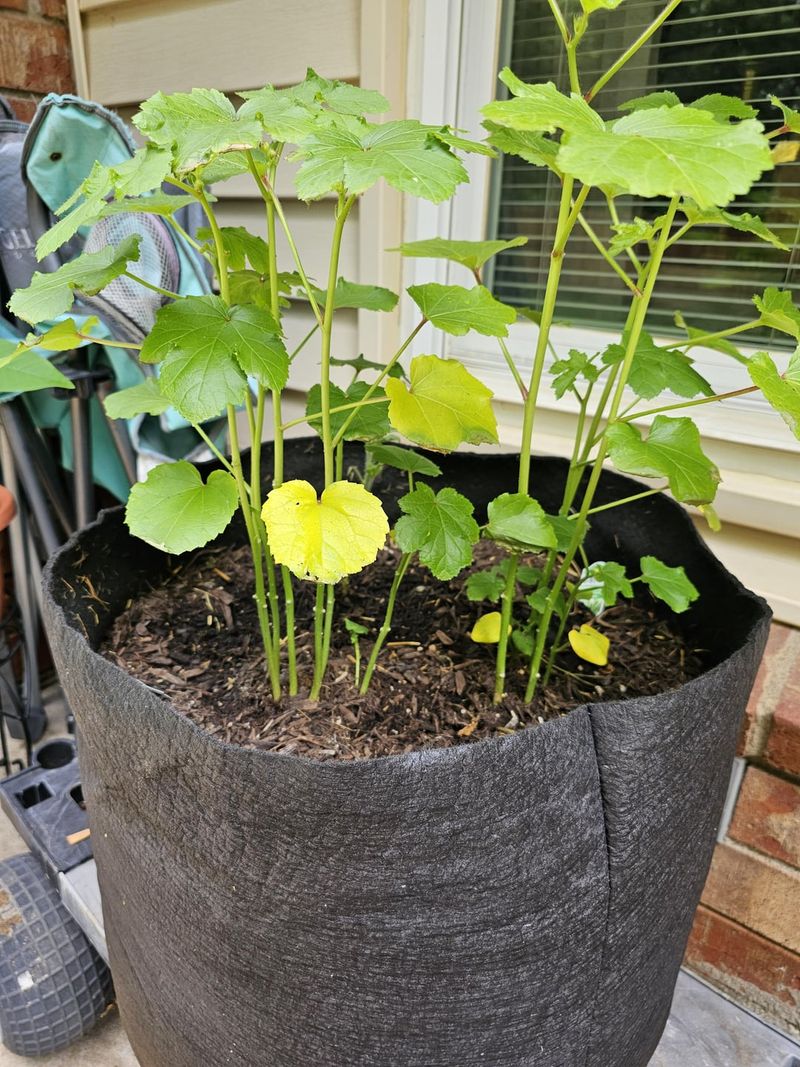
Believe it or not, a couple of yellow leaves near the bottom of a tall, productive okra plant might mean your plant is doing exactly what it should.
As okra grows taller and the upper canopy fills out, those older lower leaves start getting shaded out. Less sunlight reaching them means less energy produced, and the plant gradually lets them fade.
These lower leaves have already done their job. For weeks, they helped fuel early growth and pod development.
Once the upper leaves take over that role, the older ones naturally begin to lose their green color. This is a completely normal part of the plant life cycle, especially during the fast growth of peak summer.
The key is knowing what healthy aging looks like versus a real problem. If new leaves at the top stay bright green, stems feel firm, flowers keep opening, and pods are sizing up nicely, then a few yellow leaves at the base are nothing to stress about.
Your plant is simply redirecting its energy upward where it matters most. A smart move is to remove only leaves that are fully yellow, visibly damaged, or lying directly on the soil. Fallen or touching leaves can trap moisture and invite disease.
However, resist the urge to strip away any leaf that still shows green. Even partially green lower leaves are still producing some energy for the plant.
Pulling them off too early just adds unnecessary stress. Watch the overall plant health, not just one or two leaves, to get the full picture.
2. Nitrogen Is Running Low During Heavy Production
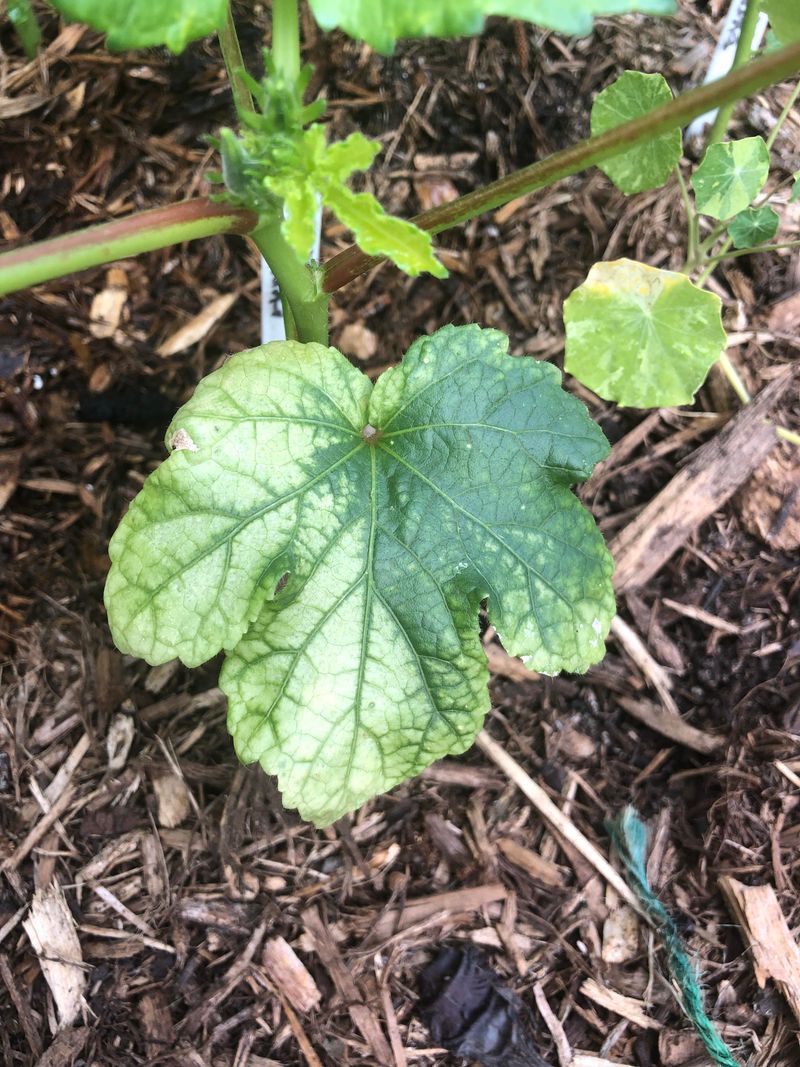
Nitrogen deficiency is one of the most common reasons okra leaves turn yellow, and it almost always starts at the bottom. Older lower leaves are the first to show pale green or yellow coloring because nitrogen is a mobile nutrient.
When soil supplies run low, the plant actually pulls nitrogen out of its older leaves and sends it up to younger growth, flowers, and developing pods.
During peak summer, okra works incredibly hard. It pushes out new leaves, opens flowers, and fills pods almost simultaneously.
That kind of heavy production drains the soil faster than most gardeners expect. A single fertilizer application at planting time may simply not be enough to carry the plant through an entire North Carolina growing season.
Your North Carolina Garden Changes Every Week. Your Plan Should Too.
Gardening in North Carolina changes quickly throughout the season. Every Friday you’ll receive a simple weekly plan showing exactly what to plant, prune, fertilize, harvest, and protect so you never miss the right timing.
Watch for a few supporting clues alongside the yellowing. Slow overall growth, smaller-than-normal new leaves, and fewer pods forming can all point toward a nitrogen shortage.
If yellowing starts at the bottom and gradually moves upward over time, that pattern strongly suggests the plant is running out of available nitrogen in the root zone.
Before reaching for a fertilizer bag, run a soil test through your local North Carolina Cooperative Extension office.
Applying too much nitrogen can push the plant into producing lots of leafy growth while actually slowing down flowering and pod production, which is the opposite of what you want.
Follow the soil test recommendations closely, choose a balanced slow-release fertilizer when possible, and time any additional applications during the active growing season for the best results.
3. The Root Zone Is Drier Than It Looks
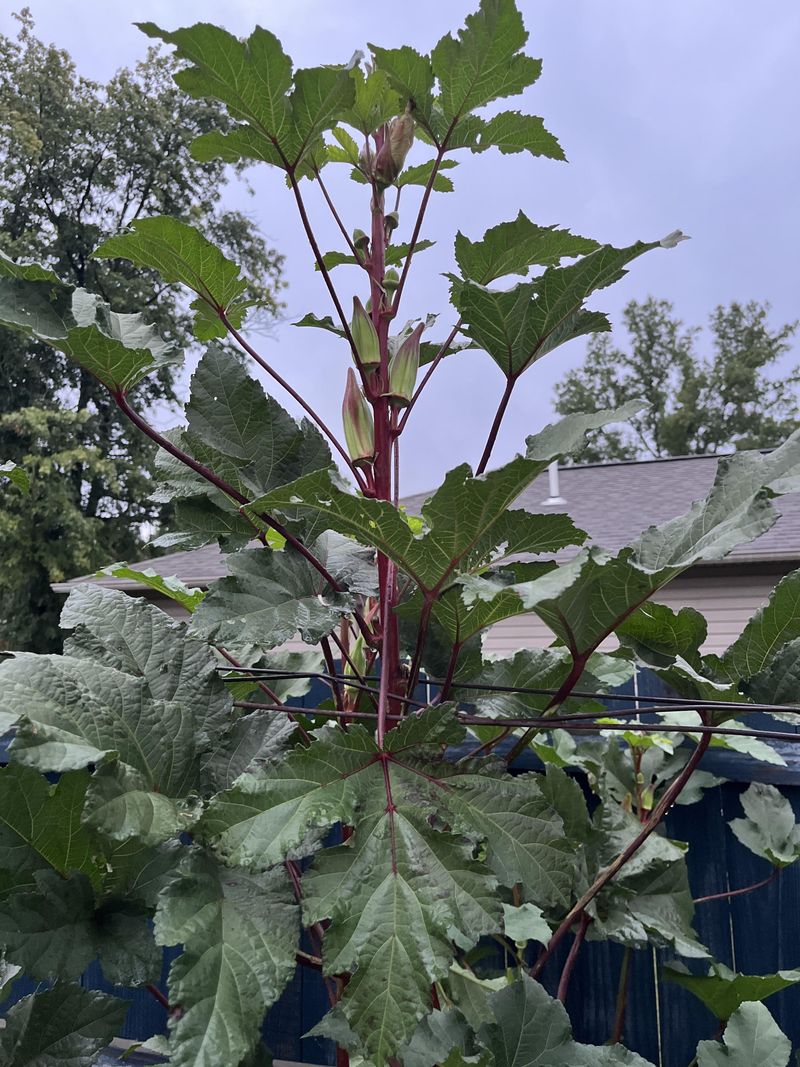
Here is something that catches a lot of gardeners off guard. After a brief afternoon shower or a quick pass with the hose, the soil surface can look perfectly moist while the deeper root zone stays bone dry.
Okra roots reach several inches down into the ground, and if that deeper layer stays parched, the plant starts showing stress in the oldest leaves first.
Dry soil stress and nitrogen deficiency can look surprisingly similar, which is why checking the actual soil is so important. Push a finger or a wooden dowel several inches below the surface before watering.
If the soil feels dry at a depth of three to four inches, your plant almost certainly needs a thorough drink rather than a light sprinkle.
Morning wilting, leaves that fold inward slightly, and pods that seem slow to enlarge are all useful clues pointing toward drought stress.
The good news is that okra usually bounces back quickly after a deep, thorough watering. The key word is deep.
A slow, steady irrigation session that soaks the root zone is far more effective than frequent shallow watering that never reaches where the roots actually grow. Water in the morning when possible so foliage can dry before evening.
Adding a layer of organic mulch around the base of the plant, keeping it a few inches away from the stem, can make a big difference in holding soil moisture through the intense North Carolina summer heat.
One important note: temporary afternoon drooping during extreme heat is normal and does not always mean the soil is dry. Always check the soil before adding more water.
4. Saturated Soil Is Restricting Root Oxygen
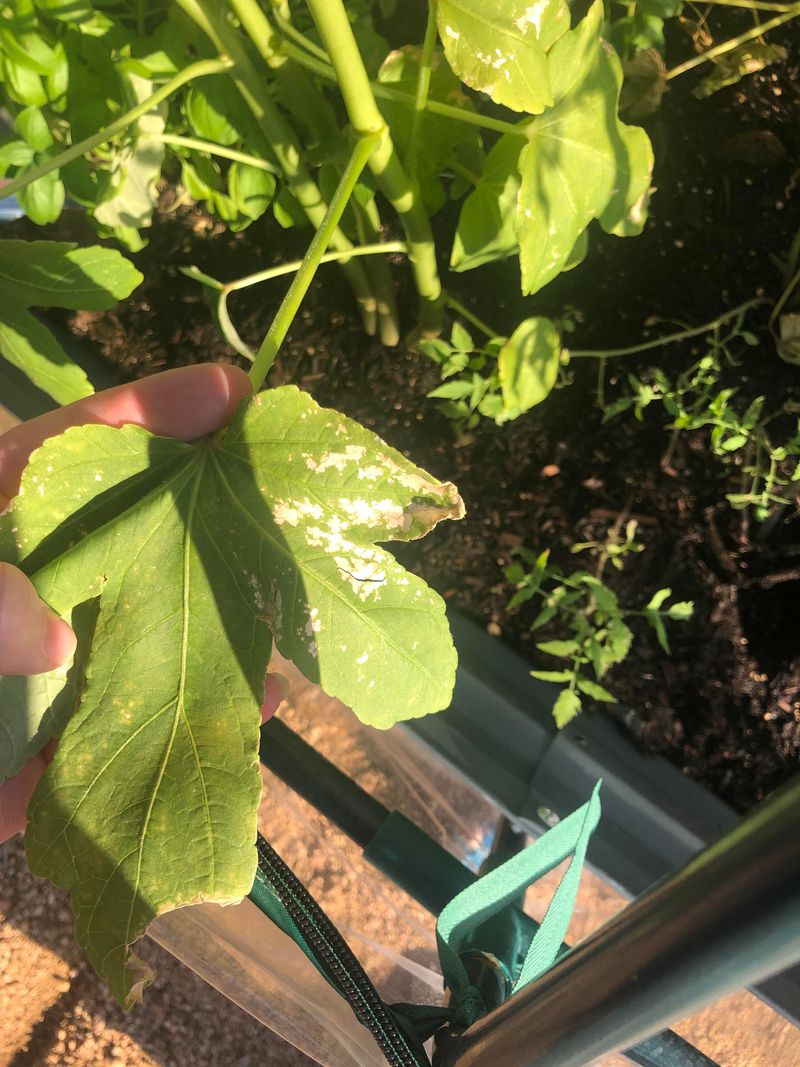
Too much water can cause yellow lower leaves just as easily as too little, and the two problems can look almost identical from a distance. During North Carolina summers, intense thunderstorms can drop large amounts of rain in a short period.
When that water has nowhere to go, whether due to compacted clay soil, low-lying garden spots, or blocked drainage in raised beds, the root zone stays saturated for too long.
Okra roots need oxygen just as much as they need water. When soil stays waterlogged for more than a day or two, oxygen gets pushed out of the air pockets around the roots.
Without oxygen, roots struggle to absorb both water and nutrients properly. The plant then shows signs of stress that look a lot like drought, including yellowing lower leaves, wilting, and slowed growth, even though the soil is soaking wet.
A few important warning signs can help you tell overwatering apart from underwatering.
If the soil stays wet for several days after rain, if multiple lower leaves yellow at once, if growth feels weak and sluggish, or if roots look soft and pale when you gently check them, excess moisture is likely the culprit.
Persistent wilting that does not improve after cooler evening temperatures is another red flag.
Pause any irrigation immediately and let the soil dry out before watering again. Improving drainage by loosening compacted soil, adding organic matter over time, or adjusting the garden bed layout can help prevent this from repeating.
Keep mulch and soil from piling against the stem, and remember that adding more water to an already saturated plant will only make things worse.
5. Root Knot Nematodes Are Reducing Root Function
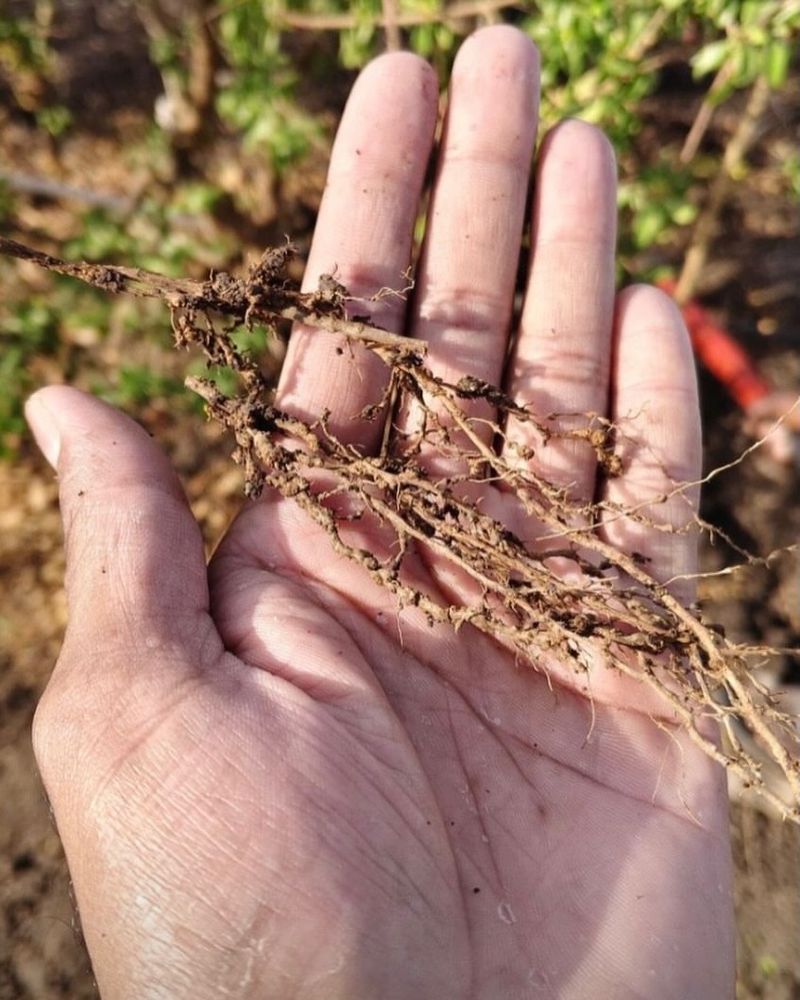
Root knot nematodes are one of the sneakiest problems in a North Carolina vegetable garden, and okra is especially vulnerable to them.
These microscopic soil-dwelling organisms are invisible to the naked eye, but the damage they cause is very real.
They enter roots shortly after planting and trigger the formation of swollen knots or galls along the root system. Those galls interfere with the root’s ability to absorb water and nutrients from the soil.
The symptoms above ground can be frustratingly easy to confuse with other problems. Lower leaf yellowing, midday wilting even when the soil feels moist, stunted overall growth, and reduced pod production are all common signs.
What makes nematode damage particularly tricky is that it often shows up in irregular patches across the garden.
One section of plants might look noticeably weaker than a nearby row, even though both sections received the same care and watering.
If you suspect nematodes, the most reliable way to confirm it is to gently pull a plant after harvest and examine the roots. Healthy roots feel firm and look smooth.
Nematode-damaged roots have visible swellings or knots along their length. You can also submit a soil sample for a nematode assay through your local North Carolina Cooperative Extension office for a more precise count.
Unfortunately, once nematodes enter a plant’s roots, there is no practical way to remove them from that plant. Future management focuses entirely on prevention.
Rotating crops each season, growing nematode-resistant cover crops like marigolds or sorghum-sudangrass, using certified clean transplants, and avoiding moving soil from affected beds to clean areas are all helpful long-term strategies.
6. Aphid Colonies Are Feeding Beneath The Leaves
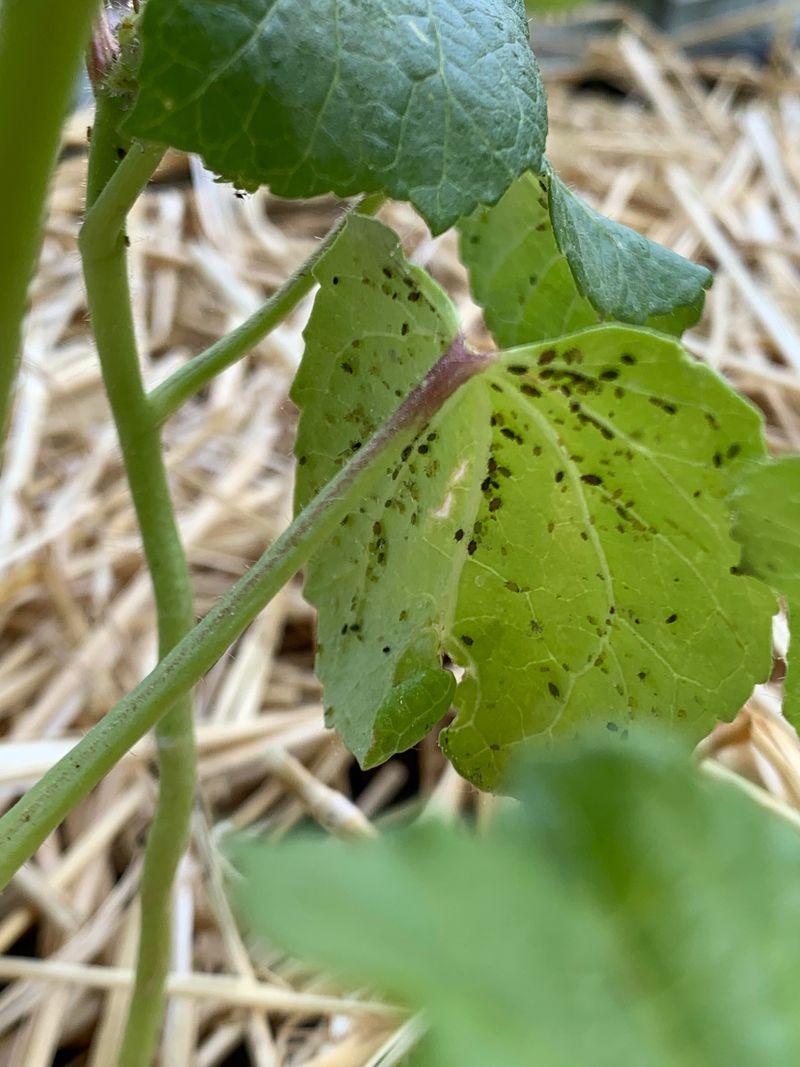
Flip over a yellowing lower okra leaf and take a close look at the underside. If you spot small, pear-shaped insects clustered along the veins, you have found aphids.
These tiny pests tend to gather in groups along leaf undersides and soft stems, where they pierce the plant tissue and sip away the nutrient-rich sap inside. A large enough colony can weaken a leaf noticeably over time.
Beyond the insects themselves, aphids leave behind several clues that confirm their presence. A shiny, sticky coating called honeydew often covers nearby leaves and sometimes the soil below.
Ants are a surprisingly useful clue too, since they actively farm aphids for that honeydew and will move up and down the plant stem regularly.
In time, a dark sooty mold can develop on the honeydew, making affected leaves look smudged or dusty. Curled or cupped lower leaves are another sign that sap-feeding has been going on for a while.
The good news is that not every aphid sighting requires immediate action. A small population rarely causes serious long-term harm, especially when natural predators are present.
Lady beetles, lacewing larvae, and parasitic wasps all feed on aphids and can bring populations under control naturally. Before reaching for any spray, spend a moment looking for these beneficial insects on and around the plant.
For heavier infestations, a firm stream of water directed at the affected leaves can knock colonies off effectively.
If stronger management becomes necessary, use only products specifically labeled for use on edible okra and always follow label directions carefully to protect both your harvest and the beneficial insects in your garden.
7. Leaf Spot Disease Is Moving Through The Lower Canopy
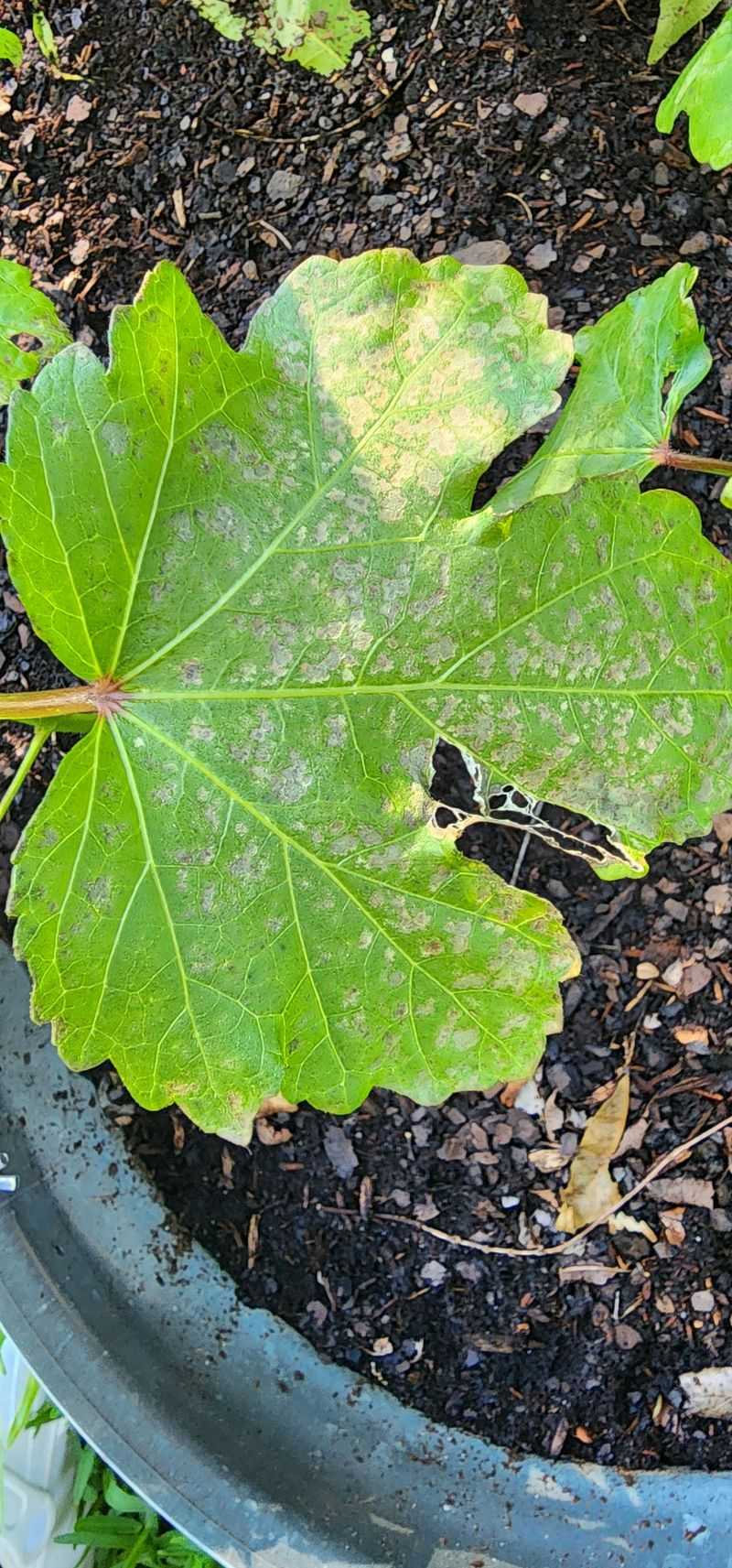
The lower canopy of an okra plant is the perfect environment for leaf spot diseases to get started. Leaves near the base sit closest to the soil, where water splashes upward during rain or irrigation, carrying fungal spores or bacteria directly onto the foliage.
Limited airflow between densely packed plants keeps those lower leaves moist longer, giving pathogens the warm, humid conditions they need to spread.
Leaf spot symptoms usually begin as small brown, gray, or dark-colored spots on the older lower leaves.
A yellow halo often surrounds each spot, which is one of the most recognizable signs that a disease rather than a nutrient issue is at work.
As the problem advances, spots can merge into larger damaged areas, and heavily affected leaves may eventually drop from the plant. Watching for this progression helps you catch it early before it climbs higher into the canopy.
A few practical habits can slow the spread significantly. Water near the soil surface rather than overhead, and try to irrigate in the morning so foliage stays dry through the afternoon and evening.
Giving plants adequate spacing improves airflow, which is one of the most effective and underrated ways to prevent disease.
When removing affected leaves, do it during dry weather and clear fallen plant material from around the base promptly.
One important caution before treating anything: not every spot on an okra leaf is fungal. Bacterial disease, insect feeding, nutrient stress, and even herbicide drift can produce spots that look remarkably similar.
Rather than guessing, bring a sample to your North Carolina county Extension office for an accurate diagnosis before choosing any garden treatment.