Why Ohio Arborvitae Show Brown Patches In Late August Heat
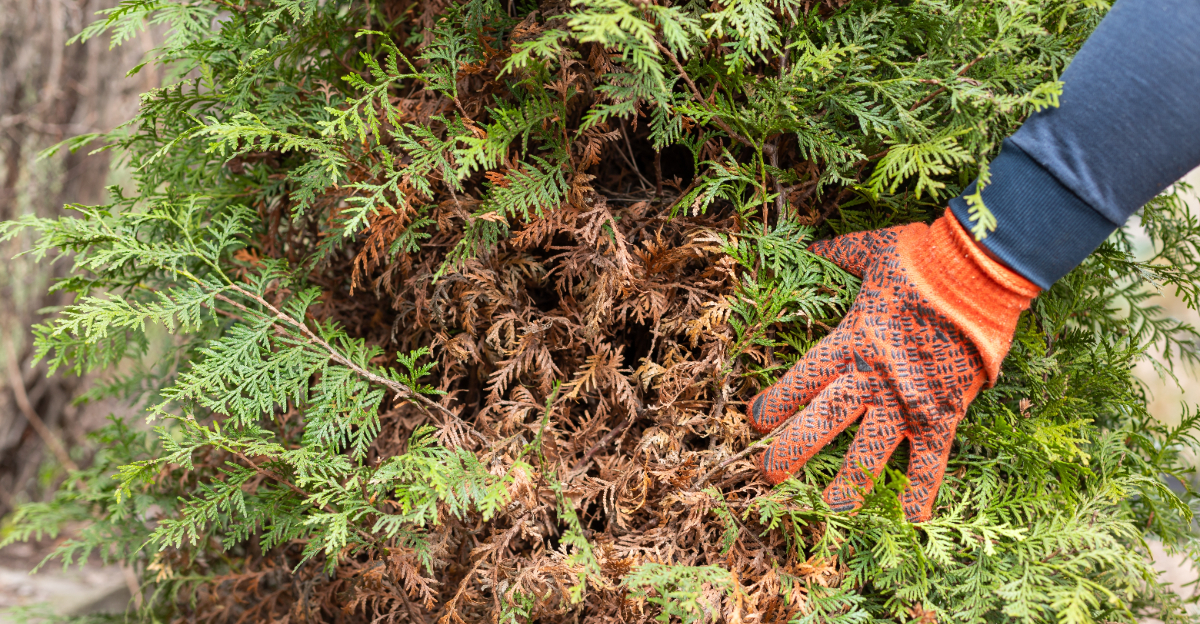
Late August heat does something to Ohio arborvitae that catches homeowners off guard every single year.
The browning appears without warning, spreads faster than expected, and sits right in the most visible part of a hedge or privacy screen that was doing its job perfectly well a month ago.
Brown patches on arborvitae in late August are not all the same problem. Spider mites, bagworms, drought stress, and natural shedding can all produce similar symptoms from ten feet away.
Each one requires a different response, and the wrong response wastes time the plant does not have going into fall. Reading the browning correctly is the whole game here.
Where it appears on the plant, how fast it moved, and what the surrounding foliage looks like all point toward a specific cause that a closer look can confirm. Late August is not the time to guess.
The right diagnosis now determines what the plant looks like by October.
1. Blame Drought Stress Before You Blame Disease
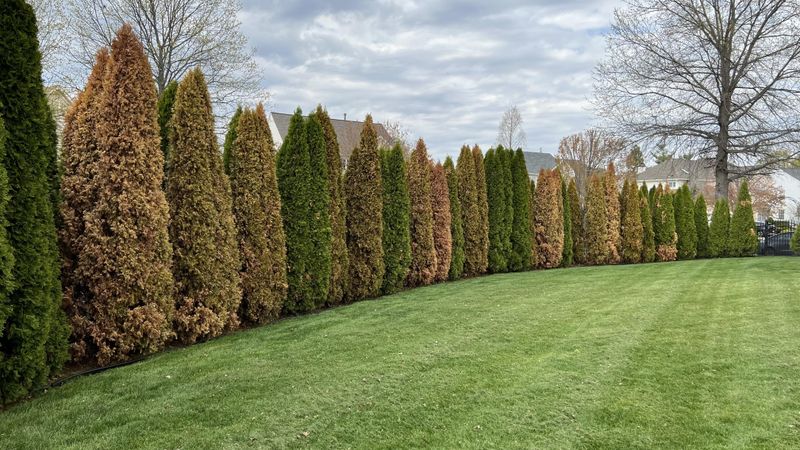
A rusty patch appearing on the sunny south or west side of a hedge is one of the most telling signs of heat and drought stress. Arborvitae can struggle when hot afternoons, drying winds, and uneven watering leave the root zone short on moisture.
The browning often shows up on exposed sides first, while the shaded interior or north-facing branches stay green longer.
Before assuming disease, check the soil several inches down near the base of the plant. If the root zone feels powdery dry even after a recent rain, moisture stress is likely playing a role.
OSU Extension evergreen guidance notes that shallow, compacted, or root-crowded soil can dry faster than nearby turf. That leaves arborvitae vulnerable even when nearby plants look fine.
Compare browning patterns across multiple shrubs in the same row. Uniform browning across a full hedge row often points more toward environmental stress than a spreading disease.
Disease patterns tend to be irregular and may show visible signs on the foliage itself.
Drought stress does not automatically mean the shrub is declining. Catching it early and improving deep watering can help stabilize the plant.
However, foliage that has fully turned brown may not recover its color, so acting before the browning spreads is the better approach. Always rule out drought first, then investigate pests and root problems.
2. Check New Plantings For Shallow Dry Roots
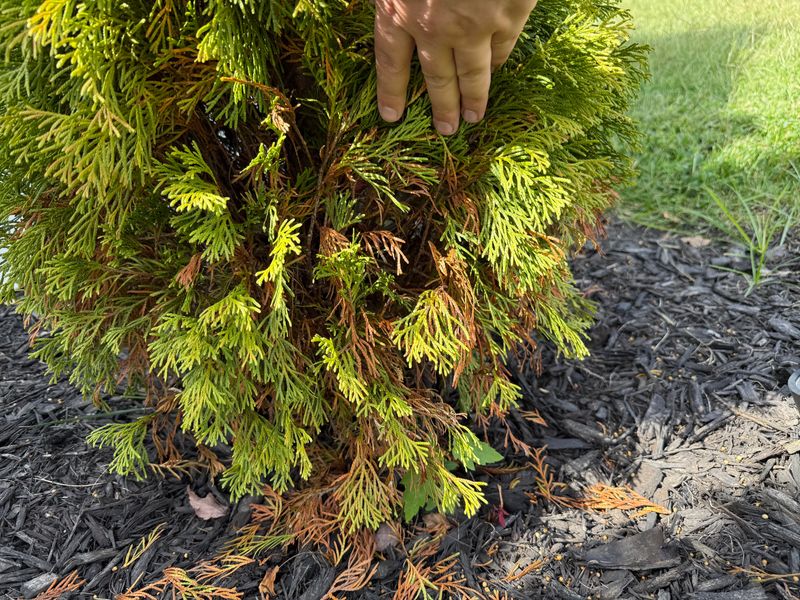
Shrubs installed within the last one to three years carry a hidden vulnerability that older, established hedges do not share.
The root ball of a new arborvitae has not yet spread far into surrounding soil, which means the plant depends almost entirely on moisture held within that original ball.
When late-August heat arrives, that small root zone can dry out surprisingly fast.
University extension plant-health guidance explains that newly transplanted evergreens need consistent, deep watering. This is especially important through their first few growing seasons and during hot, dry stretches.
Watering the surrounding lawn is not enough if the root ball itself stays dry. Water needs to reach the original planting zone slowly and thoroughly.
Your Ohio Garden Changes Every Week. Your Plan Should Too.
Gardening in Ohio changes quickly throughout the season. Every Friday you’ll receive a simple weekly plan showing exactly what to plant, prune, fertilize, harvest, and protect so you never miss the right timing.
Check planting depth as well. Arborvitae planted too deep can develop stressed roots that struggle to absorb water efficiently.
Gently pull back mulch near the trunk and confirm the root flare is visible at or just above the soil surface.
Compacted soil around new plantings can also cause water to run off rather than soak in. A slow trickle from a hose laid at the base for 30 to 45 minutes works better than a quick spray across the foliage.
New plantings showing browning in late summer deserve extra attention to the root ball first, before any other treatment is considered.
3. Look For Bagworms Hiding In Plain Sight
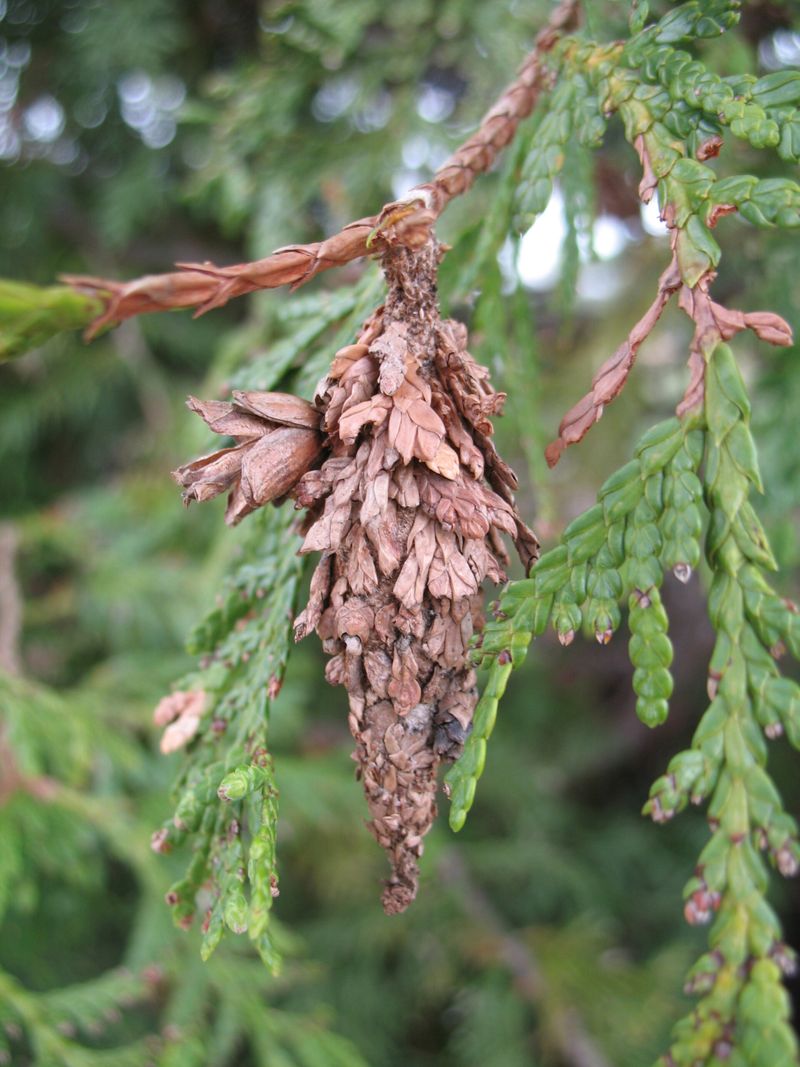
Tiny hanging bags tucked among the branches of an arborvitae can be easy to overlook, especially when they blend in with the foliage.
Bagworms construct protective cases out of plant material, so their bags look like small cones or bundles of declined twigs attached to the branch.
On arborvitae, they can cause noticeable browning as they feed on the foliage through summer.
Entomology guidance from university extension sources describes bagworms as a serious pest of arborvitae and other evergreens in the Midwest. Heavy feeding strips the foliage.
Because arborvitae does not regrow well from bare wood, major infestations can leave permanent brown sections even after the pest is gone.
Inspect brown patches closely, pulling back outer foliage to look inside the canopy. Bags range in size depending on the stage of the season.
By late August, mature bags may be one to two inches long and are often found near branch tips.
Hand-picking bags in late fall or early spring, before eggs hatch, is one practical control option. For heavy infestations, OSU Extension recommends consulting extension guidance or a qualified professional for timing and treatment options.
Do not rely on guesswork spraying without confirming bagworms are present. Correct identification before any treatment saves time, money, and beneficial insects.
4. Test For Spider Mites Before Spraying Anything
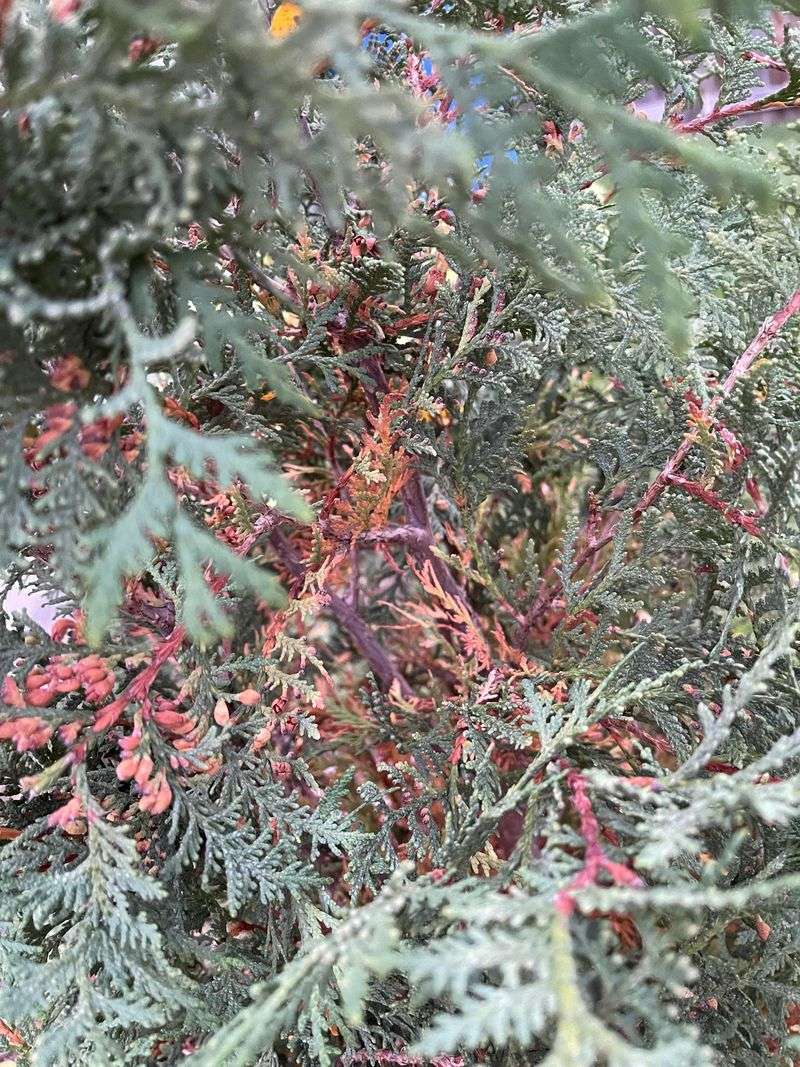
Bronzing, stippling, or a dull grayish cast on arborvitae foliage during dry summer weather can look a lot like heat stress. Spider mites thrive in hot, dry conditions and can build up quickly on stressed evergreens, making an already-struggling plant look even worse.
The tricky part is that mite damage and drought browning can appear nearly identical at first glance.
A simple field test can help confirm whether mites are present. Hold a sheet of white paper under a suspect branch and tap the branch firmly.
If tiny moving specks appear on the paper, spider mites are likely the culprit. Plant pathology and entomology resources describe this tap test as a reliable first step for identifying mite activity on conifers and evergreens.
Confirming the pest before treating is important. Spraying a miticide on a plant that only has drought stress wastes money and can harm beneficial insects that naturally keep mite populations in check.
Horticulture experts warn that unnecessary pesticide use can sometimes make mite problems worse by eliminating natural predators.
Mite pressure tends to peak during hot, dry stretches, which is exactly when late-August conditions in Ohio often align. If the tap test confirms mites, consult OSU Extension or a certified professional for appropriate next steps.
Always follow product labels and extension guidance rather than guessing at treatment rates.
5. Stop Watering The Foliage Instead Of The Roots
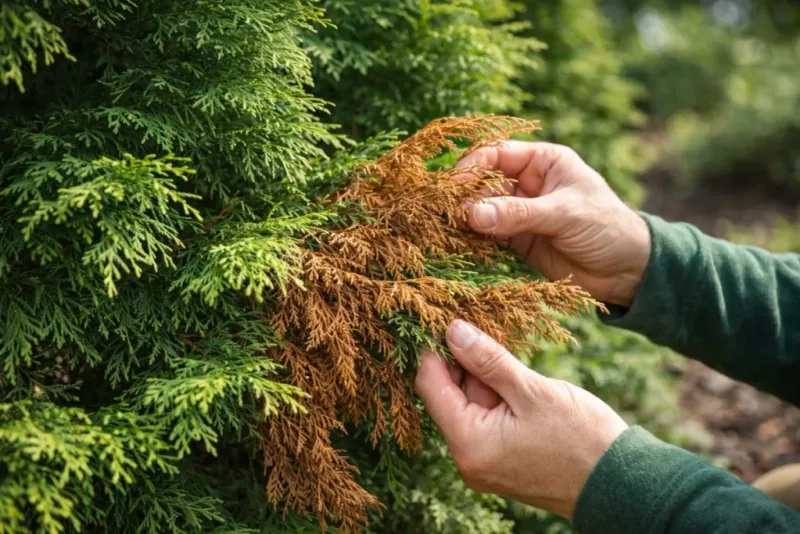
Running a sprinkler that sprays across the outside of a hedge can feel productive, but it often does little for the roots that actually need the water.
Arborvitae roots spread outward and downward through the soil, and they need moisture to reach that zone to function properly.
Wetting only the outer foliage and the top inch of soil leaves the root zone dry even after a watering session.
Watering slowly at the base is far more effective than overhead spraying. A soaker hose or drip line placed along the base of the hedge delivers water directly to the root zone and allows it to soak in gradually.
OSU Extension evergreen care guidance supports deep, slow watering over frequent shallow watering for established and newly planted shrubs alike.
Watering early in the morning is generally the better choice over evening watering. Early morning watering allows any moisture on the foliage to dry before nightfall, reducing conditions that can favor certain foliar problems.
Compacted soil is another factor worth checking. If water beads up and runs off instead of soaking in, the soil may need aeration.
A slow, patient watering approach can also help the ground absorb each application. Overhead spraying is not a substitute for deep root-zone watering.
Switching techniques can make a real difference for stressed arborvitae in summer heat.
6. Check Mulch And Soil Before Adding Fertilizer
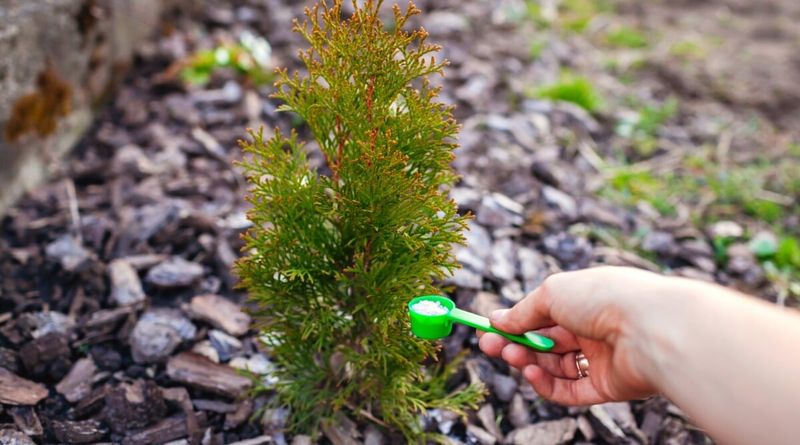
Reaching for a bag of fertilizer when arborvitae starts turning brown is a common reaction, but it is often the wrong one. A shrub showing stress in late August is more likely responding to dry soil, planting problems, or root issues than to a nutrient shortage.
Fertilizing a drought-stressed evergreen can push tender new growth that the plant cannot support under those conditions.
Mulch problems are worth checking first. Mulch piled too high against the trunk, sometimes called a mulch volcano, can trap moisture against the bark and create conditions that harm the root flare over time.
Arborist guidance recommends keeping mulch two to three inches deep and pulled a few inches away from the trunk to allow airflow and healthy root development.
Pull back the mulch near the base and feel the soil underneath. If the soil is bone dry several inches down, moisture management is the priority, not fertilizer.
Soil that is consistently wet or poorly drained points to a different problem that fertilizer will not fix.
If soil testing suggests a genuine nutrient deficiency, extension guidance can help interpret results and recommend appropriate timing. Horticulture experts generally advise against fertilizing stressed evergreens in late summer.
It can interfere with the plant’s natural preparation for colder months. Mulch and moisture deserve attention before any fertilizer decision is made.
7. Avoid Cutting Past The Green Growth
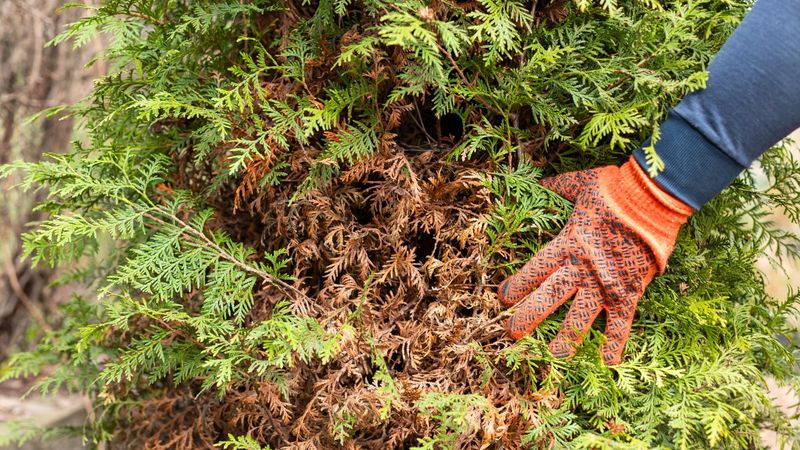
Grabbing shears and cutting back every brown section can feel right. But arborvitae pruning has a firm biological limit that Ohio homeowners often discover too late.
Unlike many deciduous shrubs, arborvitae generally does not produce new buds from bare interior wood. Once a branch is cut back past the green growth, that section is unlikely to fill in again.
Arborist guidance and university extension resources warn that arborvitae should be pruned lightly. Stay within the zone where green foliage is still present.
Removing only clearly damaged or declined branch tips, and only when necessary, is the safer approach. Aggressive shearing into bare brown interior wood can leave permanent gaps in the hedge.
Before cutting anything, assess whether the browning is surface-level or whether entire branches have withered to the trunk. Surface browning with green growth nearby may improve on its own as stress eases.
Fully declined branches with no green remaining need a different evaluation before any action is taken.
Late summer is generally not the ideal time for heavy pruning on stressed evergreens. Waiting until the plant stabilizes and checking whether surrounding green foliage fills in naturally is often the wiser choice.
If significant withering is spreading and pruning decisions feel unclear, call a certified arborist. They can recommend the right cut or confirm that no cut is needed yet.
8. Call An Arborist When Browning Keeps Spreading
Some browning situations are straightforward enough to address with better watering or a careful look for bagworms.
Others are more complicated, and waiting too long to get expert eyes on the problem can mean losing shrubs that might have been saved with earlier intervention.
Knowing when to call for help is just as important as knowing the basic diagnostic steps.
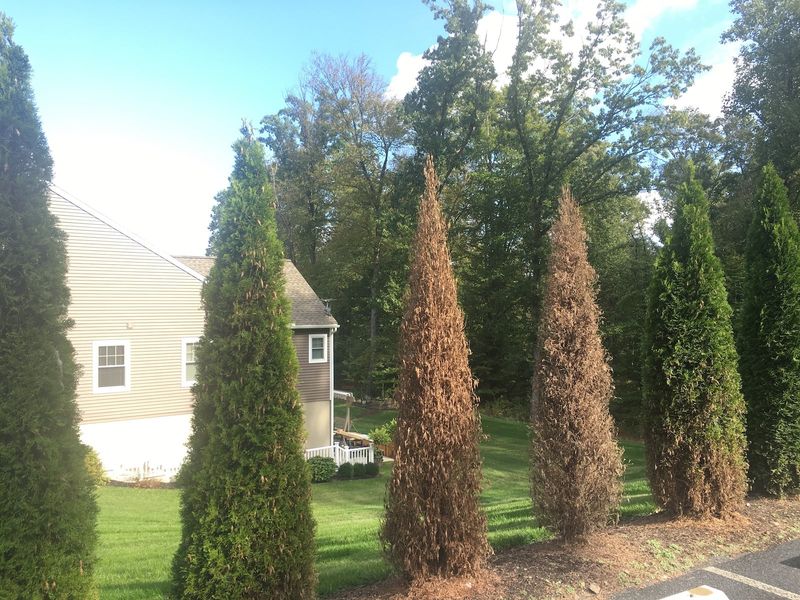
Call a professional if browning spreads quickly from shrub to shrub or several plants decline at once. Also get help for withering near the trunk base, soft or discolored bark, drainage problems, or nearby construction history.
These patterns can point to root disease, soil compaction, grade changes, or other issues that go beyond drought stress.
OSU Extension offices across Ohio can provide plant-health guidance, pest identification help, and referrals to qualified professionals.
A certified arborist can assess root health, soil conditions, pest pressure, and structural damage in ways that a visual inspection from the yard cannot fully reveal.
Late-August brown patches are the hedge’s way of communicating that something is wrong. Slow down, check the soil, inspect the foliage for pests, and treat the actual cause rather than the symptom.
That gives arborvitae the best chance of holding on to its remaining green. When the cause is unclear or the decline keeps moving, bringing in a qualified professional is the most protective step an Ohio homeowner can take.