Why Ohio Raised Bed Gardeners Are Switching From Topsoil To This Mix
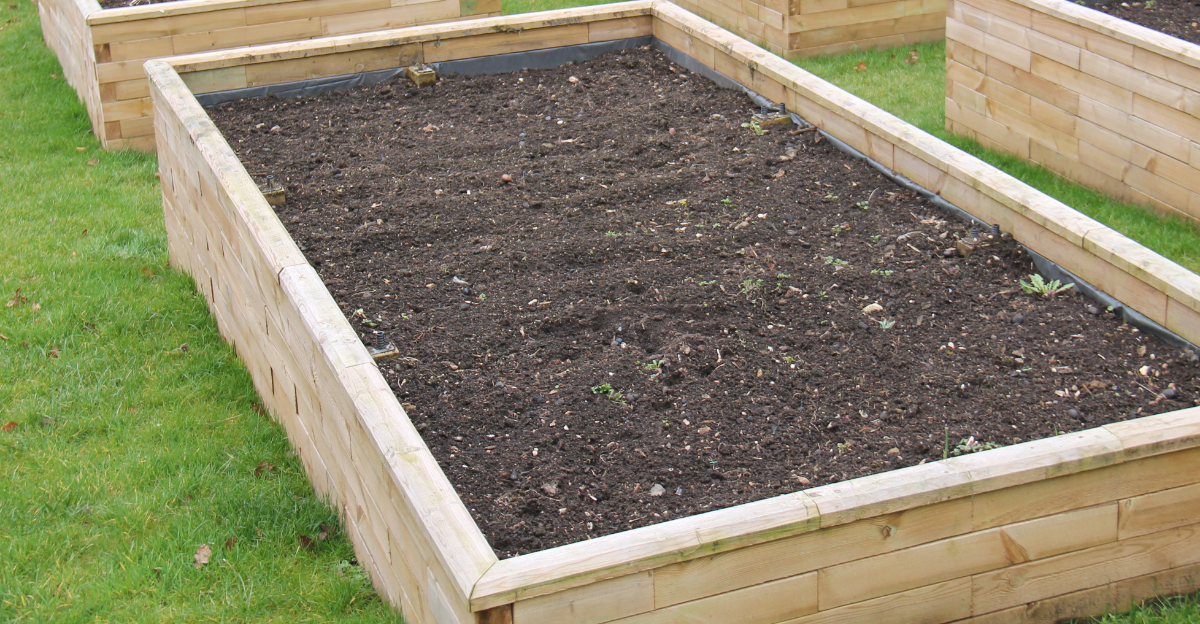
Topsoil seems like the logical starting point for a raised bed. It is what gardens grow in, it is widely available, and it is cheap enough to fill a bed without much deliberation.
Ohio raised bed gardeners who have used it for a season or two tend to arrive at the same conclusion. It compacts, it drains poorly, and it underperforms in ways that become obvious fast once plants are in the ground.
Something else has been gaining ground in Ohio raised bed circles, and the gardeners who have made the switch are not going back.
It outperforms topsoil on drainage, root development, and long term soil health in ways that show up clearly by midsummer.
The mix itself is not complicated or expensive to put together. It just requires knowing what topsoil is actually missing and why that gap matters more in a raised bed than anywhere else in the garden.
1. Use A Raised-Bed Mix Instead Of Straight Topsoil

A bed can look full and promising in April, then sink into a dense, root-stopping slab after several hard rains. That is one of the most common frustrations home gardeners in this state face when they fill raised beds with straight topsoil.
They expect it to perform like a premium growing medium.
Straight topsoil is not automatically a bad material. The real problem shows up when the topsoil is heavy, poorly screened, high in clay, or low in organic matter.
In a raised bed, those qualities get worse over time, not better. Water drains slowly, roots hit resistance, and the surface crust makes watering uneven.
A blended raised-bed mix solves most of those problems by combining materials with different strengths. Screened topsoil or mineral soil provides physical structure and weight.
Finished compost adds organic matter, improves moisture retention, and feeds soil organisms. A coarse material, such as pine fines or aged bark, opens up air space so roots can breathe.
No single recipe works for every bed, crop, or site. The goal is a mix that feels loose and workable, holds moisture without staying soggy, and does not compact into a hard layer after rain.
That balance is what straight topsoil alone rarely delivers inside a raised frame, and why so many local gardeners are blending their own fill.
2. Blend Screened Topsoil With Finished Compost
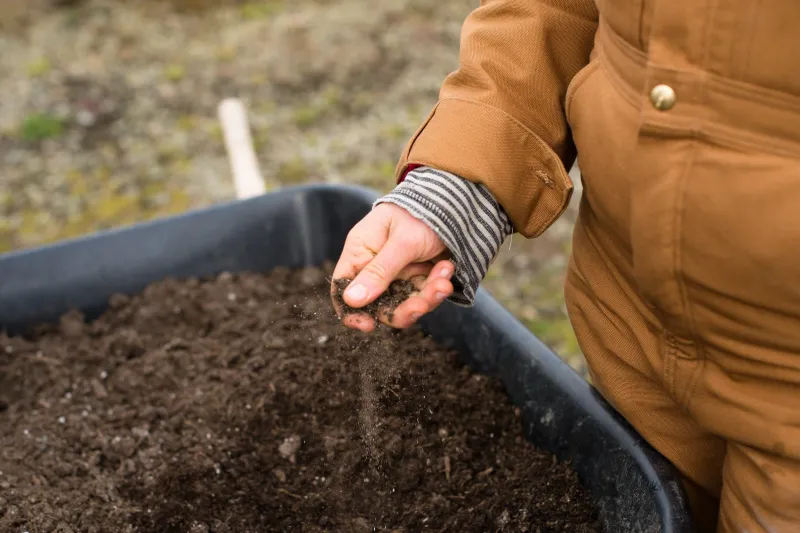
Finished compost is one of the most reliable improvements a gardener can make to a raised-bed fill. It works best when blended with a stable mineral base rather than used alone.
Screened topsoil or a quality mineral soil gives the mix structure and physical weight that holds the bed together through rain and foot traffic near the edges.
The compost side of the blend does a different job. It feeds soil organisms, improves the way the mix holds and releases moisture, and adds slow-release organic nutrients that support plant growth over a full season.
Ohio State University Extension recommends finished, stable compost for soil improvement. Raw or partially decomposed material can tie up nitrogen or introduce weed seeds.
Your Ohio Garden Changes Every Week. Your Plan Should Too.
Gardening in Ohio changes quickly throughout the season. Every Friday you’ll receive a simple weekly plan showing exactly what to plant, prune, fertilize, harvest, and protect so you never miss the right timing.
A common starting point for a raised-bed blend is roughly one part screened topsoil to one part finished compost. Adjust that based on what you already have and how your existing soil drains.
That ratio is not a fixed rule. Heavier soils may benefit from more compost.
Lighter sandy soils may need less.
Check the compost before you mix it in. Finished compost smells earthy, not sour or ammonia-like.
It should look dark and crumbly, not stringy or full of recognizable plant pieces. Using compost that is not fully broken down can actually slow plant growth early in the season, which is the opposite of what most gardeners are hoping for.
3. Add Pine Fines Or Coarse Material For Better Airflow
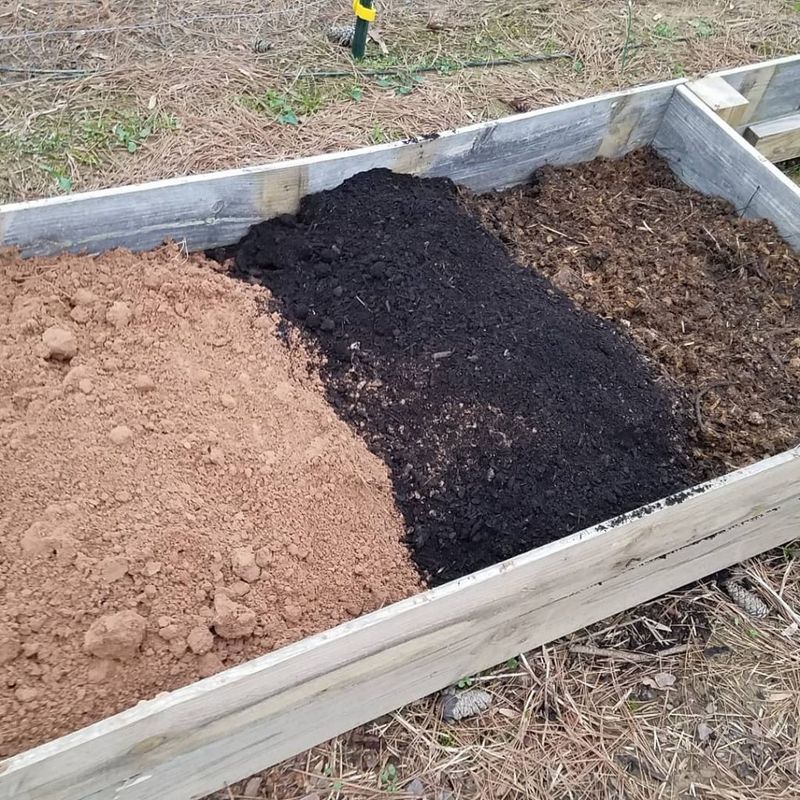
Compaction is one of the quietest problems in a raised bed. The mix looks fine at planting time, but after several weeks of watering and rain, the particles settle tightly together and root-zone airflow drops.
Adding a coarse organic material to the blend is one way to slow that process and keep the mix from becoming too dense.
Pine fines, which are small screened pieces of pine bark, are one material that can help open up a raised-bed blend. They are coarser than potting mix perlite but break down slowly enough to provide lasting structure.
Coarse compost, meaning compost that has not been finely screened, can also add texture and air pockets to a blend that would otherwise compact quickly.
Leaf mold, which is fully decomposed leaves, is another option worth considering in this state where fall leaf drop is plentiful. It improves moisture retention and adds a light, open texture to the mix.
These materials work best when they are incorporated throughout the blend, not just layered on top.
The goal is not to make the bed feel fluffy or light like a container mix. Outdoor raised beds still need enough weight and density to anchor roots and hold moisture during dry spells.
The right amount of coarse material creates air channels without making the mix so loose that it dries out between waterings. Finding that balance takes some adjustment based on your specific bed depth and crops.
4. Avoid Heavy Clay Soil That Compacts After Rain
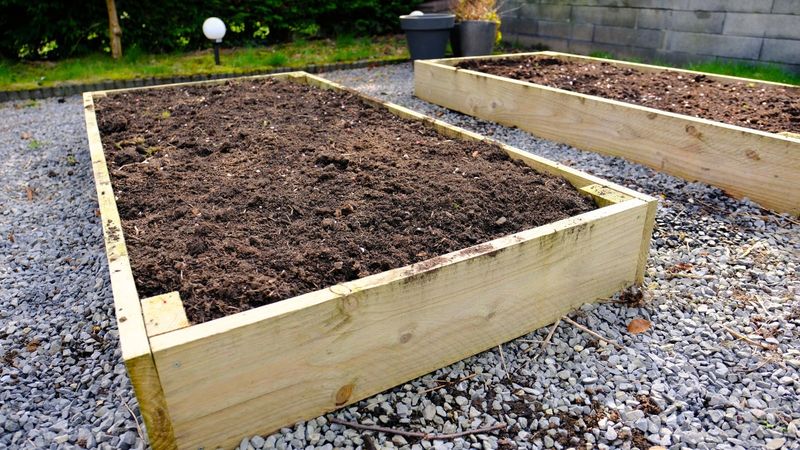
Heavy rain has a way of revealing exactly what is wrong with a raised-bed fill. A bed loaded with heavy clay or poorly screened topsoil can look workable in dry weather.
It can then harden into something close to brick after a few inches of rain hit it in a single week. That kind of compaction makes root growth slow and uneven.
Clay soil is not worthless in all situations. In the ground, clay holds nutrients well and retains moisture during dry stretches.
The problem is that those same qualities become liabilities inside a raised frame. The bed does not drain to surrounding soil the same way a garden row does.
Water moves more slowly, and the clay particles press together under their own weight as the bed settles.
Much of this state sits on glacial lake clay or heavy glacial till, especially in northern and central regions. That means a lot of the cheap bulk topsoil available locally is clay-heavy and poorly suited for use as a solo raised-bed fill.
Screening helps remove clumps, but it does not change the basic texture of a high-clay soil.
The fix is not to avoid topsoil entirely. Choose a screened, quality topsoil and blend it with enough compost and coarse material to break up the tendency to compact.
A raised bed should feel crumbly and loose when you squeeze a handful. If it holds a tight shape and does not crumble, the clay content is likely too high for good root growth.
5. Skip Pure Potting Mix In Deep Outdoor Beds
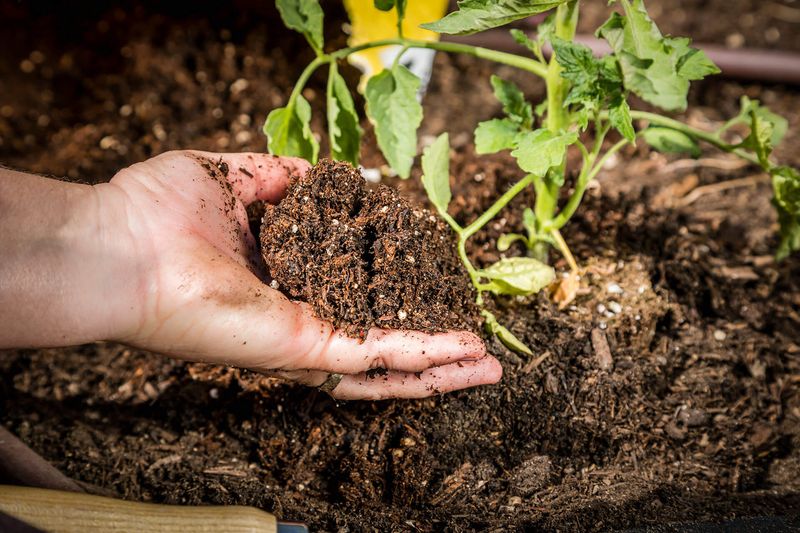
Potting mix earns its reputation in containers. It is lightweight, well-aerated, and designed to drain quickly in a confined pot where roots can circle the walls and moisture can escape through drainage holes.
Those same qualities become drawbacks when you try to fill a deep outdoor raised bed with it from top to bottom.
A bed that is twelve to eighteen inches deep holds a significant volume of material. Filling that entire depth with potting mix can get expensive quickly, and the results do not always justify the cost.
Potting mix dries out fast in warm weather, which means more frequent watering during Ohio summers. It also lacks the mineral density that many vegetable crops need for stable root anchorage.
Pure potting mix in a large outdoor bed can also shrink noticeably as the organic components break down. A bed that looks full at planting may drop several inches by midsummer.
That can leave plants sitting lower than expected and requiring more topping off than a blended mix would.
That said, potting mix has a real place in the garden. It is well-suited for container plants, seed starting trays, small planters on patios, and the top few inches of a raised bed where seedlings need a fine, light surface.
Mixing a portion of potting mix into a blended raised-bed fill can improve texture without the downsides of using it as the sole fill material. Match the material to the scale of the bed.
6. Fill New Beds In Layers That Settle Evenly
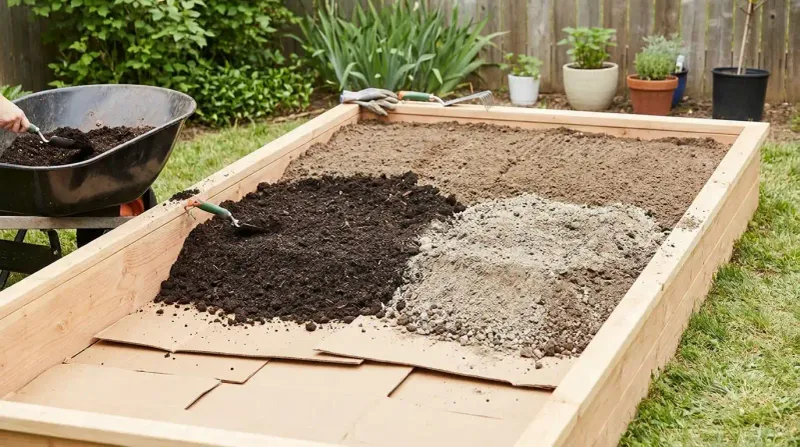
Settling is one of those things new raised-bed gardeners rarely expect until they see it happen. A bed filled to the top brim in early spring can drop two to four inches by midsummer.
Compost breaks down, organic matter compresses, and the mix adjusts to repeated watering and rain. Planning for that drop makes the process less frustrating.
One practical approach is to fill the bed in layers rather than dumping all the material in at once. Add several inches of your blended mix, water it in thoroughly, and let it settle for a day or two before adding more.
This helps the material pack naturally and gives you a more accurate read on how much you actually need to reach your target depth.
Overfilling by a few inches at the start is a reasonable strategy. Most blended mixes with compost will settle noticeably in the first season, especially if the compost was not fully finished when it went into the bed.
Watering the bed in after filling also helps flush out air pockets that would otherwise cause uneven settling later.
Do not expect the bed to stay at the same height all season. Topping off with a fresh layer of finished compost in spring or fall is a normal part of raised-bed maintenance, not a sign that something went wrong.
Treating settling as a routine step rather than a failure makes the whole process easier to manage from year to year.
7. Refresh Beds With Compost Each Season
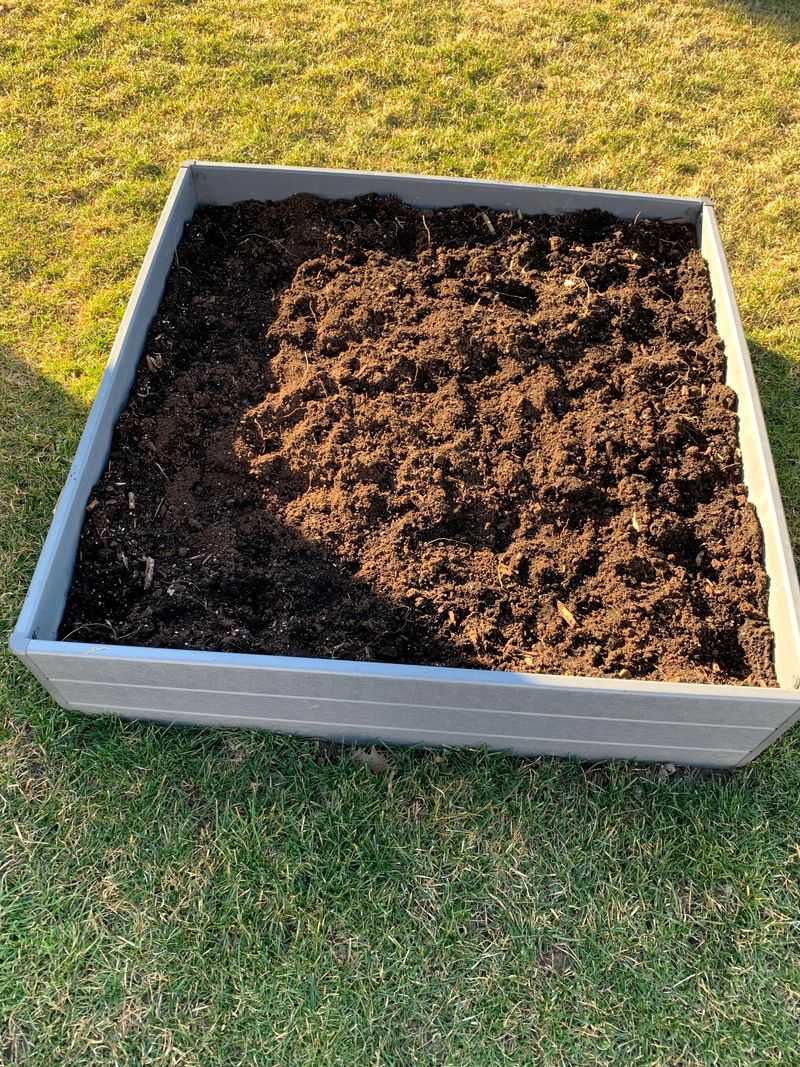
Soil does not stay the same from one season to the next. Crops pull nutrients out of the mix as they grow, and organic matter breaks down over the winter.
The physical structure of the bed also becomes more compact with each watering cycle. That slow change is normal, but it does mean raised beds need some attention between seasons.
Adding a layer of finished compost each spring or fall is one of the most straightforward ways to keep a raised bed productive. A one-to-two-inch layer worked lightly into the top of the bed returns organic matter and feeds soil organisms.
It also helps maintain the loose texture that makes raised beds worth the effort in the first place.
More is not always better when it comes to compost. Piling on thick layers every season without testing the soil can push certain nutrients out of balance.
Phosphorus, for example, builds up in heavily amended beds over time and can interfere with how plants take up other minerals. A soil test every few years helps you stay on track.
Local sources of finished compost are worth seeking out. Many Ohio municipalities offer compost made from yard waste at low or no cost to residents.
Community gardens and local farms sometimes sell finished compost in bulk. Using local compost also tends to be more affordable than buying bagged products season after season, especially for gardeners managing several beds at once.
8. Test Soil Before Adding Extra Fertilizer
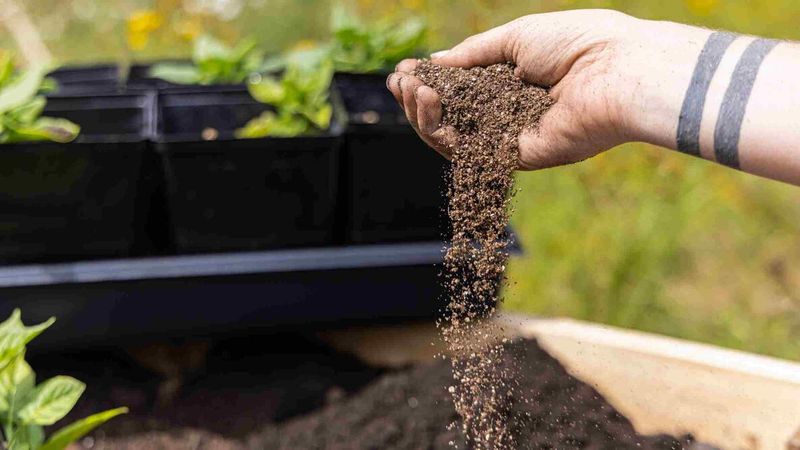
Guessing about soil fertility is one of the most common ways gardeners accidentally create problems instead of solving them. Adding fertilizer to a bed that already has adequate nutrients can push pH off balance or lock out other minerals.
It can also cause leafy growth at the expense of fruit and root development. A soil test removes the guesswork.
Ohio State University Extension offers soil-testing guidance through OSU Ohioline and local county extension offices. A basic test typically measures pH, phosphorus, potassium, and sometimes organic matter content.
The results come with recommendations tailored to what you are growing, which is far more useful than following a generic fertilizer schedule.
Raised beds that have been amended with compost for several years often have adequate or even excessive phosphorus levels. Adding more phosphorus-heavy fertilizer to those beds does not help and can actually reduce the availability of zinc and iron for plants.
Testing first saves money and prevents those kinds of nutrient imbalances from building up quietly over time.
pH matters just as much as nutrient levels. Most vegetables prefer a pH between 6.0 and 7.0.
Soils outside that range can make nutrients unavailable even when they are present in the mix. Lime raises pH in acidic soils, and sulfur lowers it in alkaline ones.
Neither should be added without knowing where your bed currently stands. A soil test done every two to three years is a practical habit for any serious raised-bed gardener.