Why Painted Buntings Are One Of Georgia’s Most Colorful Summer Visitors
Some birds are easy to miss. They blend into the background and become part of the everyday scenery.
Others seem to grab attention the moment they appear. A single glimpse can be enough to make people stop, look again, and wonder if they really saw what they think they saw.
That is part of the reason Painted Buntings have become such a favorite among bird lovers. Their colors stand out in a way that few summer visitors can match.
Even people who do not spend much time watching birds are often surprised when they see one for the first time. Sightings tend to leave a lasting impression, especially during the warmer months when backyards are full of activity.
Across Georgia, many people consider spotting a Painted Bunting one of the most memorable wildlife moments of the season.
Their appearance is hard to forget, and there is a good reason they attract so much attention year after year.
1. Their Bright Plumage Sets Them Apart
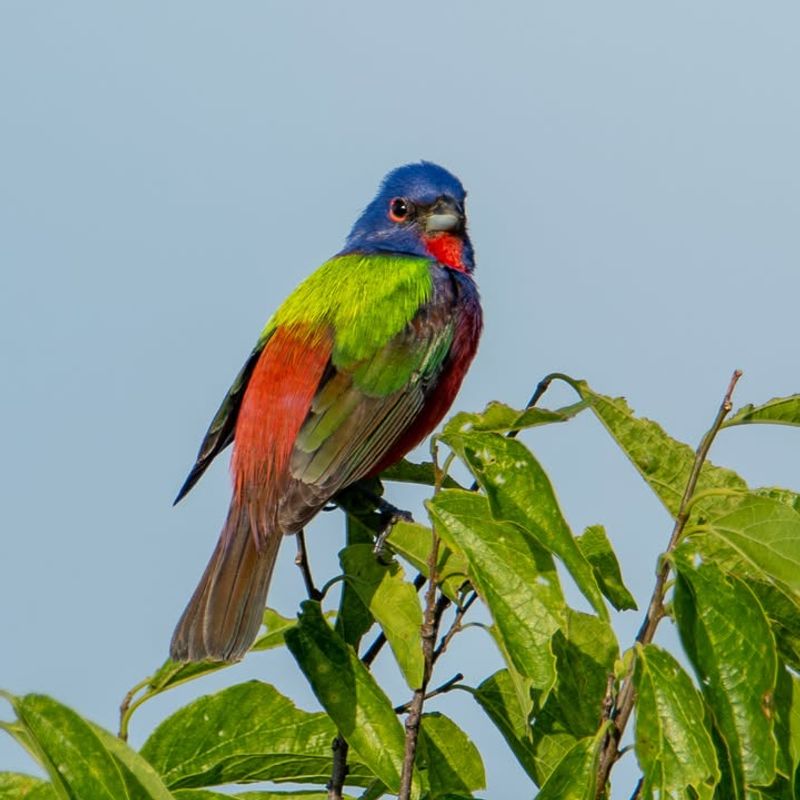
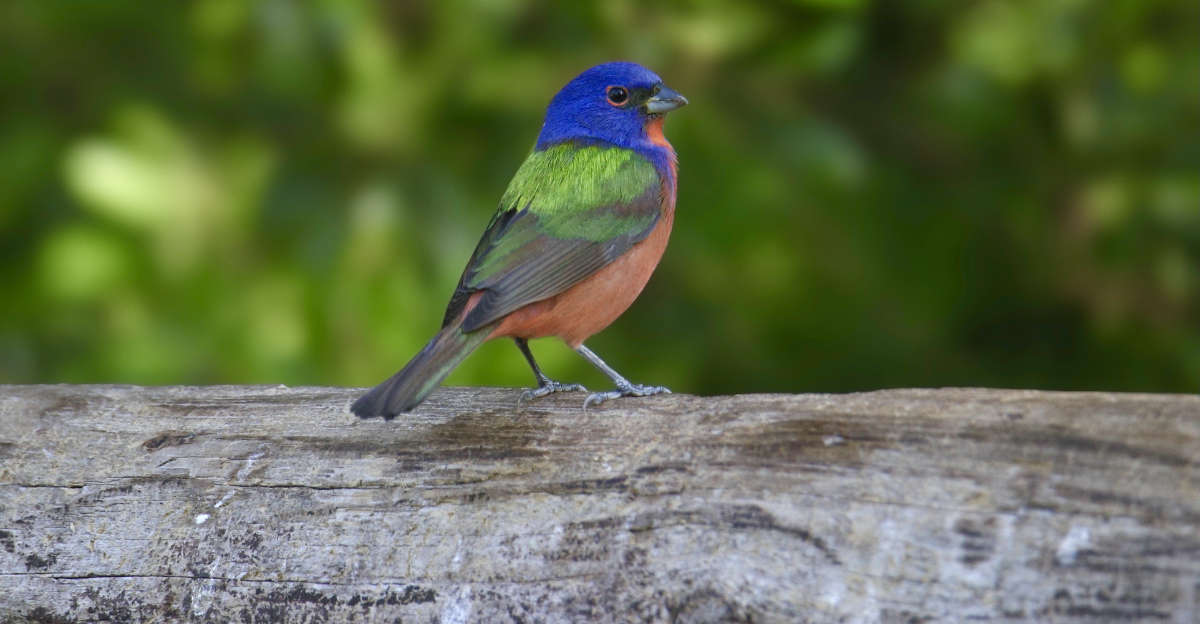
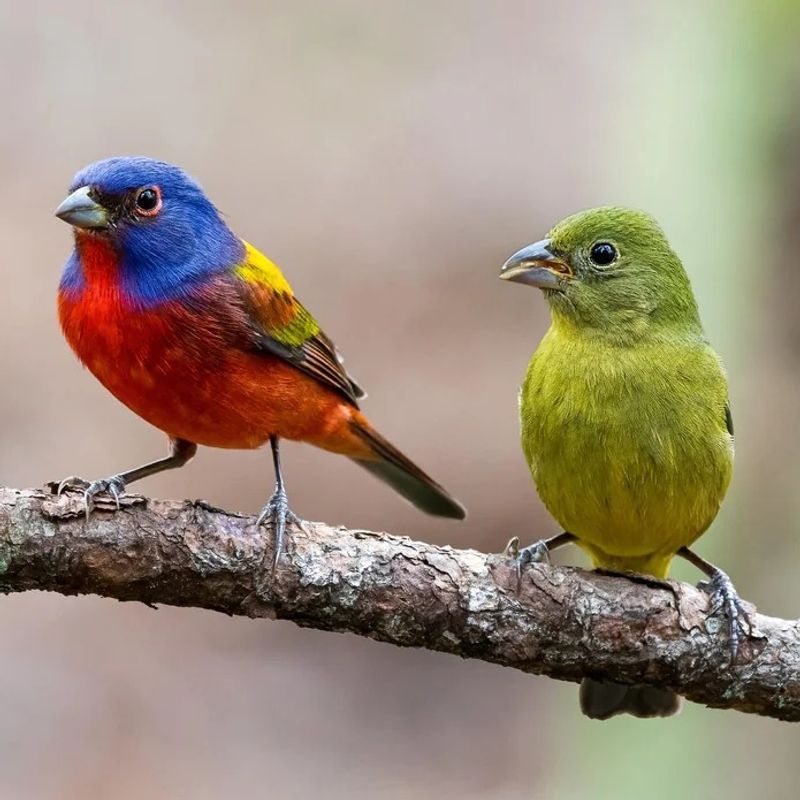
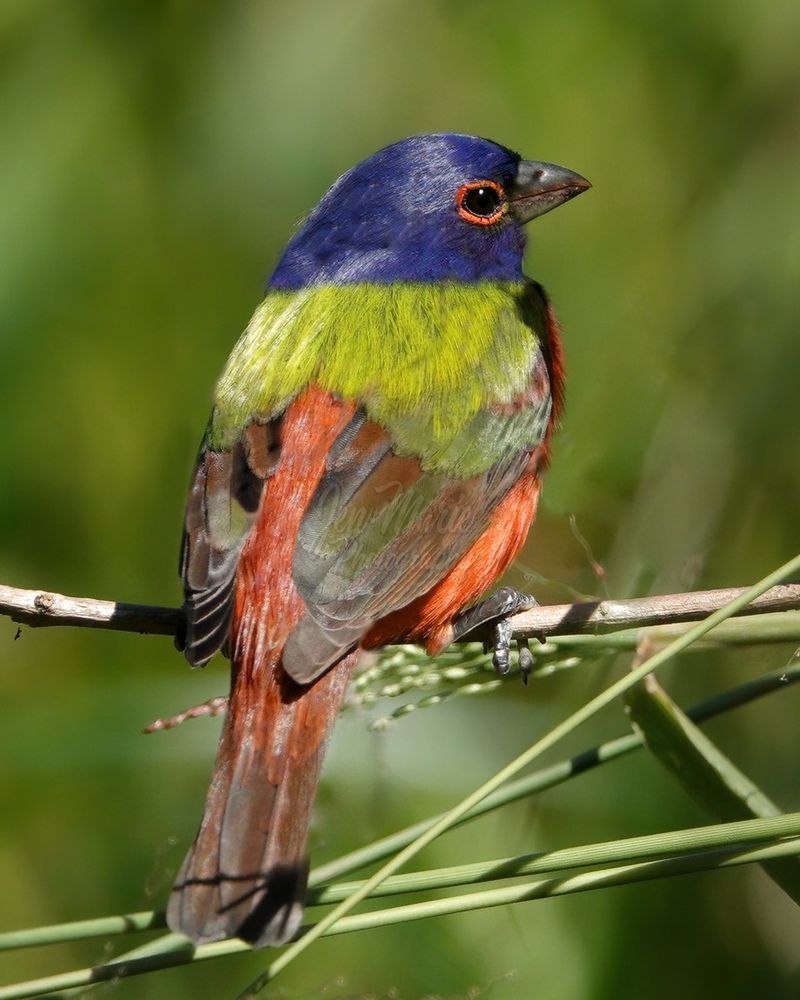
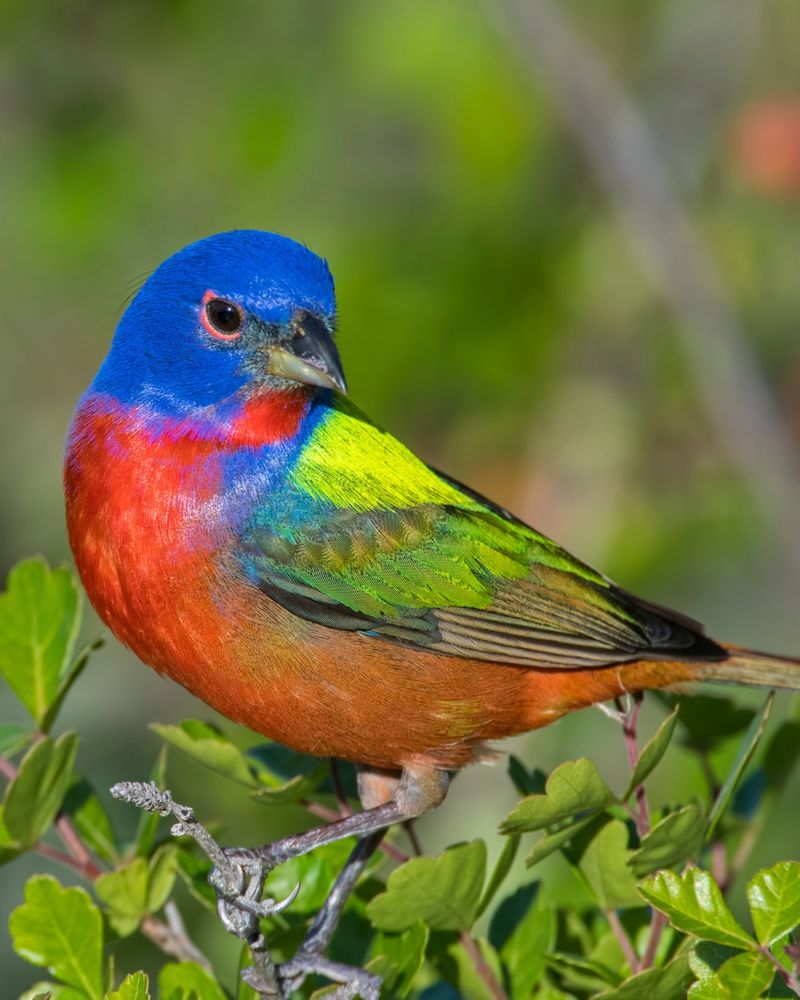
Nothing in North American birding hits quite like seeing a male Painted Bunting for the first time. Brilliant blue covers the head, green wraps the back, and red blazes across the chest and belly.
No other bird on the continent wears that combination.
Females look completely different. Soft lime green feathers make them easy to overlook.
That contrast between the sexes is sharper in Painted Buntings than in almost any other backyard bird.
Young males spend their first year looking like females. Full adult coloring takes time to develop.
Experienced birders know to look twice at every green bunting just in case.
Color isn’t just for looks. Males use bright plumage to attract mates and warn off rivals.
A more vivid male often holds better territory and wins more breeding opportunities.
Sunlight changes how the colors appear. In shade, the red can look almost brown.
Direct light makes the blue shimmer like polished metal. Catching one in full sun is genuinely breathtaking.
Painted Buntings rank among the most photographed birds across the southeastern United States. Backyard birders set up feeders and cameras specifically hoping to capture that perfect shot.
Once you see one up close, it’s easy to understand why.
2. Summer Brings More Visible Activity
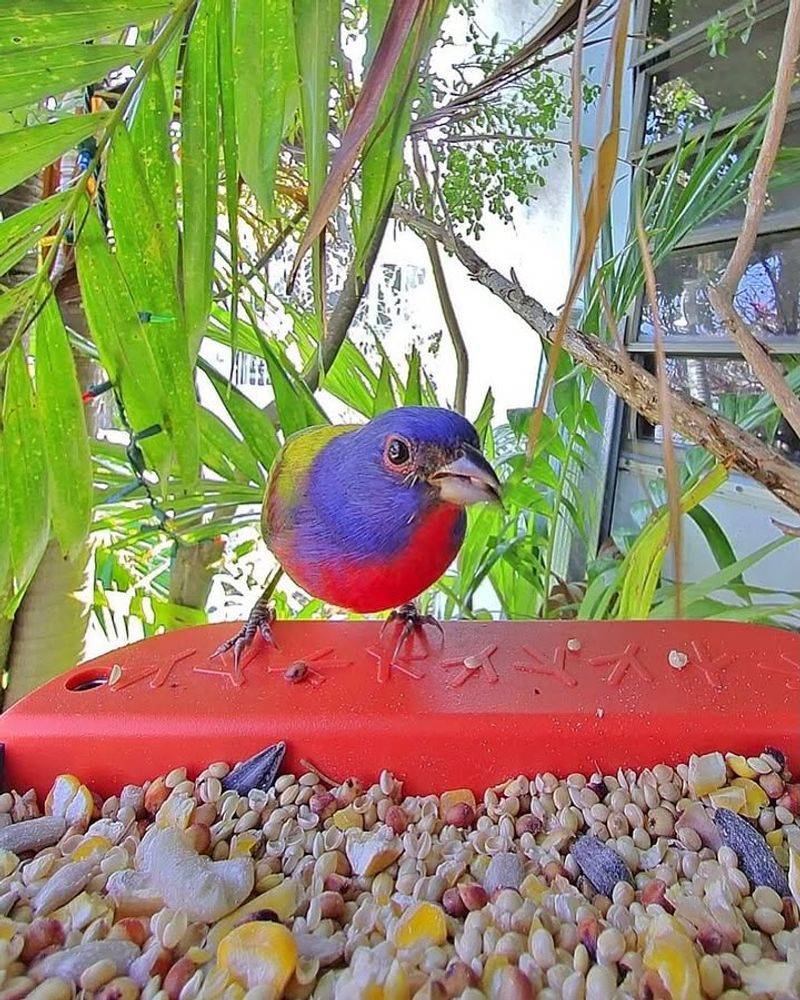
Summer flips a switch for Painted Buntings. Activity levels jump noticeably once warmer weather settles in across the region.
Males sing loudly from exposed perches, making them far easier to spot than during quieter months.
Early mornings are prime time. Males belt out clear, rolling songs from treetops and fence lines right after sunrise.
Sitting outside with coffee before 8 a.m. gives you a real advantage.
Feeders stay busier during summer months. White millet draws Painted Buntings reliably when placed low to the ground.
Tube feeders also work, but ground or platform feeders tend to get more consistent visits.
Heat pushes birds to water sources too. A shallow birdbath placed near dense shrubs can attract buntings that might otherwise skip your yard entirely.
Movement in the water helps catch their attention from a distance.
Your Georgia Garden Changes Every Week. Your Plan Should Too.
Gardening in Georgia changes quickly throughout the season. Every Friday you’ll receive a simple weekly plan showing exactly what to plant, prune, fertilize, harvest, and protect so you never miss the right timing.
Afternoon activity slows down during peak heat. Most feeding and singing happens between dawn and mid-morning.
Late afternoon sometimes brings a second wave of activity as temperatures drop slightly.
Watching for movement in brushy edges pays off more than scanning open areas. Painted Buntings prefer cover and rarely stay exposed for long.
Patience near thick vegetation almost always produces better results than walking around searching.
3. Breeding Activity Increases In Summer
Summer is when Painted Buntings get serious about raising a family. Breeding season runs from late spring through midsummer, with peak nesting activity happening right in the warmest weeks.
Pairs work quickly once they find suitable territory.
Females handle most of the nest building. Compact cup-shaped nests get tucked into low shrubs or dense vines.
Spanish moss, grasses, and plant fibers make up the bulk of the structure.
Clutch sizes usually range from three to four eggs. Incubation takes roughly eleven to twelve days.
Females sit on eggs almost exclusively while males patrol and sing nearby.
Chicks grow fast once hatched. Parents make dozens of feeding trips each day to keep up with hungry nestlings.
Both adults take part in feeding, though females tend to contribute more at the nest.
Second broods are common when conditions allow. A successful pair may nest twice within a single summer.
That means breeding activity can stretch well into August in favorable habitat.
Nesting success depends heavily on predator pressure and habitat quality. Dense, low shrubs offer the best protection for vulnerable nests.
Areas with thick native vegetation consistently support more successful breeding attempts than open or manicured landscapes.
4. Dense Cover Remains Essential
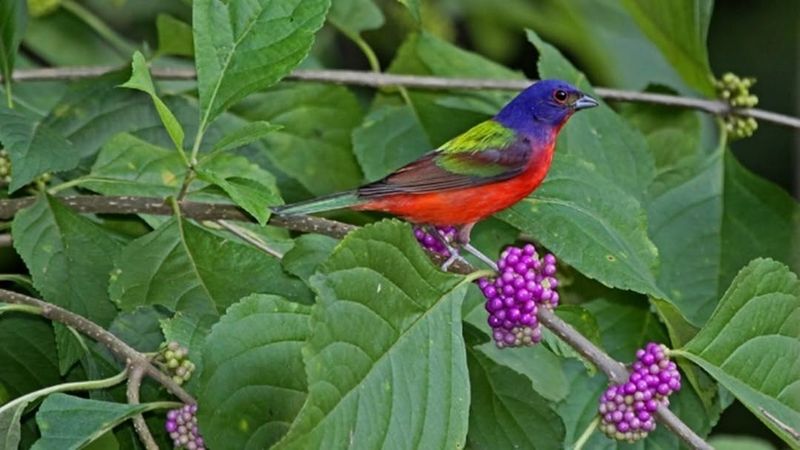
Open lawns don’t interest Painted Buntings much. Dense shrubs, tangled vines, and brushy field edges are what they actually need.
Without adequate cover, even well-stocked feeders often go ignored.
Cover serves multiple purposes. It provides escape routes from hawks and other threats.
It also offers shade, roosting spots, and foraging ground all in one package.
Native plants make the best cover. Species like wax myrtle, beautyberry, and native grasses create the layered structure Painted Buntings prefer.
Exotic ornamentals rarely provide the same habitat value no matter how thick they grow.
Brush piles count too. A loosely stacked pile of branches and woody debris near a feeder gives buntings a quick place to retreat.
Simple additions like that make a real difference in how often birds feel comfortable visiting.
Yard edges matter more than yard centers. Buntings tend to hug the transition zones between open areas and thick vegetation.
Planting native shrubs along fence lines or property borders targets exactly where these birds want to be.
Reducing lawn area and letting some sections grow wild benefits far more than just Painted Buntings. Sparrows, towhees, and other ground-foraging birds all respond positively to added cover.
A slightly messier yard is genuinely more productive for wildlife than a perfectly manicured one.
5. Insects Support Growing Young
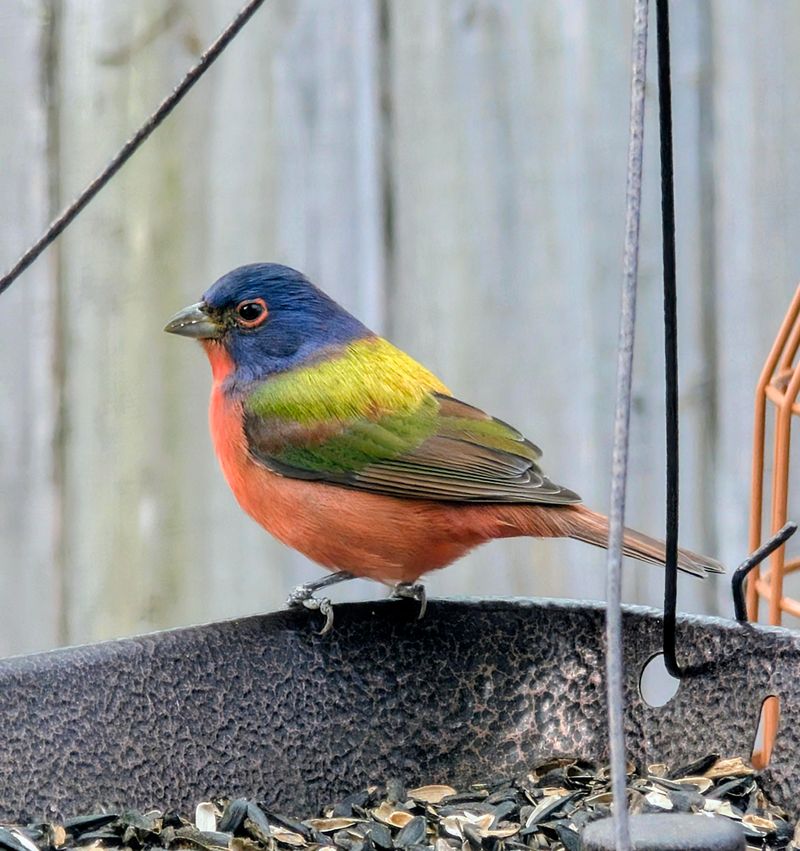
Seeds fill most of a Painted Bunting’s diet, but chicks need something different entirely. Protein-rich insects fuel rapid growth during the first weeks after hatching.
Adults shift their foraging behavior noticeably once nestlings arrive.
Caterpillars rank among the most important food items for chicks. Soft-bodied insects are easier for adults to carry and for nestlings to swallow.
A yard with healthy native plants tends to host far more caterpillars than one dominated by exotic species.
Beetles, grasshoppers, and small spiders also get collected regularly during breeding season. Adults forage low in vegetation and along the ground searching for anything moving.
Their foraging range expands considerably when chicks need constant feeding.
Pesticide use directly affects insect availability. Yards treated heavily with chemicals tend to have fewer insects, which puts pressure on birds trying to raise young nearby.
Reducing or eliminating pesticide applications makes a measurable difference for nesting birds.
Native flowering plants attract the insect communities that Painted Buntings depend on. Plants like coneflowers, black-eyed Susans, and native milkweeds support caterpillars and other beneficial insects.
That insect diversity is what ultimately makes a yard useful during breeding season.
6. Coastal Areas See More Sightings
Coastal regions consistently produce the highest Painted Bunting sighting rates across the southeast. Barrier islands, maritime scrub, and coastal marshes create ideal conditions that inland areas often can’t match.
Birders who focus their efforts along the coast typically log far more encounters.
Georgia’s coast hosts both breeding and migrating birds. Some individuals nest in coastal scrub and stay through summer.
Others pass through during spring and fall migration, stopping to rest and refuel along the way.
Coastal feeders attract remarkable numbers during peak migration windows. A well-placed feeder near dense shrubs at a coastal property can draw dozens of buntings in a single morning.
That concentration makes coastal spots genuinely exciting for birdwatchers of any experience level.
Maritime shrub thickets offer exactly the dense cover these birds prefer. Yaupon holly, wax myrtle, and sea oats create layered habitat right at the coast.
Those plant communities support not just buntings but the insects and seeds they depend on.
Coastal development pressure threatens some of the best habitat. As beachfront areas get built up, the brushy edges that buntings rely on shrink.
Conservation efforts focused on coastal scrub preservation directly benefit Painted Bunting populations.
Visiting coastal wildlife refuges and state parks during summer dramatically improves your odds.
7. Healthy Habitat Sustains Local Populations
Long-term Painted Bunting presence in any area comes down to habitat quality. Food, water, cover, and nesting sites all need to be available within a reasonable range.
Remove one piece and the whole picture shifts.
Native plant diversity is the foundation. A yard or natural area with varied native species supports the full food web that Painted Buntings need across all seasons.
Monocultures of any kind, whether grass lawns or single-species plantings, offer limited value.
Water availability matters year-round. A clean, shallow birdbath refreshed regularly draws consistent bird activity.
Moving water, like a small dripper or fountain, attracts birds even more reliably than still water.
Fragmented habitat creates real challenges. Small isolated patches of good habitat surrounded by development can’t support stable populations the way connected corridors can.
Linking habitat patches through native plantings along fence lines and property edges helps address that fragmentation.
Community-level action amplifies individual efforts. When multiple neighboring yards all reduce pesticide use and add native plants, the combined effect is far greater than any single property alone.
Bird populations respond to landscape-scale changes over time.