Why Pennsylvania Spiders Keep Building Webs Across Your Path
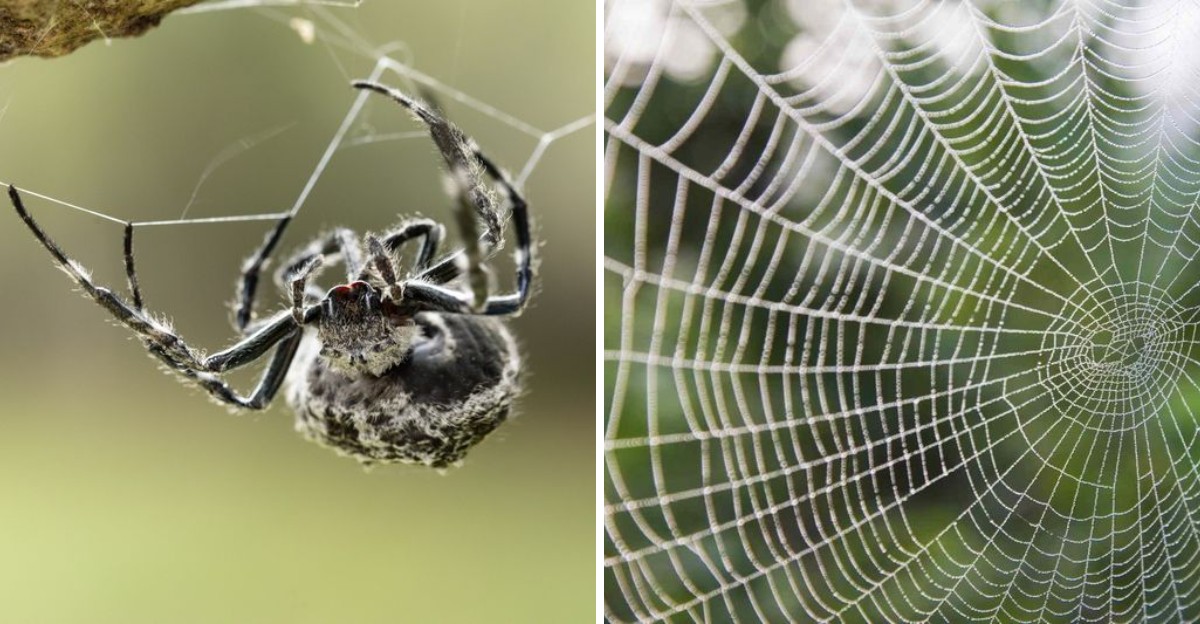
You step outside on a cool fall morning, take two steps down the path, and walk face-first into a sticky web.
Cue the frantic arm-waving dance. If it feels like this happens every single day, you’re probably right.
Early fall is peak web season in Pennsylvania. Spiders that hatched as tiny specks in spring are now full-grown, and many of them are building bigger, bolder webs than ever. Some even take down their webs and build fresh ones every night.
Garden paths, porches, and the gaps between shrubs make perfect spots, since they act like natural highways for flying insects.
These spiders aren’t trying to annoy you. They’re racing to catch as much food as possible before the cold sets in.
Once you understand why they choose those spots, you might look at your morning obstacle course a little differently.
1. Paths Are Natural Insect Highways
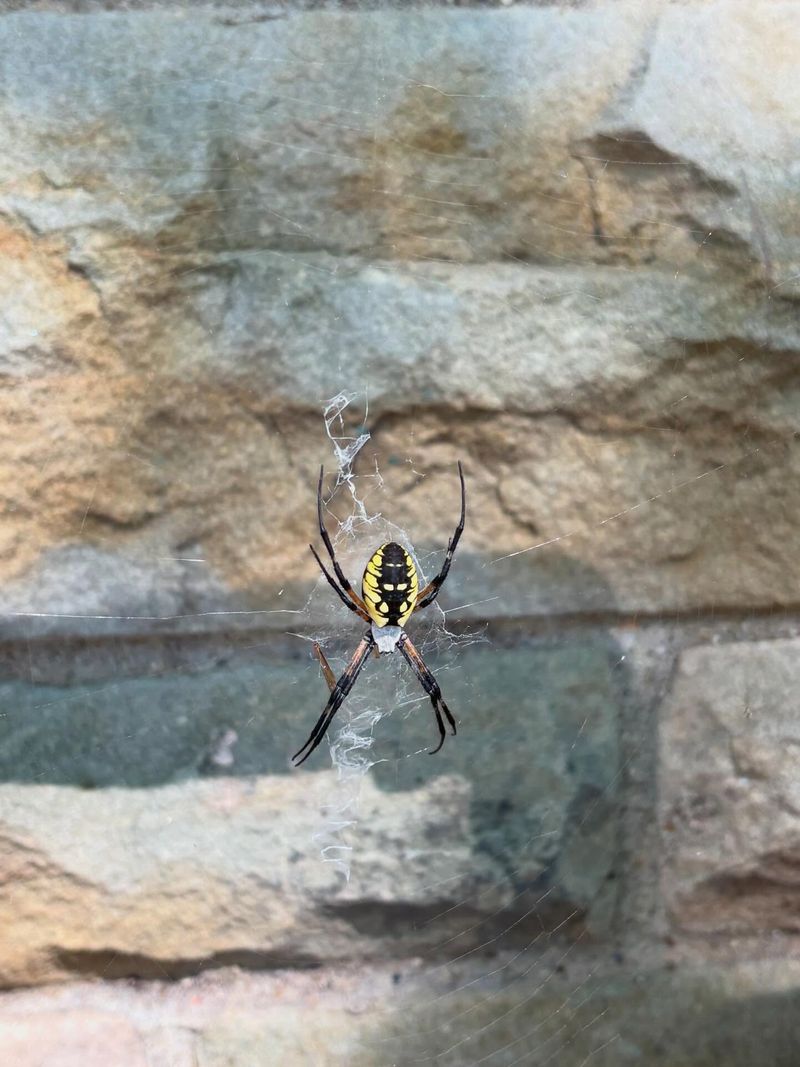
Think about how you walk through a crowded room. You look for the open lane with nothing in your way. Flying insects do the very same thing.
Bugs like moths, flies, and gnats save energy by flying where the air is clear. Thick bushes and tall grass slow them down. So they zip along open spaces like walkways, garden paths, and gaps between plants.
Orb-weaving spiders seem to know this. They build their webs right where the most bugs travel. It is a lot like a fisherman setting a net in the busiest part of a river. More traffic means more meals.
Your path is basically a bug highway. People also use it, which is why you end up running into the web. The spider was not aiming for you. It was aiming for the insects that zoom down the same route every day.
Fun fact: one orb web can catch dozens of insects in a single day. That is a lot of free pest control right outside your door.
So what can you do? Start by noticing which paths get webs the most. Those are likely the spots with the most insect traffic. You might choose a different route at dawn or dusk, when spiders and bugs are busiest.
You can also keep a small flashlight handy at night. Silk shines when light hits it. A quick sweep of the beam ahead of you will often show a web before your face finds it. That simple habit can save you a lot of sticky surprises.
2. Plants On Both Sides Make Perfect Anchors
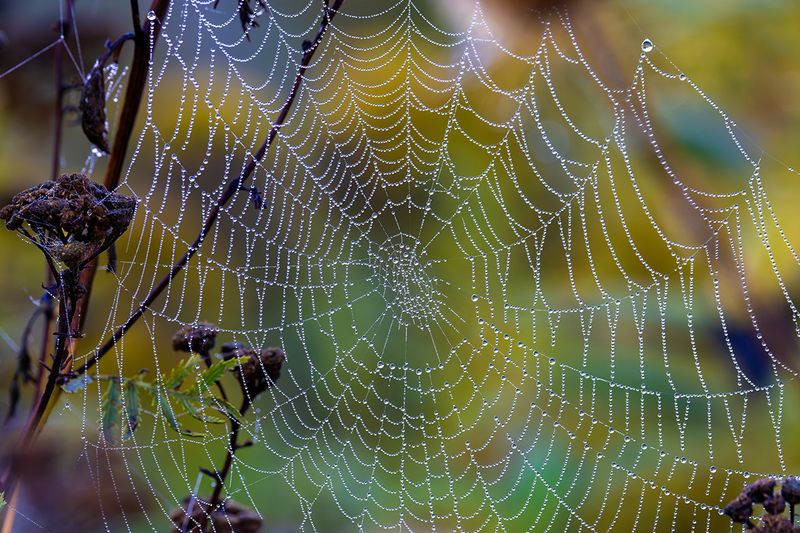
Every good bridge needs strong supports on each end. Spiders are no different. A web is really a tiny suspension bridge made of silk.
Orb weavers need solid spots to tie their main lines. Shrubs, tall flowers, fence posts, mailboxes, and porch railings all work great. When a path has these things on both sides, the spider has everything it needs.
The open space in the middle becomes the perfect frame. The spider attaches a few strong lines to the anchors.
Then it fills the center with its famous spiral pattern. Some webs in Pennsylvania can stretch three feet or more across.
Your Pennsylvania Garden Changes Every Week. Your Plan Should Too.
Gardening in Pennsylvania changes quickly throughout the season. Every Friday you’ll receive a simple weekly plan showing exactly what to plant, prune, fertilize, harvest, and protect so you never miss the right timing.
Here is something cool. The anchor lines are made of a different, tougher silk than the sticky spiral. Spiders can make several kinds of silk, each with its own job. The anchor silk is stretchy and strong, so wind and bumps do not break it easily.
Want fewer webs blocking your walkway? Look at what sits on the edges. If bushes lean over the path, they make anchoring very easy. A wider, more open path gives spiders fewer good choices.
You do not have to clear everything out. Just trimming plants back a foot or so can push webs off to the side.
The spiders will still find places to hunt, just not right at face level. Garden plants also stay healthier with a bit of space and airflow. It is a small change that keeps both you and the spiders happy.
3. Breezes Help Them Bridge The Gap
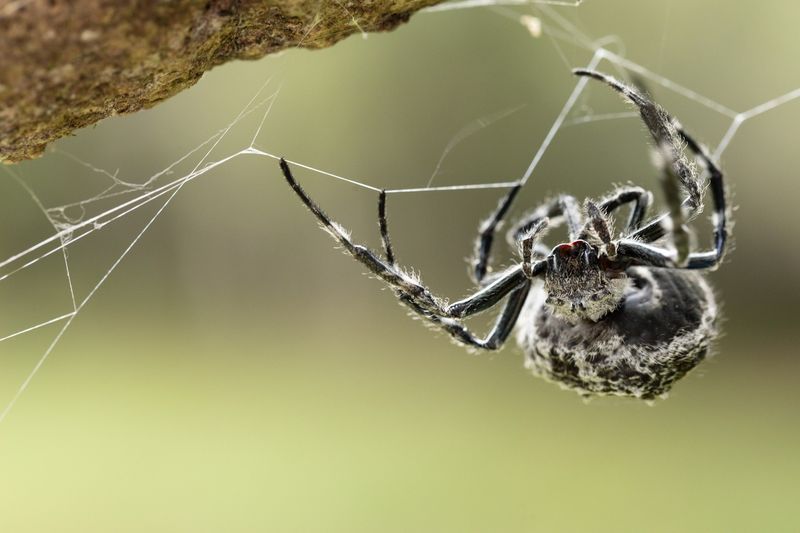
Ever wonder how a spider gets a web from one bush to another without walking across? It does not jump. It lets the wind do the work.
Here is how it goes. The spider climbs to a high spot and lets out a thin line of silk. A light breeze picks up the thread and carries it through the air. When the loose end snags on a branch or post, the spider pulls it tight.
That first line is called the bridge line. It is the most important strand in the whole web. Once it is in place, the spider walks across it again and again, adding more silk to make it stronger. Then it builds the rest of the web from there.
Open paths are perfect for this trick. Air moves easily through the gap, and there is nothing to block the drifting thread. A forest trail or garden walkway acts like a wind tunnel for spider silk.
Did you know? Some spiders can float a bridge line many feet across. That is pretty amazing for a creature smaller than your fingernail.
This also explains why webs seem to show up out of nowhere. You might walk the path at sunset and see nothing.
By morning, a full web is there. The spider simply waited for a good breeze and got to work while you slept.
If your path stays breezy and open, expect regular visitors. Checking for webs first thing in the morning is a smart habit.
4. Many Orb Weavers Rebuild Every Night
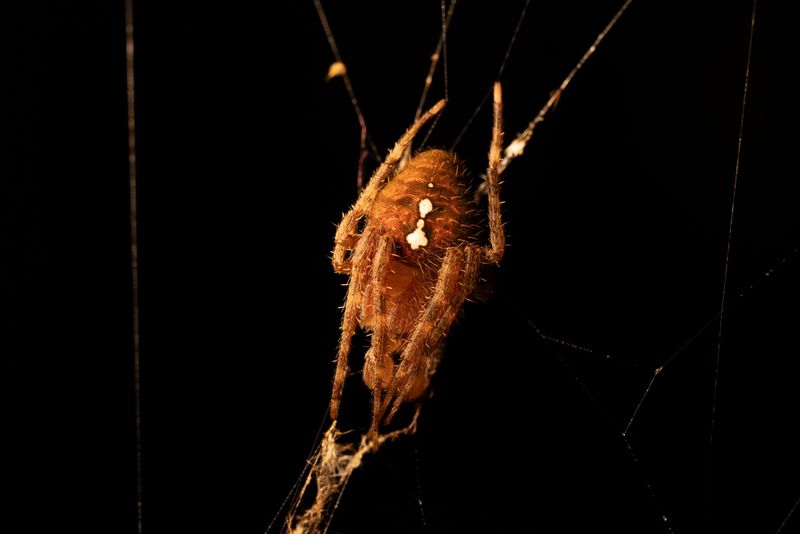
Yesterday you walked right through that web. Today it is back in the exact same spot. Is the spider just stubborn? Not really. It is following its daily routine.
Many orb weavers build a brand new web each evening. Before they start, they often take down the old one. And here is the wild part. They eat it.
Spider silk is made of protein, and protein takes energy to make. By eating the old silk, the spider recycles that protein to build the next web. Nothing goes to waste. It is one of the best recycling programs in nature.
Building a full orb web takes about an hour. The spider follows the same steps every time, almost like a recipe. Bridge line first, then spokes, then the sticky spiral. It is a skill they are born knowing.
So why the same spot? If a place caught plenty of food yesterday, it makes sense to try it again. Spiders also tend to stay close to their hiding spot, often a curled leaf or crack nearby.
This is why simply knocking a web down does not solve the problem. The spider is usually unhurt and will spin again that night.
If you want to move it along, gently relocate the spider with a cup and a piece of paper. Set it in a bush away from your path.
Many spiders will happily build in their new home. You get a clear walkway, and the spider keeps hunting nearby. Everyone wins with very little effort.
5. Fall Is When They’re Biggest
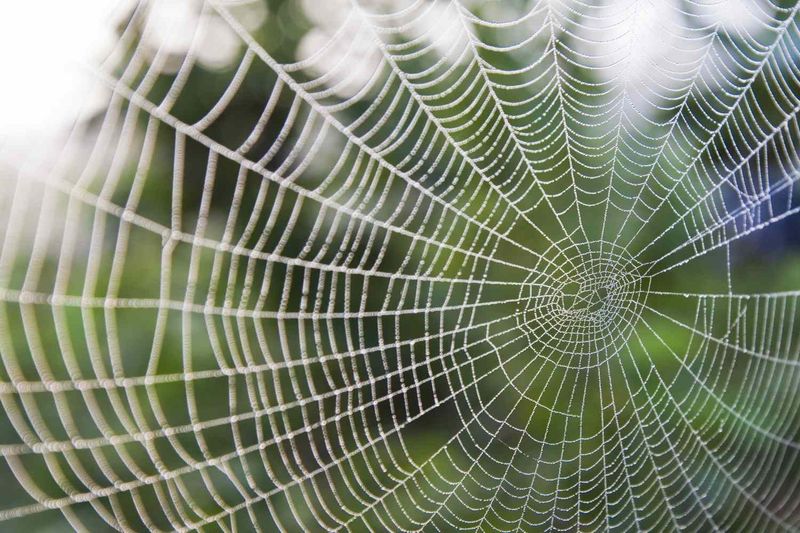
September in Pennsylvania brings apple picking, football games, and a whole lot more spider webs. If it feels like they get bigger every fall, you are right.
Orb weavers hatch in spring as tiny babies. All summer long, they eat, grow, and shed their skin.
By late summer and fall, they reach full adult size. Some of the most common ones you will see are the cross orbweaver, the barn spider, and the marbled orb weaver.
The cross orbweaver has a pale cross pattern on its back. Barn spiders are brown and often hang out near porches and sheds.
Marbled orb weavers are the flashy ones, with bright orange and swirly patterns. Some people call them pumpkin spiders because of their fall colors.
Bigger spiders need more food. So they spin bigger webs to catch more bugs. A large web stretched across a path is hard to miss, especially when morning dew makes it sparkle.
Fall is also mating season. Adult spiders are busy eating as much as they can before laying eggs. That keeps them working hard and building often.
Here is a tip for autumn. Carry a hat with a brim or wear glasses on your morning walks. They help shield your face if you do bump into silk. Kids can even make a game of spotting webs before anyone walks into them.
Once the first hard frosts hit, the webs fade away until next year. Enjoy the show while it lasts.
6. Outdoor Lights Draw In Their Prey
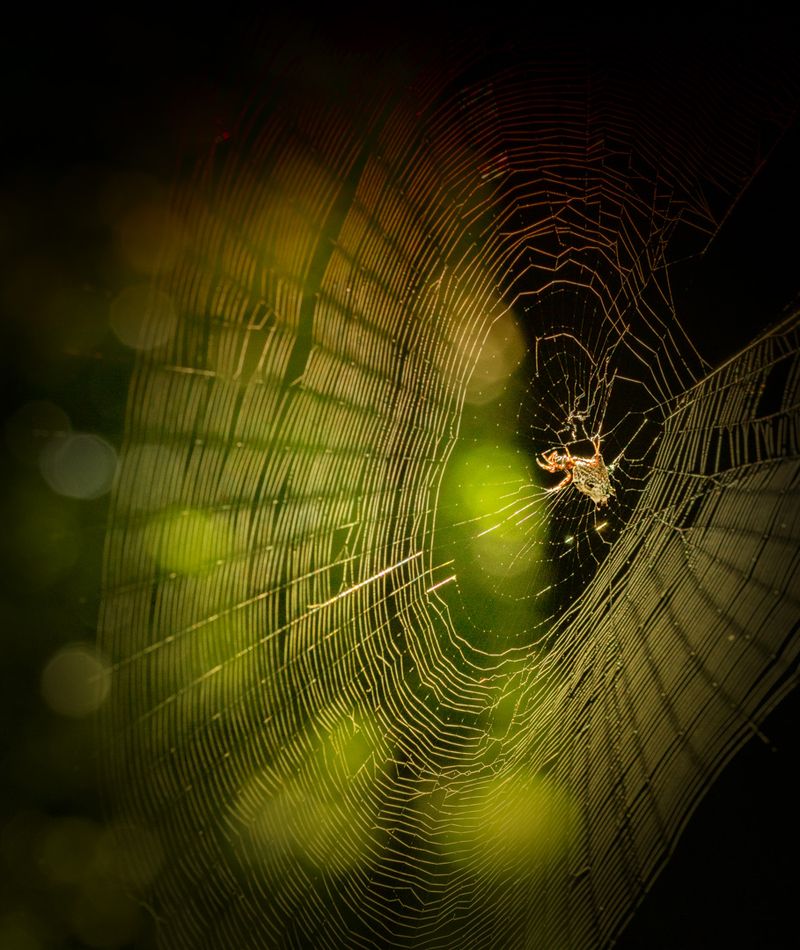
Turn on a porch light on a summer night and watch what happens. Within minutes, moths and beetles start circling the glow. Now guess who else notices.
Spiders are smart hunters. They do not need to see the light themselves to benefit from it. They just need to be where the insects gather. Porch lights, lamp posts, and solar path lights all act like bug magnets.
Scientists are still studying exactly why moths love lights so much. One idea is that bright lights confuse their sense of direction. Whatever the reason, the result is a steady stream of snacks flying right into the area.
For a spider, that is like setting up a table right outside a busy restaurant. Webs near lights catch far more food than webs in dark corners. That is why barn spiders and other orb weavers love doorways and lit walkways.
The downside for you is easy to spot. You open the door and walk straight into silk. Or you head down a lit path and get a face full of web.
Luckily, a few changes can help. Try switching to yellow or warm-colored bulbs, since they attract fewer insects.
Motion-sensor lights only turn on when needed, which also cuts down on bug crowds. You can also place lights a bit away from doors instead of right above them.
Fewer bugs near your entrance means fewer spiders setting up there. Your electric bill might even go down a little too.
7. Your Yard Has Plenty Of Insects
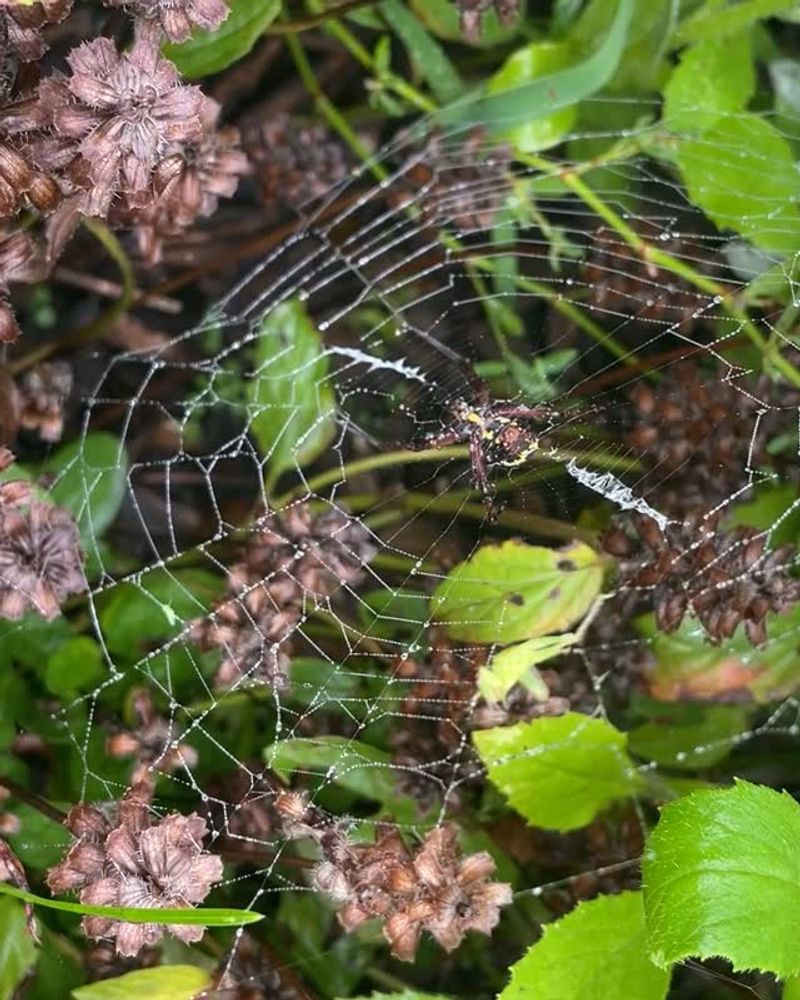
Believe it or not, a yard full of webs is kind of a compliment. It means your outdoor space is buzzing with life.
Spiders only stay where food is easy to find. If you see lots of orb webs, you have plenty of insects around. Gardens, flower beds, and lawns support all kinds of bugs. That makes your yard a five-star buffet for spiders.
The best part is that orb weavers are harmless to people. They are shy and would rather run than bite. Even if one did bite, it would feel like a small pinch at most. They are not looking for trouble.
Instead, they help you out. Orb weavers catch mosquitoes, flies, and garden pests that munch on your plants.
Having them around means fewer bugs pestering you at cookouts. So how do you share the space without walking into webs? Here are a few easy tricks:
Wave a stick or broom gently in front of you as you walk. It catches the silk before your face does. Trim plants that crowd your path so spiders have fewer anchor points. Walk with a flashlight at night to spot shiny strands.
You can also leave a few wild corners in your yard where spiders can build freely. They will often choose those spots over your walkway.
With a little planning, you and your eight-legged neighbors can get along just fine. Your garden stays healthy, and your face stays silk-free.