Why Powdery Mildew Explodes On Oregon Squash At The End Of Summer
Squash leaves you inspected on Monday can be unrecognizable by the following weekend. Cooler Oregon nights collide with warm afternoon air right when your vines are most exposed.
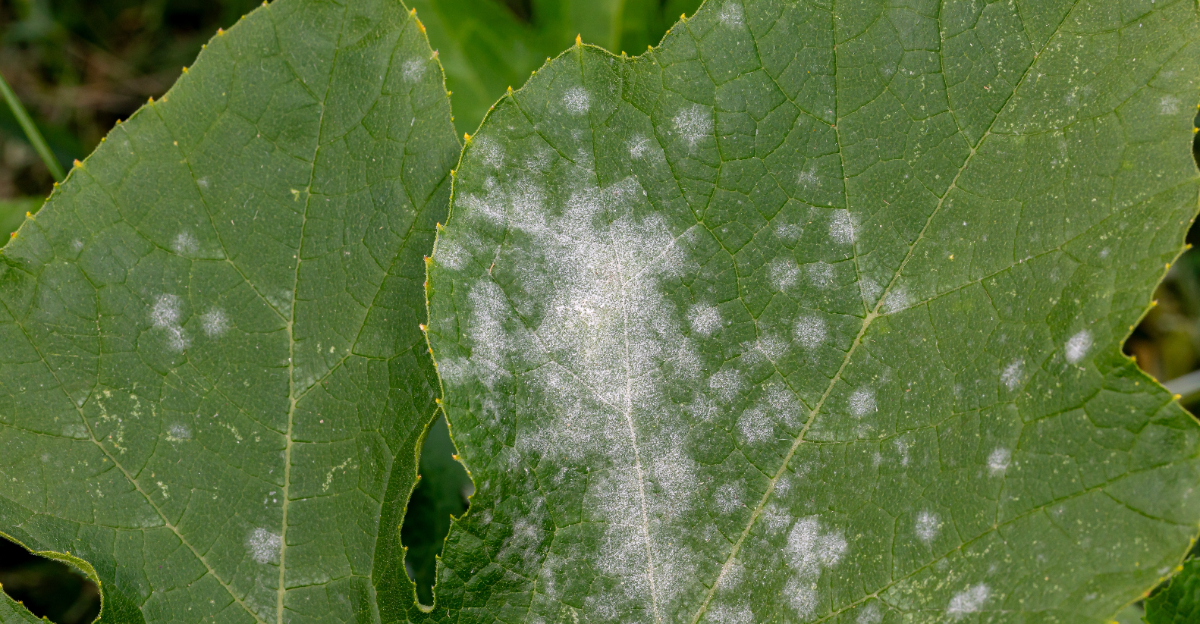
Humidity spikes after that shift, and you’ll notice a pale coating creeping across leaves you thought were healthy. Airflow drops at the exact moment fungal spores need it to, and your garden becomes the perfect trap.
Nothing about this timing is accidental, and everything about your growing season built toward it. Gardeners across Oregon watching this unfold assume you’re the exception, but you’re not.
You didn’t cause this, and you can’t out-water your way past it either. Your vines are sending signals days before the visible damage appears, and most of those signals go unnoticed.
Warm Days And Cool Nights Set The Stage
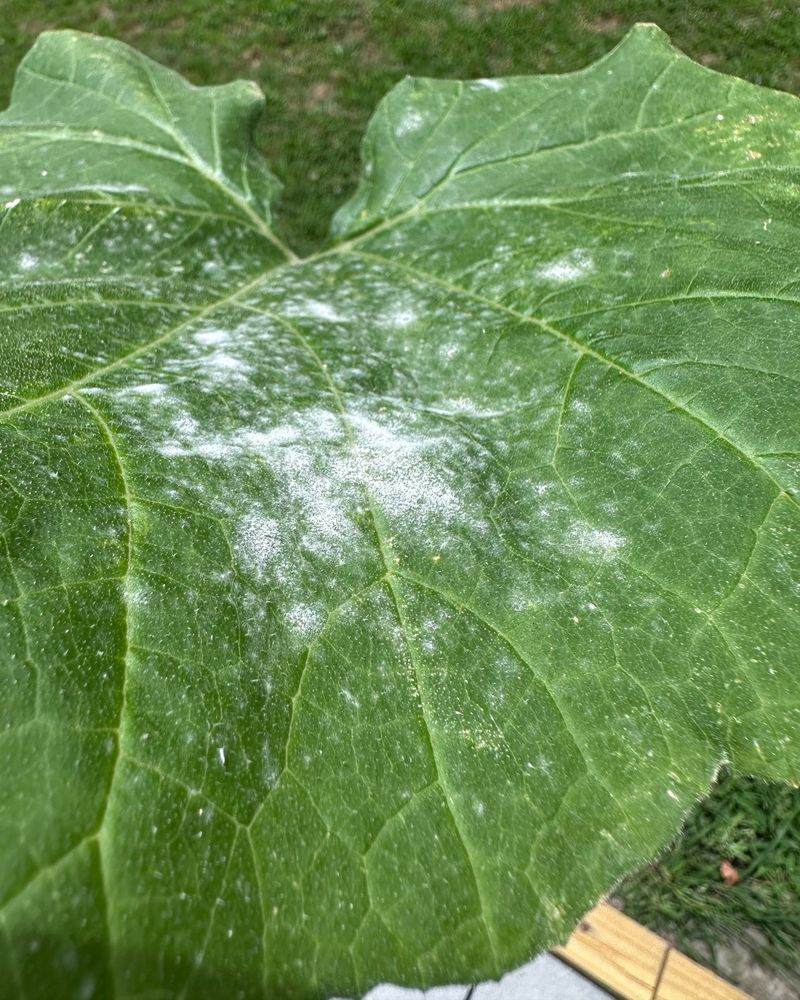
Oregon’s late summer is basically a welcome mat for powdery mildew. Warm afternoons followed by cool nights create the exact humidity levels this fungus loves most.
Powdery mildew does not need standing water to spread. It actually thrives when humidity sits between 50 and 90 percent, which is exactly what Oregon delivers in August and September.
Daytime temperatures push into the 80s, then drop sharply after sunset. That swing creates surface moisture on leaves without triggering full rain, giving the fungus a cozy window to germinate spores.
Most gardeners associate mold and fungus with wet weather. This one is different, and that surprises a lot of people who think dry spells should protect their plants.
The spores land on dry leaf surfaces and start growing almost immediately. They pull moisture from inside the plant tissue itself, so they do not need rain to get started.
By the time September rolls around, those temperature swings become more dramatic. Nights get cooler faster, and the fungus gets more aggressive with every passing week.
Your squash plants are already stressed from a full growing season. Stressed plants have weaker defenses, and powdery mildew takes full advantage of that vulnerability.
Knowing this pattern helps you prepare earlier in the season. You do not have to wait until the white patches appear to start protecting your plants from this predictable annual threat.
Dense Foliage Makes Everything Worse
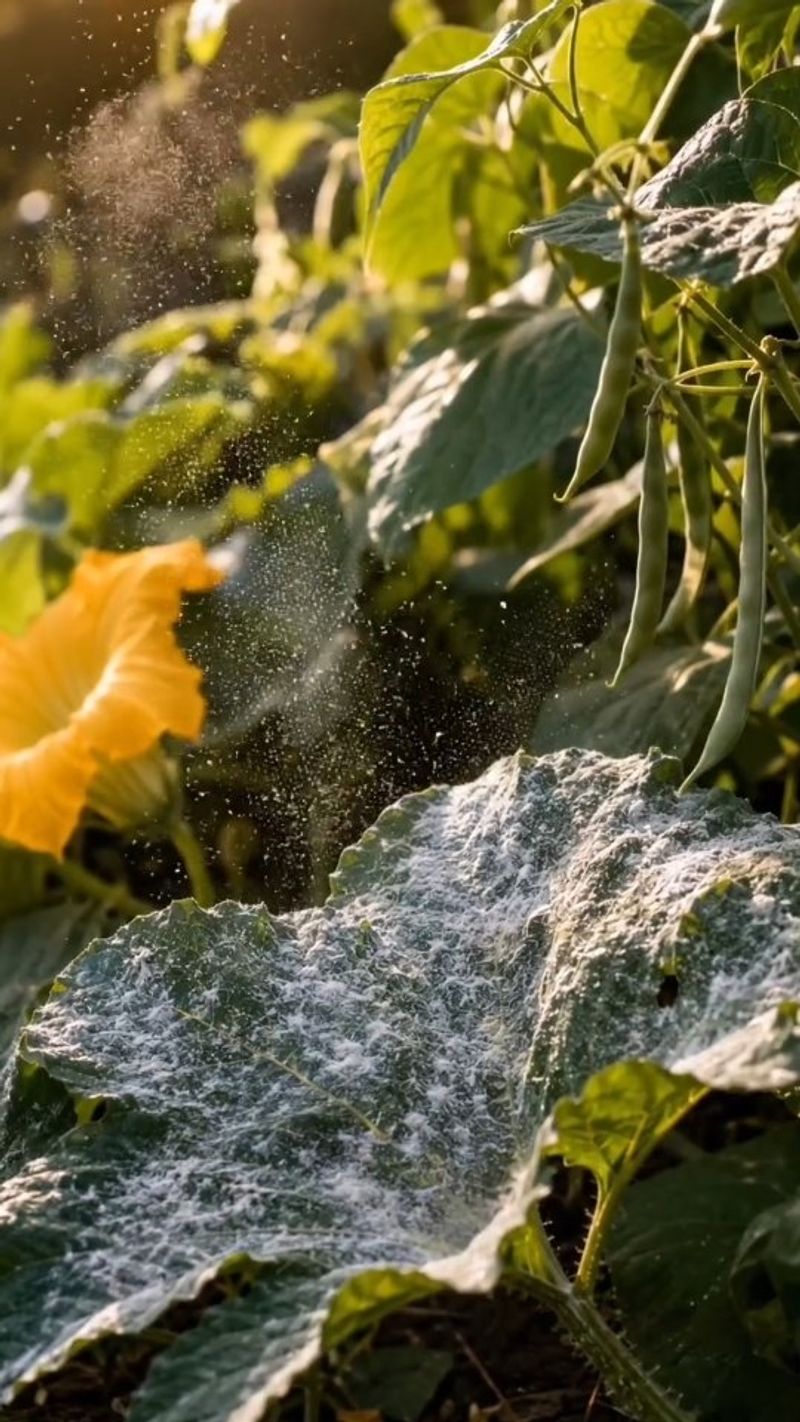
Squash plants are aggressive growers, and by late summer, they have taken over everything. That thick canopy of leaves looks impressive, but it is quietly making your mildew problem much worse.
Dense foliage traps humidity close to the soil and leaf surfaces. Air cannot move through packed vines, so moisture just sits there, building up like steam in a closed room.
Powdery mildew spores travel by wind and land on whatever surface they find. When leaves overlap heavily, spores have hundreds of landing spots in a single square foot of garden space.
Squash leaves are also enormous compared to most garden plants. Each big leaf holds more surface area for spores to colonize, and shaded undersides stay damp much longer than exposed surfaces.
Gardeners who skip pruning often see the worst outbreaks. Removing older, lower leaves early in the season dramatically reduces the number of surfaces available for infection to start.
Your Oregon Garden Changes Every Week. Your Plan Should Too.
Gardening in Oregon changes quickly throughout the season. Every Friday you’ll receive a simple weekly plan showing exactly what to plant, prune, fertilize, harvest, and protect so you never miss the right timing.
Crowded plants also compete harder for nutrients by late summer, and that added stress leaves them more vulnerable to infection.
You can actually slow the spread just by thinning your vines before August hits. Pull off any leaf that is yellowing, touching the soil, or blocking airflow through the center of the plant.
Less canopy means more airflow, more sunlight, and far fewer places for powdery mildew to get its first foothold this season.
Airflow Around Squash Vines Changes The Outcome
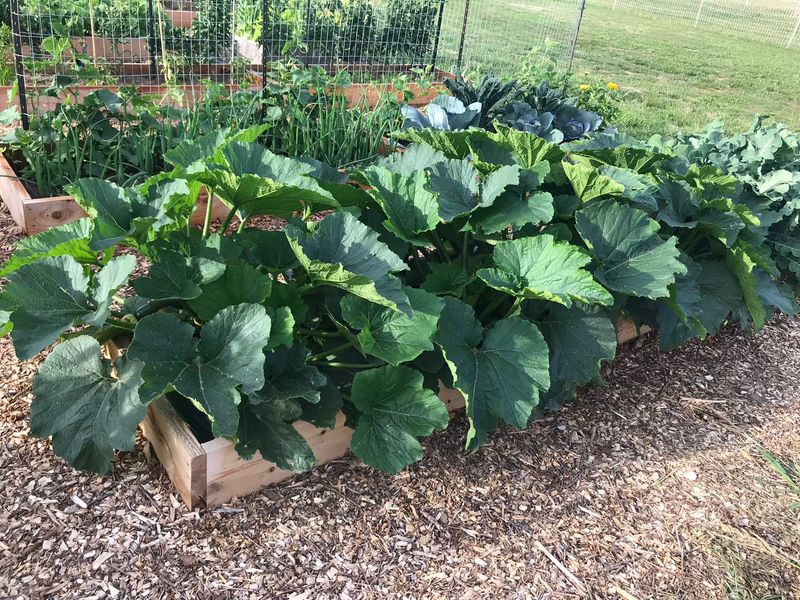
Picture two squash plants side by side. One is crammed against a fence with no breathing room, and the other has open space on all sides. The difference in mildew pressure between those two plants is enormous.
Airflow is one of the most underrated tools in the fight against powdery mildew. Moving air dries leaf surfaces faster, disrupts spore travel, and lowers the humidity that the fungus depends on.
When vines sprawl in every direction, they block each other. Leaves press together, air stalls, and the microclimate inside the plant canopy becomes warm and still, which is exactly what the fungus wants.
Trellising squash vertically is one of the best moves you can make in an Oregon garden. It keeps vines off the ground, exposes more leaf surface to wind, and makes the whole plant easier to inspect.
Spacing also matters more than most people realize at planting time. Squash plants need at least three feet between them, and four feet is better in a climate like the Pacific Northwest.
Even after the season starts, you can improve airflow by redirecting wandering vines. Gently lift them and point them away from neighboring plants to open up gaps in the canopy.
Morning sun exposure is especially valuable because it dries overnight moisture quickly. Positioning your squash where it catches early eastern light can reduce the daily window for spore germination.
Better air movement is free, and it works. Use it before the white powder shows up, not after.
Early Signs Hiding On The Undersides Of Leaves
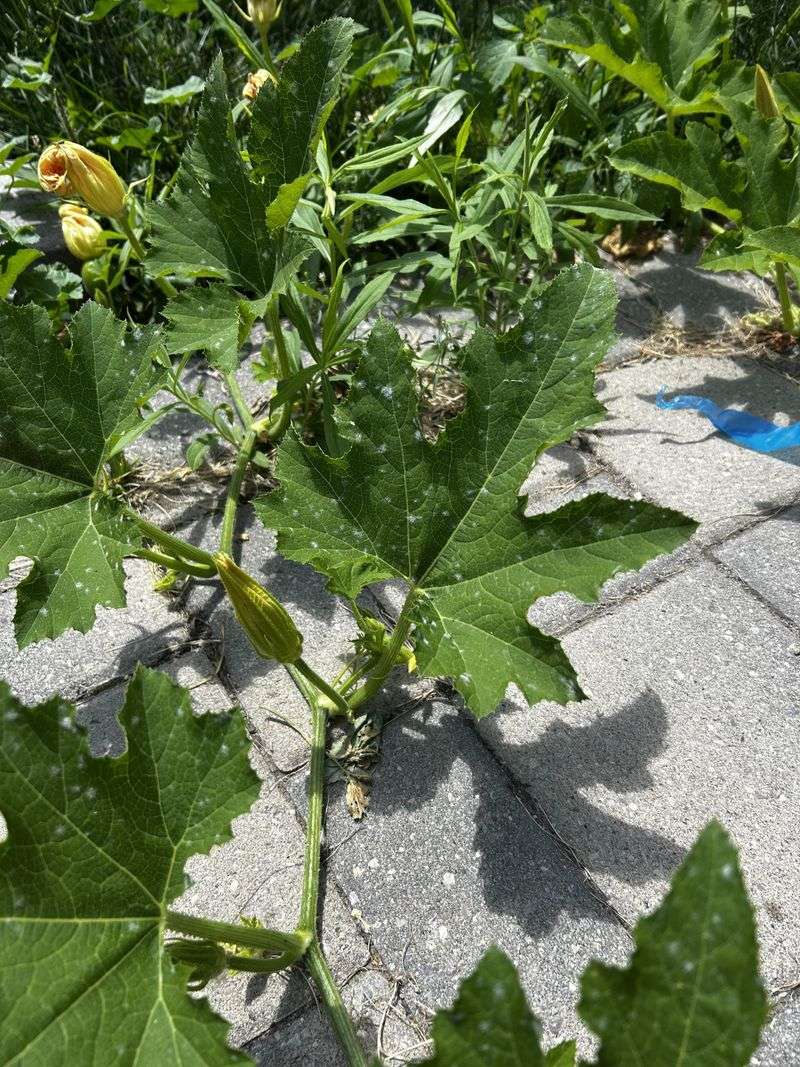
Most people catch powdery mildew way too late. By the time white patches are visible on the top of a leaf, the infection has already been spreading for days underneath.
The undersides of squash leaves are where the earliest signs appear. Tiny, faint white circles form there first, often so subtle that you can mistake them for dust or water mineral deposits.
Check the undersides of your oldest leaves first. Older foliage near the base of the plant is almost always the first place the fungus establishes itself each season.
You are looking for a powdery or slightly fuzzy coating that wipes off with your finger. If it smears and leaves a faint residue, that is the fungus, not dirt.
Some gardeners also notice a slight yellow tinge on the top surface of a leaf before they see any white coating. That yellowing is the plant reacting to fungal threads already working inside the tissue.
Weekly inspections starting in late July can catch infections early enough to actually slow them down. Catching it early makes a real difference in how far it spreads.
Remove any leaf showing early signs immediately, and do not compost it. Bag those leaves and put them in the trash to prevent spores from cycling back into the garden soil.
Early detection on powdery mildew is your biggest advantage all season long. Train yourself to flip those leaves every single time you walk through the garden.
Late-Season Growth That Feeds The Problem
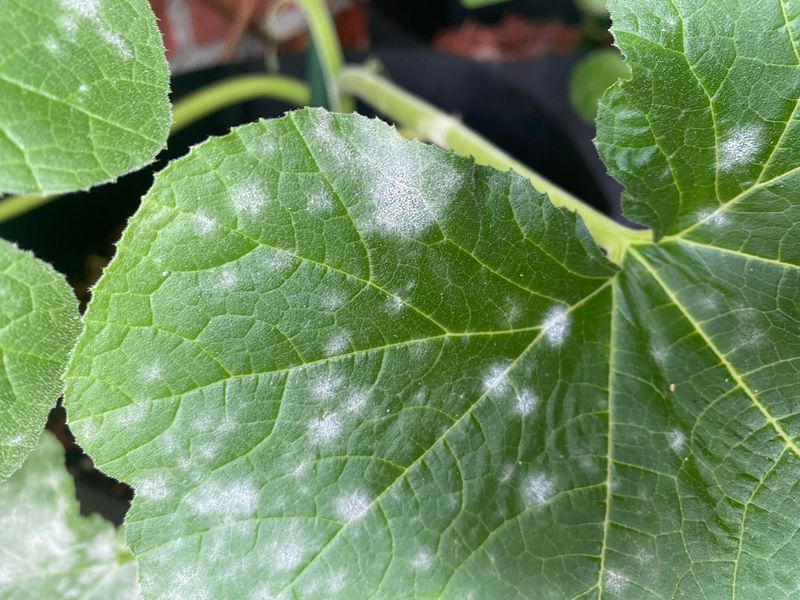
Squash plants do something surprising in late summer. They push out a fresh round of new growth right when the season should be winding down, and that new growth is extremely vulnerable.
Young, tender leaves have softer cell walls than mature foliage. Powdery mildew spores can penetrate those soft surfaces far more easily, which is why new growth gets hit so hard so fast.
This late push tends to happen as the plant tries to produce more fruit before frost arrives, and it creates the perfect feeding ground for the fungus.
The new leaves also emerge into the worst possible conditions. By late August and September in Oregon, spore loads in the garden air are at their seasonal peak, and every new leaf is a fresh target.
Gardeners sometimes make the mistake of fertilizing heavily in late summer to push more production. High-nitrogen fertilizer encourages exactly the kind of soft, fast new growth that mildew loves to attack.
Cutting back on nitrogen after mid-July helps slow that vulnerable late flush. Switch to a low-nitrogen or phosphorus-focused fertilizer to encourage fruiting without producing excess leafy growth.
Pinching off the growing tips of main vines in early August also helps. This redirects the plant’s energy toward ripening existing fruit rather than creating new leaves for the fungus to colonize.
Working with your plant’s natural timing is smarter than fighting it. A few small adjustments in July and August can change what your garden looks like in September.
Steps To Slow It Down Before Harvest Ends
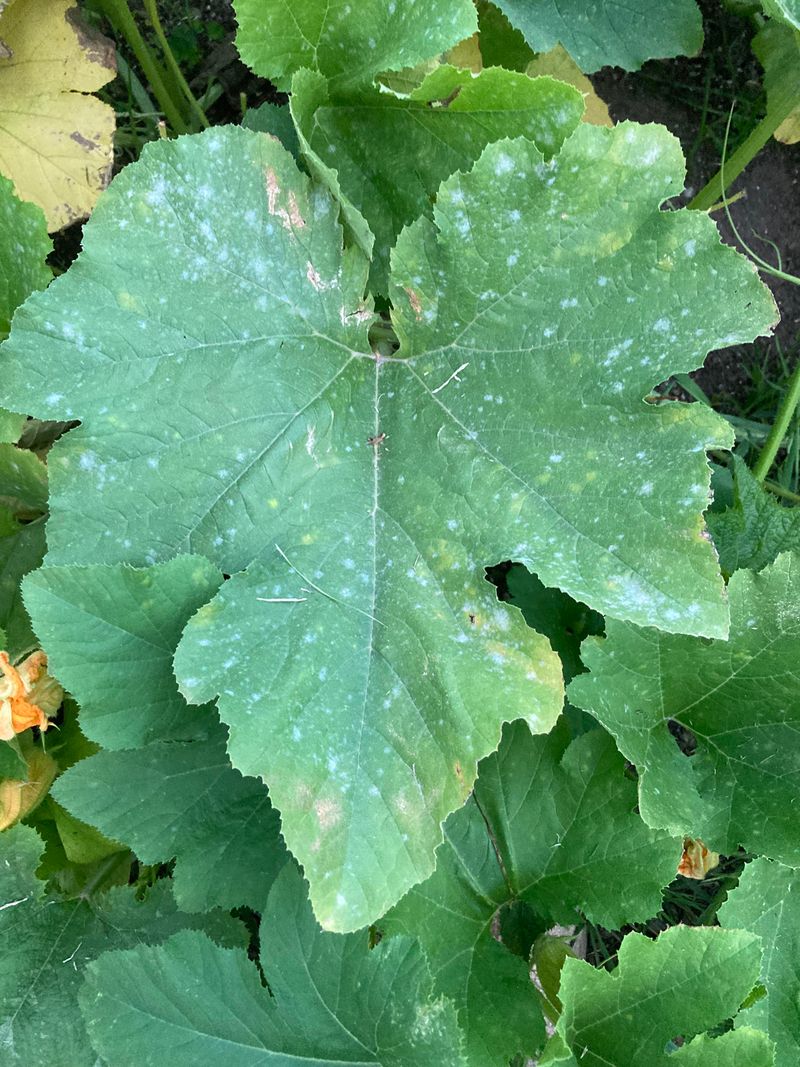
Powdery mildew on Oregon squash is not the end for your harvest. Acting quickly with the right steps can slow the spread and keep your plants producing through the end of the season.
Baking soda spray is one of the oldest and most accessible home remedies available. Mix one tablespoon of baking soda with a gallon of water and a few drops of dish soap, then spray the affected leaves thoroughly.
Neem oil is another option that works well when applied consistently. Spray it in the early morning so it dries before the heat of the day, and repeat every seven to ten days for best results.
Milk spray sounds strange, but research actually supports it. A mixture of 40 percent milk and 60 percent water, sprayed on leaves weekly, has been shown to reduce powdery mildew spread in multiple garden studies.
Removing infected leaves immediately works faster than any spray you’ll apply. Every infected leaf you remove is thousands of spores that will never reach another plant in your garden.
Watering at the base of the plant rather than overhead keeps leaf surfaces drier throughout the day. Drip irrigation or a soaker hose is far better than a sprinkler for mildew-prone squash.
Resistant squash varieties are worth considering for next season. Seed companies now offer several options bred specifically to hold up against powdery mildew pressure in high-humidity climates like the Pacific Northwest.
Slowing powdery mildew is achievable with consistent effort. Start these steps now, and your squash can still finish the season strong.