Why Regular Lawn Fertilizer Can Make A Florida Palm’s Nutrient Problems Worse
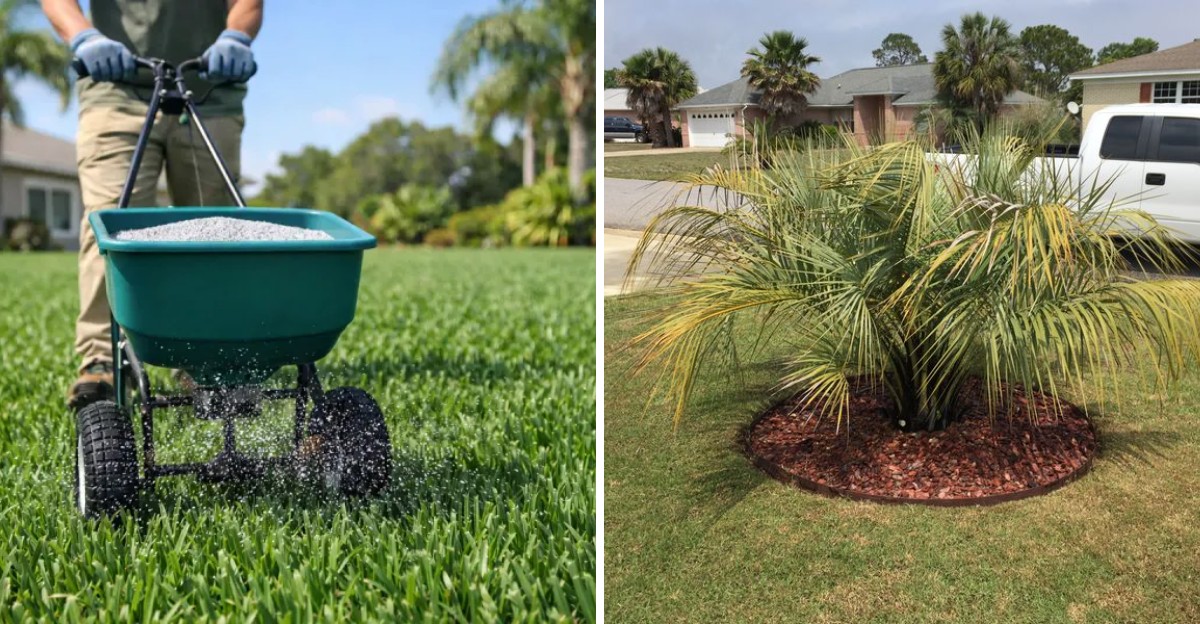
Yellow fronds, brown tips, a palm that looks tired. So you toss a scoop of lawn fertilizer around the base, and the tree gets worse.
That scoop felt like the obvious move. Grass gets hungry, so does the palm, and the same bag covers both.
Reasonable on paper. In Florida soil, it often backfires.
Palms run on a different menu than turf. The nutrients that make a lawn lush can crowd out the ones the tree actually needs, and the damage creeps in slowly, then all at once.
Plenty of well-meaning homeowners keep feeding the problem for years before anyone points it out.
Put the lawn bag back on the shelf. Your palm has been asking for something else entirely.
1. Palm Roots Reach 50 Feet Or More Into Your Lawn
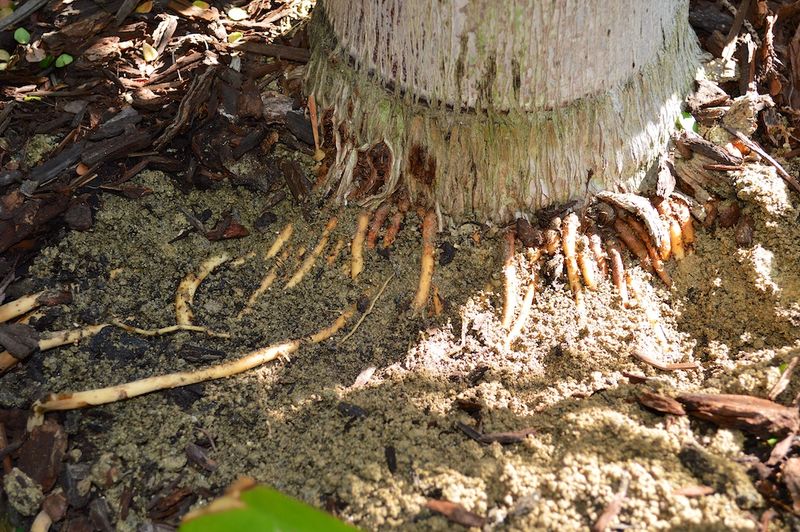
Imagine a garden hose snaking out from your palm in every direction. That picture is closer to the truth than most folks realize.
Palms skip the single deep taproot that oaks and pines use. Instead, they grow a thick web of skinny, stringy roots that spread sideways.
Most of that web sits in the top two to three feet of soil, right under your grass.
Here is the surprising part. A palm’s roots often stretch two to three times wider than the tree is tall.
Big species like the Canary Island date palm can send roots 50 feet outward in loose, sandy ground.
Florida sand makes this even easier. Loose soil lets roots wander far without much effort, so they travel wherever water and food show up.
So that patch of lawn by the mailbox may not belong to the grass alone. Your palm could be sharing it, sipping from the same spot your sprinkler soaks.
Try a quick experiment in your mind. Measure the palm’s height, then double or triple it.
Draw that circle around the trunk, and you have a rough map of its feeding zone.
Knowing this changes how you treat your whole yard. Every bag you spread inside that circle is, in a real sense, palm food too.
2. They Soak Up Whatever You Feed The Grass
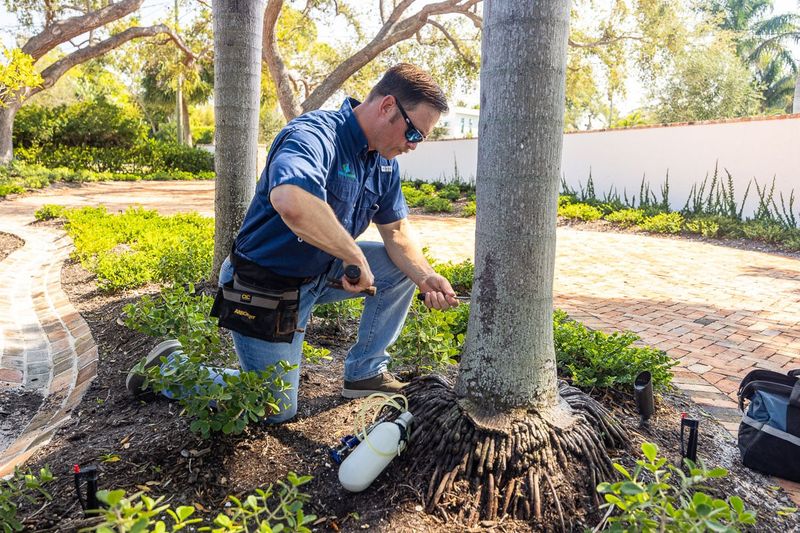
Ever share a pizza with a friend who only eats the toppings you hate? Palms are a bit like that dinner guest who grabs a slice no matter what.
Roots do not read labels. When granules dissolve after rain or watering, the nutrients slide into the soil, and any root nearby can take them in.
Grass roots and palm roots share the same shallow layer, so they drink from the same cup.
That means your lawn plan is also your palm plan, whether you meant it or not. A product built for grass sends a grass-shaped meal to your trees.
Grass and palms want very different diets. Turf loves a big nitrogen boost for that deep green color.
Palms need a steadier mix with plenty of potassium and magnesium.
Picture feeding a race horse and a parrot from one bucket. One of them is going to get shortchanged, and in our yards it is usually the palm.
Your Florida Garden Changes Every Week. Your Plan Should Too.
Gardening in Florida changes quickly throughout the season. Every Friday you’ll receive a simple weekly plan showing exactly what to plant, prune, fertilize, harvest, and protect so you never miss the right timing.
The good news is that you control the menu. Once you see the yard as one shared dining table, choosing what goes into the spreader gets much simpler.
Start by reading the bag before your next weekend chore. Those three or four numbers tell you exactly who you are really feeding.
3. Lawn Fertilizer Is Heavy On Nitrogen
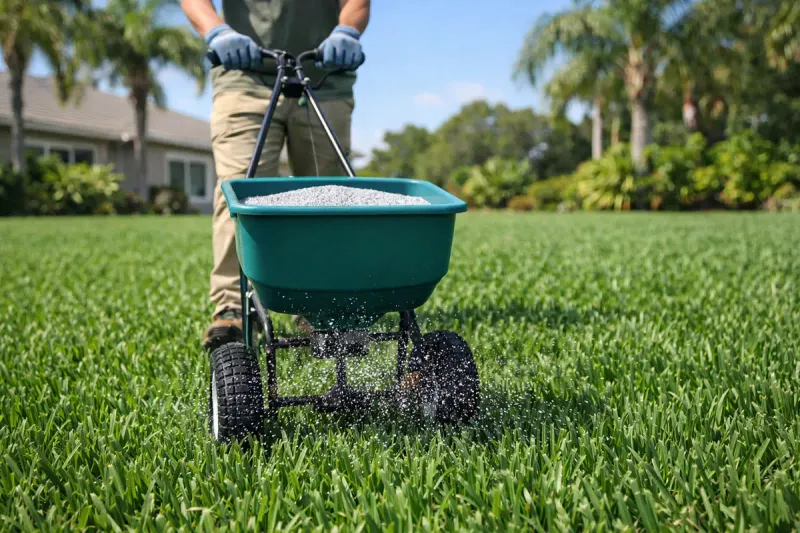
Flip over a typical bag of lawn food and look at the first big number. That number is nitrogen, and on turf products it usually wins the race by a mile.
Common blends read like 16-4-8 or 12-4-8. The three numbers stand for nitrogen, phosphorus, and potassium, in that order.
Some general products use balanced mixes like 10-10-10, but turf formulas lean hard toward the first one.
There is a good reason for that. Nitrogen is the gas pedal for leafy growth, and grass is basically all leaves.
Push the pedal, and your lawn turns thick and emerald in a few weeks.
Fun fact: nitrogen makes up about 78 percent of the air we breathe. Plants still cannot use it from the air, so they rely on what lands in the soil.
For a lawn, heavy nitrogen feels like a win. For a palm growing nearby, it is like getting a giant energy drink with no real meal attached.
A smart habit is to compare numbers before you buy. If the first number towers over the third, that product is built for blades of grass, not for fronds swaying above them.
Keep that in mind, because the next problem grows right out of this one.
4. Extra Nitrogen Pushes Growth Without The Potassium To Support It
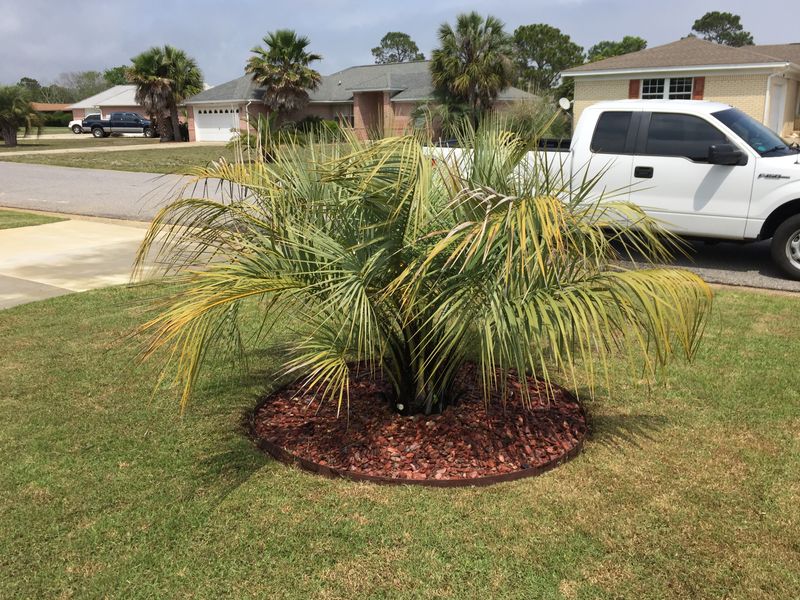
Think of building a taller house without adding more bricks. That is roughly what happens when a palm gulps down too much nitrogen.
Nitrogen tells the palm to grow, grow, grow. New fronds start pushing out quickly, and each one needs potassium to form properly.
If potassium is already low, the palm has to find it somewhere.
So the tree does something clever but costly. It pulls potassium out of its older, lower leaves and ships it up to the new growth.
The bottom fronds pay the price, turning spotty and frizzled.
It gets trickier. Some turf products do contain potassium, but often in a quick-release form that washes through sand fast.
The nitrogen keeps pushing, while the potassium has already slipped away.
The result is a palm that looks busy on top and tired underneath. Owners often think more fertilizer will help, which starts the whole cycle again.
Here is a helpful clue. If the newest fronds look fine but the oldest ones look rough, nutrient imbalance is a strong suspect.
Pests and disease are possible, yet this pattern points toward the dinner plate.
Easing off nitrogen near your palms gives them a chance to catch up. Balance matters far more than speed.
5. Potassium Deficiency Is The Most Common Palm Problem
Across the state and around the world, one nutrient shortage tops the list for palms. Potassium deficiency shows up more than any other feeding problem.
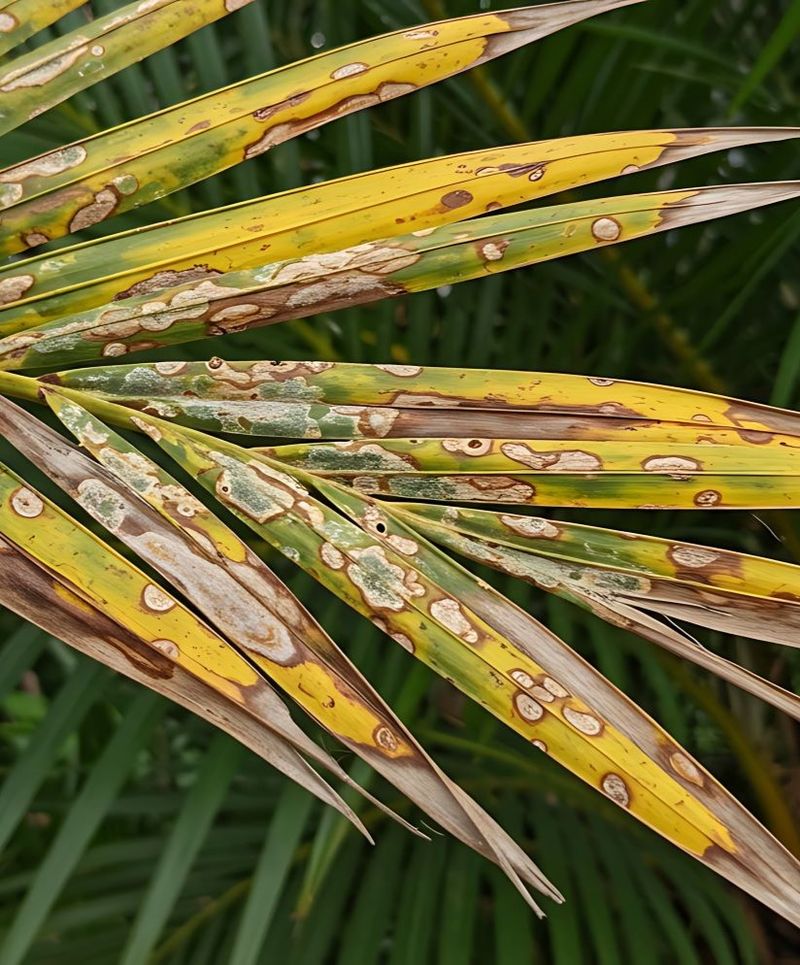
Spotting it is easier once you know the signs. Look at the oldest, lowest fronds first.
You may see yellow or orange spots that look a little see-through when sunlight hits them.
As things progress, leaflet tips turn brown and crispy. The fronds can look frizzled, almost like a bad hair day.
Some may droop or drop early.
In serious cases, the canopy shrinks to a few small, faded leaves. The trunk can even start to narrow near the top, a shape experts call pencil-pointing.
That narrowing cannot be reversed, which is why early action matters.
Why is Florida such a hot spot? Our sandy soil holds nutrients poorly, so potassium leaches away with heavy rain.
Add nitrogen-rich lawn feed, and the shortage grows worse.
One tip saves a lot of heartache. Do not trim off those spotted lower fronds too early.
The palm is still pulling potassium from them, and cutting them can speed up the problem.
Patience pays off here. Recovery takes months, since only new fronds come in healthy.
6. Most Lawn Fertilizers Lack Magnesium Too
Here is a little science gem. Every molecule of chlorophyll, the stuff that makes plants green, has one magnesium atom sitting right in its center.
No magnesium, no rich green color. That is why palms short on this mineral start to fade.
Most lawn products skip it entirely, leaving palms to fend for themselves.
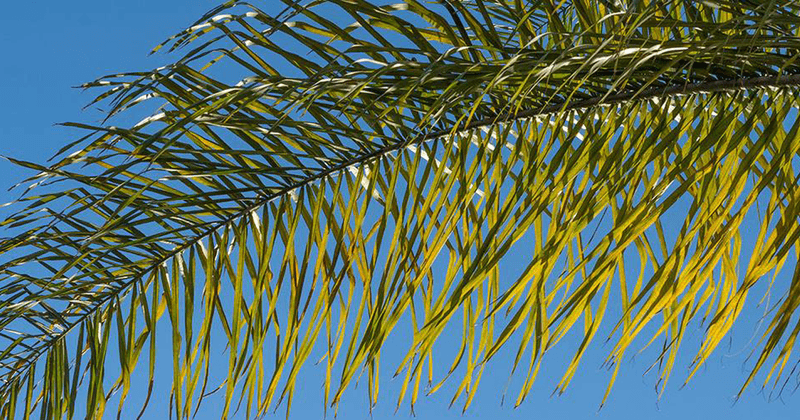
The signs show up on older fronds. You will see a wide band of light yellow along the outer edges, while the middle stays green.
From a distance, some fronds look like a tiny holiday tree pattern.
Florida sand plays its usual role here too. Rain washes magnesium down and out of reach.
Piling on nitrogen, potassium, or calcium can also crowd magnesium out, making the shortage worse.
The comforting news is that this problem rarely threatens a palm’s survival. Still, it can bring slower growth, smaller leaves, and a dull look that takes the shine off your yard.
Fixing it is straightforward. A fertilizer with slow-release magnesium, often from a mineral called kieserite, slowly brings color back to new growth.
Keep expectations realistic, though. Yellow fronds will not turn green again.
Instead, you will see each fresh frond come in a little brighter, like a slow and steady makeover.
7. Look For An 8-2-12-4Mg Palm Fertilizer
Ready for the shopping list? The University of Florida’s plant experts at UF/IFAS have a favorite recipe, and it reads 8-2-12-4Mg.
Notice how the third number, potassium, is higher than the first. That flip is the whole point.
Nitrogen stays modest, while potassium and magnesium get top billing.
Labels can still fool you, so check the fine print. You want nitrogen, potassium, magnesium, and boron in 100 percent slow-release or controlled-release form.
In Florida sand, fast-release nutrients can disappear after one good storm.
Look for micronutrients too, such as manganese and iron, ideally listed as sulfates. Sulfate forms dissolve in a way palms can use well.
Kieserite is a great magnesium source if you see it named.
A quick store tip: palm products can look similar on the shelf. Snap a photo of the 8-2-12-4Mg ratio on your phone so you can compare bags fast.
Timing is simple. Many state experts suggest feeding about three times a year during the growing season, but follow your local rules.
Some counties limit fertilizing during the rainy summer months.
Spend a few extra minutes reading, and your palms will thank you. Good food choices show up as fuller, greener fronds over time.
8. The Palm Formula Works On St. Augustinegrass Too
Good news for anyone who hates juggling three bags of fertilizer. One product can handle both your palms and your lawn.
Research trials found that St. Augustinegrass fed with the 8-2-12-4Mg palm blend looked about as good as grass fed with regular turf products. Neighbors would have a hard time telling the difference.
That is a big deal for busy weekends. Instead of mapping out safe zones and switching spreaders, you just fill up once and go.
The whole yard gets the same balanced meal.
It also takes the guesswork away from helpers. If a teen or a lawn crew handles the chores, there is no risk of the wrong bag landing near your trees.
Your grass may green up a touch slower than with a nitrogen blast. Think of it like a steady jog instead of a sprint.
The color still arrives, and it tends to hold longer.
Many landscape plants enjoy this mix as well, including shrubs and flowering beds. Check plant tags for anything unusual, but most Florida yards handle it well.
Saving money is a nice bonus. Buying one product in a bigger bag often costs less than stocking separate fertilizers for every corner.
9. Keep Lawn Fertilizer At Least 50 Feet From Palms

Stick with your regular lawn food if you must, but give your palms some breathing room. Experts suggest a buffer of about 50 feet.
Why so far? Studies have shown that high-nitrogen turf products spread 30 feet away still triggered potassium problems in palms.
Those wandering roots reach farther than most people expect.
Inside that 50-foot circle, use palm fertilizer instead. Spread it evenly under the canopy and across the lawn nearby.
Keep granules at least 18 inches away from the trunk.
Skip the old habit of piling food in a ring around the base. Banding like that concentrates salts and can harm tender roots.
An even scatter works far better.
Mulch needs some space too. Pull it back a few inches from the trunk so moisture does not sit against the bark.
That also lets granules reach the soil cleanly.
A handy trick is to pace it out. Most adults cover about two and a half feet per step, so roughly 20 steps from the trunk marks your zone.
Flag it with a small stake if that helps.
With a little planning, grass and palms can share the yard happily. Your trees get their proper meal, and your lawn stays lush.