Why Resurrection Fern Suddenly Turns Green on Florida Live Oaks After Rain
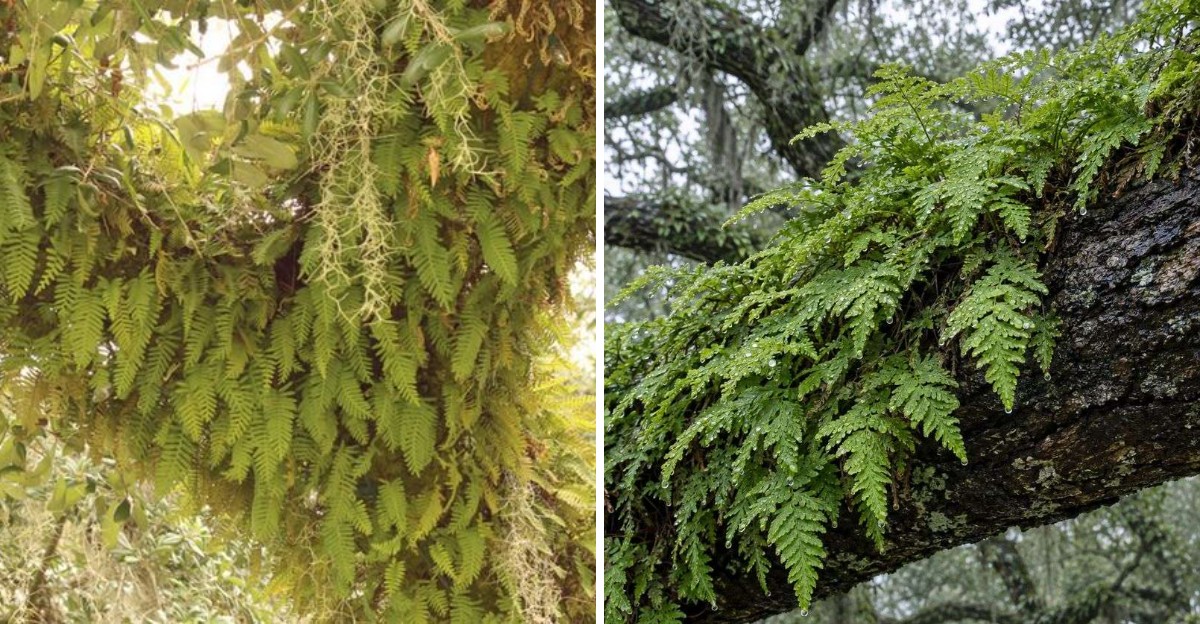
A tiny fern can lose up to 97 percent of its water and still bounce back after one good rain. Most plants run into serious trouble after losing only about 10 percent.
I like to walk under the big oaks after a summer storm in Florida. The branches look fuzzy and brown in the morning, then lush and bright by afternoon. It feels like someone repainted the whole tree while I was eating lunch.
This little green shag carpet is no parasite. It takes nothing from the tree except a place to sit. Personally, I think that makes the show even better.
So what flips the switch so fast? Why does a plant that looks finished for weeks wake up like it just had a cup of cocoa and a nap? You’re in for a big surprise once you see what goes on inside those curled fronds.
Those Crispy Brown Fronds On Oak Branches Are Only Napping
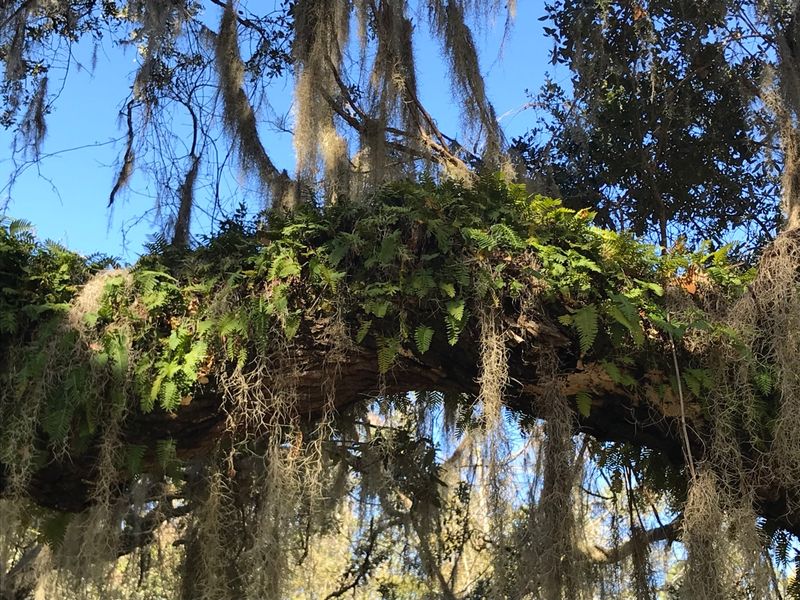
Grab a pair of binoculars and look up at a live oak during a dry week. Those shriveled, gray-brown clumps along the limbs look like leftovers from last year.
Many folks assume the tree has a problem.
Nothing is wrong at all. The resurrection fern, known to scientists as Pleopeltis polypodioides, simply goes dormant when water runs short.
It curls its fronds inward so less surface faces the sun and drying wind.
That curled shape works a lot like folding up a beach umbrella. The underside of each frond is covered in tiny silvery scales, and when the leaf rolls up, those scales face outward.
They act like a shield that slows water loss.
The fern can stay in this resting state for weeks or even months. Some reports suggest far longer periods, though those claims are hard to test and should be taken with a grain of salt.
So if you see brown clumps on your oaks, leave them alone. Pulling them off removes a native plant that will turn emerald again with the next shower.
Patience is the only tool you need here.
Rainwater Soaks Straight Into The Fern Leaves, Not The Roots
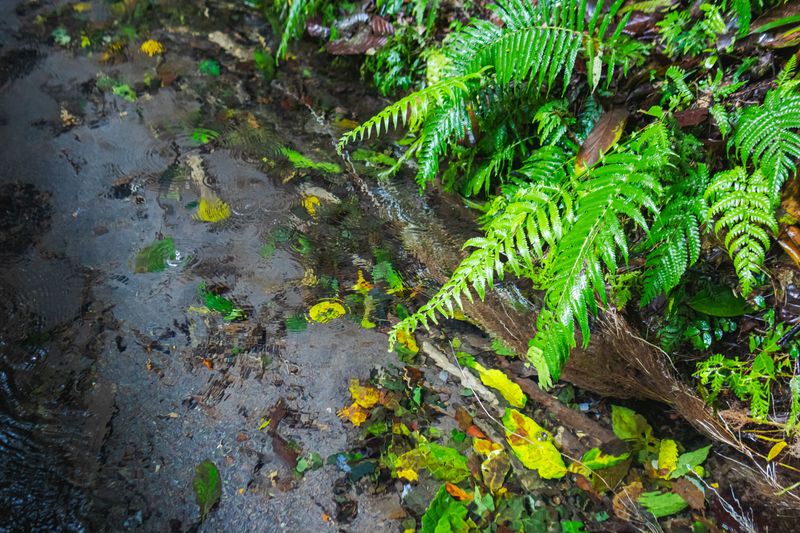
Here comes the real magic trick. When rain hits the oak, the fern drinks mostly through its fronds instead of its roots.
Scientists call this foliar water uptake.
The roots on this fern are small and mostly serve as anchors. They hold the plant onto the rough bark like little grappling hooks.
Water collection happens up top.
Those silvery scales on the leaf underside play a starring role. Researchers have found special cells in the scales that guide water toward the leaf surface, almost like tiny funnels.
Water moves in fast, and the fronds start to swell and unroll.
You can actually watch the change if you are patient. Within an hour or so, many fronds begin loosening their curl.
Over the next day or two, the color deepens to a rich green.
I once sprinkled a dry clump with a spray bottle just to test it. By dinner the patch looked noticeably greener and flatter.
You can try the same experiment on a fallen twig with fern attached, and kids love it.
Just remember, the fern does this all on its own outdoors. A summer thunderstorm does the job better than any hose.
Sugar And Special Proteins Keep Fern Cells Safe While Dry
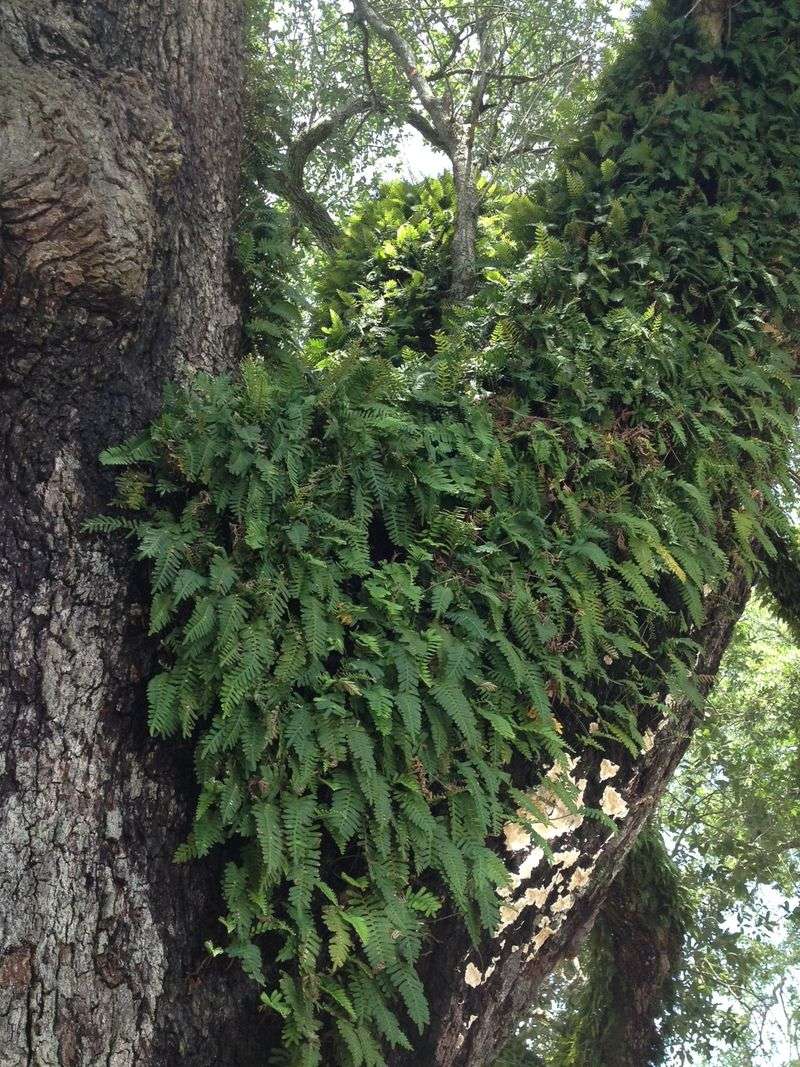
Ever wonder why a dried-out houseplant rarely recovers, but this fern does? The answer lives inside its cells.
Researchers have spent years studying it, and NASA even sent resurrection fern on a Space Shuttle mission in 1997 to watch it revive in low gravity.
As the fern dries, it builds up protective molecules. Sugars such as trehalose and compounds like proline help hold cell parts in shape.
Proteins called dehydrins also guard membranes from cracking.
Think of it like packing fragile dishes in bubble wrap before a move. Everything stays in place, so nothing shatters when the water leaves.
When moisture returns, the cell can unpack and get back to work.
The fern also turns up its antioxidant system while dry. That helps limit the chemical wear and tear that drought usually causes in plant tissue.
Because the parts stay protected, the plant does not need to rebuild from scratch. That is a big reason the green color returns so quickly.
Studies show photosynthesis often recovers within roughly 12 to 48 hours after rehydration.
Pretty clever for something the size of your thumb, right?
Live Oak Bark Makes A Perfect Perch For This Air Plant
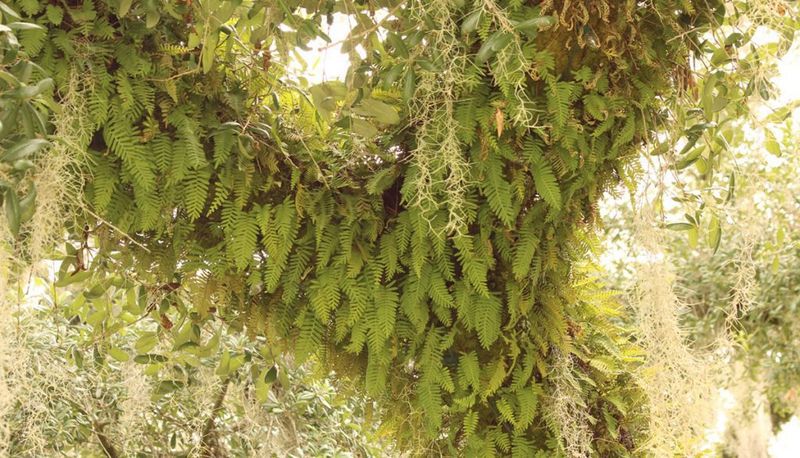
Southern live oaks have those wide, nearly horizontal limbs that practically beg for company. Their rough, furrowed bark catches rain, dust, and bits of leaf litter.
That makes a cozy bed for epiphytes.
An epiphyte is a plant that grows on another plant without stealing food from it. The resurrection fern belongs in that group, along with Spanish moss and many native bromeliads.
UF/IFAS experts note these plants do not harm healthy trees.
Water running down the bark carries small amounts of nutrients. The fern grabs what it needs from that runoff and from tiny organic bits trapped in crevices.
It is a bit like living on rooftop rainwater.
You may also spot the fern on other trees, such as southern magnolia, elms, and sometimes on old rooftops or rocks. Live oaks stand out because their long, sturdy limbs hold so much surface area.
In my experience, the oldest oaks carry the thickest fern blankets. Older bark has deeper grooves, and that gives spores more spots to settle.
If you have a mature oak, consider it a free native garden hanging overhead.
Summer Storms Bring The Greenest Fern Show Across The State
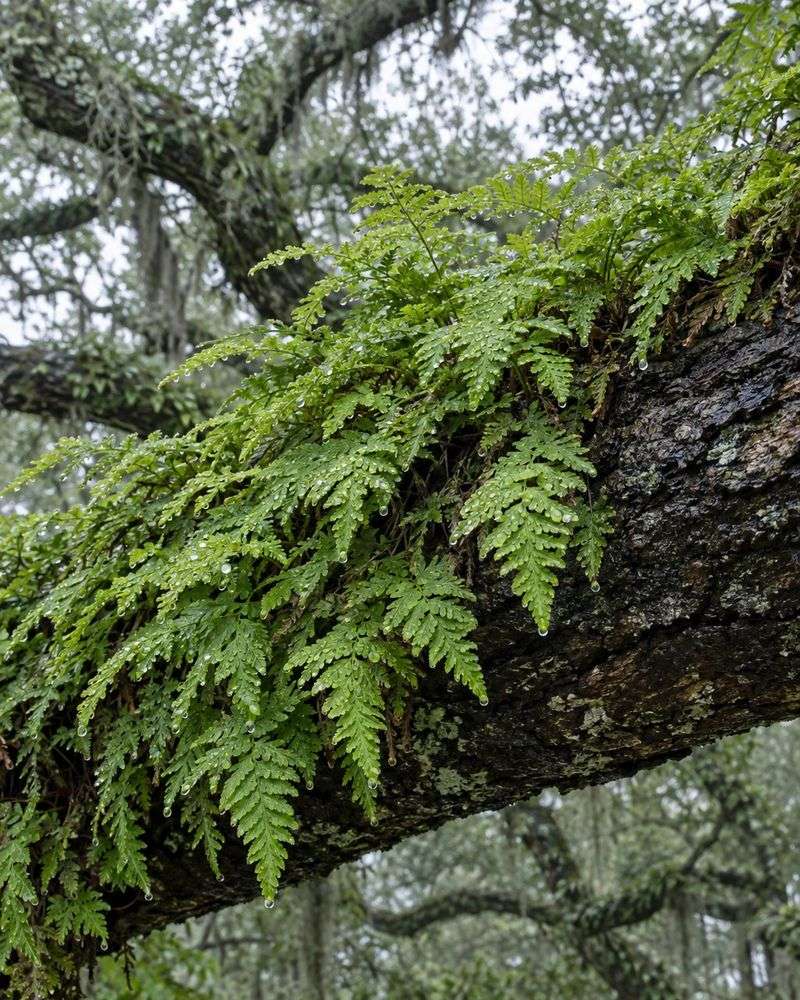
Timing matters a lot with this little fern. Across most of Florida, the rainy season runs roughly from late May through September.
Afternoon thunderstorms roll in often, so the fern stays green for long stretches.
Late fall through spring is usually drier, especially in central and south Florida. During those months you will likely see the fern flip between brown and green several times.
One cold front with a light shower can wake it up for a few days.
North Florida and the Panhandle get more winter rain from passing fronts. So the fern there may green up more often in cooler months than it does near Naples or Miami.
Fog and heavy dew can help a little too. Still, a good soaking rain gives the most dramatic change.
I keep a mental calendar of this. After the first big storm in late spring, I make a point to drive under the oak canopy roads.
Those tunnels of green feel brand new.
If you enjoy photography, shoot the same branch before and after a storm. The side-by-side pictures make a fun record to share with friends.
Please Skip Scraping Ferns Off Your Oak Tree
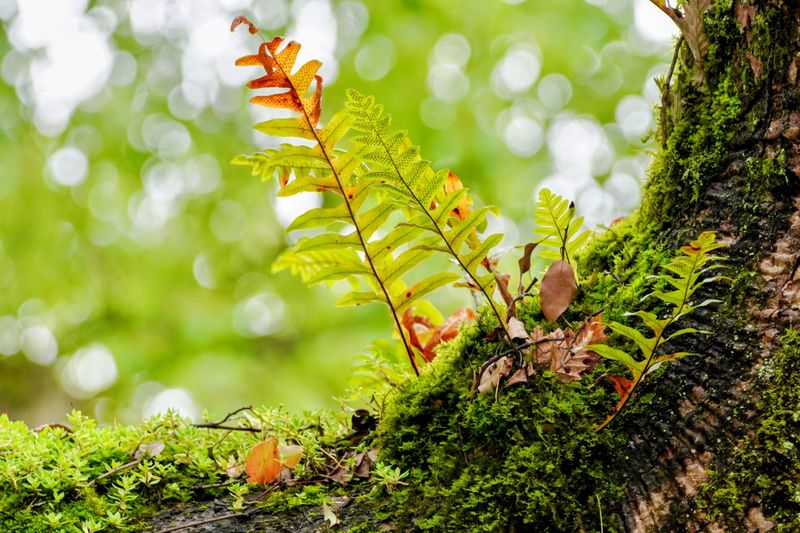
Some homeowners grab a ladder and a scraper the minute they see brown clumps on a limb. I get the urge to tidy up.
But this is one chore you can cross off your list.
The resurrection fern is a native plant, and it does not feed on your tree. It will not cause branches to weaken or leaves to drop.
Florida extension specialists consistently say removing it offers no benefit to the oak.
Scraping can actually cause harm. Rough tools can wound bark, and wounds open doors for decay and insects.
Climbing an oak to clean it also carries obvious safety risks.
If an oak looks unhealthy, look for other clues instead. Thinning canopy, large lifeless-looking limbs, mushrooms at the base, or oozing cracks deserve attention.
A certified arborist can check those problems properly.
Meanwhile, the fern quietly helps the yard. It shelters tiny insects and spiders, which feed birds like warblers and wrens.
Its spongy mats also hold a bit of moisture during dry spells.
So let it be. Your tree gets a green coat, and you get your Saturday back.
Bring A Bit Of Resurrection Fern Magic To Your Own Yard
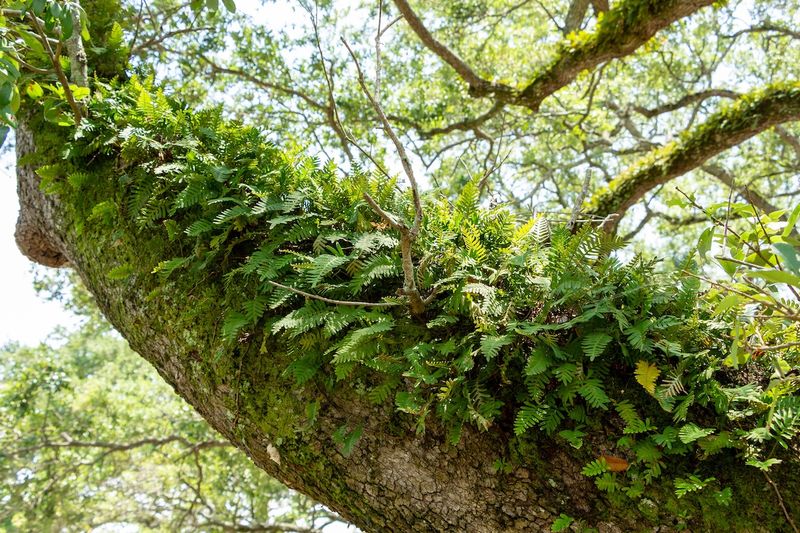
Want this living weather gauge closer to your porch? You can encourage it without much fuss.
Start with patience, because the fern spreads slowly by tiny spores.
One easy method uses fallen material. After storms, look for small twigs or bark chips with fern still attached.
Tie them gently to a rough-barked tree using natural twine or soft garden tape.
Choose a branch with partial shade and good airflow. Mist the patch during dry spells while it settles in, though rain will do most of the work.
Avoid glue or nails, since both can damage the host tree.
Native trees such as live oak, laurel oak, and southern magnolia make solid hosts. Please collect only fallen pieces, and never take plants from state parks or preserves.
Permission matters on private land too.
You can also grow it on a slab of cork bark or driftwood. Hang the mount outdoors where it gets rain and some shade.
Once established, it becomes a tiny forecast you can see. Brown means you might need to water the garden.
Green means the sky already handled it.