The Mulch Depth Mistake That’s Suffocating Florida Root Systems Right Now
Tree roots breathe, and most of the fine ones that do the work live in the top foot of soil. Bury them too deep, and they start gasping for air out of sight.
I used to pile it on thick every spring, thinking extra cover meant extra love for my Florida yard. My oaks and hibiscus did not agree with me.
Here’s what gets me. The damage hides for years, showing up as thin leaves, small growth, or odd bark problems that look like a pest or a disease. Plenty of us blame the weather, the fertilizer, or the lawn guy first.
I get it, because a fresh, tall mound around a trunk looks tidy and cared for. But what if the neatest bed on your block is quietly starving your trees of oxygen, and the fix costs nothing but a rake and ten minutes?
That Tidy Mulch Mound Around Your Tree Trunk Has a Hidden Cost
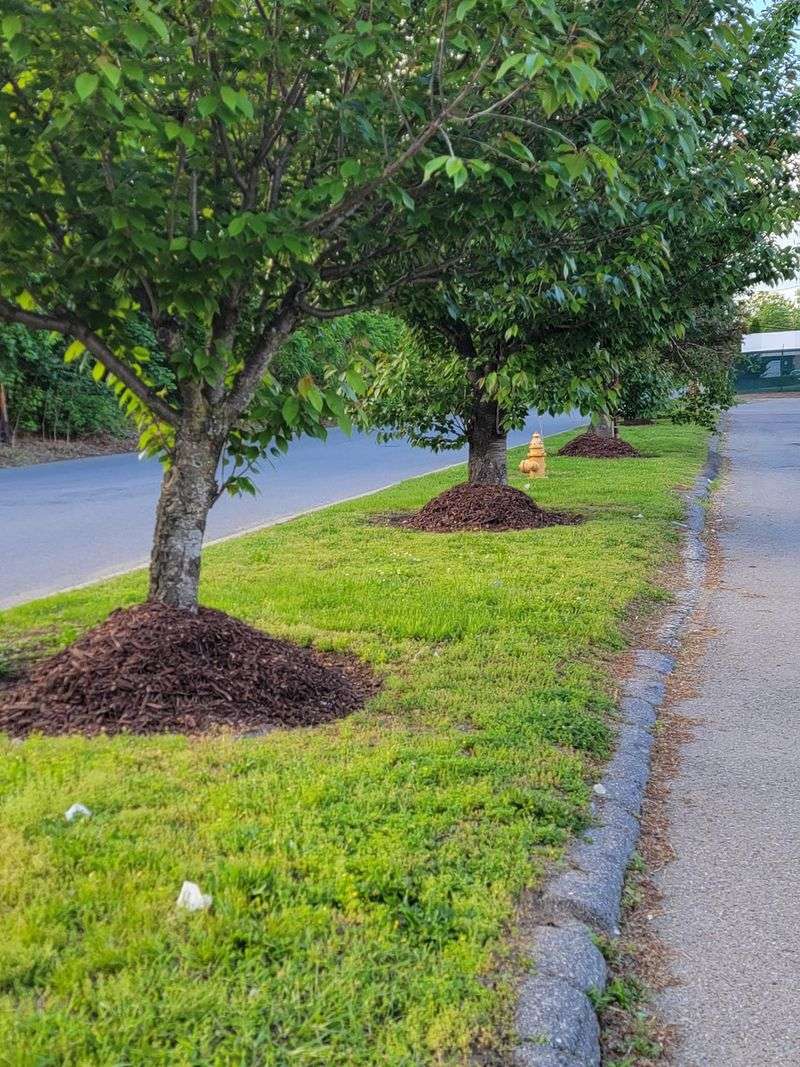
Drive through almost any Florida neighborhood and you will spot them. Tall cones of mulch hug the bases of palms, oaks, and crape myrtles like little brown volcanoes.
Arborists even have a name for it, the mulch volcano. University of Florida IFAS experts point to it as one of the most common landscape mistakes in the state. It looks neat, it feels generous, and it quietly works against the tree it surrounds.
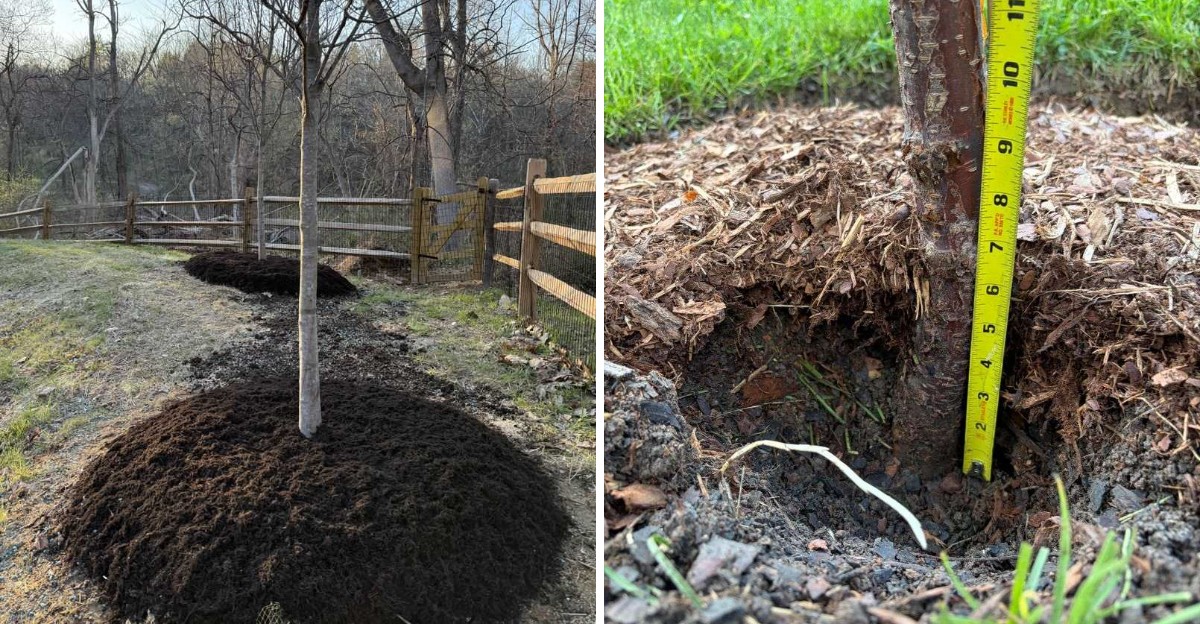
The trouble comes from two things at once. The pile is far too deep, and it sits right against the bark. Tree trunks are built to handle open air, not a damp layer pressed against them day after day.
Once that mound settles in, roots below can struggle to get oxygen and water. The bark at the base can stay wet long enough to soften and invite trouble. None of this happens overnight, which is exactly why so many people keep doing it.
I walked past my own trees for years without a second thought. Then a local extension agent pointed at my perfect cone and just shook her head. That moment changed how I look at every tree in town, and it might change yours too.
Pull Mulch Back and Let the Root Flare Show
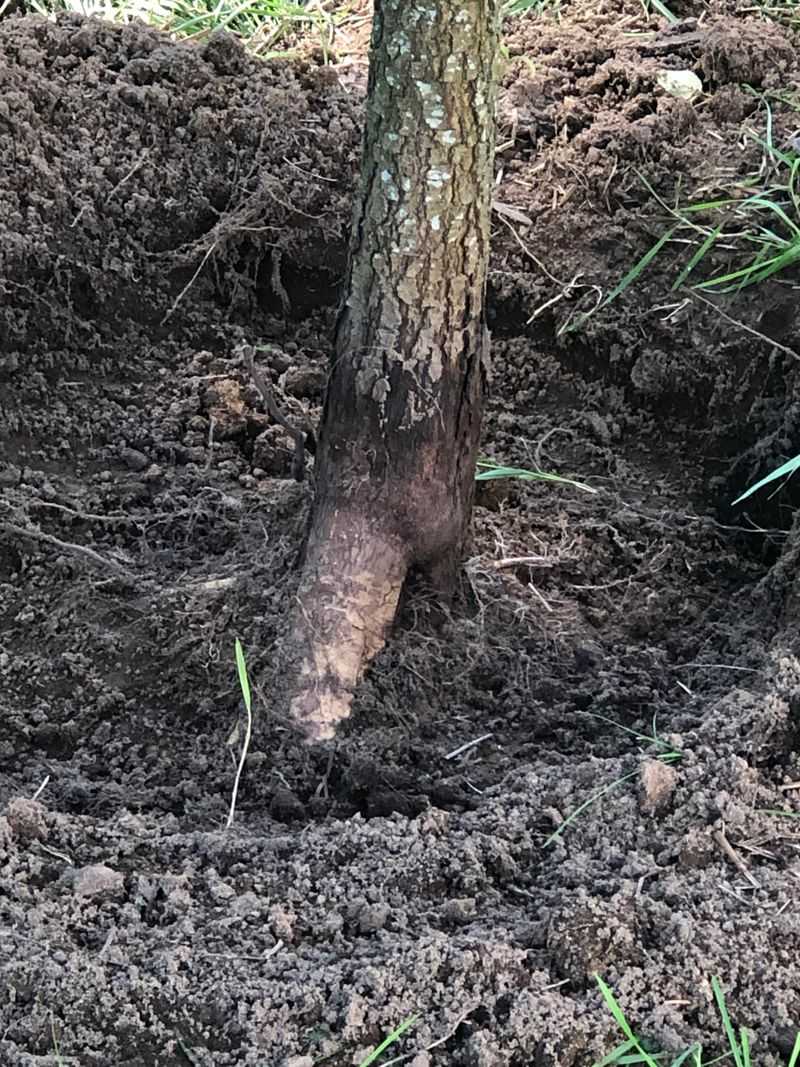
Think of it as a donut, not a volcano. That simple picture fixes most mulching problems in about ten minutes.
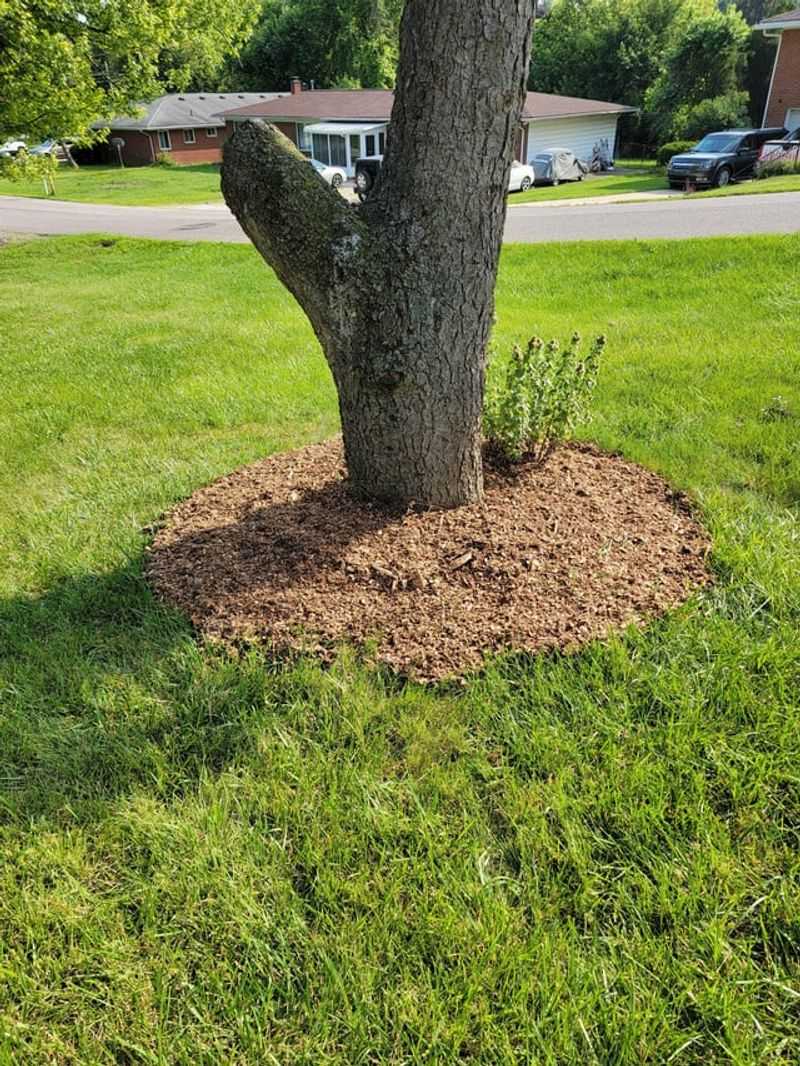
Start by finding the root flare, the spot where the trunk widens as it meets the ground. Rake mulch away until that flare is visible again. Then spread a flat, even layer outward, leaving a gap of roughly 3 to 6 inches from the trunk on smaller trees and shrubs.
Bigger, established trees benefit from even more breathing room. Some UF/IFAS guidance suggests keeping mulch a foot or more from the base of large trees. That bare circle keeps bark dry and gives critters fewer cozy hiding spots right against the trunk.
Spread the ring wide rather than tall. For young trees, aim for at least a 3-foot radius, and extending toward the drip line helps the feeder roots that do most of the drinking. Those roots stretch far beyond the trunk, often well past the canopy edge.
Fair warning, the first time you do this, it may look a little bare. Give it a week. You will start to like the clean look of a trunk that actually meets the soil the way nature intended.
Buried Tree Roots Need Oxygen More Than You Realize
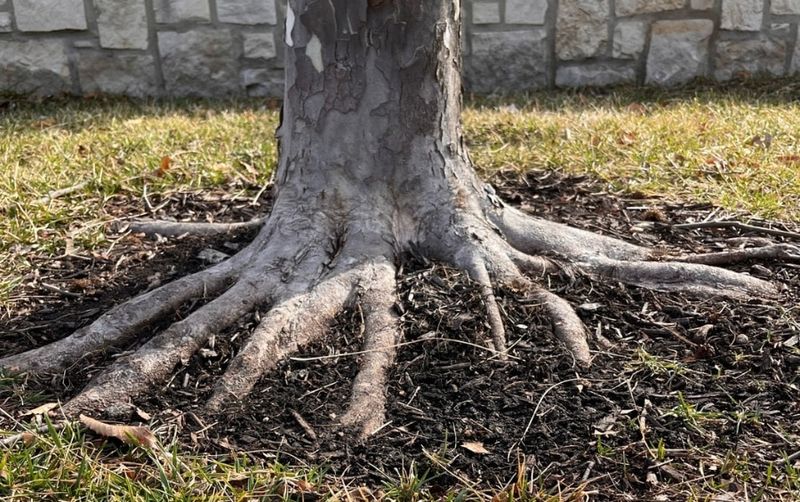
Roots breathe, plain and simple. Living root cells take in oxygen and release carbon dioxide, much like we do, only underground and out of sight.
Most of a tree’s fine absorbing roots grow in the top 12 inches of soil, where air moves freely. Pile on a deep blanket of mulch, and that air exchange slows down. Research on tree roots shows growth tends to drop as soil oxygen falls, and very low levels can stop new root growth in many species.
Florida adds a twist. Many of our soils are sandy and drain fast, but low spots, clay pockets, and heavy summer rains can leave the ground waterlogged. Deep mulch on top of wet soil makes the oxygen squeeze even tighter.
Struggling roots mean struggling trees. Fewer healthy roots soak up less water and fewer nutrients, so the canopy feels it later. That lag time is why the real cause gets missed so often.
I like to remind myself that a tree is mostly invisible. What we see up top depends on a busy, breathing network below. Keep that layer light, and you give that network room to work.
Soggy Bark and Circling Roots Hide Under Deep Mulch Piles
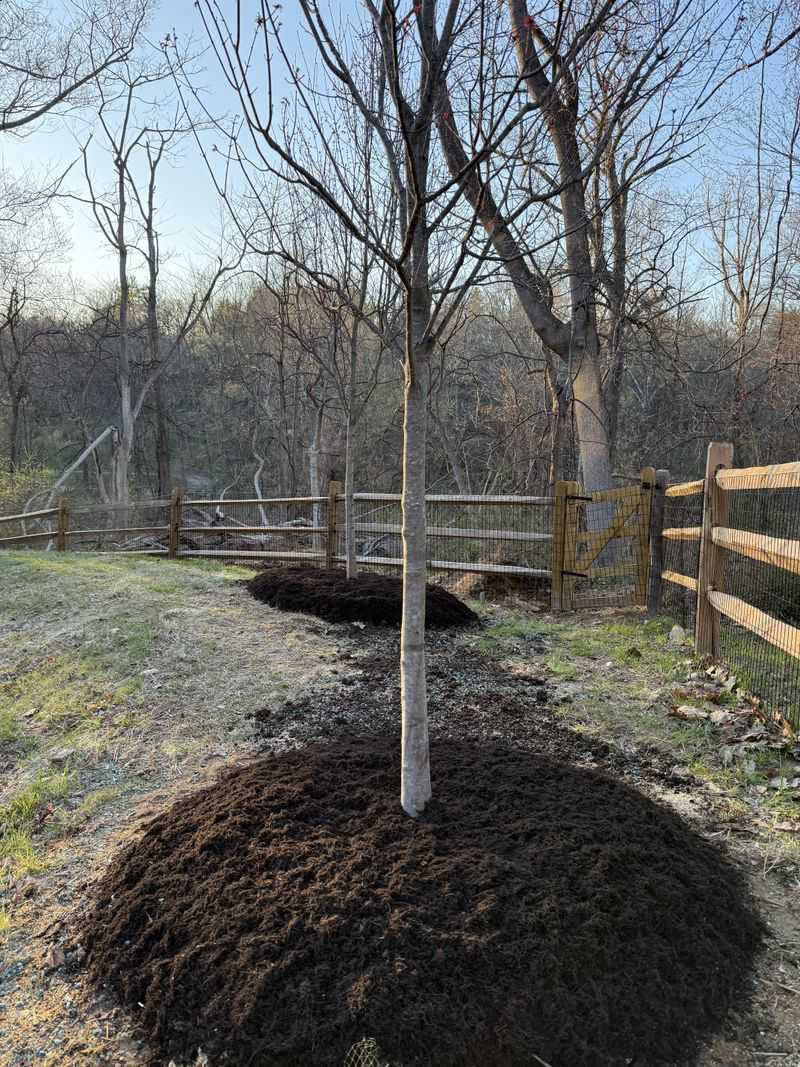
Pull back a mulch volcano that’s been sitting for a few years, and you might find a surprise. Damp, darkened bark, and sometimes small roots wrapped around the trunk like rubber bands.
Constant moisture against the bark gives fungi and bacteria a perfect home. In humid Florida, problems like collar rot and other trunk decay can get a head start when bark rarely dries out. Weakened bark also becomes an easier entry point for insects.
Roots behave oddly in deep mulch, too. Some grow upward into that moist, loose layer instead of reaching outward into the soil. Over time, roots that circle the trunk can tighten as both grow, squeezing the vessels that move water and sugars.
These girdling roots don’t always come from mulch alone. Pot-bound nursery stock and planting too deep cause them as well, so it pays to check carefully at planting time.
Okay, small confession. The first time I found one on my magnolia, I felt a little sick. A certified arborist removed it safely, and the tree perked up within a couple of seasons. If you spot a thick circling root, calling a pro is a smart move.
Yellow Leaves and a Thinning Canopy Could Point to the Mulch
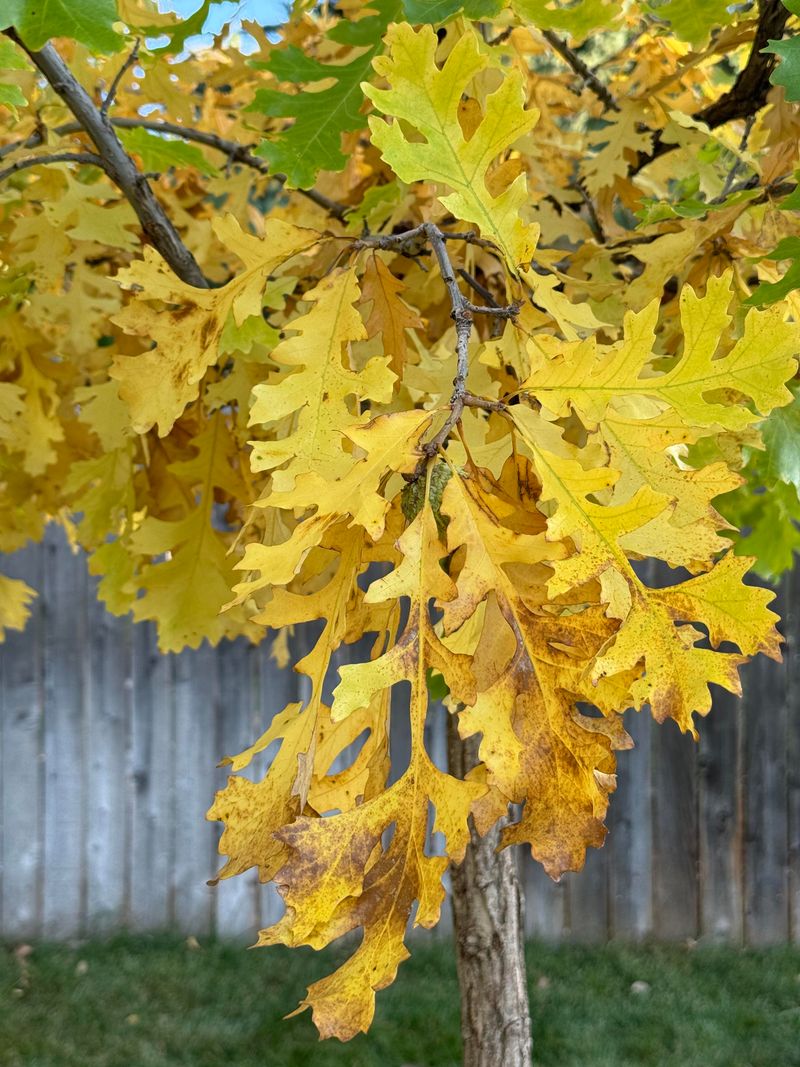
Symptoms from over-mulching love to pretend they are something else. Pale or yellow leaves, smaller-than-normal foliage, and short twig growth can all look like a nutrient issue.
Over time, branch tips may decline and the canopy can thin out. Some trees drop leaves early or put out weak, scraggly growth. Because these signs creep in slowly, they often show up years after the mulch was first piled high.
Plenty of things cause the same symptoms, including drought, poor drainage, nematodes, root damage from construction, and plain old nutrient deficiency. So don’t blame mulch automatically. Rule it in or out with a quick look at the base.
The easiest clue is that missing root flare. If your tree goes straight into the ground like a telephone pole, something is likely buried. Gently scrape back the mulch and see what’s hiding underneath.
When the signs stick around after you fix the depth, reach out to your local UF/IFAS Extension office. Many counties offer plant clinics where trained volunteers can help sort out what’s really going on. It’s a free resource that too many gardeners overlook.
Two to Three Inches of Mulch Is the Sweet Spot for Florida Beds
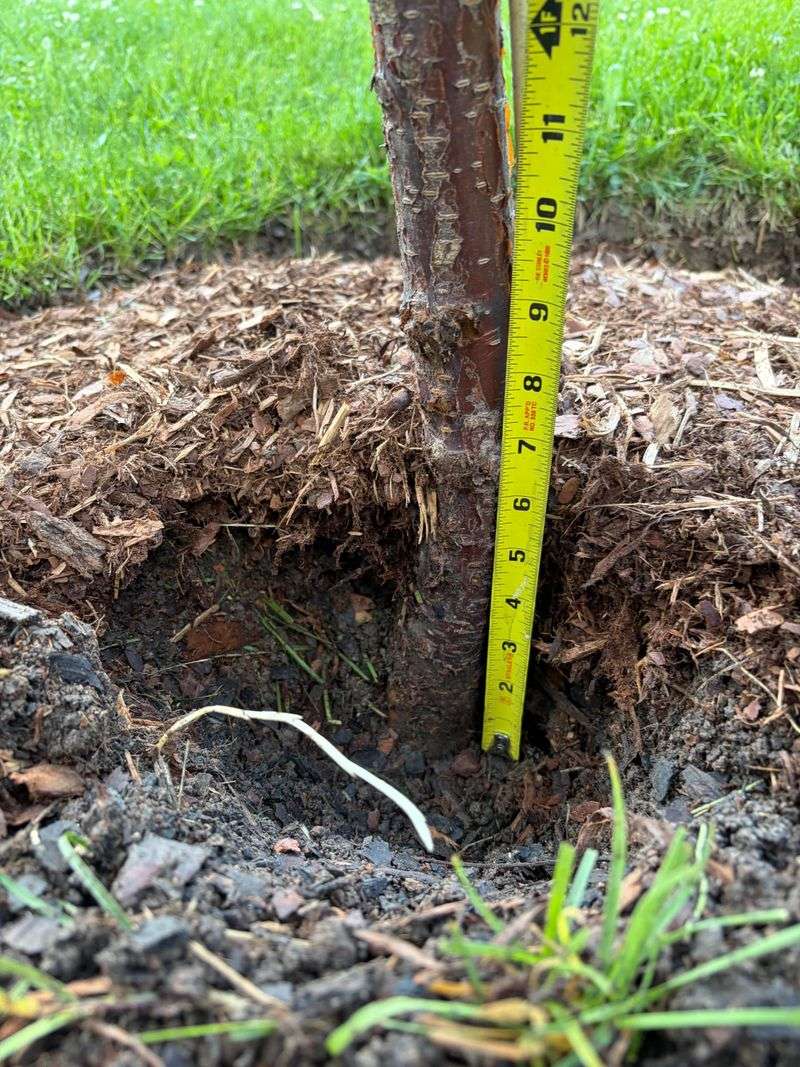
Grab a ruler, because the magic number is smaller than most people expect. UF/IFAS recommends about 2 to 3 inches of mulch for most landscape beds once it settles.
That shallow layer still does every job you want. It shades the soil, slows evaporation, smothers many weed seeds, and keeps root temperatures steadier during those blazing summer afternoons. Going past 3 or 4 inches rarely adds benefits and starts adding problems.
Thick layers can shed light rain before it reaches the soil, or they can hold so much water that the ground stays soggy. Either way, roots end up stressed. Fine-textured mulches can also mat down into a crust that sheds water like a tarp.
Here’s a quick test I use in my own yard. Push a finger straight down through the mulch, and if you hit soil around your second knuckle, you are in good shape. If your whole finger disappears, it’s time to rake some out.
Florida heat and humidity break mulch down fast. That means a light top-up each year often beats dumping fresh bags on top of last year’s layer. Check depth first, then add only what you need.
Pine Straw, Pine Bark, and Leaves Make Smart Florida Mulch Picks
Walk into any garden center and the mulch aisle can feel endless. Picking the right one matters almost as much as spreading it correctly.
UF/IFAS lists plenty of solid options. Pine straw, pine bark, shredded leaves, eucalyptus, melaleuca, mixed hardwood, and free utility mulch from tree crews all work well. Many of these come from byproducts or recycled material, which is a nice bonus.
Cypress mulch is one extension experts suggest skipping. Concerns about harvesting wetland cypress trees for mulch have led UF/IFAS to recommend other choices.
Fun fact, melaleuca mulch comes from an invasive tree being removed from the Everglades. Using it puts that cleanup material to good work instead of letting it go to waste.
Texture affects depth, too. Light, fluffy pine straw can go on a bit thicker because it settles and lets air through. Fine, shredded mulches pack down tight, so keep those on the thinner side.
Fallen leaves from your own yard might be the best deal of all. They’re free, they break down into rich organic matter, and they feed the soil the way a forest floor does.
Fix Your Mulch Beds Now and Keep a Gap Near the House
Grab a rake, a ruler, and a cool drink of water. A single afternoon can undo years of well-meant mulch mistakes.
Start at your biggest trees and work outward. Uncover each root flare, spread the extra mulch into a wide flat ring, and check the depth as you go. Leftover mulch can fill thin spots elsewhere instead of going to waste.
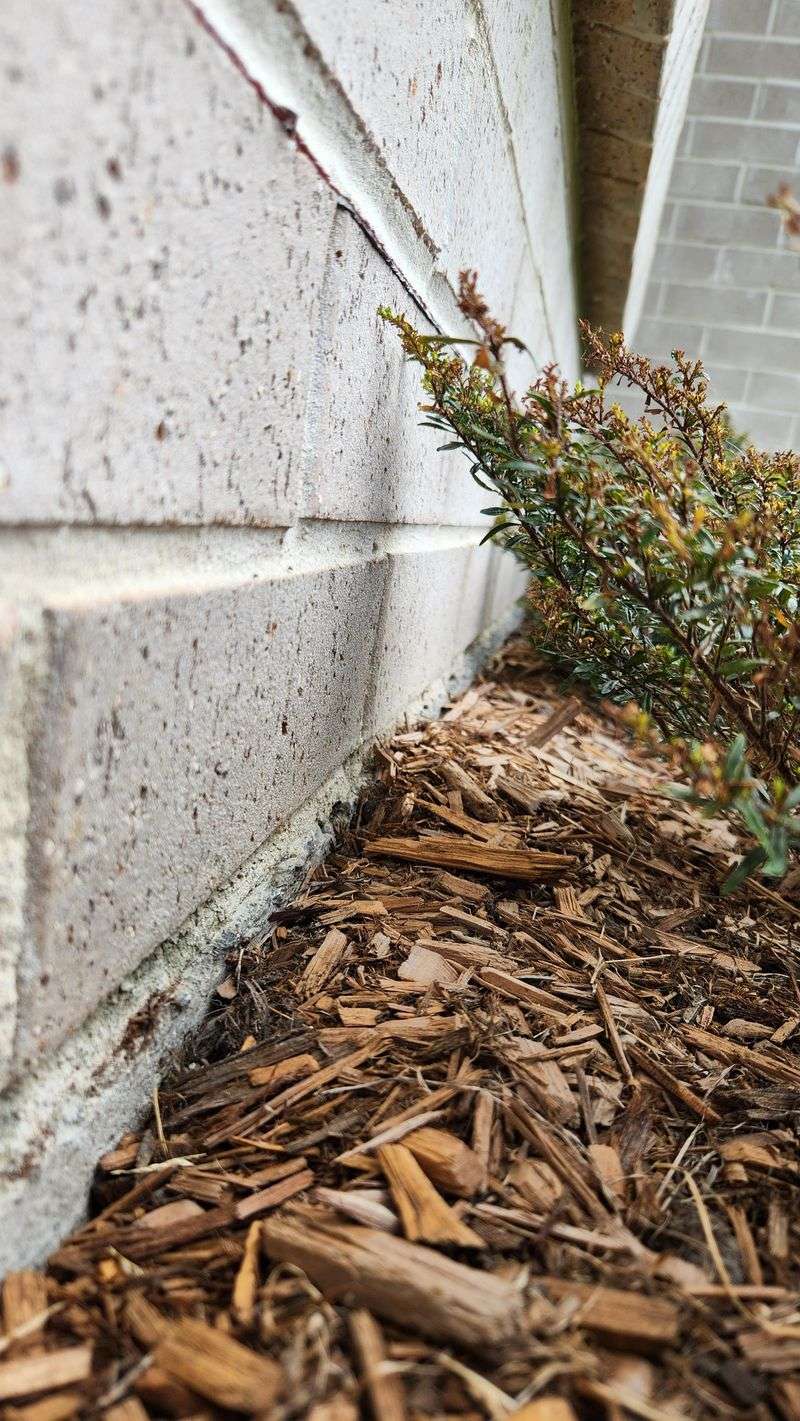
Don’t forget the house. UF/IFAS and pest experts suggest leaving about a 6-inch strip of bare ground between mulch and your foundation. Mulch doesn’t magically attract termites, but a constantly damp layer touching the wall can make things comfier for them and hide their activity.
Cooler months are a great window in most of the state. Fall and winter bring milder temperatures and less storm stress, and roots in much of Florida keep growing quietly through the season. South Florida gardeners can tackle this nearly any time of year.
Make it a yearly habit. Before adding any new mulch, measure what’s already there, since much of last year’s layer may still be sitting on top. Less really can be more, and your trees will show it with healthier growth for years.