These Are The Oregon Native Plants That Survive Wildfire And Come Back Stronger
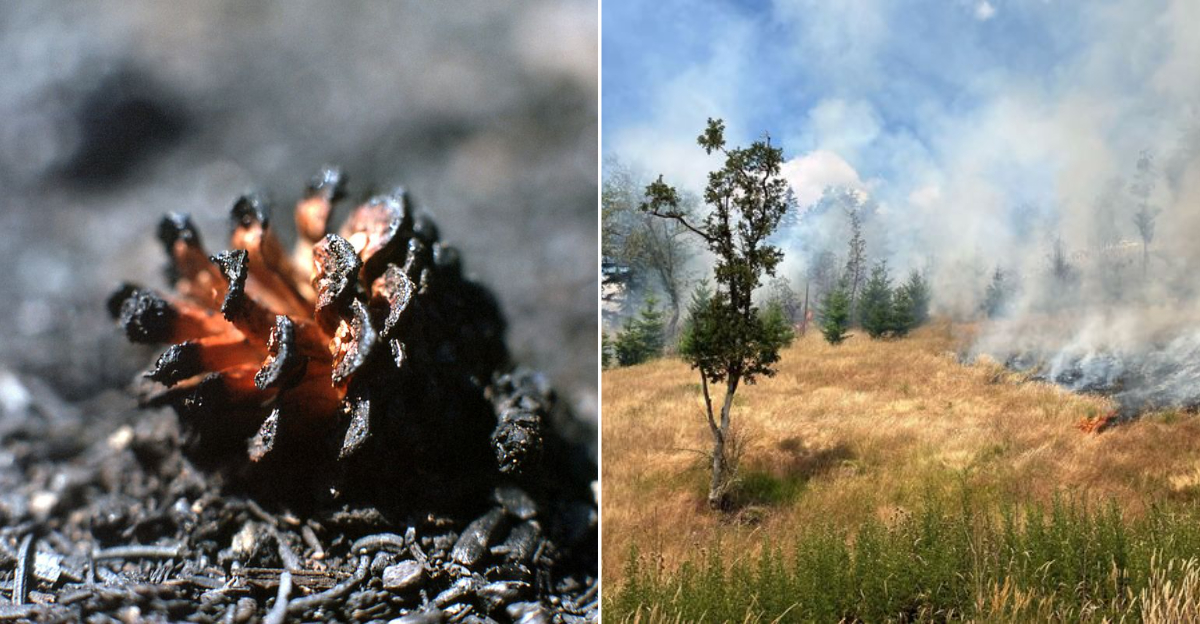
Fire can look like the final chapter for many plants, but some natives treat it more like a reset button. Pretty wild, right?
Across Oregon’s forests, prairies, and rugged slopes, certain plants have adapted to heat, smoke, ash, and sudden open space in ways that feel almost impossible. Some hide their strength underground, waiting for the flames to pass.
Others rely on fire to clear competition, release seeds, or wake up new growth when the landscape looks bare and broken. What makes a plant tough enough to return after such extreme stress?
And what can that teach us about building yards, restoration areas, and natural spaces that bounce back instead of giving up? These resilient natives are not just survivors.
They are part of a fire-shaped ecosystem that knows how to heal, rebuild, and burst back with life when the smoke finally clears.
1. Camas Lily
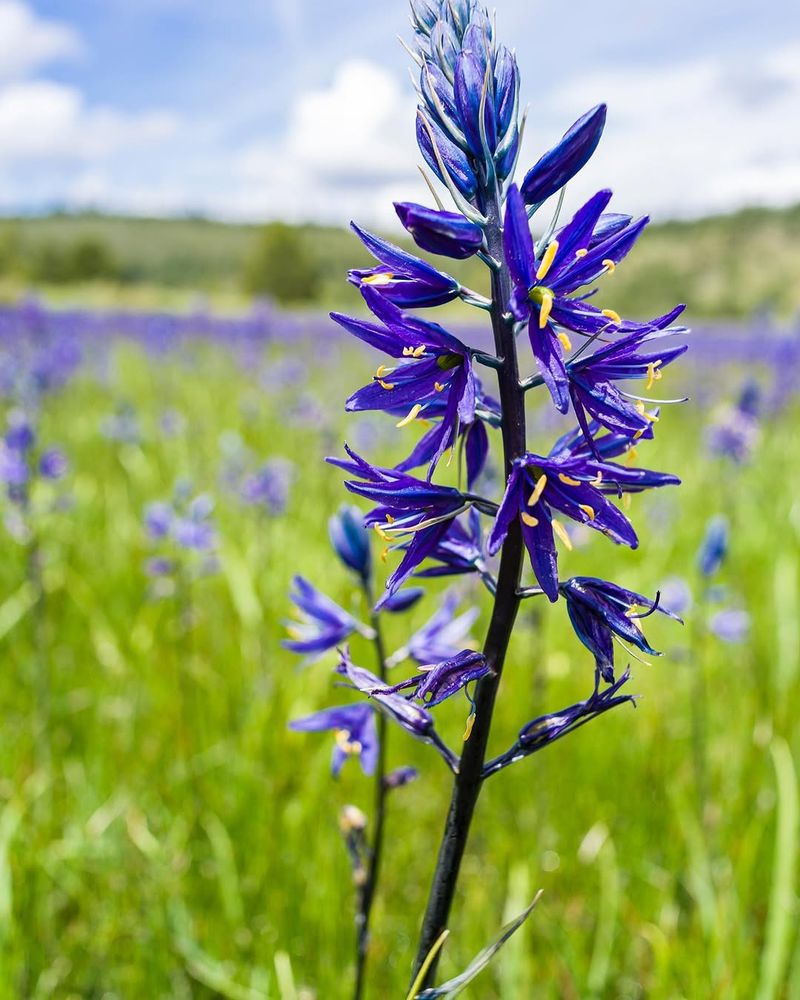
Few sights in Oregon are as stunning as a meadow full of Camas Lilies in full bloom. The flowers come in rich shades of blue and purple, and they look delicate enough that you would never guess how tough they really are.
The secret is hidden underground in their bulbs.
Camas bulbs sit several inches below the soil surface, far enough down that the heat from a surface fire cannot reach them. While the grassy meadow above gets scorched, the bulbs stay cozy and safe underground.
Once the fire passes and the first rains come, they send up fresh green shoots like nothing ever happened.
What makes Camas even more impressive is what happens next. The ash left behind by fire is loaded with nutrients like potassium and phosphorus.
Camas bulbs soak all of that up and reward the landscape with blooms that are noticeably bigger and more vibrant than before the fire. That post-fire flush of color is one of nature’s most remarkable comebacks, and it happens quietly, without any intervention or replanting on your part.
Historically, Camas bulbs were a vital food source for Indigenous peoples throughout the Willamette Valley and other parts of Oregon. Their resilience was not just beautiful; it was life-sustaining and deeply woven into the cultural fabric of the region for thousands of years.
Planting Camas in a fire-prone garden is a smart, practical move that also honors Oregon’s deep cultural roots and native plant heritage in a way that few other plants can match.
2. Snowbrush Ceanothus
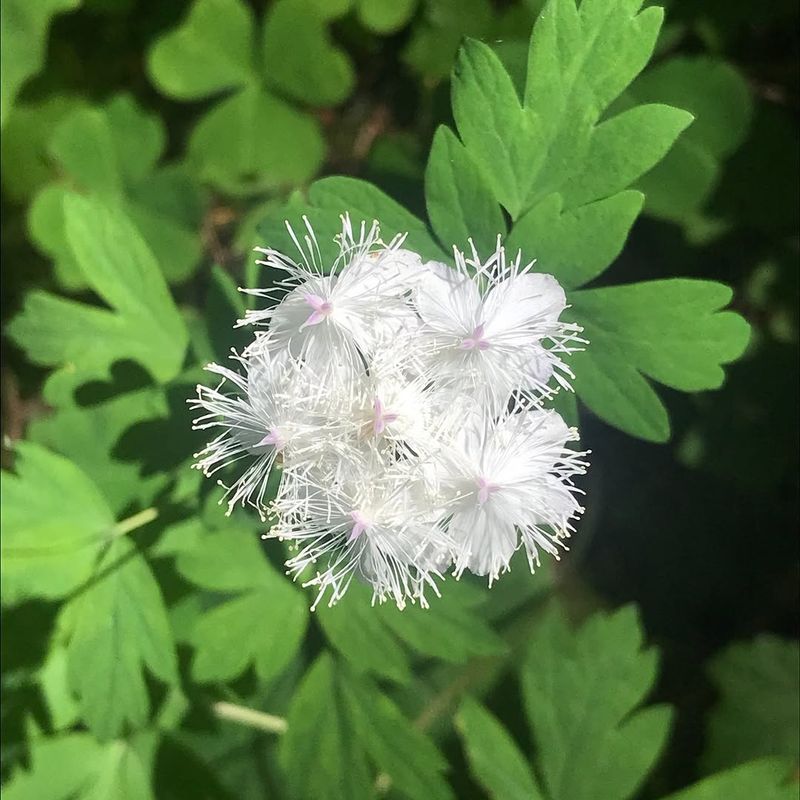
Imagine a seed that has been waiting in the ground since before the United States was even a country. That is exactly what Snowbrush Ceanothus seeds do.
They can stay buried and dormant in Oregon’s soil for more than 200 years, completely undetected, just waiting for the right moment to spring into action.
That moment is fire. The intense heat cracks open the hard seed coat that keeps these seeds locked up tight.
Once cracked, moisture can get in, and the seed finally starts to grow. Without fire, these seeds would never germinate at all.
Your Oregon Garden Changes Every Week. Your Plan Should Too.
Gardening in Oregon changes quickly throughout the season. Every Friday you’ll receive a simple weekly plan showing exactly what to plant, prune, fertilize, harvest, and protect so you never miss the right timing.
It is one of the most fascinating survival strategies in the entire plant kingdom.
After a wildfire sweeps through the mountains or foothills of Oregon, Snowbrush Ceanothus is often one of the first shrubs to carpet the hillside with new growth and clusters of small white flowers. Beyond its fire-response superpower, this plant is also a nitrogen fixer, meaning it pulls nitrogen from the air and adds it to the soil.
That makes the ground richer and more welcoming for other plants to follow. Planting Snowbrush in a fire-prone area helps restore the whole ecosystem, not just the shrub itself.
It is a team player that rebuilds the land from scratch.
3. Fireweed
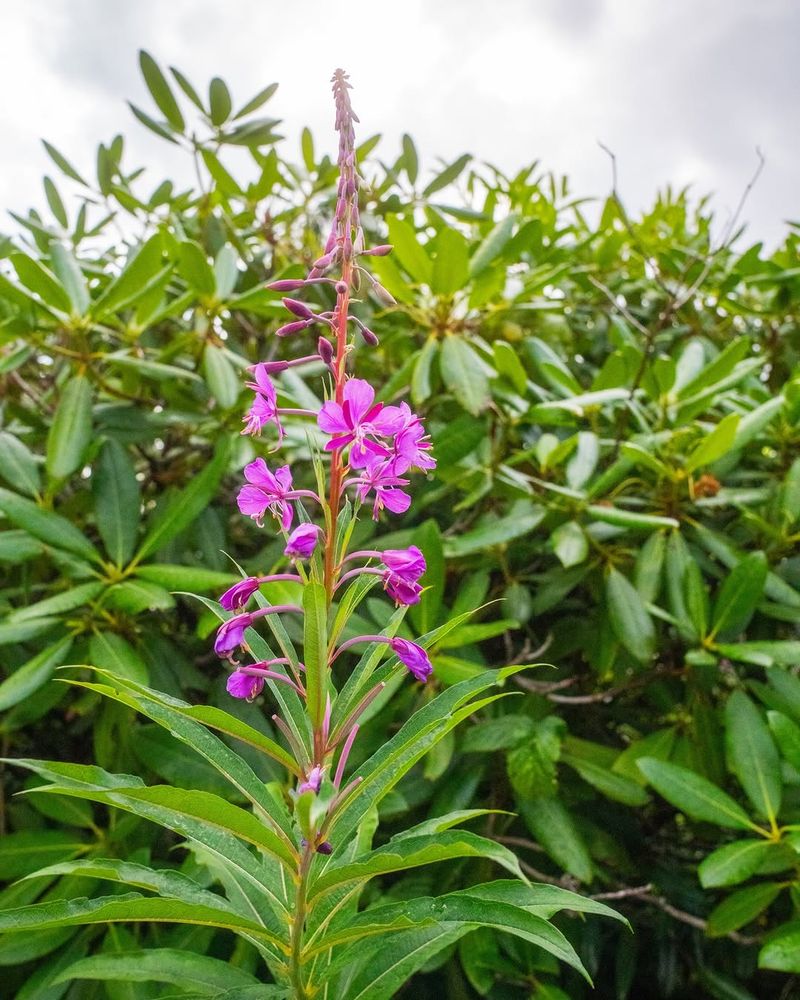
There is something almost magical about watching a burned hillside turn bright pink within a single growing season. Fireweed earns its name honestly.
It is almost always the very first plant to show up after a wildfire moves through Oregon’s forests and open lands. It does not wait around for conditions to be perfect.
Fireweed spreads by releasing thousands of tiny seeds attached to silky white fibers that float on the breeze. After a fire clears out the competition, there is nothing blocking the sunlight or stealing nutrients from the ash-rich soil.
Fireweed takes full advantage of that open real estate and spreads fast. A single plant can produce up to 80,000 seeds in one season.
Beyond its looks, Fireweed is genuinely useful. The young leaves and shoots are edible and have been used by Indigenous communities throughout the Pacific Northwest for centuries.
Bees absolutely love the flowers, making Fireweed a top pollinator plant in post-fire landscapes across Oregon. Beekeepers sometimes follow wildfire zones to harvest the light, floral honey that bees produce from Fireweed nectar.
If you want to help a burned area recover quickly while also supporting pollinators, scattering Fireweed seeds is one of the easiest and most rewarding things you can do for Oregon’s recovering landscape.
4. Oregon White Oak
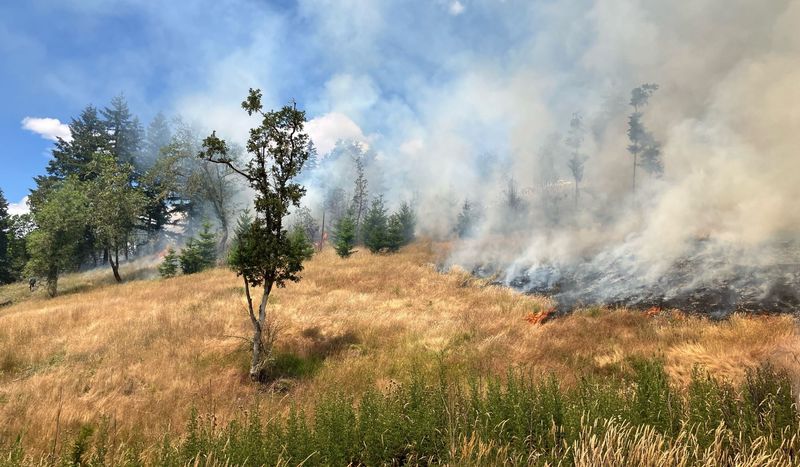
Oregon White Oak is the kind of tree that has seen it all and keeps going anyway. It is the only oak native to the Pacific Northwest, and it has spent thousands of years adapting to the fire-dependent savannas and woodlands of the Willamette Valley and surrounding regions.
Fire is not its enemy. In many ways, it is its partner.
The bark of a mature Oregon White Oak is thick and deeply furrowed, giving it strong protection against low to moderate fires. Even if a fire damages the upper canopy or crown, the tree has a backup plan.
It can send up fresh sprouts directly from its root crown or trunk, a process called resprouting. These new shoots grow surprisingly fast and can turn a damaged tree into a thriving one within just a few years.
Historically, Indigenous peoples across Oregon used controlled burns to maintain White Oak savannas, knowing the oaks would come back and the open grasslands would stay productive. Without fire, conifers tend to crowd out White Oaks over time.
Restoring fire to these landscapes helps oaks reclaim their space. If you live in the Willamette Valley or Umpqua region and want a long-lived, wildlife-friendly, fire-resilient tree, Oregon White Oak is an outstanding choice for your property.
5. Lodgepole Pine
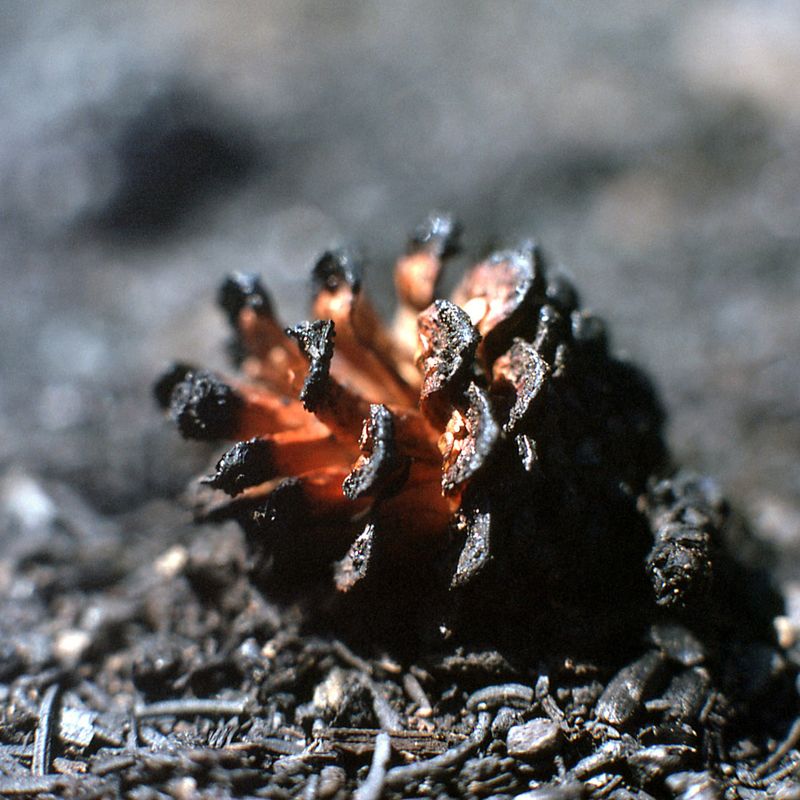
Some plants tolerate fire. Lodgepole Pine was practically built for it.
This slender, straight-trunked tree grows across the Cascade Mountains and high-elevation forests of Oregon, and it has one of the most remarkable reproductive strategies in the plant world. Its secret weapon is the serotinous cone.
Serotinous cones are sealed shut with a sticky resin that only melts at high temperatures. A Lodgepole Pine can hold these cones on its branches for years, even decades, without releasing a single seed.
Then a wildfire rolls through, the heat melts the resin, and suddenly thousands of seeds are released all at once onto a freshly cleared, ash-covered forest floor. The timing is almost perfect.
With no competition from other plants and plenty of nutrients in the soil, Lodgepole seedlings establish themselves quickly. Within a few years, a burned area can be filled with a young, dense stand of new Lodgepole Pines.
What is remarkable is how uniform these post-fire stands tend to look, row after row of similarly aged trees all sprouting from the same catastrophic event, growing together like a generation defined by the fire that made them possible.
Scientists who study Oregon’s high-country forests say that without fire, Lodgepole populations would actually struggle to reproduce effectively over the long term. Fire is not a disruption to this tree’s life cycle.
It is the main event. The tree has essentially outsourced its reproductive timing to wildfire, trusting a force of destruction to create the exact conditions its seeds need to survive and thrive.
Few plants on Earth have evolved such a direct and specific partnership with wildfire as the Lodgepole Pine has. It does not merely recover from fire.
It waits for it, prepares for it, and ultimately depends on it to carry the species forward into the next generation. In Oregon’s fire-shaped mountain landscapes, the Lodgepole Pine is less a survivor and more a collaborator with one of nature’s most powerful forces.
6. Salal
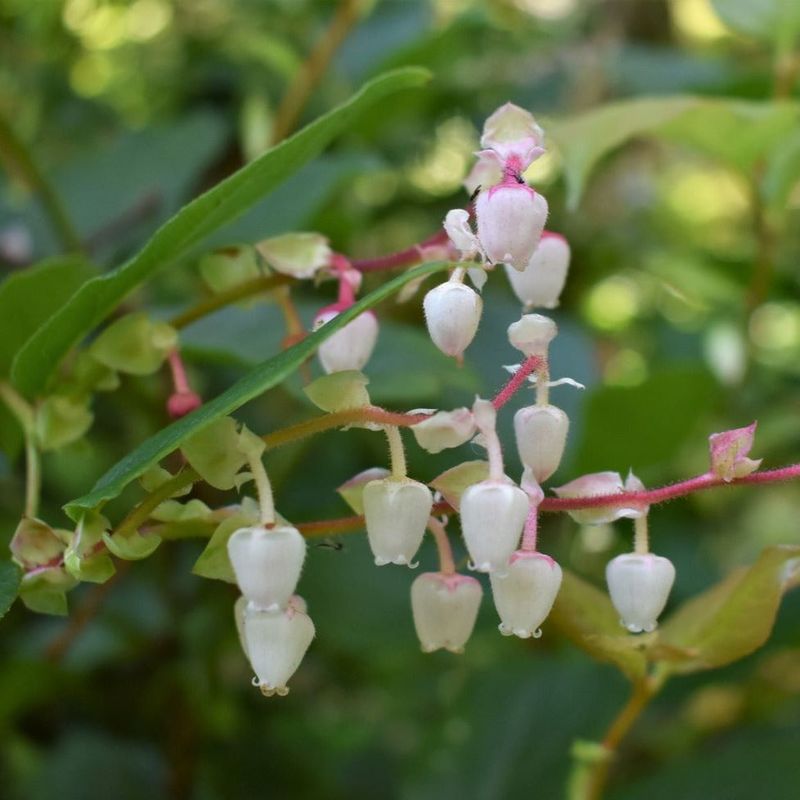
Anyone who has walked through the coastal forests of Oregon has probably pushed through a wall of Salal at some point. It grows thick, low, and everywhere along the Oregon Coast and into the Coast Range.
It might look like just another leafy shrub, but Salal is hiding something clever just below the surface.
Underground, Salal spreads through a network of stems called rhizomes. When fire burns through the forest and scorches everything above ground, the rhizomes stay protected in the cool, moist soil beneath.
As soon as conditions are right, those underground stems push up fresh green shoots. The recovery can happen in just a few weeks after a fire passes through.
Salal’s thick, waxy leaves also give it some natural resistance to lower-intensity flames. The plant does not go up in flames as easily as drier, more papery vegetation.
That combination of underground survival and leaf toughness makes Salal one of the most fire-resilient shrubs along the Oregon coast. Beyond fire recovery, Salal produces dark berries that are edible and were historically used by coastal Indigenous peoples to make dried fruit cakes.
Birds and other wildlife also depend on Salal berries through the fall and winter months. It is a plant that feeds the ecosystem while rebuilding it at the same time.
7. Kinnikinnick
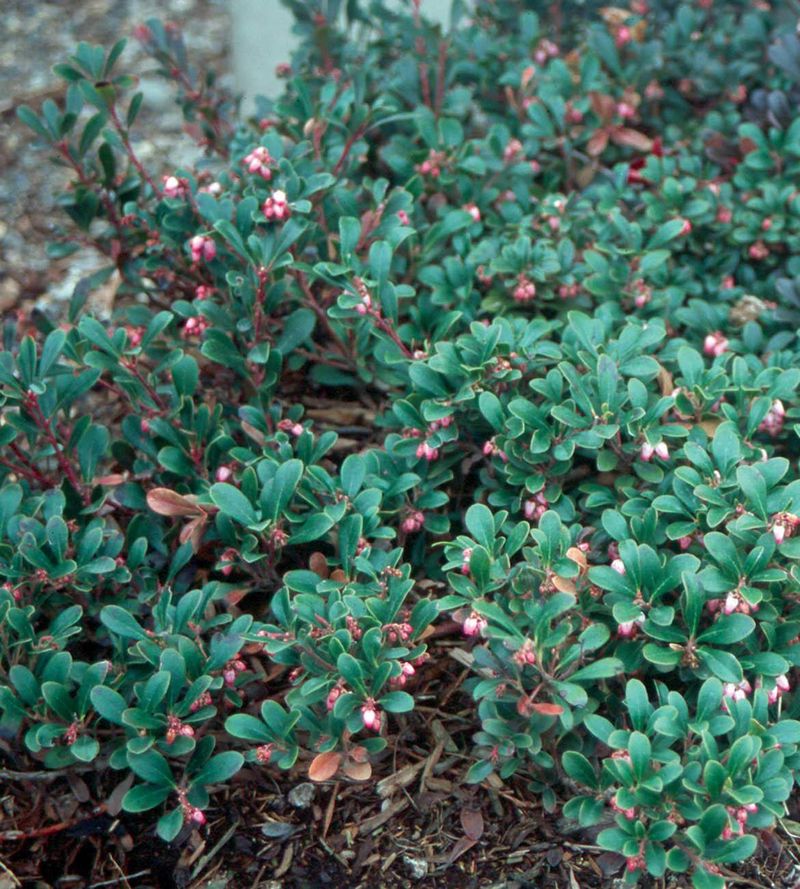
Not every plant hero stands tall. Kinnikinnick, also known as bearberry, creeps along the ground in a dense, carpet-like mat, covering rocky slopes, sandy soils, and open woodlands across much of Oregon.
It looks almost too delicate to handle anything harsh, but appearances are deceiving with this tough little groundcover.
The leaves of Kinnikinnick are thick, waxy, and leathery, which gives them a natural resistance to low-intensity fire. While faster-burning grasses and thin-leafed plants get consumed, Kinnikinnick often makes it through lighter burns with minimal damage.
Even when fire does burn off the surface growth, the plant’s root system stays intact and pushes new growth back up quickly.
One of Kinnikinnick’s most valuable roles after a wildfire is soil stabilization. Burned slopes in Oregon are extremely vulnerable to erosion, especially during the heavy fall and winter rains that follow fire season.
Kinnikinnick’s dense mat of stems and roots holds the soil in place, reducing runoff and protecting the hillside while other plants slowly return.
The bright red berries it produces are also a favorite food for bears, birds, and other wildlife, making it a plant that gives back to the ecosystem long after the fire has passed. It also spreads steadily on its own without becoming aggressive, gradually stitching together bare patches of ground into a cohesive, living surface.
If you are replanting a fire-damaged slope or a dry, rocky area in Oregon, Kinnikinnick is one of the most practical, ecologically generous, and hardworking native groundcovers you can choose.
8. Oregon Grape
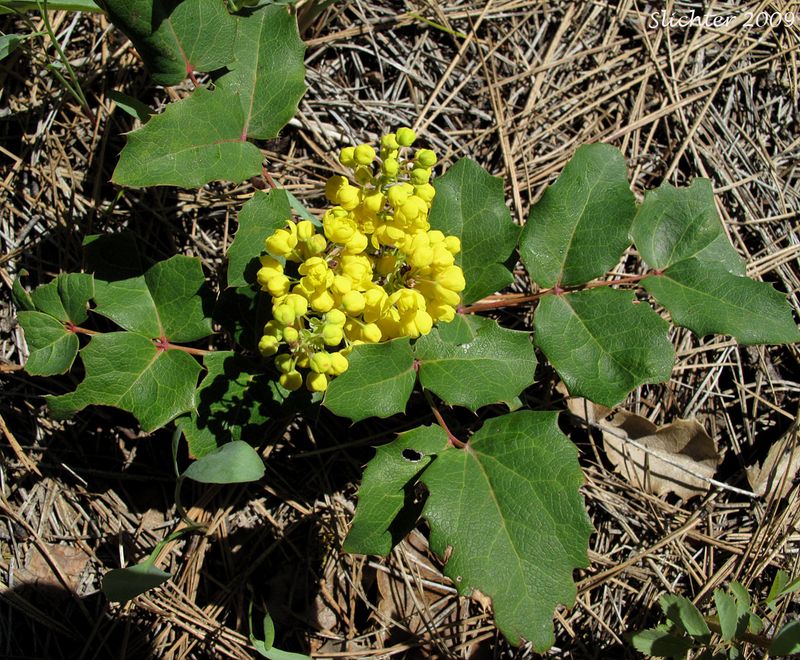
Oregon Grape holds a special place in this state’s identity. It is the official state flower of Oregon, and its spiky, holly-like leaves and clusters of yellow blossoms are a familiar sight in forests from the coast all the way to the Cascade foothills.
But there is more to this plant than its good looks and state title.
When wildfire moves through the forest understory, Oregon Grape can be burned completely to the ground. Every leaf, stem, and visible part of the plant may be gone.
Yet the root crown, the tough woody base just below the soil surface, survives the heat and holds everything the plant needs to start over. Within one growing season, fresh green shoots emerge from that root crown and the plant begins rebuilding itself.
Oregon Grape also plays a meaningful role in the post-fire ecosystem. Its yellow flowers attract early pollinators in spring, and its tart blue-purple berries are a food source for birds and small mammals.
The berries can also be made into jelly by humans, though they are quite sour on their own. Indigenous peoples across Oregon used the roots medicinally for centuries.
Planting Oregon Grape in your yard or garden is a way to support native wildlife, honor the state’s natural heritage, and add a genuinely tough, fire-resilient shrub to your landscape.