Why Some Arborvitae In Michigan Recover In Spring And Others Don’t
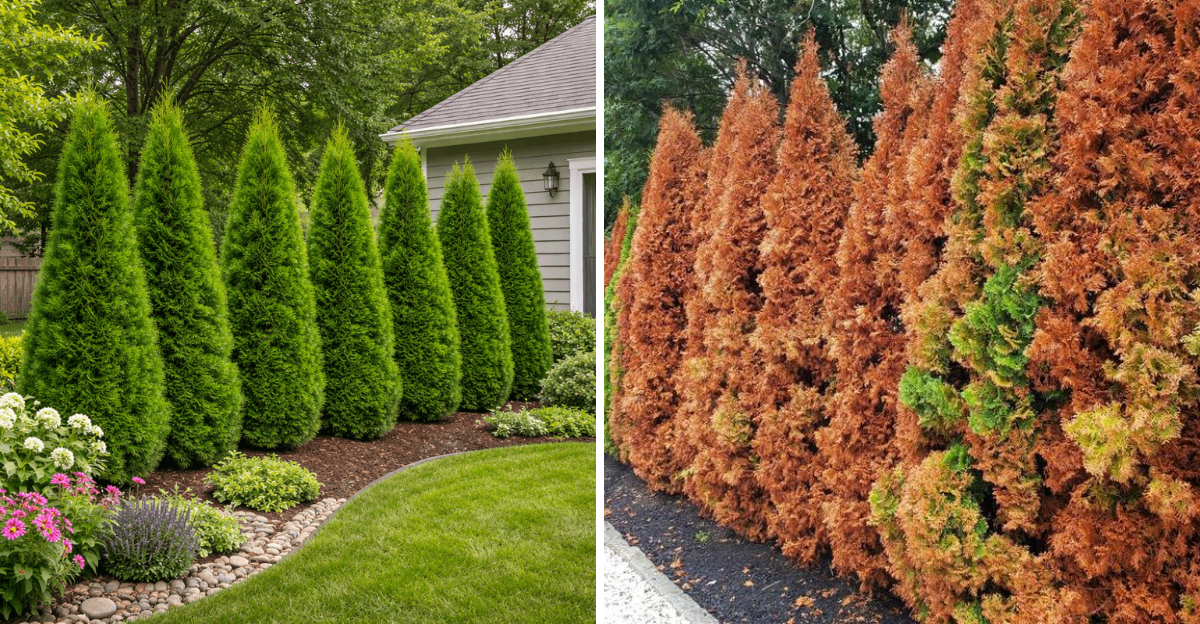
Ever wonder why your neighbor’s arborvitae looks like a lush emerald while yours looks like a toasted marshmallow? It’s the ultimate Michigan spring mystery.
After a brutal winter of drying winds, heavy snow, and a face-full of road salt, these evergreens face a grueling “recovery” test.
While some bounce back with new growth, others stay thin, brown, and barely clinging to life.
This isn’t just bad luck. It’s the result of how specific stressors and unpredictable spring warm-ups impact different plants.
Understanding exactly what separates a thriving shrub from a struggling one is the key to smarter care.
1. Winter Burn Affects Spring Recovery
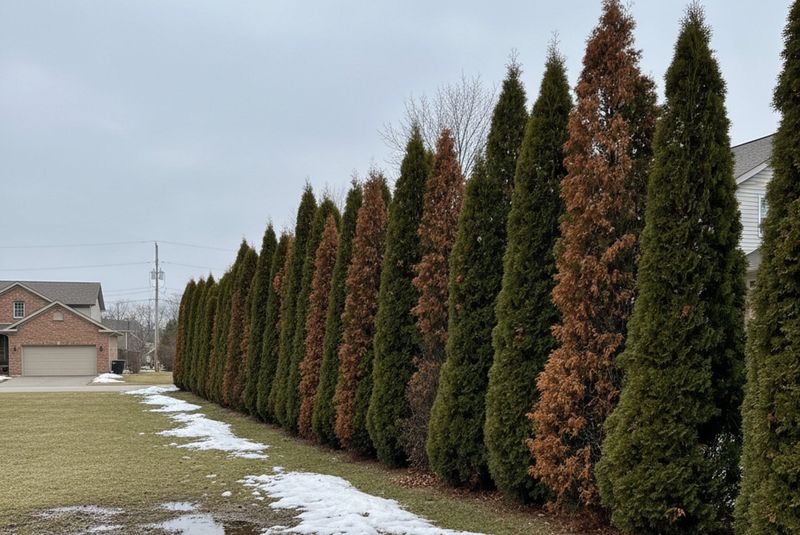
Brown, crispy foliage on arborvitae in late winter is one of the most common sights across Michigan landscapes, and it usually points to winter burn.
This condition happens when evergreen foliage keeps losing moisture through a process called transpiration, even while the ground stays frozen and roots cannot pull up water to replace what is lost.
The damage tends to show up most on the side of the shrub facing south or west, where sun and wind hit hardest during cold months.
Michigan’s combination of bright winter sun reflecting off snow and persistent northwest winds creates conditions that speed up moisture loss significantly.
Lightly burned foliage often recovers once soil thaws and roots begin absorbing water again in spring. However, if the browning goes deep into the branch structure rather than staying on outer tips, recovery becomes much slower and sometimes incomplete.
Homeowners who water their arborvitae thoroughly in late October or early November, before the ground freezes, tend to see noticeably better spring green-up.
Giving roots a strong moisture reserve heading into Michigan’s long winter season makes a real difference in how much foliage survives and how quickly new growth fills in come April and May.
2. Dry Soil During Winter Stresses Roots
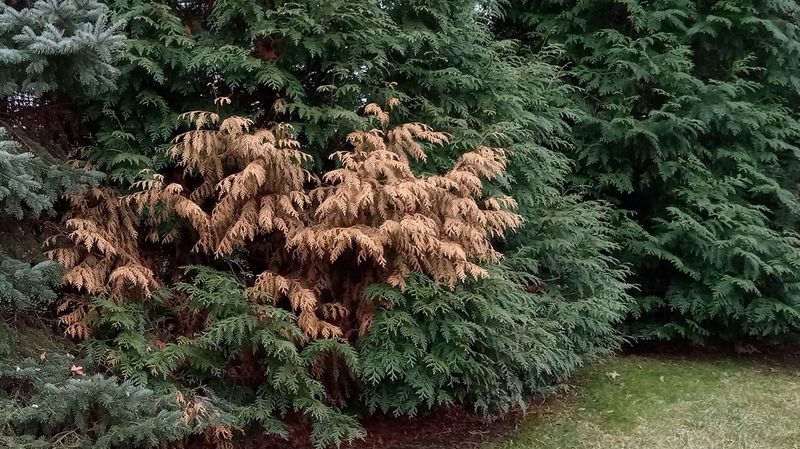
Soil moisture during the months leading into winter has a bigger impact on arborvitae health than most Michigan homeowners realize.
When fall arrives dry and watering stops too early, roots head into the frozen season already running low on stored moisture.
That puts the plant at a serious disadvantage before the first hard frost even arrives.
Michigan soils vary quite a bit across the state. Sandy soils in western Michigan drain quickly and hold very little water, meaning arborvitae planted in those areas face greater drought stress during both fall and winter.
Clay soils in southeast Michigan hold moisture longer but can become compacted, limiting root growth and reducing the plant’s ability to absorb water efficiently when it does become available.
Root stress during winter does not always show up immediately in spring. Sometimes arborvitae look fine in April but begin thinning out in May or June as soil temperatures rise and demand on the root system increases.
That delayed response often confuses homeowners who assumed the plant had recovered fully.
Watering arborvitae deeply through October, even when temperatures feel cool, helps roots build up the reserves they need.
Your Michigan Garden Changes Every Week. Your Plan Should Too.
Gardening in Michigan changes quickly throughout the season. Every Friday you’ll receive a simple weekly plan showing exactly what to plant, prune, fertilize, harvest, and protect so you never miss the right timing.
Mulching around the base with two to three inches of wood chips also helps Michigan soils retain moisture longer into the fall season.
3. Snow And Ice Damage Weakens Branches
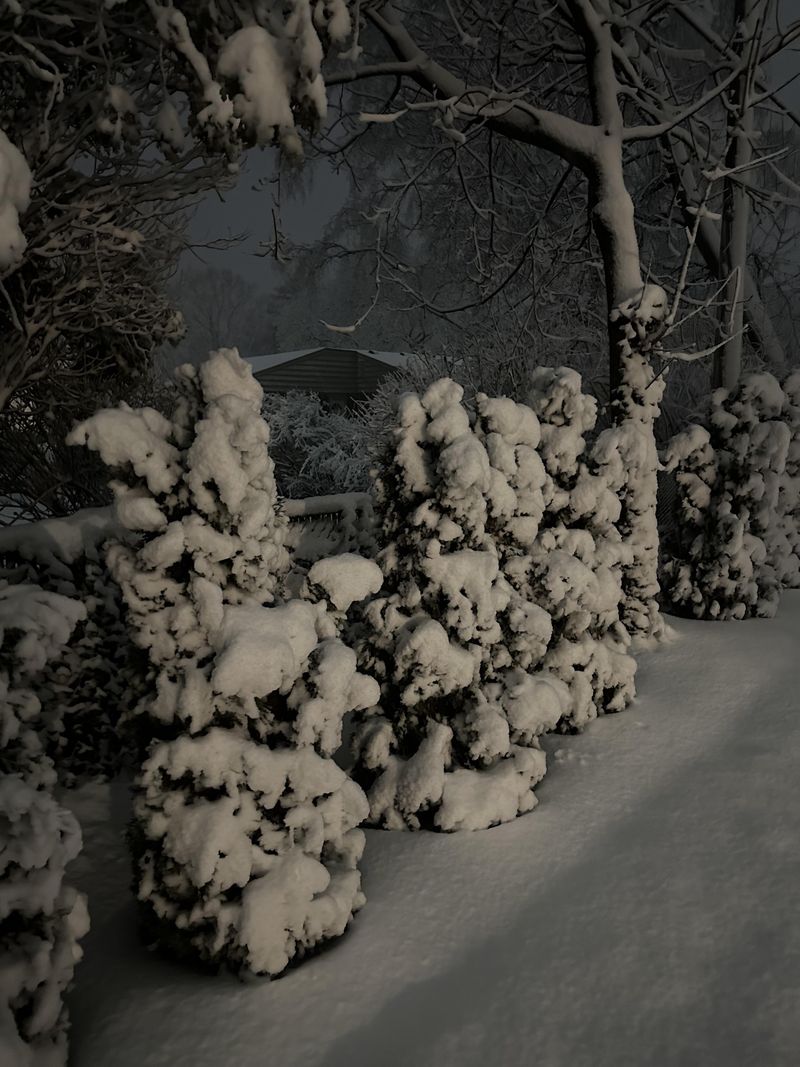
Heavy snowfall is part of life in Michigan, and arborvitae feel its weight more than many other landscape plants. These shrubs tend to grow in a narrow, upright form, which makes them especially vulnerable to snow and ice loading.
When wet, heavy snow piles up on the branches, the weight can push them outward and cause splitting at the main trunk, permanently changing the shape of the plant.
Ice storms, which Michigan sees regularly in late fall and early spring, create a different kind of stress. A coating of ice adds significant weight to every branch and holds moisture against the foliage for extended periods.
Branches that split or crack under ice load lose their ability to transport water and nutrients effectively, which shows up as browning or thinning in those specific areas come spring.
Some arborvitae recover their upright shape after snow melts if the branches were only bent rather than broken.
Wrapping shrubs loosely with burlap twine in a spiral pattern before Michigan’s heavy snow season helps hold branches together and reduces splitting risk.
Plants that experienced repeated snow damage over several winters tend to show slower recovery in spring because the structural stress accumulates.
Younger, more flexible arborvitae generally handle snow load better than older, stiffer specimens with thicker branch unions.
4. Salt Exposure Slows Spring Green-Up
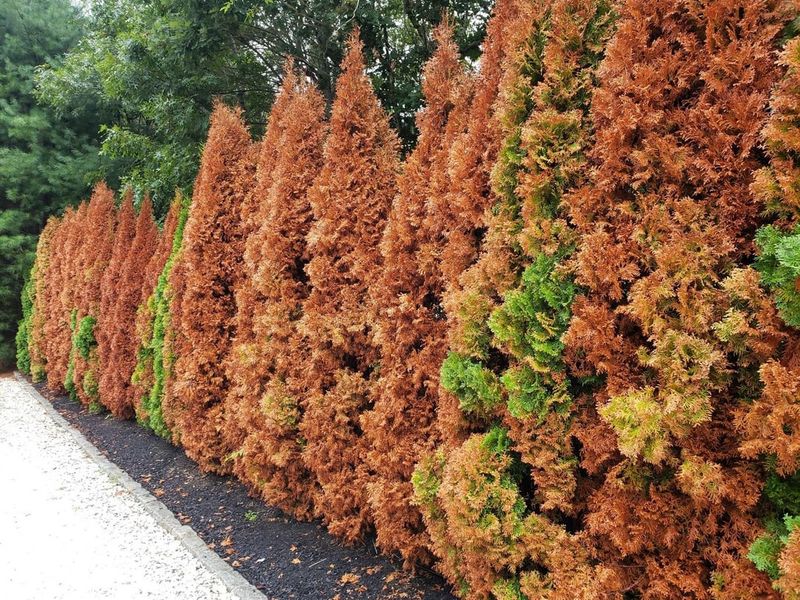
Roadside arborvitae in Michigan face a challenge that backyard plantings rarely deal with: road salt. Michigan uses significant amounts of salt on roads, driveways, and sidewalks each winter, and that salt travels farther than most people expect.
Wind carries salt spray onto foliage, and snowplow throw deposits salt-laden slush directly against shrubs planted near the road.
Salt affects arborvitae in two main ways. First, salt on the foliage draws moisture out of the needles, adding to the desiccation stress already caused by winter winds and sun.
Second, salt that accumulates in the soil disrupts the plant’s ability to absorb water and nutrients properly, even after spring arrives and temperatures warm up.
The telltale sign of salt damage is browning that appears only on the side of the shrub facing the road or driveway, while the opposite side stays relatively green.
This one-sided pattern helps homeowners distinguish salt injury from winter burn, which tends to affect the south or west exposure regardless of road proximity.
Flushing the soil around affected arborvitae with generous amounts of water in early spring can help move excess salt deeper into the soil profile and reduce its impact on root function.
Choosing salt-tolerant shrub species for roadside plantings is a smart long-term strategy for Michigan landscapes near heavily treated roads.
5. Planting Depth Impacts Long Term Health
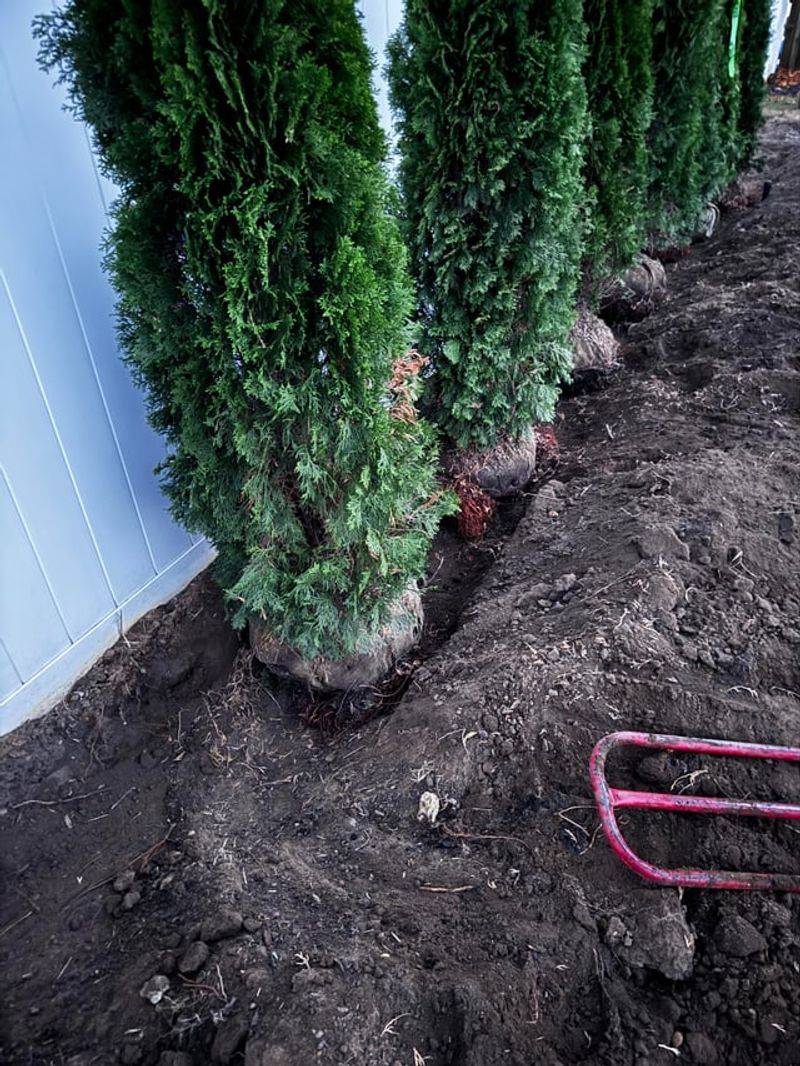
Getting planting depth right might not seem like a winter issue, but it plays a significant role in how well arborvitae handle Michigan’s cold season and bounce back each spring.
Shrubs planted too deeply develop root systems that struggle to establish properly, leaving them less equipped to handle temperature extremes, moisture swings, and the general stress of a Michigan winter.
When the root flare, the area where the trunk widens at the base, gets buried under soil or mulch, the plant can develop crown rot and other moisture-related problems.
Roots planted too deep often grow in a circular pattern rather than spreading outward, which limits the plant’s ability to anchor itself and access water and nutrients across a wider area of soil.
Shallow planting creates its own set of problems. Roots too close to the soil surface are more exposed to freeze-thaw cycles, which are especially common during Michigan’s unpredictable late winter and early spring.
Those temperature swings can heave roots upward and break the connections that keep the plant stable and well-nourished.
Arborvitae planted at the correct depth, with the root flare sitting right at or just slightly above the soil surface, tend to establish faster, develop stronger root systems, and show noticeably better recovery after Michigan winters compared to improperly planted specimens nearby.
6. Poor Fall Watering Reduces Hardiness
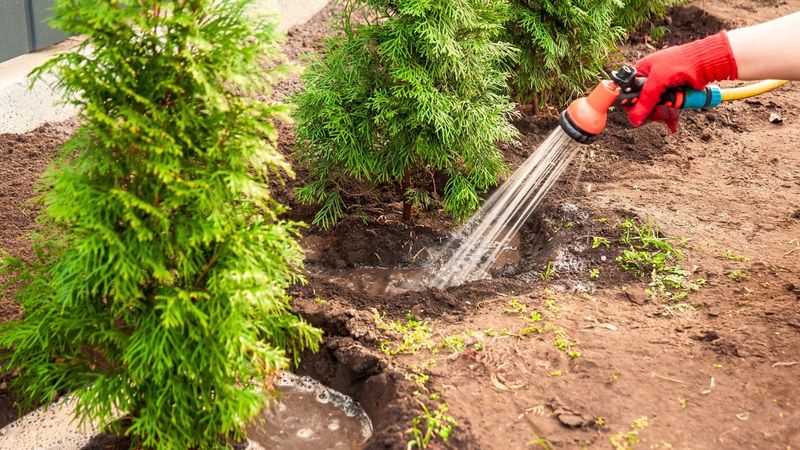
Fall watering often gets overlooked because cooler temperatures make it feel like plants no longer need attention. In Michigan, that assumption leads to a lot of unnecessary winter stress on arborvitae.
Evergreens do not go fully dormant the way deciduous trees do, which means they keep losing moisture through their foliage throughout the winter months even when growth has stopped.
Plants that head into winter with well-hydrated tissues are significantly more resilient against desiccation, temperature swings, and wind exposure.
Arborvitae that missed out on deep fall watering enter the frozen season already running a moisture deficit, making them more vulnerable to winter burn and slower to green up when spring finally arrives in Michigan.
A common mistake is stopping irrigation in early September when rainfall becomes more frequent.
While fall rains help, they do not always penetrate deeply enough to saturate the root zone, especially in compacted Michigan soils or areas under dense tree canopies where rainfall rarely reaches the ground evenly.
Continuing to water arborvitae every week or two through October, then giving a final deep soak just before the ground freezes in November, provides a meaningful buffer against winter moisture stress.
This single practice consistently separates arborvitae that green up quickly in spring from those that spend weeks looking patchy and uncertain.
7. Wind And Sun Increase Winter Stress
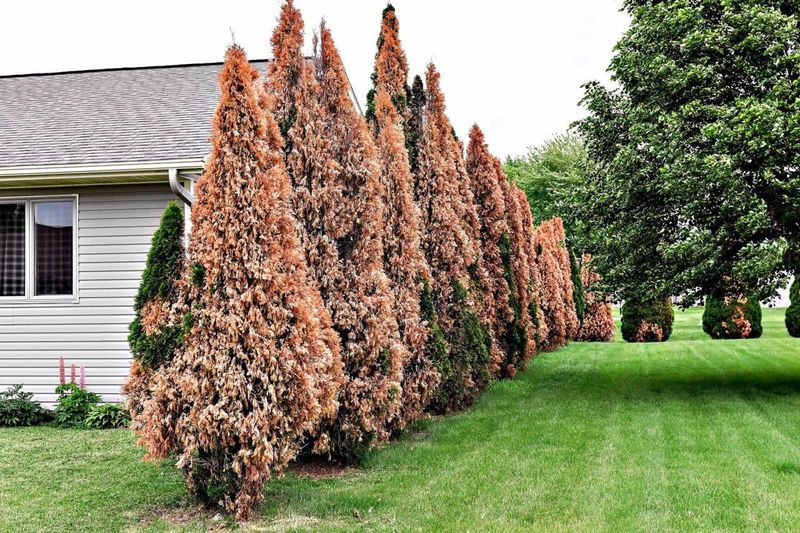
Open Michigan landscapes, especially those on the west and northwest sides of a property, expose arborvitae to some of the harshest winter conditions in the region.
Prevailing winds in Michigan blow primarily from the northwest during winter, carrying cold, dry air that pulls moisture from evergreen foliage at a rapid rate.
When those winds combine with bright winter sunshine, the drying effect on arborvitae foliage becomes even more intense.
Foliage on the windward side of a shrub often browns first and most severely because that side bears the full force of both wind and sun exposure simultaneously.
The opposite side of the same plant, sheltered by its own bulk, frequently stays much greener through the winter and recovers more quickly when spring moisture returns.
Placement matters enormously for arborvitae in Michigan. Shrubs planted near a building, fence, or dense windbreak experience far less winter stress than those standing alone in open ground.
That physical protection reduces wind speed and limits the amount of direct sun hitting the foliage during the coldest months.
Burlap windscreens, installed on the northwest side of exposed arborvitae before winter, offer a practical solution for established shrubs in vulnerable spots.
They do not need to wrap the entire plant, just blocking the prevailing wind direction provides meaningful protection and noticeably improves spring recovery outcomes.
8. Pests And Disease Delay Recovery
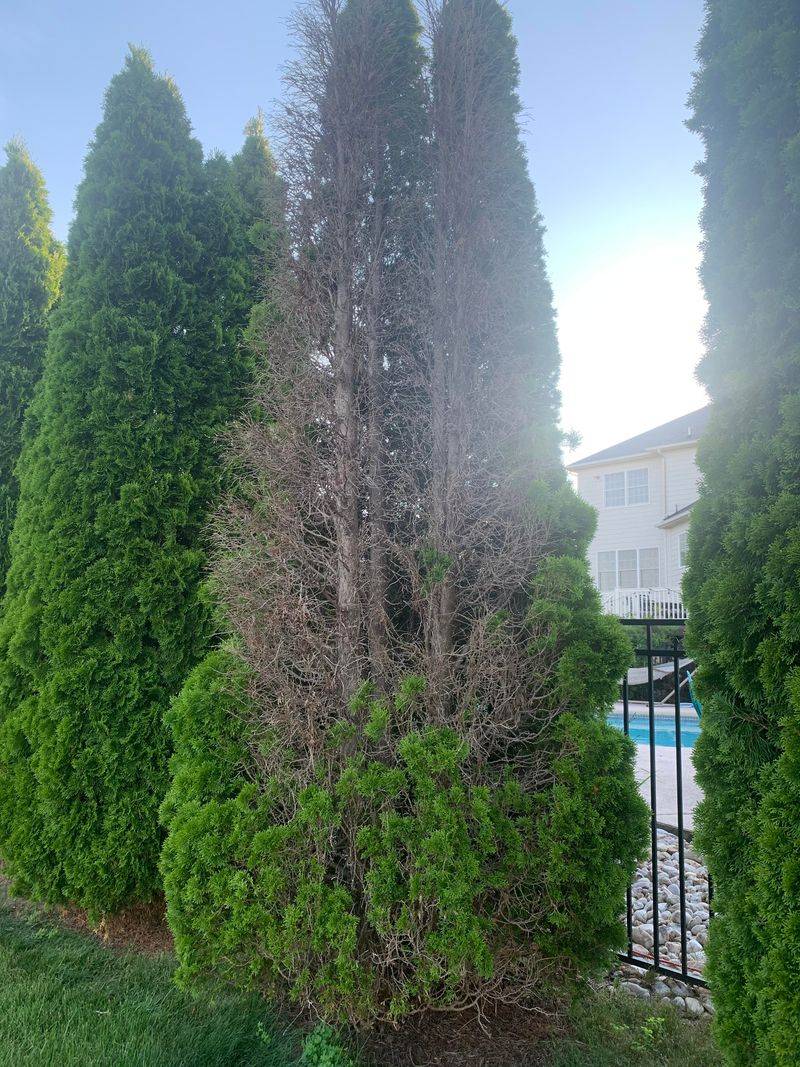
Not every struggling arborvitae in Michigan is dealing with a weather-related problem. Pest pressure and fungal issues can look surprisingly similar to winter injury, which makes it easy to misread what is actually holding a plant back from recovering in spring.
Spider mites, for example, are a common problem on arborvitae and tend to flare up during hot, dry stretches or in plants already weakened by winter stress.
Bagworms are another pest that Michigan arborvitae growers need to watch for. These insects spend the winter as eggs inside the distinctive spindle-shaped bags hanging from branches.
When eggs hatch in late spring, the larvae begin feeding on foliage almost immediately, and a heavy infestation can strip sections of the plant before most homeowners notice the damage has begun.
Fungal diseases, including tip blight and canker, tend to take hold in arborvitae that experienced physical stress during winter.
Wet spring conditions in Michigan create favorable environments for fungal spores to spread, and weakened plants have less ability to resist infection compared to fully healthy, well-established specimens.
Checking arborvitae carefully in early spring for webbing, small bags, or discolored patches that do not match the typical pattern of winter burn helps identify pest or disease problems early.
Catching these issues in April or May rather than July gives treatment options a much better chance of supporting recovery before the growing season advances too far.
9. Strong Roots Support Better Spring Growth
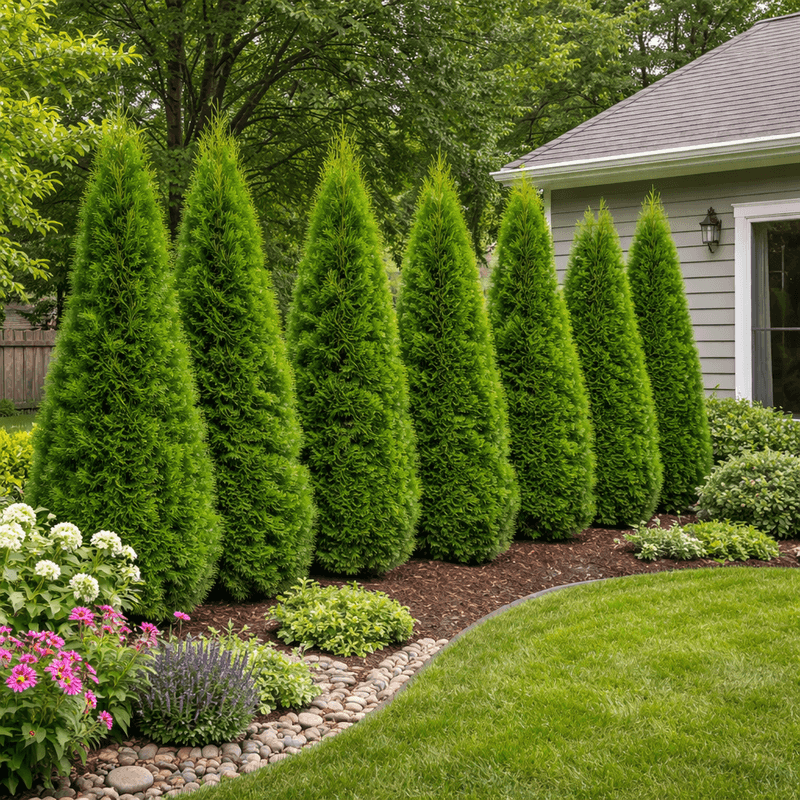
When spring finally arrives in Michigan, the arborvitae that green up fastest and most evenly are almost always the ones with the strongest, most established root systems.
Root depth and spread determine how quickly a plant can access soil moisture as the ground thaws, and that early access to water is what drives new foliage growth and recovery from whatever winter threw at the plant.
Newly planted arborvitae, especially those installed within the last one to two years, tend to struggle more after Michigan winters simply because their roots have not had enough time to spread into the surrounding soil.
A shallow, limited root system cannot buffer against moisture extremes the way a mature, wide-spreading root network can.
Consistent watering during the first two to three growing seasons after planting gives arborvitae the best chance to develop the kind of root system that handles Michigan winters with confidence.
Avoiding soil compaction around the root zone, keeping mulch pulled a few inches away from the trunk, and limiting foot traffic near the base all support healthy root development over time.
Fertilizing lightly in early spring with a balanced, slow-release product can also encourage root activity and new shoot development.
Strong roots are the foundation of spring recovery, and investing in root health throughout the growing season pays off every time Michigan winter arrives again.