Why Some Arizona Cactus Pads Turn Purple Before Summer Heat Peaks
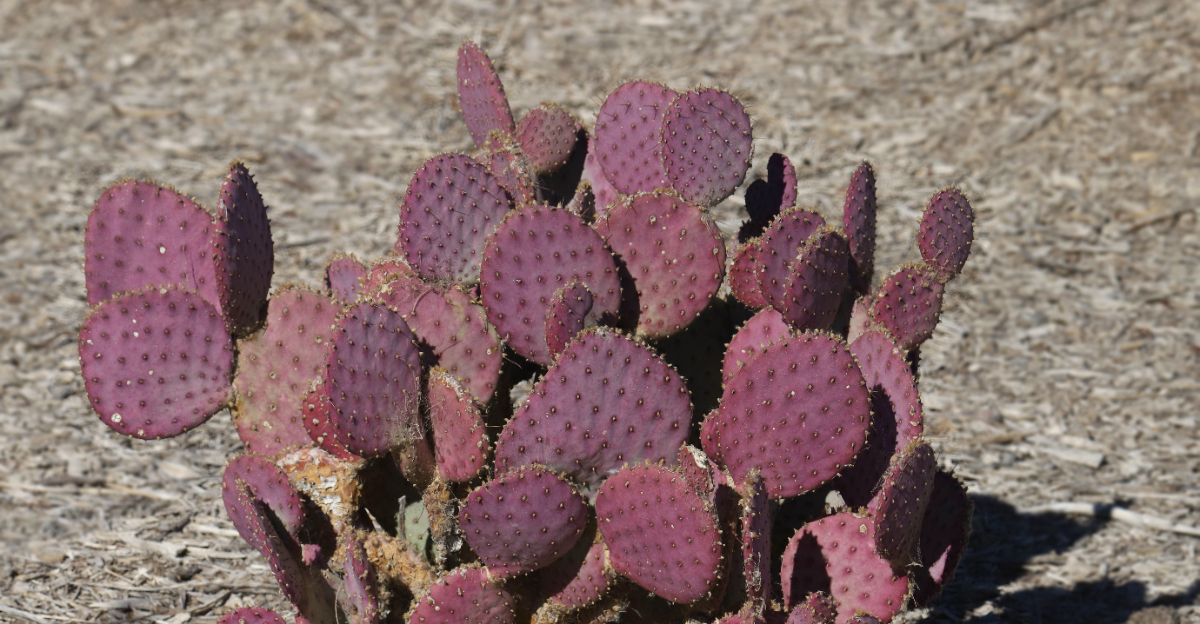
Purple cactus pads tend to grab attention immediately in a desert yard, especially when the color seems to appear out of nowhere.
Bright green suddenly shifts into reddish purple tones, darker patches spread across the pads, and the whole cactus starts looking completely different compared to a few weeks earlier.
Late spring is usually when these color changes become much more noticeable, right as temperatures start climbing higher every afternoon. The contrast looks even stronger against pale gravel, block walls, and dry desert landscaping.
Questions start coming up fast once the color shift appears because the cactus may still look healthy otherwise. Certain Arizona varieties are especially known for changing appearance before the hottest stretch of summer settles in.
1. Purple Cactus Pads Are Often Normal Before Summer Heat Peaks
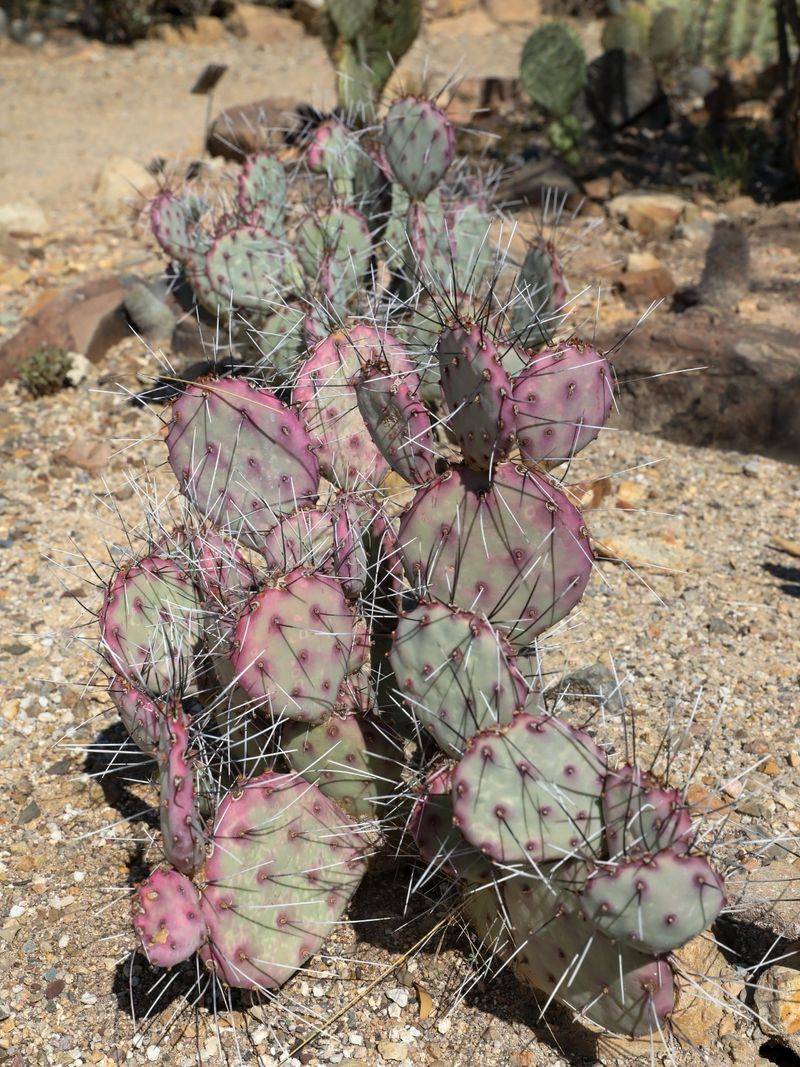
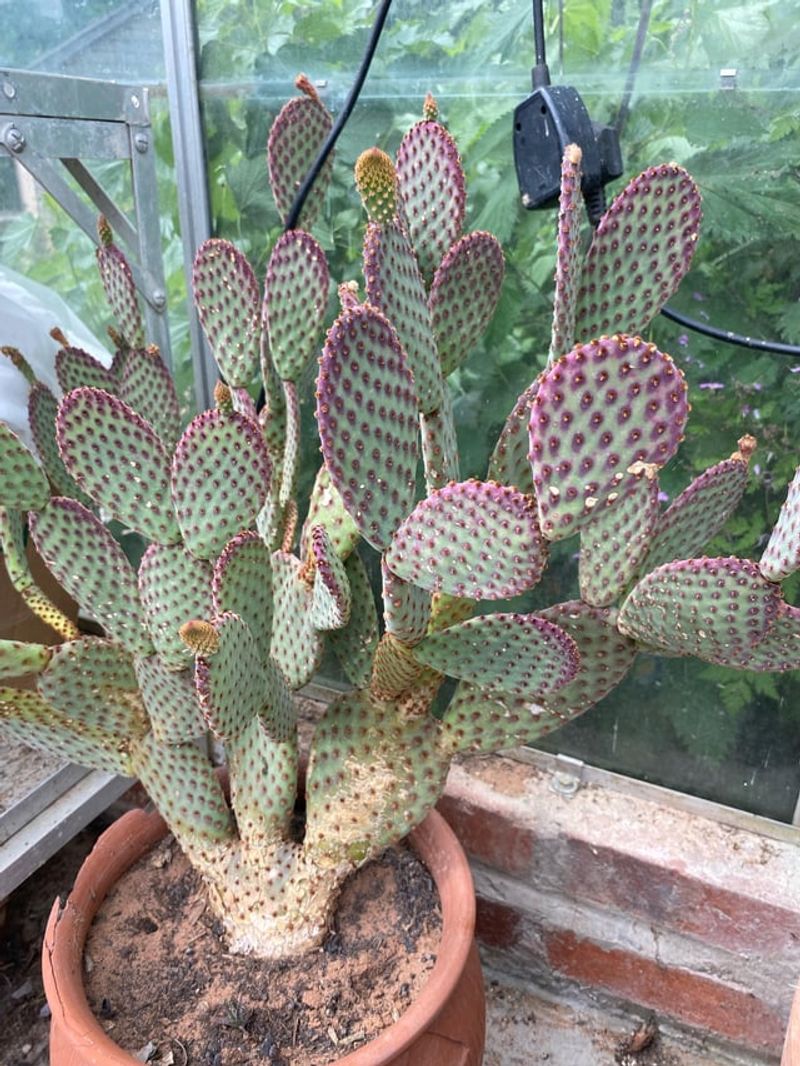
Not every purple cactus pad is a warning sign. In Arizona, it is actually pretty common to see prickly pear cactus pads shift toward purple or reddish-violet tones during the weeks leading up to peak summer heat.
For many gardeners who are new to the desert Southwest, that color change can feel unsettling, but experienced growers in Phoenix, Tucson, and surrounding areas often recognize it as a normal seasonal response.
Cacti produce pigments called betalains and anthocyanins, which can intensify under environmental stress. These pigments act a bit like built-in sunscreen, helping the plant manage intense UV radiation before temperatures climb into triple digits.
The color shift tends to be most noticeable on pads that face south or west, where sun exposure is strongest throughout the day.
In Arizona specifically, late April and May bring a unique combination of increasing heat, low humidity, and long sunlight hours. That combination pushes cacti to activate their natural defenses early.
A pad that looks vivid purple in May might return to green once monsoon moisture arrives in July.
What you want to watch for is whether the purple color is even across the pad or concentrated in spots, which could suggest something else.
2. Intense Sun Exposure Can Trigger Purple Coloring
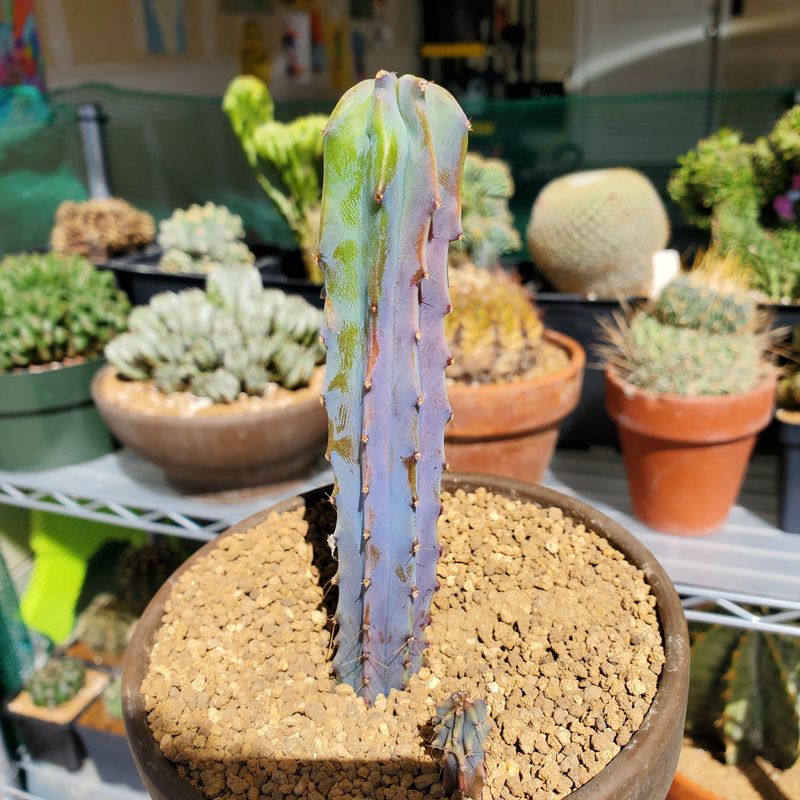
Arizona sunlight in May hits differently than almost anywhere else in the country. UV index levels regularly reach extreme ratings before the summer solstice even arrives, and cactus pads absorb a significant amount of that radiation every single day.
When the light intensity exceeds what the plant can process efficiently, pigment production ramps up as a protective mechanism.
Anthocyanins are the primary pigments responsible for the purple and reddish tones you see on stressed pads.
Pads positioned on the south-facing or west-facing side of a cactus tend to purple up first because they catch the most direct afternoon sun. In urban Arizona yards, heat radiating off concrete patios and light-colored walls can amplify this effect significantly.
A cactus sitting near a white stucco wall in Scottsdale or Mesa might show more purple coloring than one planted in open desert because reflected light adds to the total radiation load.
3. Water Stress Often Becomes More Visible In Late Spring
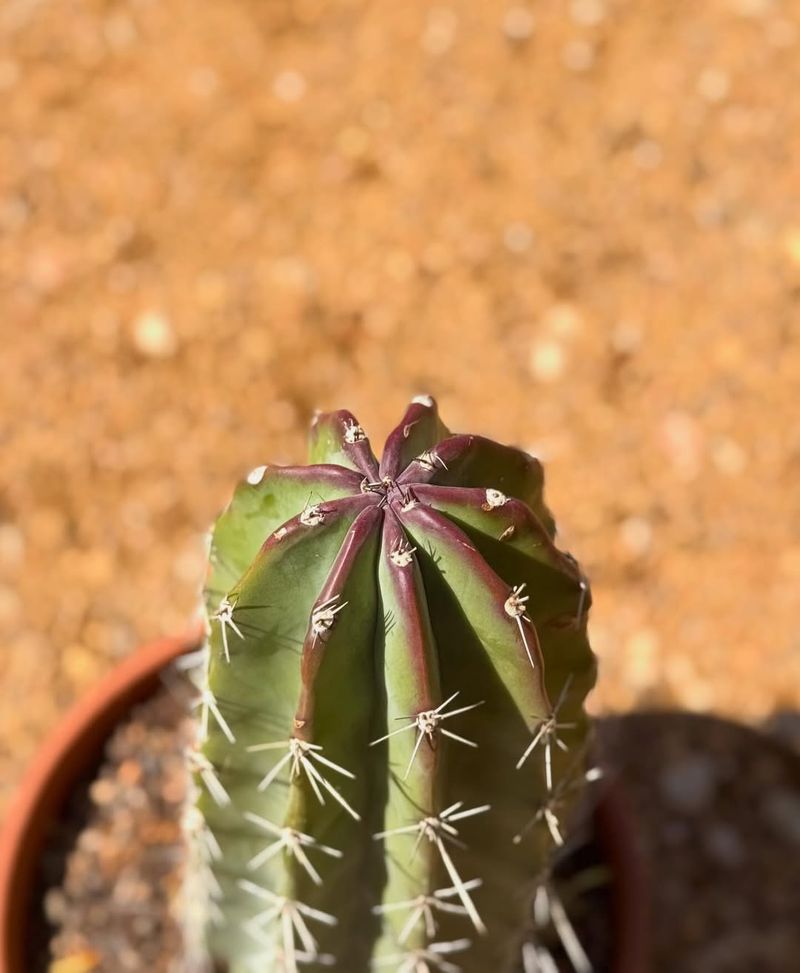
Late spring in Arizona is arguably the driest stretch of the entire year. Rainfall drops off sharply after winter, monsoon season has not started yet, and soil moisture can reach critically low levels by May.
Your Arizona Garden Changes Every Week. Your Plan Should Too.
Gardening in Arizona changes quickly throughout the season. Every Friday you’ll receive a simple weekly plan showing exactly what to plant, prune, fertilize, harvest, and protect so you never miss the right timing.
Cacti are built to handle drought, but prolonged dry conditions still push them into a stress response that often shows up as color change.
When a cactus pad loses more moisture than it can replace through its roots, internal pressure drops. That shift in cell hydration affects how pigments are distributed across the pad surface.
You might notice pads looking slightly wrinkled or deflated alongside the purple coloring, which is a clearer sign that water stress is playing a role.
In Arizona landscapes, the combination of sandy or gravelly soil, high evaporation rates, and low spring rainfall creates conditions where even drought-tolerant cacti can show visible stress.
Prickly pear varieties are especially expressive when water-stressed, and their pads often turn a deeper purple-red before plumping back up after irrigation or rain.
A slow, deep watering once every two to three weeks during dry spring months can help reduce visible stress without overwatering, which carries its own risks. Avoid frequent shallow watering because it encourages surface root growth that dries out quickly.
4. Some Cactus Varieties Naturally Develop Purple Tones
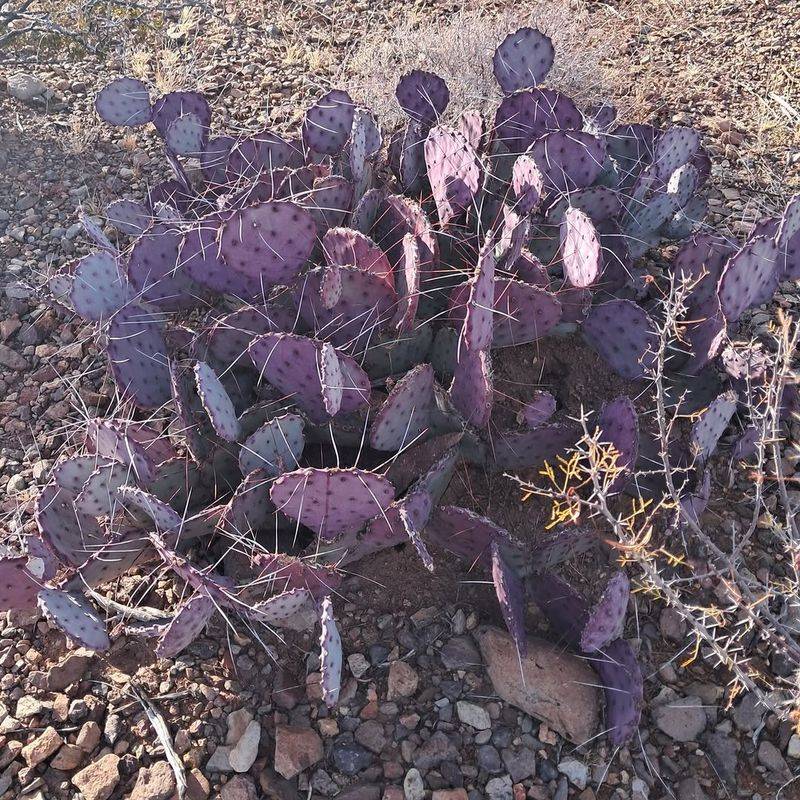
Genetics plays a bigger role in cactus color than most people realize.
Certain varieties of prickly pear, including Opuntia santa-rita and Opuntia macrocentra, are genetically predisposed to develop rich purple or violet tones, especially during cooler or drier months.
If you planted one of these varieties in your Arizona yard, the purple color is simply part of who the plant is.
Opuntia santa-rita, sometimes called the Santa Rita prickly pear, is native to southern Arizona and northern Mexico. It can display stunning blue-green pads that shift to deep purple under environmental triggers like low soil moisture or bright sun.
Gardeners in Tucson and the surrounding Sonoran Desert region often specifically choose this variety for its dramatic seasonal color display.
Opuntia macrocentra, the long-spined prickly pear, shows similar behavior. Its pads turn vivid purple-red in response to cold, drought, or intense light, and the color can be striking enough to make the plant look like it belongs in a painting rather than a desert yard.
Both species are perfectly healthy when purple, assuming no other symptoms are present.
Before assuming something is wrong with a purple cactus in Arizona, it is worth identifying the exact variety.
5. Gravel And Walls Can Increase Reflected Heat Stress
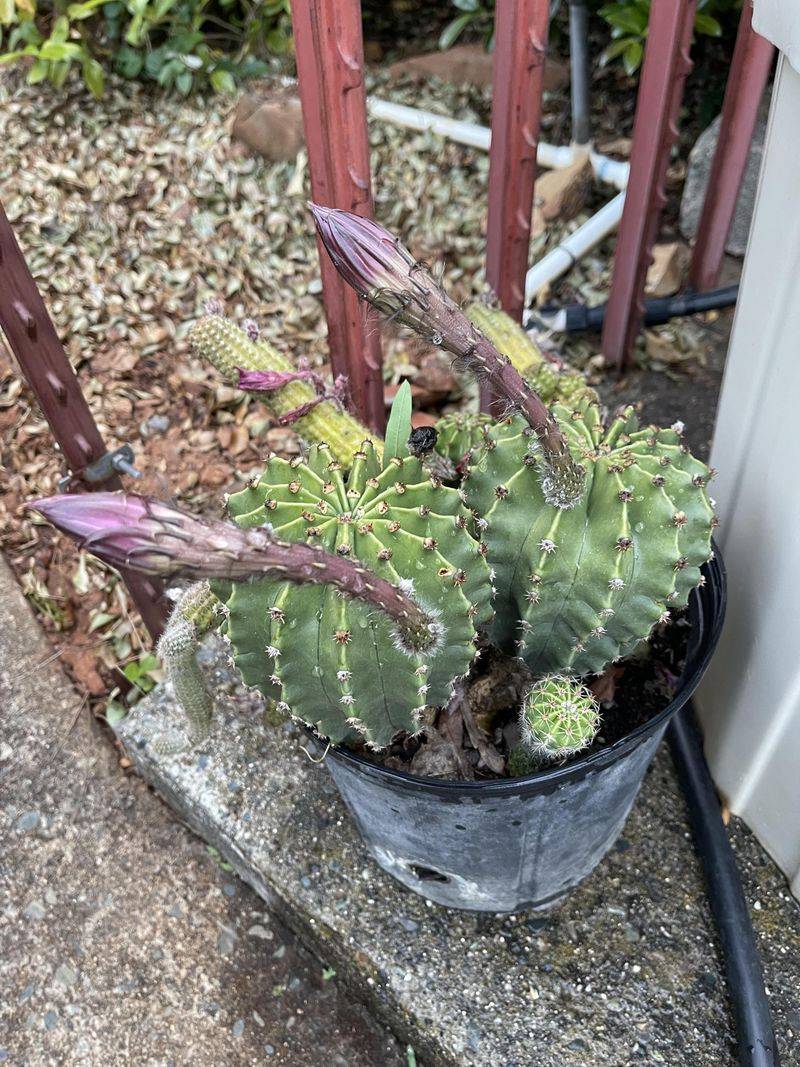
Walk through almost any Arizona neighborhood and you will notice how much of the landscape is covered in gravel, decomposed granite, and light-colored block walls.
That material combination is practical for water conservation, but it creates a radiant heat environment that most plants outside the desert Southwest rarely experience.
Cacti growing in these yards face not just direct sun but also intense reflected heat bouncing off every nearby surface.
Gravel and granite absorb solar energy during the day and release it slowly as the afternoon and evening progress.
A cactus sitting in a gravel bed near a south-facing stucco wall in Chandler or Gilbert can experience temperatures significantly higher than the ambient air temperature.
That extra heat load accelerates moisture loss and pushes pigment production into overdrive.
Purple coloring in cacti surrounded by gravel or positioned close to walls is often more intense than the same species planted in open ground or shaded settings.
It is not necessarily a problem, but it does mean the plant is working harder to manage its environment.
If the pads look firm and the spines appear healthy, the cactus is likely coping well despite the elevated stress signals.
Adding a buffer of organic mulch around the base of the cactus is not always practical in Arizona desert landscaping, but adjusting gravel placement slightly away from the main trunk can reduce reflected heat at the base.
6. Root Problems Sometimes Show Up Through Color Changes
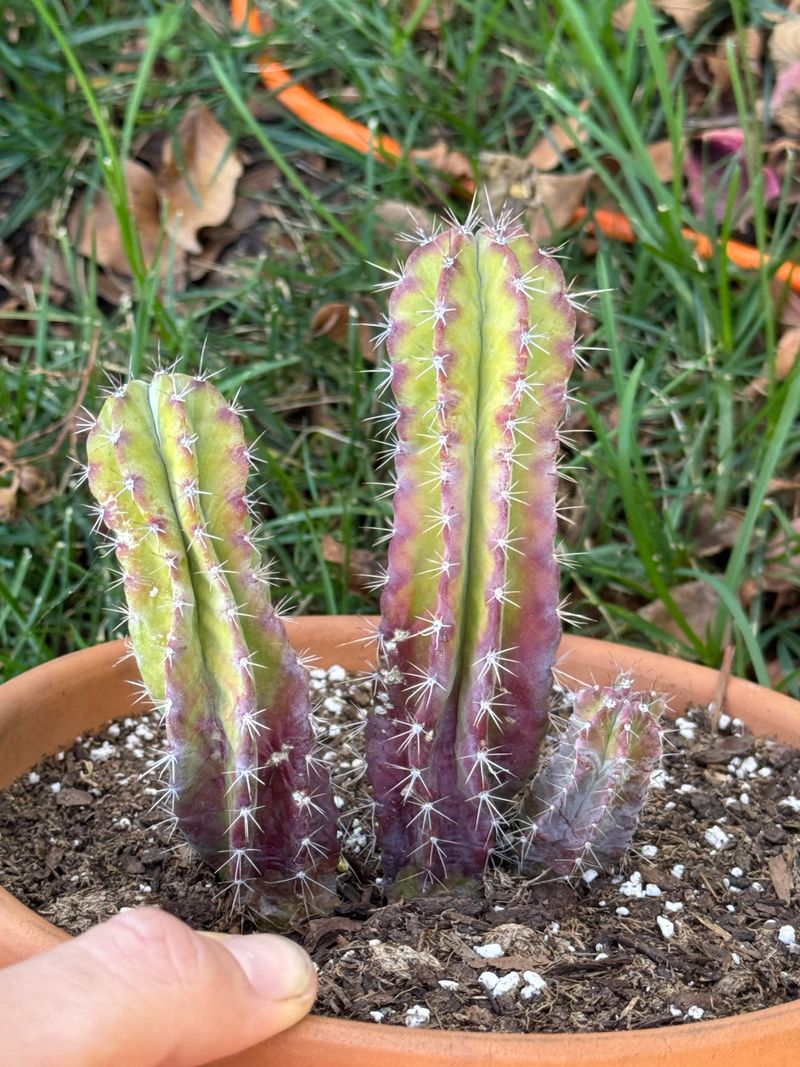
Purple coloring that appears suddenly, spreads unevenly, or shows up alongside soft or sunken areas on pads deserves closer attention.
While many cases of purple cactus pads in Arizona are completely normal, root stress caused by poor drainage, compacted soil, or physical root damage can also produce visible color changes that look similar at first glance.
Overwatering is one of the most common root problems in Arizona cactus gardens, especially during spring when well-meaning gardeners start watering more frequently in anticipation of summer heat.
Excess moisture in poorly draining soil can suffocate roots and interfere with nutrient uptake, causing pads to shift color in irregular patterns. Soggy soil combined with purple, mushy pads is a combination worth acting on quickly.
Compacted caliche soil, which is extremely common throughout central and southern Arizona, can restrict root development and limit a cactus’s ability to absorb water and nutrients evenly.
When roots cannot spread properly, the plant may show stress signals in its pads even when surface conditions appear fine.
Breaking up caliche during planting and amending with coarse sand or gravel helps roots establish more successfully.
Physical root damage from construction, foot traffic, or animal activity is another factor that sometimes goes unnoticed until pads start showing stress color.
7. Sudden Weather Swings Can Affect Desert Cactus Appearance
Arizona spring weather is not as predictable as people outside the state often assume. Late cold snaps, unexpected temperature drops in April, and sharp swings between warm days and cool nights can all leave a visible mark on cactus pads.
Temperature stress triggers many of the same pigment responses as sun and drought stress, which means a cold night followed by a blazing afternoon can push pads toward purple faster than either condition alone.
Cooler temperatures slow down the enzymatic processes that keep chlorophyll production running at full capacity. When chlorophyll breaks down or becomes less active, other pigments like anthocyanins become more visible.
In Arizona, where spring nights can still drop into the 40s or even 30s in higher elevation areas like Prescott or Flagstaff, this effect can be quite pronounced on exposed pads.
Temperature swings also affect how efficiently a cactus moves water and nutrients through its tissue.
A pad that experienced a cold night may show purple coloring for several days even after temperatures normalize, simply because the plant needs time to recalibrate its internal processes.
That delayed response sometimes confuses gardeners who cannot immediately connect the color change to a specific weather event.
Keeping a loose mental record of recent weather patterns in your part of Arizona can help you interpret color changes more accurately.