Why Some Arizona Yards Are Becoming Less Suitable for Cactus Wrens and How to Improve Habitat
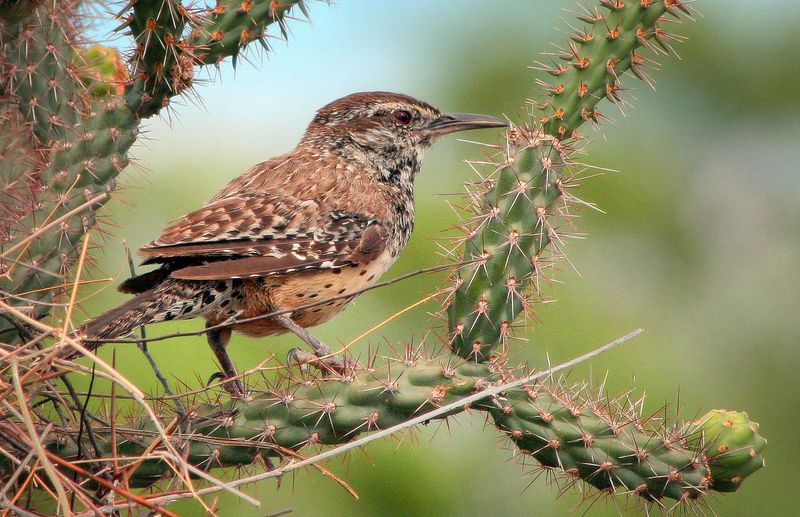
Cactus wrens are bold, noisy birds that many Arizona homeowners love hearing rattle through the morning air, but some yards that once hosted them seem quieter now. Arizona still supports healthy cactus-wren populations across much of the low desert, yet range-wide monitoring shows a substantial long-term decline, and yards stripped of cactus, thorny shrubs, and native plants give these birds fewer reasons to stay.
Understanding what cactus wrens actually need makes it possible to improve your yard’s habitat quality, even if no single change can promise a returning bird.
Why Some Arizona Yards Become Less Suitable for Cactus Wrens
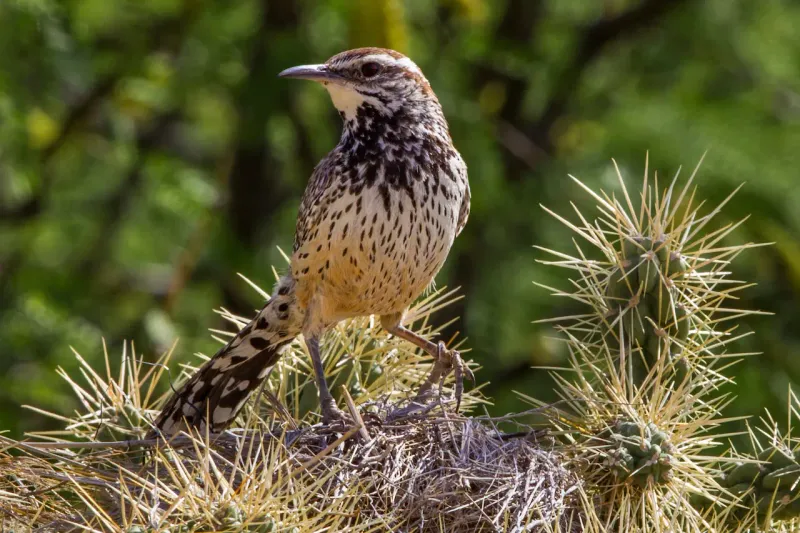
Arizona still supports common cactus-wren populations across much of the low desert, from the Phoenix metro to Tucson and beyond. Arizona Game and Fish lists the species as a year-round resident in southern, western, and central Arizona and notes it has not been evaluated for a state conservation status, so calling it endangered or officially declining statewide would go beyond what the evidence supports.
That said, broader monitoring tells a different story at the range level.
The North American Breeding Bird Survey has tracked a substantial long-term decline across the cactus wren’s full range. Cornell Lab of Ornithology estimates a cumulative drop of roughly 51 percent from 1966 to 2019, a trend that points to habitat loss, fragmentation, and urban expansion as recognized pressures.
A continent-wide decline, however, is not the same as proof that cactus wrens are disappearing from every Arizona neighborhood.
Local abundance in Arizona can shift with annual rainfall, the development history of a given area, proximity to desert preserves, and how much native vegetation structure remains nearby. A yard that loses its cholla, prickly pear, or thorny shrubs becomes less useful to cactus wrens without that reflecting anything about Arizona populations generally.
Recognizing that distinction is the starting point for making practical improvements at home.
The Desert Structure Cactus Wrens Use
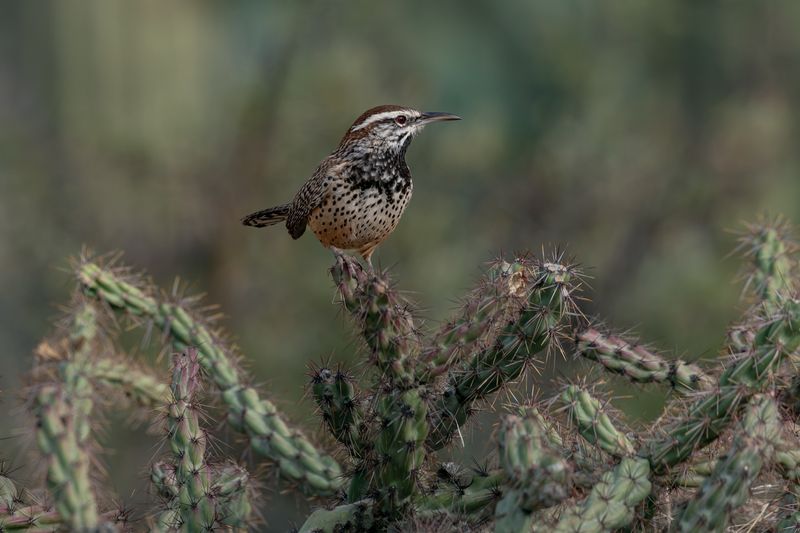
Cactus wrens in Arizona are not looking for a manicured yard. They rely on a connected set of physical features: thorny plants for nesting and protective cover, open patches of ground for hunting insects, and native vegetation that produces the seeds, berries, and small invertebrates that round out their diet.
Remove any one of those layers and the yard becomes noticeably less useful.
The problem arises when a low-desert Arizona yard trades cholla thickets and layered native growth for bare decomposed granite, heavily trimmed ornamentals, or a lawn that offers nothing a cactus wren can use.
Habitat quality for this species is a package deal. A single cactus surrounded by bare gravel might offer a potential nest site but provides little foraging opportunity and almost no protective cover for a bird moving between territories.
The combination of thorny nesting structure, nearby open ground, and living plant diversity matters far more than any one element added in isolation. Thinking in layers rather than individual plants is the most useful frame for low-desert Arizona yards.
Use Thorny Plants for Nesting and Cover-Safely
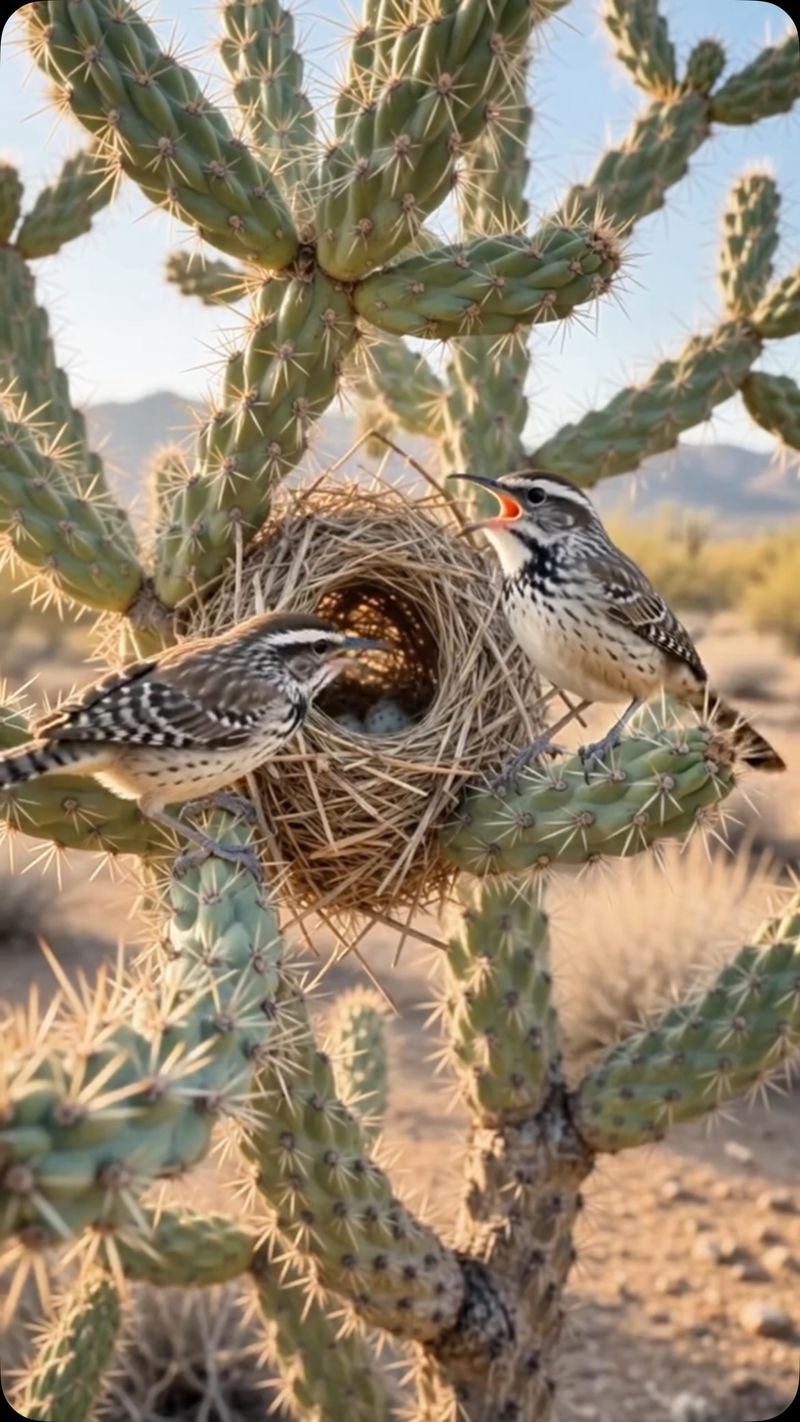
Cholla is the plant most strongly associated with cactus-wren nesting in Arizona, but the birds also use prickly pear, mesquite, ironwood, palo verde, and catclaw acacia as nesting sites and protective cover. A mature thorny plant offers something a standard birdhouse simply cannot replicate: interlocking spines that deter most predators from reaching eggs or nestlings.
Your Arizona Garden Changes Every Week. Your Plan Should Too.
Gardening in Arizona changes quickly throughout the season. Every Friday you’ll receive a simple weekly plan showing exactly what to plant, prune, fertilize, harvest, and protect so you never miss the right timing.
Preserving what is already growing in a safely located spot often does more for habitat quality than any new purchase.
Cholla and catclaw near a children’s play area, a pet run, or a main entrance create real hazards. The practical approach is to retain or add thorny habitat plants where they will not pose a daily risk to people and animals moving through the yard.
Timing matters as much as placement. Cactus wrens can nest multiple times between late winter and early summer in Arizona, so excessive pruning during that window can disturb active nests.
Most native bird species and their active nests are protected from harm or harassment under federal law. If you suspect a nest is occupied, pause any planned trimming and consult Arizona Game and Fish or a qualified wildlife professional before proceeding.
Waiting a few weeks costs little and avoids a serious problem.
Build Food-Rich Foraging Ground Instead of Relying on Seed
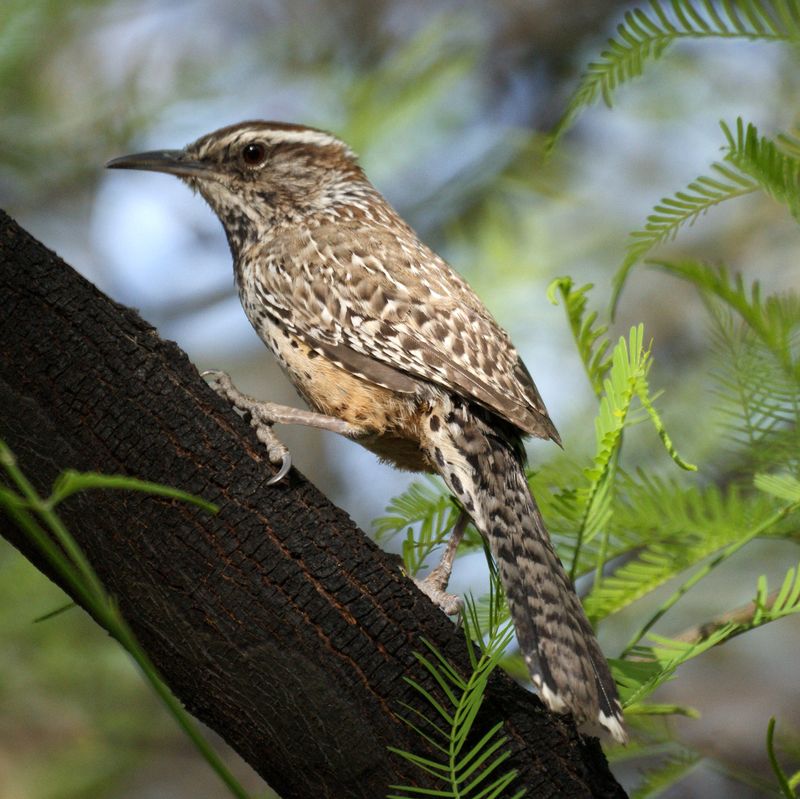
Ground foraging is central to how cactus wrens feed in Arizona. They flip over stones and debris, probe leaf litter, and work through open soil patches searching for beetles, ants, grasshoppers, and other invertebrates.
Seeds, fruit, berries, and nectar supplement that insect base, but the primary food source is animal protein found at ground level. A yard designed around that reality looks different from one optimized for seed-eating songbirds.
Retaining some open, unpaved ground near native plantings gives cactus wrens a practical foraging surface. Native plants support the local insect communities that make foraging productive, and a modest layer of leaf litter or decomposed organic material can shelter the small invertebrates the birds hunt.
Putting out a seed feeder is not a reliable way to draw cactus wrens in Arizona, and it carries its own risks. Feeders can concentrate birds in ways that spread disease and attract predators.
The stronger investment is habitat: native plants that produce food and shelter insects, open ground for foraging, and reduced chemical interference. No yard change, including this one, guarantees that cactus wrens will appear, but removing the obstacles to foraging is more likely to help than adding seed.
Choose Arizona Plants for the Site, Not Just the Bird
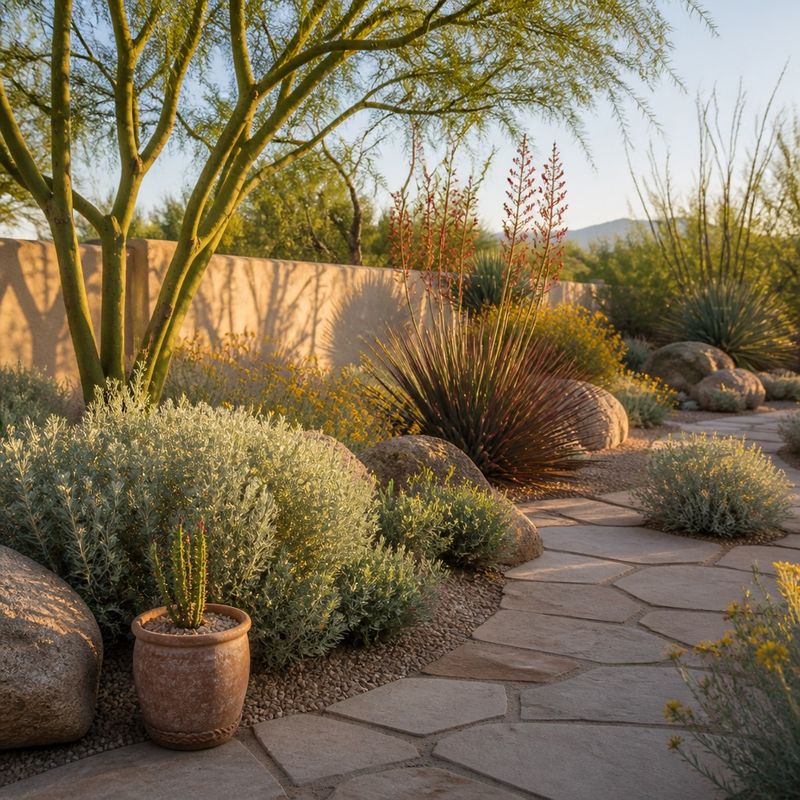
Layering vegetation is the key concept for low-desert Arizona yards aiming to support cactus wrens. A canopy-level tree such as palo verde or ironwood provides shade and structural complexity.
A mid-level thorny shrub like catclaw acacia or a cholla placed at a safe distance from foot traffic adds nesting potential. Lower native plants and some open ground complete the set.
One isolated cactus dropped into an otherwise barren decomposed-granite yard adds very little of that connected habitat value.
Native status does not make every plant equally appropriate for every Arizona site. University of Arizona Cooperative Extension guidance on mesquite and palo verde points out that velvet mesquite can grow quite large and may require more supplemental irrigation than blue palo verde or ironwood, both of which are more reliably low-water once established.
Desert willow is another useful mid-size option that stays manageable in many Arizona yards. Matching a plant’s mature size, water needs, and root behavior to the actual space prevents problems down the road.
Soil drainage, reflected heat from walls or pavement, and proximity to walkways, utilities, and structures all influence whether a plant thrives or becomes a maintenance burden in Arizona’s low desert. A thorny plant that drops spines across a path or lifts a sidewalk with its roots creates problems that outweigh its habitat value.
Consulting University of Arizona Cooperative Extension resources or a local nursery familiar with Sonoran Desert conditions helps match plant choices to real site constraints before anything goes in the ground.
Treat Water and Maintenance as Supporting Measures
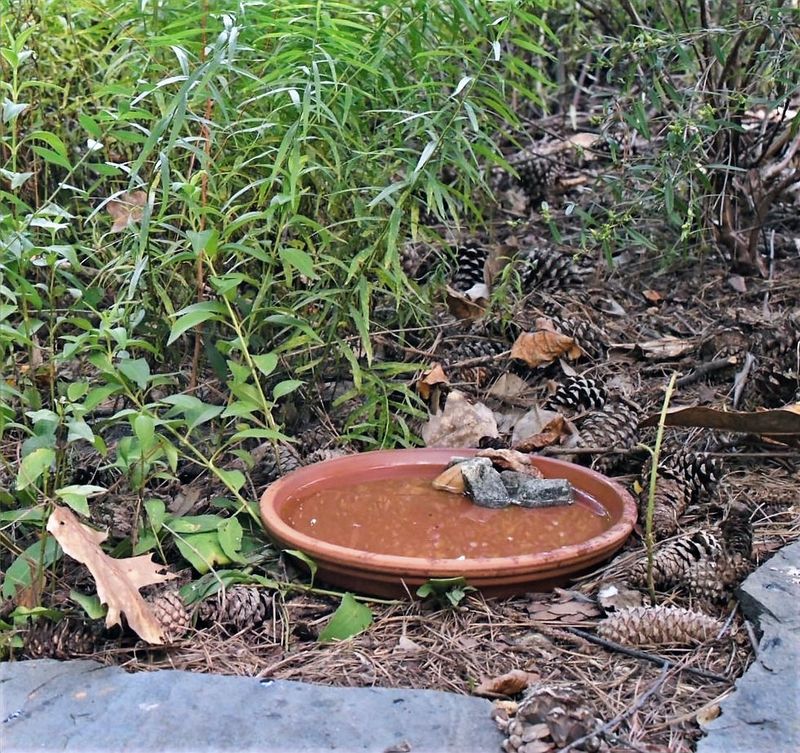
Cactus wrens are well adapted to Arizona’s dry conditions and obtain much of their water from the insects, fruit, and other foods they eat. Other Arizona yard visitors, including pollinators and smaller songbirds, may use a bath more readily than cactus wrens will.
If you do provide a birdbath in Arizona, hygiene is non-negotiable given the summer heat. Dump and refill it daily to prevent mosquito larvae from developing, and clean the basin regularly with a dilute bleach solution followed by a thorough rinse.
Stagnant water in Arizona’s warm months becomes a disease and mosquito risk quickly, so a neglected birdbath can do more harm than good for yard wildlife overall.
Maintenance choices matter more broadly than water sources. Reducing unnecessary broad-spectrum pesticide applications, avoiding heavy pruning during Arizona’s late-winter-through-early-summer nesting window, and keeping mature native plants structurally intact all support habitat quality in ways that a birdbath or seed feeder simply cannot match.
Secondary amenities are fine additions, but the habitat foundation, thorny cover, foraging ground, and native plant layers, carries the real weight for any Arizona yard trying to support cactus wrens.
Improve Habitat Without Expecting a Guaranteed Return
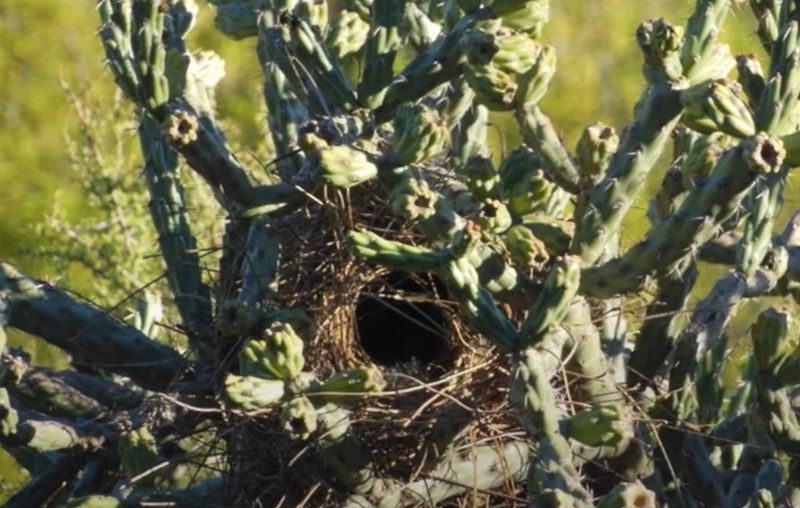
A practical sequence for improving cactus-wren habitat in Arizona starts with what is already there. Protect safely located cholla, prickly pear, mesquite, ironwood, and palo verde before adding anything new.
Add compatible native layers where space and site conditions allow, keep some open ground near thorny cover for foraging, and reduce broad-spectrum pesticide use to support the insect base the birds depend on. Observe the yard over multiple seasons rather than expecting immediate results.
Habitat improvements can make an Arizona yard more attractive to cactus wrens, but they cannot overcome regional development pressure, habitat fragmentation beyond the property line, weather variability, or the simple reality that territory limits how many birds a given area can support. Cornell’s land trust conservation profile for the cactus wren reinforces that landscape-scale habitat loss is the primary driver of long-term decline, something no single yard can fully counteract.
The honest framing is this: better habitat raises the odds without writing a guarantee. What works in Arizona is a connected package of desert features, thorny nesting cover, open foraging ground, native plant layers, and reduced chemical interference, rather than any one plant, feeder, or accessory.
A yard built around that package does something genuinely useful for a bird that has lived in the Sonoran Desert far longer than any subdivision has.