Why Some Texas Gardeners Are Replacing Heat Stressed Ornamentals With Salvias
Texas gardens can look gorgeous in May and exhausted by late July.
The petunias slump. The impatiens crisp at the edges. Roses push out one brave bloom, then spend the afternoon looking personally offended by the sun.
By August, many gardeners start eyeing the same beds with one question in mind: why keep replacing plants that clearly hate the assignment?
That is where salvias begin to look less like a trend and more like common sense.
They bring color, movement, scent, and wildlife value without demanding the same constant rescue routine.
Some handle rocky Hill Country soil. Some tolerate Gulf Coast humidity. Some keep hummingbirds hovering so close to the porch that coffee suddenly tastes better.
No plant is perfect for every Texas yard. The right salvia still needs the right light, drainage, and first-season care.
But for gardeners tired of nursing heat-stressed ornamentals through another brutal summer, this switch can feel like finally planting with the climate instead of arguing with it. That alone changes the whole mood fast.
1. Salvias Keep Blooming Through Heat
Salvias do not faint the minute Texas summer gets serious.
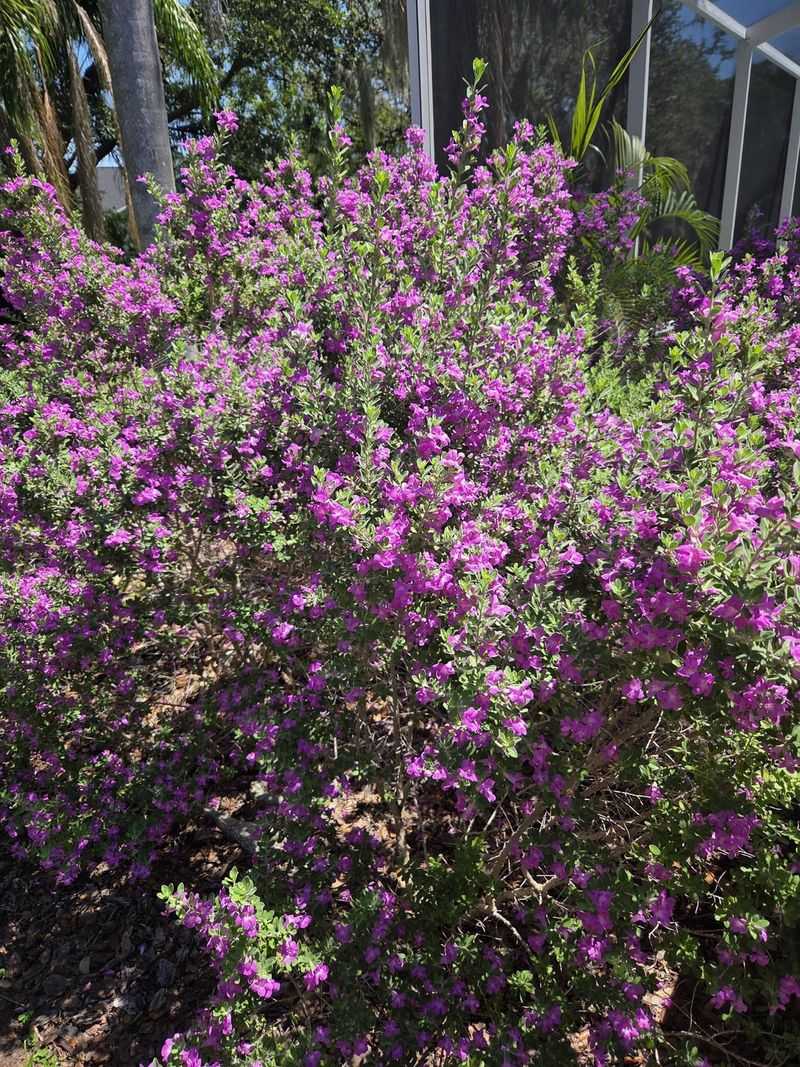
That is the appeal. While many bedding flowers start to slump, scorch, or stall during the hottest stretch, the right salvia can keep sending up color with much less drama.
Bloom may slow during the most punishing heat, but many types recover quickly once nights ease back and water reaches the roots.
Autumn sage, or Salvia greggii, is a favorite in Central and West Texas because it handles heat, sun, and leaner soil with real grit once established. It can bloom in waves from spring into fall, especially with light pruning between flushes.
Mealy blue sage, or Salvia farinacea, brings upright blue-violet spikes and often handles more humidity than some shrubby types. That makes it useful in parts of East and Southeast Texas where dry-climate plants can sulk.
The catch is species choice. Common bedding salvia may need more water or afternoon protection in brutal southern heat. A plant labeled “salvia” is not automatically built for every Texas zip code.
Give new transplants steady water through their first season. Mulch lightly, keep soil from baking bare, and avoid planting into rock-hard dry ground during a heat advisory.
Once roots settle, many salvias can outlast petunias, impatiens, and other thirsty ornamentals with far fewer rescue missions.
That is why gardeners start with one plant, then somehow end up planning an entire salvia border by Labor Day.
2. Deep Roots Stretch Irrigation Longer
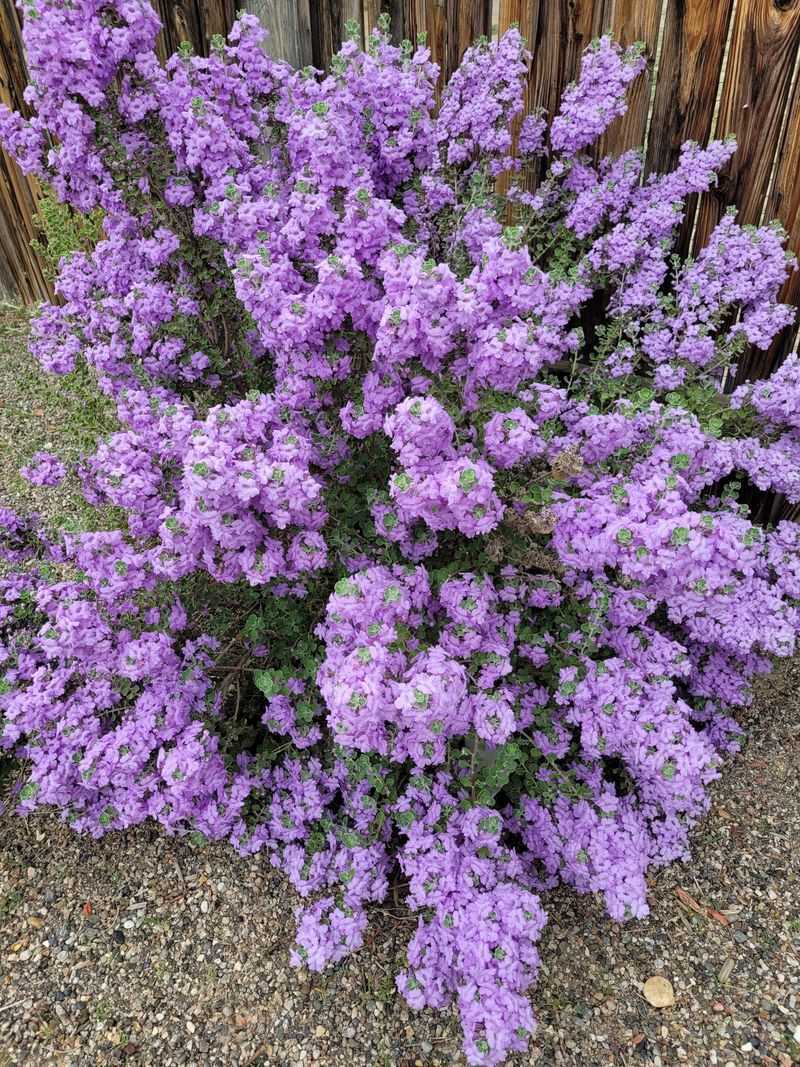
A salvia’s best work often happens underground.
The nursery pot may look modest, but after a full season in the ground, many salvias build stronger root systems that help them reach moisture beyond the quick-drying surface layer.
That deeper rooting habit is one reason established plants can stretch irrigation better than shallow-rooted annuals.
This matters in Texas, where surface soil can turn dusty between waterings while deeper soil still holds usable moisture.
Watering style makes a difference. Frequent shallow sprinkles teach roots to stay near the surface, exactly where heat dries the soil first.
Your Texas Garden Changes Every Week. Your Plan Should Too.
Gardening in Texas changes quickly throughout the season. Every Friday you’ll receive a simple weekly plan showing exactly what to plant, prune, fertilize, harvest, and protect so you never miss the right timing.
Deep, slower watering encourages roots to move down and out, which gives the plant better odds during dry spells.
New plants still need regular care. A fresh salvia is not drought-proof just because the mature plant has a tough reputation. Give it consistent moisture through the first hot season so the roots can actually build that resilience.
Drainage is just as important as water depth. Salvias can struggle in heavy clay that stays soggy after rain. Raised beds, sloped sites, gravelly soil, or amended planting areas can help roots get the oxygen they need.
Mulch helps too. Use 2 to 3 inches around the root zone, but keep it pulled back from the crown. A damp mulch pile pressed against stems can invite trouble.
Once established in the right spot, salvias often need less frequent watering than many classic summer ornamentals.
That means fewer hose emergencies, less wilt panic, and a garden that does not collapse emotionally every time the forecast shows triple digits.
3. Aromatic Leaves Reduce Deer Browsing
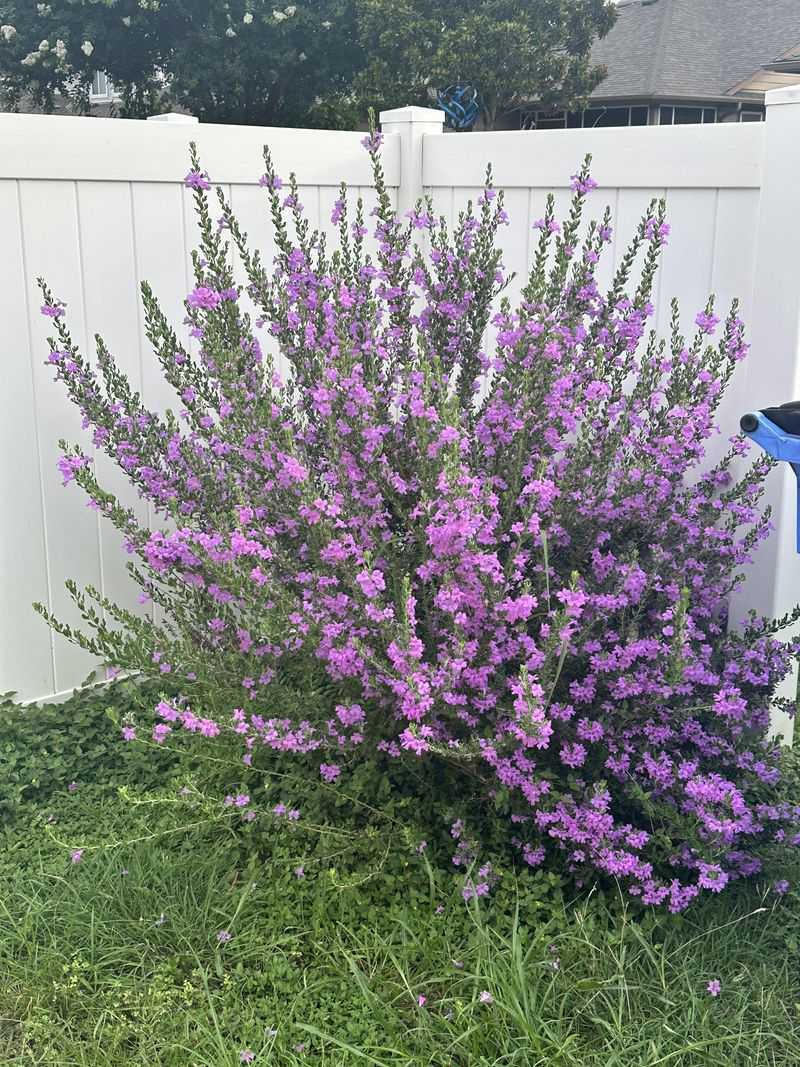
Texas deer can turn a flower bed into a buffet with suspicious speed.
That is one reason salvias have become so attractive to gardeners in deer-heavy neighborhoods, especially around the Hill Country, San Antonio suburbs, and rural edges where browsing pressure can be relentless.
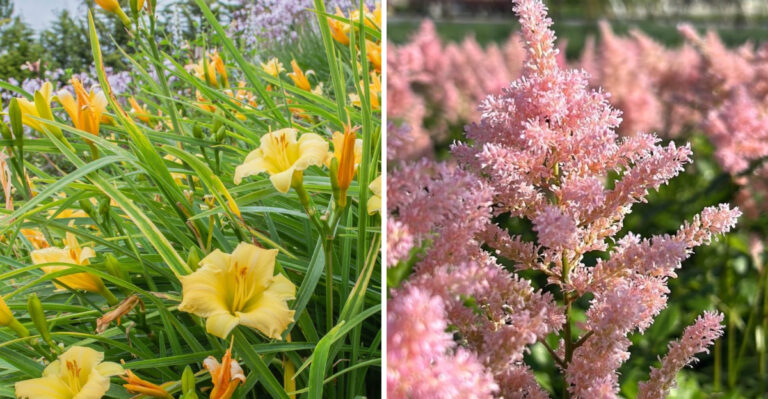
Many salvias carry aromatic oils in their leaves. Brush the foliage, and that sharp herbal scent rises fast. Deer often prefer softer, milder plants, so strongly scented salvias may sit lower on the menu than roses, daylilies, hostas, or tender annuals.
That does not make them deer-proof. Hungry deer are not known for reading plant tags or respecting garden plans. In drought, overpopulated areas, or late summer food shortages, they may sample almost anything.
Still, salvias can be a smarter starting point than plants deer repeatedly strip to sad little stems.
Young growth needs the most protection. Fresh transplants are softer and more appealing than woody, established plants. Use temporary cages, repellents, or strategic placement during the first few months if deer already treat your yard like a salad bar.
Once plants mature and develop woody bases, light browsing may be less damaging. Many salvias can rebound with new growth if the crown stays healthy.
Watch your own neighborhood patterns. Deer pressure changes from street to street. A salvia that remains untouched in one yard may get sampled two blocks away.
For Texas gardeners tired of replacing deer snacks and heat victims in the same bed, salvias offer a practical middle ground.
Not magic. Just better odds with flowers attached.
4. Hummingbirds Work Every Flower Spike
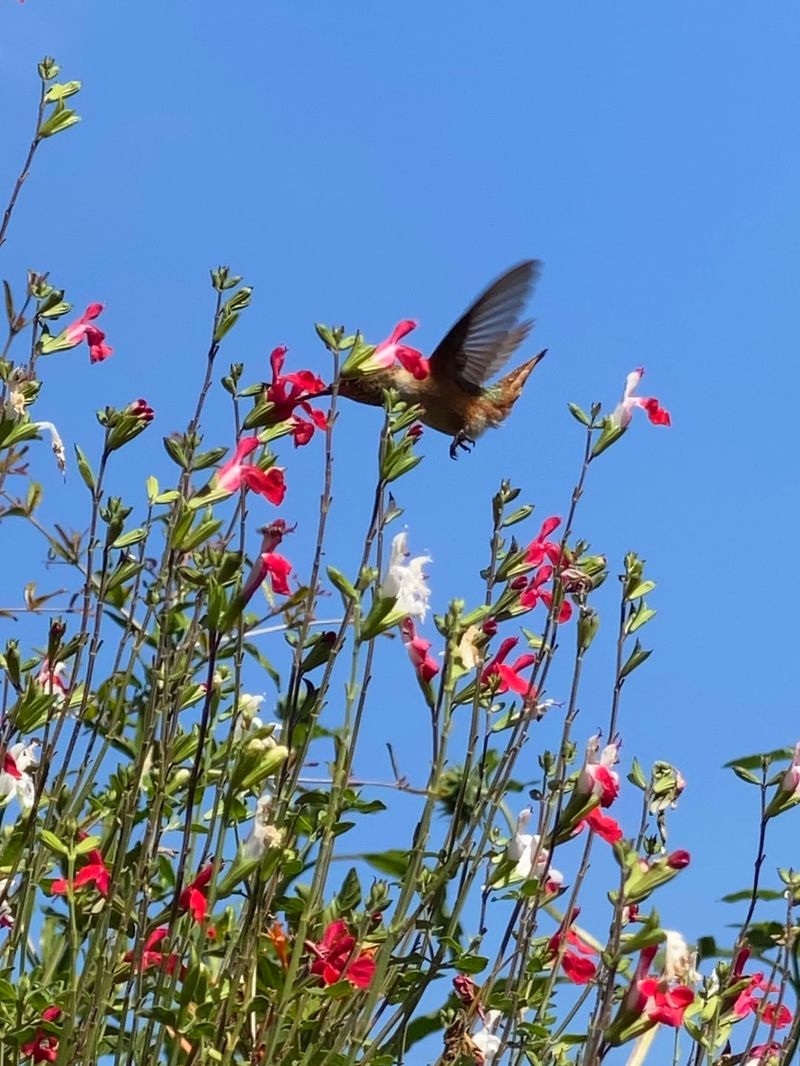
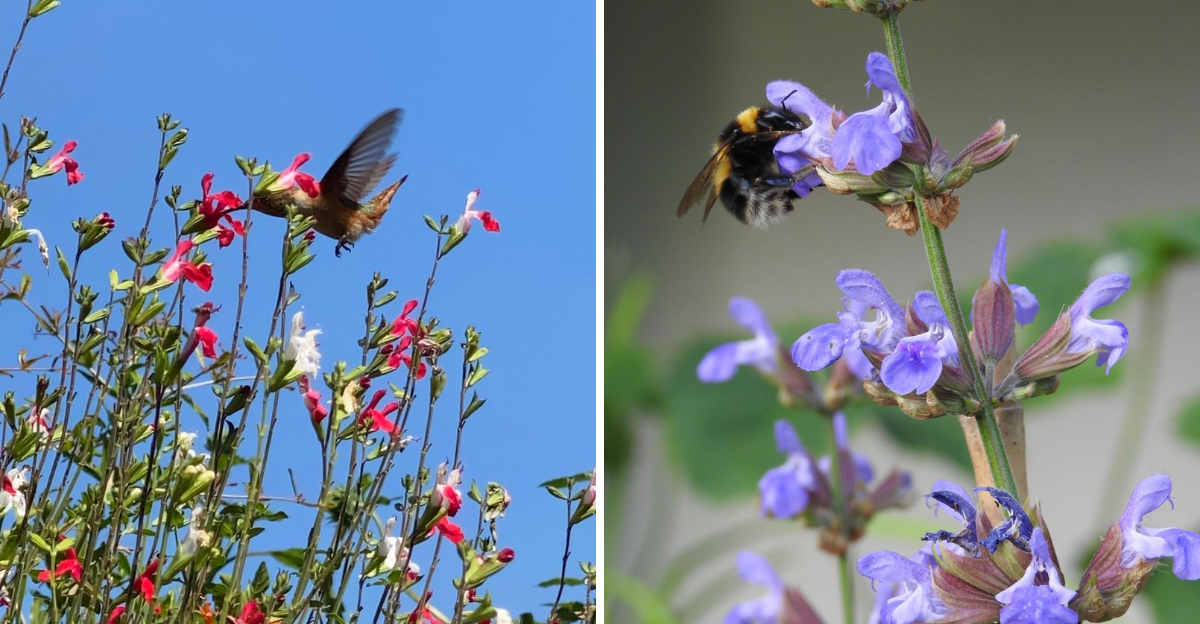
Salvias turn a hot Texas garden into a hummingbird stop.
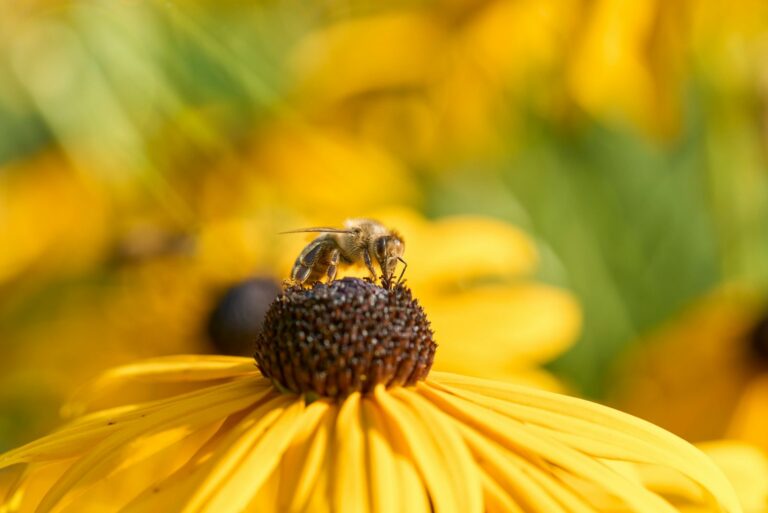
The tubular flowers fit long bills beautifully, and the repeated bloom gives birds a reason to keep checking the same plants.
Red, coral, pink, orange, purple, and blue varieties can all draw attention, though red and coral shades often get noticed fastest.
Autumn sage is one of the porch-side favorites because it blooms in waves and stays manageable. Scarlet sage, or Salvia coccinea, can also pull in hummingbirds with bright flowers that light up shaded edges and warm garden beds.
The best part is the rhythm. A well-chosen salvia planting can offer nectar across a long stretch of the year instead of one brief spring moment.
That matters in Texas, where hummingbird migration and local movement can overlap with long bloom seasons.
Plant in groups when space allows. One salvia is useful. Several together are easier for birds to spot and can create a more reliable feeding patch.
Avoid spraying open blooms. Even products that seem gentle can create risk when applied where hummingbirds, bees, butterflies, and other visitors feed.
Treat pest problems carefully, away from active flowers, and only when a real need exists.
Keep spent flowers trimmed on repeat-blooming types. Light trimming or shaping can push fresh growth and more nectar-producing blooms.
Give plants enough room for air movement and enough sun for strong flowering.
The reward is not just color. It is that sudden flicker near the porch, the tiny hover beside a flower spike, and the feeling that the whole garden has more life in it.
5. Pollinators Find Color For Months
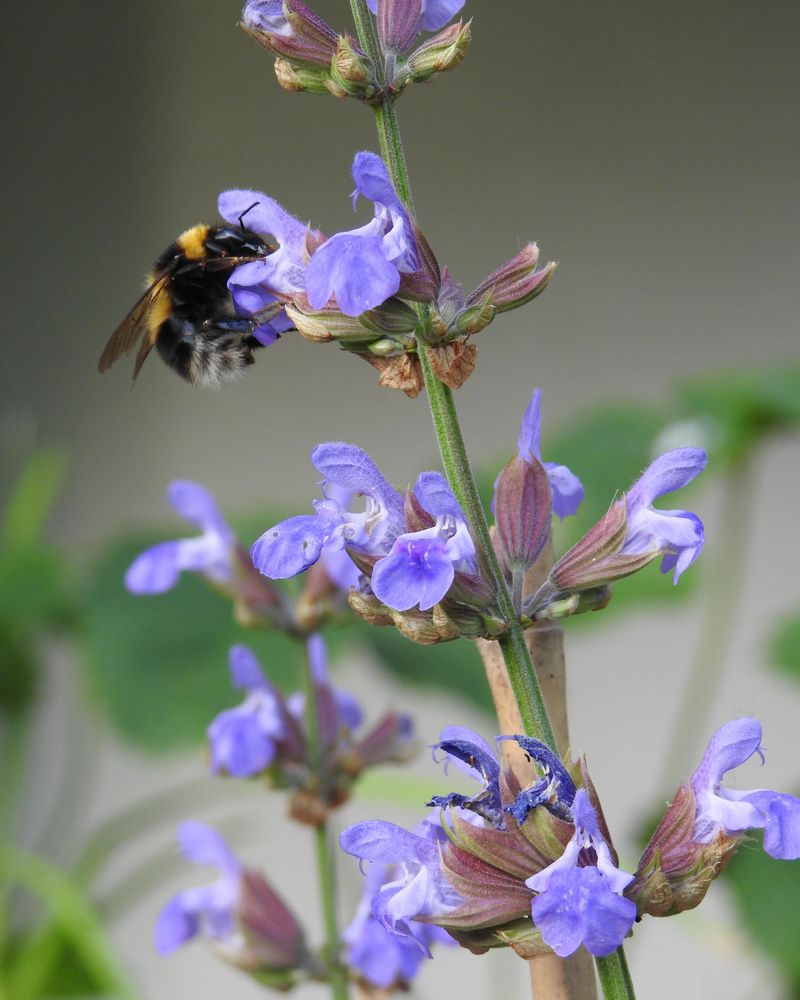
A single salvia can brighten a bed.
A mix of salvias can keep pollinators working for months. That long bloom window is one reason gardeners use them to replace ornamentals that peak once and then spend summer looking exhausted.
Mealy blue sage can start early and keep pushing blue-violet flower spikes through much of the warm season with decent care.
Autumn sage often blooms strongly in spring, slows during extreme heat, then returns with a fall flush that feels perfectly timed.
Scarlet sage can carry color through warm months, especially where it gets the right balance of light and moisture.
Together, they create a sequence. Different bloom times mean bees, butterflies, and other visitors find food across more of the season.
Massing helps. Planting three, five, or more of the same salvia creates a stronger visual target than scattering one plant here and one plant there.
Pollinators do not browse the yard like shoppers with tiny carts. They respond to visible patches of color and repeated rewards.
Mix flower shapes and colors for more diversity, but do not overcrowd. Airflow matters in humid regions, and salvias packed too tightly may look messy or struggle with leaf issues.
Skip broad-spectrum insecticides near blooming plants. A pollinator bed cannot do its job if the helpful insects get knocked back with the pests.
Salvias also pair well with other Texas-tough plants like lantana, Gregg’s mistflower, native grasses, and coneflowers, depending on region and site.
The result is a garden that changes with the season instead of giving one short performance and asking for replacements.
6. Light Pruning Triggers A Fall Flush
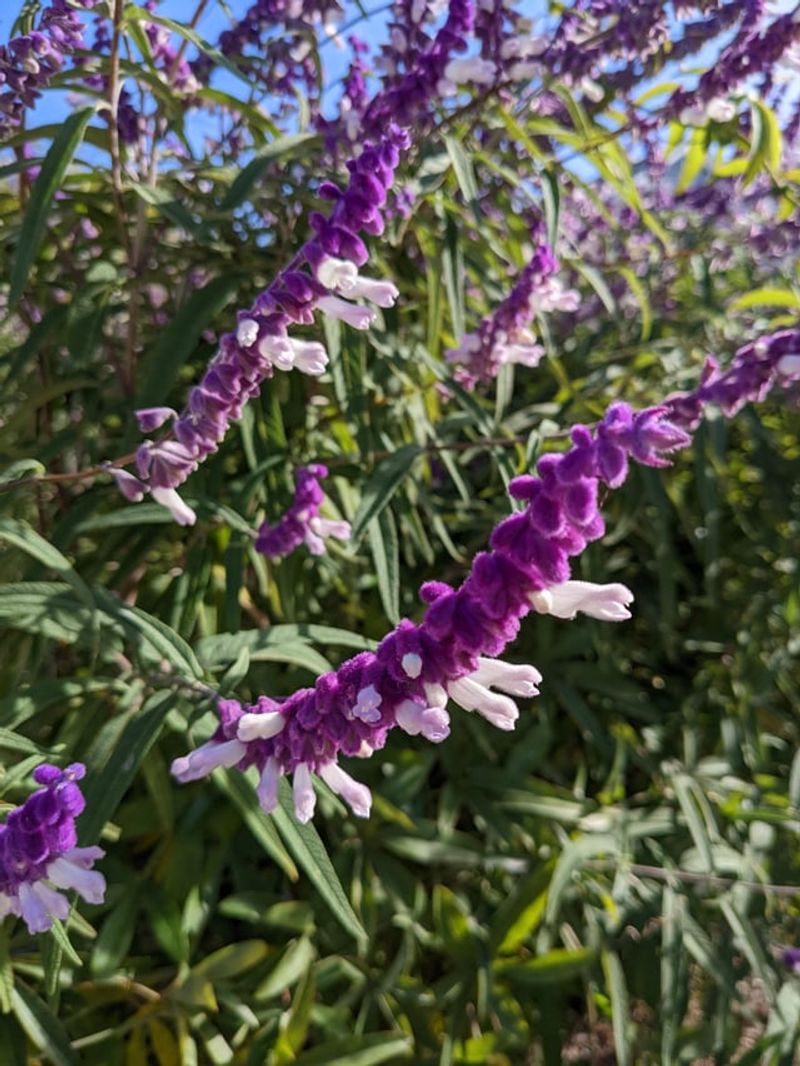
By late summer, salvias may look a little tired.
That does not mean they are finished. In many Texas gardens, a light trim at the right time can push new branching and set up a fresh bloom flush just as fall weather begins to feel kinder.
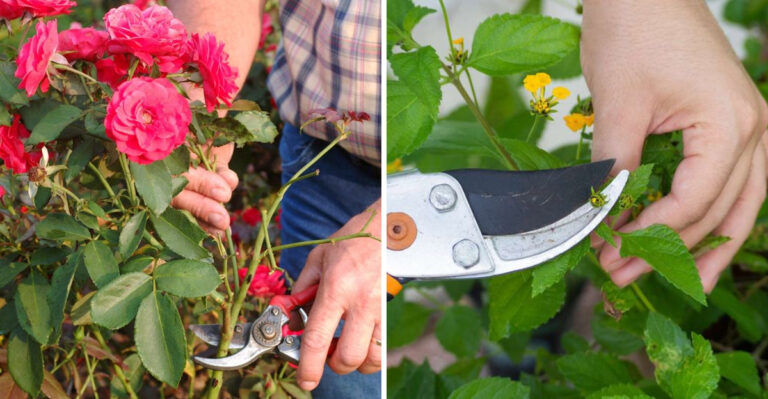
The key is restraint. A brutal haircut during the hottest stretch can stress the plant instead of helping it. Remove spent flower spikes, leggy tips, and about the top third of growth when nights start to ease.
For many areas, that moment lands in late August or early September, but local weather should guide the timing.
Autumn sage responds well to shaping. A light cut can keep it compact and encourage another wave of flowers.
Mealy blue sage often benefits from trimming individual spikes, which keeps the clump neater and blooming longer. Mexican bush sage is different because it saves its big show for fall, so heavy pruning before bloom can steal the best part.
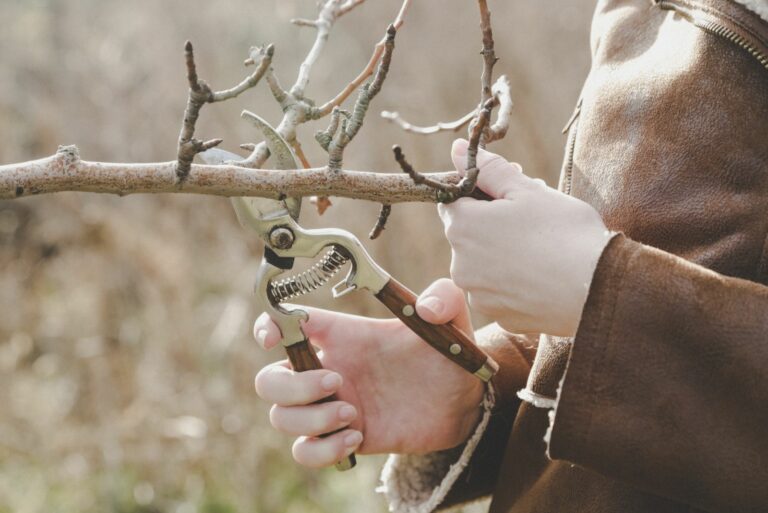
Use clean, sharp pruners. Ragged cuts invite stress, and dirty blades can move problems from plant to plant. Clip just above a set of leaves when possible so new growth has a clear place to start.
Water deeply after pruning if the soil is dry. The plant needs support while it pushes fresh stems.
Do not fertilize heavily to force growth. Too much nitrogen can create floppy foliage instead of strong bloom.
Light pruning works like a reset button, not a punishment.
With timing and moderation, salvias can move from late-summer scruffy to fall-color comeback without the gardener buying another flat of replacements.
7. Native Species Match Texas Conditions
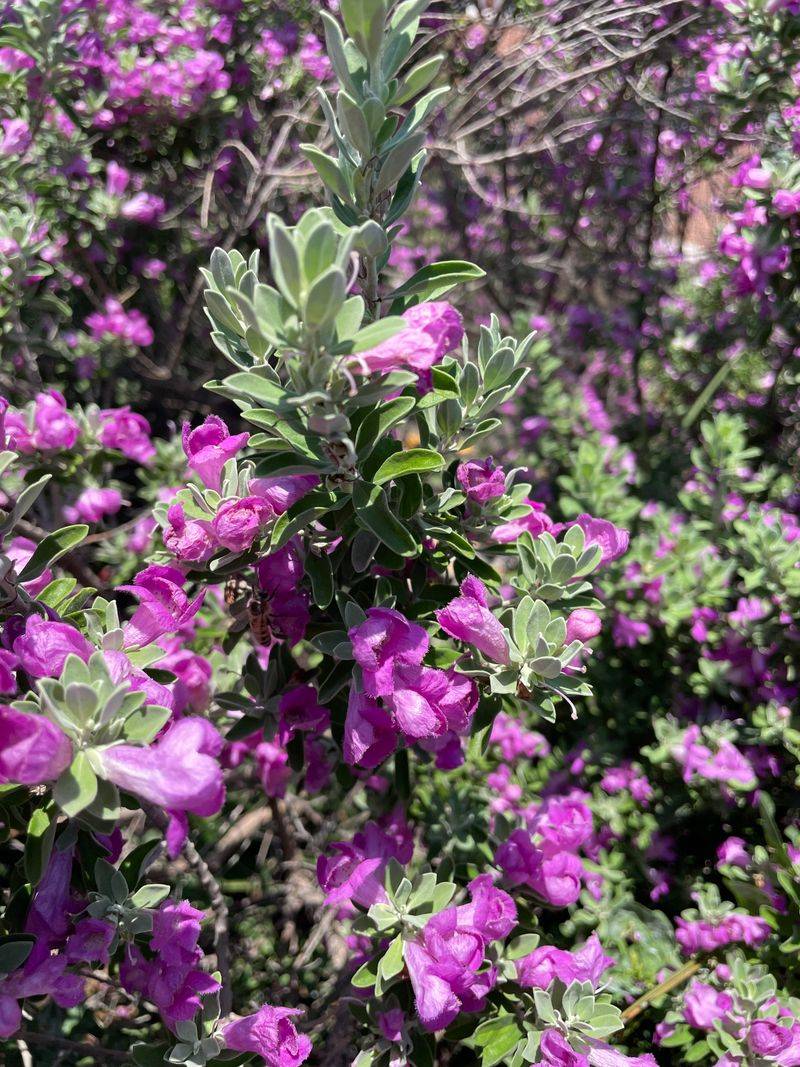
Texas native salvias come with local experience built in.
That is why more gardeners are looking beyond generic bedding plants and choosing species tied to their region’s soil, rainfall, heat, and wildlife.
A plant that evolved with Texas conditions often needs less pampering than an ornamental bred for quick retail color in a greenhouse.
The state is huge, though. “Native to Texas” does not mean perfect for every Texas yard.
Texas sage, Salvia texana, suits rocky, limestone-based sites in parts of Central and West Texas. It stays relatively compact and brings blue-purple flowers in spring.
Cedar sage, Salvia roemeriana, is a strong choice for partial shade in the Edwards Plateau, especially under trees where full-sun plants struggle. Its red flowers can draw hummingbirds early in the season.
Engelmann’s sage, Salvia engelmannii, fits dry, open areas with lean soil. It is not the plant for a soggy coastal bed, but in the right site, it can look perfectly at home.
Scarlet sage is another valuable native or near-native choice in many Texas gardens, especially where gardeners want red flowers and wildlife activity with some shade tolerance.
Buy from local native plant nurseries when possible. Ask where the plants were grown and which regions they suit best. Local provenance can matter, especially in a state with so many different climates.
Give native salvias the conditions they actually want. Good drainage, proper light, and room to mature still matter.
The payoff is a planting that feels less forced. Instead of dragging heat-stressed ornamentals through another punishing summer, gardeners can build beds around plants that already understand the assignment.