Native North Carolina Ground Covers That End The Bark Mulch You Rebuy Around Every Shrub Bed
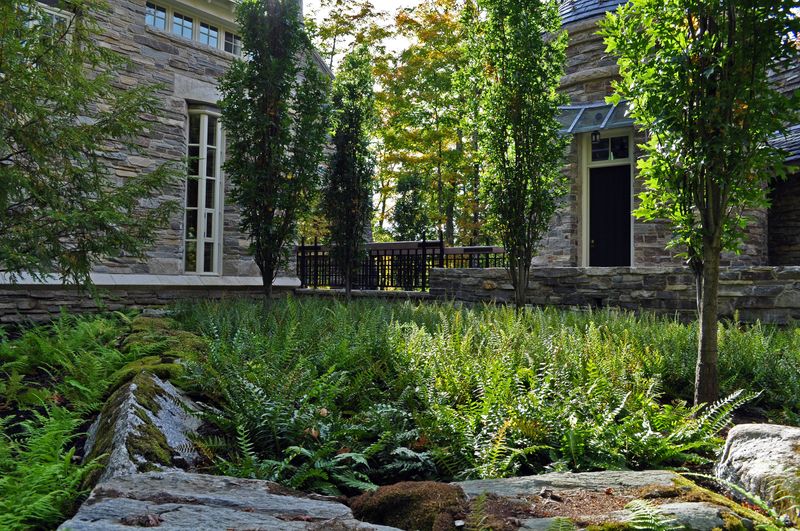
You walk out to the shrub bed on a muggy July morning, coffee in hand, and there it is again. The bark mulch you spread in spring has faded to gray, washed thin by afternoon storms, and half of it floated toward the driveway. Every year you buy more, haul more, spread more, and every year North Carolina weather undoes your work. There is a better way, and it grows itself.
Native ground covers knit the soil together, feed pollinators, and turn that bare dirt into a living carpet you never rebuy.
1. Green And Gold Carpets The Ground With Sunshine
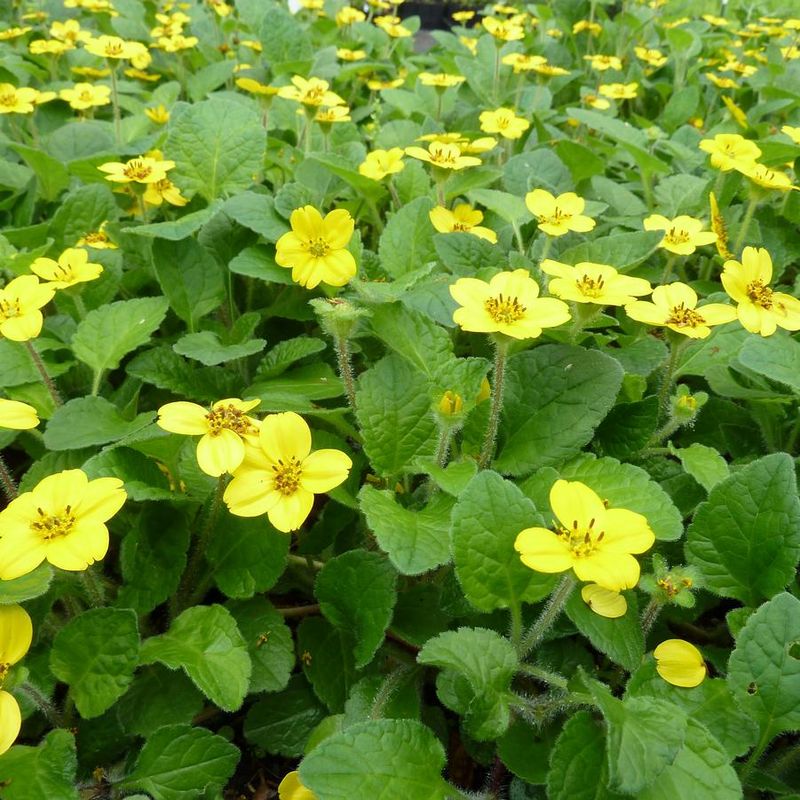
Picture the front of your azalea bed in April, dappled shade from a dogwood overhead, and a low mat of yellow stars spreading right up to the mulch line. That is green and gold, or Chrysogonum virginianum, and it does something bark chips never will. It fills in.
Most folks think ground cover means one boring green rug. But this native throws daisy-like blooms an inch wide from spring into early summer, then again in fall when North Carolina cools down. The leaves stay low, around 4 to 8 inches tall, and creep outward by runners to knit a bed together.
Here is where it gets easy. Green and gold genuinely loves the part shade under shrubs where grass sulks and mulch bleaches out. Plant plugs 12 inches apart in spring, water them for the first few weeks, and they close the gaps by the following season. Piedmont red clay works fine as long as water does not pond there.
NC State Extension lists it as a dependable native for shady beds, which matters when you want something proven for our soil. It will not choke out your azaleas. It simply covers the dirt they leave bare.
You stop buying mulch for that bed. The plant handles it, and the bees thank you every spring.
2. Creeping Phlox Turns Slopes Into Spring Rivers
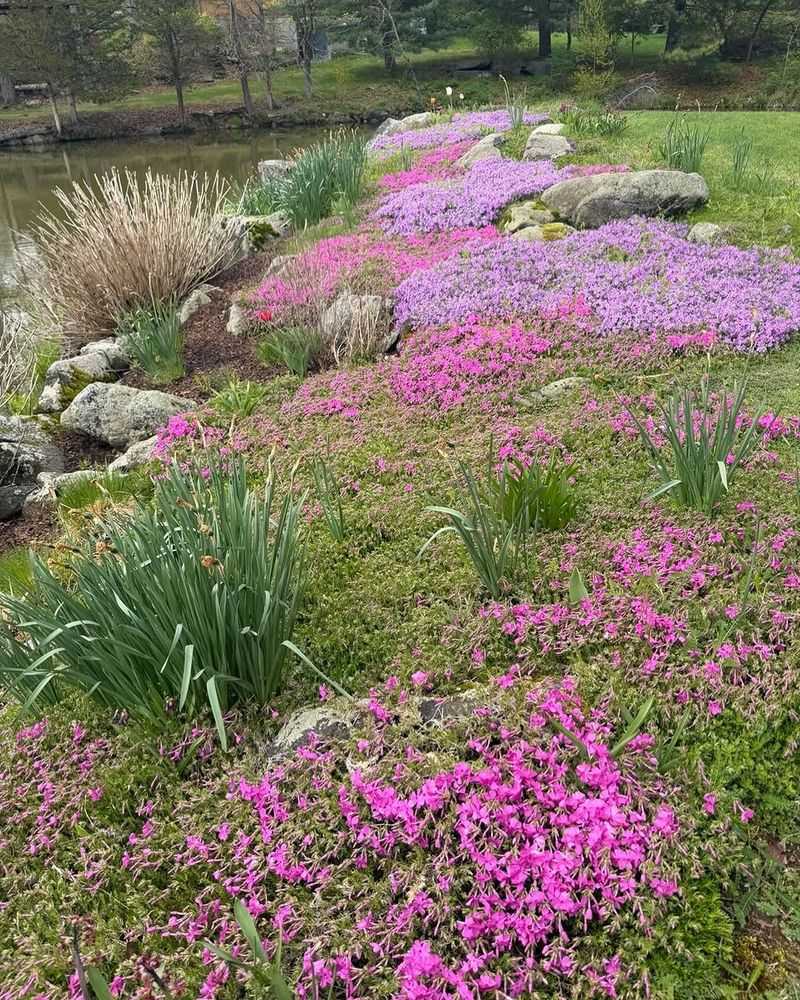
Drive through the Piedmont in late March and you will spot yards where an entire bank glows purple, pink, or white like spilled paint. That is creeping phlox, Phlox subulata, and it laughs at the sunny slopes where mulch always slides downhill.
Bark chips on a hillside are a losing battle. One good storm and they end up in the street. Creeping phlox solves that problem with roots that grip and stems that hug the ground, holding soil in place through the worst summer downpours.
The bloom show is the payoff. For about three weeks in spring the foliage nearly disappears under flowers, and pollinators arrive early while other plants still sleep. After bloom it stays a tidy evergreen mat, only 4 to 6 inches tall, green all winter through our mild Piedmont cold snaps.
Give it full sun and well-drained ground. Space plants 12 to 18 inches apart, and they will grow together within two seasons. Sandy Coastal Plain soil suits it beautifully, and it shrugs off drought once established, easing that August water bill.
It is not a magic solution for deep shade, so save it for the bright spots. But on a sunny shrub border or a bank you hate to mow, it turns a chore into a yearly celebration.
Your North Carolina Garden Changes Every Week. Your Plan Should Too.
Gardening in North Carolina changes quickly throughout the season. Every Friday you’ll receive a simple weekly plan showing exactly what to plant, prune, fertilize, harvest, and protect so you never miss the right timing.
3. Wild Ginger Thrives Where Nothing Else Will
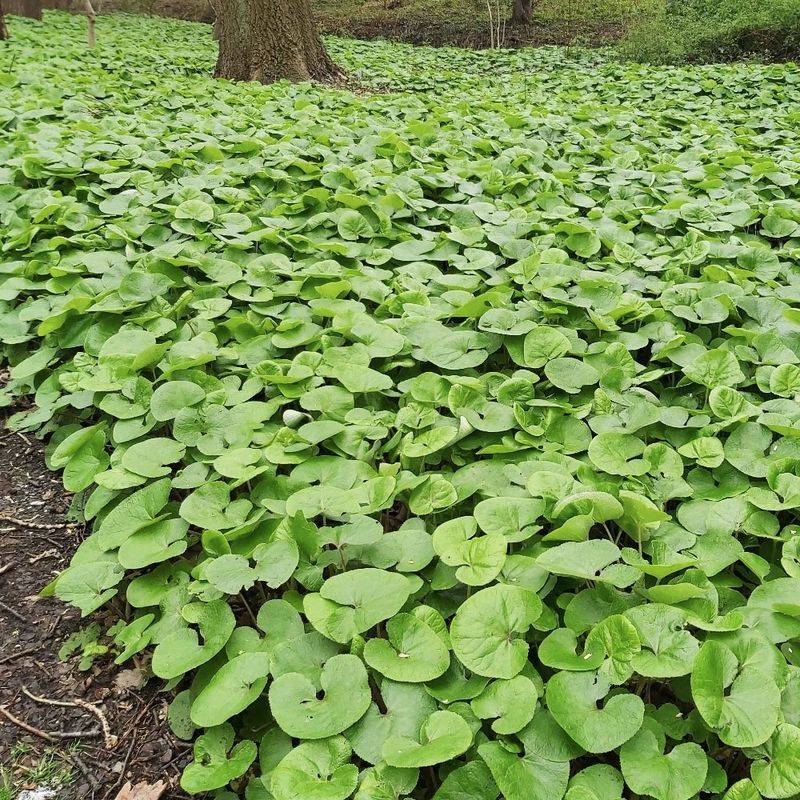
Deep shade under a mature oak or beneath the north side of the house is the graveyard of good intentions. Grass quits, mulch molds, and you keep reaching for the bag. Wild ginger, Asarum canadense, actually wants that spot.
The leaves are the draw, heart-shaped and lush, a soft green carpet about 6 to 8 inches tall that reads almost tropical in our muggy summers. Hidden underneath sit small maroon flowers most people never notice, quietly pollinated by ground beetles doing their work at soil level.
Here is the turn. Wild ginger spreads by slow creeping roots, so it fills in patiently rather than racing away. That makes it a well-behaved neighbor for hydrangeas and hostas, never a bully.
Plant it in rich, moist shade, spacing rhizome divisions about 12 inches apart in early spring or fall. Piedmont clay amended with leaf litter keeps it happy, and it appreciates the moisture our summer storms deliver. Once settled it needs almost nothing from you.
Do not confuse it with the culinary ginger from the grocery store, they are unrelated plants. This native simply covers the hardest ground in your yard and asks for nothing back but shade.
4. Foamflower Lights Up The Woodland Edge
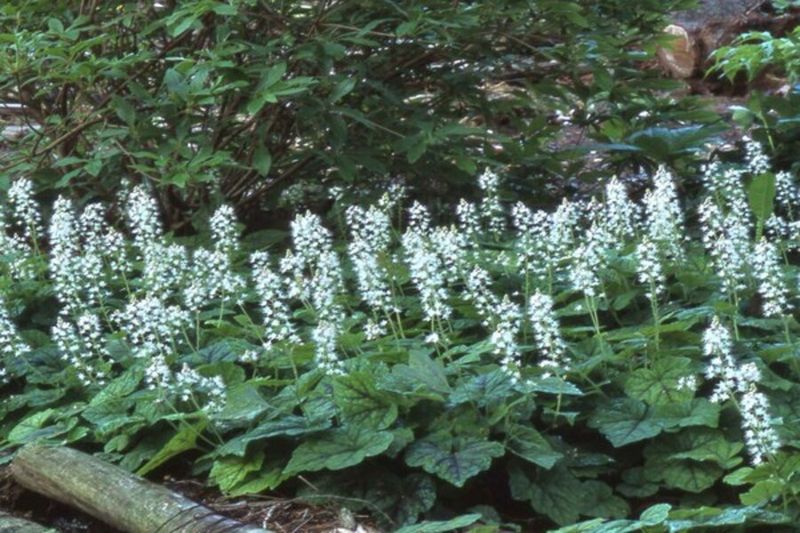
Foamflower earns its name honestly. Come April, spikes of tiny white blooms rise over the foliage like sea foam catching light along a shaded path. Botanists call it Tiarella cordifolia, and it belongs at the front of every North Carolina woodland bed.
What surprises people is the foliage after the flowers fade. The maple-shaped leaves stay handsome all season, often blushing bronze and red once the mountains and Piedmont cool in fall, giving you two seasons of interest from one low plant.
Standing only 6 to 12 inches tall, foamflower spreads by short runners to form a gentle colony. It threads perfectly between azaleas and rhododendrons, filling the awkward bare patches where mulch usually goes to die.
Set plugs 12 inches apart in dappled shade with moist, humus-rich soil. Our mountain gardeners in zones 6a to 7a love it because it handles cold and shade together. Water through the first summer, and it settles in for good.
It genuinely bridges the gap between showy bloom and reliable green cover. You get the spring sparkle, then a tidy carpet that holds the bed until the leaves drop.
5. Golden Ragwort Blooms Bright And Spreads Fast
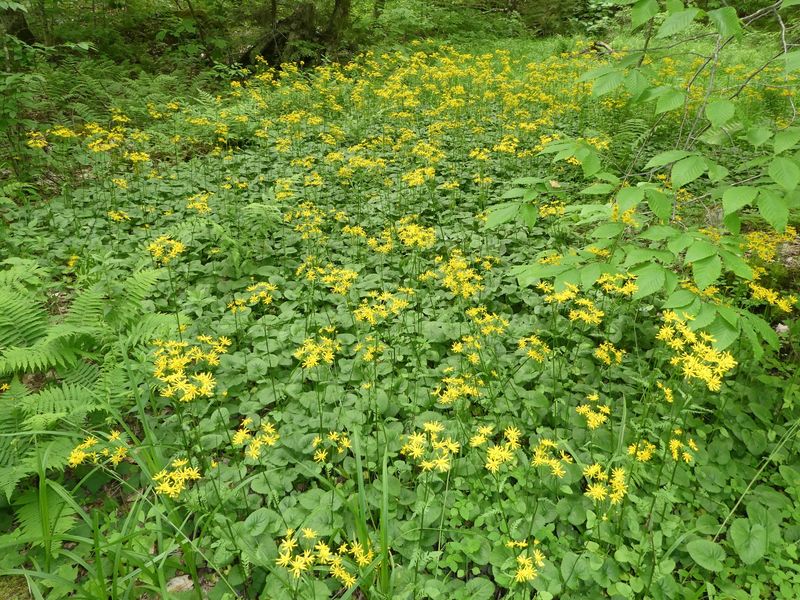
Some plants make you wait years for coverage. Golden ragwort, Packera aurea, is the impatient friend who shows up early and fills the whole room. If you want bare dirt gone quickly, this is your native.
Rosettes of rounded green leaves stay low through winter, then in April send up stems topped with cheerful yellow flowers that feed early native bees. After bloom the stems fade back and the basal leaves carry on as a dense, weed-smothering mat.
The real trick is how it moves. Golden ragwort spreads by seed and by runners, so it colonizes moist shade to part sun with genuine speed, closing gaps in a single season where slower plants would need three.
Plant plugs 12 to 18 inches apart in spring, and give it average to moist soil. It tolerates the wet spots along a downspout or a low corner of the yard where water collects after Coastal Plain storms. That is a spot mulch always rots in anyway.
Because it spreads eagerly, plan for it in a bed you want fully covered rather than a tiny nook. Let it run, and it does the mulching for you every year, for free.
6. Pennsylvania Sedge Reads Like A Lawn Without Mowing
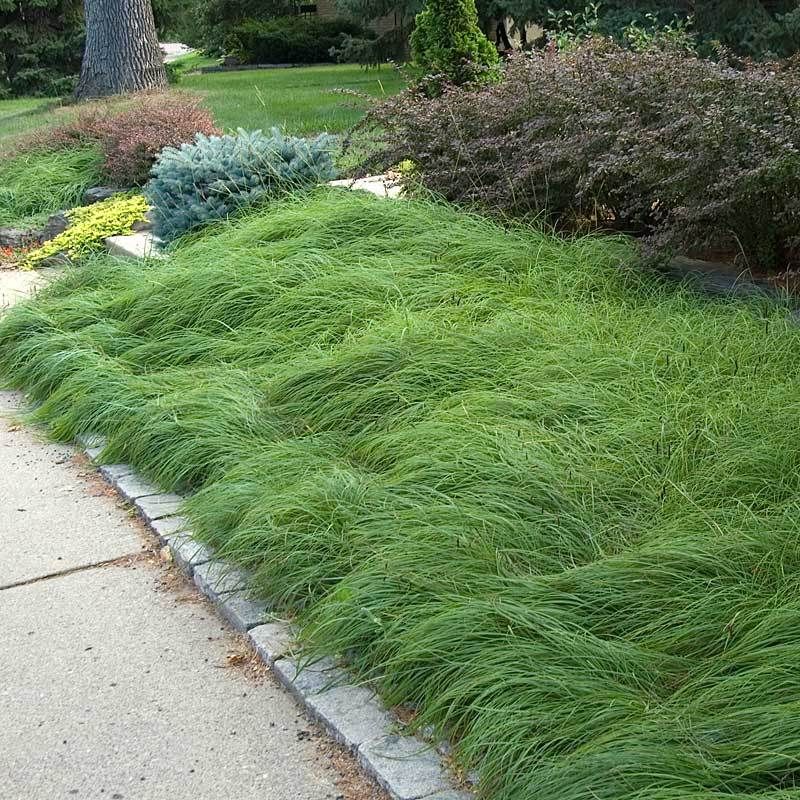
You want the calm, green look of turf under your shrubs but not the Saturday morning wrestling match with a mower. Pennsylvania sedge, Carex pensylvanica, gives you the softness of a lawn and skips the engine noise entirely.
Fine, arching blades grow only 6 to 8 inches tall and flop into a soft, wavy texture that ripples in a breeze. It is not a true grass, it is a sedge, which means it thrives in dry shade where real grass gives up and thins to dirt.
Here is the part that wins people over. Once established, Pennsylvania sedge needs no mowing, little water, and no fertilizer, spreading slowly by underground runners to form a continuous mat beneath trees and shrubs.
Plant plugs 6 to 12 inches apart for faster fill, in spring or fall, in the dry shade under oaks and pines common across the Piedmont and Sandhills. Water it the first season, then step back.
NC State Extension points to native sedges as smart, low-input choices for shaded ground, and this one proves the case. Trade the mower and the mulch bag for a green carpet that mostly minds itself.
7. Partridgeberry Weaves A Tight Evergreen Mat
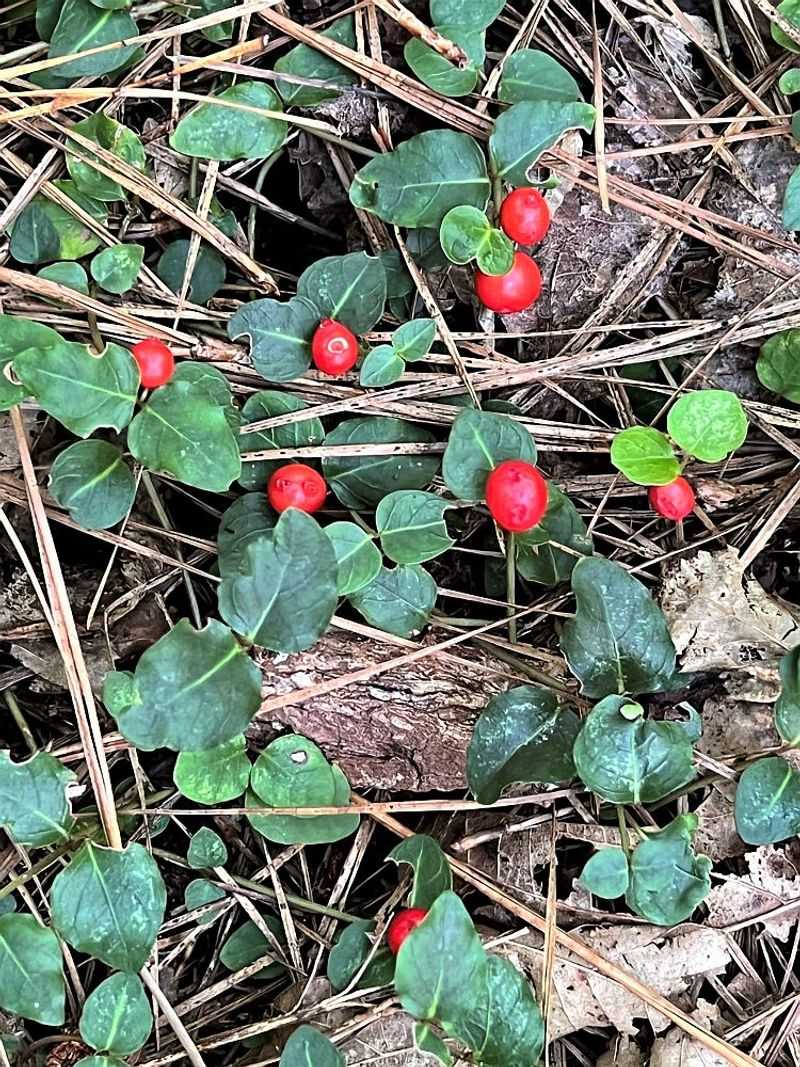
Down at ground level, some of the best plants stay small and steady all year. Partridgeberry, Mitchella repens, is a tiny evergreen creeper that hugs the soil so closely you could roll it up like a rug.
Round little leaves, each with a pale vein down the center, connect along trailing stems only 2 inches tall. Come summer it puts out paired white flowers, and by fall those turn into bright red berries that hold through winter, feeding birds and wild turkeys in our woods.
What makes it different is the scale. Partridgeberry is the finisher, the plant you tuck between larger ground covers or along the front edge of a shrub bed where you want a neat, unbroken green line down to the path.
Give it moist, shaded, acidic soil rich in leaf litter, exactly the conditions under azaleas and rhododendrons across the mountains and Piedmont. Set small divisions 8 to 10 inches apart and keep them damp while roots take hold.
It grows slowly, so this is patience over speed. But the payoff is a fine evergreen carpet that greets you with red berries during the coldest, grayest weeks of a North Carolina winter.
8. Woodland Stonecrop Handles The Dry Rocky Spots
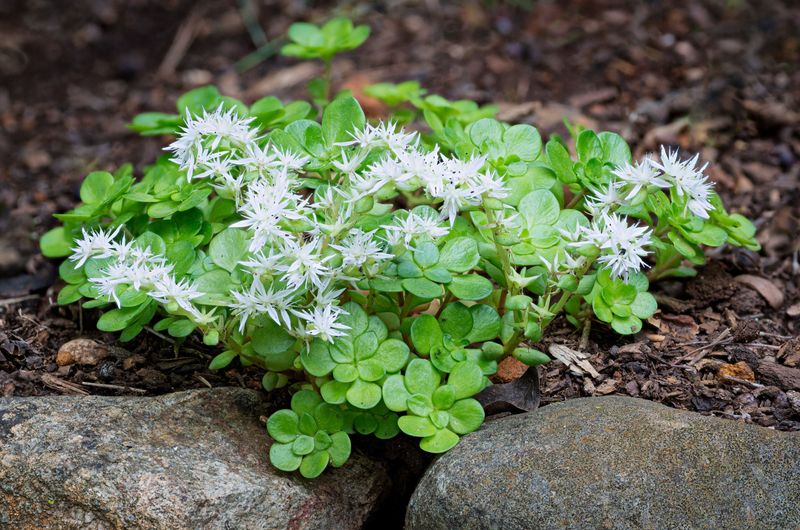
Every yard has that stubborn strip. Thin soil over roots, maybe a rocky edge, a place so dry that mulch bakes and blows away by August. Woodland stonecrop, Sedum ternatum, moves right into that misery and looks good doing it.
Unlike the fussy natives that beg for rich, moist ground, this succulent native stores water in its plump little leaves. Whorls of green foliage sit only 3 to 6 inches tall, and in spring it crowns itself with clusters of tiny white star flowers.
The surprise is that a native succulent grows wild in North Carolina at all. Woodland stonecrop tucks into rock crevices and thin woodland soil, so it thrives exactly where richer ground covers would sulk and die.
Plant it in part shade with fast-draining soil, spacing pieces 8 to 12 inches apart in spring. It roots easily from stem sections pressed into the ground, so a little goes a long way and costs you almost nothing to expand.
Once it spreads across that dry, awkward strip, the bare dirt disappears for good. And you can finally quit mulching the one spot that always defeated you.
9. Green Carpet Trumpet Vine Alternative Coral Honeysuckle Anchors The Bed
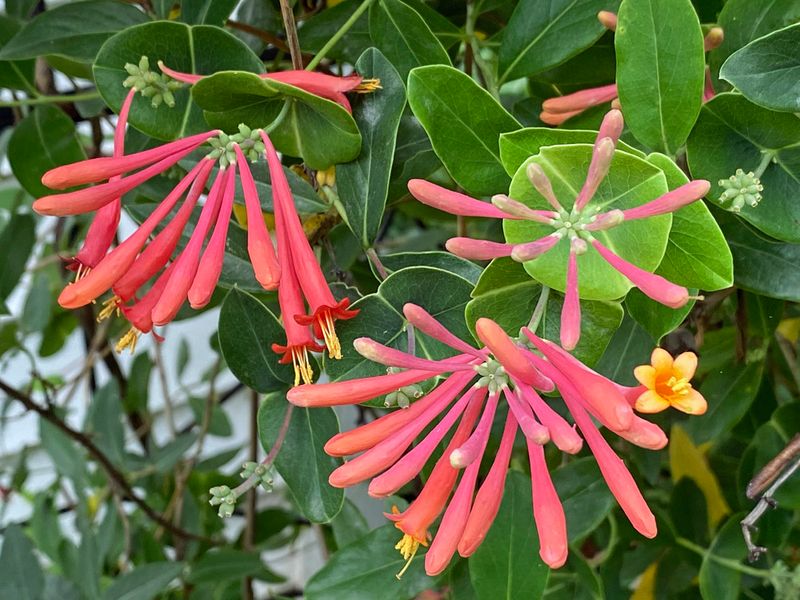
Not every ground cover has to stay flat. Along a shrub bed backed by a low fence, coral honeysuckle, Lonicera sempervirens, will sprawl and root as it goes, blanketing the ground while sending up trumpet blooms that hummingbirds cannot resist.
Most people know it as a climber, and it is. But left without a trellis it happily scrambles across open ground, its stems knitting into a leafy layer that shades out weeds and cuts your mulching where fences meet beds.
The wildlife draw is real. Clusters of red and orange tubular flowers open from spring into fall, so ruby-throated hummingbirds feed here on their way through North Carolina, and the berries later feed songbirds heading south.
Give it sun to part shade and average soil, which describes most Piedmont yards. Space plants 3 feet apart along the base of a bed, and pin a few stems down to encourage them to root and spread wide rather than up.
Keep it away from your shrubs so it does not climb them, that is the one caution. Managed at the edge, though, it turns a plain border into a living hummingbird highway, and you never haul another bag of bark to that stretch again.