Why Spiders Keep Building Webs Across Your Texas Garden Path
In Texas, fall is prime time for these sticky surprises. Long, warm days keep insects buzzing well into autumn, and spiders are taking full advantage.
Many of them have grown to their biggest size of the year, and they’re spinning large, round webs between shrubs, fence posts, and tomato cages.
Some, like the black-and-yellow garden spider, add a bold zigzag pattern right in the middle.
These spiders aren’t picking your path by accident. Open walkways create natural flight lanes for moths, flies, and other insects.
To a hungry spider, that’s valuable real estate. Understanding their strategy can help you share the garden with a little less flinching.
1. Paths Are Natural Insect Flyways
Think of your garden path as a tiny highway in the sky. Bugs do not like bumping into leaves and branches any more than you do. So they fly where the space is open and easy.
A garden path is one of the clearest routes in your whole yard. Moths, flies, gnats, and beetles zip along it all day and night.
They use it to travel from one patch of flowers to another. Spiders have figured this out.
Orb-weaving spiders are like fishermen who cast their nets where the fish swim. They do not build webs at random.
They build them where the most food will pass by. A web across your path is basically a trap set on a busy road.
Here is a fun fact. Some studies show that orb weavers will move their webs if they do not catch enough food.
When a spot works well, they stick with it. That means your path has passed the test.
So what can you do about it? You do not need sprays or harsh chemicals. Try these simple ideas instead:
Walk the path a little later in the morning, after the spider may have moved to the side. Keep a few open areas in other parts of the yard so bugs have more routes to choose from. Plant some flowers away from the walkway to pull insects in a new direction.
Remember that the spider is doing you a favor. Every bug caught in that web is one less bug buzzing around your head. Your path is busy, and the spider is just running a smart little business on it.
2. Plants On Both Sides Give Them Perfect Anchors

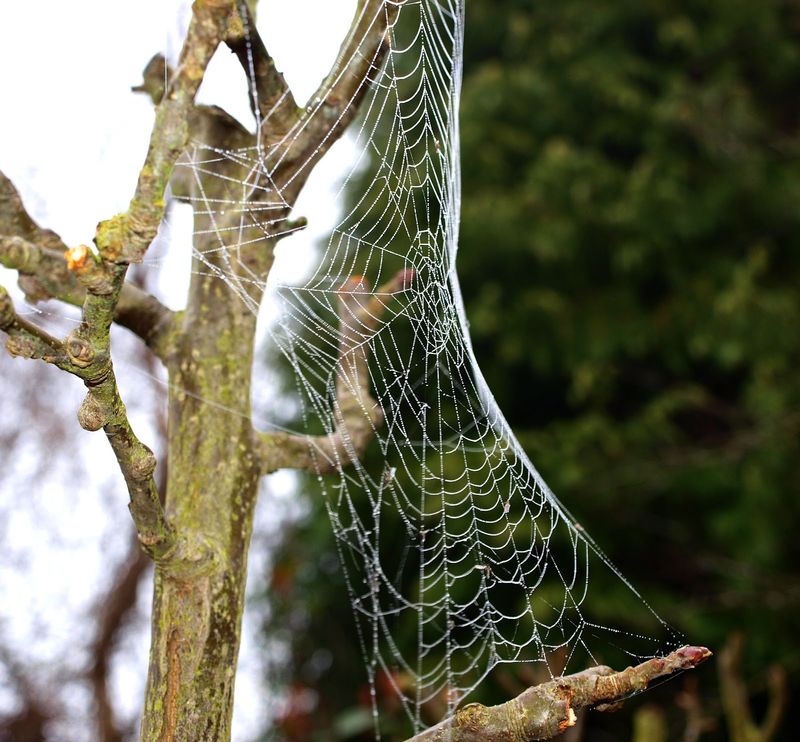
Every great bridge needs strong posts, and spider webs are no different. A web is a bit like a tiny suspension bridge. It needs solid points on each side to hold it up.
Your garden path is often lined with shrubs, tall flowers, fences, and small trees. To a spider, those are perfect support beams. One side gives a starting point, and the other side gives a finishing point.
Now, here is the clever part. A spider cannot jump across a three-foot gap. Instead, it lets out a thin line of silk and waits for a breeze. The wind carries the silk across until it snags on something.
Your Texas Garden Changes Every Week. Your Plan Should Too.
Gardening in Texas changes quickly throughout the season. Every Friday you’ll receive a simple weekly plan showing exactly what to plant, prune, fertilize, harvest, and protect so you never miss the right timing.
Once that first line sticks, the spider walks across it and makes it stronger. Then it adds more lines to build a frame. After that, it fills in the spiral that catches bugs. The whole thing can take less than an hour!
In Texas, many gardens are full of tough plants like Texas sage, salvia, rosemary, and ornamental grasses.
They are sturdy and bushy, which makes them great anchor spots. A path with plants on both sides is like an open invitation.
Want fewer webs in your face? Trim back plants that lean over the walkway. Leave a wider gap between both sides of the path. The bigger the gap, the harder it is for a spider to connect the two edges.
You can also move tall potted plants a little further from the path. Even a foot or two can make a real difference. The spider will simply find a better spot nearby.
3. Some Spiders Rebuild Their Webs Every Night
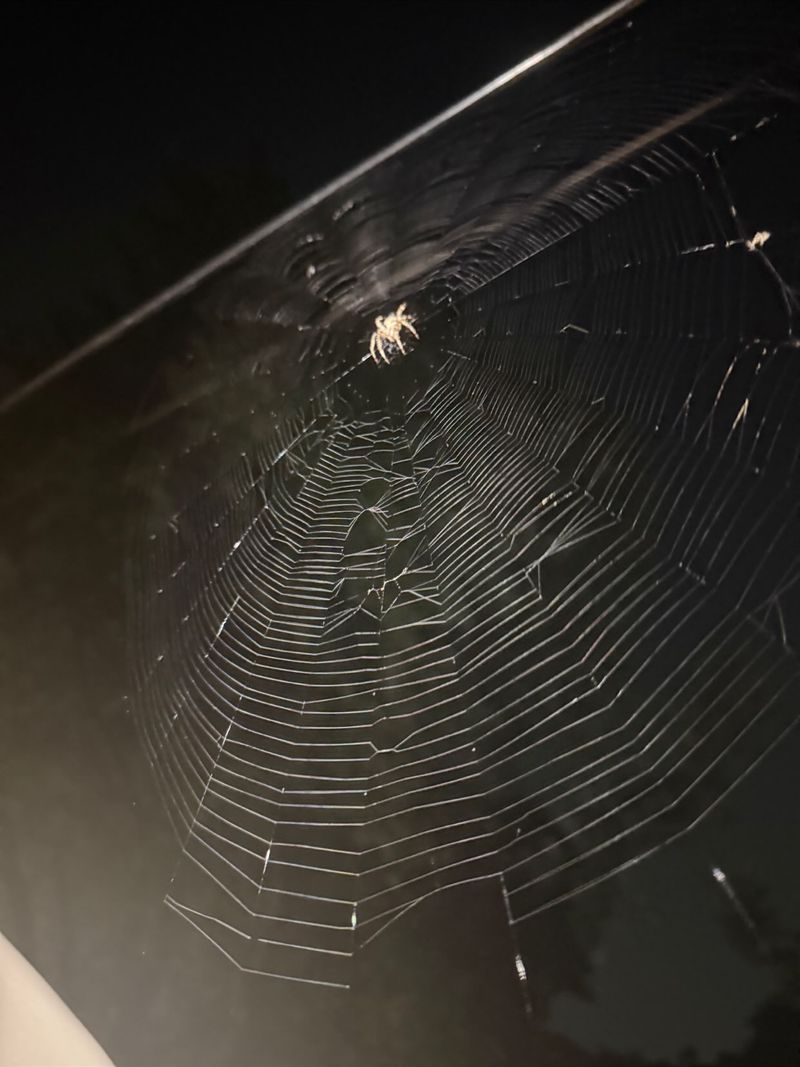
Ever cleared a web in the morning and found a brand-new one in the exact same place the next day? You are not imagining things. Some spiders really are that determined.
Many orb weavers, like the spotted orbweaver, work the night shift. They spin a fresh web each evening when it starts to get dark. Then, before sunrise, many of them take it down.
And here is the wild part. They often eat the old silk! Silk is made of protein, and spinning it takes a lot of energy.
By eating the old web, the spider recycles that protein to make the next one. It is like nature’s own recycling program.
During the day, these spiders usually hide in a curled leaf or a nearby crack. You might not even know they are there. When evening comes, they climb out and get right back to work.
So when you walk through a web, you are not chasing the spider away for good. You are just giving it a little extra homework.
If the spot was good yesterday, it will probably be good tonight too. Here are a few tips for night owls and early birds:
Carry a small flashlight when you walk outside at night. The silk will shine in the light so you can see it. In the morning, look low and to the side for spiders that may still be packing up.
If one keeps building in the same spot, gently move it to a bush a few feet away using a stick or a cup.
4. Fall Is When Texas Orb Weavers Are Biggest
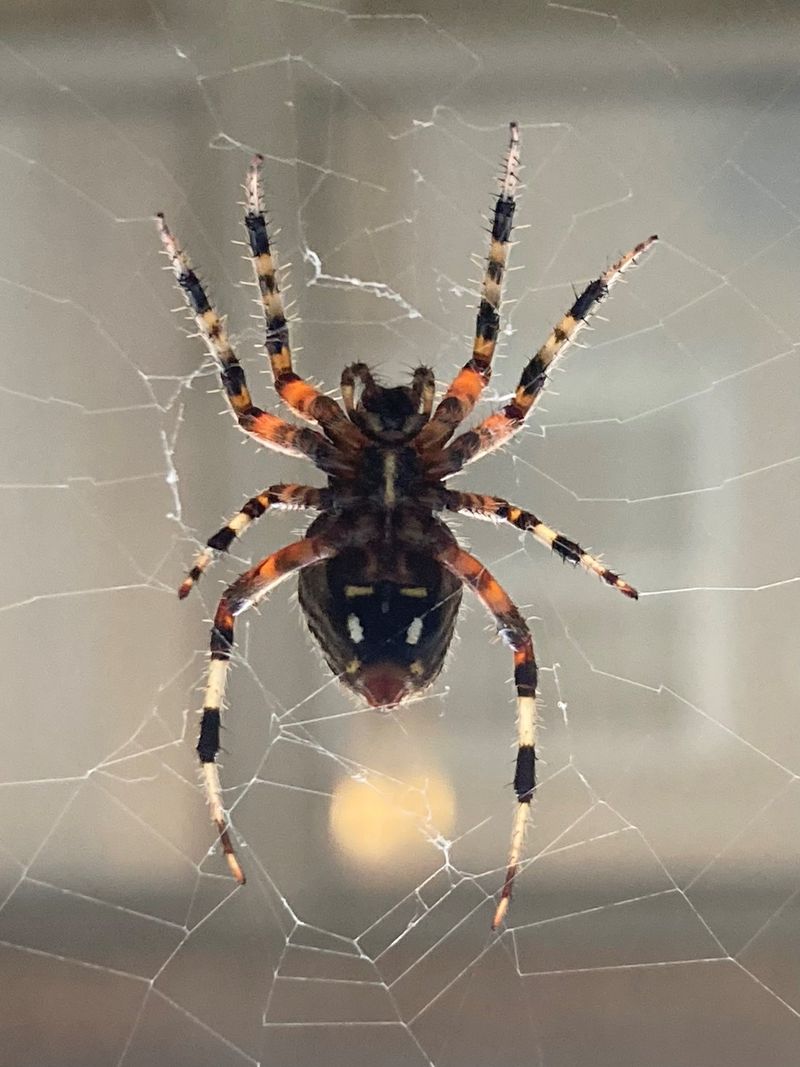
Late summer rolls in, and suddenly the spiders in your yard look like they have been hitting the gym. That is no accident. Many Texas orb weavers hatch in spring and spend the whole summer eating and growing.
By late summer and fall, they reach their full adult size. Bigger spiders build bigger webs. That is why you suddenly notice giant webs across your path in September and October.
In East and Southeast Texas, the golden silk orb-weaver steals the show. Its webs can stretch several feet wide.
The silk even has a golden shine when the sun hits it. Some people call it the banana spider because of its long, yellowish body.
Across the rest of the state, you might spot the black-and-yellow garden spider. It loves sunny gardens and often builds a zigzag pattern in the center of its web.
Scientists still argue about why. Some think it helps birds see the web so they do not fly through it.
These big fall spiders might look scary, but they are not out to get you. They are shy and would much rather run than bite. Their bite, if it ever happens, is usually no worse than a bee sting.
So how should you handle the fall spider season? Expect more webs and plan for them. Walk slowly and keep your eyes up.
Teach kids to spot the bright colors and admire them from a safe distance. Fall is a great time to grab a camera, because these spiders are at their most impressive.
5. Outdoor Lights Bring Them A Steady Food Supply
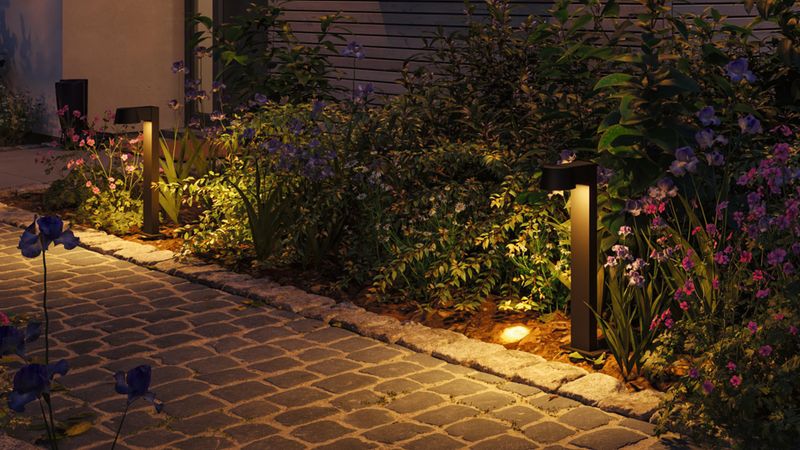
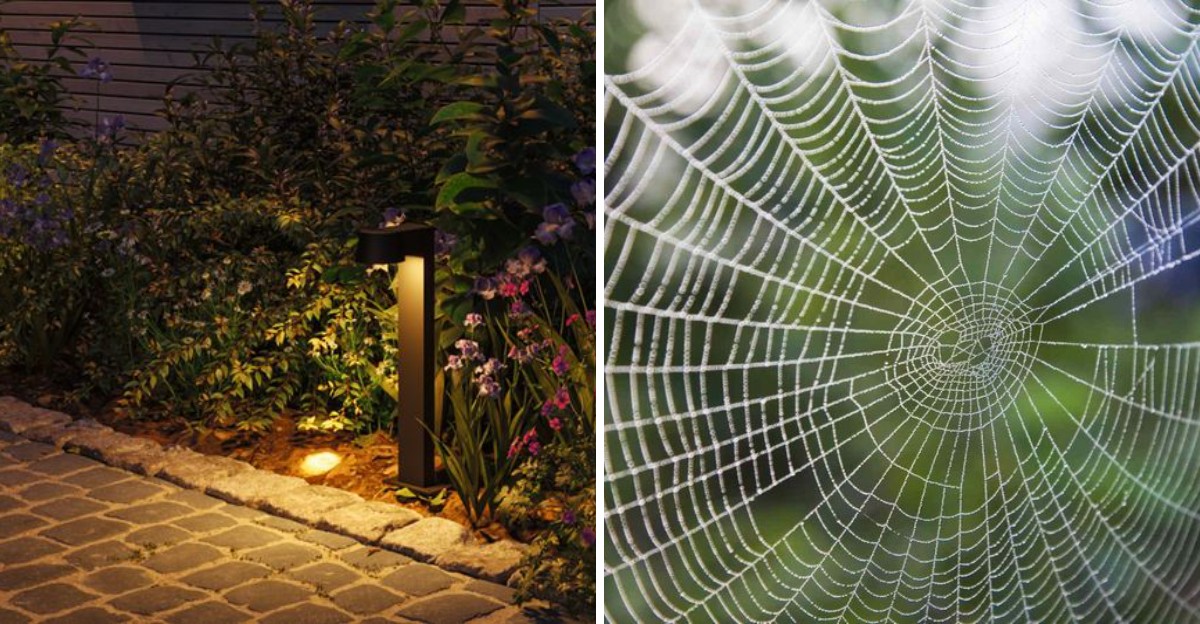
Moths cannot resist a glowing light, and spiders know it. Your porch light or path lights might as well be a neon sign that says free food here.
At night, bugs like moths, beetles, and gnats fly toward bright lights. Nobody knows for sure why they do this. One idea is that they use the moon to find their way, and lights confuse them.
Whatever the reason, the result is the same. Bugs gather around your lights in big crowds. Smart spiders build their webs nearby and wait for dinner to arrive. It is the easiest meal in the whole yard.
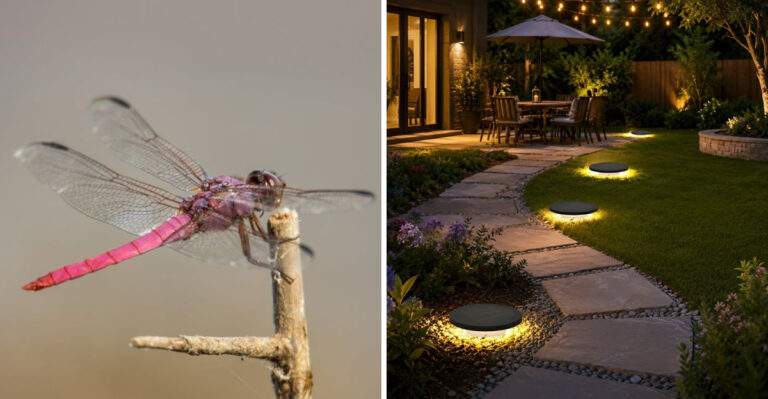
If you have solar lights lining your garden path, you may have created a buffet line without meaning to. Each light pulls in insects, and each spider sets up a table.
That is why webs often show up right next to lamps and lit walkways. Luckily, a few simple changes can help a lot:
Switch to yellow or warm-colored bulbs. Many bugs are less drawn to these than to bright white or blue light.
Turn off porch lights when you do not need them. Use motion-sensor lights so they only glow when someone walks by.
You can also move path lights a bit away from the main walkway. That way, the bugs and the spiders hang out on the edge instead of right where you step. Keep in mind that fewer bugs near the house is a win for you too.
Less buzzing, fewer bites, and fewer surprise webs make evenings outside a lot more relaxing.
6. Texas’s Long Warm Season Keeps Them Busy
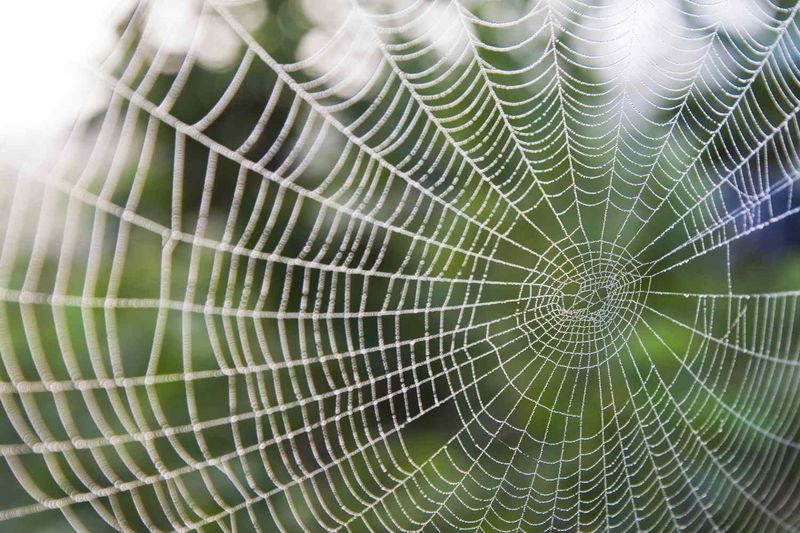
Folks up north pack away their garden tools by October. In Texas, we are still wearing shorts and swatting mosquitoes. That long warm season is great news for bugs, and even better news for spiders.
Warm weather keeps insects flying for months longer than in colder places. More bugs mean more food. More food means spiders stay busy building webs well into fall and sometimes early winter.
Here is the good news, though. These garden spiders are harmless to people. They do not chase you, and they rarely bite.
Instead, they quietly gobble up mosquitoes, flies, aphid-eating pests, and other garden troublemakers. Think of them as free pest control that works around the clock.
Still, nobody enjoys a mouthful of silk on the way to the mailbox. So here are a few friendly ways to share your path:
Trim plants that crowd the walkway so spiders have fewer anchor points. Carry a long stick and wave it gently in front of you as you walk. It catches the web before your face does. Some Texans even keep a stick by the back door just for this job.
You can also give spiders better places to build. Leave a few shrubs or tall plants away from the path untrimmed. Spiders will happily set up shop there instead.
Living with spiders in Texas is mostly about patience and small habits. Once you understand why they show up, the webs feel less like a nuisance and more like a sign of a healthy, busy garden.