Why Texas Gardeners Are Ripping Out Their Boxwood And What They’re Planting Instead
Boxwood has been a foundation planting staple in Texas for decades, chosen for its dense evergreen habit and the tidy, structured look it brings to landscape borders and entryways.
The relationship has been unraveling in recent years though, and the reasons go beyond the well-documented blight problem that has been spreading through boxwood plantings across the state.
Texas summers push boxwood harder than the plant is built to handle, and the combination of heat stress, root problems, and disease pressure has turned what was once a reliable choice into an ongoing maintenance burden for a growing number of homeowners.
Texas gardeners who have finally pulled the boxwood are not replacing it with something that just looks similar.
They are choosing plants that actually belong in this climate, and the results are changing the way their landscapes look and how much time they spend maintaining them.
1. Dwarf Yaupon Holly (Ilex Vomitoria ‘Nana’)
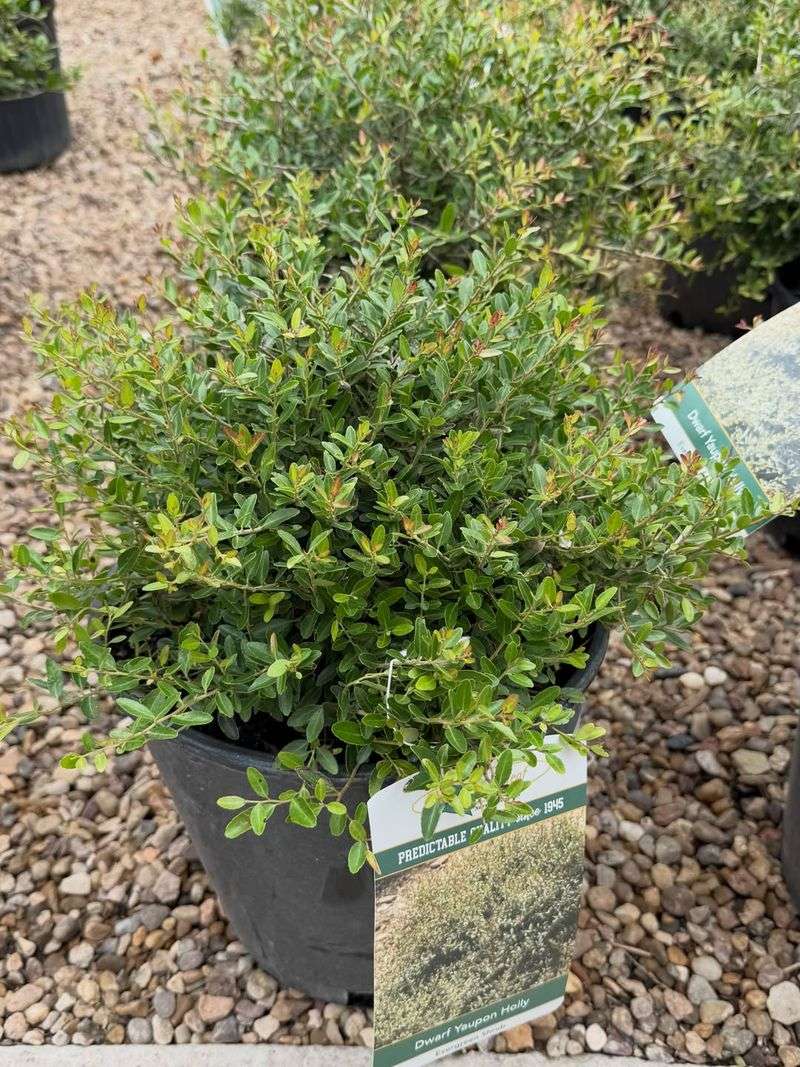
Meet the shrub that Texas gardeners are calling their new best friend. Dwarf Yaupon Holly is a native Texas evergreen that grows in a tight, rounded shape without much help from you.
It stays green all year, handles drought like a champ, and rarely needs pruning to look tidy and polished.
One of the biggest reasons people love this plant is how low-maintenance it really is. Once it gets established in your yard, usually after the first full growing season, it can survive on rainfall alone in most parts of Texas.
That means less time dragging out the hose and more time enjoying your garden. It works beautifully as a hedge, a foundation planting along the front of your house, or even as a border along a walkway.
The small, oval leaves stay a rich dark green, giving your yard that clean, structured look that boxwood used to provide. Unlike boxwood, though, this plant does not get stressed out by Texas summers.
Dwarf Yaupon Holly also handles a wide range of soils, including the heavy clay and rocky limestone soils so common across Texas. It grows in full sun or partial shade, making it flexible for different spots in your yard.
Pests and diseases rarely bother it, which is a huge bonus for gardeners who want beauty without the drama. If you have been searching for a reliable, good-looking shrub that truly belongs in a Texas landscape, this is the one to start with.
2. Wax Myrtle (Morella Cerifera ‘Don’s Dwarf’)
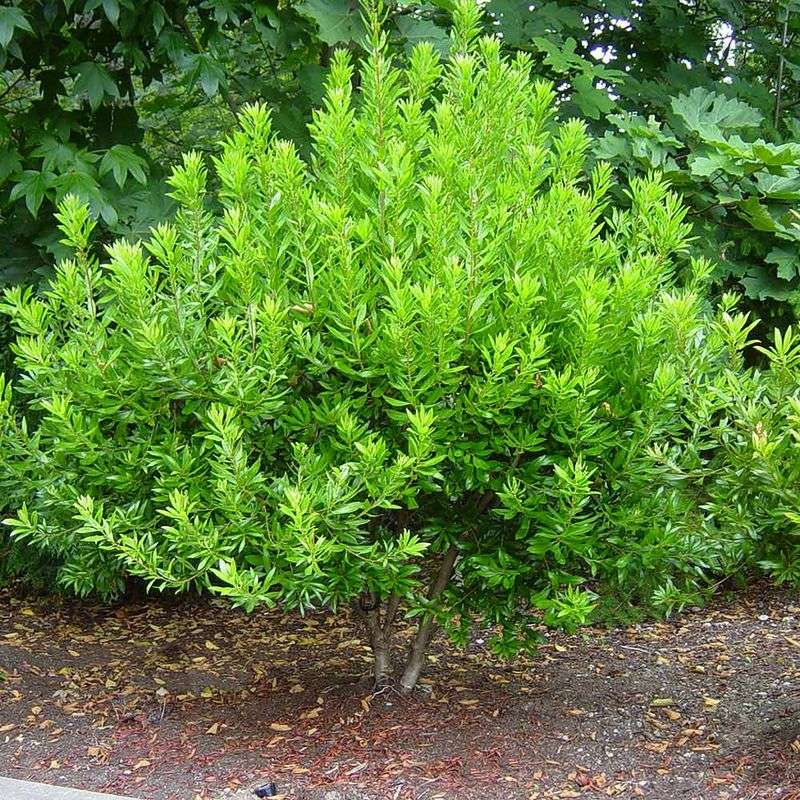
Walk past a Wax Myrtle on a warm day and you will notice something right away. The leaves have a fresh, spicy fragrance that floats through the air whenever the breeze picks up or you brush against a branch.
It is one of those small pleasures that makes gardening feel extra rewarding. The ‘Don’s Dwarf’ variety of Wax Myrtle stays smaller and more manageable than the standard species, making it a smart pick for home landscapes.
It grows quickly enough to fill in as a hedge or screen, but it does not get so large that it takes over your yard. You can shape it lightly or let it grow in a natural, informal style.
Your Texas Garden Changes Every Week. Your Plan Should Too.
Gardening in Texas changes quickly throughout the season. Every Friday you’ll receive a simple weekly plan showing exactly what to plant, prune, fertilize, harvest, and protect so you never miss the right timing.
Beyond its looks and scent, this shrub is a wildlife magnet. Birds absolutely love the small, waxy berries that develop in late summer and fall.
Pollinators are drawn to the flowers in spring, so planting Wax Myrtle means you are doing something good for your local ecosystem at the same time.
Heat and humidity do not faze this plant at all. It is native to the southeastern United States, including large parts of Texas, so it has spent thousands of years adapting to exactly the conditions your yard throws at it.
It grows well in sandy, loamy, or even wet soils, which makes it useful near drainage areas or low spots in the yard. If you want a hedge that smells great, feeds wildlife, and keeps looking lush through a Texas summer, Wax Myrtle deserves a serious look.
3. Texas Sage (Leucophyllum Frutescens)
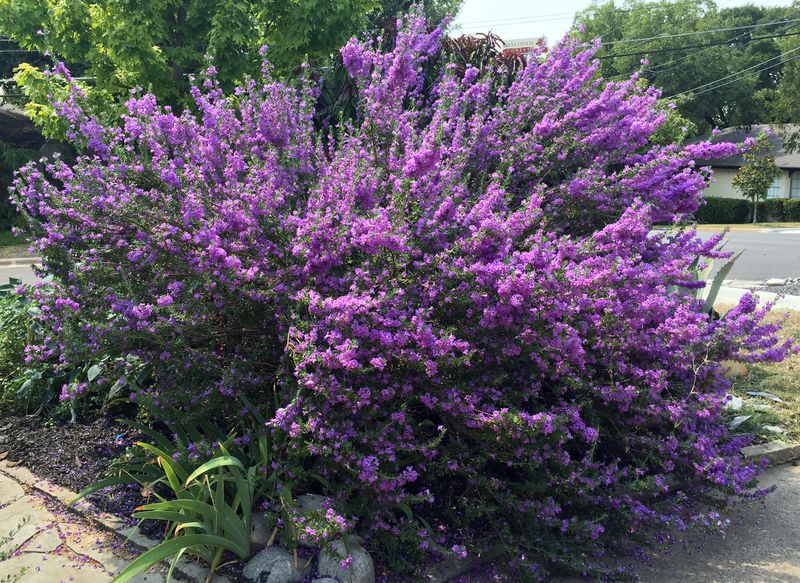
There is a reason Texans sometimes call this plant the “barometer bush.” Texas Sage bursts into a cloud of purple blooms right after a good rain, almost like it is celebrating.
Watching it flower after a summer storm is one of those genuinely magical gardening moments that never gets old.
This shrub is built for Texas from the ground up. It thrives in full sun, survives on minimal water once established, and actually prefers the well-drained, alkaline soils that are common across central and west Texas.
Where boxwood struggles and sulks, Texas Sage just keeps on growing strong. The silvery-gray foliage looks beautiful even when the plant is not in bloom. It has a soft, almost velvety texture that catches the light and adds a cool tone to the garden.
This makes it useful as a contrast plant next to darker green shrubs or bright flowering perennials.
Texas Sage can grow as a loose, informal hedge or be trimmed into a more structured shape. It reaches about four to eight feet tall depending on the variety, so you can choose a size that fits your space.
Some popular varieties, like ‘Green Cloud’ and ‘Silver Cloud,’ offer slightly different foliage colors and growth habits to match your style.
Pruning is simple and only needed once or twice a year. Birds and butterflies visit the blooms regularly, adding life and movement to the garden. For a tough, gorgeous, and truly Texas-tough shrub, this native beauty is hard to beat.
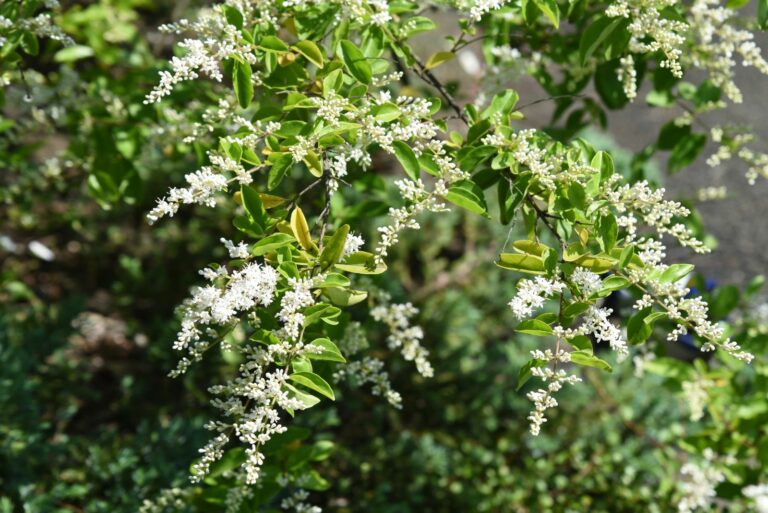
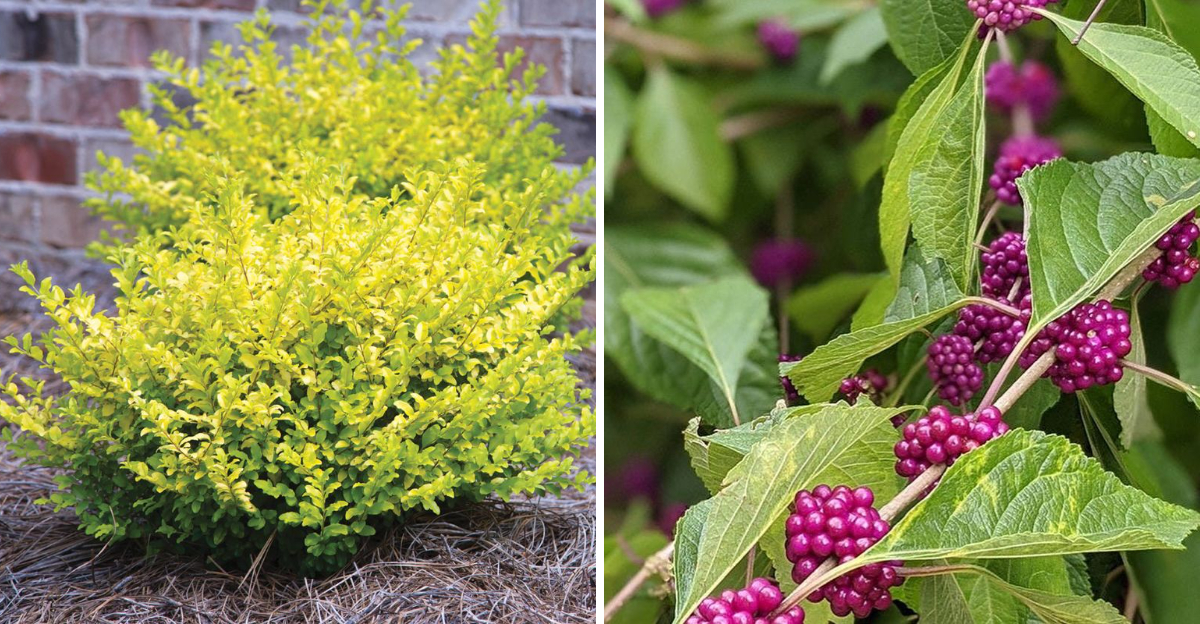
4. Ligustrum ‘Sunshine’ (Privet)
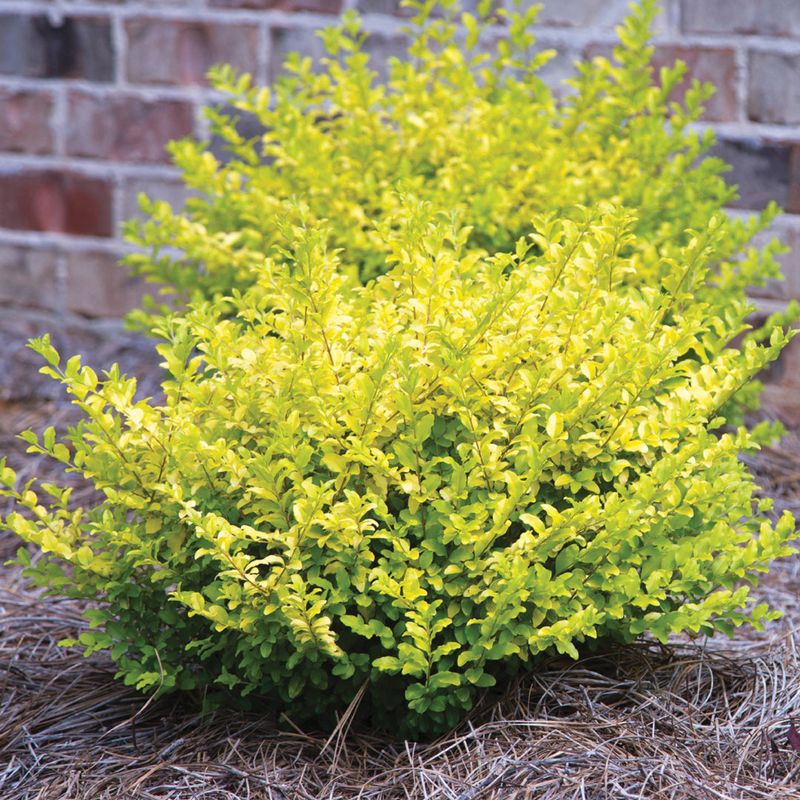
Bold, bright, and practically indestructible in Texas conditions, Ligustrum ‘Sunshine’ is the shrub that makes your neighbors stop and ask questions.
Its foliage is a vivid golden yellow that holds its color all year long, giving your garden a cheerful, sun-drenched look even in the middle of winter.
Unlike traditional boxwood, which demands regular trimming and specific soil conditions to look its best, ‘Sunshine’ privet is much more relaxed about its needs.
It tolerates full sun, reflected heat from pavement and walls, and dry spells without missing a beat. Once it settles in, it grows at a steady pace and fills in nicely as a hedge or border shrub.
Trimming is easy and infrequent compared to boxwood. You can shear it into a formal shape or let it grow in a softer, rounded form.
Either way, the bright foliage keeps it looking intentional and well-maintained with very little effort on your part.
Fun fact: ‘Sunshine’ privet is a sport of the Japanese Ligustrum, meaning it appeared as a natural color mutation.
Gardeners quickly noticed how eye-catching it was and started propagating it widely. Today it is one of the most popular evergreen shrubs sold in Texas nurseries.
It pairs beautifully with dark green plants like Dwarf Yaupon Holly or purple-flowering Texas Sage, creating contrast that makes both plants pop.
If your goal is a low-maintenance hedge that actually adds color and personality to your yard, ‘Sunshine’ privet is absolutely worth considering.
5. Juniper (Juniperus Spp.)
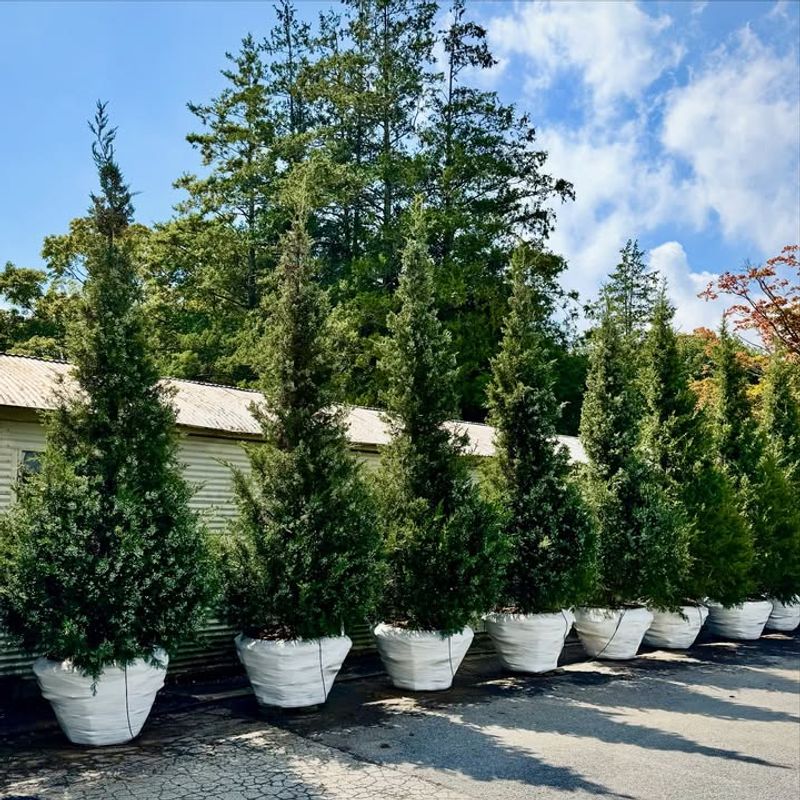
Junipers have been growing in Texas for thousands of years, long before anyone planted a single boxwood hedge.
These tough, needle-leaved evergreens come in many shapes and sizes, from low, spreading ground covers to upright columns that add strong vertical lines to the garden. They are built for the Texas landscape in every way.
Varieties like ‘Tortuga’ and similar compact forms work especially well as hedge plants or structural anchors in a mixed border. They grow slowly and steadily, which means less trimming for you and a longer-lasting shape in the garden.
The foliage stays a rich green or blue-green through every season, giving your yard year-round structure and color.
Drought tolerance is where junipers really shine. Once established, they can go long stretches without supplemental water, making them a smart choice for water-conscious Texas gardeners.
They also handle rocky, shallow soils and intense reflected heat without complaint, which is more than most ornamental shrubs can say.
Birds love junipers too. Many species use the dense branching for nesting and shelter, and the small berries that some varieties produce are a favorite winter food source for wildlife. Planting a juniper hedge means you are creating habitat as well as beauty.
One thing to keep in mind is that junipers do not like wet feet. Make sure they are planted in well-drained soil, and avoid overwatering during the establishment period.
With that simple precaution, a juniper hedge can last for decades in a Texas yard with very little care needed at all.
6. Brush Holly (Xylosma Flexuosa)
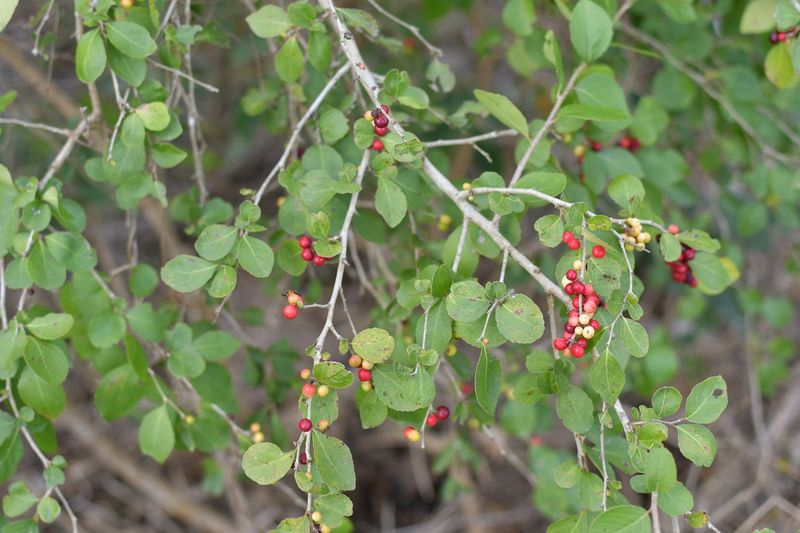
Not many people have heard of Brush Holly, but Texas gardeners who discover it tend to become instant fans.
Also known as coronilla or brush-holly, this native Texas shrub has glossy, dark green leaves that stay on the plant all year and catch the light in a way that makes the whole hedge look polished and lush.
One thing that sets Brush Holly apart is its adaptability. It grows well in both full sun and partial shade, which makes it useful in spots where other shrubs struggle.
Got a fence line that only gets afternoon sun? A shady corner near the house? Brush Holly can handle both situations without skipping a beat.
The small berries that appear in late fall and winter add an extra layer of seasonal interest. Birds visit regularly to snack on them, so you get some nice wildlife activity in the garden during the cooler months when other plants are not doing much.
The berries start out red and deepen to a dark purplish-black as the season progresses. Growth is moderate and manageable. You can shape it into a formal hedge or let it grow more freely as a natural screen.
It responds well to pruning and fills back in quickly after a trim. Established plants are notably drought tolerant and do not need much fertilizing to stay healthy and attractive.
For gardeners who want something a little different from the usual lineup of Texas shrubs, Brush Holly is a hidden gem worth seeking out at specialty native plant nurseries across the state.
7. American Beautyberry (Callicarpa Americana)
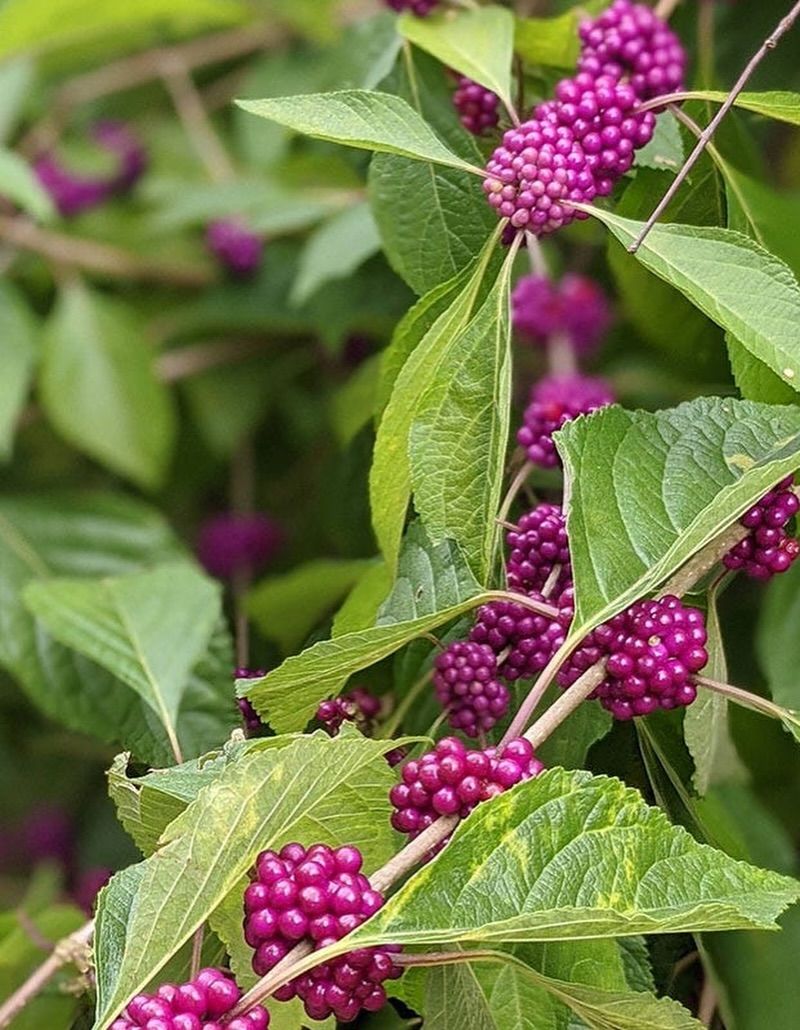
If you want your garden to stop traffic in late summer, plant an American Beautyberry. The clusters of magenta-purple berries that line every branch in August and September are so vivid and unexpected that people who have never seen this plant before often do a double take.
It is genuinely one of the most eye-catching native shrubs in the entire South. American Beautyberry is not an evergreen, so it works a little differently than the other plants on this list.
It loses its leaves in winter, but the bare branches still hold those spectacular berry clusters well into the cold months, giving birds a valuable food source and your yard an interesting winter silhouette.
In spring, small pinkish-lavender flowers appear along the stems before the berries form. The flowers are subtle but lovely up close, and they attract bees and butterflies throughout the growing season.
By midsummer, the plant fills out into a large, arching shrub that creates a soft, natural screen or backdrop in the garden.
This plant thrives in partial shade to full sun and tolerates a wide range of Texas soils. It does appreciate occasional moisture during very dry stretches, especially when young, but it is far less demanding than boxwood once it gets going.
It can be cut back hard in late winter to keep it compact and encourage the most vigorous berry production the following season.
For wildlife gardeners and anyone who wants bold seasonal color with minimal effort, American Beautyberry is a native treasure that earns its place in any Texas landscape.