Why Texas Mockingbirds Imitate The Sound Of Car Alarms And Phones Instead Of Just Other Birds
It is 2 a.m. in a quiet Dallas neighborhood, and somebody bolts upright in bed, certain a car alarm is wailing in the driveway right outside their window.
Sneakers on, porch light flipped, eyes scanning the street. Nothing there. Then a slim gray bird on the streetlight tips its head back and runs the whole alarm sequence again.
Note for note, followed by a ringtone and what sounds like a squeaky screen door somewhere nearby in the neighborhood.
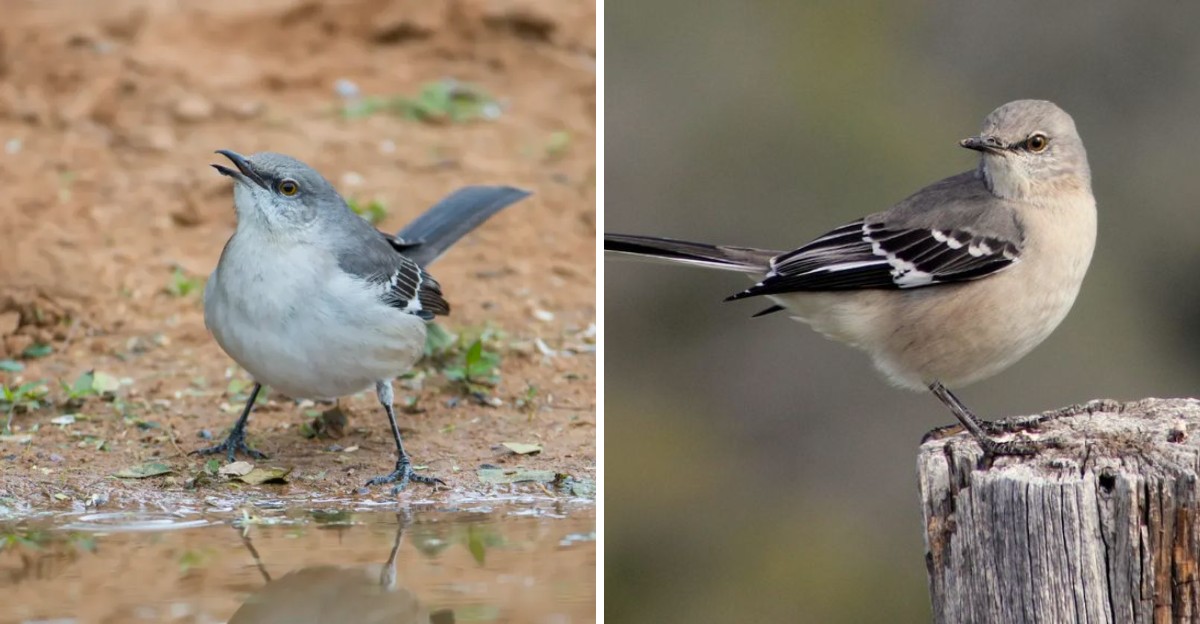
That bird is a Northern Mockingbird, the official state bird of Texas, and it is not confused or broken in any way at all.
Most people assume something mechanical must be malfunctioning nearby, never suspecting a bird sitting quietly on a wire is behind the whole confusing episode.
According to the Cornell Lab of Ornithology, mockingbirds can learn around 200 distinct song types and, unlike most songbirds, they keep adding new sounds throughout their whole lives.
1. Their Vocal Learning Never Really Stops
Most songbirds have a deadline built into their biology. Young sparrows, warblers, and finches soak up the songs of their species during a short window in their first year.
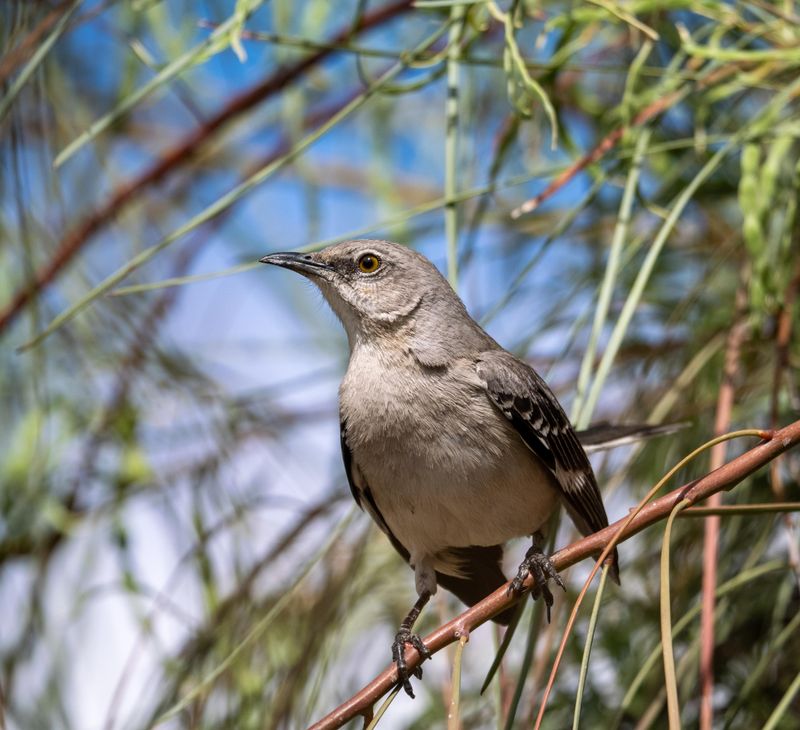
Mockingbirds ignore that rule entirely. The Cornell Lab of Ornithology notes that Northern Mockingbirds keep adding fresh sounds to their repertoire year after year.
A four-year-old male carries material a one-year-old simply has not collected yet, building up his catalog gradually over many seasons of listening.
Cornell also reports that individuals may build up roughly 200 distinct song types over a lifetime, drawing from an enormous range of sources nearby.
Some of those come from other birds. Plenty come from whatever else makes noise nearby, including machines humming away in the background of daily life.
Think about what that means for a bird living beside a Texas parking lot full of cars coming and going all day long.
Every beeping truck backing up, every alarm chirp from a key fob, every ringtone drifting out an open window is potential new material worth learning.
There is a real cost involved in all this collecting though. Learning, storing, and accurately reproducing that many patterns takes brainpower and practice over time.
2. Bigger Song Lists Impress Female Mockingbirds
Picture a talent show where the judges only care about one thing. How much material you have memorized and can perform accurately under pressure.
That is roughly the situation a male mockingbird faces each spring when trying to attract a mate in the neighborhood.
The leading scientific explanation for all that mimicry is sexual selection. A male with a long, varied catalog of sounds may be advertising something real.
The logic holds up well under scrutiny. A male who has collected hundreds of sound patterns has almost certainly been around a while surviving hardships.
He has survived hawks, heat waves, cats, and winter. He has had time to listen, practice, and refine his whole performance over many seasons.
A female choosing between two singers cannot read a health chart directly. She can, however, listen carefully to what each male offers.
Your Texas Garden Changes Every Week. Your Plan Should Too.
Gardening in Texas changes quickly throughout the season. Every Friday you’ll receive a simple weekly plan showing exactly what to plant, prune, fertilize, harvest, and protect so you never miss the right timing.
Range and accuracy give her usable information about age and capability without any guesswork needed on her part at all.
Variety matters more than beauty here in this whole equation. A mockingbird that can deliver a cardinal’s whistle, a shorebird’s call, and a car alarm is showing breadth.
3. Mechanical Noise Works Just As Well As Birdsong
Here is the part that surprises people most about this whole phenomenon. Mockingbirds are not fascinated by technology in any meaningful sense.
They have no idea a car alarm belongs to a car sitting in a driveway somewhere nearby in the neighborhood.
Their learning process is opportunistic pattern copying at its core. A sound qualifies as worth learning if it is distinctive, loud enough to hear.
Compare the raw ingredients involved here. A cardinal’s whistle repeats in a clean, recognizable pattern. A key fob chirp repeats in a clean pattern too.
To a bird’s ear and brain, those two things are not different categories of sound at all, just two more patterns worth collecting.
Phones make excellent material for the same reason. Ringtones are short, high-contrast, and played over and over throughout the day nearby.
So the whole question answers itself once you drop the human assumption baked into how we think about this. Mockingbirds were never limited to bird sounds.
They copy whatever their neighborhood repeats, and in a Houston apartment complex the neighborhood repeats alarms far more often than warbler songs.
4. Repertoires Signal Age And Fitness
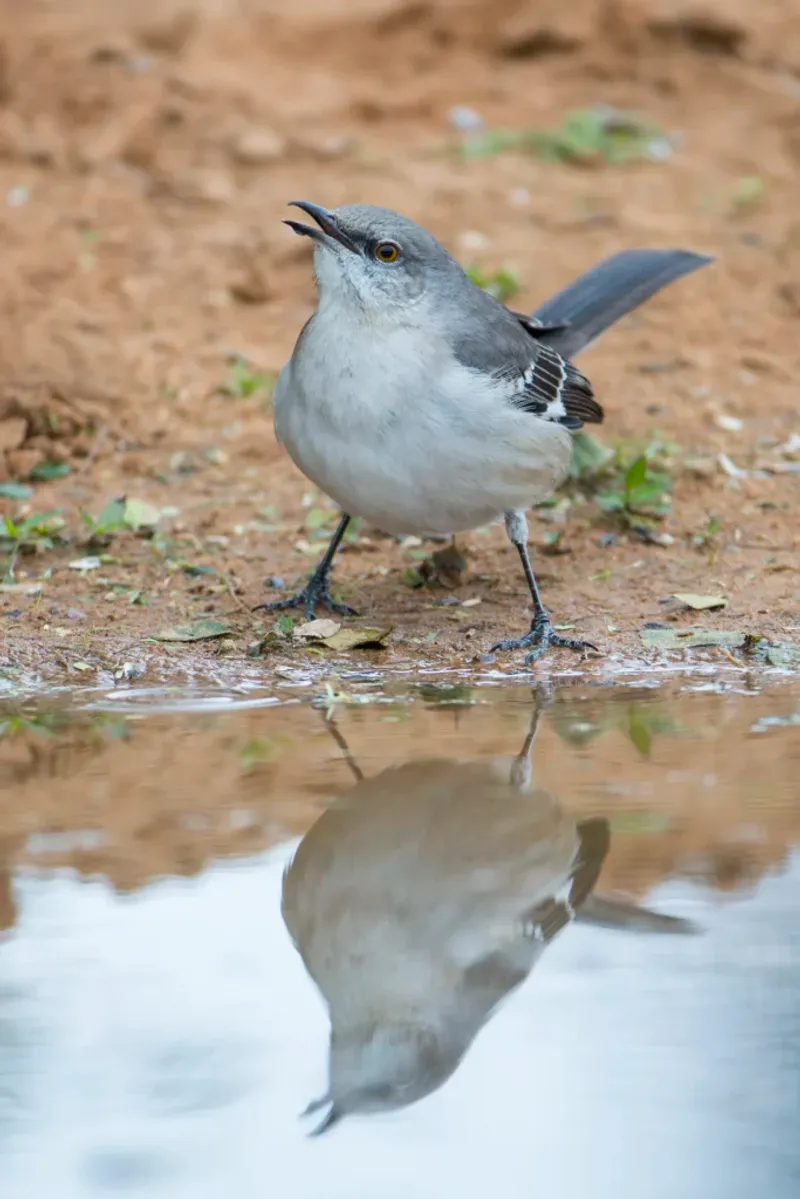
Cheating is hard when the test involves memory itself. A young male cannot fake a catalog he has not built yet through years of listening.
Biologists call this kind of display an honest signal in scientific terms. The performance costs something real, so it cannot be bluffed easily.
Bright feathers can sometimes be grown cheaply by comparison, but a hundred accurately reproduced sound patterns require survival, time, and working brain circuitry.
Accuracy counts as much as quantity in this whole equation. A sloppy, half-remembered imitation says less than a crisp one delivered cleanly.
Food and energy factor in too throughout this process. Singing for hours from an exposed perch burns calories and attracts predators watching from nearby cover.
Only a bird finding enough insects and berries, and holding a decent territory, can afford that kind of exposure night after night.
Researchers studying mimic species have linked larger repertoires to better condition and greater breeding success in several documented cases worth noting.
You can observe the pattern casually yourself if you pay attention. Listen to the mockingbirds on your block over a couple of seasons.
5. Territory Defense Plays A Role Too
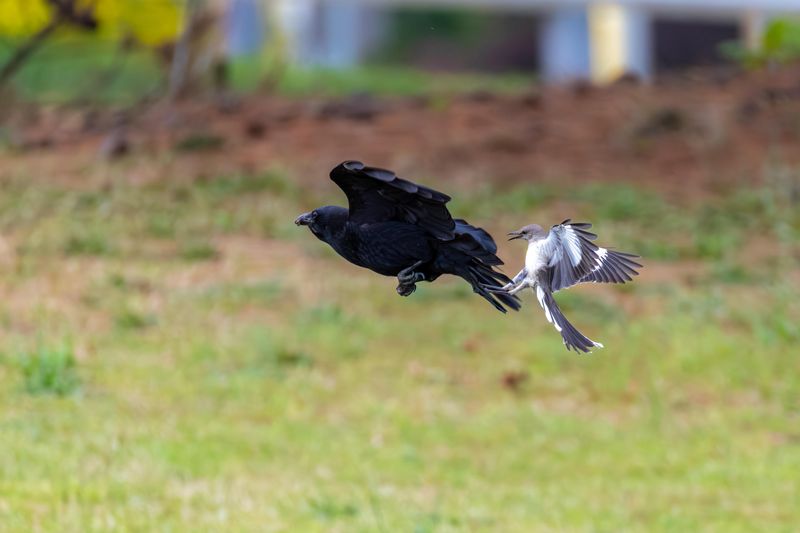
Anyone who has watched a mockingbird chase a grackle three times its size off a hedge knows these birds do not share space politely at all.
Aggression is part of the package here, built right into the bird’s basic personality and defensive instincts around its territory.
A second theory suggests mimicry also serves territorial purposes beyond just attracting mates during breeding season each spring and summer.
Copying the alarm calls of other species might unsettle intruders, confuse rivals, or make a single territory sound busier than it really is.
The idea makes intuitive sense in a crowded suburb setting. If a patch of yard rings out with jay alarms and hawk-like screams.
Other birds may decide the spot is not worth contesting at all, moving on to easier territory elsewhere in the neighborhood instead.
Evidence here is thinner than the mate-attraction evidence though, and it should be presented with that caveat attached honestly.
What is not in doubt is the territorial behavior itself. Mockingbirds dive-bomb cats, dogs, hawks, and people who wander too close to a nest.
6. Unmated Males Sing The Loudest And Longest
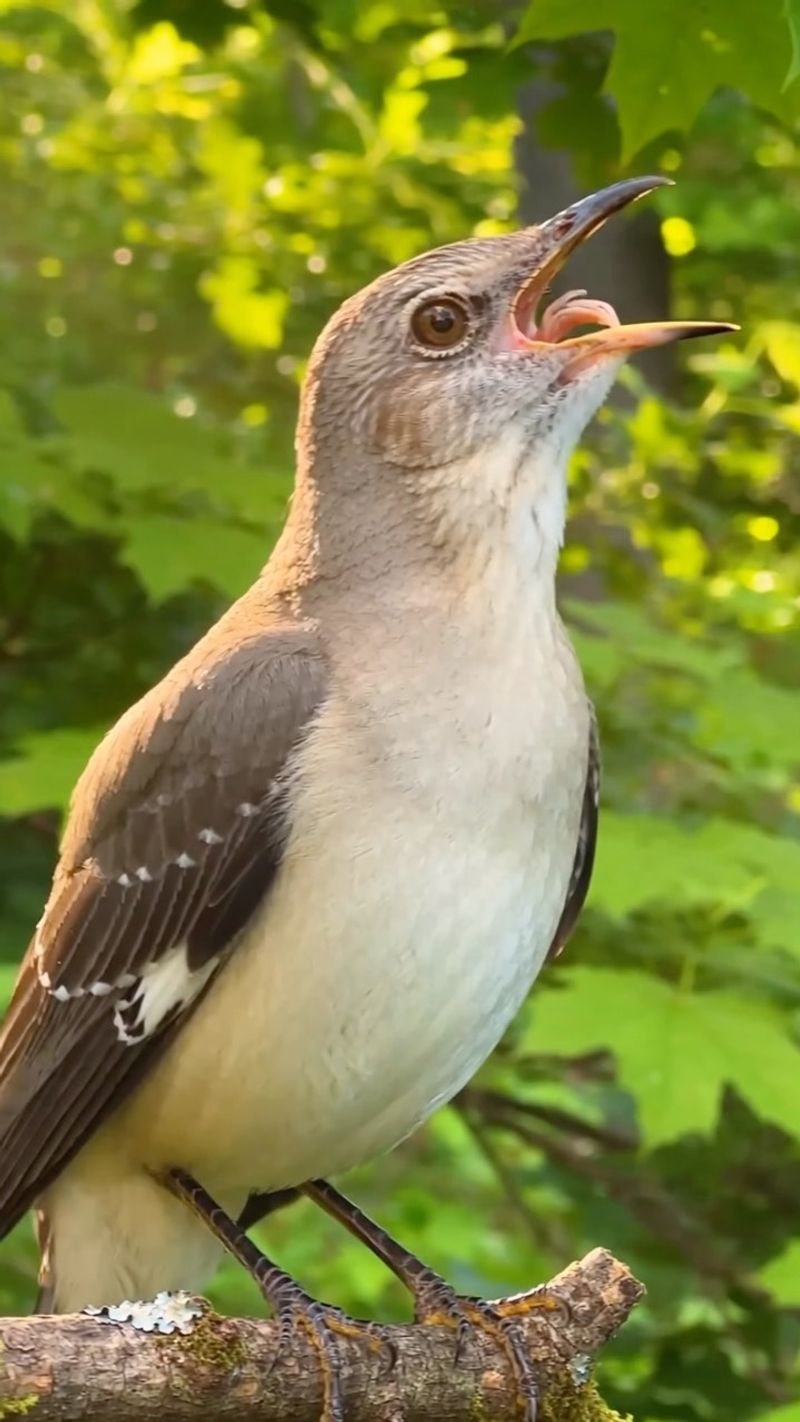
Those 2 a.m. concerts have a specific cause, and it is oddly sympathetic once you understand what is actually happening.
The bird keeping you awake is very likely single, still searching for a mate during this particular stretch of the breeding season.
Cornell notes that unmated male mockingbirds sing far more than paired males, including through the night without much rest at all.
A male with no mate has nothing to lose by broadcasting around the clock, so he keeps working the night shift diligently.
Streetlights make it worse too. Artificial light in neighborhoods and parking lots seems to encourage extended nighttime singing among these persistent birds.
Timing follows a pattern too throughout the season. Night singing peaks in spring and early summer, fading once pairs form successfully.
Homeowners looking for relief have limited options, and that matters legally speaking. Harming or removing the bird is illegal under federal law entirely.
A white noise machine, a fan, or a closed window facing the street are the realistic fixes available to a frustrated homeowner.
7. Repeating Each Sound Gives Them Away
Want a birding trick you can use in about ten seconds without seeing the bird at all involved in the whole process?
Count the repeats carefully as you listen. Mockingbirds typically repeat each mimicked phrase several times, often three to six, before switching to something new.
Car alarm, car alarm, car alarm, then cardinal, cardinal, cardinal, then squeaky gate. The rhythm is unmistakable once you catch it happening.
Other mimics behave differently though, worth knowing for comparison purposes. Brown Thrashers, common across eastern Texas, tend to repeat phrases only about twice.
Gray Catbirds usually run through sounds once each in a rambling, jumbled stream with a distinctive mewing call mixed in throughout.
So the repeat count separates three similar-sounding species by ear alone, a genuinely useful skill on a morning walk through the neighborhood.
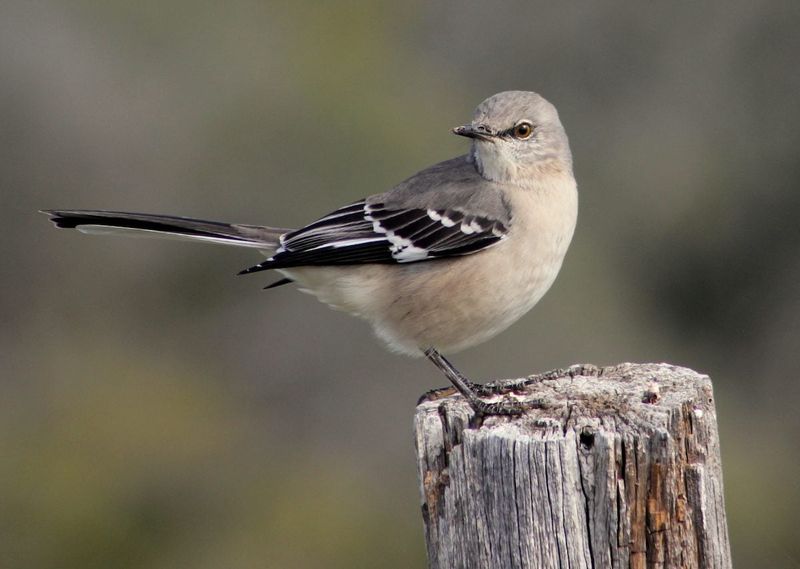
Visual confirmation is easy once you look directly at the bird itself sitting on a fence or wire nearby.
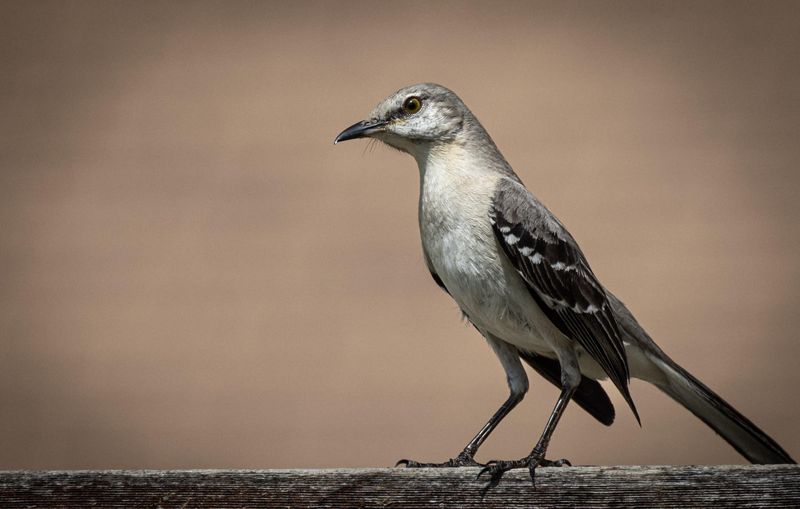
Mockingbirds are slim and pale gray with a long tail, dark wings, and bold white wing patches that flash brightly in flight.
8. Texas Claims This Bird As Its Own
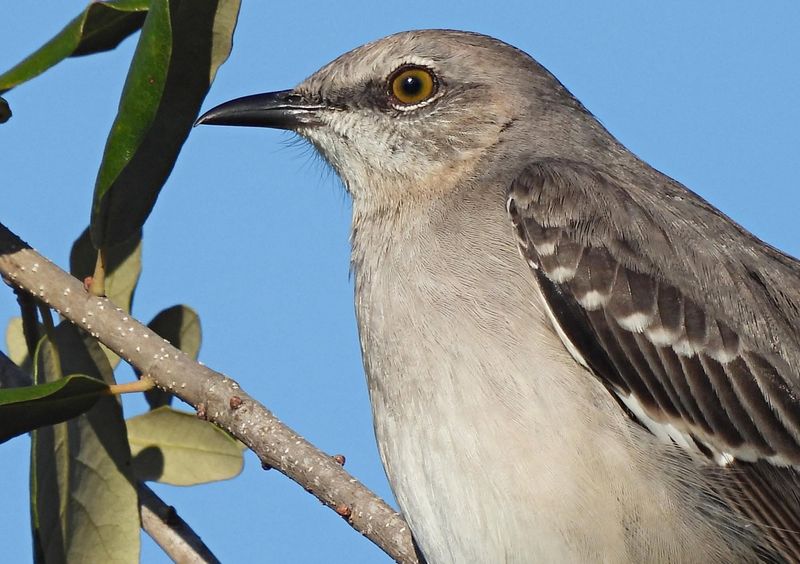
In 1927, the Texas Legislature made it official. The Northern Mockingbird became the state bird, backed by a resolution from a women’s club.
Lawmakers praised the bird as a fighter for its home and family, which anyone who has been dive-bombed will find accurate.
Texas is not alone in the fandom surrounding this species either. Arkansas, Florida, Mississippi, and Tennessee all named the same species as their own.
Legal protection goes further than state pride alone though. The Northern Mockingbird is covered by the federal Migratory Bird Treaty Act nationwide.
This makes it unlawful to harm the birds or disturb their active nests and eggs without a permit issued through proper channels.
Landscaping choices can shape how many you host in your own yard throughout the year without much extra effort involved.
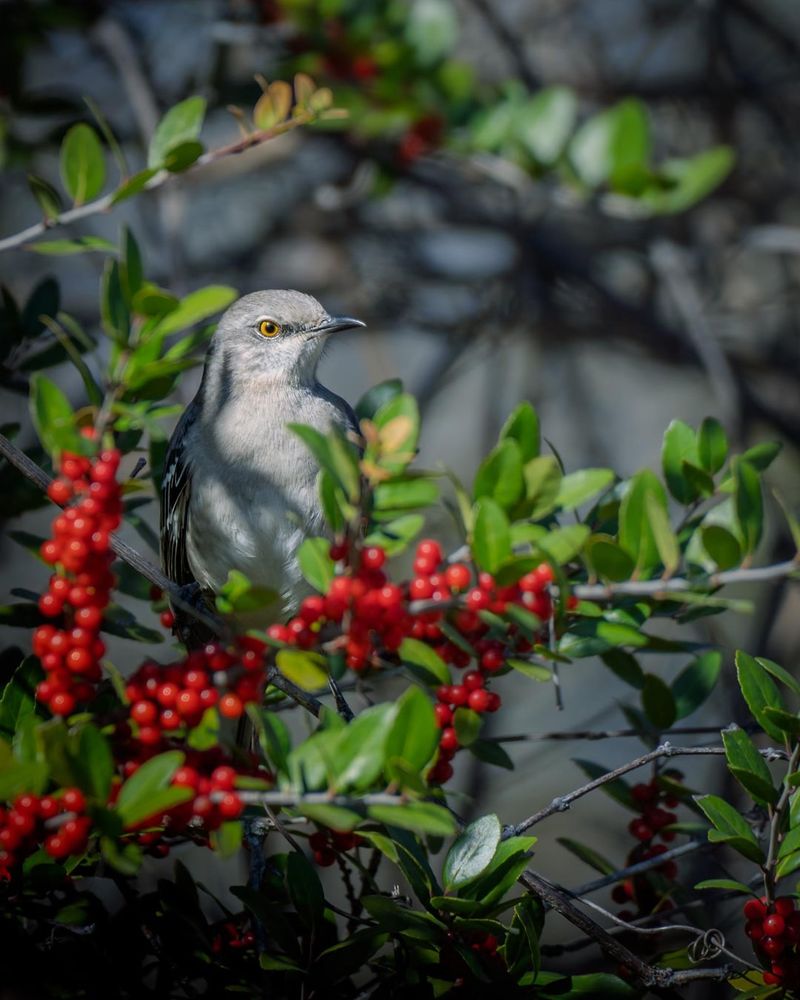
Mockingbirds love dense shrubs for nesting and fruiting plants for food, including yaupon holly and beautyberry planted around a typical yard.
So the next phantom car alarm at midnight comes courtesy of a federally protected state icon with a lifelong habit of collecting sounds.
9. You Can Actually Encourage This Behavior On Purpose
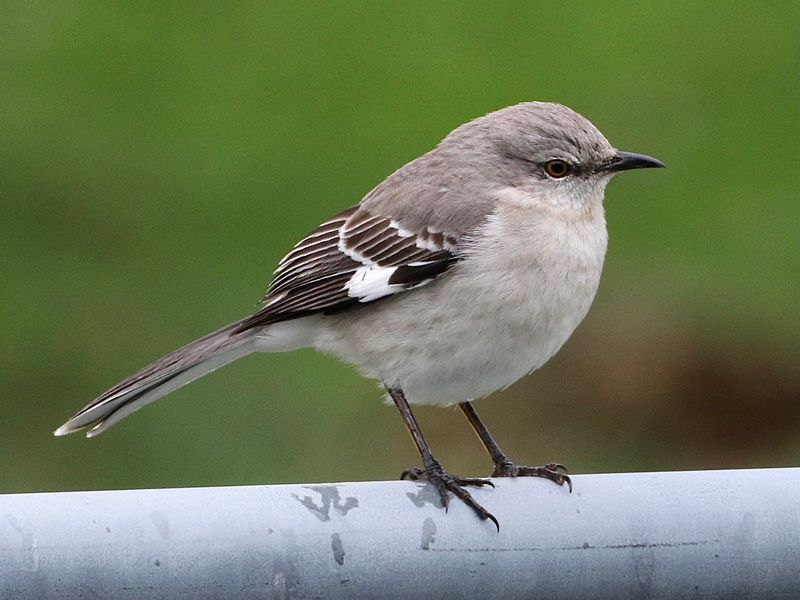
Some Texas homeowners, once they understand what is actually happening, start treating a resident mockingbird less like a nuisance and more like a genuinely entertaining backyard fixture worth encouraging.
Providing reliable food sources year-round keeps a mockingbird in good enough condition to spend energy on singing rather than constant foraging, since a well-fed bird has more calories available for those long, elaborate performances.
Berry-producing native shrubs like yaupon holly, possumhaw, and beautyberry supply natural food through fall and winter, reducing the survival pressure that might otherwise push a bird to spend all its time searching for scraps instead of practicing new sounds.
A birdbath or shallow water source nearby gives a territorial male one more reason to stick around a specific yard rather than wandering off toward a neighbor’s property in search of better resources.
Leaving some open, exposed perches available, like a tall shepherd’s hook or a bare branch left unpruned, gives a singing male the elevated stage he naturally prefers when broadcasting his repertoire across the neighborhood.
Resisting the urge to scare off a mockingbird that seems too vocal or too aggressive near a favorite outdoor sitting area often pays off once nesting season passes, since the dive-bombing behavior fades on its own within a few weeks.
Some backyard birders even keep informal logs of new sounds a resident mockingbird picks up over a season, treating the whole thing like tracking a local celebrity’s evolving act rather than tolerating random noise.
None of this guarantees quiet nights during peak breeding season, since an unmated male will keep singing regardless of how comfortable his territory feels.
But a well-supported bird often settles into a stable pair bond faster, which tends to shorten the loudest, most persistent nighttime stretches for everyone nearby.