Why Your Hydrangea Blooms Are Browning Early (And How To Fix It)
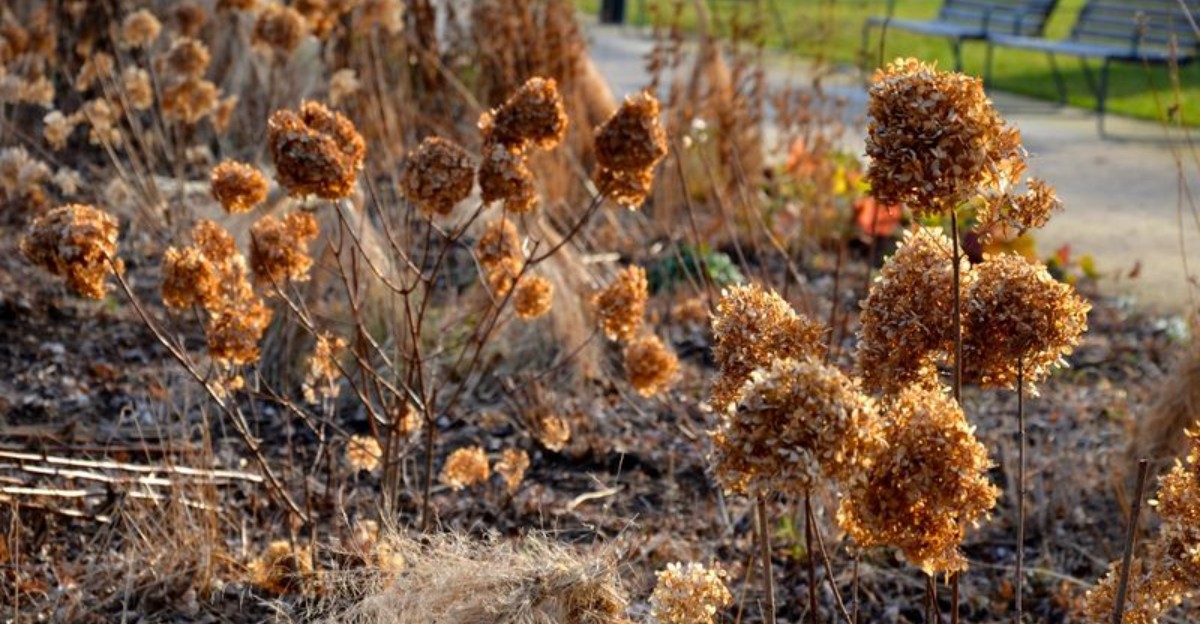
Brown edges spreading fast across your hydrangea petals spark real alarm. You notice it happens quickly, almost overnight, without warning. Heat isn’t your only problem here, not even close.
Fungus waits for the exact night your guard drops. Salt buildup from cheap fertilizer weakens roots you cannot see. Sun damages your blooms unevenly, favoring shade over harsh exposure.
Water habits you follow decide how long color lasts. Wrong placement quietly turns thriving gardens into slow fading zones. Airflow around your shrub matters more than people assume.
Soil beneath your feet tells a story you ignored. Pruning timing shapes what your shrub grows next year. Shade, timing, and soil decide your outcome together. Careless watering habits invite trouble that spreads quickly indoors.
Ignoring these signs costs you blooms you wanted badly. Each clue below points toward something you can fix. Answers sit just ahead, and they change what you expect next.
1. Thirsty Roots Showing Signs Of Drought Stress
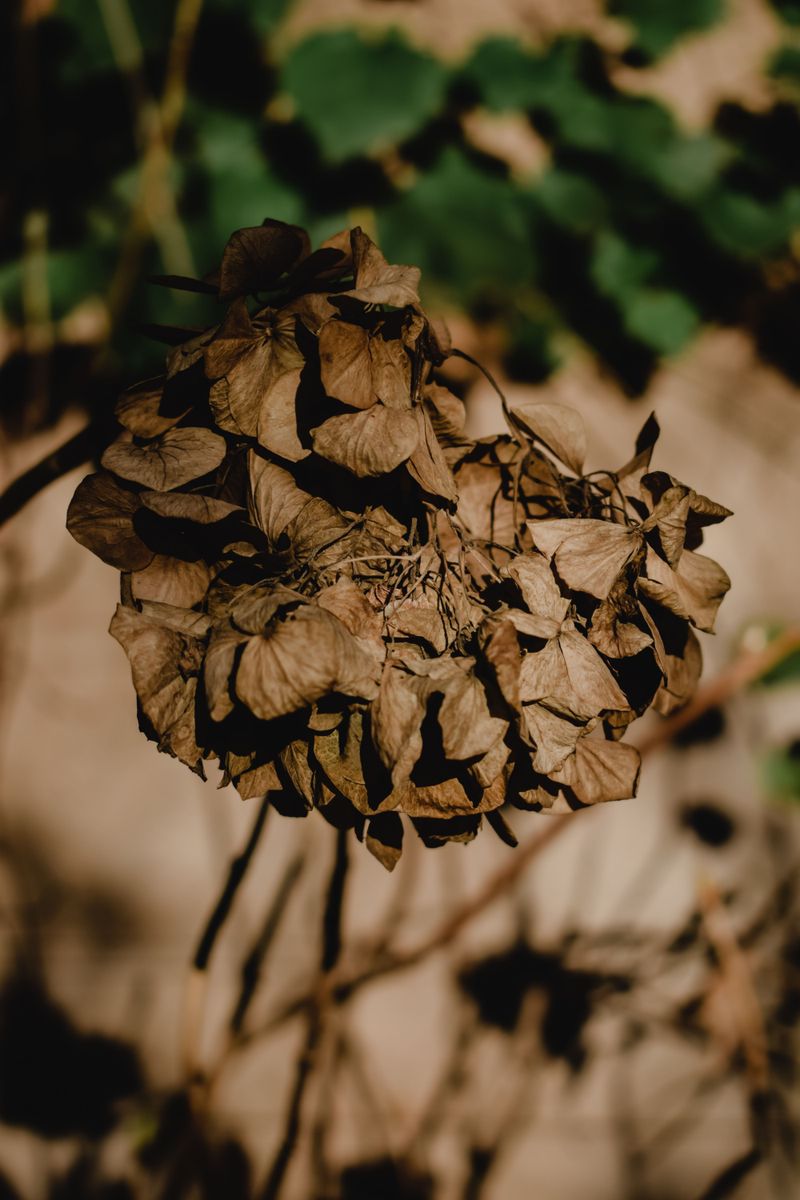
Hydrangea’s name comes from Greek words meaning ‘water vessel,’ a reference to its seed capsule shape, and fittingly, the plant is also a notoriously thirsty grower. Those wide leaves lose moisture fast, faster than thin roots can replace it on a hot afternoon.
When soil dries out, the shrub makes a hard choice. It pulls water away from the flowers first, because blooms are a luxury and leaves are survival gear.
The result shows up as crispy brown edges on the petals, often starting on the outer ring of florets. You may notice the whole head droops by afternoon and perks up by morning.
That daily wilt-and-recover cycle is a warning, not a crisis. Repeated often enough through August, though, and the flowers stop bouncing back at all.
Check moisture with your finger rather than your eyes. Push it two inches into the soil near the drip line, and if it feels dry, the plant has been coasting on empty.
Deep soaking beats frequent sprinkling. A slow trickle from a hose for twenty minutes reaches the lower roots, while a quick spray only wets the top inch and encourages shallow rooting.
Morning watering gives leaves time to dry and lets the plant stock up before heat arrives. Evening works too, but aim at the soil rather than the foliage.
Container hydrangeas tend to dry out significantly faster than in-ground ones. During a September warm spell, potted plants may need a drink daily, sometimes twice.
2. Too Much Afternoon Sun On Tender Petals
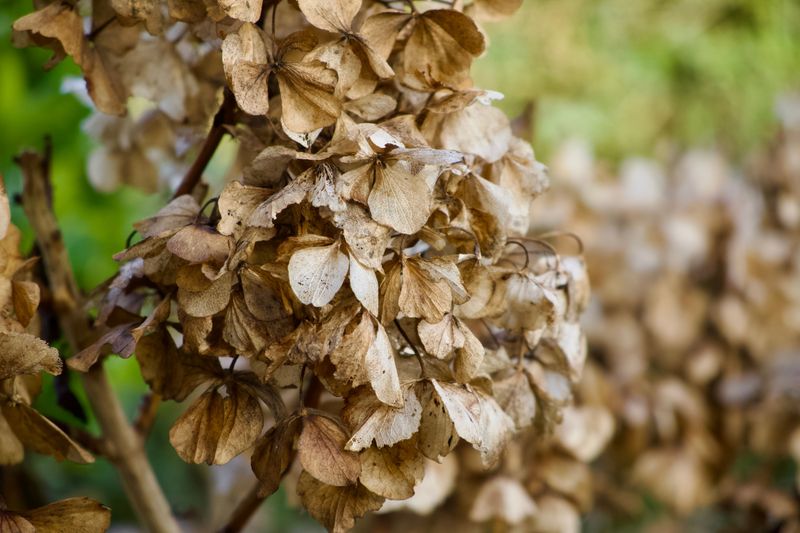
Picture leaving a colorful paper flower on a car dashboard for a week. That is roughly what several hours of unfiltered afternoon light can do to hydrangea petals.
Bigleaf and oakleaf types evolved under the edges of woodlands. Dappled light and cool roots are their comfort zone, not wide-open western exposure.
Scorch has a telltale pattern. The damage appears on the side facing the sun, while the shaded half of the same flower head stays fresh and colorful.
Reflected heat makes things worse. A light-colored wall, a concrete driveway, or a metal fence nearby can push the temperature around the plant up by several degrees.
Fixing it does not require a shovel right away. Temporary shade cloth on stakes, a patio umbrella tilted west, or even a tall potted grass can soften the strongest rays.
For a permanent solution, plan a move for late autumn once the shrub goes dormant. Aim for a spot with morning sun and shade from about one o’clock onward.
Panicle hydrangeas are the exception worth knowing. Varieties like Limelight handle full sun cheerfully, so if your yard is bright and open, those are the smarter pick.
Mulch helps more than people expect here. A layer of shredded bark helps keep root-zone soil cooler, which steadies water uptake during heat waves.
Watch the plant for a week and note when the wilting starts. That timing can help you narrow down which hours are causing the trouble.
3. Fungal Spots Sneaking In After Humid Nights
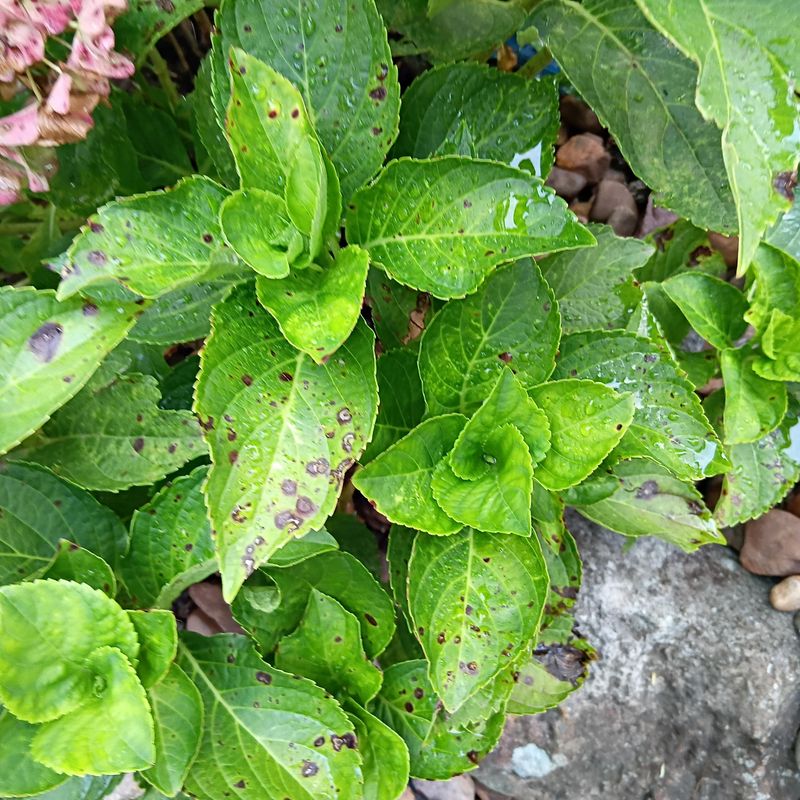
Warm days plus muggy nights create ideal conditions for fungal growth. Cercospora leaf spot and botrytis blight both love the sticky stretch between mid-August and early September.
Botrytis, sometimes called gray mold, targets flowers directly. It starts as small tan flecks on individual florets and spreads until the whole head looks discolored and papery.
Overhead sprinklers are frequent accomplices. Water sitting on petals overnight gives spores everything they need to settle in and multiply.
Crowded planting adds to the problem. Shrubs jammed shoulder to shoulder trap humid air, and still air is fungal weather.
Start by improving airflow. Thin out a few crossing stems in the interior so breezes can move through the plant instead of around it.
Remove affected blooms with clean snips and bag them rather than tossing them on the compost pile. Spores overwinter happily in plant debris.
Rake up fallen leaves beneath the shrub throughout autumn. That simple habit cuts down on next spring’s infection pressure, often more effectively than spraying alone.
If spots return yearly, a copper-based or chlorothalonil fungicide applied early in the season can help. Read the label and treat before symptoms appear, since fungicides protect rather than cure.
Water at soil level going forward. Soaker hoses and drip lines keep foliage dry, which removes the fungus’s favorite launching pad. Morning watering also gives any splashed leaves several hours of sunshine to dry off.
4. Fertilizer Salts Stressing Roots Underground
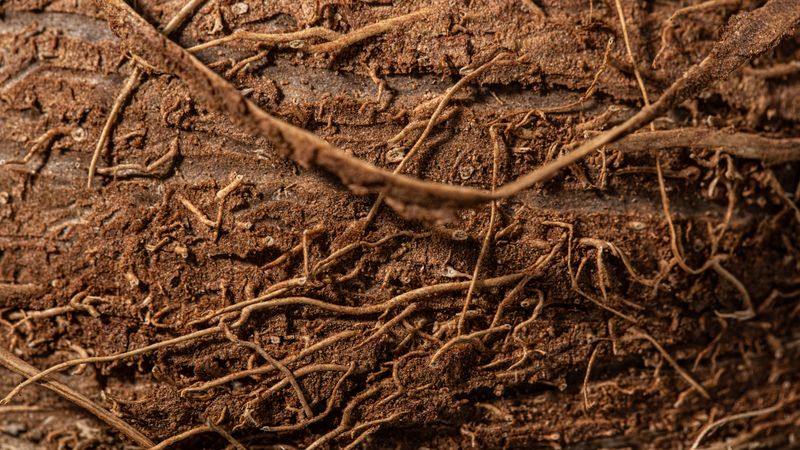
More food is not more flowers. Hydrangeas are surprisingly modest eaters, and heavy feeding often backfires in ways that show up on the petals.
Synthetic fertilizers leave behind mineral salts. When those build up in soil, they pull moisture away from roots instead of feeding them.
The plant then behaves like it is in a drought even when the soil feels damp. Brown, crisp flower edges follow within a week or two.
High-nitrogen lawn products are the usual culprit. Granules that drift into the bed while you fertilize turf push leafy growth and weak, floppy blooms.
You can sometimes spot salt buildup as a whitish crust on the soil surface or on the rim of a container. It is a useful visual clue.
Flushing helps. Run a slow hose over the root zone for fifteen minutes to carry excess salts below the root line.
Going forward, feed once in early spring with a slow-release fertilizer balanced for shrubs. A second light feeding in early summer is plenty for most gardens.
Stop feeding entirely by midsummer. Late-season nitrogen pushes soft new growth that browns quickly when temperatures swing.
Compost is the gentler route. Two inches spread around the base each spring feeds steadily without the salt spike.
Keep granules a few inches away from the main stems. Direct contact can scorch bark and slow the whole plant down.
5. Build A Watering Routine That Actually Sticks
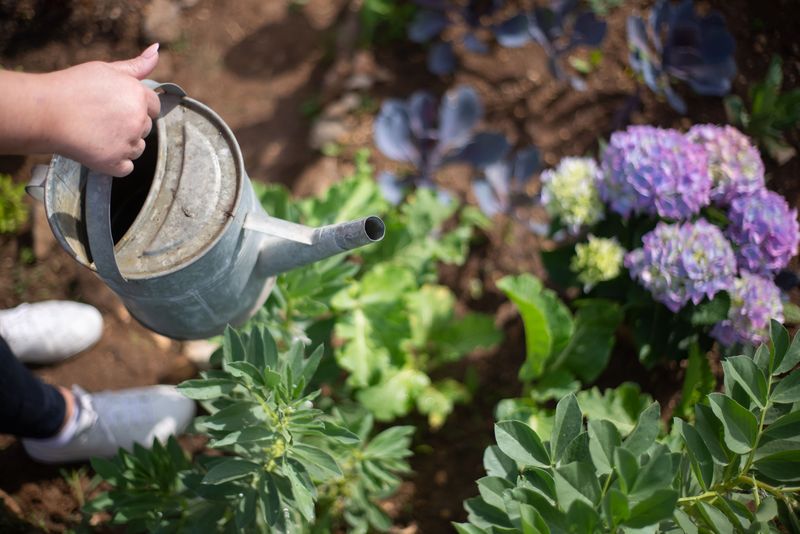
Consistency beats intensity in the watering game. A shrub that gets one deep soak weekly outperforms one that gets random splashes whenever someone remembers.
Set a schedule you can keep. Twice weekly during warm stretches, dropping to once weekly as September nights cool, works for most in-ground plants.
Measure what you are giving. Place an empty tuna can under the hose and aim for about an inch of water per session.
Soaker hoses make this nearly effortless. Snake one in a loose spiral around the root zone, cover it with mulch, and let gravity do the work.
A simple hose timer removes much of the guesswork. An affordable timer and a few minutes of setup can support a whole season of steadier blooms.
Mulch is the quiet partner in all this. Shredded bark, pine straw, or leaf mold holds moisture and keeps the soil temperature even.
Keep mulch pulled back two inches from the stems. Piling it against the trunk invites rot and gives rodents a cozy hideout.
Pay attention to rainfall before you water. A rain gauge on a fence post tells you whether that afternoon shower actually counted.
Container plants deserve their own routine. Check them by weight, lifting the pot slightly, and water when it feels noticeably light.
By next July, this habit will show. Flowers hold their color weeks longer when roots rarely experience a dry spell.
6. Give Stressed Shrubs Some Strategic Shade
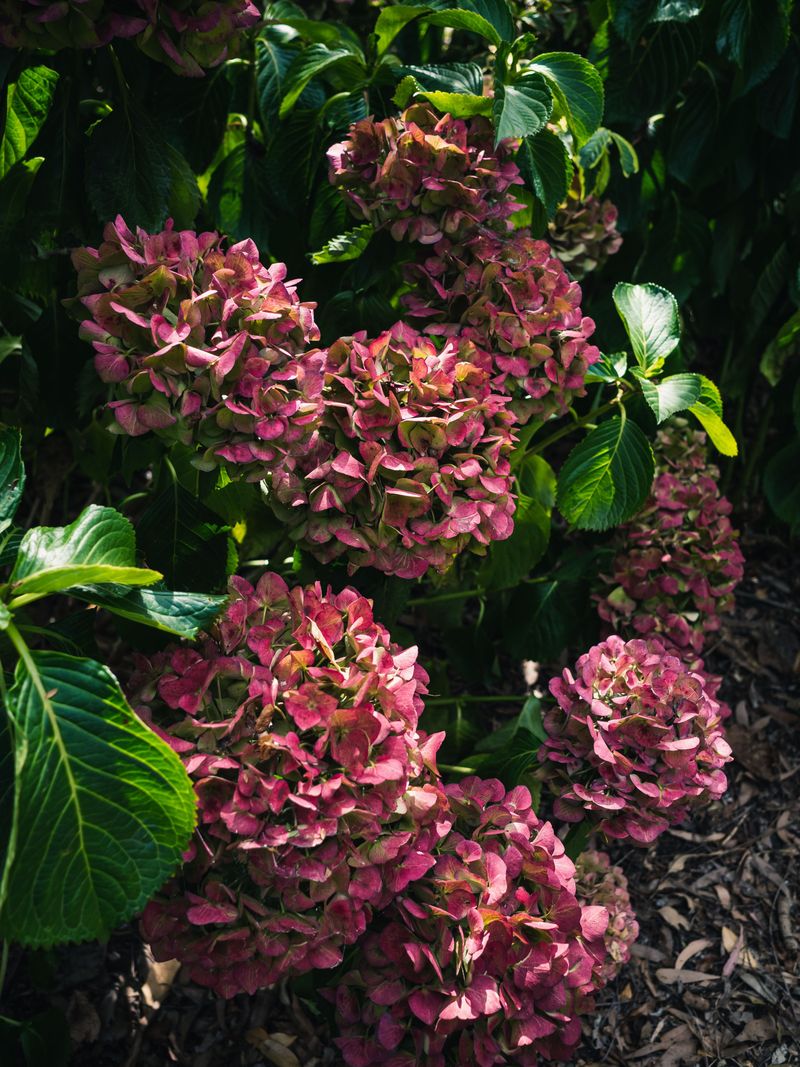
Shade is a tool, not just a location. Even a few hours of relief during peak heat changes how long flowers hold their color.
Quick fixes work while you plan something permanent. Shade cloth rated at thirty to forty percent, stretched over stakes, cuts the harshest light without making the spot gloomy.
Angle matters more than size. Position the cloth on the west and southwest sides, since that is where the intense afternoon sun comes from.
Living shade is the long game. A small tree such as a serviceberry or redbud planted fifteen feet away casts filtered light within a few years.
Tall perennials help in the meantime. Ornamental grasses, joe-pye weed, or a row of sunflowers create a light screen at flower height.
Fall is prime transplanting season. Once the shrub drops its leaves, dig a wide root ball and move it to a gentler spot with minimal fuss.
Water the new location deeply for several weeks after moving. Roots need steady moisture to settle in before the ground freezes.
Match the variety to the light while you are at it. Panicle and smooth hydrangeas tolerate brightness that bigleaf types find difficult.
Watch the sun patterns in your yard for a full day before committing. Phone photos taken every two hours make an honest record. The right spot turns a struggling plant into a low-maintenance showpiece.
7. Prune With Purpose Instead Of Panic
This is a common mistake gardeners make. Cutting a hydrangea at the wrong moment removes the very buds that would have flowered next year.
Know your type first. Bigleaf and oakleaf hydrangeas set buds on old wood in late summer, so heavy autumn or spring cutting erases the coming show.
Panicle and smooth types are more forgiving. They bloom on new wood, so late-winter trimming actually encourages stronger stems.
For browning blooms right now, trimming is safe on any variety. Snip just below the faded head, above the first pair of healthy leaves.
Resist going deeper than that on old-wood bloomers. A light touch preserves the swelling buds tucked along the stems.
Remove damaged or crossing branches whenever you spot them. Improving airflow through the middle of the shrub lowers fungal risk noticeably.
Clean blades matter. Wipe pruners with rubbing alcohol between plants so you are not carrying spores from one shrub to the next.
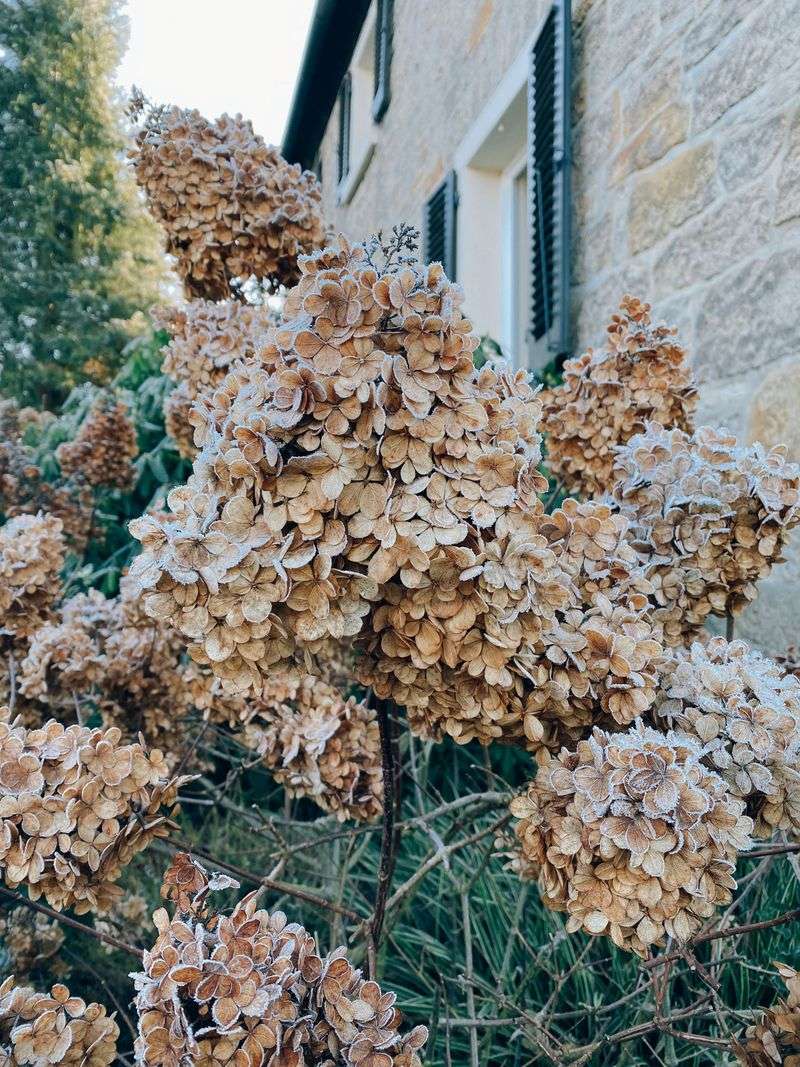
Some gardeners leave the faded heads on through winter. They catch frost beautifully and offer the buds below a bit of insulation.
If you go that route, tidy up in early spring once buds begin to swell. Cut back to the first plump pair.
Sharp bypass pruners make clean cuts that heal fast. Anvil-style tools compress stems and leave openings for disease.
8. Rebuild The Soil Beneath It All
Everything above ground reflects what is happening below. Compacted clay or sandy soil that drains like a sieve both lead to flowers that fade fast.
Hydrangeas want soil that holds moisture but still breathes. Think of a wrung-out sponge rather than a mud pie or a beach.
Compost is the universal fix. Spread two inches over the root zone each spring and let earthworms carry it downward for you.
Leaf mold works beautifully too. Shredded autumn leaves piled in a corner break down into crumbly material that holds water like a champion.
Test your pH if flower color has shifted oddly. Acidic soil below 6.0 pushes blue tones, while alkaline soil above 7.0 leans pink.
Extreme pH also locks up nutrients. Plants that cannot access iron or manganese develop pale leaves and weak, short-lived blooms.
Aluminum sulfate lowers pH gradually for bluer flowers. Garden lime raises it for pink, and both work best applied in small doses over time.
Avoid tilling around established roots. Hydrangea roots run shallow and wide, so top-dressing is kinder than digging.
Check drainage with a simple test. Dig a foot-deep hole, fill it with water, and see whether it empties within a few hours.
Standing water means you need raised beds or amended soil. Roots sitting in soggy ground struggle just as much as thirsty ones.