Winter-Blooming Shrubs To Plant In Georgia This Fall For Cold-Season Fragrance
You probably chose your foundation shrubs for how they look in spring, not for how they smell in January.
Most of us do the same, so plenty of Georgia yards go quiet once the last roses fade. That gap is easy to ignore until a sweet scent drifts over from a neighbor’s hedge on a cold morning.
When that happens, stop and look closely, because the shrub behind it rarely looks like much from the street.
Many winter bloomers have small, pale flowers that are easy to walk right past. Their fragrance does the work instead, carrying surprisingly far on still air.
Consider the paths you use most in winter, since that’s where scent matters.
Planting there this fall gives roots several weeks to settle in before the blooms open.
1. Wintersweet’s Waxy Yellow Flowers Can Perfume A Yard In Midwinter
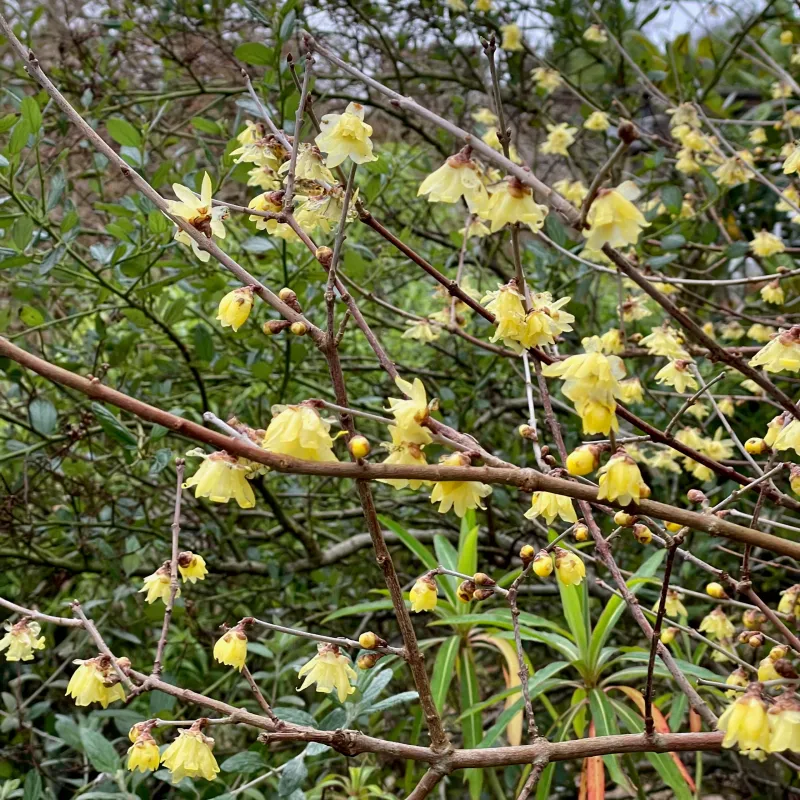
Bare branches rarely smell this good. Wintersweet blooms on leafless stems, usually somewhere between December and February, and its fragrance can carry surprisingly far on a still day.
Its flowers are small, pale yellow, and almost translucent, often with a maroon center you only notice up close.
Gardeners in Georgia often plant it near a walkway or back door, since the blooms themselves are easy to overlook. You want to catch the scent while you go about your day.
Give it full sun to part shade and soil that drains reasonably well.
Wintersweet is slow to get going and may take a few years before it blooms heavily. Patience matters here, so plant it this fall and expect the real show a little later.
Most plants grow into a large, multi-stemmed shrub around 10 to 15 feet tall.
In summer, it turns into a plain green background plant, which is fine for a screen or the back of a border. Prune right after flowering, since next winter’s buds form on this year’s growth.
A hard freeze can brown open flowers, but unopened buds often carry on once temperatures rise again.
Its strongest feature is easy to appreciate when much of the garden is quiet. Give it enough room to mature, and the winter fragrance becomes more impressive with age.
2. Given Good Drainage And Light Shade, Winter Daphne Offers Rich Fragrance
Few shrubs smell as rich as winter daphne, and few are as fussy about where they grow. Get the spot right, and late winter feels a lot sweeter.
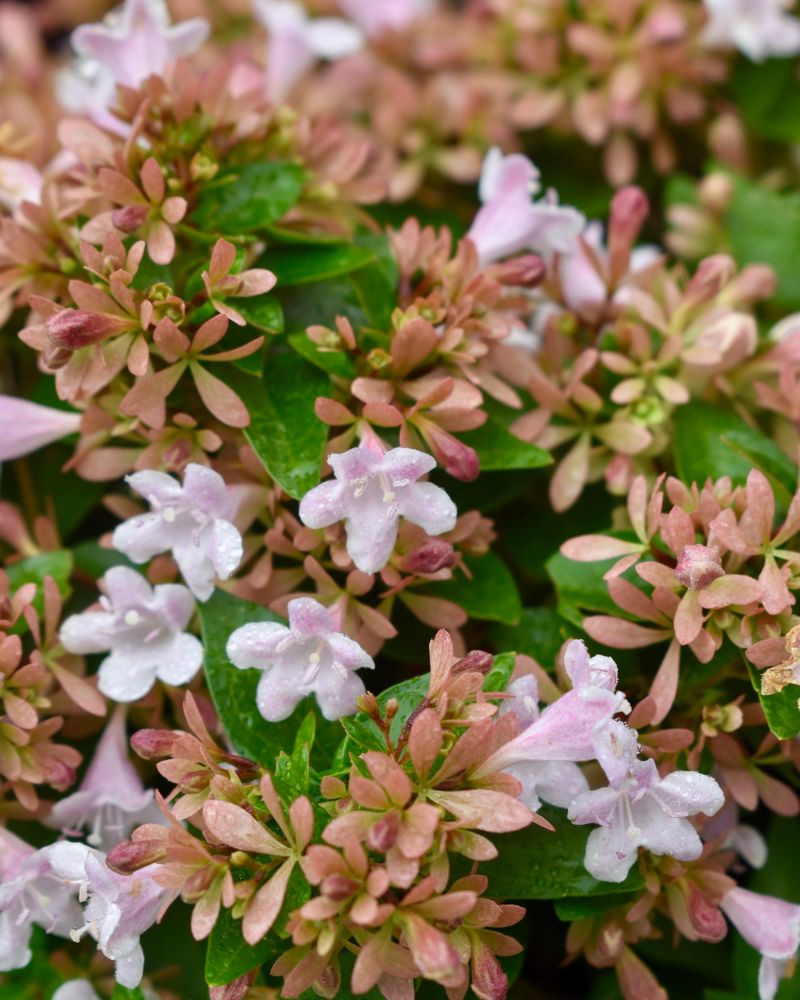
Clusters of pink-and-white flowers usually open from about February into March, depending on the weather.
Drainage is the big issue. Heavy clay that stays soggy is one of the most common reasons daphne struggles, so a raised bed or gentle slope helps a lot in Georgia yards.
Morning sun with afternoon shade tends to suit it well.
Plant it high, with the top of the root ball slightly above the surrounding soil. Mulch lightly, but keep the mulch pulled back from the stem.
Once it settles in, try not to move it, because daphne usually resents being dug up.
Your Georgia Garden Changes Every Week. Your Plan Should Too.
Gardening in Georgia changes quickly throughout the season. Every Friday you’ll receive a simple weekly plan showing exactly what to plant, prune, fertilize, harvest, and protect so you never miss the right timing.
Water during dry spells in its first year, then ease off. Overwatering can cause as much trouble as drought, especially in summer heat.
Expect a compact, rounded shrub, often around 3 to 4 feet tall and wide.
Honest note: even well-placed daphnes sometimes decline suddenly, and gardeners are not always sure why. Many people accept that and enjoy the fragrance while it lasts.
All parts are toxic if eaten, so keep it away from spots where kids or pets like to chew.
3. Hybrid Witch Hazels Bring Fragrant Flowers Into The Winter Garden
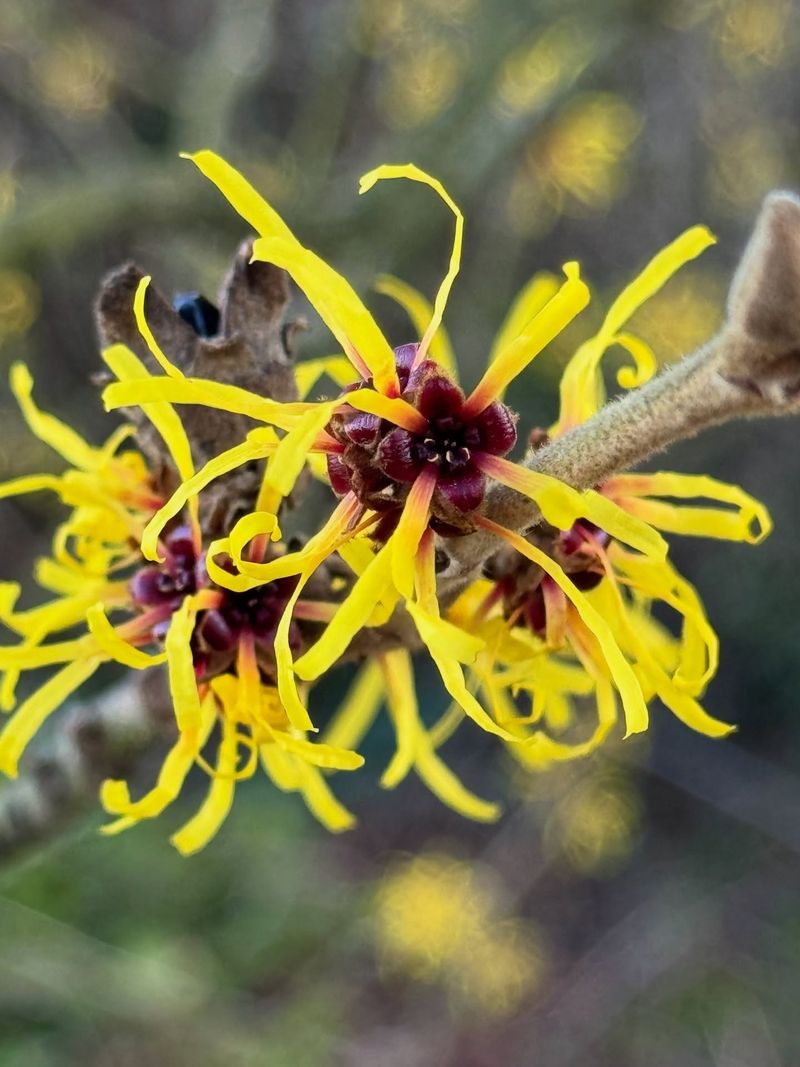
Picture tiny ribbons of crinkled paper stuck all over a bare shrub. Hybrid witch hazel flowers look a lot like that, and several varieties add a light, spicy fragrance.
Blooms often appear from January into early March, with colors ranging from yellow to orange to coppery red.
Scent strength varies by cultivar. ‘Arnold Promise’ is a yellow type often noted for good fragrance, while some red types look striking but smell fainter.
On cold days, the petals curl up tight and then unfurl again when it warms, which helps the flowers last.
Plant witch hazel in sun to part shade with moist, well-drained soil. In the hotter parts of Georgia, a little afternoon shade can keep leaves from scorching in summer.
Place it where low winter sun can shine through the flowers, since backlighting makes them glow.
These shrubs grow slowly into a vase shape, often reaching 10 to 15 feet over many years. Give them room early so you are not constantly cutting them back.
Remove suckers coming from below the graft, because they belong to the rootstock and not the named variety.
Bonus: fall leaves often turn gold or orange, so you get two seasons of color. Buying one in bloom lets you sniff before you commit.
Once established, it needs little fuss to deliver one of the garden’s earliest flower displays each year.
4. Tucked Into Shade, Sweetbox Offers A Honey-Like Scent Near The Ground
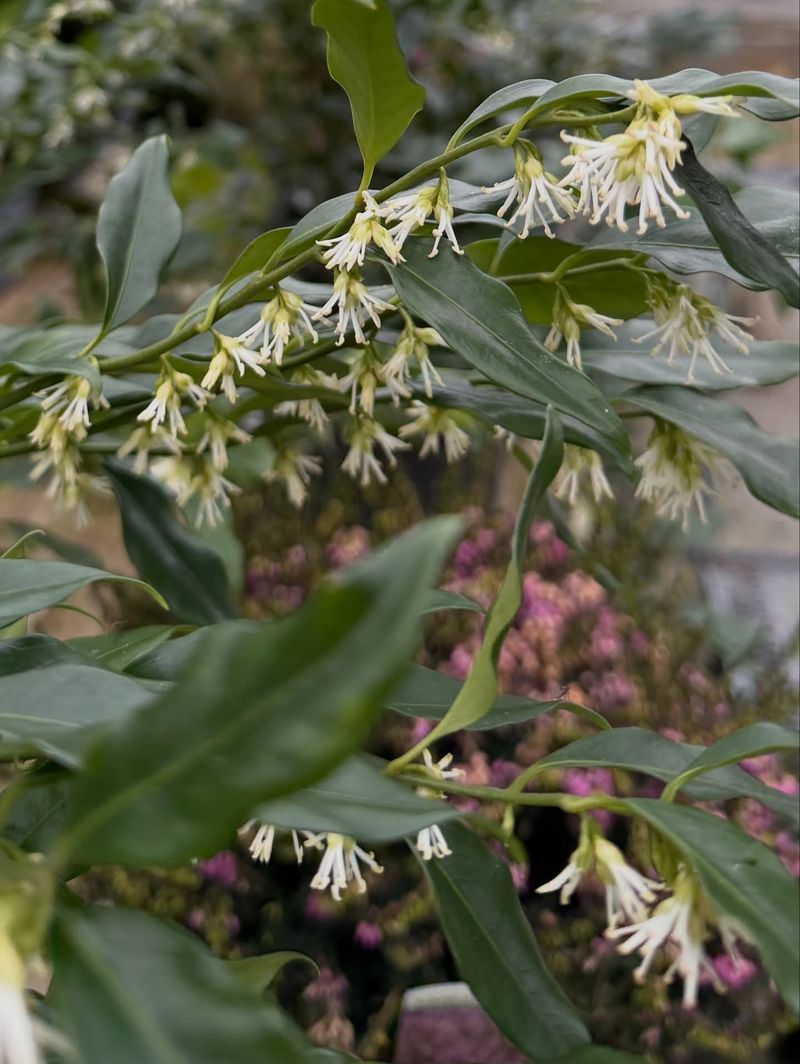
Smell it first, find it later. Sweetbox flowers are so small and hidden that people often sniff around confused before spotting the source.
Tiny white blooms tuck under glossy evergreen leaves, usually opening in late winter.
Deep shade is where sweetbox shines. Under oaks, beside a north wall, or along a shaded path, it can grow where many flowering shrubs sulk.
Its scent is often compared to honey or vanilla.
Plant it close to steps or a bench so the fragrance meets you at nose level, or at least near it. Low varieties like Sarcococca hookeriana var. humilis stay around 1 to 2 feet tall.
Rich, moist soil with good drainage keeps it happiest.
Hot afternoon sun can yellow or burn the leaves, especially in middle and south Georgia summers. Keep it shaded, and water during long dry stretches until it is established.
Growth is slow, so buy a few plants if you want a groundcover effect sooner.
Deer tend to leave sweetbox alone, though hungry deer may nibble almost anything in a tough winter. Small black berries sometimes follow the flowers.
Think of it as a quiet evergreen that asks for little attention and pays you back in fragrance every February.
Its dense foliage also helps fill bare spots beneath taller shrubs without demanding much pruning. Once settled in, it can quietly hold that shady corner together through every season.
5. Viburnum ‘Dawn’ Brings Fragrant Pink Blooms To Bare Winter Stems
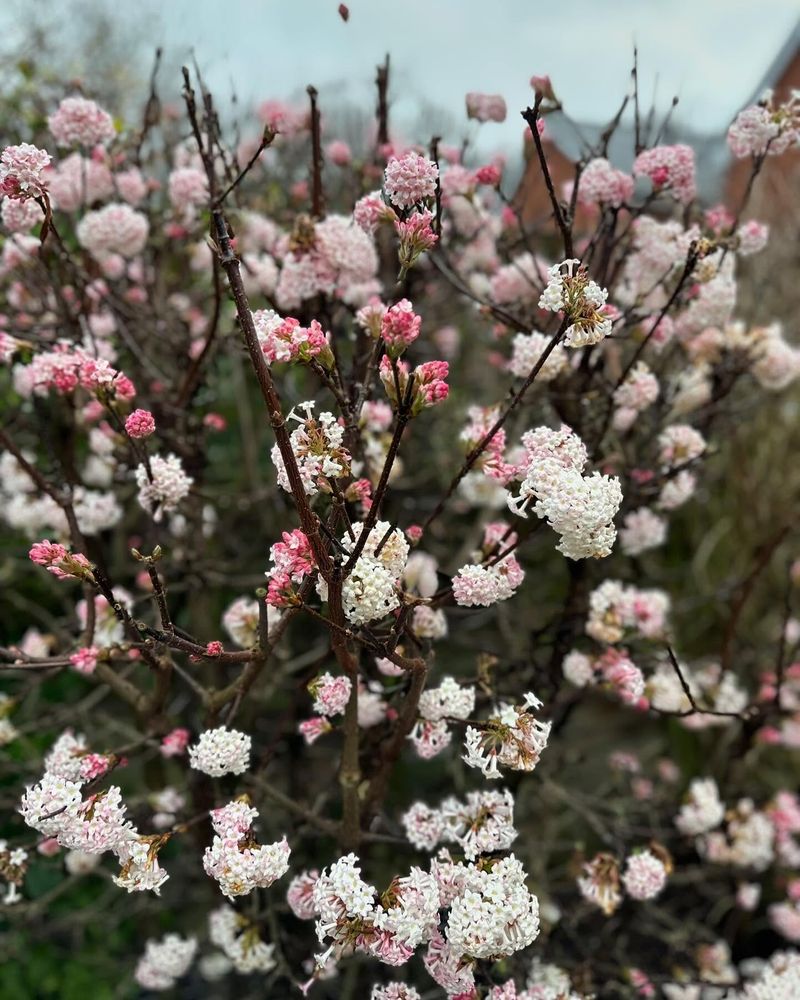
Pink flowers on naked stems in the middle of winter can stop you in your tracks. Viburnum ‘Dawn’ does exactly that, and its clusters carry a sweet scent.
Bloom time is flexible, with flowers sometimes appearing in fall and again during mild winter spells.
A sharp freeze may brown open blooms. Fortunately, more buds often open once the weather warms, so the display tends to come in waves rather than all at once.
Plant it in full sun to part shade with average, well-drained soil.
Expect an upright shrub around 8 to 10 feet tall. Its stiff, vase-like shape works well at the back of a bed or as part of a loose hedge.
Summer heat and humidity can be a test in the warmest parts of Georgia, so it may perform best in the northern half of the state.
Pruning is simple if you do it right after flowering ends. Take out a few of the oldest stems at ground level to keep the shrub fresh.
Cut stems bring the fragrance indoors nicely, especially if you snip them when buds are just showing color.
Leaves are a plain green in summer. Pair it with an evergreen neighbor so the space looks full year-round.
Its bare winter branches make those pink flower clusters stand out even more when little else is blooming. Give it a sheltered spot, and the seasonal fragrance can become one of the garden’s earliest highlights.
6. Looking For Something Unusual? Paperbush Adds Sweet, Silvery Clusters
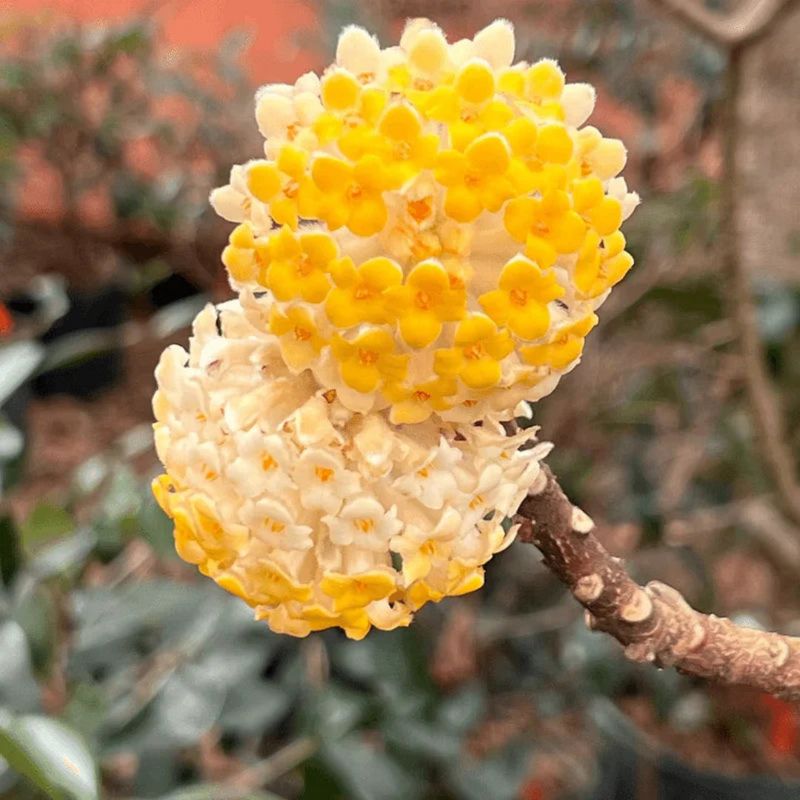
Neighbors will ask about this one. Paperbush grows silvery, fuzzy buds in fall that hang like little tassels all winter before opening.
Flowers usually unfold in late winter, showing yellow tubes inside round, drooping clusters with a sweet fragrance.
Its name comes from its bark, which has been used in Asia to make high-quality paper. That history makes it a fun story to share with visitors.
Part shade and rich, moist soil that drains well suit Edgeworthia best.
In Georgia, a spot with morning sun and afternoon shade often works nicely. Too much hot sun can make the big summer leaves droop and look tired.
Water it during summer droughts, since it does not love drying out.
Plants typically reach around 4 to 6 feet tall and wide, with a rounded shape. Branches often split into threes, giving it a neat, tidy structure even when bare.
Hard freezes in the low teens or colder can damage buds, so a sheltered spot near a wall or evergreens may help.
Good drainage matters, as roots can rot in heavy, soggy clay. Mix in compost or plant slightly high if your yard stays wet.
Put it where people walk, because those hanging buds look beautiful up close for months.
Once the flowers open, their fragrance gives you another reason to stop and notice the shrub. Even after blooming ends, its bold foliage keeps the planting interesting through summer.
7. Early And Sweet-Smelling, Mahonia ‘Winter Sun’ Brightens The Winter Garden
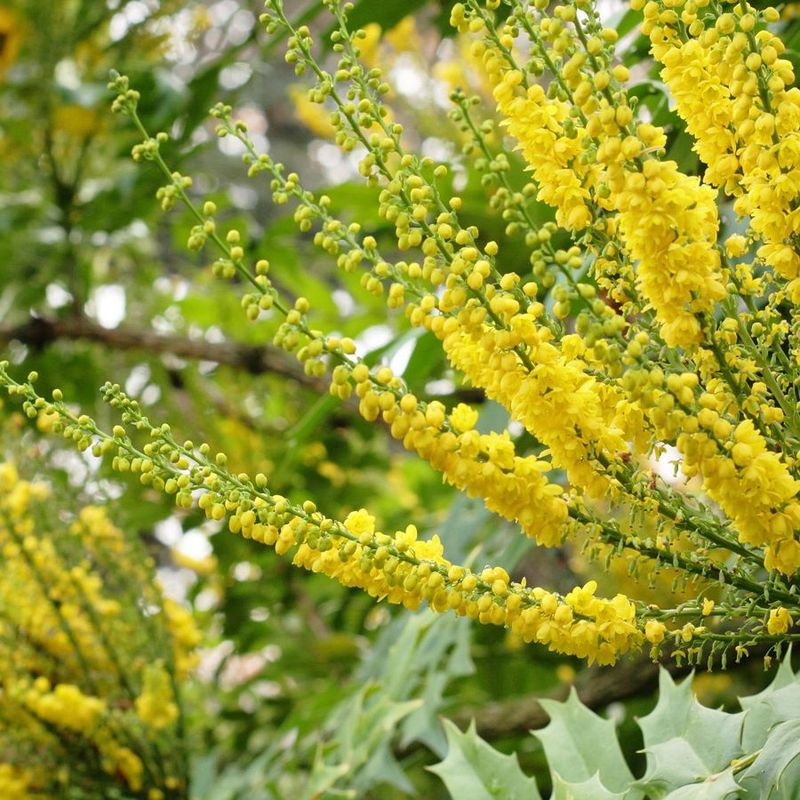
Bright yellow spikes shooting up from spiky leaves feel almost like fireworks in December. Mahonia ‘Winter Sun’ often blooms from late fall into winter, depending on the weather.
Its flowers carry a light, sweet scent that is easiest to notice on mild afternoons.
Wintering hummingbirds and early bees sometimes visit the flowers. You may not see them every year, but it is a treat when they show up.
Leaves are evergreen, stiff, and prickly, so keep it away from paths where people brush past.
That spiny foliage makes it a handy barrier plant along a fence line. Shade to part shade suits it, and it handles dry shade better than some shrubs once established.
Expect an upright plant around 6 to 8 feet tall over time.
Well-drained soil with some organic matter helps it settle in after fall planting. Water regularly during its first summer.
If it gets leggy, cut a few of the tallest stems back after flowering to encourage bushier growth.
Wear thick gloves for any pruning, because those leaves bite back. Blue-black berries may follow the flowers in spring, which birds often eat.
Leatherleaf mahonia, a related species, can spread into woodlands in parts of Georgia, so ‘Winter Sun’ is often considered a better choice, though check local guidance.
8. Tea Olive Can Produce Fragrant Blooms Beyond Its Main Fall Flush
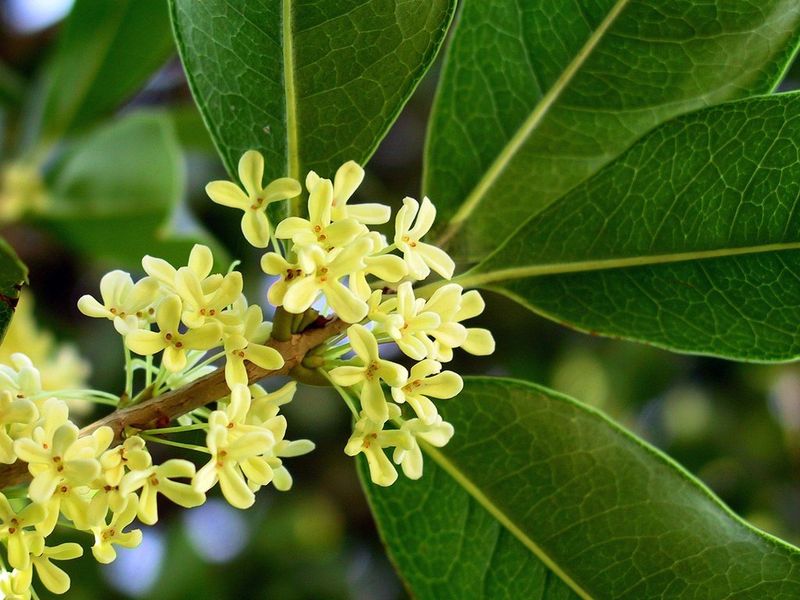
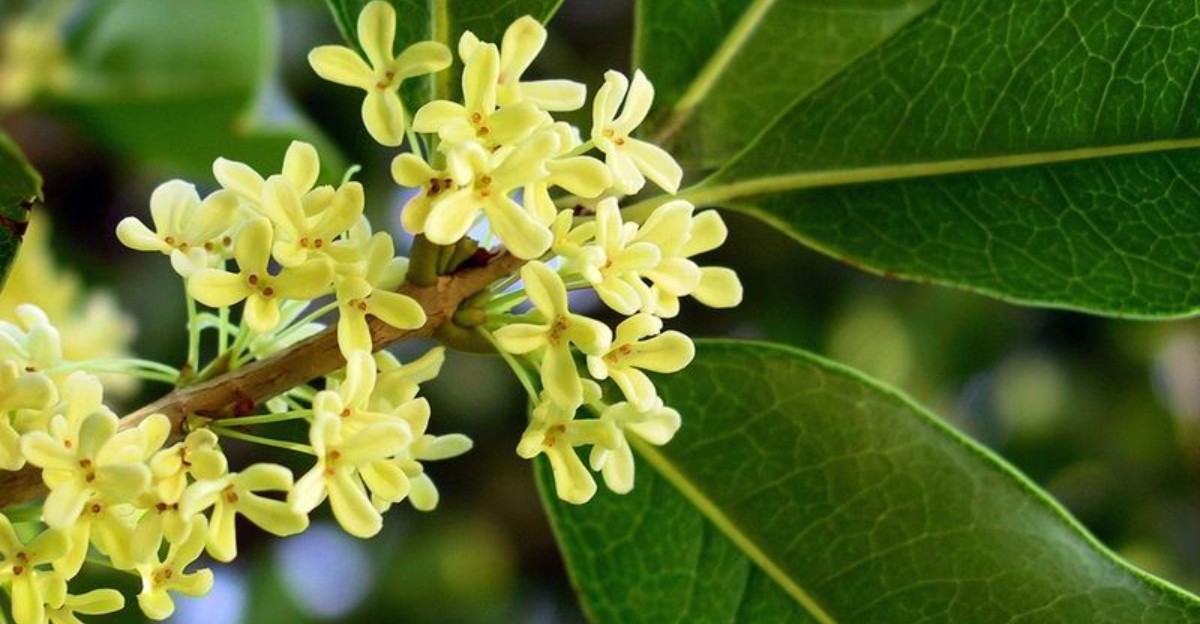
Ask almost any longtime Southern gardener about scents, and tea olive comes up fast. Its tiny cream flowers smell a bit like ripe apricots.
Osmanthus fragrans usually blooms most heavily in fall, often after the first cool spell.
Here is the bonus. During mild stretches, many plants push out smaller rounds of flowers into winter and sometimes early spring, though timing depends on the weather.
Across much of Georgia, tea olive is a familiar sight beside porches and old homes.
Plant it in sun to part shade with well-drained soil. It is evergreen and can grow into a large shrub or small tree, often 10 to 20 feet tall over many years.
Give it space near a window or patio so you can enjoy the fragrance without crowding the house.
Hard freezes may damage tender growth or open flowers, particularly in the colder mountain areas. A protected spot near a south or east wall can help in those regions.
Once established, it handles heat and summer humidity fairly well.
Light shaping is fine after a flush of blooms. Avoid heavy shearing, which cuts off future flower buds and leaves a boxy look.
Fall planting fits perfectly, since you might catch a few blooms right away.
Its glossy leaves keep the shrub attractive even when no flowers are open. With the right placement, one mature plant can perfume a surprisingly large part of the yard.