Yaupon Holly Handles Drought Better Than Most Nursery Favorites In Georgia
Nursery rows can make thirsty shrubs look irresistible, but that first impression rarely tells you how they will handle a dry spell. Your yard eventually reveals which plants can manage without constant attention.
That is where yaupon holly starts looking far more interesting.
This native shrub brings dependable greenery while handling dry conditions better once its roots are established. For Georgia gardeners tired of dragging hoses around, that combination deserves a closer look.
Still, drought tolerance is only part of its appeal.
Yaupon holly can fit into landscapes in ways that many familiar nursery choices cannot easily match. Look beyond the usual favorites, and you may find a shrub that asks for less while still earning its place.
Before choosing another high-maintenance option, see why this understated native deserves consideration.
1. A Native Evergreen Built For Tough Growing Conditions
Yaupon holly did not arrive here from a breeding program overseas. It grows naturally through the Southeast, including sandy flatwoods and pine edges across Georgia.
That local history matters more than most plant tags let on. A shrub that evolved with our summers already knows what August feels like.
Look closely at the leaves and you can see part of the reason. They are small, thick, and coated with a waxy layer that slows water loss.
Smaller leaves also mean less surface exposed to hot wind.
Roots do the rest of the work. Yaupon puts out a wide, fibrous root system that pulls moisture from a broad area instead of depending on one deep taproot.
In the wild it turns up in odd places. You will find it in soggy ditch banks and also on dry sandy ridges, sometimes within a mile of each other.
That range of habitats tells you something useful about its flexibility.
Salt spray near the coast does not bother it much either, which is why it shows up in older beach plantings. Inland gardeners get the same toughness without needing the salt tolerance.
It is worth being clear about one thing.
Native does not mean maintenance free, and a stressed young plant can still struggle. But the starting point is far better than most imported nursery shrubs.
2. Established Plants Ride Out Dry Spells Surprisingly Well
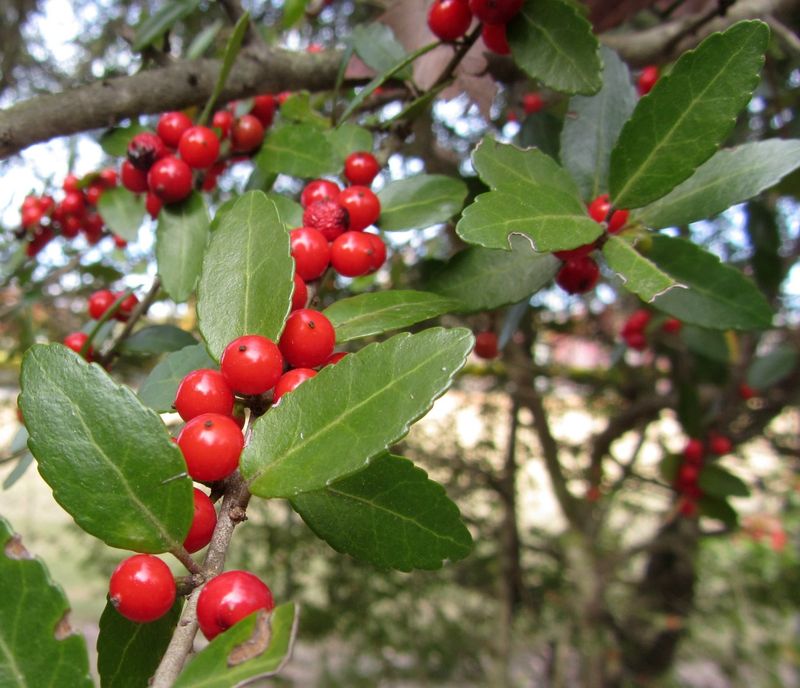
Three weeks without rain is the real test, and yaupon usually passes it.
Once the roots have spread out, the plant slows down rather than falling apart. Growth pauses, leaves stay on, and the shrub waits for the next storm.
Compare that to a hydrangea in the same bed. Those big leaves wilt by noon and need water almost daily in July.
Getting there takes patience, though.
The first full growing season is when watering actually counts. A deep soak once or twice a week beats a light daily sprinkle, since shallow water encourages shallow roots.
By year two most plants can go long stretches on their own. By year three, many gardeners across Georgia stop supplemental watering except during unusually harsh stretches.
Mulch helps more than people expect.
Your Georgia Garden Changes Every Week. Your Plan Should Too.
Gardening in Georgia changes quickly throughout the season. Every Friday you’ll receive a simple weekly plan showing exactly what to plant, prune, fertilize, harvest, and protect so you never miss the right timing.
Two or three inches of pine straw keeps soil temperatures down and slows evaporation. Pull it back an inch or two from the trunk so bark stays dry.
Container plants are a different story.
Pots dry out fast no matter how tough the plant is, so those still need regular checks. Drought tolerance applies to shrubs in the ground with room to root.
Extreme, extended dry weather can still cause leaf drop or thin growth. Recovery is usually good once rain returns.
3. Adaptability Reaches Well Past Dry Weather
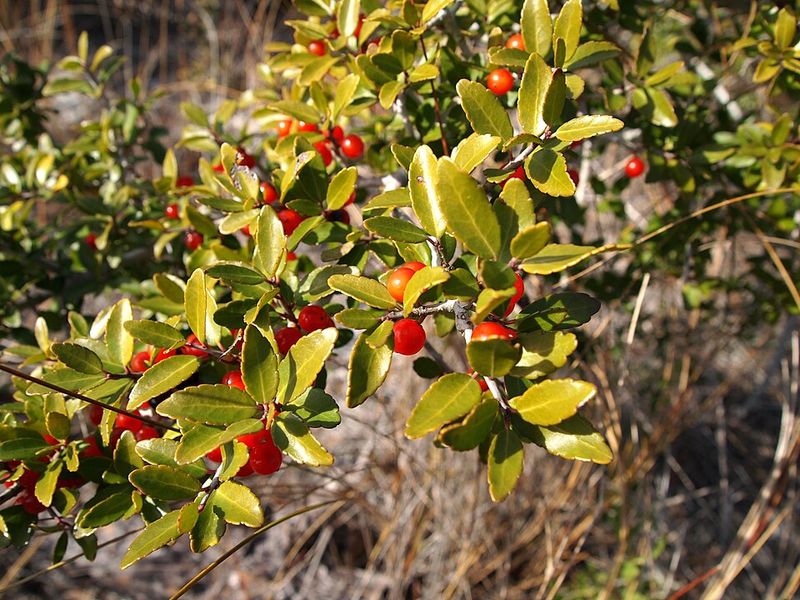
Here is the odd part: the same shrub that handles drought also tolerates wet feet.
Yaupon grows in low spots where water sits after heavy rain. That combination is rare, and it makes the plant useful in yards with uneven drainage.
Soil type is another non-issue for the most part. Sand, clay, or something in between all seem to work.
Clay does need a little thought at planting time.
Dig the hole wide instead of deep, and skip heavy soil amendments that create a bathtub effect. Roots spread outward anyway.
Cold weather rarely causes problems in this state.
Yaupon is generally rated for USDA zones 7 through 10, which covers nearly all of Georgia. Gardeners in the far northern mountain counties should check their zone before planting.
Pests and diseases stay mostly quiet. Scale insects show up occasionally, and root problems appear in soil that never drains at all.
Deer browsing varies by area.
Some folks report light damage, others see none, so local pressure matters more than any general rule. Young plants are the most vulnerable.
Air pollution and road runoff along busy streets do not seem to faze it either. Parking lot islands and street plantings hold up better than you might guess.
Flexibility like that saves replacements later.
4. Sun And Shade Both Give This Shrub Room To Perform
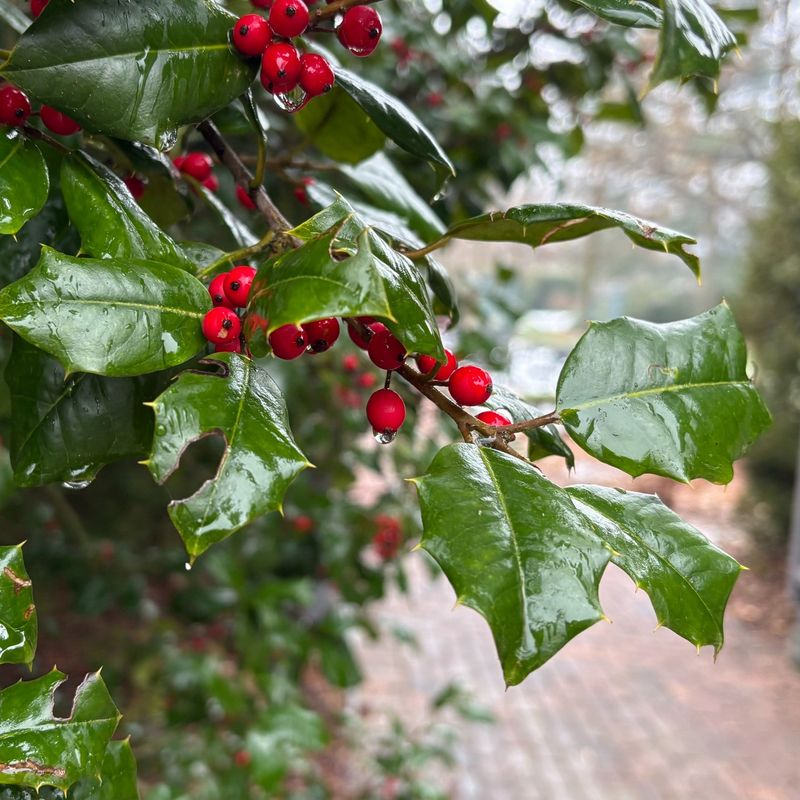
Full sun, part shade, mostly shade. Yaupon handles all three, just differently.
Out in the open it grows dense and tight. Leaves crowd together, the shape stays compact, and berry production on female plants tends to be heavier.
Shade changes the look. Growth gets looser, branches reach a bit, and the whole plant feels more open.
Neither version is wrong.
A loose, airy yaupon under pines can look natural and relaxed, which suits woodland edges. A sheared hedge in full sun looks formal and neat.
Deep shade does have limits.
Under a dense canopy with almost no light, expect thin growth and few berries. Four hours of sun or good dappled light is a reasonable minimum.
Georgia yards often have both extremes, sometimes twenty feet apart. Being able to use one plant in a west-facing bed and a shady side yard simplifies things.
Reflected heat from brick walls or driveways rarely bothers established plants.
Newly planted shrubs are more sensitive.
Spring or fall planting gives roots time to settle before the worst heat arrives. Fall is usually the better bet in the Southeast.
One practical note on pruning: shrubs in shade need it far less often since they grow slower. Sunny plantings may want a trim twice a year.
5. Different Forms Fit Hedges, Screens, And Small Corners
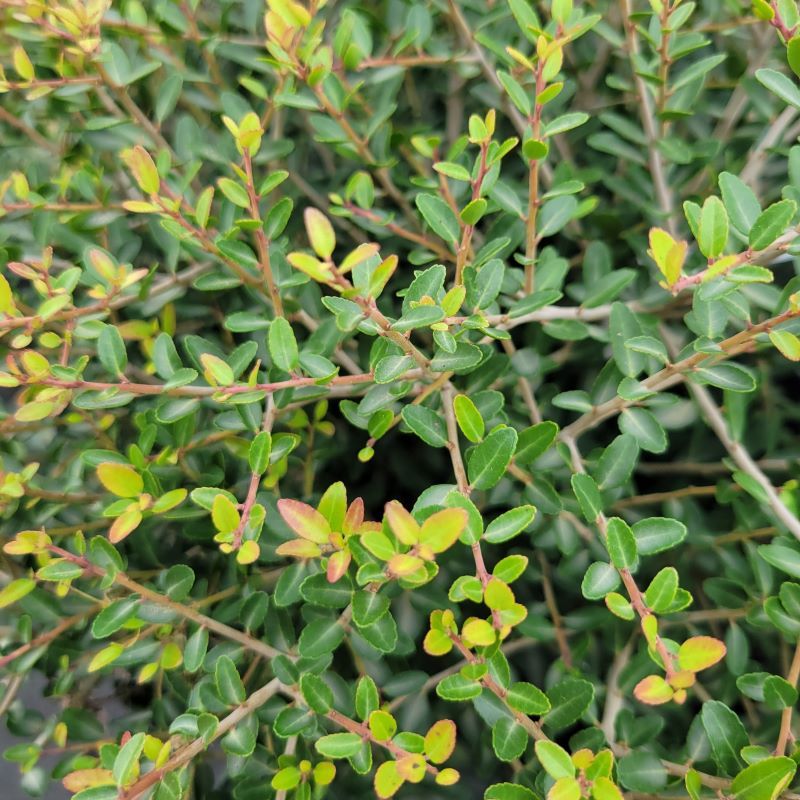
One species, a lot of shapes. That is what keeps yaupon in rotation for designers.
Standard yaupon can reach fifteen to twenty feet over many years. Left alone it becomes a small multi-trunk tree with pale, twisting bark.
Dwarf types stay much lower. Selections like Nana or Schillings usually top out around three to five feet with regular shearing.
Those little ones replace boxwood in a lot of Georgia foundation beds.
Boxwood struggles with humidity and blight in the Southeast. Dwarf yaupon takes the same haircut without those headaches, though the leaf texture is not identical.
Weeping forms exist too.
Pendula and similar cultivars drape their branches downward, which works well as a single accent near a patio. Berries on weeping females hang in clusters along the stems.
Upright columnar selections handle narrow spaces.
Will Fleming grows tall and skinny, useful along a driveway or between two windows. Plants may need light tying when young to keep the form tight.
Spacing depends on your goal. Three feet apart for a solid low border, five or six feet for a taller screen that fills in over a few seasons.
Check the tag carefully before buying.
Nursery labels sometimes mix up cultivars, and mature size varies with pruning and site conditions.
6. Female Plants Bring Red Berries To Winter Foliage
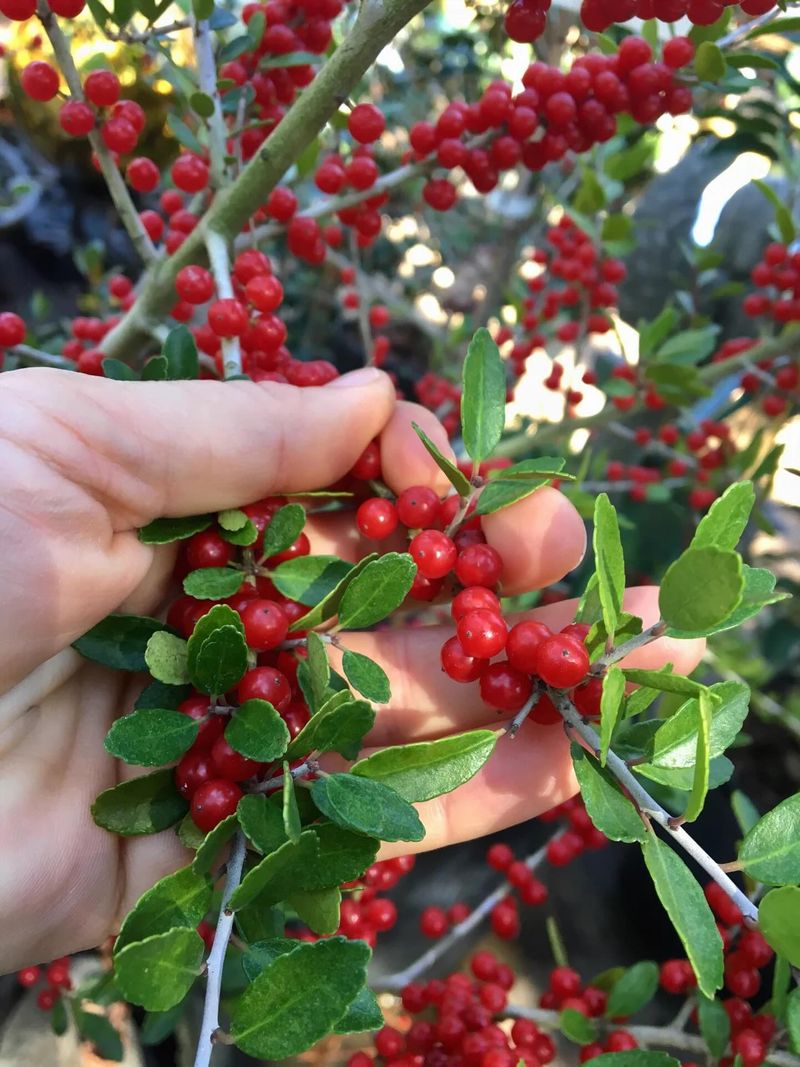
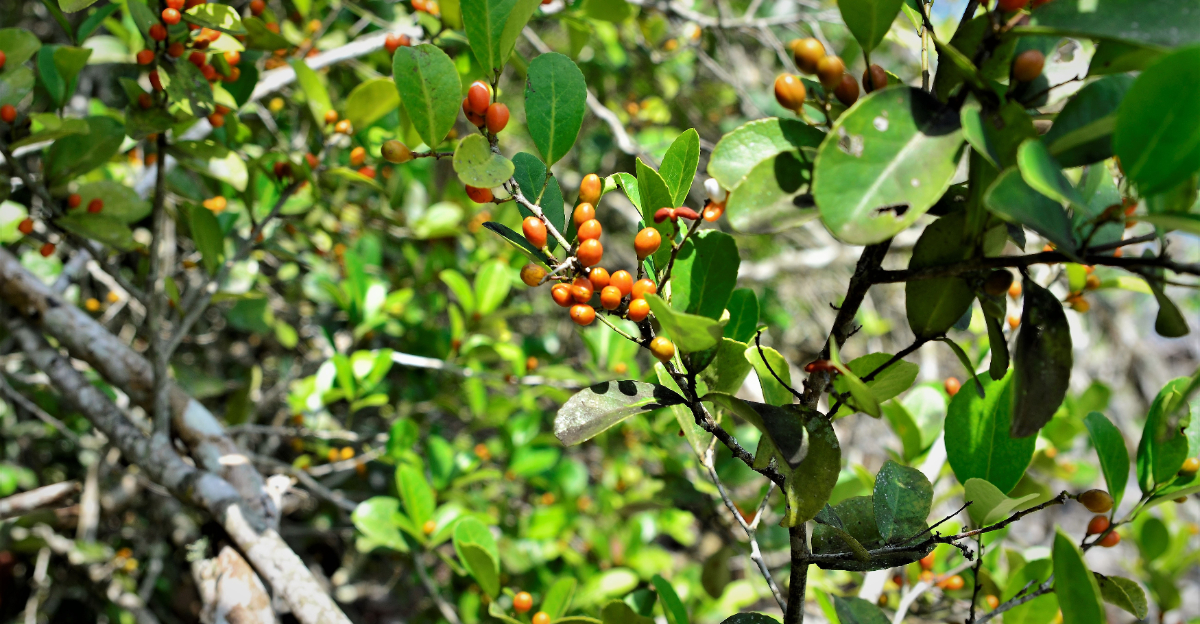
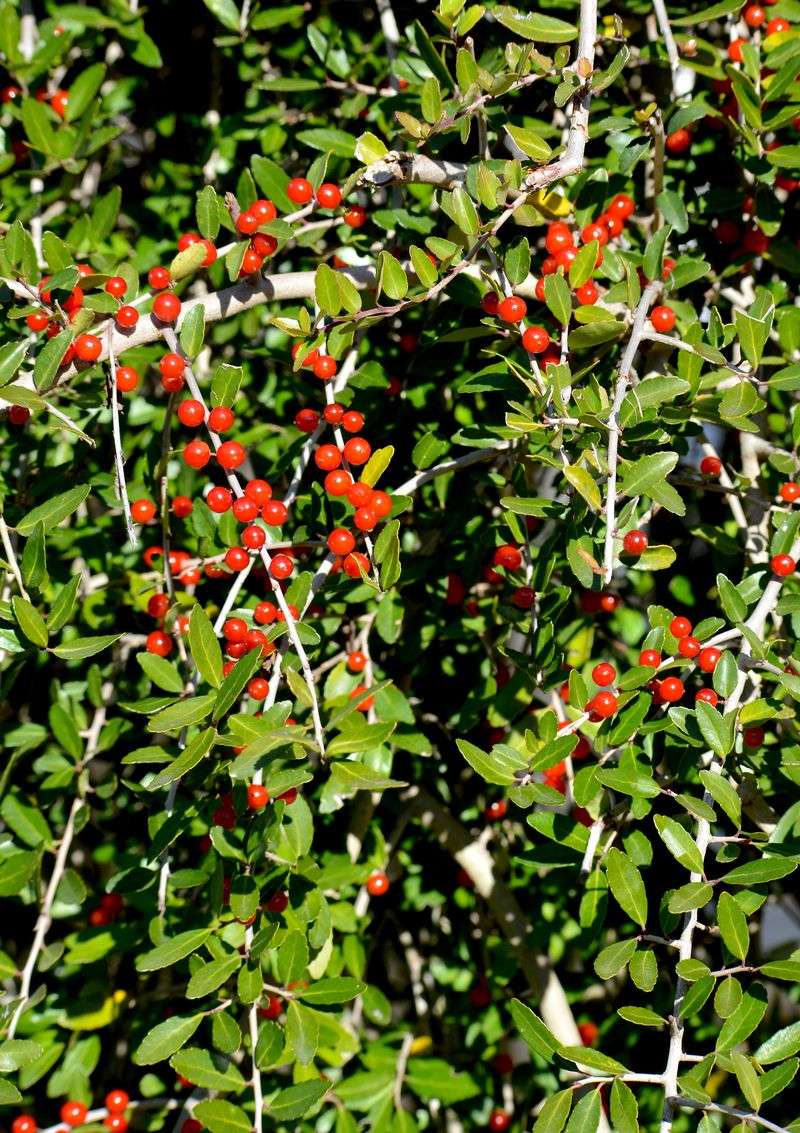
Red berries against dark green leaves in January. That is the payoff for choosing carefully at the nursery.
Yaupon holly is dioecious, meaning male and female flowers grow on separate plants. Only females produce fruit.
Buy a plant in fall or winter and you can see berries before you pay.
Spring shopping is trickier.
Tags often list the cultivar rather than the sex, so ask staff or look for a named female selection. Some cultivars are known to be reliably female.
Pollination needs a male somewhere nearby.
Wild yaupon grows commonly enough across much of Georgia that a neighborhood male often does the job. In newer suburbs with no natives left, adding one male per several females helps.
Birds notice the fruit.
Cedar waxwings, mockingbirds, and robins strip berries through late winter when other food runs short. That is one reason old yaupon thickets stay full of activity.
The berries are not for people.
Yaupon fruit is considered toxic if eaten, so plant with that in mind around small children. Leaves are a separate matter, since dried yaupon leaves have a long history of use as a caffeinated tea by Southeastern peoples.
Heavy pruning in spring can remove flower buds and reduce that year’s fruit.
7. Picking The Right Spot Keeps Care Simple
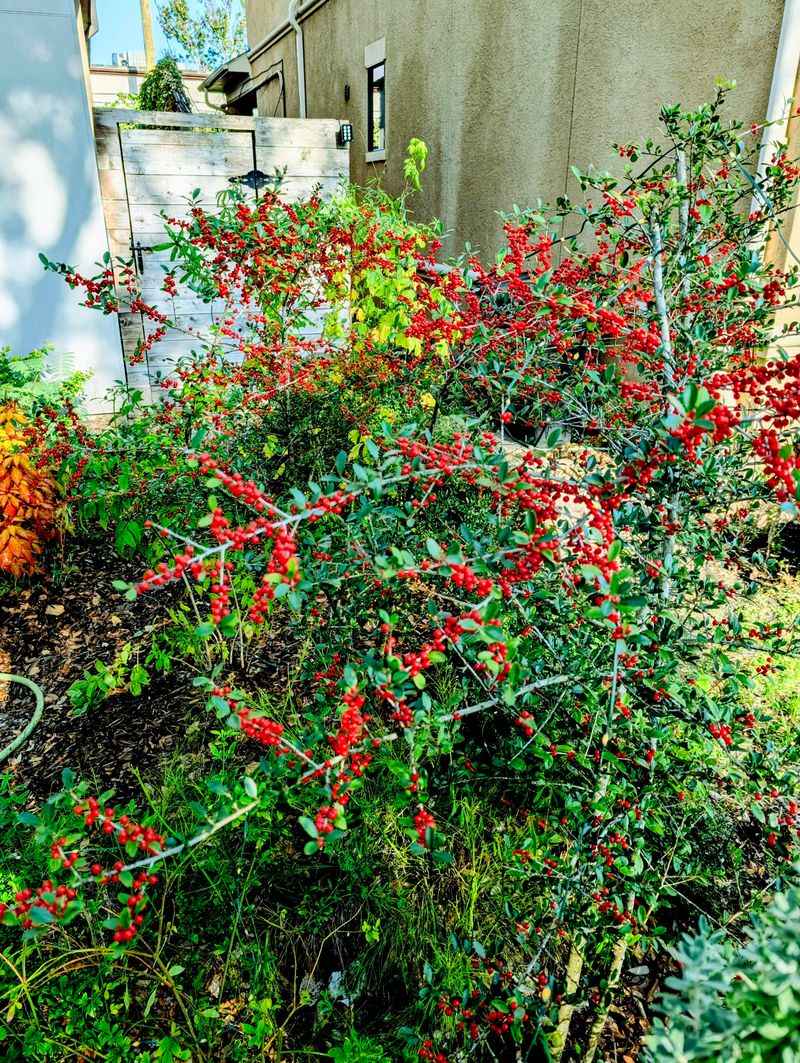
Most yaupon problems trace back to placement, not the plant.
Stick a fifteen-foot species under a low window and you will be pruning forever. Match mature size to the space and the workload drops fast.
Think about the view from inside too. Evergreen screens block headlights and neighbors year round, which is worth planning on paper first.
Planting depth matters a lot.
Set the root flare level with the surrounding soil, never below it. Buried trunks invite rot and slow establishment.
Loosen circling roots before backfilling.
Container-grown shrubs often have roots wrapped tight against the pot wall. Slicing those sides encourages outward growth into native soil.
Fall planting works well throughout Georgia.
Cooler air with warm soil lets roots grow while the top stays quiet. Spring planting is fine but demands more watering through the first summer.
Fertilizer is rarely necessary.
A light spring application of a balanced product helps if growth looks weak, but too much nitrogen pushes soft shoots that need extra water. Poor growth more often signals drainage trouble or planting depth issues.
Prune in late winter or early summer, keeping cuts modest.
Yaupon takes hard shearing better than most broadleaf evergreens, though repeated heavy cuts can thin the interior. Light, regular trims keep the shape and the plant healthier long term.