This Is The Biggest Mistake Georgia Gardeners Make When Pruning Crape Myrtles
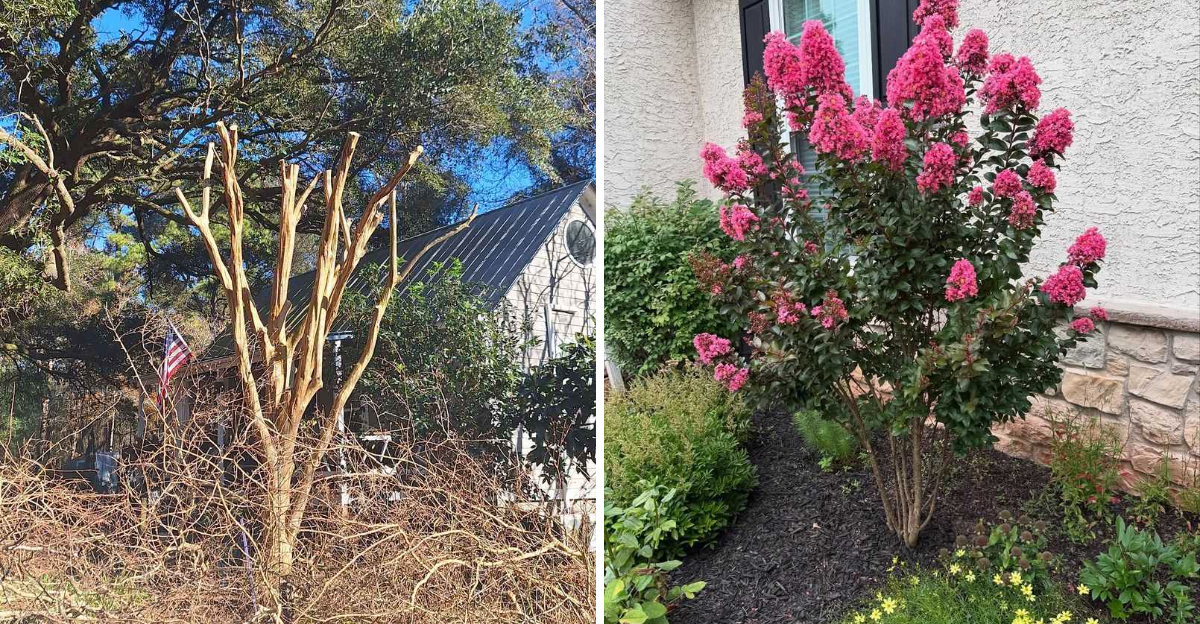
Crape myrtles grow fast once warm weather settles into Georgia. New branches shoot upward, fresh leaves fill the canopy, and many trees suddenly start looking larger and rougher than expected.
Pruners usually come out right around this stage.
Large sections get cut back in hopes of creating fuller blooms or tidier growth. Fresh shoots appear quickly afterward, so the tree often seems perfectly fine at first glance.
A few months later, the structure usually starts looking less balanced.
Thin branches stretch outward, heavy blooms pull stems down, and the tree loses the natural shape that made it attractive in the first place.
Careful pruning keeps crape myrtles healthier and better shaped over time. Repeating the same aggressive cuts year after year can slowly change how the entire tree grows and flowers.
1. Cutting Large Limbs Back Too Hard Ruins The Natural Shape
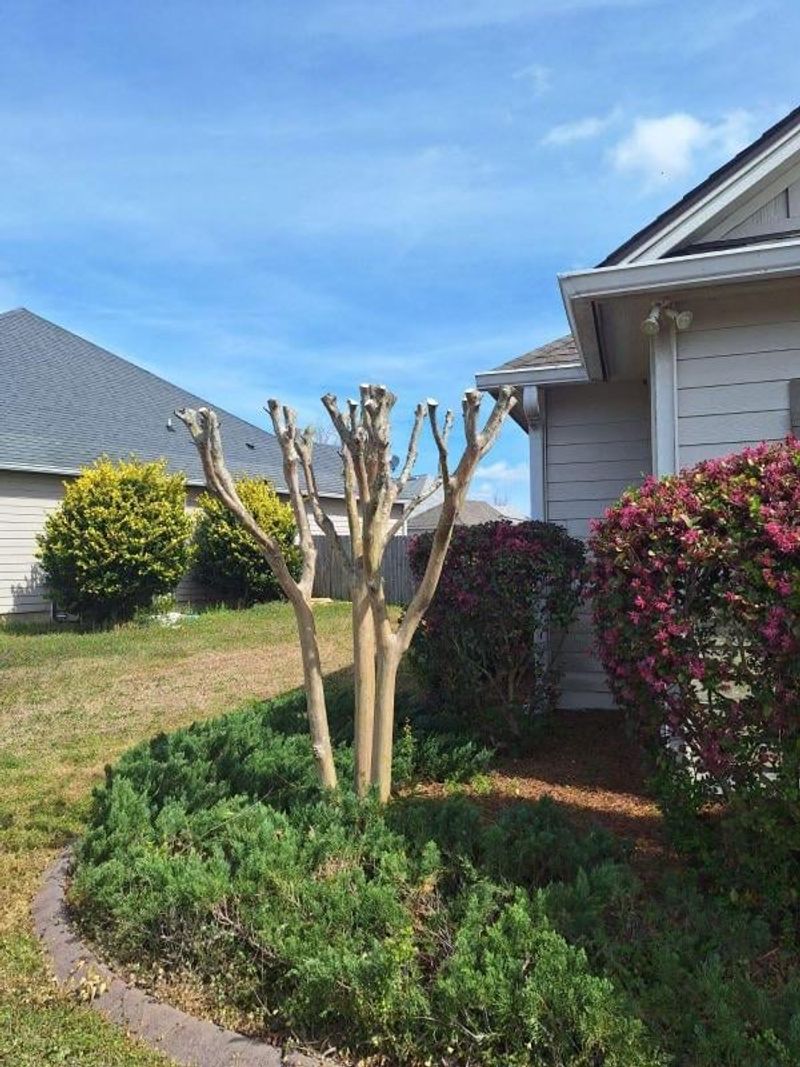
Chopping off the tops of crape myrtles is so common it has its own nickname: crape murder. Walk through almost any neighborhood in the South and you will spot rows of these trees with thick, stubby tops that look more like fence posts than flowering trees.
Hard topping removes the entire upper canopy in one cut. What grows back is not the same as what was removed.
You get a cluster of thin, weak shoots that sprout from the cut ends, and those shoots are poorly attached to the tree.
Over several years, those weak sprouts thicken into ugly knobs. Each spring, even more weak growth shoots from those same spots.
The tree loses its graceful arching shape permanently.
Crape myrtles naturally grow into beautiful multi-stemmed forms with smooth, peeling bark and gently arching branches. Hard topping destroys that completely.
Once the natural branch structure is gone, you cannot get it back without starting over.
Removing no more than one-third of any branch at a time is a widely recommended guideline.
2. Selective Thinning Encourages More Balanced Growth
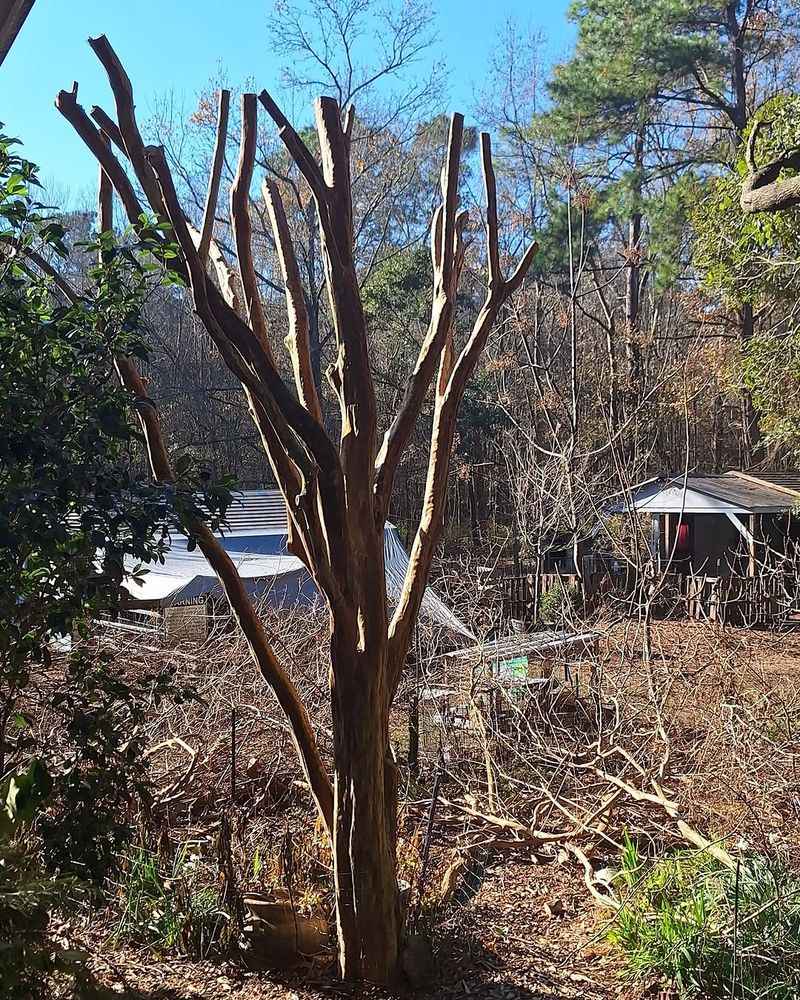
Not all pruning is bad. Selective thinning, done correctly, actually helps crape myrtles grow stronger and look better over time.
The key word is selective.
Thinning means removing specific branches rather than cutting everything back to a uniform height. You target branches that are crossing, rubbing, or growing inward toward the center of the tree.
Removing those opens up the canopy without destroying the overall form.
A more open canopy allows sunlight to reach inner branches. Better light distribution means more blooms across the entire tree, not just on the outermost tips.
Air can also move through more freely, which reduces the risk of powdery mildew during humid summer months.
Start by identifying any branches that rub against each other. Rubbing creates wounds in the bark, and those wounds can invite insects and fungal problems.
Remove the weaker of the two crossing branches at its point of origin.
Next, look for any branches that are growing straight down or sharply inward. Those directions do not contribute to the natural outward spread of the tree.
Removing them tidies the structure without sacrificing anything useful.
Your Georgia Garden Changes Every Week. Your Plan Should Too.
Gardening in Georgia changes quickly throughout the season. Every Friday you’ll receive a simple weekly plan showing exactly what to plant, prune, fertilize, harvest, and protect so you never miss the right timing.
3. Smaller Cuts Help Preserve Stronger Natural Branches
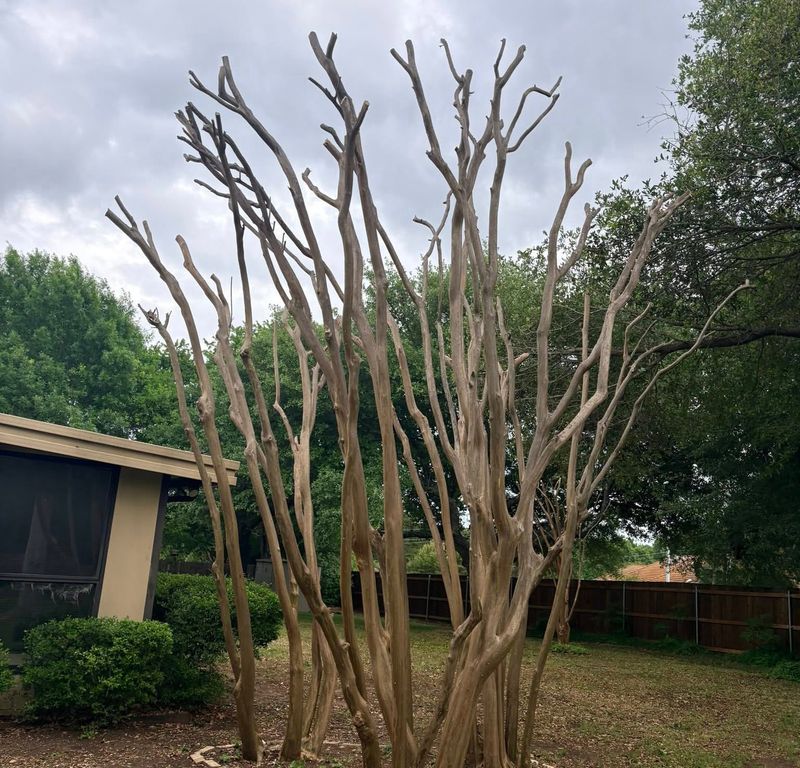
Sharp tools and small cuts are two of the most underrated parts of good crape myrtle care. Most people focus on where to cut, but how you cut matters just as much.
Large, heavy cuts leave wide wounds that take a long time to seal over. Smaller cuts heal faster because the tree can compartmentalize the damage more efficiently.
Faster healing means less exposure to insects and fungal spores that thrive in open wounds.
Always cut just outside the branch collar, which is the slightly swollen area where a branch meets the trunk or a larger limb. Cutting into the collar damages the tissue the tree uses to close wounds.
Leaving the collar intact speeds up recovery significantly.
Using bypass pruners instead of anvil-style pruners makes a real difference too. Bypass pruners cut cleanly with a scissor-like motion.
Anvil pruners crush the branch slightly before cutting, which leaves damaged tissue that takes longer to seal.
Keep blades sharp and clean throughout the pruning season. Dull blades tear rather than slice, leaving ragged edges that heal slowly.
Wiping blades with a diluted bleach solution between trees also reduces the chance of spreading fungal issues from one plant to another.
Focusing on smaller, precise cuts preserves the strongest and most structurally sound branches.
4. Lower Branch Removal Improves Air Movement Near The Base
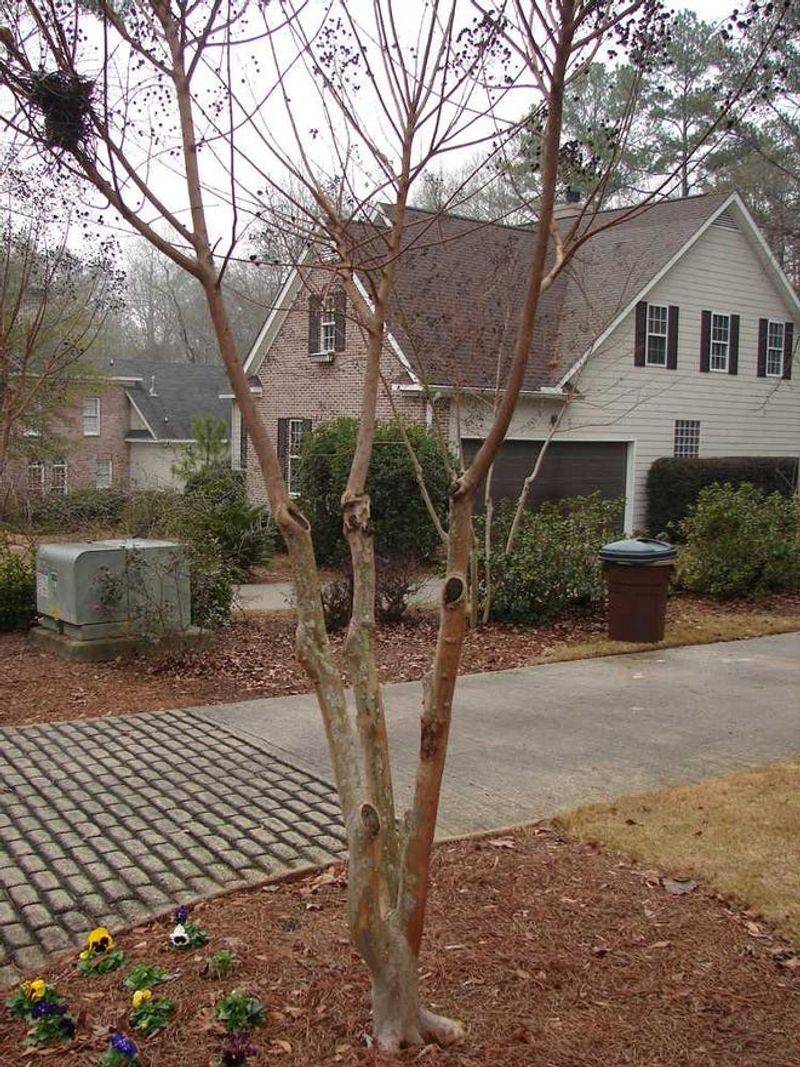
Suckers and low-growing shoots at the base of crape myrtles are easy to overlook. They seem harmless at first, but letting them go unchecked creates real problems over time.
Basal suckers draw energy from the main root system. Every shoot that sprouts from the base competes with the primary trunks for nutrients and water.
Over a few seasons, a heavily suckered tree may show reduced bloom production at the top simply because too much energy is being diverted downward.
Removing suckers as soon as they appear is far easier than dealing with them later. Young suckers pull away cleanly by hand or with a quick snip.
Older ones require pruners and leave larger wounds that take more time to close.
Clearing the base of the tree also improves airflow around the lower trunks. Crape myrtles are prone to powdery mildew, especially during the humid summers common across the South.
Dense low growth traps moisture against the bark and creates the kind of still, damp environment where mildew thrives.
Keeping the base clean also makes it easier to spot pest activity or bark damage early. Scale insects, borers, and other common problems are much harder to detect when the trunk area is buried in a tangle of small shoots and foliage.
5. Fast Weak Shoots Often Appear After Heavy Topping
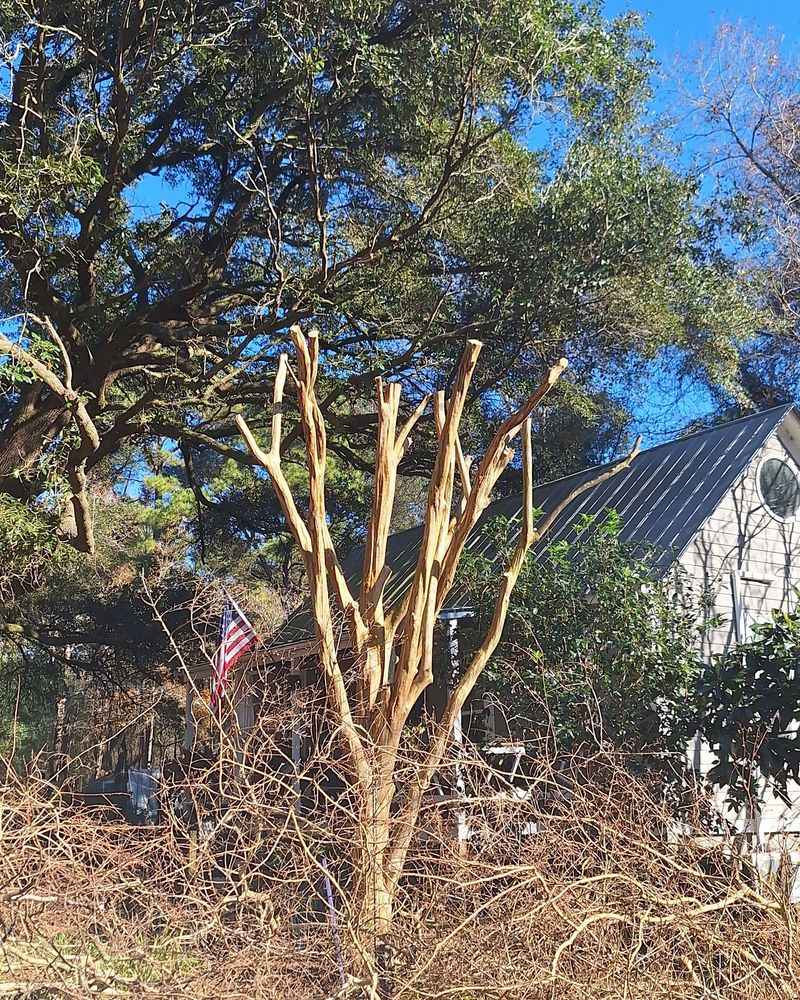
Heavy topping triggers a survival response in crape myrtles. After a severe cut, the tree pushes out a burst of fast-growing shoots from every cut surface.
Those shoots look lush and green at first, but they are structurally weak from the start.
These rapid sprouts are sometimes called water sprouts. They grow quickly because the root system is still large and actively pumping energy upward, but the attachment points are shallow and poorly anchored in the wood.
A strong summer storm can snap them easily.
Water sprouts also tend to grow in dense clusters, all competing for the same light and space. Rather than producing a balanced, open canopy, you get a tight tangle of thin stems that shade each other out.
Bloom quality often drops noticeably in these crowded conditions.
Another problem is that those fast shoots usually need pruning again the following year. So the cycle repeats.
Each round of heavy cutting creates more cut surfaces, which produce more water sprouts, which require more cutting. The tree never gets a chance to develop a proper structure.
Breaking this cycle requires restraint. Instead of topping again, selectively thin the water sprouts down to just two or three of the strongest ones per cluster.
Allow those to develop over two or three seasons into proper branches with real structural strength.
6. Proper Spacing Prevents Overcrowded Upper Growth
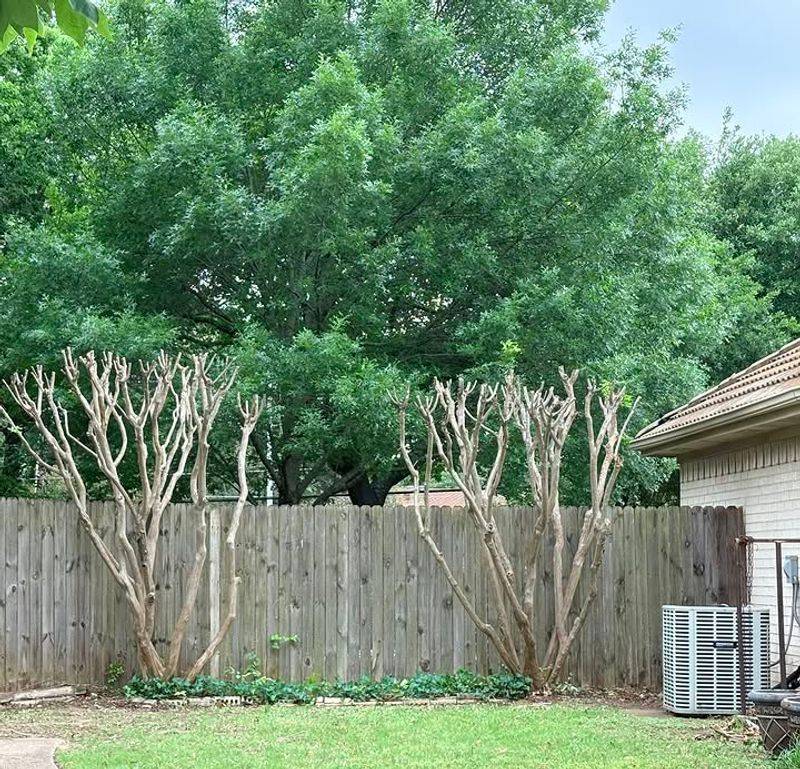
Planting crape myrtles too close together is a setup for constant pruning battles. When trees are crowded, their canopies merge and compete for light, which pushes growth upward rather than outward.
The result is a tall, narrow, congested structure instead of the open, rounded form these trees naturally want to develop.
Spacing recommendations vary by variety, but most standard crape myrtles need at least 8 to 15 feet between plants to develop properly.
Dwarf varieties need less space, but even they require room to spread without pressing against neighboring plants or structures.
Overcrowded upper growth also means more interior branches shading each other out. Shaded branches produce fewer blooms.
Over time, flowering concentrates only at the outermost tips of the canopy, leaving the inner structure bare and unattractive.
Correcting a spacing problem after the fact is difficult. Removing an established tree is labor-intensive, and replanting requires starting over from scratch.
Getting the spacing right at planting is always the easier path.
If spacing cannot be corrected, focus pruning efforts on thinning the inner canopy rather than topping. Removing crossing and inward-growing branches opens up light and air without reducing the overall height of the tree.
7. Light Annual Maintenance Prevents Severe Future Cutting
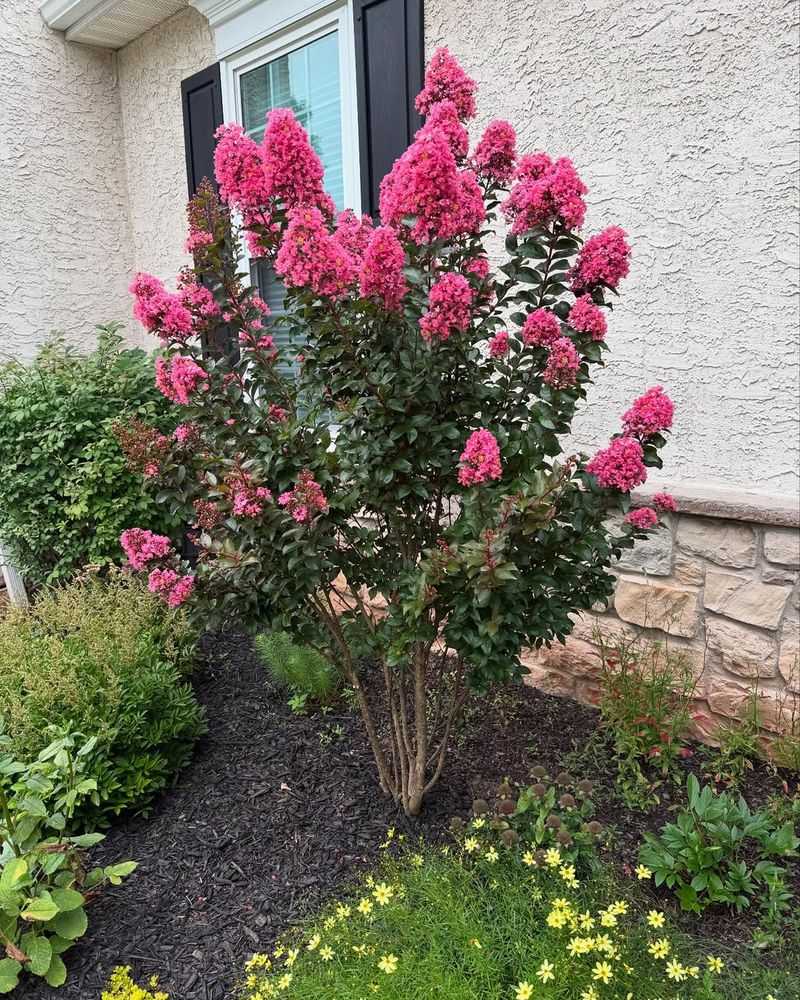
A little consistent attention each year saves crape myrtles from ever needing drastic intervention. Most people wait too long, let problems build up, and then feel like they have no choice but to cut everything back hard.
That cycle is completely avoidable.
Light annual maintenance takes maybe 20 to 30 minutes per tree. Remove the dried seed clusters from the previous season if you want to encourage earlier and heavier blooming.
Snip any small crossing twigs before they develop into larger structural problems. Pull any new suckers from the base before they get established.
Doing this every late winter, before new growth starts, keeps the tree looking clean and structured without removing anything significant.
You preserve the natural branch framework year after year while gently guiding the tree’s development in the direction you want.
Consistent light pruning also means you never face a situation where the tree has grown so far out of bounds that heavy cutting seems necessary. Prevention is genuinely easier than correction when it comes to crape myrtles.
Another benefit of annual maintenance is that you get to know each tree individually. You notice new crossing branches early, spot any unusual bark changes, and can address small problems before they grow into larger ones.
Familiarity with your own trees makes you a better caretaker over time.