Yellow Oleander May Be That Yellow-Flowered Arizona Shrub, and Pets Should Not Eat It
You may have a bright yellow shrub in your Arizona yard and no idea what it is. One possible match is yellow oleander, a plant that can make dogs and cats sick if they eat it.
Flower color alone cannot name a plant, though, so a careful look matters. Here is how to sort out the clues and what to do if a pet may have chewed on it.
Yellow oleander is a plausible match
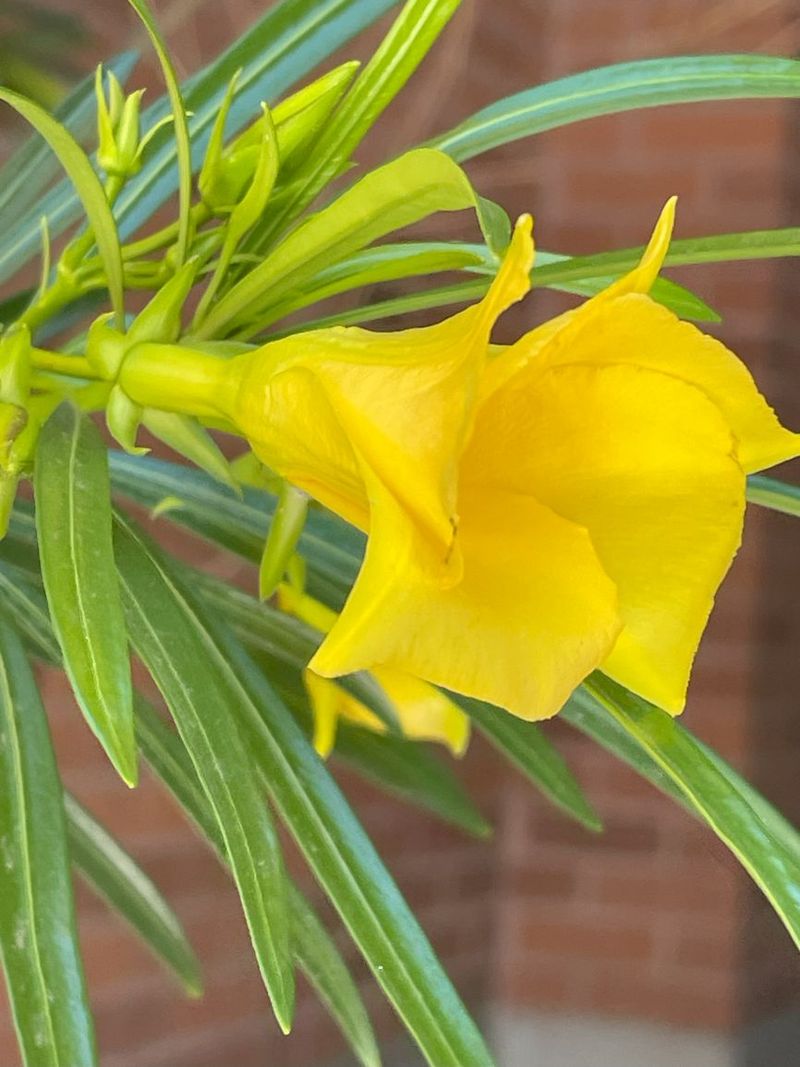
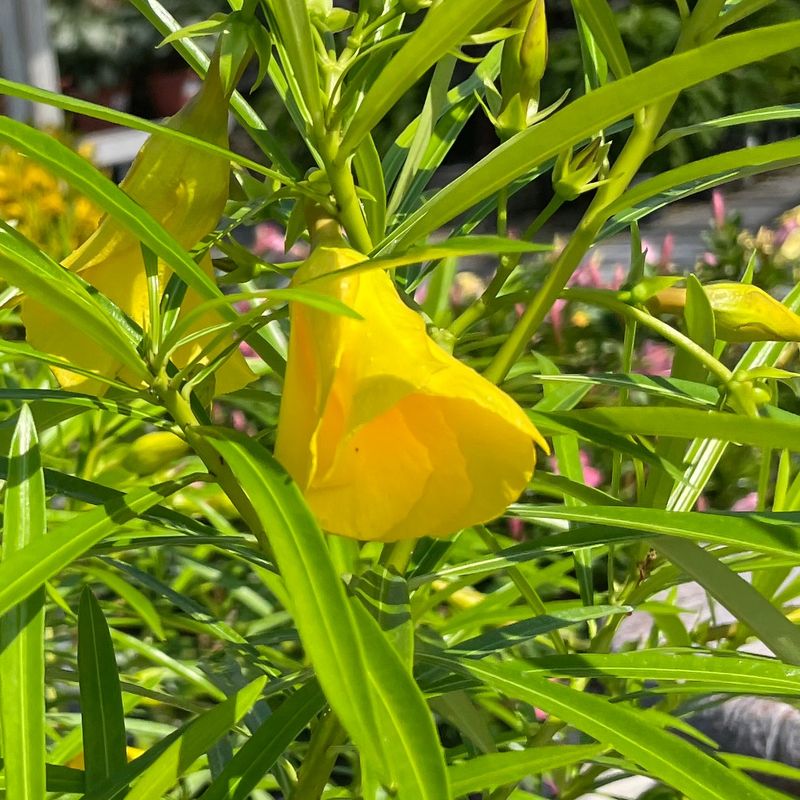
Picture a shrub or small tree covered in bright yellow, funnel-shaped flowers. That description fits yellow oleander, known scientifically as Cascabela thevetia and also listed as Thevetia peruviana.
It is a plausible match for an unnamed yard shrub, but it is not a confirmed identification.
The University of Arizona arboretum entry describes narrow, lance-shaped leaves along with those yellow blooms. It also notes that mature fruit turns black, which can help you judge a plant if fruit is present.
The same entry says the leaves and seeds are very toxic if eaten.
A description or even a photograph may not settle the question. Many shrubs share a cheerful yellow bloom, and lighting or pruning can change how a plant looks.
If you are unsure, take clear photos of the leaves, flowers, and any fruit, and ask a local nursery or extension office to help confirm what you have.
Yellow bells is a different plant
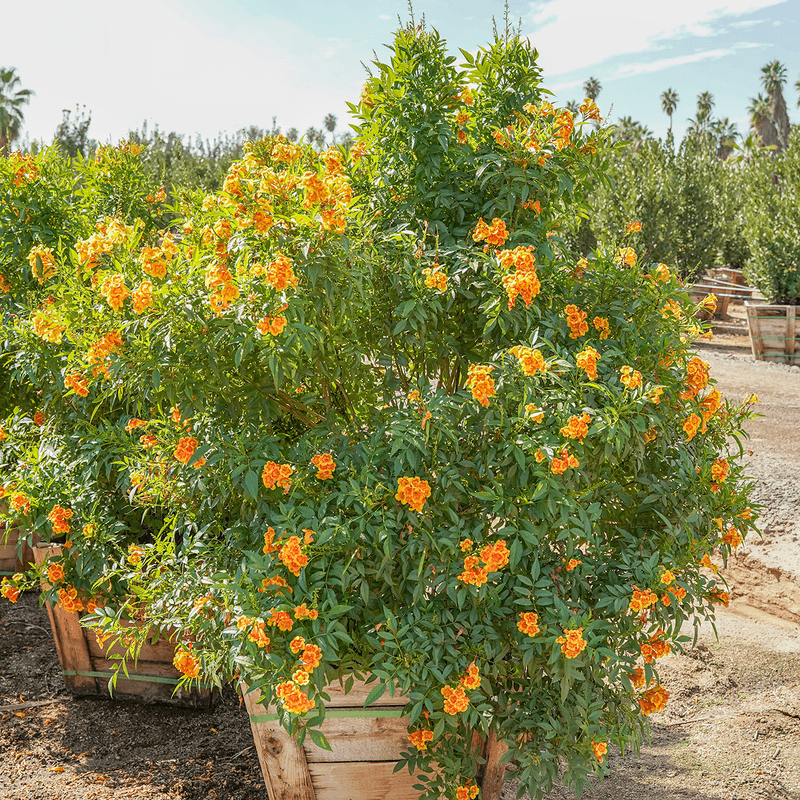
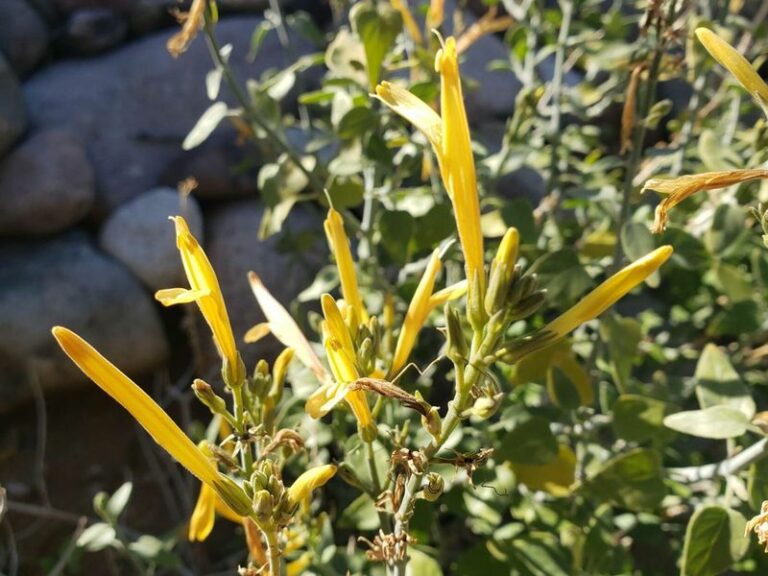
Plenty of Arizona yards have another yellow bloomer that causes mix-ups: yellow bells, or Tecoma stans. It is a different plant, and the arboretum’s yellow bells page lists it as native to the American Southwest, including Arizona.
Leaves are the easiest clue. Yellow bells has leaves divided into toothed leaflets, while yellow oleander has narrow, simple leaves with no division.
Look closely at a single leaf before you decide anything.
Plant guides also point out that yellow oleander can be confused with similar species, so the exact plant needs to be identified first. Flower color alone cannot do that job.
Not every yellow-flowered shrub in Arizona is a danger, and an uncertain guess is not proof of one. Treat it as a reason to look carefully, not a reason to panic.
Eating yellow oleander can poison pets
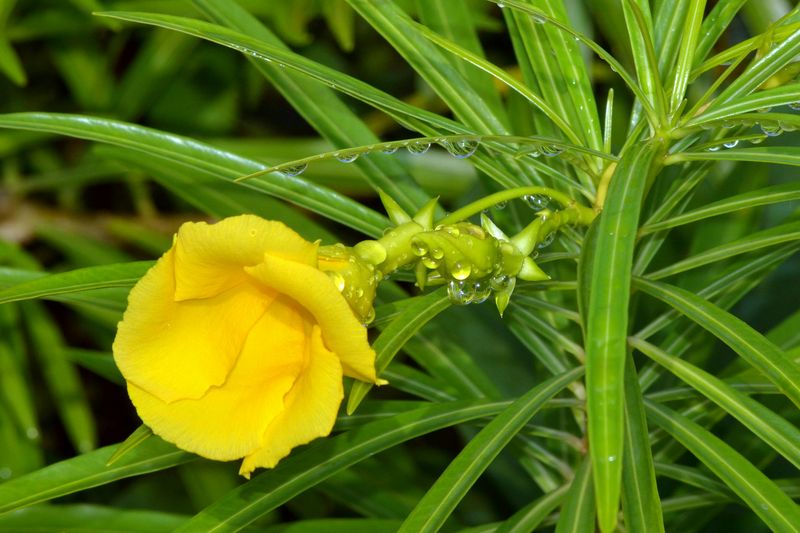
The main documented concern is ingestion. Yellow oleander contains cardenolides, a type of heart-active compound.
The ASPCA lists yellow oleander as toxic to dogs, cats, and horses.
That listing names those three animals. It does not give a risk level for every pet species, and it does not offer a safe amount for anyone.
Possible signs include vomiting, diarrhea, and a slow heart rate. These are examples, not a set order or a full checklist, and a pet may show other changes.
Veterinary references such as the Merck Veterinary Manual also place yellow oleander among ornamental plants containing cardiac glycosides, and note that toxicity can vary.
Seeing the shrub or walking past it is not what the documented concern is about. But a pet that has chewed on it and looks fine should not be assumed safe.
Your Arizona Garden Changes Every Week. Your Plan Should Too.
Gardening in Arizona changes quickly throughout the season. Every Friday you’ll receive a simple weekly plan showing exactly what to plant, prune, fertilize, harvest, and protect so you never miss the right timing.
Signs may not show right away, so a call for advice is the sensible next step.
A scorpion sting is not a valid comparison
Some headlines claim yellow oleander’s toxin rivals a scorpion sting for pets. The sources reviewed do not back that up.
They offer no shared scale that ranks one hazard against the other.
The two problems work very differently. A plant exposure happens when a pet eats leaves or seeds, and the ASPCA plant listing focuses on that kind of ingestion.
A sting delivers venom through a bite from the animal itself.
For Arizona bark scorpions, the Merck Veterinary Manual describes stings in dogs as often limited to local pain, swelling, and irritation, though body-wide signs can occur.
That does not make a sting a handy yardstick for a plant. Neither hazard can be called predictably worse for every pet, so take each one seriously on its own terms.
Call for help if a pet may have chewed it

If your pet may have chewed yellow oleander, reach out to a veterinarian or an animal poison service right away. Waiting for symptoms is not a safe plan.
If you can, identify the plant and save a specimen or any remaining plant parts to show the veterinarian. Do not try to make your pet vomit.
The Arizona Poison and Drug Information Center advises against inducing vomiting and recommends saving the plant.
Two numbers to keep handy:
Arizona Poison and Drug Information Center: 1-800-222-1222. ASPCA Animal Poison Control: 888-426-4435.
Save them in your phone now, before an emergency. A photo of the plant and a rough idea of when your pet chewed it can help you explain the situation quickly.
Beyond that, follow the guidance you receive from the professionals you speak with.
Handle sap and prunings with care
Pet ingestion is one concern. Handling the plant is another.
North Carolina extension guidance says the sap may cause skin reactions in some people and that smoke from burning plant material can be toxic.
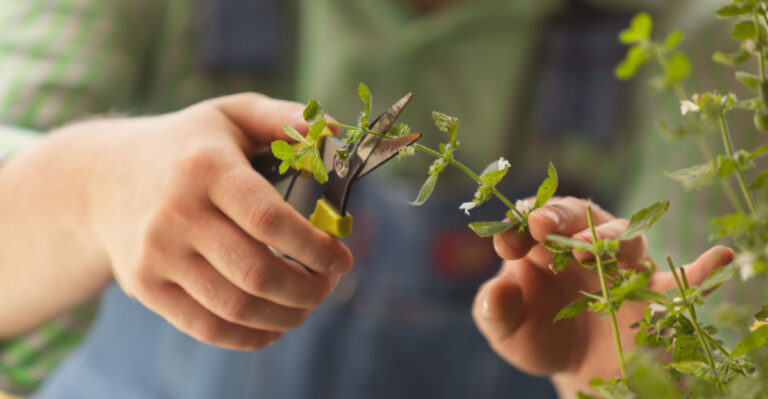
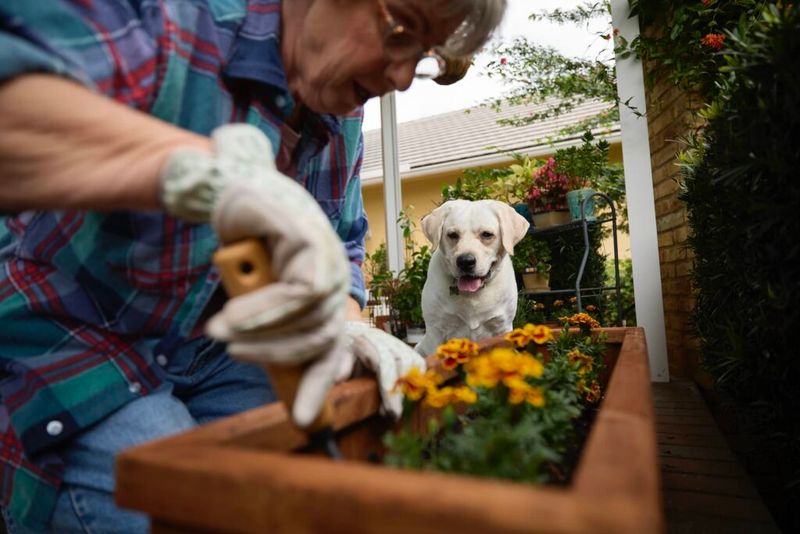
When trimming, wear gloves and long sleeves, and try to keep sap off your skin. Wash any exposed skin afterward.
Bag clippings instead of burning them, and keep pets away from the pile until it is gone.
Sap contact is not the same as eating the plant, and smoke is its own separate issue. Each one calls for its own caution.
As for your mystery shrub, yellow oleander is a plausible match, as the arboretum description suggests, but yellow flowers alone do not prove it. If a pet may have chewed any part, get prompt advice from a veterinarian or Arizona poison experts.
A plant’s name matters less than a quick phone call.