Yes, Florida Gets Fall Color – You Just Need The Right Trees
People love to joke that Florida has two seasons: hot and hotter.
Northern transplants miss the fiery maples of New England. Tourists fly home in October and swear the Sunshine State never changes color.
Even lifelong Floridians shrug and accept a year of endless green.
They are all wrong.
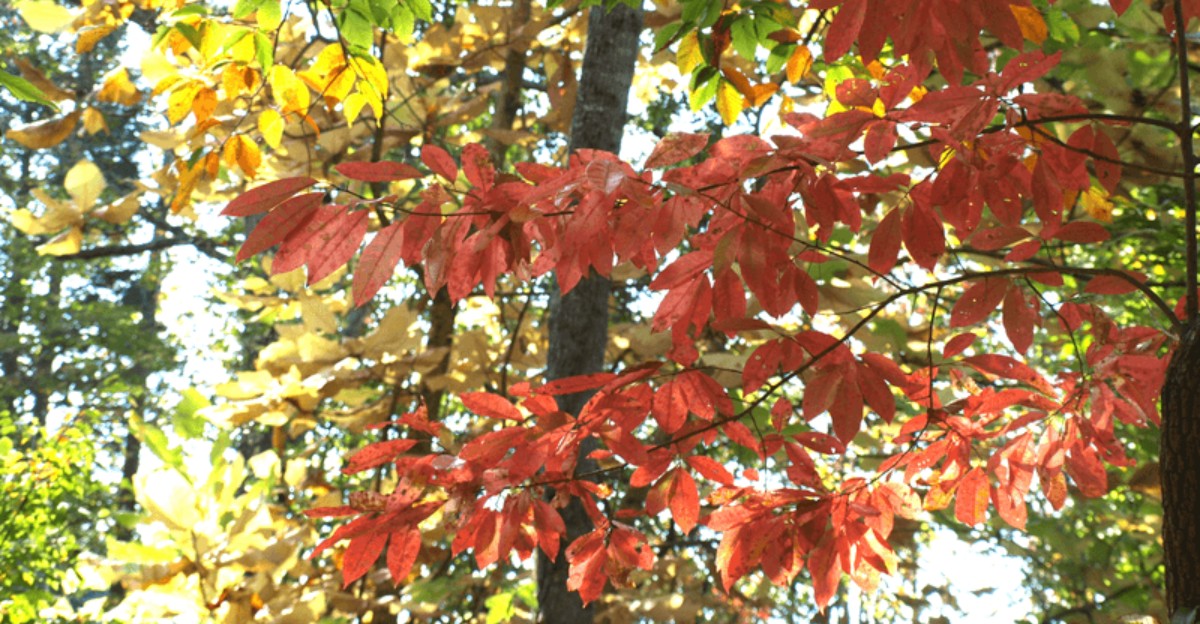
Florida does get fall color. It just hides in plain sight.
Look closely in late autumn, and you can find leaves that glow scarlet, burnt orange, deep purple, and gold. Some native trees put on a show that rivals the mountains of North Carolina.
Most yards miss out for one simple reason. Homeowners plant the wrong trees.
Palms, live oaks, and hedges stay green all year, no matter what the calendar says.
Swap in the right species, and your yard can blaze with rich color by December. Better yet, the best options thrive in heat, sandy soil, and hurricane winds.
1. Florida Maple Brings Brilliant Red To The Fall Landscape
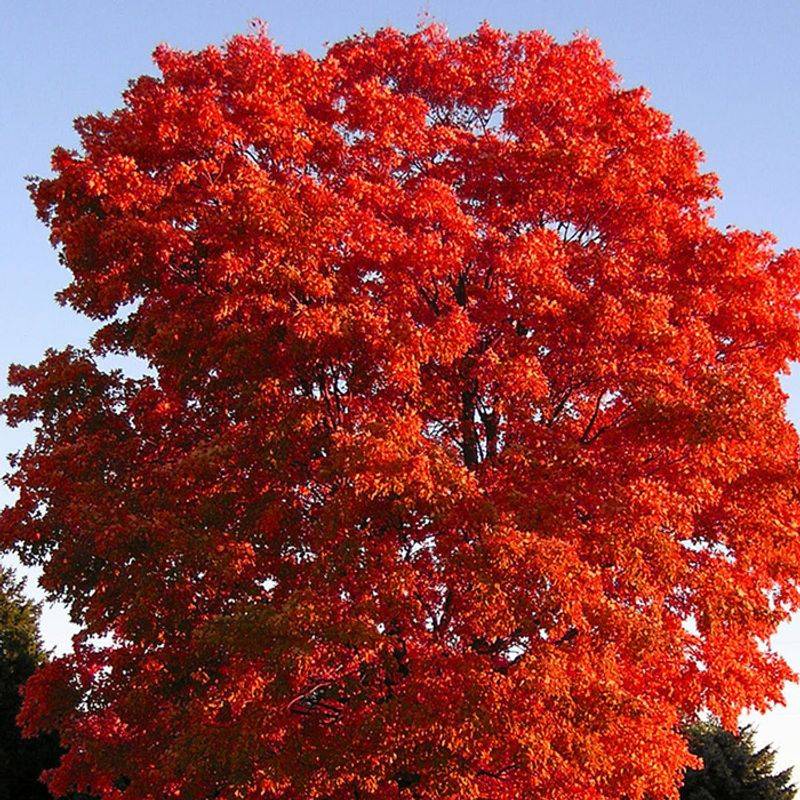
Meet the underdog of the maple family, a native tree that many Floridians walk past without a second glance. Come autumn, though, it steps into the spotlight with a glow you cannot ignore.
Florida maple is sometimes described as a southern relative of the sugar maple, with fall foliage that can include yellow, orange, and red.
Its branches grow in a graceful, airy pattern that looks lovely even before the color arrives. Most trees top out below 60 feet, so it fits many suburban lots without taking over.
Here is the good news for busy gardeners. Once its roots settle in, this maple handles dry spells better than you might expect from such a showy tree.
For the best start, give it a spot with decent soil and at least a few hours of sun each day. Water it deeply during its first year or two, then ease off as it grows stronger.
Plant it where you can see it from a kitchen window or back porch. You will want a front-row seat when the first red leaves appear in late fall.
Fun fact: it is a close cousin of the northern sugar maple, the tree famous for syrup. Pancakes aside, the Florida version gives you a taste of New England color without the snow shovel.
2. Red Maple Turns Sunny Yards Into A Seasonal Show
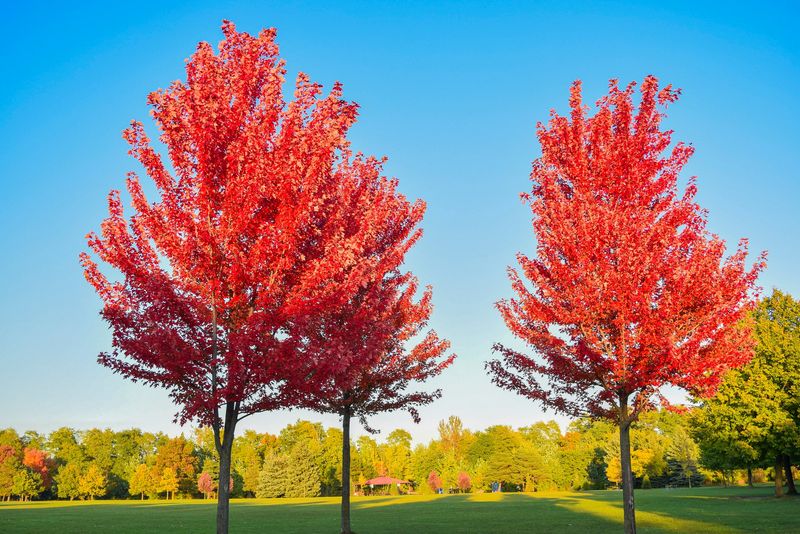
Ask a plant expert to name one native tree for fall color, and red maple often tops the list. Its leaves can turn yellow, orange, or deep red, sometimes all on the same branch.
Red maples grow naturally across most of the state, often near swamps, creeks, and other damp spots. That wet-footed history means they appreciate steady moisture in a home landscape.
Speed is a big bonus with this native. It grows quickly and can reach 40 to 60 feet, giving shade and color sooner than many slower trees.
Before you plant, think about your sprinkler setup or a low spot in the yard that stays a bit soggy after rain. A sunny area with regular water helps the leaves reach their brightest shades.
Your Florida Garden Changes Every Week. Your Plan Should Too.
Gardening in Florida changes quickly throughout the season. Every Friday you’ll receive a simple weekly plan showing exactly what to plant, prune, fertilize, harvest, and protect so you never miss the right timing.
Color can vary from tree to tree, so shopping in person during fall is a smart move. You can pick the one already flashing the richest red at the nursery.
Keep mowers and string trimmers away from the thin bark, which bruises easily. A ring of mulch around the base protects the trunk and holds in moisture too.
Red maples also show off in late winter with tiny red flowers and winged seeds. So you get two seasons of color from one easygoing tree that loves the Florida sun.
3. Sweetgum Delivers Yellow Orange And Crimson Leaves
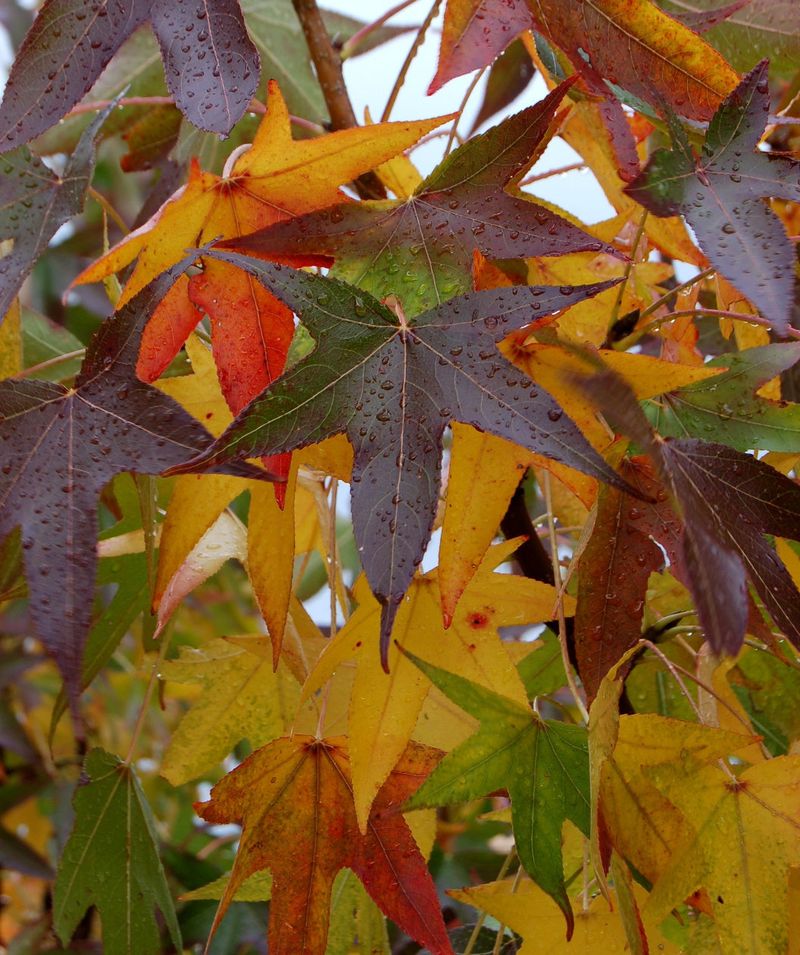
Sweetgum leaves look like little green stars, the kind a kid might cut out for a school art project. In late fall, those stars light up in orange, red, purple, and gold.
One tree can wear several colors at once, which makes it feel like a painted canvas. Sweetgum is native to Florida and is especially well suited to the northern and central parts of the state, where fall color tends to be more pronounced.
Give it room, because a sweetgum can stretch up to 75 feet tall. A big backyard, park edge, or open lot suits it far better than a tight corner by the house.
Now for the famous downside, those spiky seed balls that fall by the hundreds. Barefoot walkers learn quickly to watch their step under a sweetgum.
Squirrels and birds see things differently, though, since the seeds inside make a handy snack. Planting one away from patios and walkways keeps everyone happy, including the wildlife.
Some nurseries sell fruitless varieties if the prickly balls feel like too much trouble. Ask about them if you want the fall show without the crunchy cleanup.
Crush a leaf between your fingers, and you may notice a sweet, resin-like scent. Early settlers even chewed the sticky sap like gum, which explains how the tree got its name.
4. Blackgum Adds Deep Red Color Without A Giant Canopy
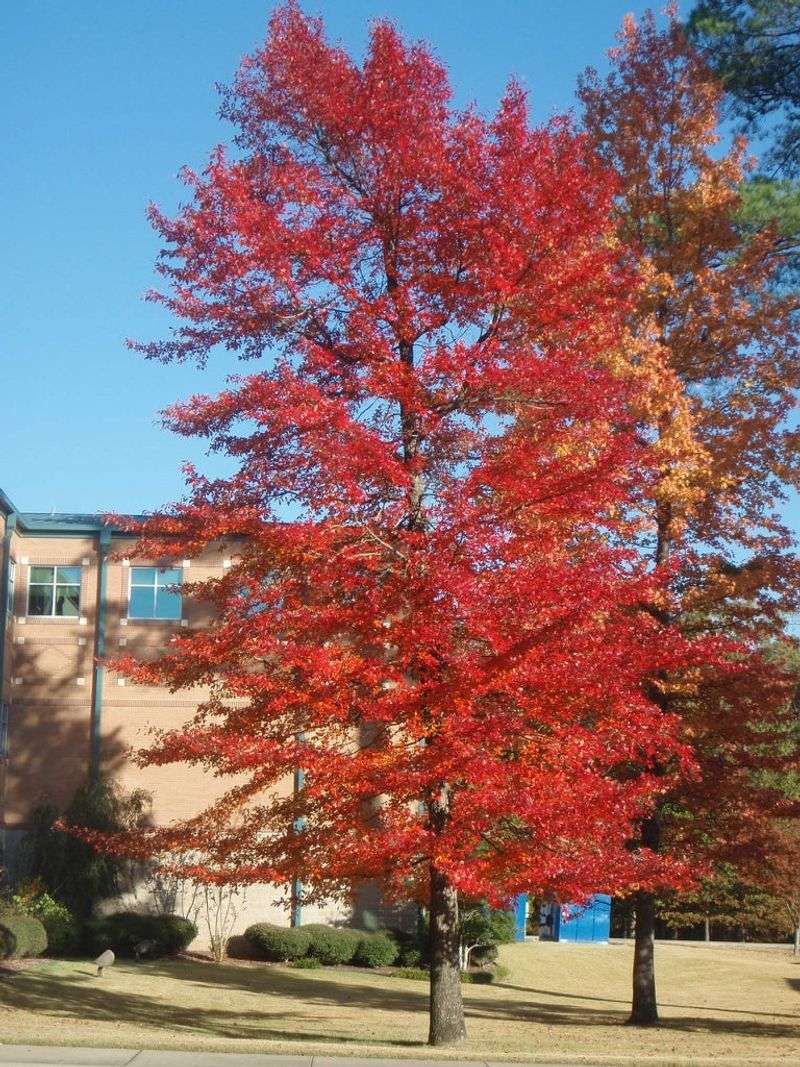
While other trees are still thinking about autumn, blackgum is already blushing. It ranks among the first trees to change color as the season turns, often weeks ahead of its neighbors.
The glossy, oval leaves move through yellow, orange, and red before settling into deep crimson or purple. Against Florida’s sea of evergreen shrubs and tall pines, that color really stands out.
Blackgum also keeps a tidy, upright shape instead of sprawling wide like a giant oak. That makes it a good pick for medium yards where you want drama without a huge canopy overhead.
Birds love this tree for another good reason. Small dark blue berries ripen in fall, drawing in robins, mockingbirds, and other feathered visitors hungry for a meal.
Plant it in full sun to part shade, and give it moist soil if you can. It handles wet areas nicely, so a spot near a rain garden or low, soggy corner works well.
Young trees have a long taproot, so they prefer to stay put once planted. Choose the spot carefully and resist the urge to move it a few years later.
Here is a quirky bonus: some old blackgums live for hundreds of years. Planting one today could give fall color to your grandkids and even their kids too.
5. Bald Cypress Trades Summer Green For Coppery Fall Tones
Picture an old Florida swamp at dawn, mist floating over the water and tall trees standing on knobby knees. Those trees are bald cypress, and they carry a surprise every autumn.
Bald cypress is a conifer, like a pine, but it sheds its needles each year like a leafy tree. That is where the bald part of the name comes from.
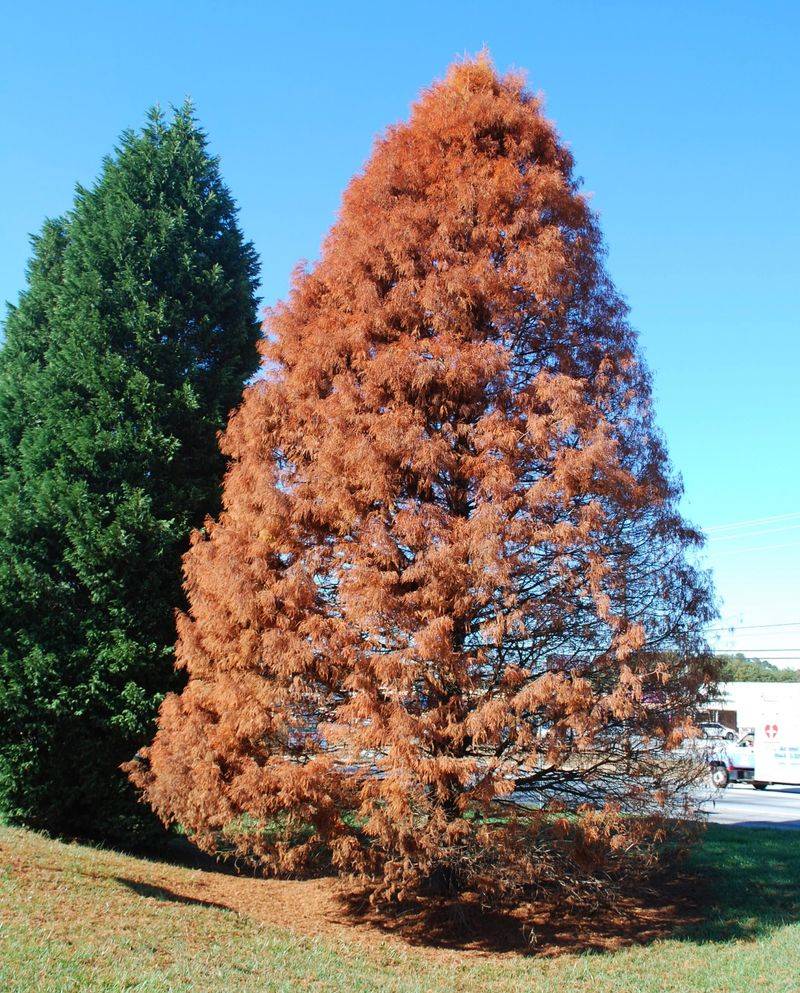
Before the needles fall, the soft, feathery foliage fades from summer green to a coppery, rusty bronze. The warm color often lingers for at least a month, giving you plenty of time to enjoy it.
For the prettiest view, plant one near a pond, lake, or retention area. The bronze tones reflect on the water and double the show on calm, breezeless mornings.
No pond? No problem, since bald cypress adapts to regular yards with decent moisture.
It grows tall and narrow, so it fits along property lines better than you might think.
In wet soil, the roots may send up woody bumps called knees. Scientists still debate why they form, but they add a wild, storybook feel to the landscape.
Bald cypress wood resists rot, which made it popular for old homes and boats. Plant one today, and you are growing a piece of state history right in your backyard.
6. Florida Elm Can Add A Softer Golden Fall Display
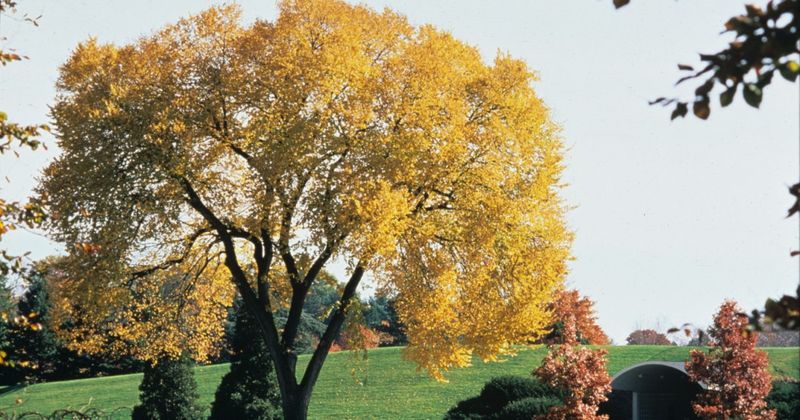
Not every fall display has to shout. The Florida elm speaks softly, trading its summer green for a warm, buttery gold that feels like late afternoon sunshine.
This tree is a form of the American elm, a native shade tree with deep roots in local history. Its leaves grow about six inches long and stay dark green through the hot months.
When cooler days arrive, the foliage mellows into rich golden yellow before floating to the ground. It is a quieter look than a flaming maple, but it glows beautifully against a blue November sky.
Florida elm is also a long-lived tree with a tall, straight trunk. Its branches spread into a graceful vase shape, reaching 60 to 80 feet at maturity.
That size makes it a classic street tree or a shady anchor for a large yard. Plant it at least 20 feet from your house so the roots and branches have space to grow.
Coastal gardeners will like that it shows moderate tolerance to drought and salt spray. Regular watering during its early years still helps it settle in and grow strong.
Pair it with a red maple or blackgum for a fall scene with layers of color. The soft gold makes those brighter reds pop even more, like a frame around a painting.
7. Persimmon Brings Fall Color Alongside Bright Orange Fruit
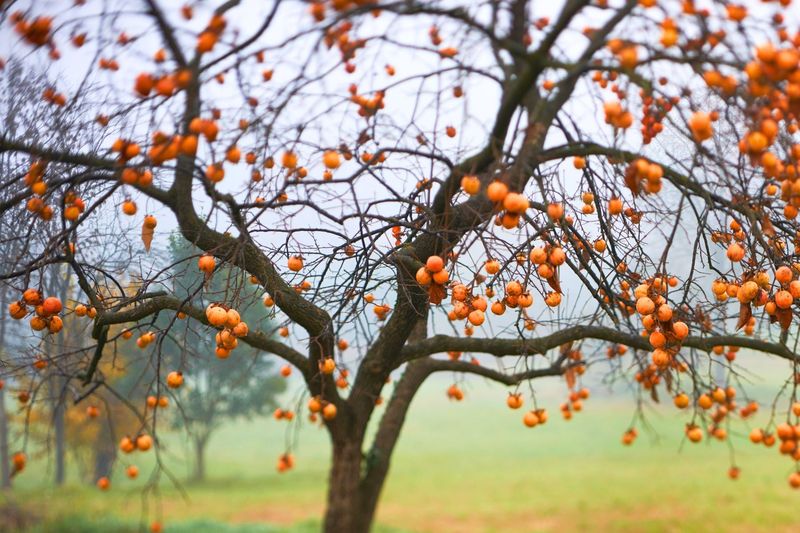
Few trees offer both a snack and a show, but persimmon pulls it off with style. As the fruit ripens in fall, the leaves turn orange, burgundy, red, or gold.
That combination of fruit and foliage can make persimmon an interesting choice for warmer parts of Florida, although fall color varies by location and weather.
The common persimmon is a native tree, and it works well in many home landscapes. Its round fruit ranges from orange to reddish purple, and wildlife goes wild for it.
Here is a tip from folks who learned the hard way. Wait until native persimmons are soft and squishy before tasting, because unripe ones will pucker your mouth like a lemon.
Once ripe, the fruit tastes sweet, a bit like honey mixed with apricot. People bake it into breads, puddings, and cookies, while raccoons and possums eat it straight off the ground.
Look at the trunk as the tree ages, too. The bark breaks into small, blocky squares that resemble a checkerboard, adding interest long after the leaves fall.
Plant in full sun for the best fruit and color, and give it well-drained soil. Some native persimmons need a male and female tree nearby, so ask your nursery before buying.
8. Crape Myrtle Adds Color After Summer Flowers Fade
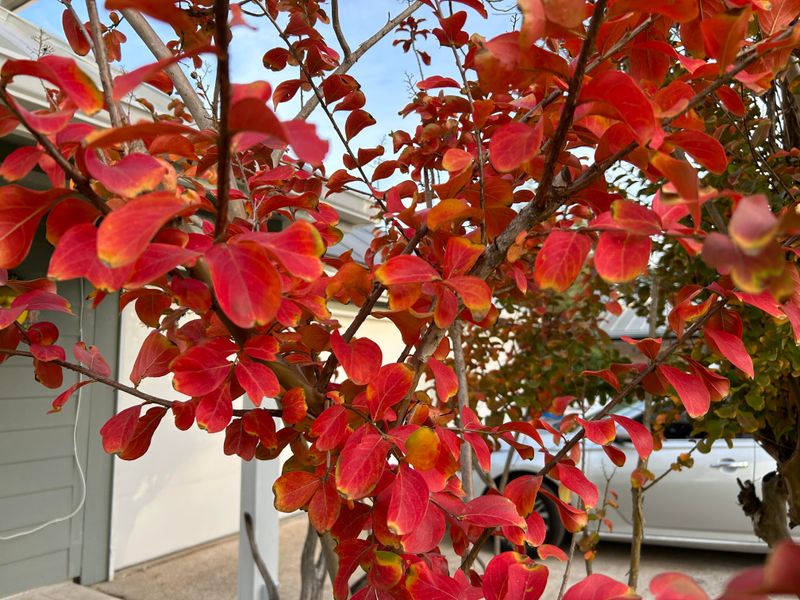
Crape myrtle is the plant that refuses to take a break. After months of frilly pink, purple, red, or white summer blooms, it still has another trick up its sleeve.
In North Florida especially, the leaves can turn vivid yellow, orange, or red in autumn. Not every variety colors up the same, so some put on a bigger show than others.
When shopping, check plant tags or ask nursery staff which types are known for strong fall foliage. A little research now saves you from a plain brown leaf fall later.
Even after the leaves drop, the fun continues. Smooth, peeling bark reveals patches of tan, cinnamon, and gray, while the multi-branched trunks create a sculpture-like shape in winter.
Here is one habit to skip, the heavy chop that turns branches into stubby knuckles. Cutting that hard each winter weakens the plant and spoils its natural form, so prune lightly instead.
Crape myrtles love full sun and handle heat like champs. They come in sizes from small shrubs to 25-foot trees, so there is one for nearly any yard.
Fun fact: crape myrtles came from Asia and have graced Southern gardens since the 1700s. That makes them a true old-timer in the region, even if they are not native.
9. Sassafras Can Turn A Florida Fall Into A Multicolor Display
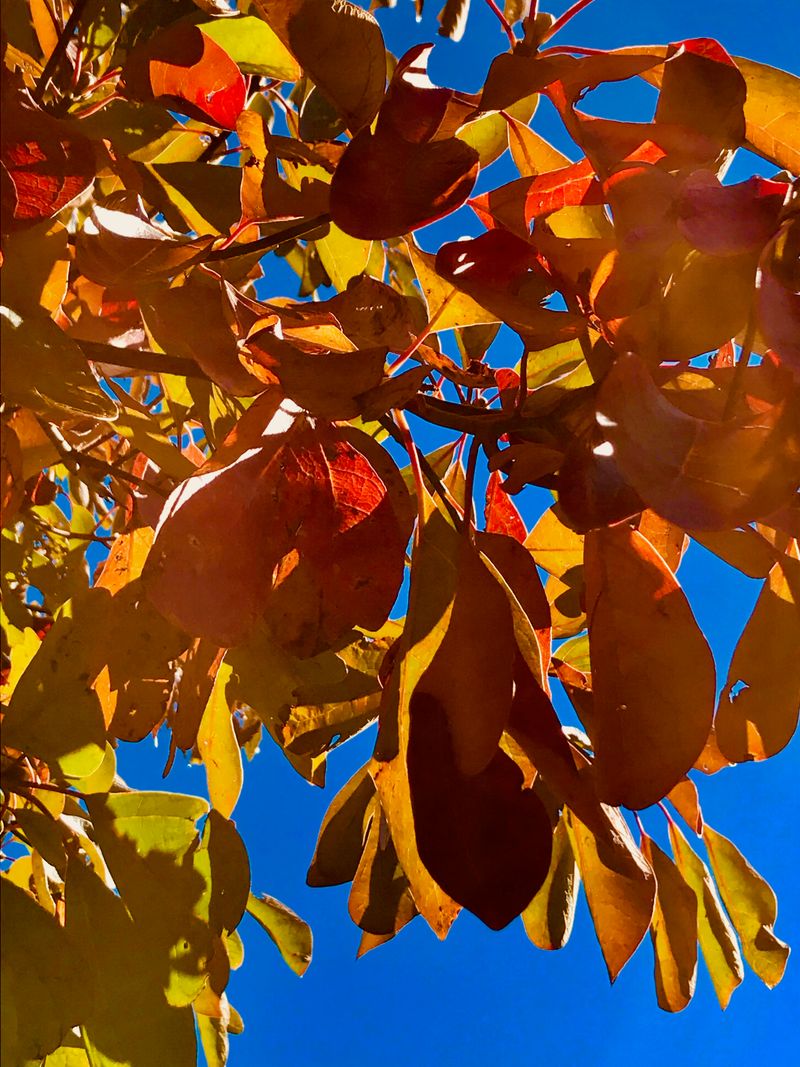
Imagine a tree that cannot decide what shape its leaves should be. Sassafras grows three kinds on the same branch: plain ovals, two-lobed mittens, and three-lobed leaves.
Kids love hunting for the mitten leaves, which look like tiny green gloves. Some even have a left-hand and right-hand version, making it a fun backyard scavenger hunt.
Autumn is when sassafras really shows off. Its leaves can blend lime green, mustard gold, burnt orange, scarlet red, and even mahogany purple in a single dazzling display.
That mix of shades gives your yard a patchwork quilt look that few other trees in the state can match. Each leaf seems to pick its own color, so no two branches look quite alike.
Sassafras is better suited to northern and central region, where the climate is more favorable for this species and fall color is more dependable. Give it sun, well-drained soil, and a spot where it can spread a bit.
Keep in mind that it often sends up suckers, or small shoots, from the roots. Mow or pull them if you want a single tree, or let them grow for a small grove.
Rub a leaf or twig, and you will smell a spicy, citrus-like scent. Long ago, the roots flavored old-fashioned root beer, which gives this tree a fun bit of history.