The Simple Way To Grow Snake Plants In Water In A New York Apartment
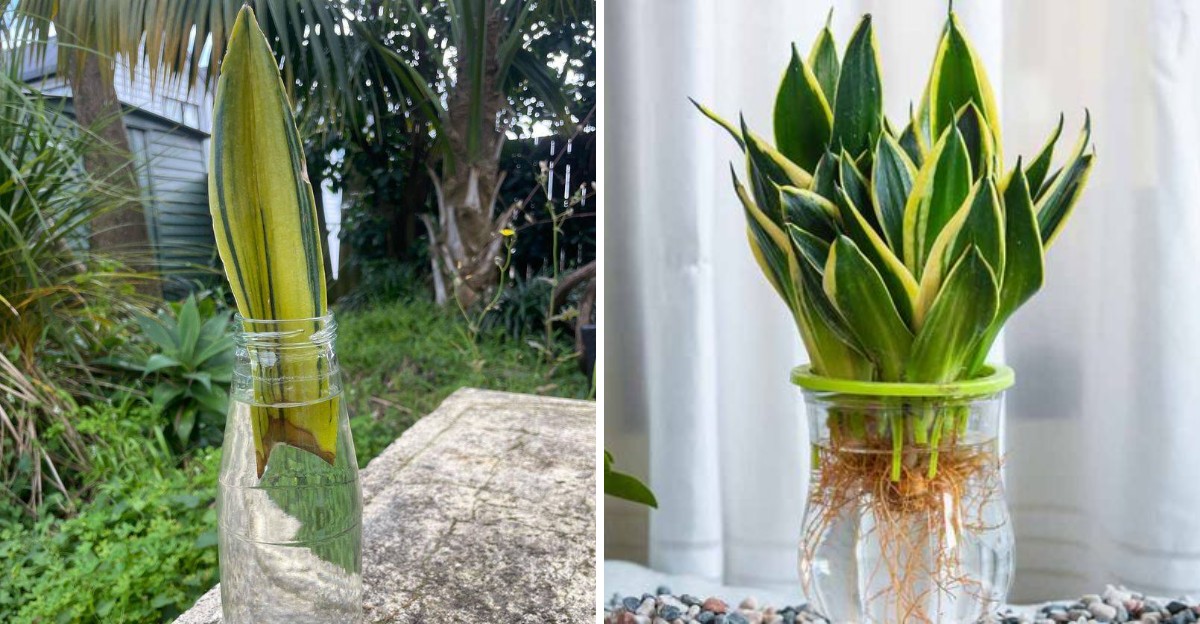
One stiff leaf, sliced into chunks and dropped in a jar, can grow a brand new plant with its own roots and baby shoots. I still find that a little wild every time I see it happen on my windowsill.
The trick works because this tough houseplant stores water in its thick, sword-shaped leaves.
Botanists moved it from one plant group to another a few years back, so even its official name went through a makeover. Plant tags in shops still use both names, which confuses plenty of shoppers.
Personally, I love projects that need almost no gear. You need a clean glass, plain water, and a bit of patience.
Small New York apartments with one decent window are honestly a great fit for this.
The hardest part is not the cutting or the jar. It is waiting while nothing seems to happen for weeks.
Are you ready to test your patience?
1. One Snake Plant Leaf In A Glass Jar Can Become A Whole New Plant
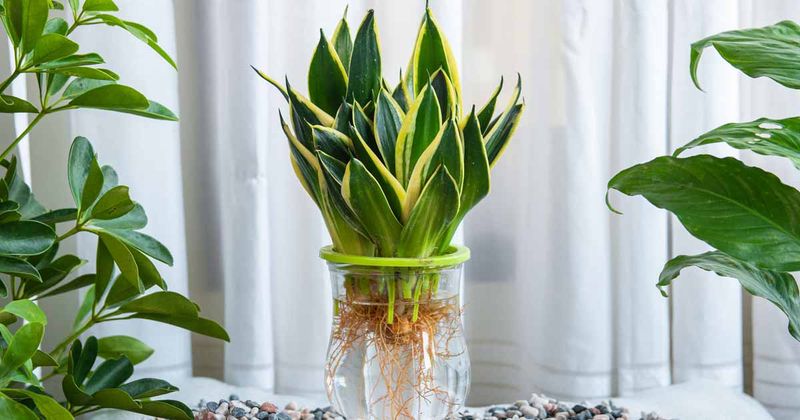
A single leaf holds more power than most people expect. Snake plants, now called Dracaena trifasciata by botanists, can grow fresh roots from a cut piece of leaf.
That means one healthy plant can turn into several free ones.
Water propagation is the simplest way to do it. You cut a leaf, let the cut end dry, and stand it in a jar with a little water.
Over time, white roots form at the bottom, and small new shoots called pups may follow.
I like this method because you can watch the whole thing happen. Soil hides everything, but a clear jar shows each tiny root as it appears.
For apartment growers, that view is half the fun.
The process also skips messy potting soil, which matters when your kitchen counter doubles as a work bench. A jar takes up barely any space on a shelf or sill.
Many New York renters with tight quarters find it easier than handling bags of mix.
One fair warning sits up front. Snake plants root slowly, often taking several weeks to a few months.
Treat this as a calm, long project, and you will enjoy it far more than if you check it every morning hoping for a miracle.
2. Cut Your Snake Plant Leaf Into Sections And Let Them Callus First
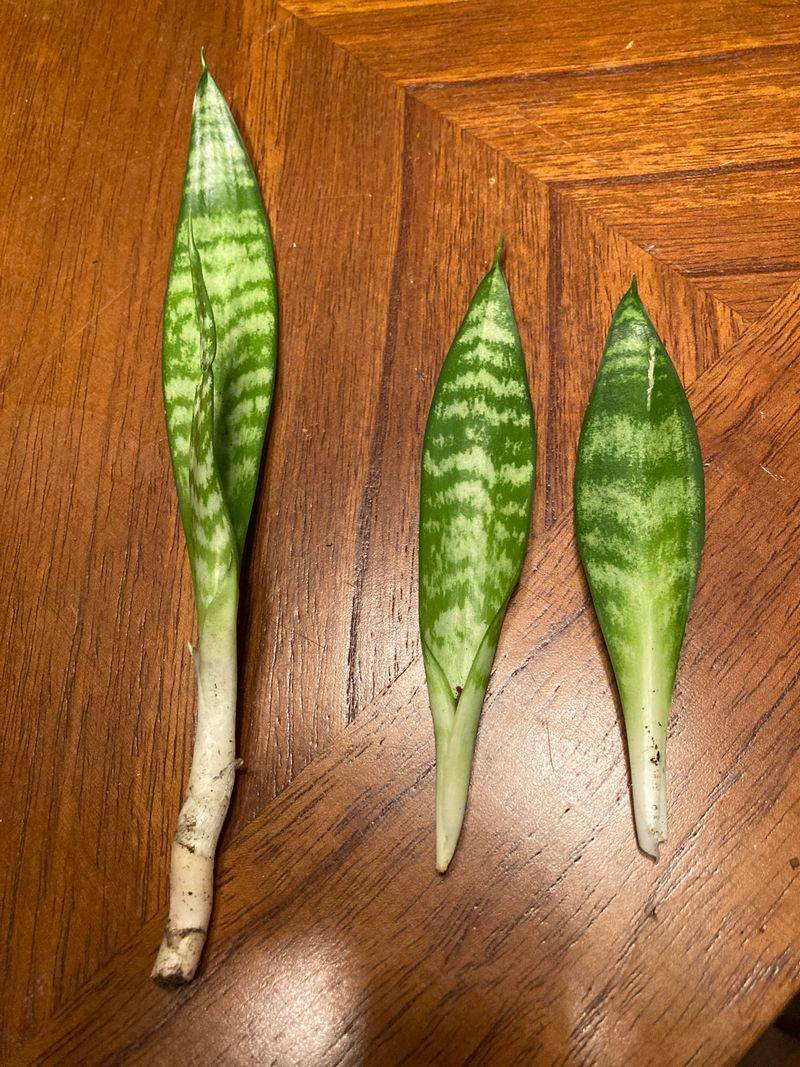
Sharp, clean tools make the biggest difference on day one. Wipe your scissors or knife with rubbing alcohol before you start.
Clean cuts heal faster and invite fewer germs.
Pick a firm, healthy leaf with no soft spots or brown patches. Cut it near the base, then slice it into pieces about 3 to 6 inches long.
Many growers trim the bottom of each piece into a V or triangle shape, which gives roots more surface to form.
Keep track of which end was pointing down. Leaf sections only root from the bottom edge, so a piece placed upside down will just sit there.
A tiny notch or marker dot on the top can save you weeks of confusion.
Your New York Garden Changes Every Week. Your Plan Should Too.
Gardening in New York changes quickly throughout the season. Every Friday you’ll receive a simple weekly plan showing exactly what to plant, prune, fertilize, harvest, and protect so you never miss the right timing.
Now comes the step people love to skip. Set the cut pieces somewhere dry and shaded for one to several days until the cut ends look sealed and slightly leathery.
This callus helps protect the tissue from rot once it touches water.
I usually leave mine on a paper towel near the kitchen table. It feels like nothing is happening, but the cuttings are quietly getting ready.
Rushing this part is the most common reason soft, mushy bottoms show up later.
3. Only The Bottom Inch Of Each Cutting Should Touch The Water
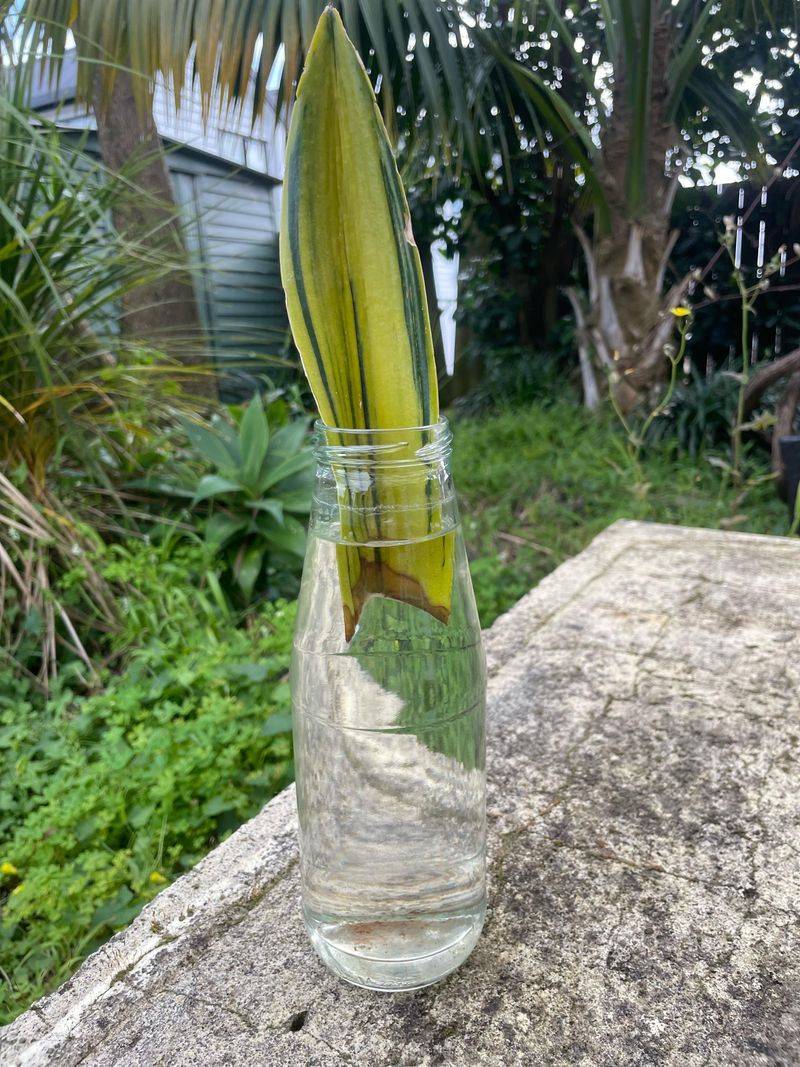
Less water works better here, and that surprises a lot of beginners. Fill your jar so only the bottom inch or so of each cutting sits underwater.
The rest of the leaf should stay dry and upright.
Narrow glass jars or bud vases help hold the pieces steady. Clear glass lets you spot roots and cloudy water early.
If a cutting keeps tipping, a small binder clip or a bit of tape across the rim can prop it up.
Plain tap water usually does the job. Letting it sit out overnight brings it to room temperature, which is gentler on fresh cuts.
Skip water from a salt-based softener, since the extra sodium can stress the plant.
Change the water every week, or at least every one to two weeks. Rinse the jar, check the cutting for soft spots, and refill with fresh water.
Stale water grows bacteria fast, especially in warm rooms.
My own routine ties water changes to Sunday chores. It takes two minutes and keeps the jars sparkling.
Clean water is honestly the main thing standing between a rooted cutting and a slimy one, so this small habit pays off in a big way.
4. East Or West Windows Give Snake Plant Cuttings The Light They Crave
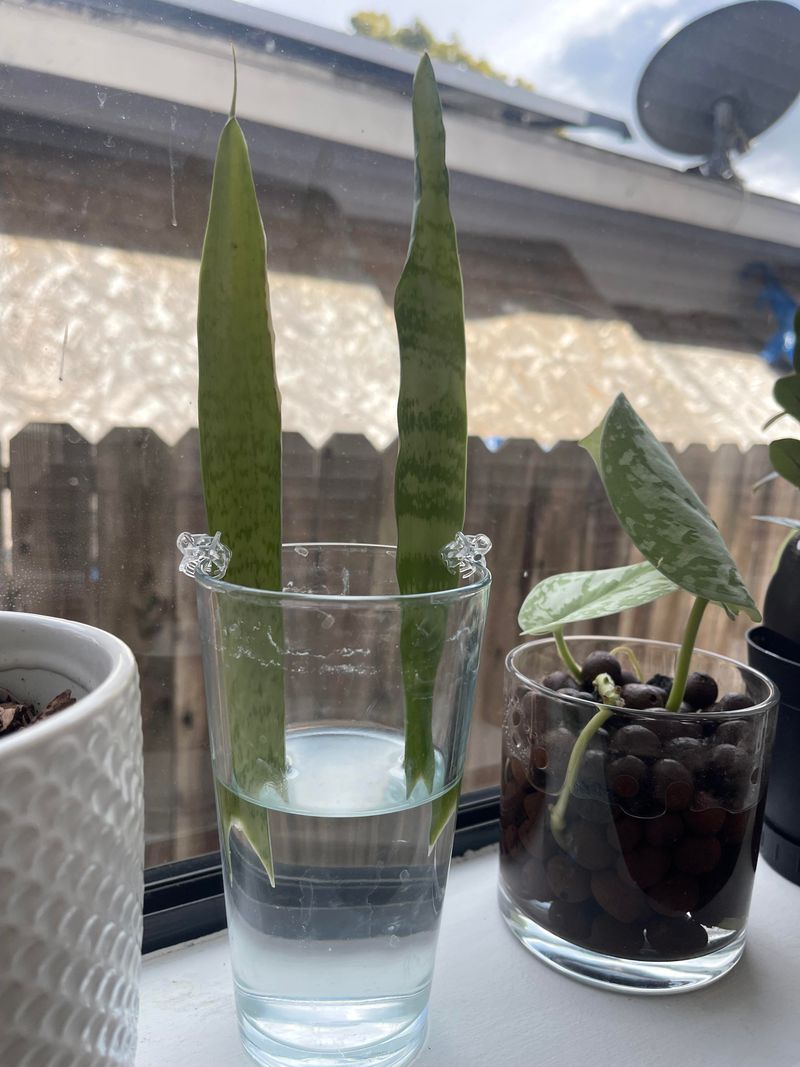
City light can be tricky, with tall buildings blocking the sun for half the day. Snake plants handle that better than most houseplants.
Still, cuttings root faster with medium to bright indirect light.
East or west windows are a sweet spot. They give gentle light without the harsh midday blast.
A south window works too, though a sheer curtain helps prevent scorched leaf tips.
Aim for roughly 5 to 10 hours of decent indirect light a day. Low light will not stop rooting, but it slows things down a lot.
If your apartment faces an air shaft or brick wall, a small LED grow light can fill the gap.
Watch out for strong direct sun hitting the glass jar. Water in a sunny jar can warm up and encourage algae.
A little green film is not a disaster, but it means extra scrubbing.
I have seen cuttings thrive on a bookshelf a few feet from a bright window. You do not need a perfect sunroom.
You just need a steady spot where the plant gets light every day without baking, and you can rotate the jar now and then for even growth.
5. Radiators And Drafty Windows Can Slow Your Snake Plant Roots
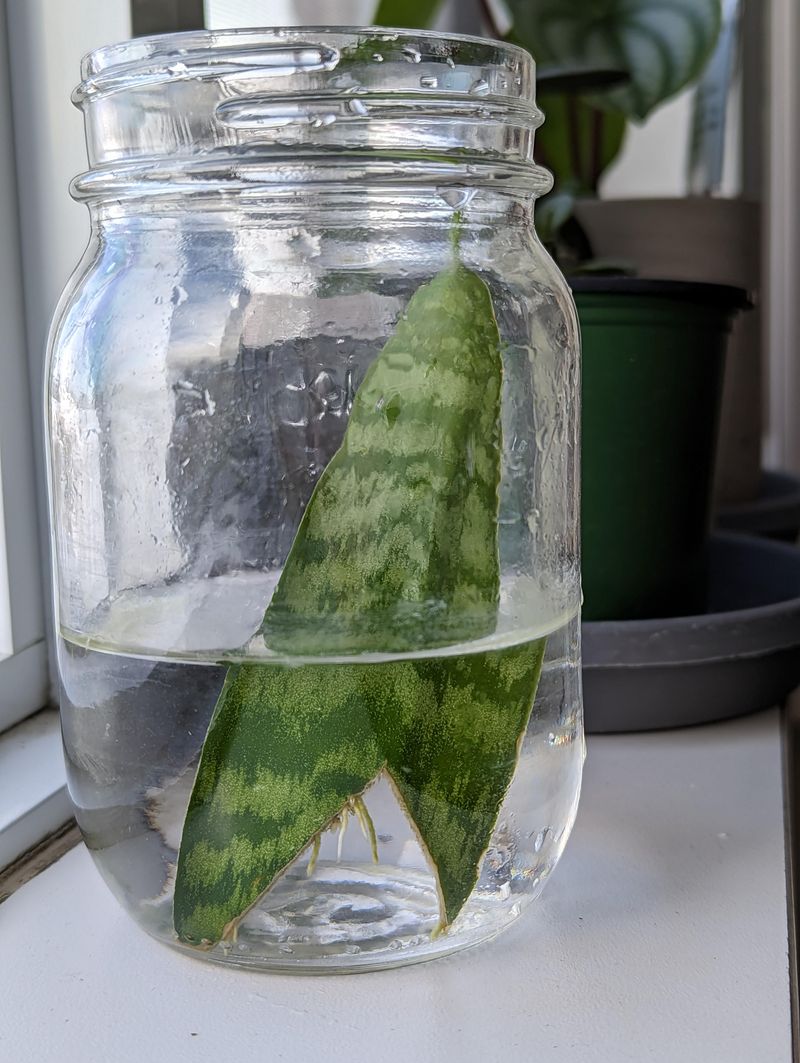
Old steam radiators are a classic New York apartment feature, and they can cause trouble for plants. Snake plants like warmth, ideally between about 60 and 90 degrees Fahrenheit.
Steady comfort helps roots form faster.
Cold is the bigger risk during winter. Snake plants can handle brief dips to around 50 degrees, but chilly glass and drafty frames can push cuttings lower than that at night.
Cold water also slows root growth to a crawl.
Move jars a few inches away from window glass on freezing nights. A table or shelf just inside the room often stays much warmer.
Avoid spots near doors that open to cold hallways too.
Radiators bring the opposite problem. Setting a jar right on top can overheat the water and the cutting.
A spot nearby, but not touching, gives gentle warmth without cooking anything.
Summer is usually easy, although air conditioning vents can blast cuttings with cold air. Keep jars out of that direct stream.
In my experience, cuttings started in spring or summer often root quicker, simply because apartments stay warmer and brighter. That said, you can start them any time of year indoors with a little attention.
6. Mushy Stems And Faded Stripes Are Snake Plant Problems Worth Knowing
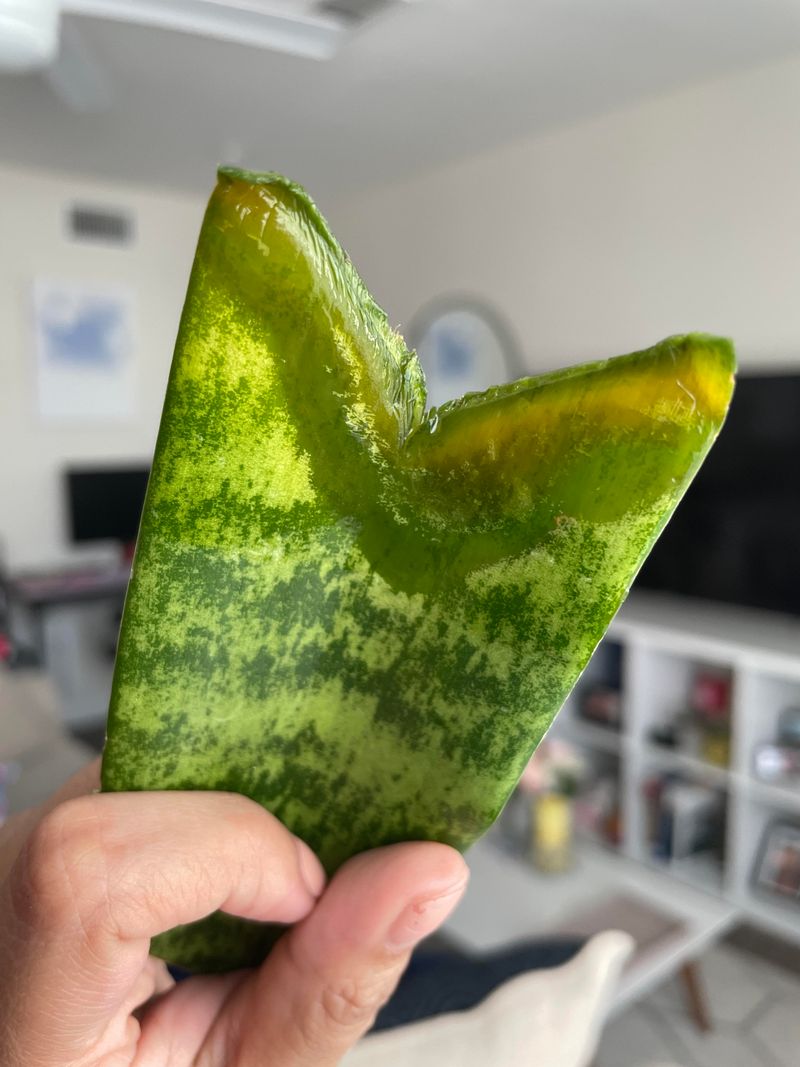
Rot is the villain of this story. A brown, soft, or smelly base means bacteria have moved in.
The fix is quick action, not waiting to see if it improves.
Pull the cutting out and trim above the mushy part with a clean blade. Let it callus again for a few days, then return it to a fresh, scrubbed jar.
Cloudy water is often the first warning sign, so take it seriously.
Another surprise catches many growers off guard. Variegated types, like the popular Laurentii with yellow leaf edges, often lose those edges when grown from leaf cuttings.
The new pups usually come up plain green.
That happens because of how the color pattern forms in the leaf tissue. If you want to keep those golden borders, dividing the plant at the roots is the better choice.
Leaf cuttings work best for solid green kinds.
Slow progress is not a problem by itself. A cutting that stays firm and green is still alive and working, even with no roots after a month.
I once waited nearly three months for a piece to sprout. Firm tissue means hope, so keep changing that water.
7. Rooted Snake Plant Cuttings Can Stay In Water Or Move To A Pot
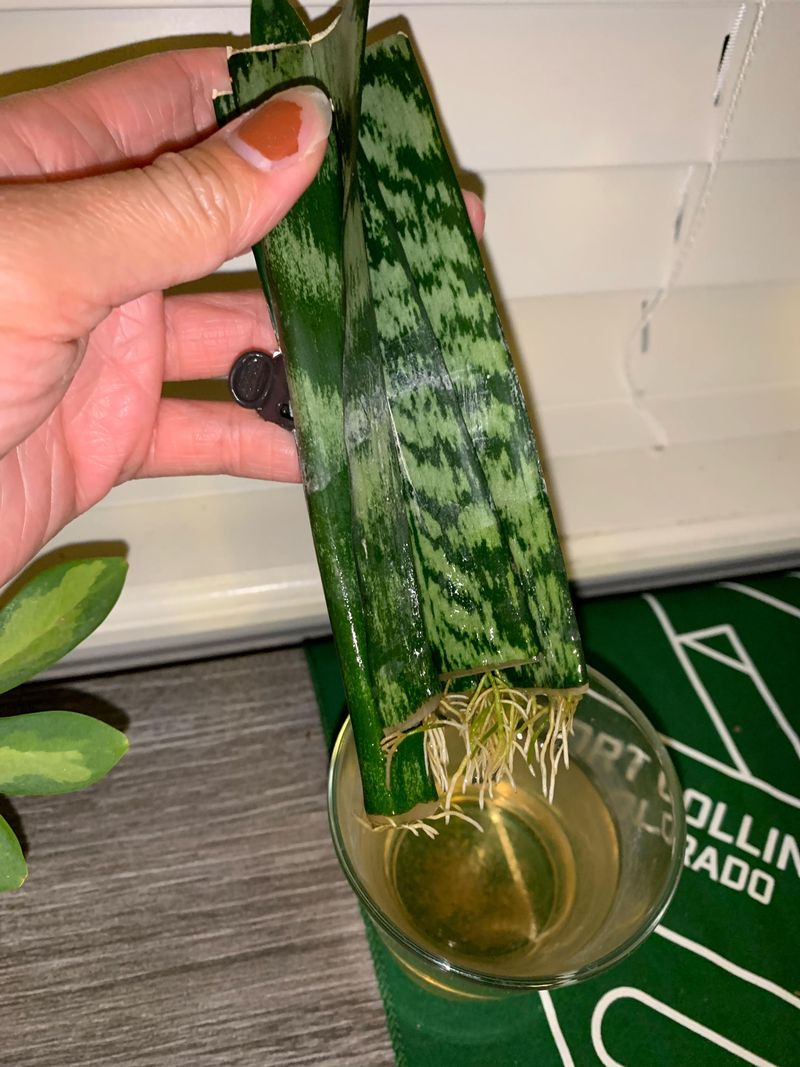
Roots finally showed up, so now what? You get to choose.
Snake plants can keep living in water long term, or they can move into soil.
Staying in water works with steady care. Keep changing the water regularly and add a very weak dose of liquid houseplant fertilizer now and then, since plain water has few nutrients.
Many people keep these as tidy, low-mess decor on shelves.
Moving to soil makes sense once roots reach about half an inch to an inch long. Use a fast-draining mix made for cacti or succulents.
Pick a small pot with a drainage hole, because soggy soil is a quick path to rot.
Water the soil lightly after planting, then let it dry out before watering again. Roots grown in water need a little time to adjust to soil.
Some leaves may look a bit sulky for a couple of weeks.
Terracotta pots are a favorite of mine because they breathe and dry faster. They also look sharp on a narrow sill.
Whichever path you pick, keep the plant in that same bright, warm spot so it can settle in without extra stress.
8. A Jar Of Snake Plant Pups Makes A Perfect Apartment Gift
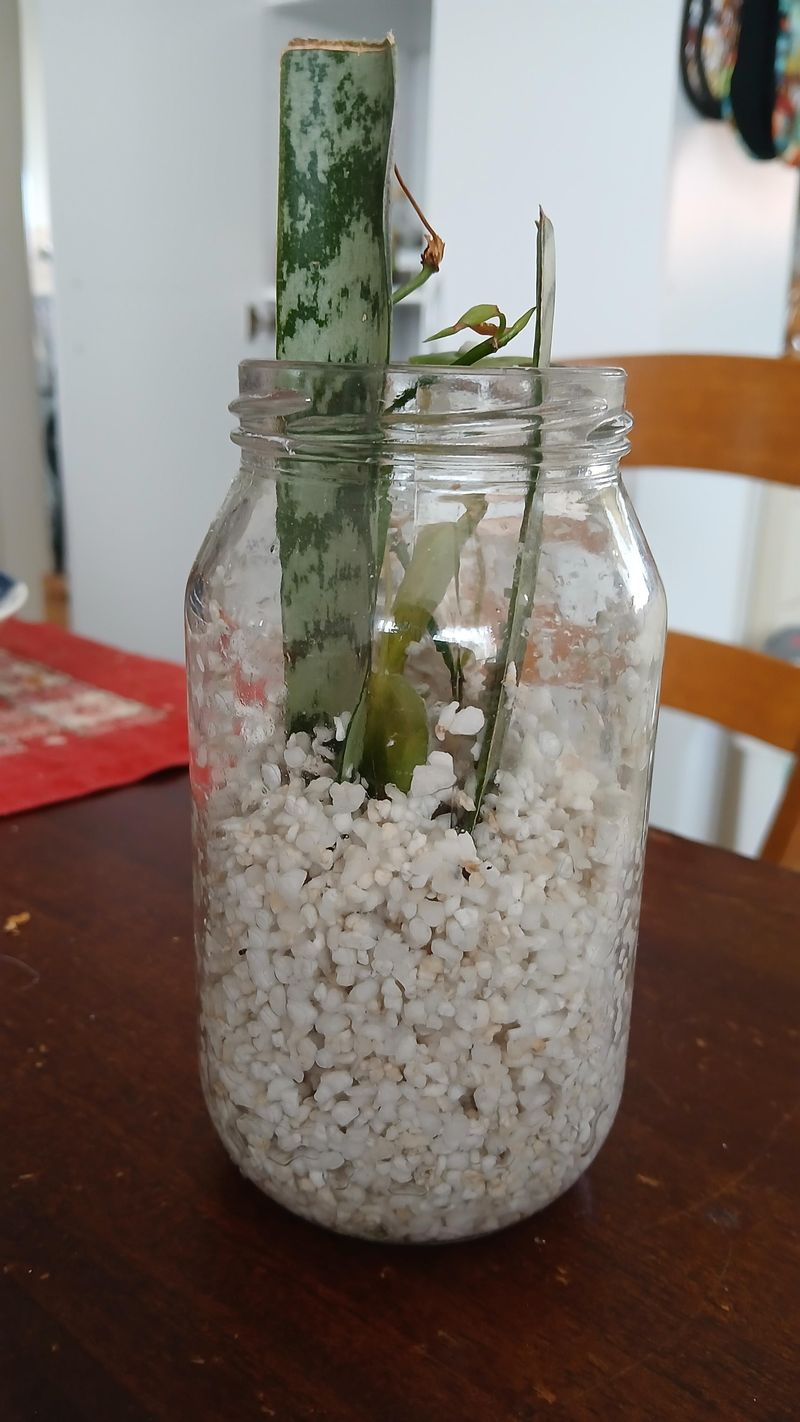
Once you get the hang of it, one plant can supply half your building. Snake plant cuttings make thoughtful, budget-friendly gifts.
A neighbor, coworker, or friend moving into a new place would love one.
Start a few extra cuttings at the same time. Some will root faster than others, so having spares gives you options.
Label each jar with the start date to track progress.
There is one safety note worth sharing with anyone who gets a plant. Snake plants are mildly toxic to cats and dogs if chewed, according to the ASPCA.
Place jars on shelves pets cannot reach.
Your next steps are easy. Choose a healthy leaf, cut it cleanly, let it callus, and set it in a little water by a bright window.
Change the water weekly and keep it away from cold glass.
Patience is the real secret ingredient here. Most of the work happens quietly while you go about your week.
Before long, you may glance over and spot that first tiny root. That little moment makes every boring Sunday water change feel worth it, and it might turn you into the plant friend everyone asks for advice.