Your Neighbor’s Compost Pile Smells. When It Becomes a Legal Nuisance in New York
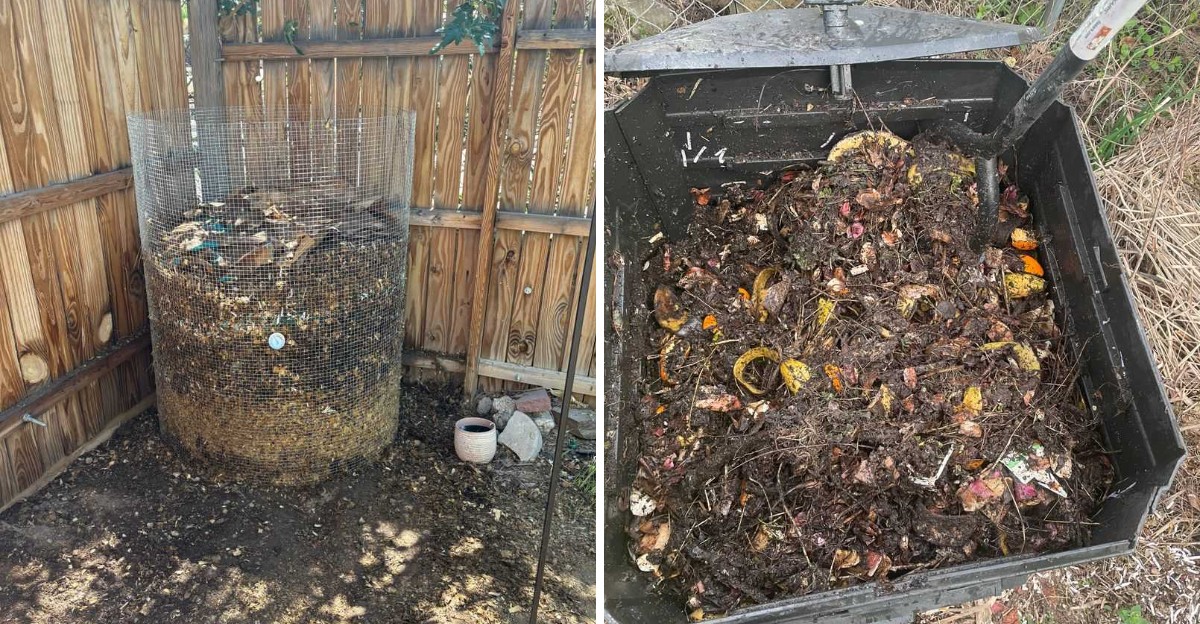
A healthy compost pile should smell like a forest floor after rain. When the scent drifting over your fence reminds you of rotten eggs instead, something has gone sideways in that heap.
Take it from someone who once let a bin turn into a soggy, sulfur-scented mess. I learned fast that a bad pile announces itself to the whole block. My own nose was not the only one complaining that summer.
Here in New York, the law does care about smells that cross property lines. Courts can treat a lingering stink as a real interference with how you use your home. Still, a single bad afternoon rarely counts, and judges look for something heavier than mild annoyance.
So where exactly is that line between an earthy whiff and a legal problem? The answer has more to do with time, strength, and reasonableness than you may expect.
That Stinky Backyard Compost Bin Might Be Crossing an Invisible Line
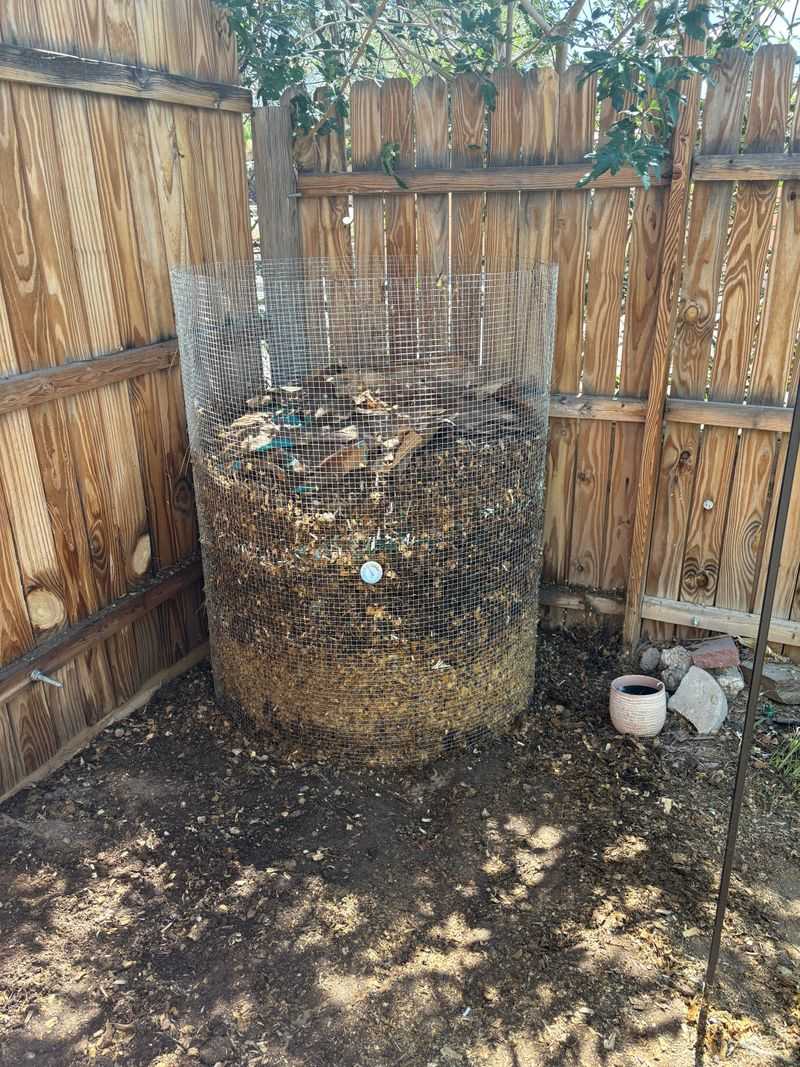
Funny thing about smells is that everyone notices them, but the law only cares about some of them. A rich, earthy scent from a well-run pile is part of normal yard life.
A sour, rotten odor that sneaks into your patio every evening is a different story.
Courts in New York look at smells through a simple question. Is the odor bad enough that an ordinary person, not just a sensitive one, would find it hard to enjoy their own property?
If the answer is yes, the stink may start drifting toward legal territory.
Between you and me, most compost complaints never get close to a courtroom. A pile that smells for a day after someone dumps fresh grass clippings is usually just a hiccup.
The line gets crossed when the problem keeps happening, week after week, and nothing changes.
Pay attention to a few details before you decide what you are dealing with. Notice how often the smell shows up, how long it hangs around, and how strong it feels.
Ask yourself whether it keeps you from opening windows, grilling outside, or sitting in your garden.
Those everyday effects matter more than the smell itself. A nuisance is really about lost enjoyment of your home.
Keeping that idea in mind helps you stay fair, calm, and clear about what you can reasonably expect from the folks next door.
New York Courts Use Five Tests for a Private Nuisance Odor

Lawyers love lists, and New York nuisance law comes with a famous one. To win a private nuisance claim, you generally need to show five things.
The interference must be substantial, intentional in origin, unreasonable in character, harmful to your use and enjoyment of land, and caused by someone else’s conduct or failure to act.
Substantial means more than a trivial whiff. A faint smell on a hot day rarely qualifies.
A heavy odor that drives your family indoors on a regular basis has a much better shot.
Intentional in origin sounds scary, but it often just means the neighbor knows the pile smells and keeps doing the same thing. Once you have politely told them, it becomes harder for them to claim they had no idea.
Unreasonable is where judges weigh both sides. They consider the neighborhood, how useful the activity is, and how much trouble it causes.
Composting is a helpful practice, so the smell has to tip the scales clearly.
Courts also apply an objective standard. Your personal sensitivity does not count if a typical neighbor would shrug it off.
For what it’s worth, keeping notes about frequency and duration can make your case far more convincing than describing one awful afternoon. A local attorney can explain how these tests fit your exact situation.
A Healthy Compost Heap Should Smell Like Forest Soil
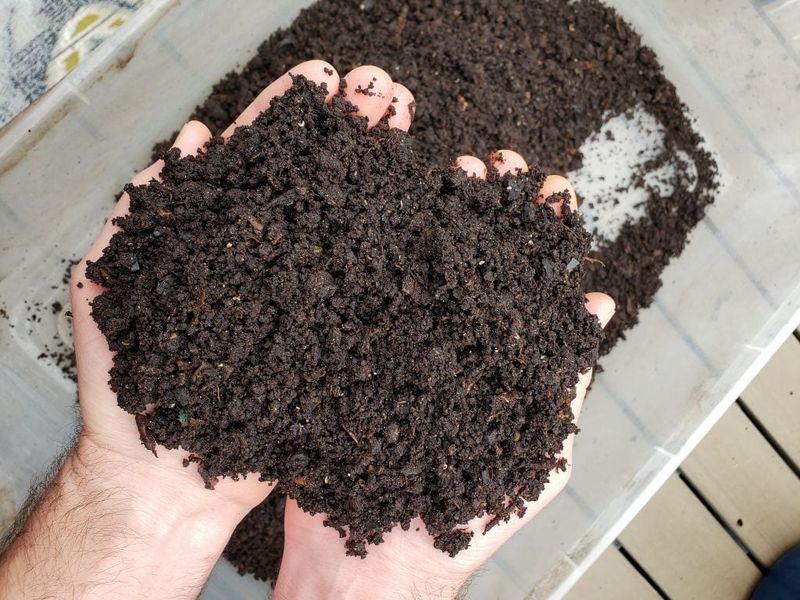
Grab a handful of good finished compost and take a sniff. It smells sweet and earthy, a lot like the ground under maple trees after a spring shower.
Cornell’s composting experts point out that a pile working the right way should not produce offensive odors.
That pleasant scent comes from busy microbes that need air. Gardeners call this aerobic decomposition.
Bacteria and fungi break down scraps quickly while breathing oxygen trapped in the pile.
Trouble starts when oxygen runs out. Different microbes take over, and they release gases with a rotten egg or sour smell.
This anaerobic process is slower and much stinkier.
In my own yard, I’ve noticed that a bad smell is basically the pile asking for help. It almost always points to too much water, too little air, or a messy mix of ingredients.
None of that is permanent.
Knowing this changes how you talk to a neighbor. You are not accusing them of being dirty or careless.
You are pointing out that their compost is out of balance and could be easy to fix.
That friendly angle tends to work better than complaints. Many people simply do not realize compost is supposed to smell nice.
A quick, kind conversation can turn an awkward standoff into a shared gardening tip.
Soggy Grass Clippings and Food Scraps Cause Most Compost Stink
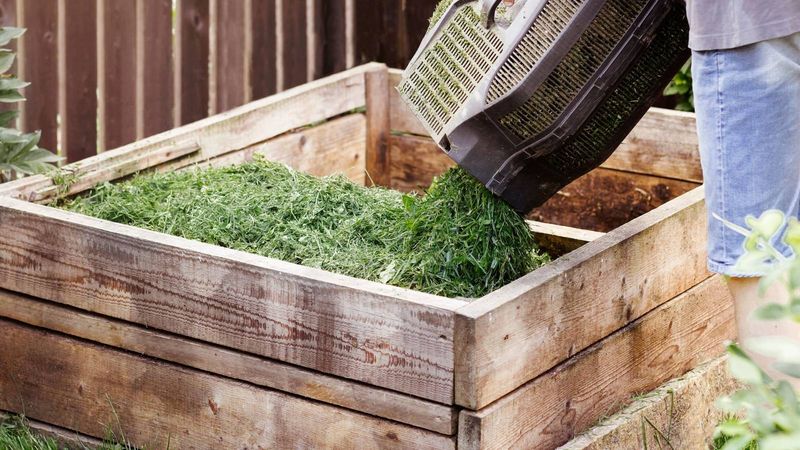
Ammonia hits your nose like a cleaning closet gone wrong. That sharp smell often means a pile has too many greens, such as thick layers of fresh grass clippings or kitchen scraps.
Nitrogen builds up faster than the microbes can use it, and the extra escapes as gas.
A rotten egg or spoiled food smell tells a different story. It usually means the pile is too wet and packed down, so air cannot move through it.
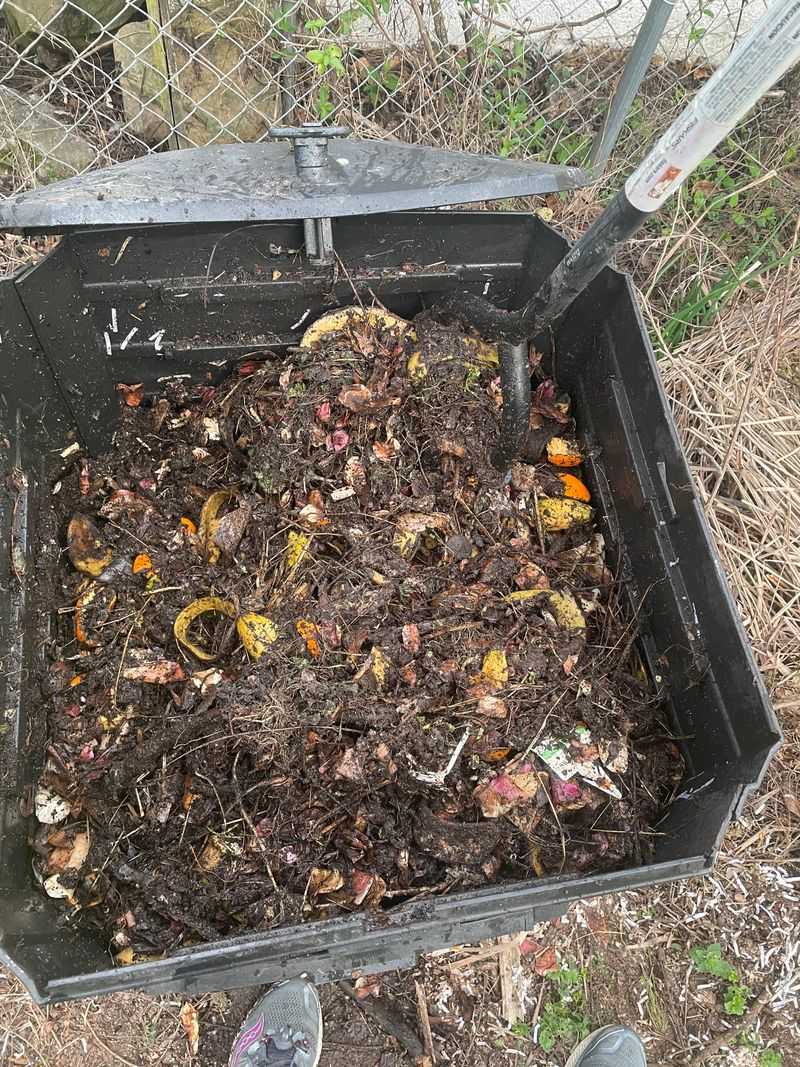
Slimy, matted layers are a strong visual hint.
Some ingredients make things worse in home bins. Meat, fish, bones, dairy, and greasy foods are often advised against because they smell strongly as they break down.
They can also attract raccoons, rats, and curious dogs.
Let’s just say I learned that lesson with a bucket of shrimp shells. The whole corner of the yard smelled like a low tide for a week.
I never added seafood again.
Weather plays a role too. Summers bring warm, humid stretches, and heavy rain can soak an uncovered pile.
Late spring mowing season also floods many bins with clippings at once.
Spotting the cause helps you suggest a useful fix. If you can see wet clumps or smell ammonia, you already have clues about what that neighboring pile needs.
A Pitchfork and a Bag of Dry Leaves Can Rescue a Smelly Pile
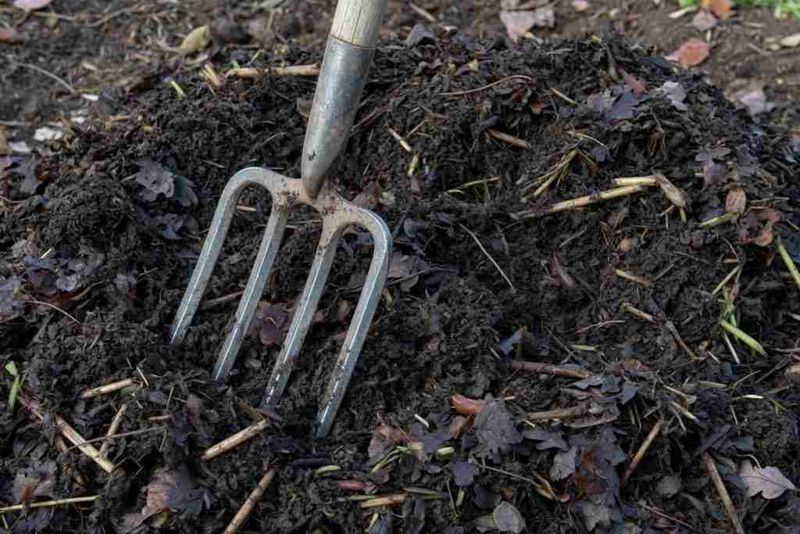
Turning a pile feels like giving it a deep breath. A pitchfork or compost aerator breaks up matted layers and lets oxygen back in.
Within a few days, the smell often fades noticeably.
Dry browns are the next secret weapon. Shredded leaves, straw, plain cardboard, and wood chips soak up extra moisture and add carbon.
Many guides suggest roughly two to three parts browns to one part greens by volume.
If you ask me, stockpiling fall leaves is the smartest move a New York composter can make. Bag them in October and November, then add a handful every time fresh scraps go in.
That steady balance keeps the pile happy into summer.
Burying scraps also helps. Tuck food waste into the center of the pile and cover it with browns.
That layer acts like a lid that traps odors and discourages pests.
A few more simple habits make a big difference:
Cover the pile during heavy rain. Skip meat and dairy in backyard bins.
Spread grass clippings thinly or leave them on the lawn instead.
Squeeze a handful of material as a quick moisture test. It should feel like a wrung-out sponge.
Water dripping out means it needs more dry stuff, and a crumbly dry feel means it could use a splash.
NYC Curbside Compost Bins Come With Their Own Rules
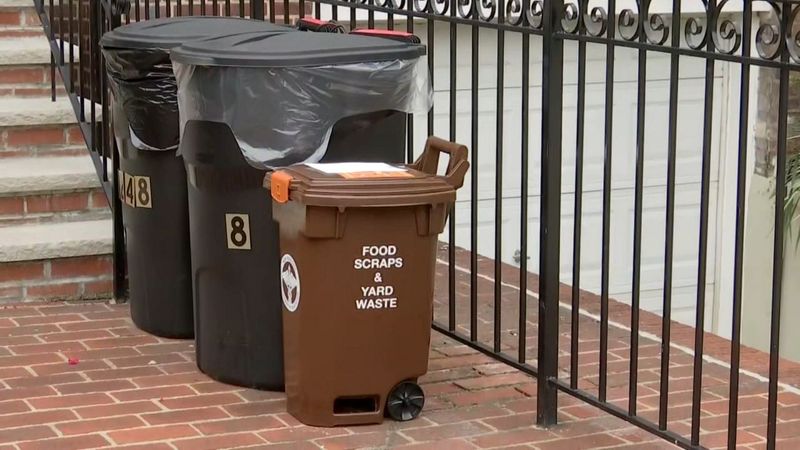
New York City made composting the law of the land. Since the citywide curbside program launched, residents must separate food scraps, food-soiled paper, and yard waste from regular trash.
The city began issuing fines for noncompliance at many residential buildings in 2025.
Odor control is baked into the rules. Organics should go out in the official brown bin or a labeled container of 55 gallons or less with a secure lid.
A tight lid keeps smells in and rats out.
For what it’s worth, the lid matters more than most people realize. An open or overflowing bin on a summer sidewalk can smell surprisingly strong.
It also invites pests, which brings its own set of headaches.
Property owners can face fines for problems like failing to separate organics or using improper containers. Check the Department of Sanitation website for current pickup days and fine amounts, since details can change.
Outside the five boroughs, rules vary widely. Some towns and counties offer drop-off sites or voluntary programs, while others leave composting to homeowners.
A few simple tricks keep curbside bins fresher. Line the bin with paper bags or newspaper, freeze smelly scraps until pickup day, and rinse the container now and then.
Those habits make life easier for you and everyone walking past.
A Friendly Chat Over the Garden Fence Beats Filing a Lawsuit

Don’t make my mistake of stewing silently for weeks. By the time I finally said something about a smelly bin years ago, I was grumpy and my tone showed it.
The conversation went worse than it needed to.
Start with a calm, friendly visit. Mention the smell kindly and share a tip or two about adding dry leaves or turning the pile.
Many neighbors have no clue the odor travels that far.
Offer something helpful if you can. A bag of shredded leaves or a link to a Cornell composting guide feels like a gift, not a complaint.
That small gesture often fixes things fast.
If the smell continues, a polite written note helps. Keep it short and specific, with dates and how the odor affects you.
A record of your effort also matters if things escalate later.
Start a simple log while you wait. Write down the date, time, weather, wind direction, and how long the smell lasted.
Photos of an open or overflowing bin can help too.
Some communities offer free mediation through local dispute resolution centers. New York has Community Dispute Resolution Centers across the state.
A neutral mediator can help both of you reach an agreement without lawyers, bills, or years of awkward glances across the hedge.
Calling 311 or the Health Department About a Rotten Compost Odor
Sometimes kindness runs out of road. When a neighbor ignores repeated requests, official channels can step in.
The right office depends on where you live.
In New York City, NYC311 handles complaints about things like improper organics storage, uncovered bins, and rodent problems. You can file online, through the app, or by phone.
Inspectors may follow up if a violation is found.
Outside the city, try your town code enforcement office or county health department. Nassau County, for example, has environmental staff who look into odor complaints.
Many towns also have local laws on property maintenance, pests, and waste storage.
Bring the log you have been keeping. Dates, times, photos, and notes about your conversations make your complaint more credible.
Officials respond better to clear patterns than to one angry phone call.
A private nuisance lawsuit is the last stop. It costs time and money, and you would need to prove those five legal elements.
A local real estate or property attorney can tell you whether your situation is strong enough.
My garden taught me that patience usually pays off. Most smelly piles get fixed with a turn of the fork and a bag of leaves.
Knowing your options simply means you are ready if that gentle approach does not work.