Your Virginia Lawn Wants This in November, and It Isn’t Fertilizer
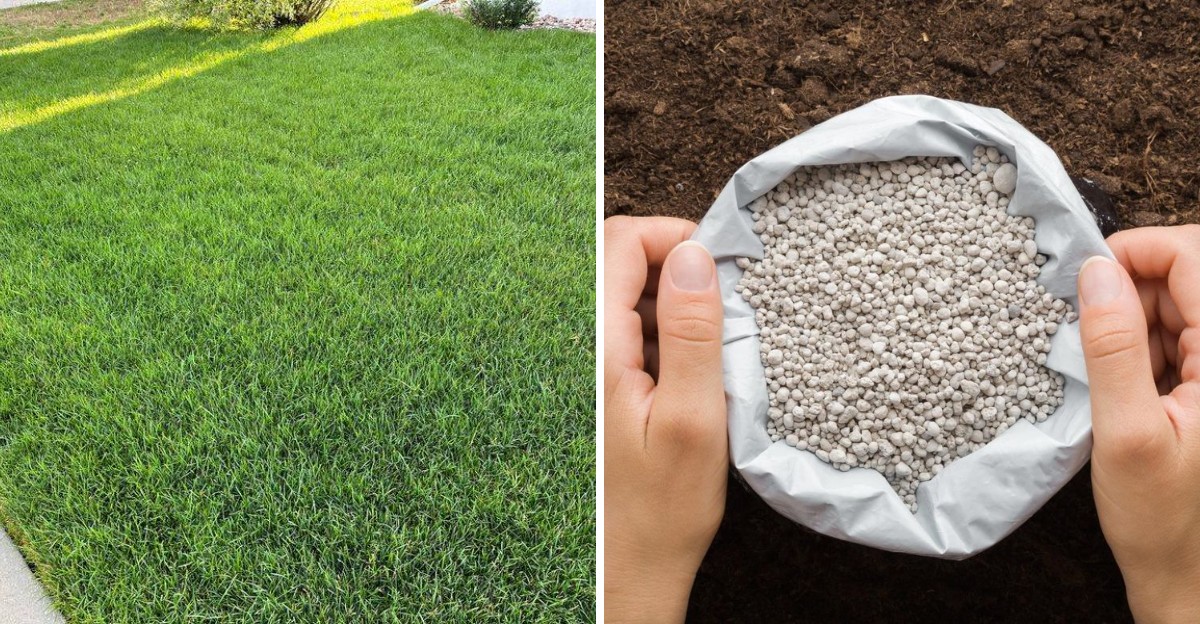
Crushed seashells and ancient sea creatures may be the secret to a greener lawn. Much of the rock sold for this job formed from marine life that settled on old ocean floors millions of years ago.
I’ll admit it. For years I tossed more fertilizer at my thin, weedy patches and wondered why nothing changed.
Most soils across Virginia lean acidic, thanks to heavy rainfall and old, weathered parent rock. When soil gets too sour, grass roots struggle to grab nutrients that are sitting right there.
Now that I think about it, my lawn was hungry at a table full of food. The fix turned out to be cheap, slow, and perfectly timed for the coldest months.
So what exactly does your yard want this month, and how much of it do you really need?
Those Patchy, Weedy Grass Spots Are Sending a Soil Signal
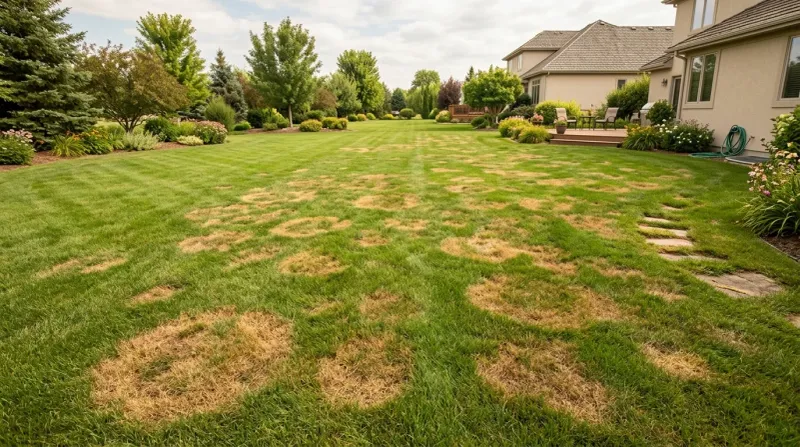
My front yard looked tired every fall, no matter what I bought at the garden center. Bare spots, moss in the shady corners, and a parade of weeds made me feel like I was losing a slow game.
Turns out the problem was hiding underground. Virginia Cooperative Extension notes that many soils in the state are naturally acidic, often well below the pH range most lawn grasses prefer.
Tall fescue and other cool-season grasses usually do best around pH 6.0 to 7.0.
When pH drops too low, key nutrients like phosphorus, calcium, and magnesium become harder for roots to use. Aluminum and manganese can also become more available, and in larger amounts they may stress grass roots.
So the nutrients can be present while your lawn still acts underfed.
Soil microbes feel the sourness too. Many helpful organisms that break down clippings and cycle nitrogen slow down in strongly acidic ground.
That can leave thatch lingering and the whole system running sluggish.
Moss is a common clue, though it often points to shade, compaction, or poor drainage as well. Weeds that tolerate sour soil may move in where turf thins out.
None of these signs proves low pH alone. They do tell you it is time to stop guessing and look below the blades.
Garden Lime Is the Quiet Hero Your Fescue Has Been Waiting For
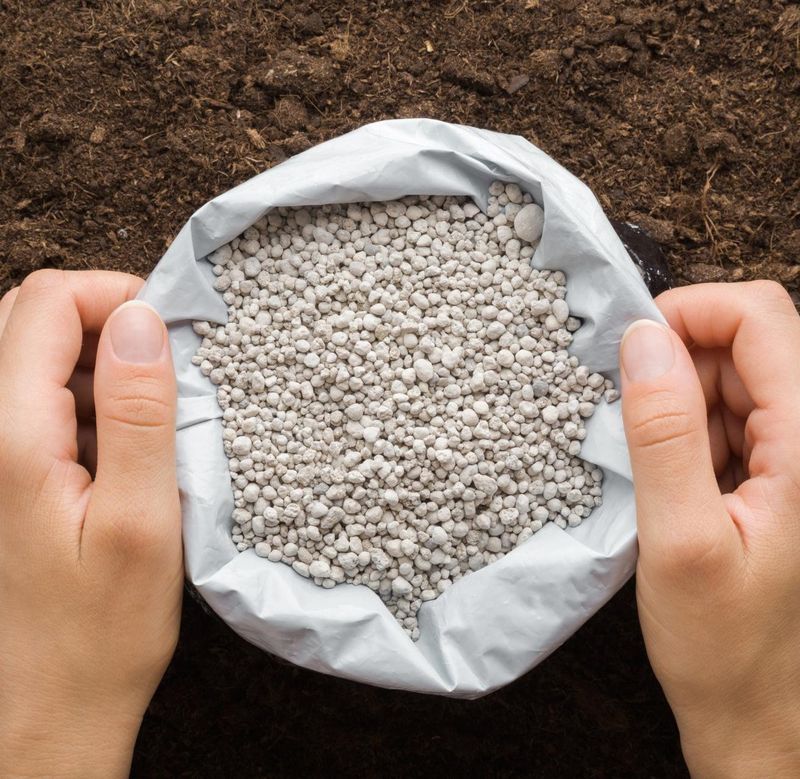
Ground limestone sounds about as exciting as gravel. Still, few products do more for a sour lawn than plain garden lime.
Lime is made mostly from crushed limestone, which contains calcium carbonate. Dolomitic lime also carries magnesium carbonate, which helps when a soil test shows magnesium running low.
Both work by neutralizing acidity and nudging the soil pH upward.
Fun fact for your next backyard chat. Much limestone formed from the shells and skeletons of tiny sea creatures that piled up on ancient ocean floors.
Your grass gets a little help from creatures that lived ages ago.
Once pH climbs into a friendlier range, roots can pull nutrients more easily. That means the fertilizer you do apply in its proper season works harder for you.
Lime itself is not a fertilizer, though calcium and magnesium are useful plant nutrients.
Healthier microbe activity often follows better pH. Those tiny workers help break down clippings and organic matter, which supports good soil structure over time.
The way I see it, lime fixes the stage so every other lawn task performs better. It will not cure shade, poor drainage, or compaction on its own.
On acidic ground, though, it often makes the biggest difference for the least money.
A Simple Soil Test Kit Tells You Exactly How Much Lime to Spread
Don’t make my mistake of buying three bags of lime before knowing the numbers. I guessed, and I guessed badly.
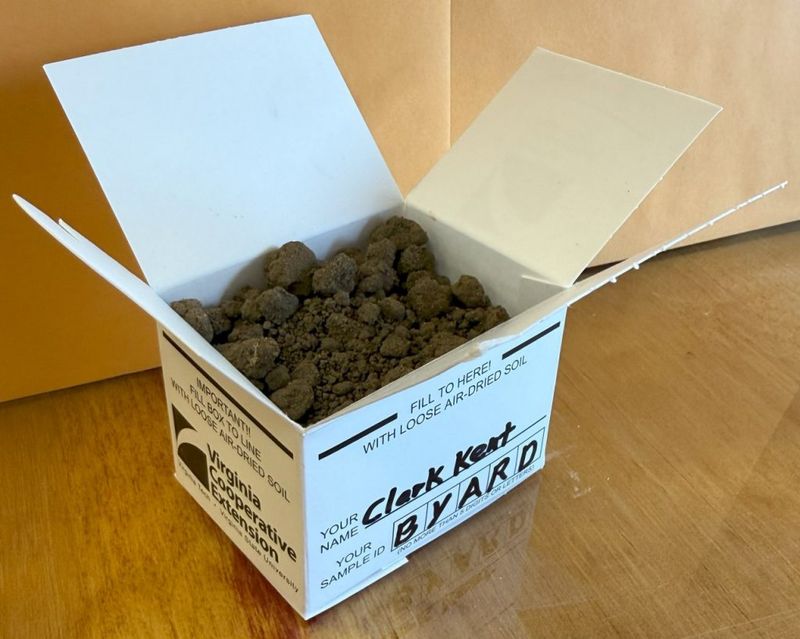
A soil test is the step that turns lime from a gamble into a plan. Virginia Cooperative Extension offers soil sample kits through local extension offices, and samples go to the Virginia Tech Soil Testing Laboratory.
Results usually include your pH plus a lime recommendation in pounds per 1,000 square feet.
Sampling is easy. Use a clean trowel or soil probe and take about 10 to 15 small cores from around the lawn, roughly 3 to 4 inches deep.
Mix them in a clean plastic bucket, then fill the sample box.
Keep separate samples for areas that look or behave differently. A shady backyard and a sunny front slope may need very different treatment.
Too much lime can push pH higher than grass likes. That can make iron, manganese, and other nutrients harder to absorb, and correcting a high pH is slow and tricky.
Testing every three years or so is a solid habit for most home lawns. It costs less than a bag of fancy fertilizer, and the report often answers questions you did not even know to ask.
Cold November Rain Helps Lime Sink Into Sleepy Lawn Soil
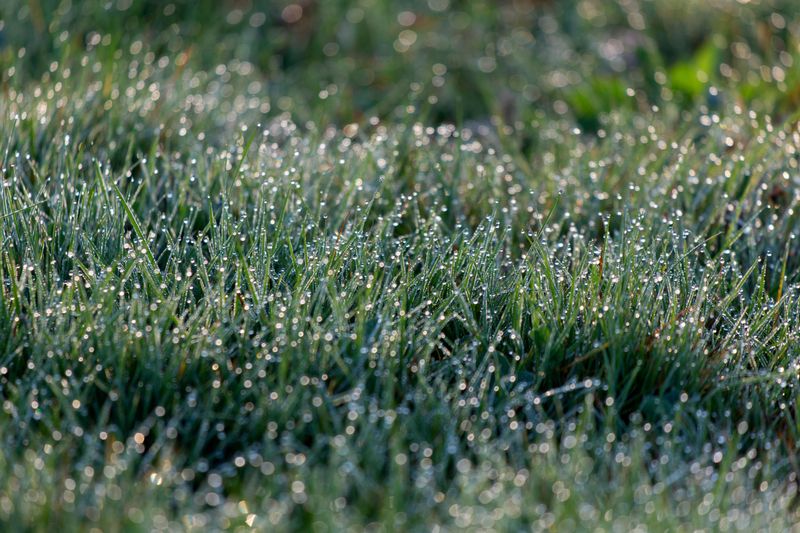
There is a sweet satisfaction in spreading something now and letting the weather do the heavy lifting. November is that kind of month for lime.
Lime works slowly because it has to dissolve and react with the soil. It can take several months before you see a meaningful pH shift.
Applying it in late fall gives the product all winter to settle in before spring growth takes off.
Rain helps carry those fine particles down into the root zone. Freezing and thawing cycles open tiny cracks in the soil, which may help the lime work its way in a little more.
Timing has another perk. By November, most cool-season lawns have finished their fall seeding and main feeding.
Lime fits neatly into the quieter calendar without crowding other jobs.
Lime can technically go down most of the year. Extension guidance generally suggests avoiding application on frozen ground, on soggy soil, or on grass stressed by heat and drought.
Coastal areas near Norfolk may stay mild longer, while the mountains around Blacksburg cool earlier. Watch your own weather rather than a fixed date.
A dry, calm day with the ground unfrozen is your sweet spot, and a gentle rain soon after is a welcome bonus.
A Broadcast Spreader Makes Pelletized Lime Easy to Handle
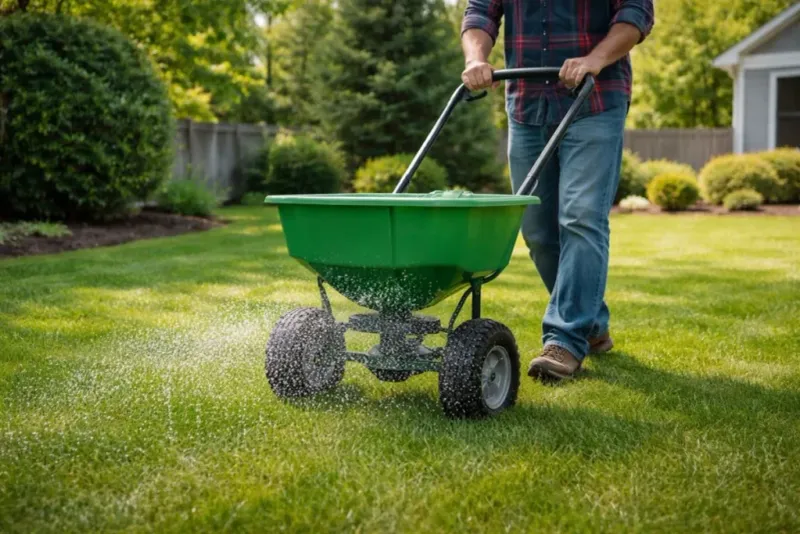
Spreading lime by hand left me with streaky stripes the first year. A rolling broadcast spreader solved that problem in one afternoon.
Pelletized lime is the friendliest choice for most homeowners. It is finely ground limestone pressed into small pellets, so it flows smoothly and makes far less dust.
Pulverized lime works too, but it can be messy and blow around.
Set your spreader using the product bag as a guide, then apply about half the amount walking north to south. Spread the second half walking east to west.
That crisscross pattern helps prevent missed strips and heavy overlaps.
Watch the limits. Virginia Cooperative Extension commonly advises keeping single lime applications on established turf to around 50 pounds per 1,000 square feet.
If your test calls for more, split it between fall and spring.
Sweep any pellets off driveways and sidewalks back onto the grass. Wear gloves and consider a dust mask, especially with powdered products.
Watering lightly afterward can help pellets begin to break down, though autumn rain often handles that job. Kids and pets can usually return once the lime has settled into the grass, but read the label for specific advice.
Then put the spreader away and let winter take over.
Fallen Oak and Maple Leaves Can Smother Grass Before Winter
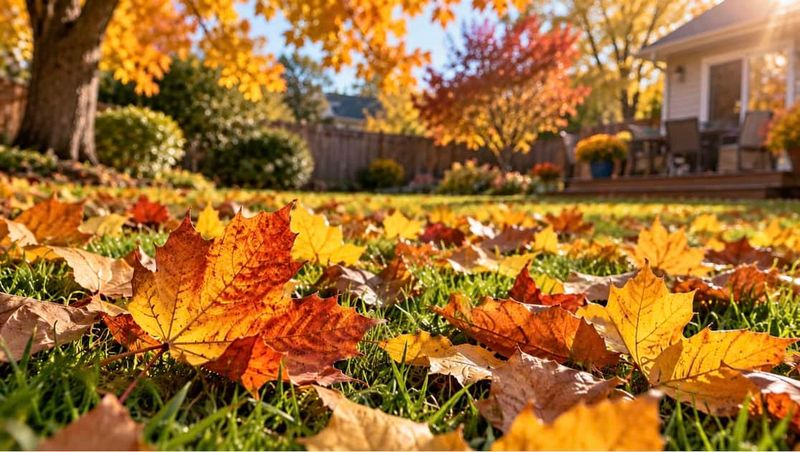
Leaves look charming for about a week. After that, a soggy mat can block sunlight and trap moisture right on top of your grass.
Cool-season grasses keep making food on mild fall days. Heavy leaf cover cuts off that light and can invite fungal problems like snow mold in colder parts of the state.
Thin patches under big oaks often show the damage by spring.
My favorite trick is mowing over light leaf layers with a mulching mower. Chopped leaves fall between grass blades and break down, adding organic matter to the soil.
Research from several universities supports this approach when leaf cover is not too thick.
Deep piles are a different story. Rake or blow them away, then use them in garden beds or the compost pile.
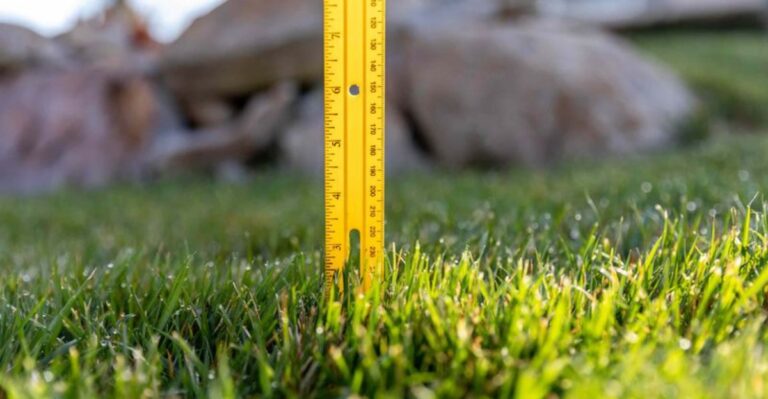
Keep mowing fescue at around 3 to 4 inches until growth slows. Skip scalping it short for winter, which stresses the crown and exposes the soil.
Overly long, floppy grass can mat down too, so stay in that middle range.
Core aeration is best done earlier in fall with seeding. By November, most Virginia lawns are better off with leaf cleanup, steady mowing, and lime.
Save heavy projects for the right season.
Thicker, Greener Spring Turf Starts With Balanced Soil Now
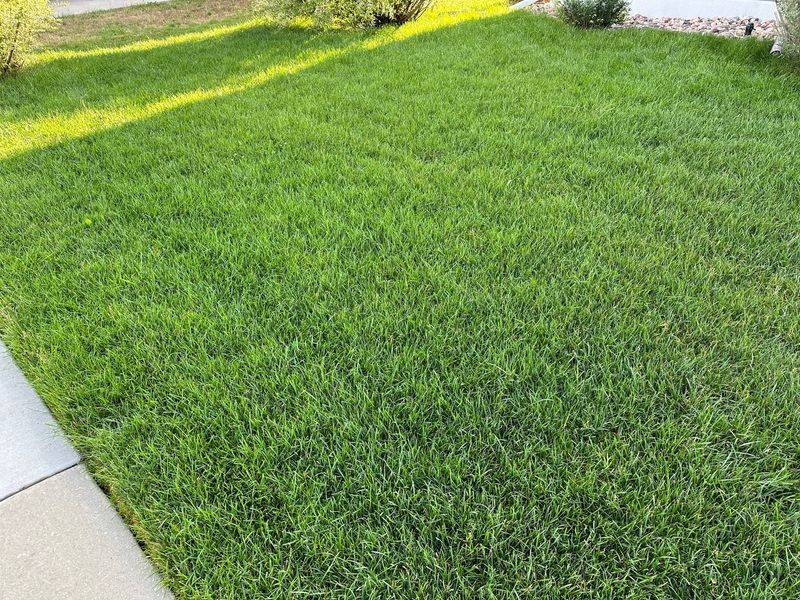
My garden taught me that patience pays in grass, too. The first spring after liming, my lawn did not look magical overnight, but it filled in steadier and stayed greener longer.
Balanced soil gives roots a better chance to grow deep. Deeper roots handle summer heat and dry spells more gracefully.
A dense lawn also leaves fewer open spaces for crabgrass and other weeds to sneak in.
Lime is a long-game tool. Its effects can last a couple of years or more, depending on your soil and rainfall.
That is why retesting every few years beats reapplying on autopilot.
Warm-season lawns are a slightly different case. Bermudagrass and zoysia are common in southeastern Virginia, and they go dormant and tan in fall.
Lime can still help them when a soil test shows acidity.
Here is a simple November checklist. Test the soil, spread lime only if the report calls for it, clear heavy leaves, and keep mowing at a healthy height.
Then take a break and enjoy the season. Your lawn is resting, but the soil underneath is quietly getting ready.
Come April, you might catch yourself smiling at a patch that used to frustrate you.