8 Texas Trees You May Need Approval To Remove
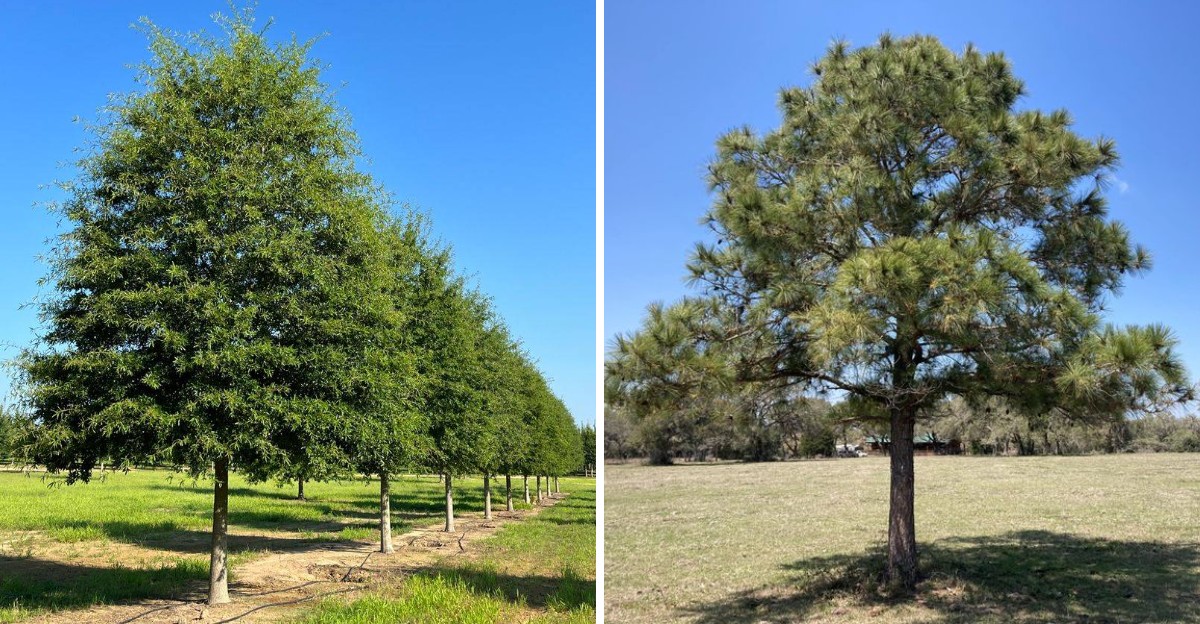
In Texas, a rule you won’t find in any state code can stop a homeowner’s chainsaw: your city’s tree ordinance.
There’s no single statewide tree law, so protections change from town to town, and that surprised me more than any frost date did.
Once a tree earns a protected or heritage label, removing it needs a permit or a formal review. I skipped the paperwork once and nearly paid for it with a fine and a replacement planting.
Fines in many Texas cities run from $500 to $2,000. You build your yard around shade and birdsong, so learning the rules early protects both your trees and your wallet.
Species alone rarely decides protection here; trunk size and city limits usually matter more than leaf shape.
Which trees across Texas can land in that tricky approval zone before anyone can cut them, depending on size and location?
1. White Oak
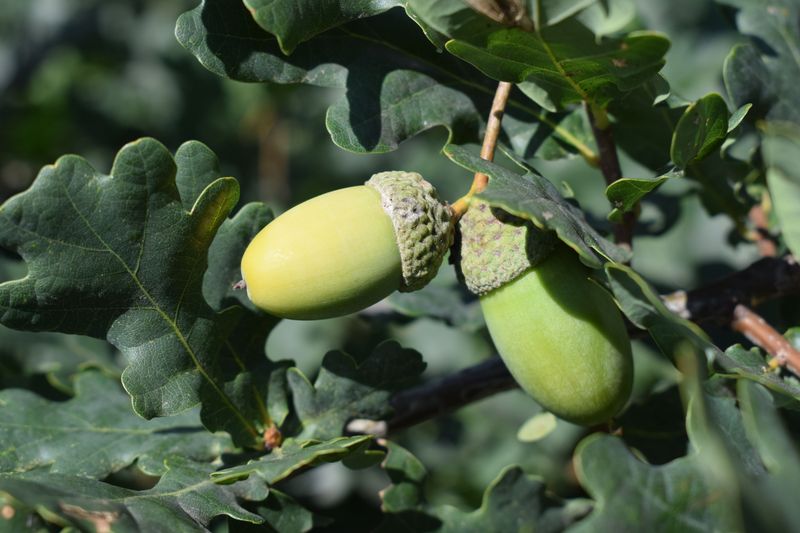
White oaks can live for centuries, and some of the oldest specimens in the country are several hundred years old. Trees with that kind of story are prime candidates for heritage status under city ordinances.
Fort Worth’s ordinance, for example, lets trees of unusual size, age, or species be given heritage status, and removal then needs a permit. I love that a single oak can carry the same paperwork weight as a historic building.
Quercus alba often reaches 80 to 100 feet tall, with a crown nearly as wide as the tree is high. Its pale gray bark turns flaky with age, and October leaves shift toward deep red or burgundy.
Wildlife experts call white oak a keystone species because hundreds of caterpillar species feed on its leaves. Those caterpillars feed nesting songbirds, while the sweet acorns falling right now fuel deer and wild turkeys.
Before you plan any removal, call your city arborist or planning office and ask whether the tree carries a special designation. A quick email with a photo and address often settles the question in a few days.
If your oak stays, protect its roots by keeping mowers and parked cars off the soil under its canopy. Fall is a smart time to spread two or three inches of shredded leaves over that root zone.
Planting a young white oak this month also works well, since cool soil helps new roots settle before winter. Give it full sun and well-drained, slightly acidic soil, then let patience handle the rest.
2. American Sycamore
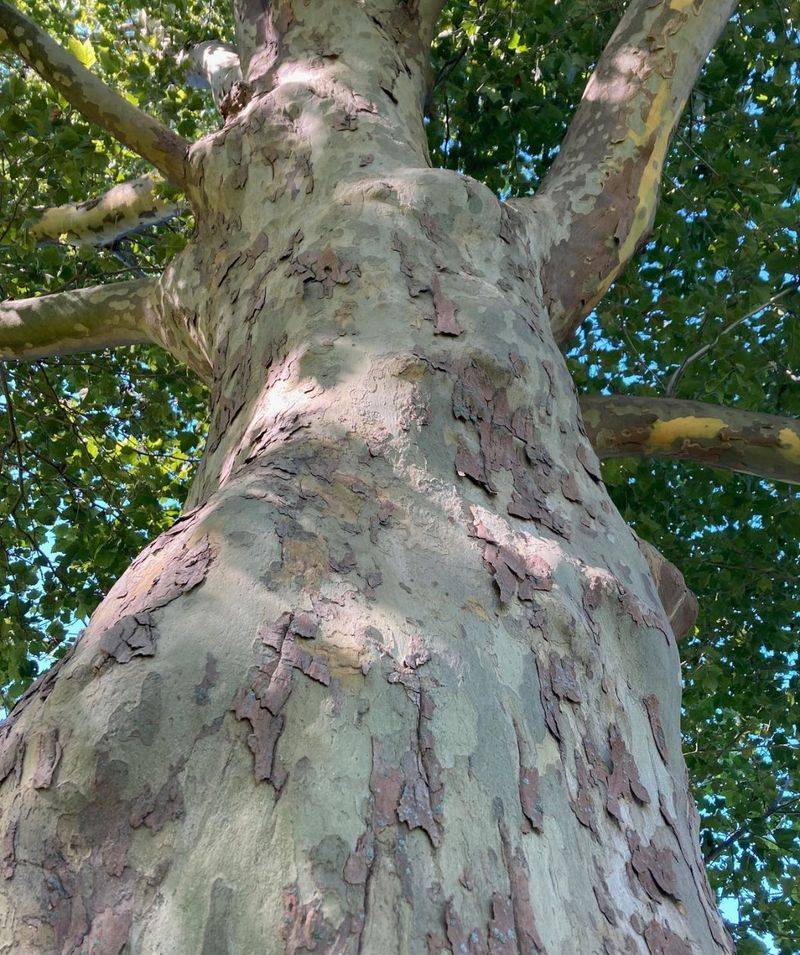
Peeling bark makes an old sycamore look like it was painted in patches of cream and olive camouflage. Those ghostly white upper limbs glow along creek bottoms, and they often belong to the biggest trees around.
Size matters here, because many Texas cities protect trees once the trunk reaches a set diameter. Austin also requires a tree permit for protected trees on public as well as residential property.
Platanus occidentalis commonly tops 75 to 100 feet, and its trunk can grow wider than many other eastern hardwoods. Leaves resemble giant maple leaves, and round seed balls dangle on long stems through much of winter.
Your Texas Garden Changes Every Week. Your Plan Should Too.
Gardening in Texas changes quickly throughout the season. Every Friday you’ll receive a simple weekly plan showing exactly what to plant, prune, fertilize, harvest, and protect so you never miss the right timing.
I am surprised every October by how messy sycamores get, dropping bark strips and crunchy brown leaves everywhere. That mess is the main reason neighbors ask about removal, yet cleanup is far cheaper than a permit fight.
Sycamores love moist, rich soil near streams, where their roots help hold banks together during heavy storms. Trees on those banks may also fall under stream buffer rules, which adds another layer of review.
Anthracnose, a fungal leaf disease, often browns sycamore leaves in cool, wet springs, but healthy trees usually recover. Ask a certified arborist to check the tree before assuming those spotted leaves mean serious trouble.
If you have room, plant one at least 30 feet from your house and away from sewer lines. Fall planting gives roots several cool months to spread before summer heat arrives next year.
3. Red Maple
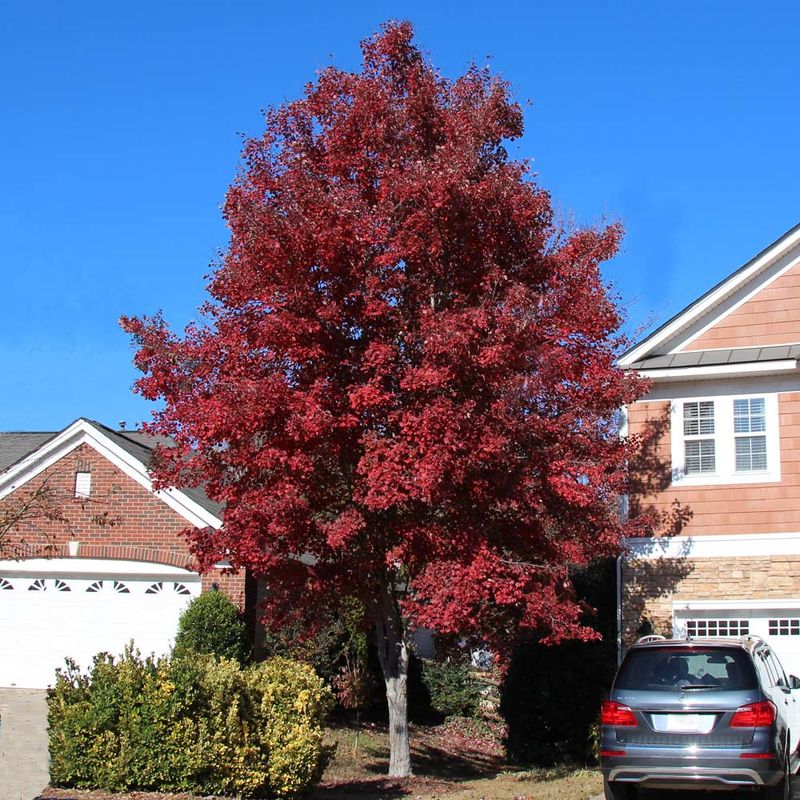
That flaming scarlet tree between the sidewalk and the curb may not belong to you at all. Many cities plant shade trees along streets, and the strip they grow in often counts as public right-of-way.
Who looks after a street tree varies by Texas city: Austin maintains trees in its right-of-way, while Dallas makes the adjacent property owner responsible, so ask your city first. Austin, for example, requires a tree permit for protected trees on public as well as residential property.
Acer rubrum typically grows 40 to 60 feet tall, with leaves that are green above and pale beneath. October is its showtime, when foliage turns bright red or glowing orange depending on the individual tree.
Tiny red flowers open in late winter, giving early bees one of their first meals of the year. I still grin every February when that rosy haze appears on bare branches near my mailbox.
Before trimming a curbside maple, call your city and ask who owns the planting strip in front of your home. Some places will even prune or replace hazardous street trees for free once you file a request.
Red maples handle wet and compacted soils better than many trees, which explains their popularity along busy roads. Their shallow roots can lift sidewalks, though, so plant new ones where pavement sits at a safe distance.
Choose a native seedling or a reputable nursery cultivar, and water it weekly through dry fall spells. Mulch in a wide ring, keeping it a few inches away from the trunk to discourage rot.
4. River Birch
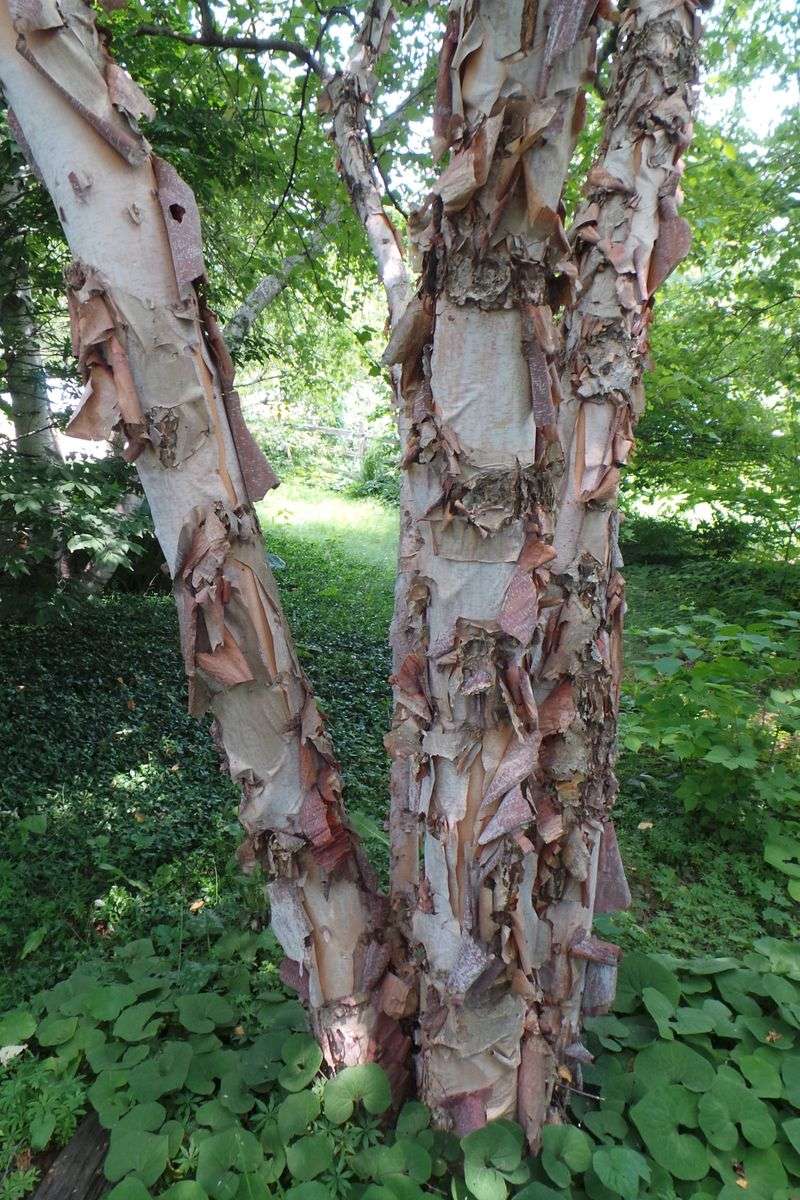
Curling sheets of salmon and cinnamon bark make river birch one of the prettiest trees on any stream bank. Unfortunately for impatient landowners, those same banks are often where tree removal rules get the strictest.
Some Texas cities set their own creek or waterway buffer rules, so check your city’s code before removing trees near water. Removing trees there may require city approval, so confirm with your city before cutting.
Betula nigra often reaches 40 to 70 feet, frequently growing as a multi-trunk clump with an airy crown. Its diamond-shaped leaves turn soft yellow this time of year before drifting into the water below.
After I tested a few birches in my soggy back corner, river birch was the only one that thrived. It handles heat far better than paper birch and resists the bronze birch borer quite well.
Riverside roots grip loose soil during floods, while the leafy canopy keeps creek water cooler for fish. Those jobs are exactly why cities guard buffer vegetation so carefully, even when a tree leans awkwardly.
If you live near a creek, bayou, or the Gulf Coast, check with your city or county for any waterway buffer rules. Many Texas cities publish their tree and buffer rules online, which saves guesswork before you hire a tree crew.
Planting one this fall works nicely in a sunny or lightly shaded spot with moist, acidic soil. Water deeply during dry stretches, because young birches sulk quickly when their roots run thirsty.
5. Tuliptree
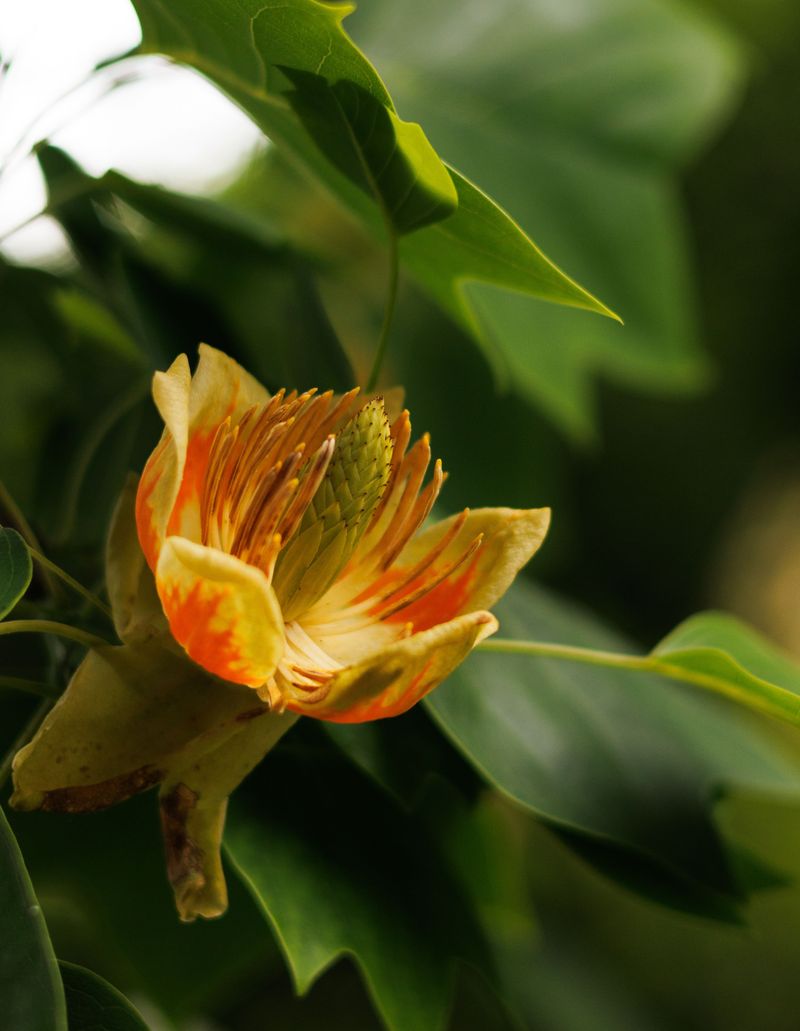
Orange-banded green flowers shaped like tulips bloom so high on this tree that many people miss them each spring.
Liriodendron tulipifera ranks among the tallest hardwoods in eastern North American forests, sometimes climbing past 150 feet, though sources disagree on whether it is native to Texas.
Big shade trees often stand in public parks and on city or county land, where removal decisions belong to officials rather than neighbors. Some cities also honor exceptional trees through notable or champion tree programs, which can bring extra attention.
The Texas Big Tree Registry, kept by the Texas A&M Forest Service, tracks record-setting trees. I once visited a champion tree and felt ridiculously small beside a trunk wider than my kitchen table.
Leaves have four lobes with a flat, notched tip, almost like a cat’s face, and they turn butter yellow now. Smooth gray bark on younger trees slowly develops deep, interlacing furrows and ridges as many decades pass.
Bees adore the spring nectar, and the tree also feeds the caterpillars of the eastern tiger swallowtail butterfly. Ruby-throated hummingbirds visit the blooms too, which turns a mature tuliptree into a busy wildlife diner each spring.
If a park tree near your fence worries you, report it to parks staff instead of hiring your own crew. Cutting a public tree without permission can lead to fines plus the cost of replacing it.
For home planting, give tuliptree deep, moist, well-drained soil and plenty of space, since it grows quickly. Weak wood can drop limbs in storms, so keep it well away from roofs and driveways.
6. Loblolly Pine
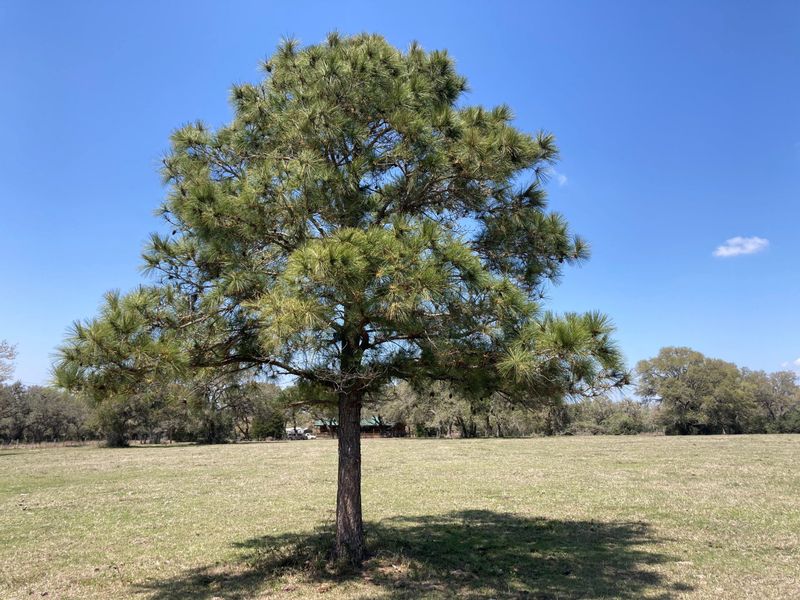
Long needles in bundles of three whisper overhead along countless East Texas highways, and some of those pines grow inside state right-of-way.
The Texas Department of Transportation controls its right-of-way, which often extends well past the paved shoulder.
The Texas Department of Transportation manages the trees inside state highway right-of-way. Before cutting or trimming a roadside tree, confirm who owns that strip and check with the Texas Department of Transportation, your city, or your county.
Cutting roadside trees without knowing who owns the right-of-way is risky, so a casual weekend cleanup can become expensive.
Pinus taeda commonly reaches 60 to 90 feet in landscapes, with a tall straight trunk and open crown. Needles run six to nine inches long, and the prickly cones often hang on after releasing seeds.
Turns out the property line near a road is rarely where your lawn ends, which surprised me during a fence project. Your plat or the county GIS map can show the actual boundary before you call a tree service.
Loblolly pine is the leading commercial timber tree across the Southeast, and it grows fast on many soil types. It tolerates heavy clay and moderate drought, which explains why it pops up on old fields so quickly.
October is a fine month to watch for pine sawfly larvae or bark beetle signs, like pitch tubes on trunks. Healthy, well-spaced pines resist trouble best, so avoid piling soil or mulch high against their bases.
Room matters if you plant one, because mature loblollies tower over houses and drop plenty of needles. Those fallen needles make wonderful free mulch for acid-loving shrubs like azaleas and native blueberries nearby.
7. Willow Oak
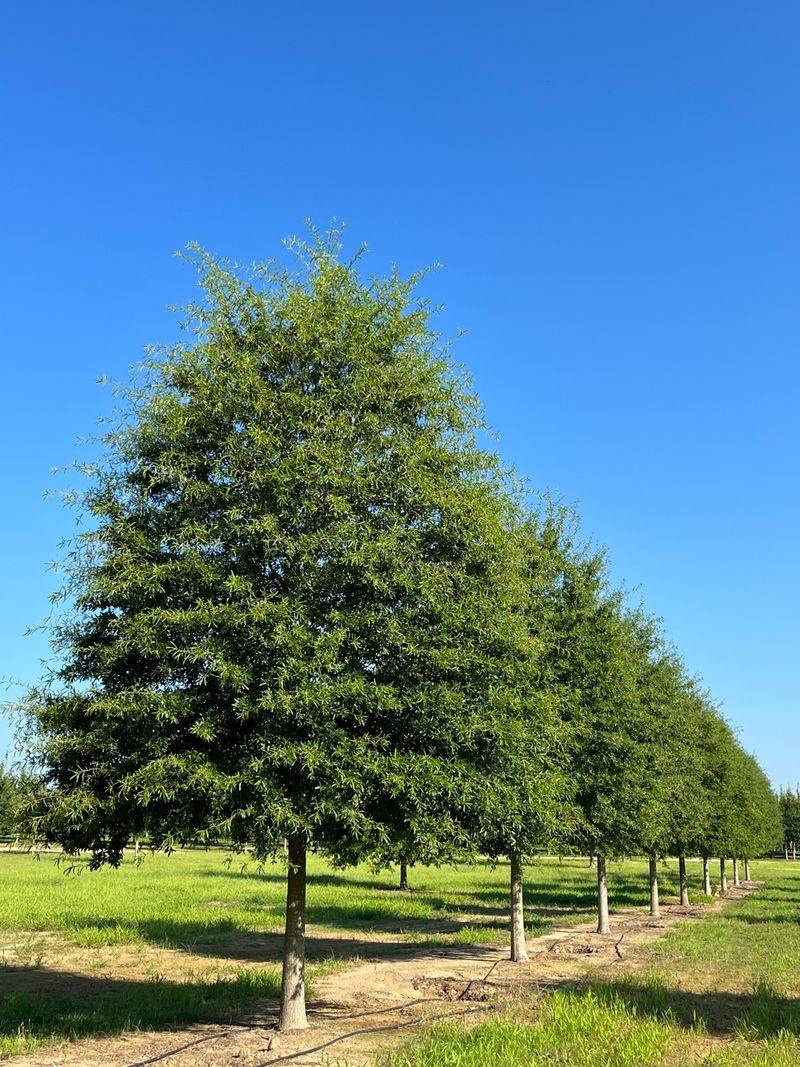
Narrow leaves that look borrowed from a willow make this oak easy to spot on suburban streets. It is wildly popular in planned neighborhoods, and that popularity brings a second rulebook into the picture.
Homeowners associations often require written architectural approval before you remove trees above a certain trunk size. Those covenants operate separately from city rules, so you may need both approvals for the same tree.
Quercus phellos usually grows 60 to 80 feet tall, with a dense oval crown that casts generous shade. Small acorns take two seasons to ripen, and fall leaves turn yellow or soft russet before dropping.
Many HOA rules require a replacement tree when removal gets approved, sometimes with a specific minimum size. Reading your covenants before calling an arborist can spare you a stressful letter from the management office.
Willow oaks handle wet, compacted soil surprisingly well, which explains their heavy use in parking lots and medians. Blue jays and wood ducks eat the little acorns, so your tree feeds a crowd each autumn.
Ask your HOA board whether they keep an approved tree list, since many favor native shade trees for replacements. A friendly conversation now beats arguing over a stump next spring when everyone notices the missing shade.
Planting a willow oak this fall gives roots time to settle while soil stays warmer than the air. Keep it at least 20 feet from foundations, since its roots spread wide as the crown matures.
8. Southern Red Oak
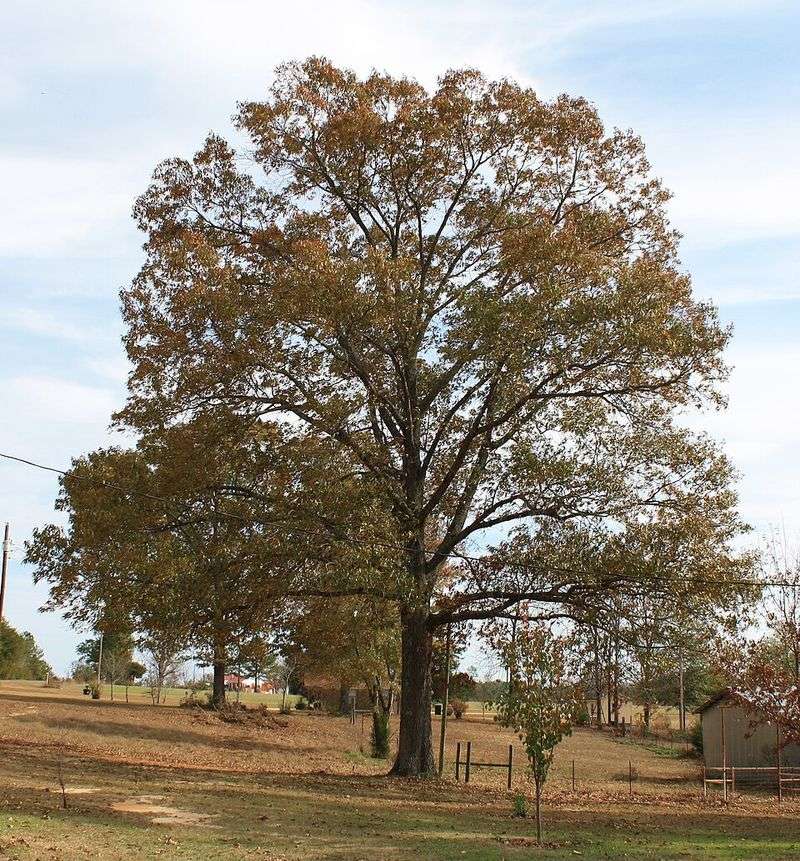
Bell-shaped leaf bases and drooping lobes give southern red oak a look some folks compare to a turkey foot. That quirky leaf often grows on dry hillsides, exactly where new subdivisions and driveways tend to appear.
Land development brings tree rules into play, and many cities require tree surveys or preservation plans with development applications. San Antonio, for instance, requires a tree preservation plan or a tree canopy plan for development on private property.
Quercus falcata typically reaches 60 to 80 feet tall, with a rounded crown and dark, ridged bark. Leaf undersides feel fuzzy, and the leaves turn dull red or brown late in the fall season.
A little evidence gave me real respect for this oak after a brutal dry summer left it looking unbothered. It handles poor sandy or clay upland soils better than many oaks, making it tough as old boots.
Acorns ripen over two seasons, and they feed wild turkeys and black bears through lean winter months. Woodpeckers and small mammals also use cavities that slowly form in older trunks over many decades.
If you are building on a wooded lot, ask your contractor to fence root zones before bulldozers arrive. Soil compaction around roots harms oaks quietly, and the decline may not show for several years.
October planning makes sense, since site plans are often reviewed before construction starts in spring. Keeping a healthy oak may help you meet a city’s tree preservation or canopy requirements, so ask your city how existing trees are counted.