10 Perennials You Should Plant in November for a Thriving Florida Garden Next Year
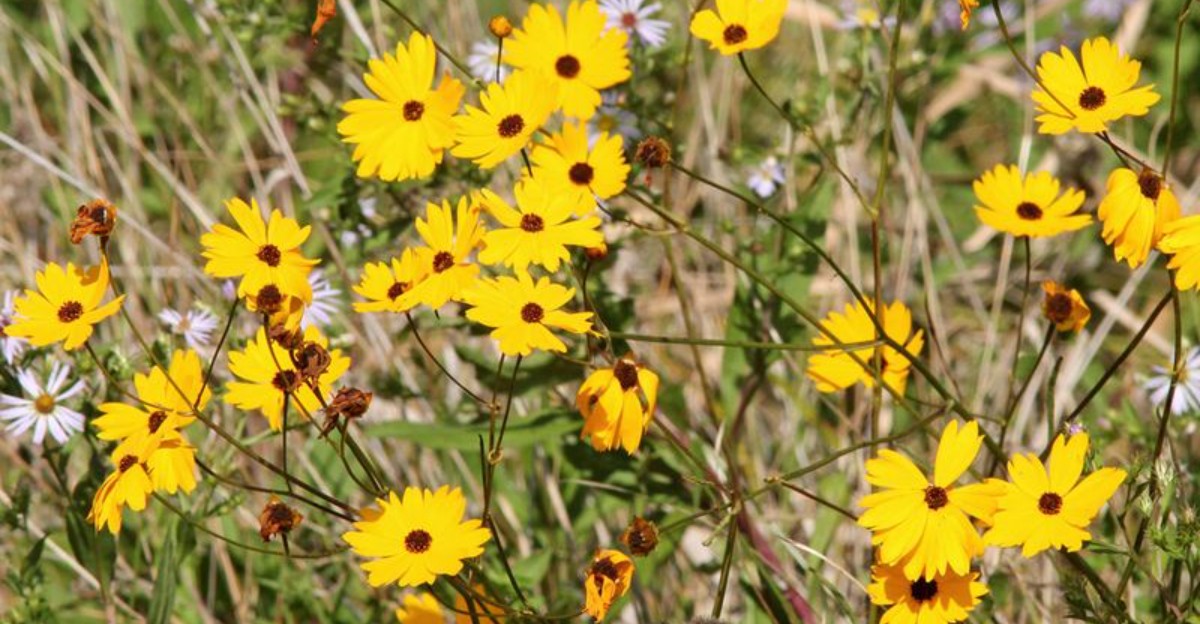
Florida gardeners get a planting season the rest of the country would envy. While northern yards go quiet under frost, our November soil stays warm and the air finally turns gentle.
That combination is perfect for new perennials. Roots keep growing in warm soil, while cooler days mean far less heat stress on young leaves.
By the time summer arrives, fall-planted perennials have had months to settle in. That head start helps them handle the brutal heat of July and August far better than anything planted in late spring.
There is one catch worth knowing. November usually marks the start of the dry season across much of the state, so new plants depend on you for water until their roots spread out.
Cold snaps can still sneak into the Panhandle and northern counties, so keep an old sheet handy for tender plants on frosty nights.
I love that this list leans heavily on Florida natives. Many of them already know how to handle our sandy soil, summer storms, and blazing sun.
Tuck a few into the ground this month, and next year your yard could be buzzing with bees, butterflies, and hummingbirds.
1. Tough Daylily Fans Thrive in Sunshine State Heat
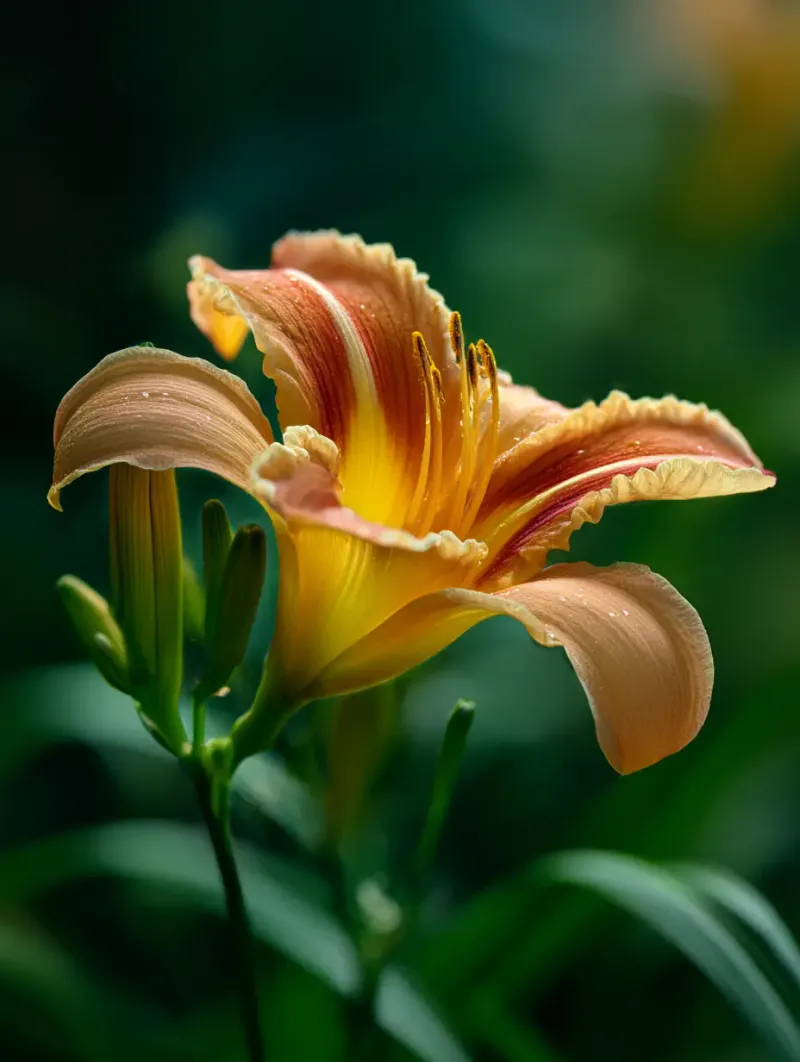
Daylilies earned their name honestly, since each flower opens for just one day. A healthy plant pushes out so many buds that the show still lasts for weeks.
Few perennials are as forgiving in Florida. Daylilies handle heat, humidity, and sandy soil, and the state has a long history of daylily breeding.
Variety choice matters here. UF/IFAS notes that evergreen and semi-evergreen types tend to perform better in the central and southern parts of the state, while dormant types do best in the north.
Choose a sunny spot with at least six hours of light. In the far south, a little afternoon shade helps darker colors keep from fading.
Set the crown, where roots meet leaves, about 1 inch below the soil surface. Spread the roots over a small mound in the hole, then fill in and water well.
Water every few days while the plants settle in, especially during dry November and December weeks.
Stick with named hybrids from a nursery rather than roadside clumps of orange ditch lily, which can spread aggressively.
Snip off spent flower stalks after blooming to keep plants tidy. Divide crowded clumps every few years, and you will have plenty to share with neighbors.
Personally, I think a border of mixed daylily colors is one of the easiest ways to make a sunny yard feel cheerful. Plant a few early, midseason, and late bloomers, and you can stretch the color for months.
2. Black-Eyed Susans Bring Native Gold to Sunny Beds
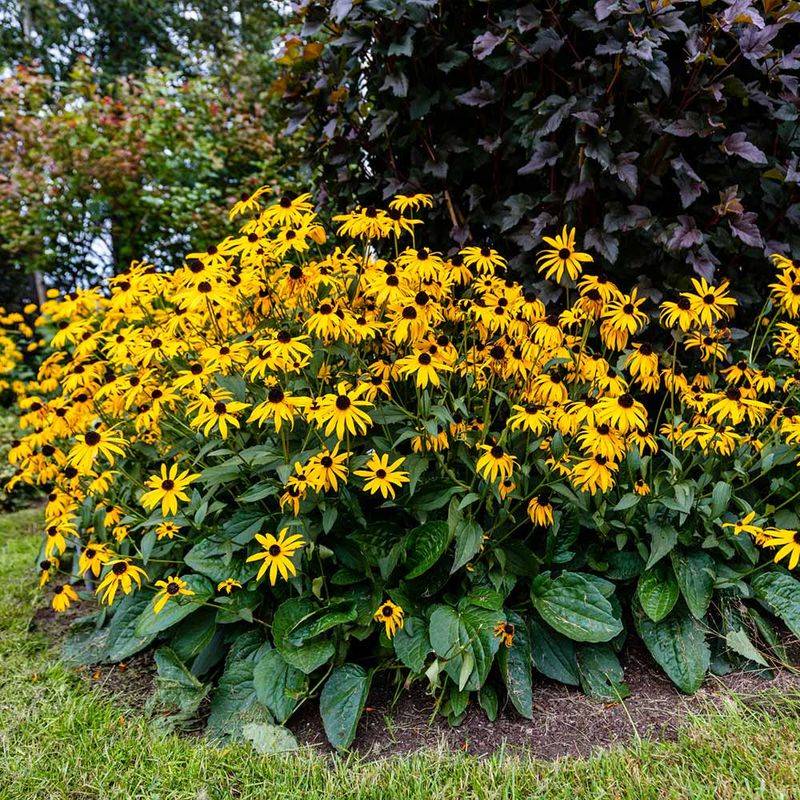
Cheerful is the only word for a patch of black-eyed Susans. Those golden petals and dark brown centers glow from late spring well into fall.
Rudbeckia hirta is native to Florida and grows wild across most of the state. It often behaves as a short-lived perennial, but it reseeds so freely that a patch keeps itself going year after year.
Give it full sun for the best bloom. It handles sandy soil, heat, and dry spells, which is why you see it brightening roadsides and meadows.
Space plants about 18 inches apart. New seedlings will pop up nearby, so let a few stay and pull the extras.
Water new plants regularly for the first few weeks, then ease off once they settle in. Too much water and overly rich soil can make the stems flop over, so this is one plant that thrives on a little neglect.
Butterflies and native bees visit the flowers often. Leave some seed heads standing after flowering, since songbirds enjoy picking out the seeds.
Black-eyed Susans also pair beautifully with purple and blue flowers, like Stokes’ aster, for a bright summer bed that feels almost like a meadow.
Fun trivia for your next garden chat: black-eyed Susan is also the state flower of Maryland.
3. Purple Coneflowers Shine Brightest in the Northern Counties
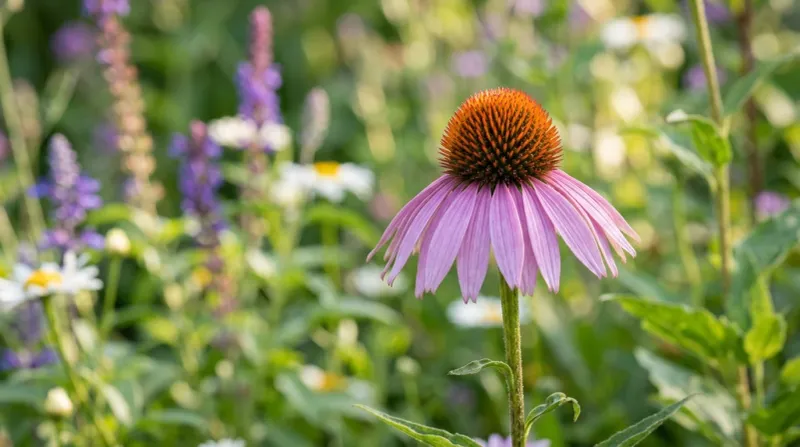
Bees bumble across coneflowers like they own the place. Purple coneflower, Echinacea purpurea, feeds pollinators with its spiky orange centers all summer.
Location matters a lot with this one in the state. Coneflowers grow best in North Florida, where winters bring some chill.
Around Orlando and Tampa they can work but are often short-lived, and the long, humid summers farther south are usually too much for them.
Full sun brings the most flowers, though a little afternoon shade helps during the hottest months. Well-drained soil counts more than rich soil, so skip low spots where water collects.
Heavy fertilizer tends to make stems floppy, so go easy on feeding.
Water new plants regularly through the dry fall weeks, then let them grow more independent once established.
Leave the seed heads standing after flowering. Goldfinches visit the northern counties in winter and love picking out the seeds.
The classic purple type is usually tougher and longer-lived than the fancy orange and red hybrids. If coneflowers fade after a few seasons in your yard, simply replant in fall.
Many gardeners treat them as a fun bonus rather than a permanent fixture.
4. Tickseed Is the Official State Wildflower
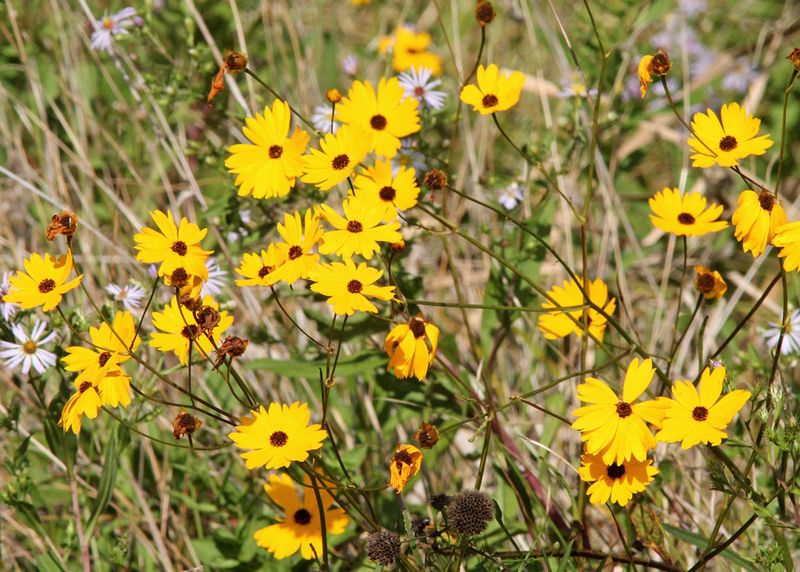
Florida lawmakers made coreopsis the state wildflower in 1991, and a sunny patch of it shows why. Bright yellow daisy-like flowers bob on wiry stems for months.
Road crews had been sowing coreopsis along highways for years before that vote, which is why so many roadsides glow gold each spring.
Leavenworth’s tickseed, Coreopsis leavenworthii, is native across nearly all of the state. Lanceleaf coreopsis, another native, does well in the northern and central parts of the state.
Fall is a great time to plant or sow seeds. Cool weather lets seedlings build sturdy rosettes before spring flowering begins.
Give it full sun and well-drained soil. Leavenworth’s tickseed even handles damp spots that stay moist between rains.
Individual plants may only last a few years, but they reseed readily. Let some flowers go to seed, and new plants will keep the patch going.
Bees and small butterflies visit the blooms constantly. In South Florida, flowers can show up almost any month of the year.
Skip heavy fertilizer, since lean soil keeps plants compact and full of blooms. Scatter seeds on bare, loosened soil and press them in lightly instead of burying them, since light helps them sprout.
5. Blanketflower Laughs at Sand, Salt, and Sun
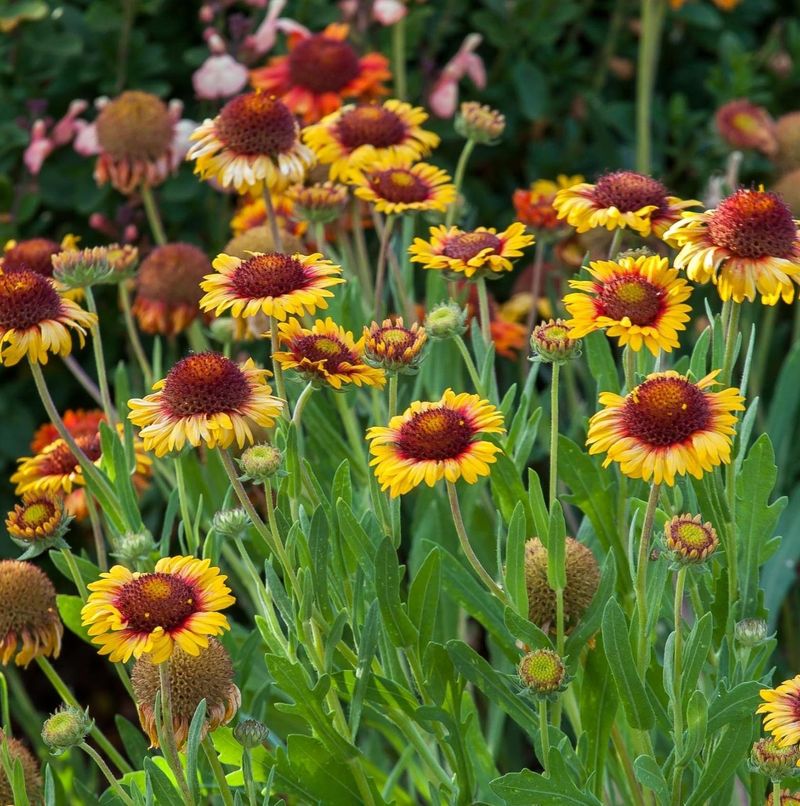
Fiery red petals dipped in yellow tips make blanketflower look like a tiny sunset on a stem. Gaillardia pulchella grows wild on sand dunes, which tells you how tough it is.
Salt spray and blazing sun rarely slow it down. That makes it a favorite for coastal yards and hot, dry corners where other plants struggle.
Lean, sandy, well-drained soil suits it best. Rich soil and extra water usually lead to floppy stems instead of a compact mound.
Plant it in full sun, and water only until the roots are established. After that, it handles dry spells with ease.
Plants typically grow one to two feet tall and bloom from spring well into fall. In warmer coastal spots, flowering can continue for much of the year.
Butterflies love landing on the domed centers. Let some seed heads stay, since blanketflower reseeds readily and fills gaps on its own.
Look for Gaillardia pulchella on the label if you want the native type rather than a hybrid.
6. Tropical Sage Pulls Hummingbirds Into Your Yard
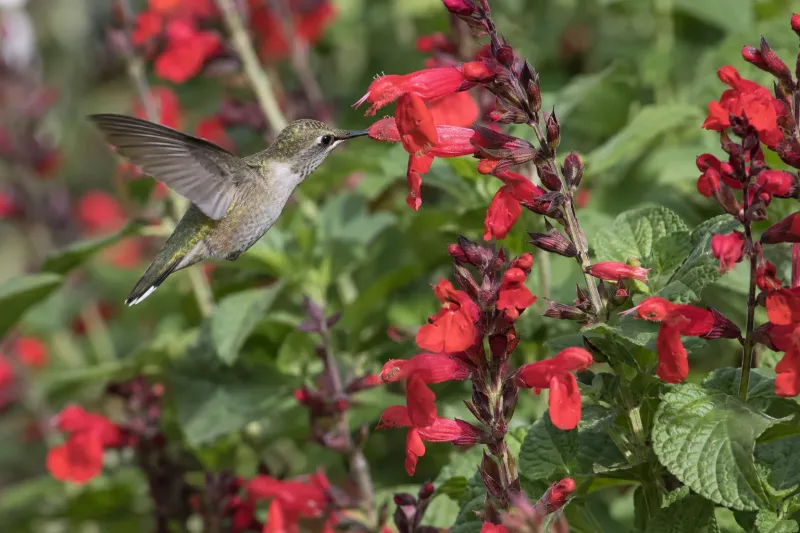
Hummingbirds spot red from impressive distances, and tropical sage flashes scarlet flowers that seem made for them. Despite the name, Salvia coccinea is native to the state.
It grows fast, often blooming within a couple of months of planting. Plants usually reach two to three feet tall with slender spikes of tubular red flowers.
Some seed strains come in pink or white, though red draws the most hummingbird attention.
Full sun to partial shade both work, and it handles sandy soil and short dry spells well. A little afternoon shade keeps leaves looking fresh during summer.
Tropical sage reseeds freely, so new plants may pop up around your garden. Pull extras while they are small or share them with friends.
In the Panhandle and northern counties, a frost may knock plants back, but they usually return from roots or fallen seed once spring warms up.
Cut leggy stems back by about a third in summer, and fresh flowering branches often follow within a few weeks.
7. Pentas Keep Butterflies Visiting Nearly All Year
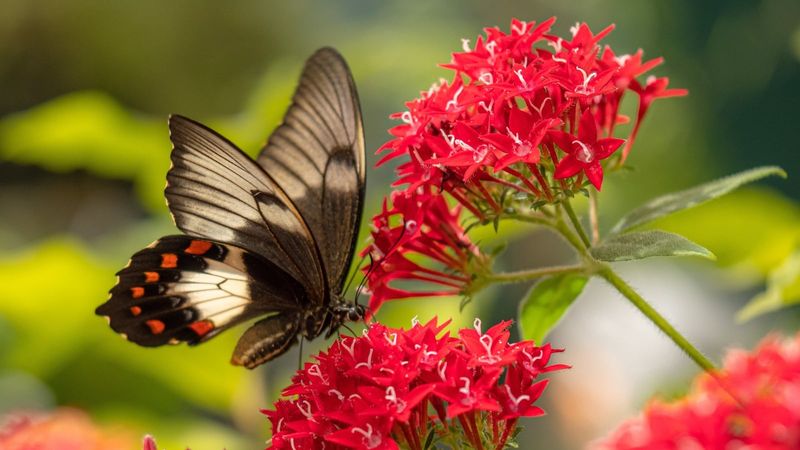
Butterflies treat a patch of pentas like a busy snack stand, landing on the star-shaped clusters all day long. Few flowers bloom as steadily in our warm climate.
Pentas lanceolata comes from Africa, but it is not considered invasive in Florida. It grows as a perennial in the central and southern parts of the state.
Gardeners in the Panhandle and northern counties should know that a hard freeze can knock plants back. Covering them on cold nights helps, or you can plant in spring instead.
Give pentas full sun for the most flowers. Partial shade works too, though you will see fewer blooms.
Well-drained soil with some compost mixed in suits them nicely. Water whenever the top inch of soil feels dry, especially during the dry fall and winter months.
Flowers come in red, pink, white, and lavender. Red and pink types are especially popular with hummingbirds.
Snip off faded flower clusters, and the plants respond with fresh buds within a few weeks. Pinching young stems early creates a bushier plant with more blooms.
8. Muhly Grass Turns Into a Pink Cloud Every Fall
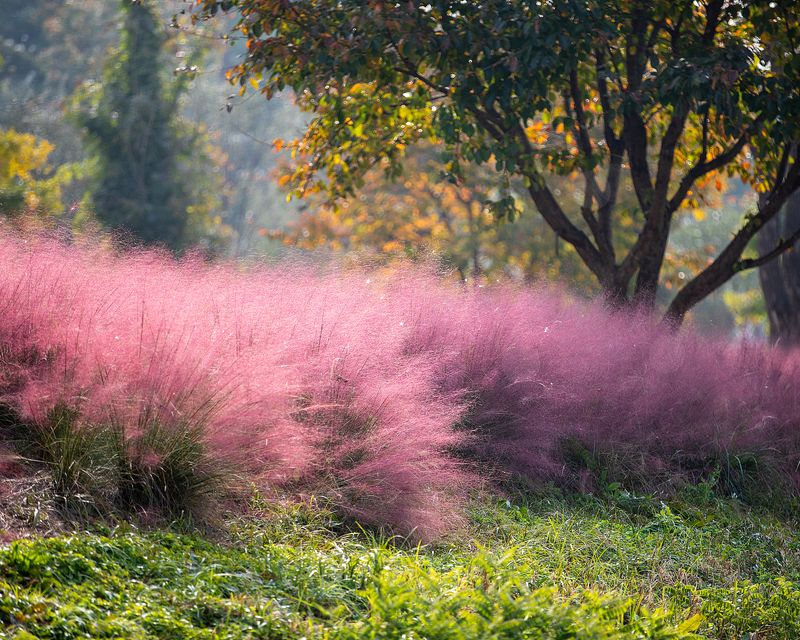
Every fall, muhly grass puts on one of the most magical shows in a yard. Its airy pink plumes look like cotton candy floating above the ground.
Muhlenbergia capillaris is a native that grows wild in pine flatwoods and coastal areas. Plants usually reach two to three feet tall and wide.
Planting in November gives roots a full year to settle in before next fall’s bloom.
Full sun brings the best color. Muhly grass handles drought, salt spray, and poor sandy soil once established, which makes it a great low-maintenance pick.
Water new plants regularly for the first few months, then let rainfall handle most of the work.
Plant in groups of three or more for the biggest visual impact. A row along a sunny walkway or driveway looks stunning when the plumes glow in low autumn light.
Cut plants back in late winter before new growth starts. Fresh green blades will fill in quickly as the weather warms.
9. Stokes’ Aster Brings Native Blue Blooms to Cooler Corners of the State
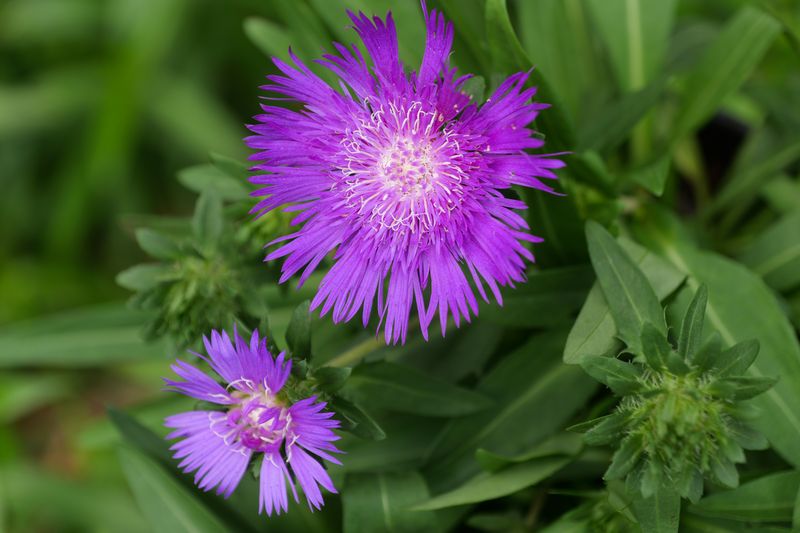
Big, fringed lavender-blue flowers make Stokes’ aster look almost too fancy to be a native wildflower. Stokesia laevis grows naturally across the Southeast, including North Florida.
It does best from the Panhandle down through the central part of the state, where winters are a bit cooler.
The leaves form a tidy rosette that often stays green through mild winters. Flowers rise above the foliage in late spring and summer.
Give it full sun to partial shade. Moist, well-drained soil keeps it happiest, so avoid spots where water stands after heavy rain.
Plants usually stay one to two feet tall, which makes them a nice choice for the front of a border.
Bees and butterflies visit the blooms often. Snip off spent flowers to encourage more buds.
Divide crowded clumps every few years in late winter or early spring. The new divisions settle in easily and make great gifts for gardening friends.
10. Firebush Is a Hummingbird Magnet for Warmer Regions
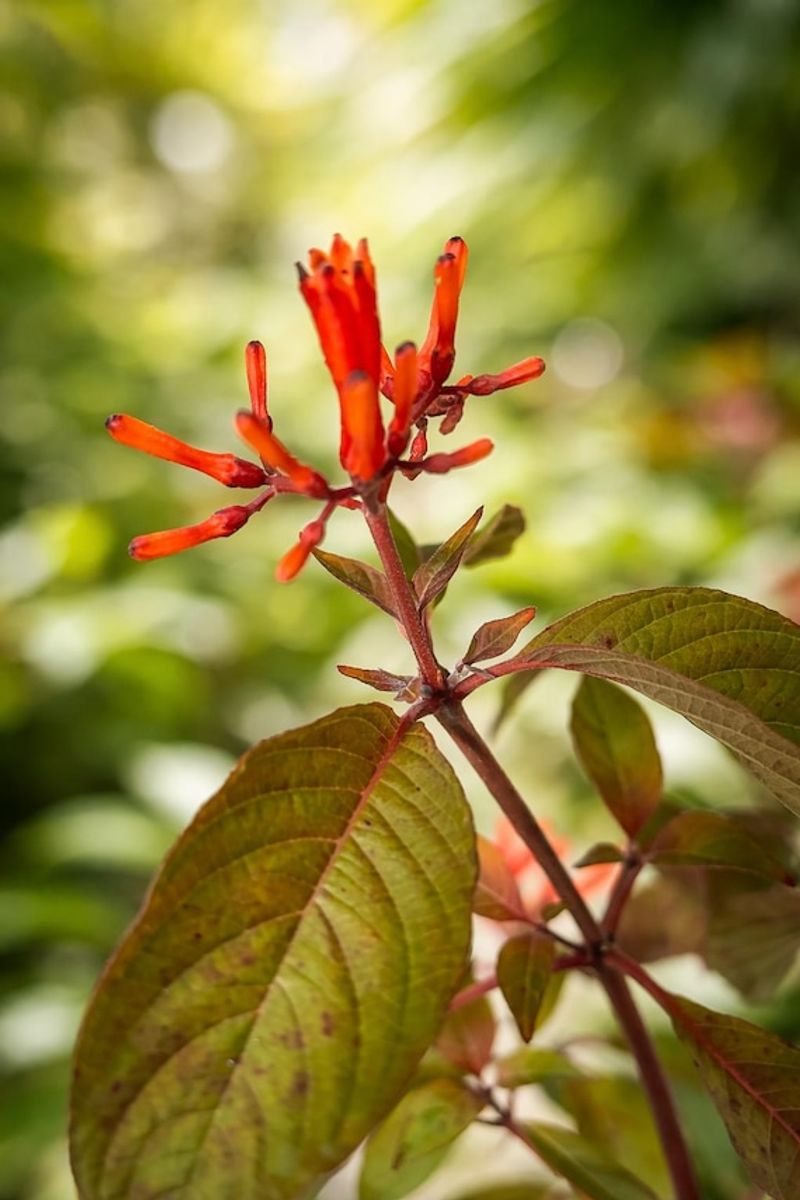
Hummingbirds treat firebush like a roadside snack bar, zipping in for nectar again and again. Butterflies follow close behind, including zebra longwings, Florida’s state butterfly.
Clusters of tubular orange-red flowers look like tiny firecrackers. In warm parts of the state, they bloom from spring through fall.
Native Hamelia patens grows quickly and can reach 15 feet or more if left untrimmed. Many gardeners keep it smaller as a hedge or shrubby border.
Gardeners in the central and southern counties can plant firebush now and enjoy it year-round. In the Panhandle and northern counties, freezes often knock it back to the ground, so spring planting may be the safer choice there.
Full sun brings the most flowers, though it still blooms in partial shade. Water regularly until the roots settle in, and it becomes fairly drought tolerant after that.
Shop carefully, because compact types sold as firebush are sometimes a non-native variety. Ask for the native Hamelia patens var. patens to give local wildlife the most benefit.
Prune in late winter or early spring to shape the plant before its big flower show begins.