10 Salt-Tolerant Plants That Survive a Florida Coastal Yard
Salt spray can turn a lush yard into a crispy brown mess in one stormy afternoon by the sea.
My first hibiscus hedge? It taught me that lesson! And, it definitely browned within weeks along the Florida coast.
Some tough natives shrug off salty wind and sandy soil with surprising ease and steady good looks. A few even grow wild on the dunes, and waves test them there every single year.
Early fall is a smart time to plant them, with cooler days and steady rain still on your side. Roots get several calm months to settle in before the dry winter weather arrives along the shore.
I picked ten plants that handle salty air better than most, and a few came with real surprises. One even feeds a rare butterfly that people once feared had vanished from Florida for good.
1. Beach Sunflower
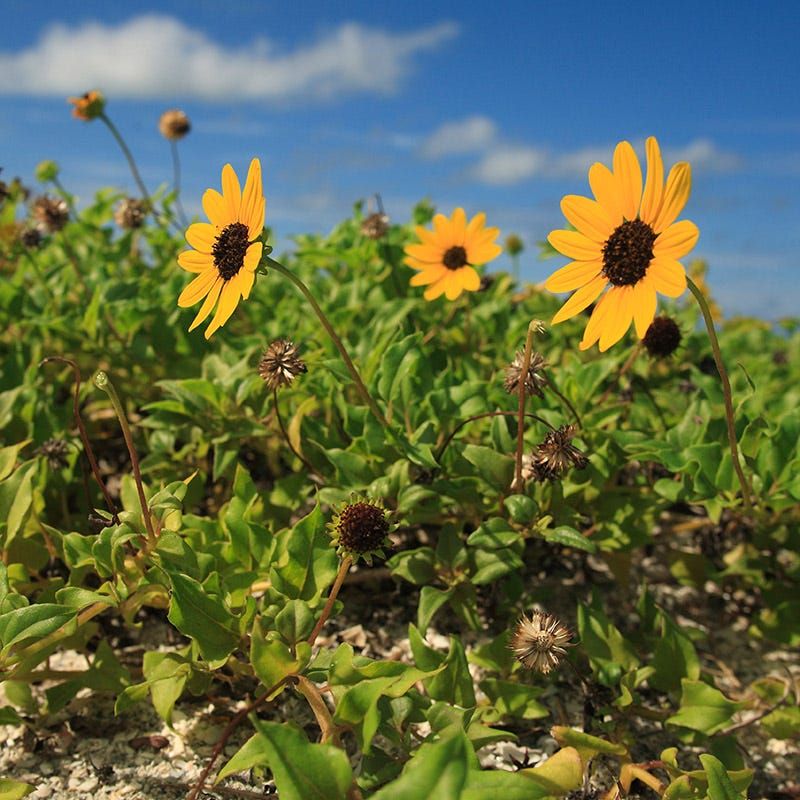
Bright yellow blooms keep popping up on this sprawling groundcover for most of the year near the beach. I love how it handles salt spray and hot sand while still looking cheerful every single morning.
Its scientific name is Helianthus debilis, and it belongs to the same family as the tall garden sunflower. The plant stays low, usually under two feet tall, but it spreads wide across bare sandy ground.
University of Florida experts rate its salt tolerance as high, so it works well close to the dunes. Strong wind and salty mist rarely slow it down once the roots have settled into place.
Two main types grow wild here, one on the Atlantic side and another along the Gulf coast. Pick the type that is native to your coast, since the two can cross and blur local genes.
Bees and butterflies visit the flowers often, and small birds pick at the seeds as heads mature. You get a busy little wildlife show right outside the window without adding a single feeder.
Early fall planting works nicely because roots can grow while the weather cools down a little. Water new plants every few days for the first weeks, then cut back as fresh growth appears.
Sometimes it gets leggy or messy after a long season of blooming and sprawling across the yard. A light trim or a fresh cutting tucked into the sand brings back a tidy, full look quickly.
2. Silver Buttonwood
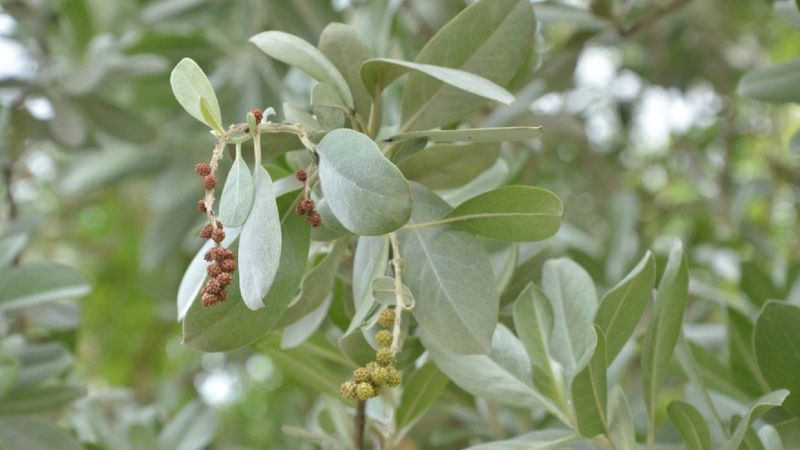
Silver leaves shimmer like brushed metal when the sun hits this shrub, and neighbors tend to notice fast. Personally, I think it is one of the prettiest ways to handle a salty, windy front yard.
Known to scientists as Conocarpus erectus var. sericeus, it is a silky-leaved form of the native buttonwood. Wild buttonwood often grows near mangroves, right where salty tides meet the edge of the land.
That background explains why it shrugs off salt spray and even handles salty, soggy soil fairly well. Coastal winds can twist older plants into curvy shapes that look like living sculptures by the water.
It grows best in the warm southern part of the state, roughly USDA zones 10 and 11. A hard freeze can damage the foliage, so northern coastal gardeners should pick a different shrub.
You can shear it into a dense hedge or let it grow into a small, graceful tree. Regular trimming keeps it compact, while a looser style shows off the twisting branches over time.
Small button-like seed heads form on the branches, which is how the plant earned its common name. They are not flashy, but they add a fun little detail when you stop and look closely.
Plant it in full sun with good drainage, and water regularly until new growth starts to appear. After that, rainfall mostly handles the job, which feels like a gift during busy fall weekends outdoors.
3. Railroad Vine
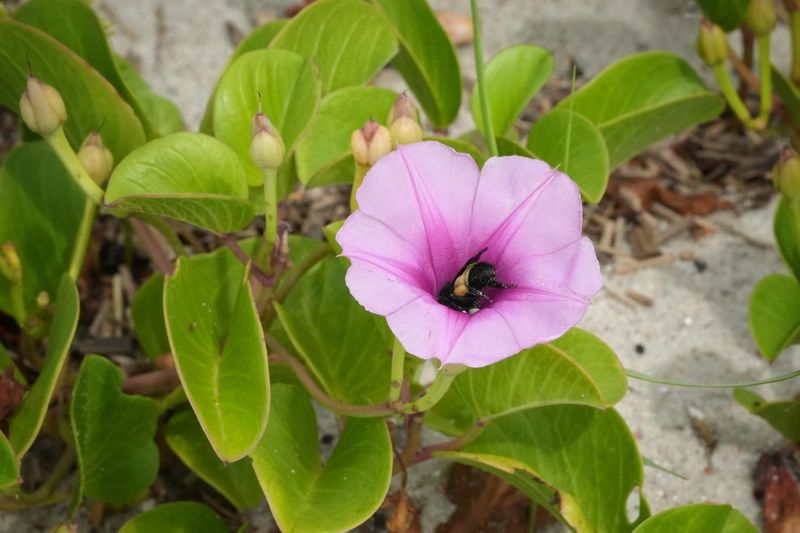
Long green runners can stretch across the sand for many feet, like tracks laid out by a tiny crew. That track-like look is exactly how this tough beach vine earned its fun and memorable name.
Its scientific name is Ipomoea pes-caprae, and it is a close cousin of the common morning glory. The second part means goat foot, because the rounded leaves have a notch that looks like a hoof.
Pink to purple funnel flowers open in the morning and often fold up by the hot afternoon. Bees visit them eagerly, and the blooms show up through much of the warm season here.
You will find this vine growing wild on dunes, right at the front line of wind and waves. Its roots and runners help hold loose sand in place, which helps reduce erosion after strong storms.
Salt spray and poor sandy soil suit it just fine, so fertilizer is rarely needed or helpful. Too much water and rich soil can actually make it weaker, so keep things lean and simple.
I believe it works best in big open spaces, since it spreads fast and wanders wherever it pleases. Small yards may need regular trimming to keep the runners off walkways and nearby flower beds.
Early fall is a fine time to plant cuttings or small pots in sunny, sandy spots. Water them lightly until roots take hold, then let the salty breeze and sunshine handle the rest.
4. Saw Palmetto
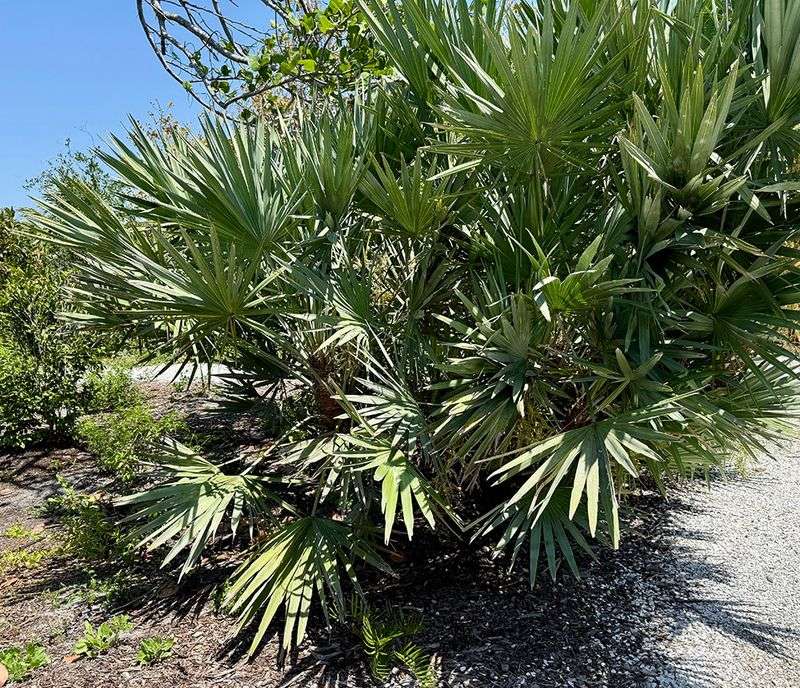
Some clumps of this shrubby palm may be hundreds of years old, quietly creeping along the ground. You are in for a big surprise when you realize how slowly and steadily it grows.
Saw palmetto, or Serenoa repens, gets its name from the tiny sharp teeth along each leaf stem. Wear gloves when you trim it, because those little saw edges can scratch your hands and arms.
It handles salt spray very well and grows wild in coastal scrub and sandy pine flatwoods. Thick trunks often grow sideways along the ground, which helps the plant hold steady in strong wind.
Leaves are usually green, but a silver-blue form grows wild along parts of the east coast. I like how that silvery color glows at sunset, and it pairs nicely with darker green shrubs.
Small white flowers appear in spring, and bees love them so much that palmetto honey is a local treat. In fall, dark berries ripen and become an important meal for many birds and other wild animals.
Since it grows slowly, buy the largest container plant your budget allows to enjoy faster results at home. Digging up wild plants rarely works, because the roots are deep and often struggle after a move.
Plant it in sun or partial shade, and give it room, since mature clumps can spread wide. Once settled, it needs almost no extra water or feeding, which makes busy gardeners very happy indeed.
5. Cocoplum
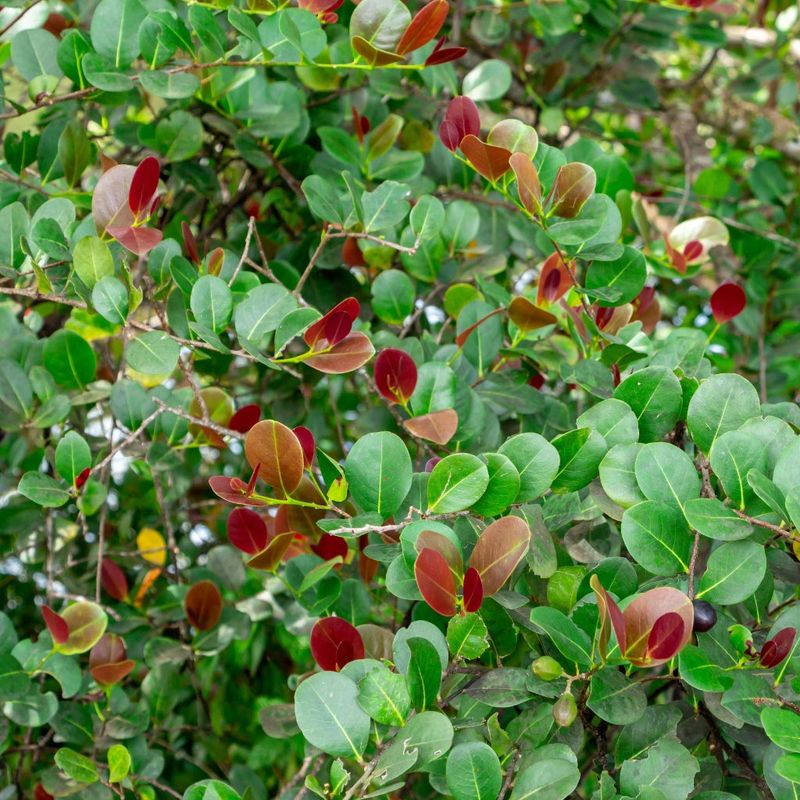
Fresh new leaves on some cocoplums flush bright red, and the hedge looks like it is blushing. I can’t imagine a friendlier privacy screen for a breezy yard just a short walk from the beach.
Chrysobalanus icaco is native to the southern part of the state and grows wild along coastal hammocks. Its round, glossy leaves stay green all year, giving you a dense wall of color without a break.
Salt tolerance depends on the type, which is a detail many shoppers miss at the garden center. Plants from beach areas handle salt spray well, while the popular red tip form prefers some protection.
Ask your nursery which type it carries, and save the most exposed spots for the tougher kind. Inland sides of the house or areas behind a dune are better homes for the red tip version.
Small plum-like fruits ripen on the branches, turning pink or dark purple as they mature in the heat. They are edible, with a mild, sweet taste, and birds and small mammals enjoy them too.
Cocoplum is sensitive to cold weather, so it fits best in warm USDA zones 10 and 11. Northern coastal gardens may see frost damage during chilly snaps, so pick a hardier hedge up there.
Plant it in sun or light shade in early fall, and water often until roots settle. Trim lightly a few times a year to keep the hedge thick and full from top to bottom.
6. Coontie
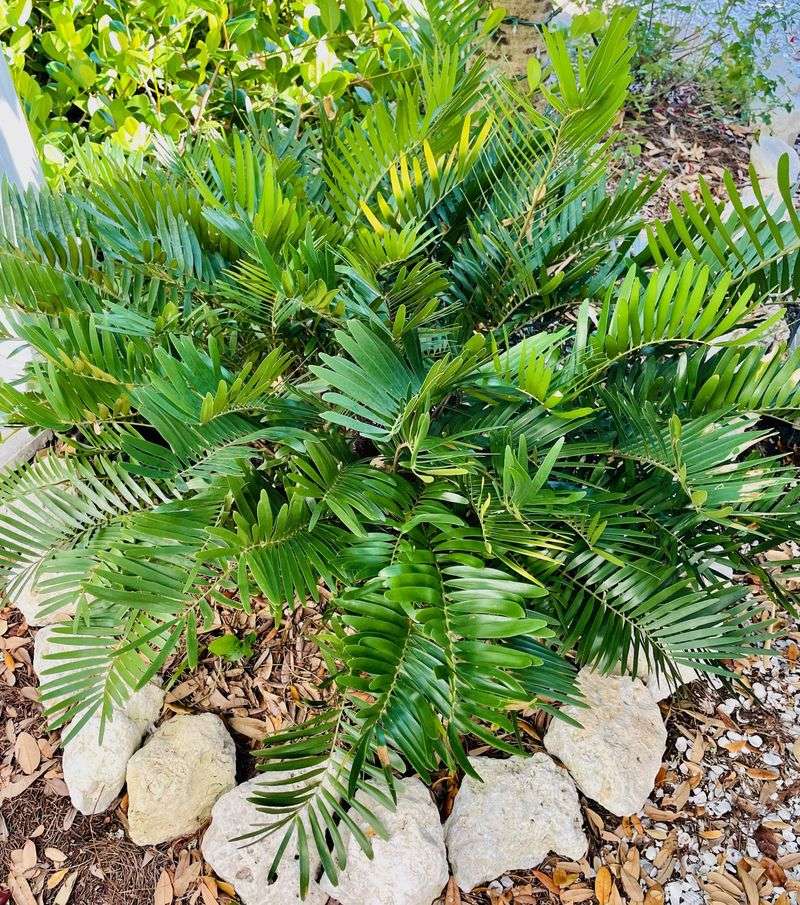
Dinosaurs walked among the ancient relatives of this little plant, and it still looks like a living fossil. Personally, I think every coastal yard has room for one clump of this tough, glossy wonder.
Coontie, or Zamia integrifolia, is the only cycad native to the United States, even though people call it a palm. It is not a true palm at all, and it produces cones instead of flowers like many ancient plants.
Stiff, feathery leaves form a low mound, usually about two to three feet tall and just as wide. It handles salt spray fairly well and grows happily in sandy soil with very little water.
The real magic is its partnership with the atala butterfly, a shimmering black insect with bright blue spots. Atala caterpillars eat coontie leaves, and the butterfly was once thought gone from the state for decades.
Thanks to people planting coontie in yards, atala butterflies have returned to many parts of the south. If chewed leaves show up, smile, because that often means bright orange caterpillars are having lunch.
Be careful with pets and kids, because all parts of the plant are toxic if eaten. Place it away from areas where dogs dig or chew, and wash your hands after handling seeds.
It grows slowly, but it fits sun or shade, which makes it handy under taller trees. Early fall planting gives roots time to settle, and established plants rarely need extra watering afterward.
7. Sabal Palm
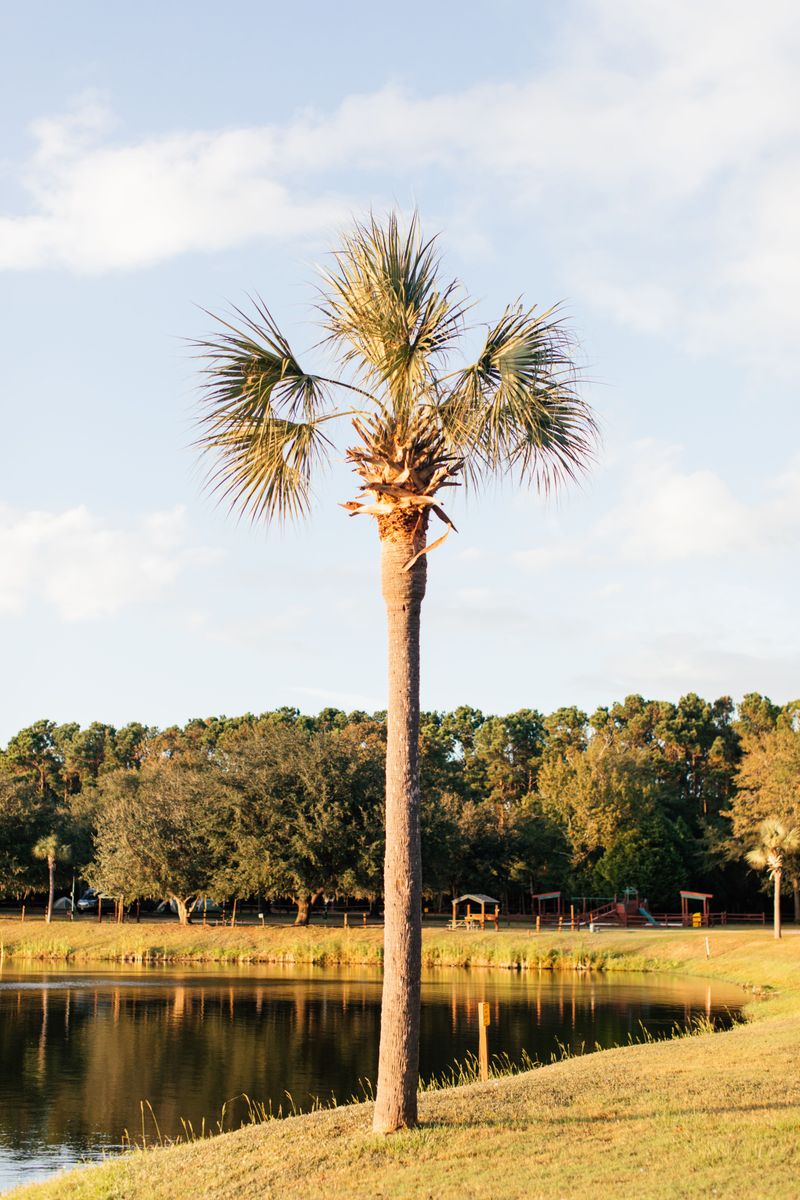
Hurricanes often snap fancy palms, yet this native giant usually keeps standing when the wind finally calms. No wonder lawmakers chose it as the official Florida state tree back in 1953.
Sabal palmetto, also called cabbage palm, grows wild from coastal dunes to swampy lowlands and open fields. That wide range tells you a lot about how easygoing it can be in a tough setting.
It rates high for salt tolerance, so it handles salt spray and windy beachfront lots quite well. Many experts point to its deep, dense root ball as a reason it stays upright through strong storms.
The trunk often keeps old leaf bases, called boots, which create a crisscross pattern along the sides. Small ferns and other plants sometimes sprout in those boots, turning the trunk into a tiny garden.
Creamy white flowers appear in summer, followed by small dark fruits that ripen toward fall and winter. Birds and raccoons eat those fruits, so your palm doubles as a snack bar for local wildlife.
Avoid trimming too hard, because removing too many green fronds can weaken the palm over the coming years. Leave the fronds that point sideways or up, and only remove brown ones that hang straight down.
New palms may lose fronds after planting, and that is normal for this species, so stay patient. Water regularly for the first months, and fresh growth from the center tells you roots are settling.
8. Muhly Grass
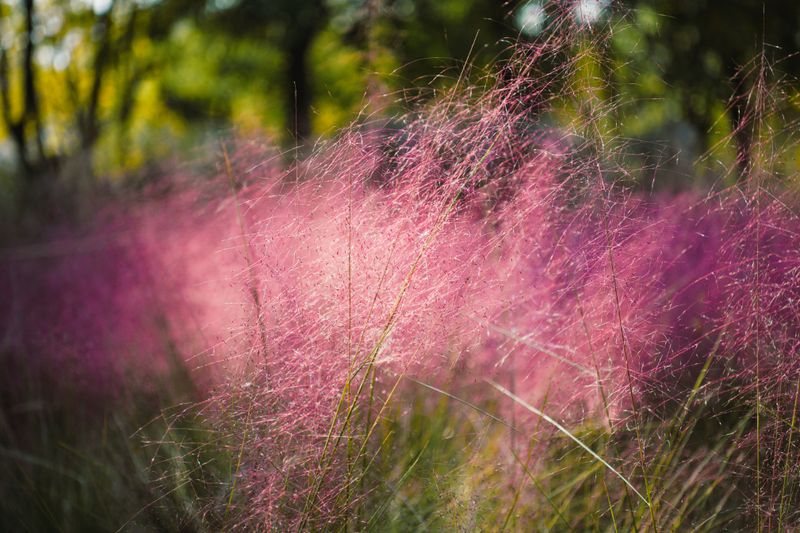
Fall is the moment this grass shows off, with pink clouds that seem to float above the yard. I like how the plumes glow at sunrise, especially when a salty breeze makes them sway gently.
Muhlenbergia capillaris is a native clumping grass that usually grows about three feet tall and roughly as wide. For most of the year, it stays a neat green mound that blends quietly into the background.
Then early autumn arrives, and tiny flowers form airy pink to purple plumes across the whole clump. October is often the peak, so this is the perfect month to spot it at local nurseries.
Muhly grass handles moderate salt spray, so place it a little behind the plants on the front line. Tucked behind a hedge of sea grape or a stretch of beach sunflower, it stays happier.
Drought does not bother it much once it settles, and sandy soil suits its roots just fine. Soggy, poorly drained spots can cause trouble, so skip low areas where rainwater sits after storms.
Plant several together for the best show, because one clump looks nice but a drift looks magical. Space them about three feet apart so each mound has room to fill out and catch the light.
In late winter, cut the old brown growth back to a few inches above the ground for renewal. Fresh green blades will return quickly, and the plumes will be ready for another fall performance next year.
9. Sea Grape
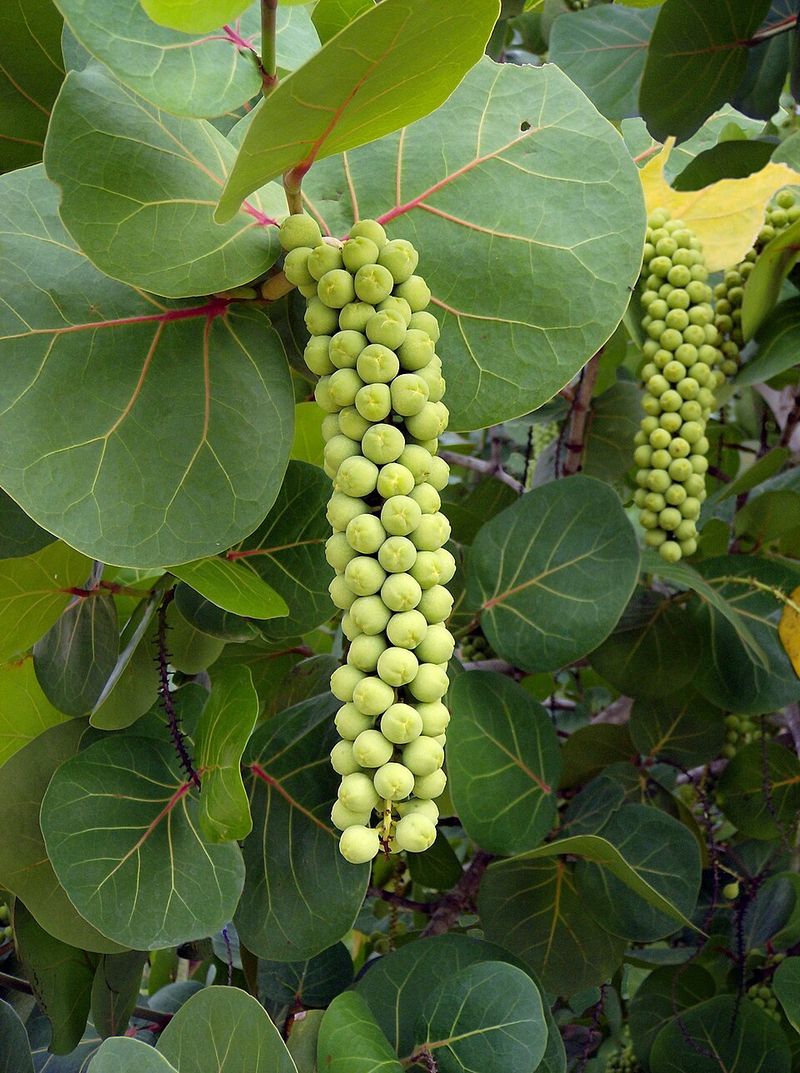
Leaves as big as dinner plates make this coastal native look like it came from a tropical postcard. You will notice the bold red veins first, and then the hanging clusters of grape-like fruit.
Coccoloba uvifera grows wild along sandy beaches and dunes, often right where waves spray salty mist. Its salt tolerance is rated high, so it can serve as a sturdy windbreak for plants behind it.
Only female plants make fruit, and those purple clusters are edible when fully ripe and soft. Some coastal families cook them into a sweet jelly, though birds usually find the fruit first.
As weather cools, older leaves may turn red or yellow before dropping, adding a hint of fall color. You need to plan for size, because untrimmed plants can grow into broad trees over twenty feet tall.
Sea grapes on beaches and dunes are protected, so trimming wild plants there often requires a state permit. Check with local officials before cutting plants near the shoreline, even if they sit on your property.
In the home yard, they can be sheared into a hedge or grown as a single shade tree. Fallen leaves are large and tough, so expect a bit of raking now and then under the branches.
Cold is the main weakness, and they grow best in USDA zones 10 and 11 near the coast. Northern gardens risk freeze damage, so south Florida coastal yards make the safest home for this bold beauty.
10. Wax Myrtle
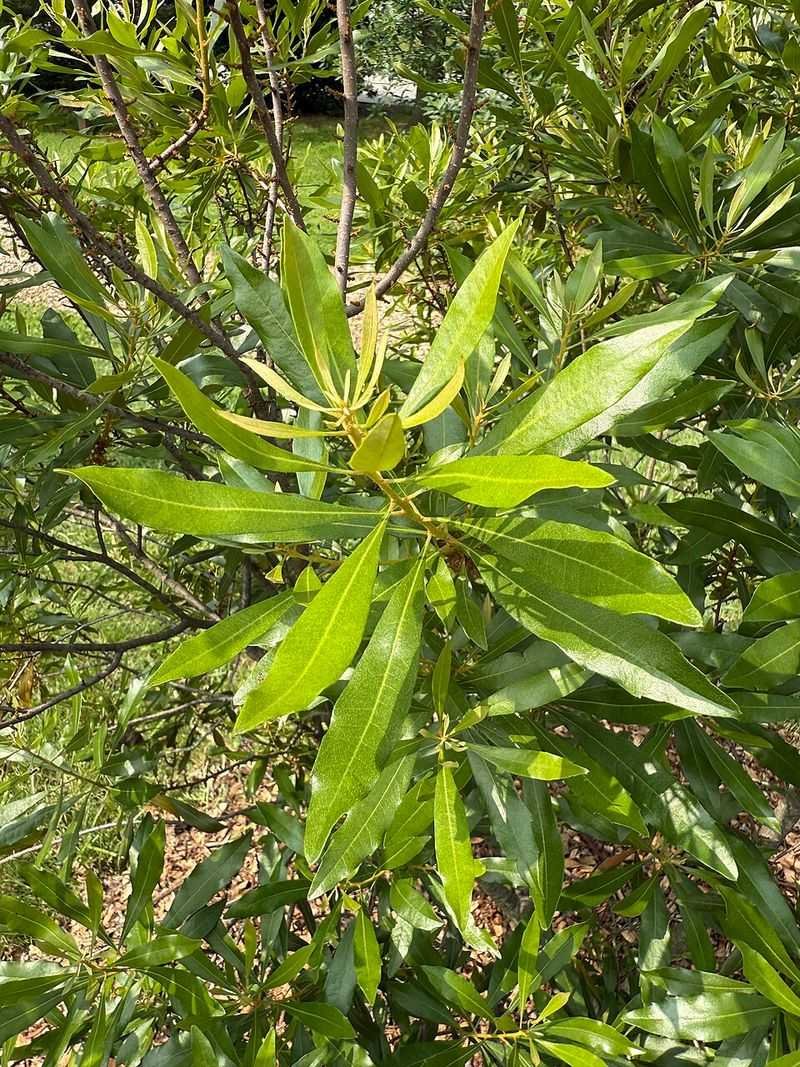
Early colonists boiled the waxy berries of this shrub to make fragrant candles that smelled fresh and clean. I still crush a leaf every time I walk past, just to enjoy that spicy, sweet scent.
Wax myrtle, known as Morella cerifera or Myrica cerifera, is a fast-growing native evergreen shrub or small tree. It grows across the whole state, which makes it one of the most widely adaptable choices on this list.
Salt tolerance is moderate, so plant it a little back from the dunes rather than right on them. Behind a row of sea grape or saw palmetto, it forms a dense green screen fairly quickly.
Only female plants produce the pale blue-gray berries, which ripen in fall and stay into winter. Many songbirds, including yellow-rumped warblers, depend on those berries during the cooler months of the year.
Wet soil or dry sand, sun or partial shade, this shrub adapts to many different yard conditions. That flexibility makes it handy for tricky corners where other shrubs often struggle to grow well.
Fast growth comes with a trade-off, because suckers pop up around the base and spread the clump. Pull or snip those shoots regularly if you want a neat single trunk instead of a thicket.
Early fall is a smart time to plant, and you can prune lightly now to shape it. Its life span is often shorter than oaks, but the quick growth and berries make it worth adding.