5 November Snake Plant Jobs That Keep It Growing Through Arizona’s Dry Winter
A single stiff leaf on one common houseplant can store enough water to carry it through weeks of neglect. Botanists moved this tough West African native into the Dracaena genus a few years ago, surprising plenty of growers.
Winter in Arizona brings softer sunshine, cooler nights, and much lower evaporation than the blazing summer months we just survived. Those changes quietly shift how much water, light, and food your favorite potted friends actually need indoors.
I have to admit that my own collection taught me this lesson the soggy way one chilly December a few years back. You might notice the same thing, because the plants that thrive on neglect also suffer from too much kindness.
November is the sweet spot for a few small adjustments that set up steady health until spring returns again. So which simple chores make the biggest difference, and which popular habits should you quietly drop this year?
1. Stretch Out The Snake Plant Watering Schedule
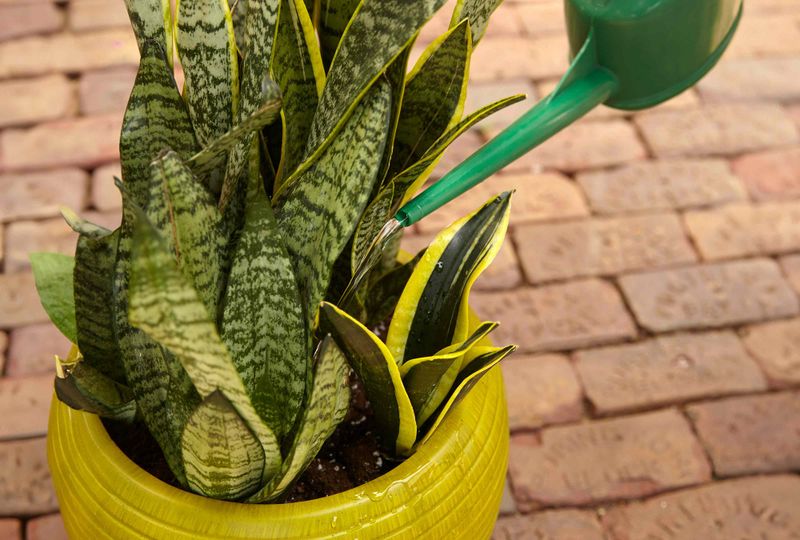
Thirsty is rarely the problem with this plant, since its thick leaves hold water like tiny desert canteens all winter. I love how it can sit happily for a month while I forget it exists between busy holiday weekends.
Shorter days and cooler rooms slow its growth, so water use drops sharply once November arrives in most homes. Many growers find that watering every four to eight weeks works well, though your home conditions decide the real rhythm.
Skip the calendar and push a finger two or three inches into the potting mix before you grab the can. If you feel any coolness or moisture down there, wait another week and check again without feeling guilty about it.
When the mix feels dry all the way down, water slowly until extra liquid runs from the drainage hole below. Empty the saucer within fifteen minutes, because roots sitting in a puddle often start to soften and rot quickly.
Personally, I would rather see slightly wrinkled leaves than mushy ones, since thirst is much easier to fix later. A thirsty plant perks up after one deep drink, while rotted roots rarely bounce back without serious surgery and luck.
2. Slide Your Snake Plant Closer To A Bright Window
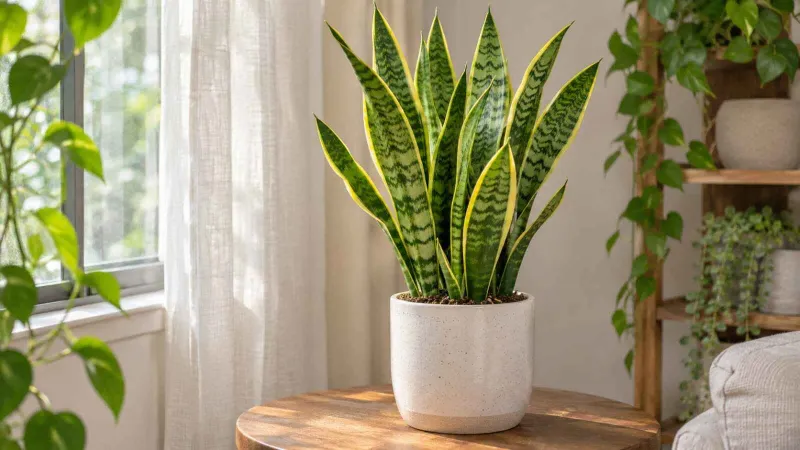
Those golden leaf edges on many snake plants fade a little when light runs short during the darker winter months. Shorter days mean even a sunny desert home sends less useful light across the room toward your corner planter.
You might be surprised how much brighter an east or south window feels compared with a shelf only six feet away. Sliding the pot closer for winter gives the leaves extra energy without any fancy equipment or complicated new routines.
Aim for roughly five or six hours of bright, filtered daylight, and keep leaves from pressing directly against the glass. A sheer curtain softens harsh afternoon rays while still letting plenty of cheerful brightness reach those tall green blades.
Rooms without good windows can borrow help from a full-spectrum LED grow light set on a simple outlet timer. Running it six to twelve hours daily keeps growth sturdy, and the modest bulbs rarely add much to your bill.
I like rotating the pot a quarter turn every couple of weeks so every side gets a fair share. That small habit keeps the plant standing straight instead of leaning dramatically toward the window like a curious sunflower all season.
3. Bring Patio Snake Plants Indoors Before Cold Nights
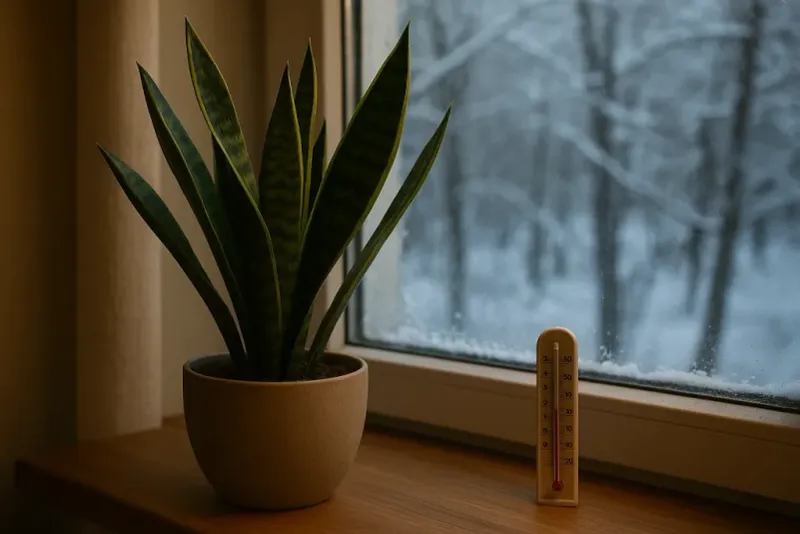
Desert evenings can feel lovely in November, yet low desert nights sometimes slip into the forties without much warning. Snake plants come from warm tropical Africa, and they start sulking when temperatures stay below fifty degrees for long.
If yours spent summer on a shaded patio, now is a smart time to carry it back indoors for winter. Frost near thirty-two degrees can turn leaves into mushy, translucent tissue that rarely recovers even after warm weather returns.
Inside, steady temperatures between sixty-five and seventy-five degrees keep this tropical houseplant comfortable and quietly growing all season. Watch for sneaky cold spots near single-pane windows, sliding doors, or entryways that open often during chilly mornings and evenings.
Heating vents cause trouble too, because blasts of hot, dry air can scorch leaf tips and dry soil unevenly. A spot a few feet from both drafts and vents usually gives the steadiest conditions through the cooler months ahead.
Before moving plants inside, I check leaf bases and pot rims for hitchhiking bugs that enjoyed the patio warmth. A quick inspection now saves you from surprise pests spreading across your whole indoor collection by midwinter or early spring.
4. Put The Houseplant Fertilizer Away Until Spring
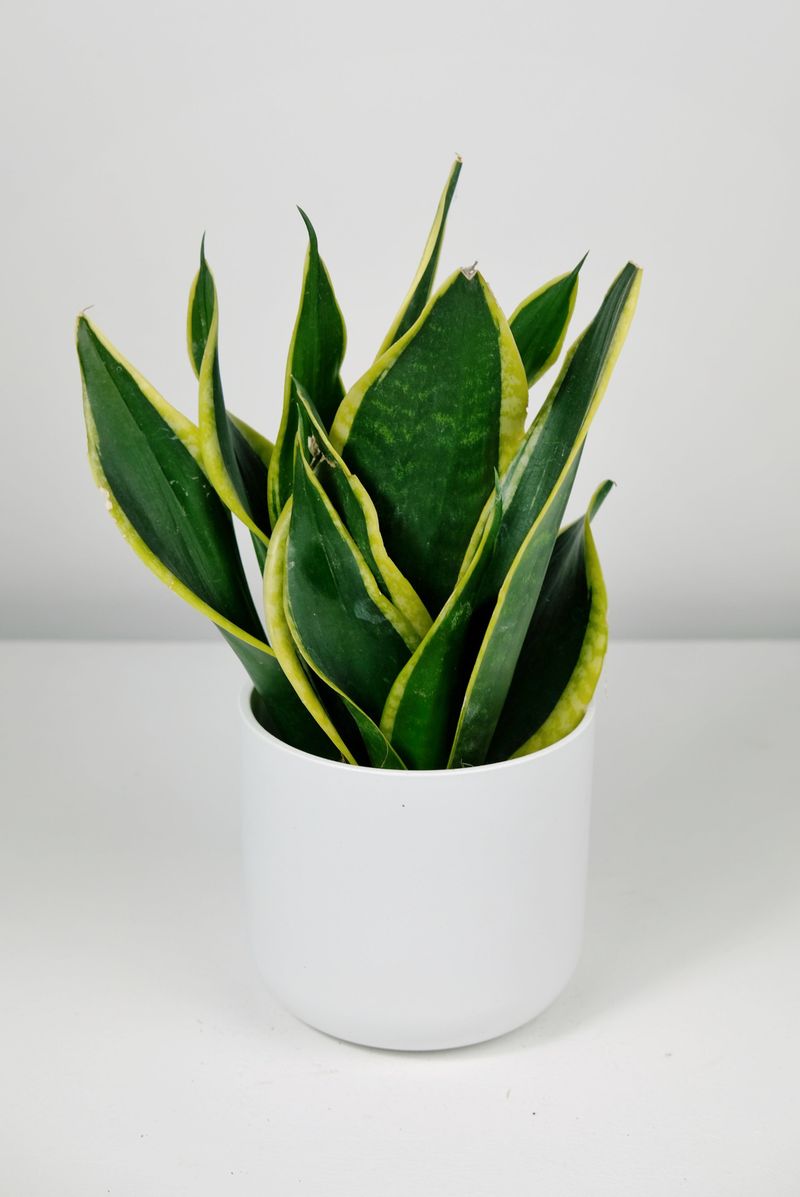
Feeding a resting snake plant is a bit like serving a big dinner to someone already asleep upstairs. The plant simply cannot use those extra nutrients while its growth slows to a gentle crawl through winter.
Unused fertilizer salts collect in the potting mix and can burn tender root tips over several cold, quiet months. You might spot crusty white residue on the soil surface or pot rim, which hints at that buildup problem.
Arizona tap water already carries plenty of dissolved minerals, so extra fertilizer only adds more salt to the mix. Occasionally flushing pots with distilled or filtered water during a regular watering helps rinse some of that buildup away safely.
Pushing new growth with fertilizer in winter also creates soft leaves that struggle with cool rooms and weak light. I believe patience pays off here, because a rested plant usually responds more vigorously once longer days finally return.
Store that bottle somewhere visible and pull it back out when fresh spears poke up in early spring again. At that point, a balanced liquid fertilizer mixed at half strength once a month gives plenty of gentle support.
5. Wipe Dusty Snake Plant Leaves With A Damp Cloth
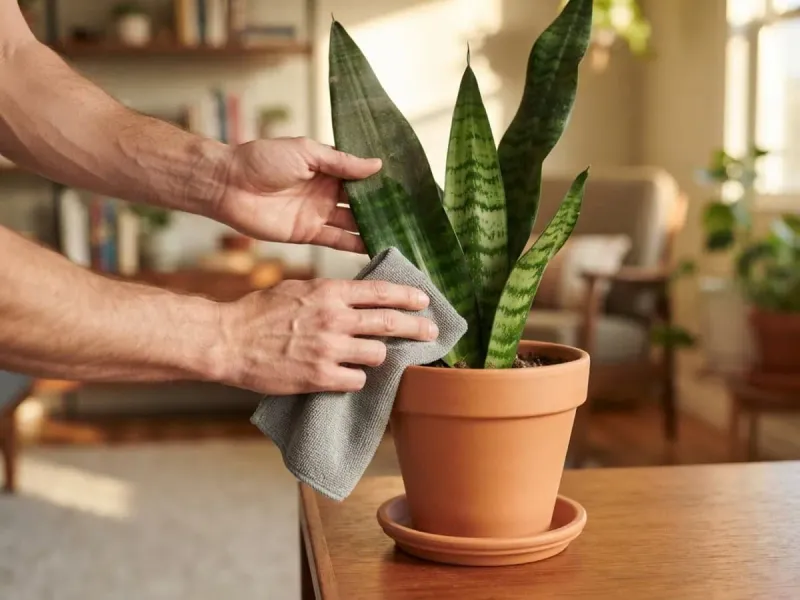
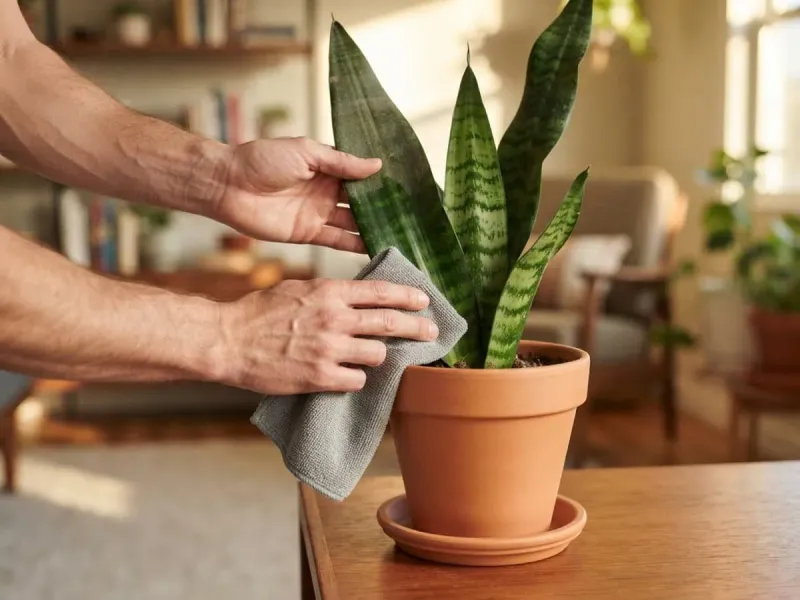
Dry desert air and indoor heating love to coat those broad, sword-shaped leaves with a fine layer of dust. I can’t imagine letting that gray film stay put, because it blocks precious light during the dimmest stretch of the year.
Grab a soft cloth dampened with plain room-temperature water and gently wipe each leaf from base to tip. Support the leaf with your other hand so the stiff blade does not crack or bend while you work slowly.
Skip leaf shine sprays and oils, since they can clog leaf pores and attract even more dust over time. Clean, matte leaves look naturally handsome, and the plant breathes and photosynthesizes more easily without any sticky coatings at all.
Cleaning time doubles as a perfect pest check, especially for spider mites that enjoy warm, dry indoor winter air. Look for fine webbing or tiny speckles, and rinse affected leaves promptly before the problem has a chance to spread.
Snake plants resist most pests thanks to their tough leaves, yet regular attention still keeps trouble rare and manageable. Fifteen minutes each month is all it takes, and honestly the shiny green result feels surprisingly satisfying to admire afterward.