What Every Arizona Gardener Should Plant In Pots Before The First Frost Arrives
In Phoenix and Tucson, the first frost usually sneaks in somewhere between late November and late December. That gives you a sweet window in October and November to fill your pots while the soil is still warm and the air finally feels kind.
Plants tucked in now grow strong roots over winter, so they are ready to shrug off next summer’s brutal heat. Pick the right ones, and your patio can feed hummingbirds, help keep bugs away, and sip very little water.
1. Parry’s Penstemon
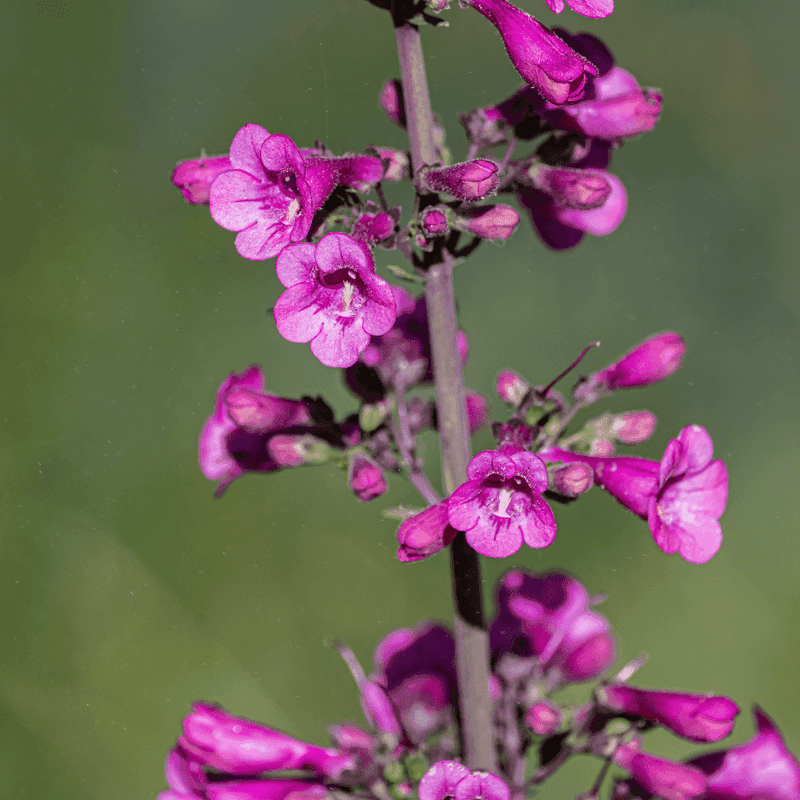
Hummingbirds in the low desert seem to have a radar for one color, and Parry’s penstemon wears it proudly. Each spring, tall stalks loaded with rosy-red tubes pop up, and the tiny birds zip in like they were sent an invitation.
Planting it in a pot this fall is how you make sure that show happens on your patio.
Fall timing matters because penstemon builds its roots in cool weather. Plants that settle in during October or November tend to bloom harder come March than ones bought in spring.
Frost rarely bothers this native, so there is no need to drag it indoors on chilly nights.
Use a pot at least 15 inches wide with a gritty cactus mix blended with pumice. Soggy soil is its biggest enemy, so water deeply only when the top two inches feel dry.
A spot with full morning sun and a little afternoon relief works well.
After the flowers fade, leave a few stalks standing so seeds can drop. Lesser goldfinches often stop by to snack on them, which keeps the wildlife visits going well past bloom season.
It is a small pot with a big guest list.
2. Fairy Duster
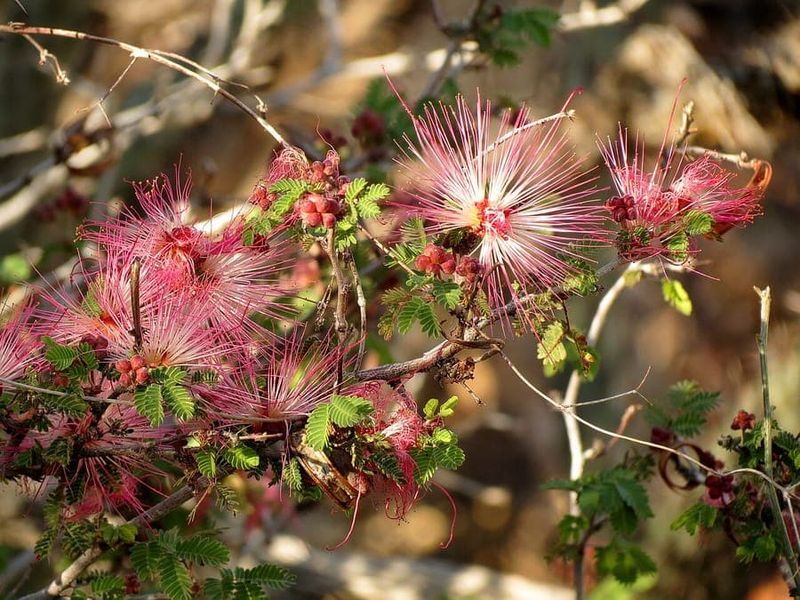
Picture a tiny pink firework frozen mid-burst. That is what a fairy duster flower looks like, and butterflies and hummingbirds treat each puff like a snack bar.
Calliandra eriophylla is a true Sonoran native, which means it was built for our sun, our alkaline water, and our long dry stretches. In a container, it stays a tidy two to three feet tall.
Its fine, fern-like leaves give a soft look that contrasts nicely with spiky agaves and round cacti.
Fall planting lets the roots spread out before summer turns patio pots into little ovens. Choose a light-colored container, since dark pots soak up heat and can cook roots in July.
Fill it with fast-draining mix, then water every few days at first until new growth appears.
Once settled, fairy duster gets by on surprisingly little. A deep soak every week or two in summer and much less in winter is usually plenty.
Cold snaps into the upper 20s are generally handled without fuss, though leaves may drop for a bit.
Fun fact: the fluffy part is not petals at all. It is a cluster of long stamens, nature’s version of pom-poms.
3. Desert Milkweed
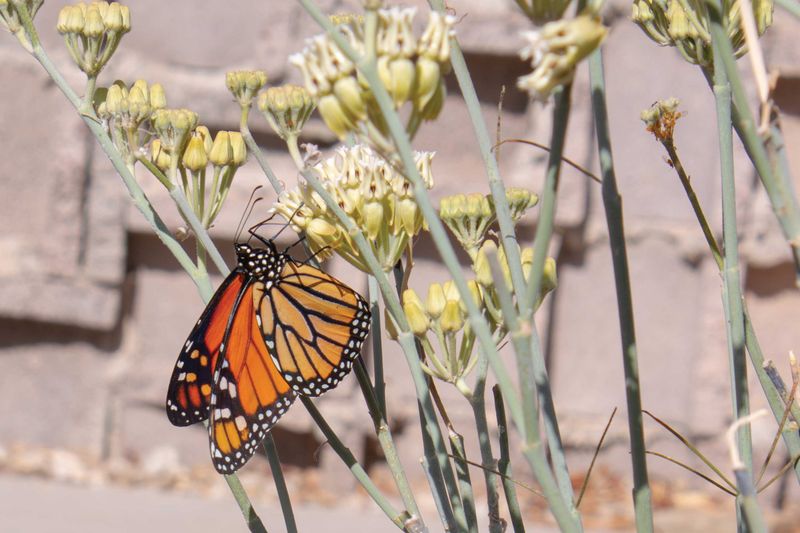
Monarchs passing through Arizona are hunting for one thing above all else: milkweed. Without it, they have nowhere to lay eggs, and their caterpillars have nothing to eat.
Your Arizona Garden Changes Every Week. Your Plan Should Too.
Gardening in Arizona changes quickly throughout the season. Every Friday you’ll receive a simple weekly plan showing exactly what to plant, prune, fertilize, harvest, and protect so you never miss the right timing.
Desert milkweed, Asclepias subulata, is the local hero for this job. It grows as a bundle of nearly leafless, pencil-thin stems that look almost like a reed sculpture.
Creamy yellow flower clusters show up from spring into fall, pulling in bees, monarchs, queens, and even big blue-black tarantula hawk wasps.
A deep container works best because the roots like to run downward. Go with a 15-gallon pot or larger, add a gravelly cactus mix, and give it the sunniest spot you have.
Planting in fall gives it time to anchor before the heat cranks up.
Here is the part people forget: caterpillars will munch it. Chewed stems are actually a good sign that your pot is doing its habitat job.
The plant bounces back quickly.
Watering is easy. Once established, a deep drink every couple of weeks in summer and about once a month in winter usually keeps it happy.
It shrugs off light frost, so your fall planting can stay right where it is.
4. Rosemary
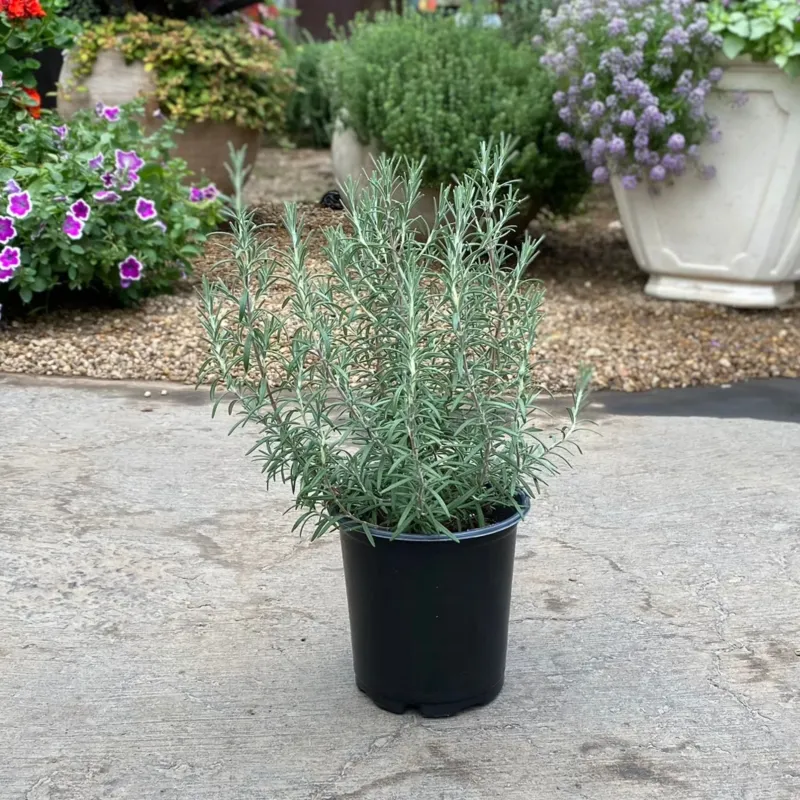
Brush your hand across a rosemary plant and your fingers will smell like a fancy kitchen for an hour. Bugs, on the other hand, tend to find that same scent a lot less charming.
Rosemary is a Mediterranean herb, but it acts like it grew up in Arizona. It handles blazing sun, poor soil, and dry spells with barely a complaint.
Its strong oils may help make seating areas less inviting to mosquitoes and some other pests, especially when the leaves are rubbed or brushed often.
Fall is the best time to pot it up here. The cooler months let it root deeply, and it often blooms with little blue flowers in winter.
Bees, which have few food sources that time of year, will happily visit.
Set the pot near a patio chair or doorway where you walk by daily. Use a fast-draining mix and let the soil dry out between waterings, since wet roots are the quickest way to lose this herb.
Light frost will not hurt it.
Bonus: snip a few sprigs for roasted potatoes or grilled chicken. A plant that may help with bugs and also flavors dinner earns its spot.
5. Parry’s Agave
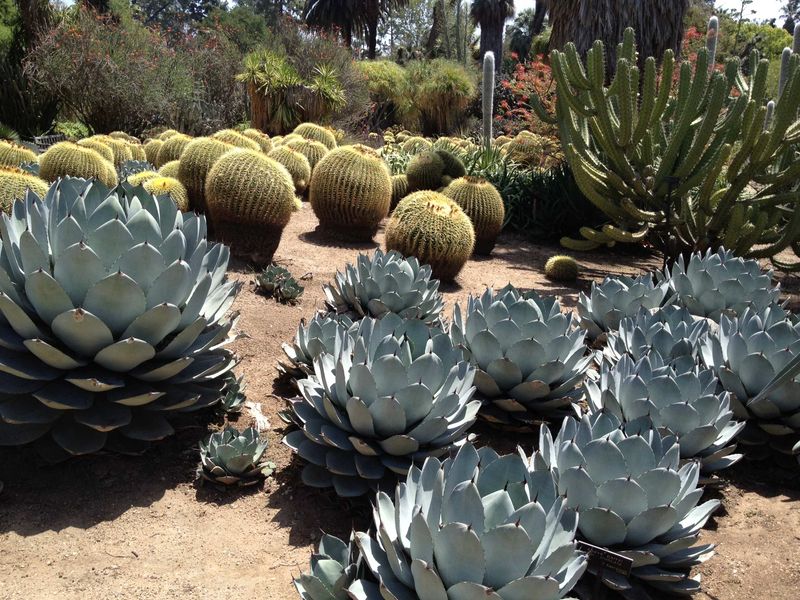
Some plants need babysitting. Parry’s agave would rather you just leave it alone, and honestly, it is better off that way.
This compact native forms a tight, artichoke-shaped rosette of blue-gray leaves tipped with dark spines. It stays small enough for a pot, usually around two feet wide, and makes an instant focal point by a front door or along a walkway.
Few plants look this sharp while asking for so little.
Water use is where it really shines. Once settled, it may need a drink only every two to four weeks in summer and even less in winter.
That makes it a smart pick for anyone trying to trim the water bill.
It also handles cold better than most agaves, coming from higher elevations where snow is normal. A low-desert frost is no big deal.
Planting in fall simply gives the roots a calm season to grip the soil.
Use a wide pot with a gritty mix and keep it away from walkways where kids or pets run, since those tips are pointy. Years from now, it may send up a towering flower stalk that bats and hummingbirds visit at night and day.
Talk about a grand finale.
6. Globe Mallow
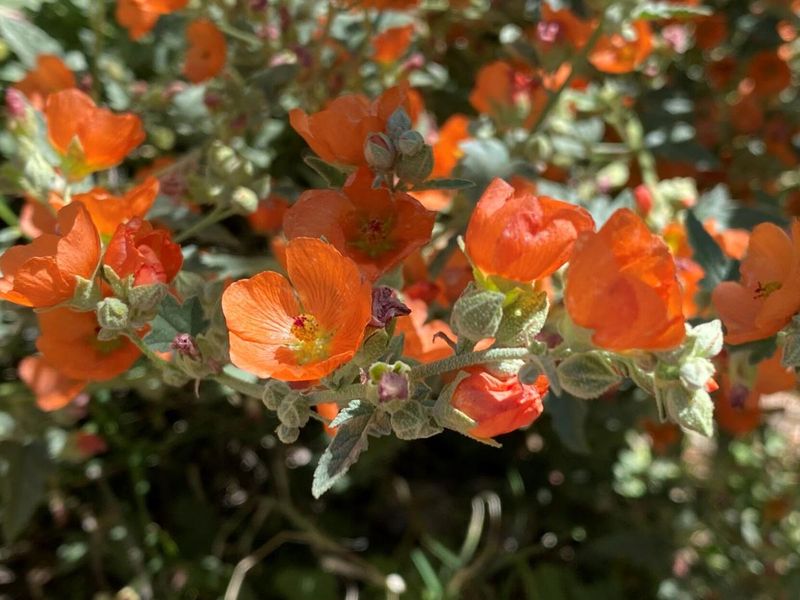
Bright apricot blooms on fuzzy silver leaves? Globe mallow looks like a sunset decided to grow roots.
Sphaeralcea ambigua is one of the toughest wildflower shrubs in the Southwest. It can bloom off and on from late winter well into fall, which means bees and butterflies have a reliable stop on your patio for months.
Native bees especially love it, and many of them are gentle, solitary types that rarely bother people.
In a pot, it grows fast and can get a bit wild. Give it a large container and trim it back by about half in late summer to keep it compact.
It responds by pushing out fresh growth and new flowers.
Fall is prime time to plant because globe mallow does most of its growing during cool weather. Frost is not a worry, since this plant handles freezing nights in its natural range.
Water deeply until it is established, then back off and let the soil dry well between drinks.
A quick heads-up: the tiny hairs on the leaves can irritate skin and eyes, so wear gloves when pruning. Colors also vary, with pink, red, and lavender forms available if orange is not your style.
7. Red Yucca
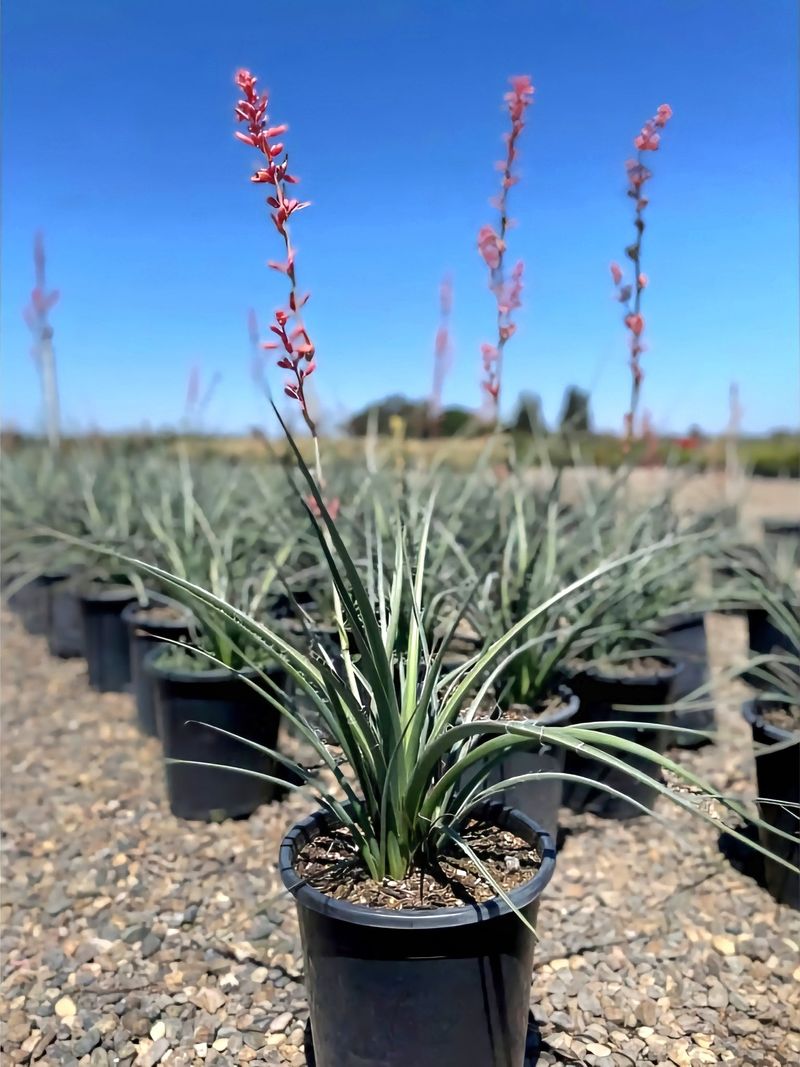
Despite the name, red yucca is not a yucca at all. It is Hesperaloe parviflora, and it is one of the most forgiving container plants a desert gardener can buy.
The plant forms a grassy clump of stiff, arching leaves with curly white threads along the edges. From spring through summer, tall wands of coral-red flowers rise high above the foliage.
Hummingbirds patrol those spikes all day long, often fighting over who gets the best blooms.
What makes it special for pots is how well it handles reflected heat. That tricky spot near a sunny wall where other plants fry?
Red yucca can usually take it, as long as the pot is light-colored and big enough to keep roots cool.
Planting in October or November lets it bulk up before blooming season. It handles frost easily and needs little water once established, maybe a deep soak every couple of weeks during the hottest months.
Maintenance is close to zero. Snip off the old flower stalks when they dry out, and that is about it.
Javelinas and rabbits often leave it alone too, which is a nice perk if critters raid your yard at night.
8. Lavender
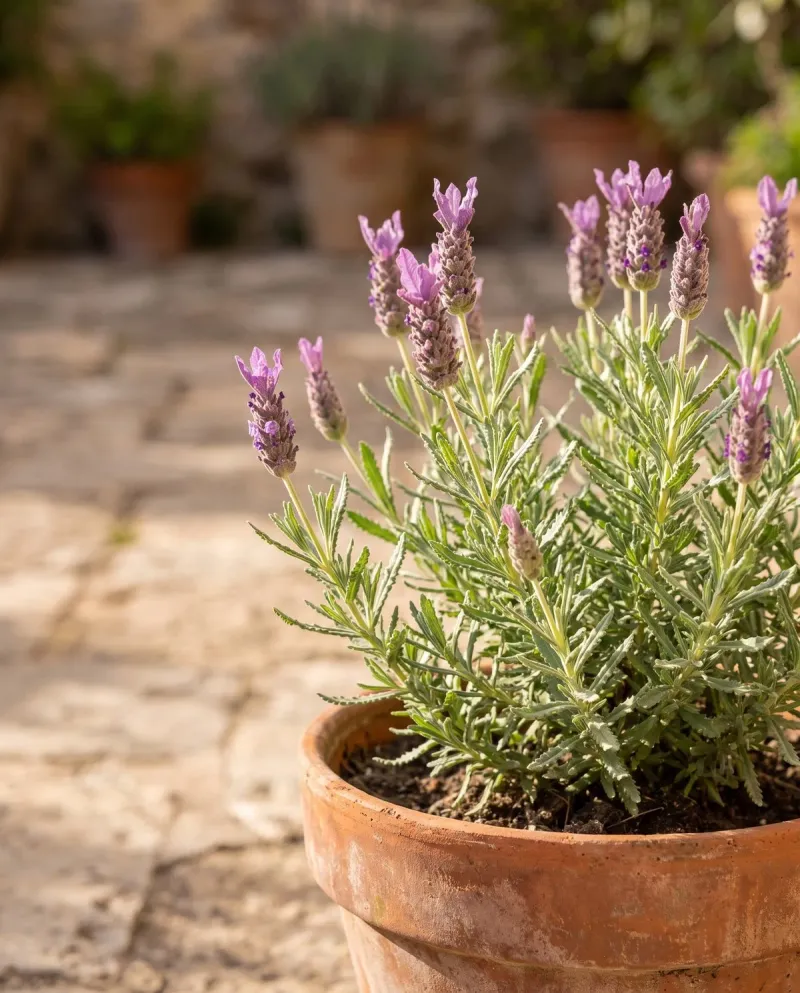
Ever notice how a whiff of lavender makes you want to take a nap? Flies, moths, and mosquitoes tend to react very differently.
The same calming scent we love can be off-putting to several pesky insects, so a pot or two near the back door may help make the area less inviting to them. Meanwhile, bees adore the flowers, so you get pollinator traffic and possible pest relief from one plant.
Now the honest part. Lavender can be fussy in the low desert because it hates wet roots and humid monsoon nights.
Spanish lavender and some French types tend to handle our conditions better than English varieties.
Fall planting gives it the best shot. Cool months let it settle in and bloom in spring before the heat arrives.
Use an extra-gritty mix with plenty of pumice, and pick a pot that drains fast, such as unglazed clay.
Place it where it gets full winter sun but some afternoon shade in summer. Water only when the soil is truly dry a couple of inches down.
Treat it this way, and you can enjoy fragrant purple blooms, happy bees, and a porch that may feel a little less buggy.
9. Brittlebush
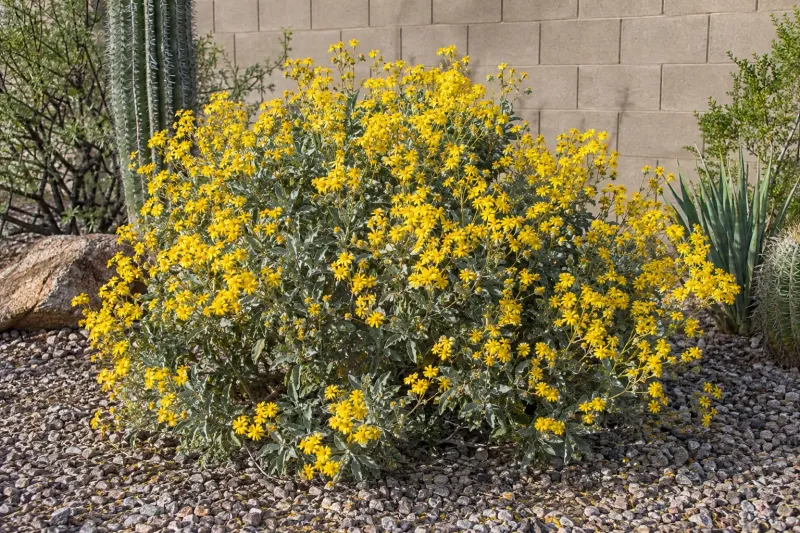
Drive through the Sonoran Desert in March and whole hillsides glow yellow. Much of that glow comes from brittlebush, and you can bring a piece of it home in a pot.
Encelia farinosa has frosty silver leaves that reflect sunlight, a clever trick that helps it stay cool and lose less water. In late winter and spring, it covers itself in cheerful yellow daisies on long stems.
Bees, butterflies, and small birds like finches all visit, either for nectar or for the seeds later on.
Fall is the right time to plant because brittlebush grows mostly during the cooler, wetter part of the year. It may look a little tired by midsummer, dropping some leaves to save water.
That is normal survival mode, not a problem.
Choose a big container since it can reach about three feet wide. A light-colored pot and gritty soil will keep it comfortable.
Water regularly while it settles, then just occasionally once it is established.
Light frost can nip the tips during a cold night. If a freeze is in the forecast, cover it with frost cloth or slide the pot under a patio roof.
It recovers quickly once temperatures warm back up.
10. Texas Ranger
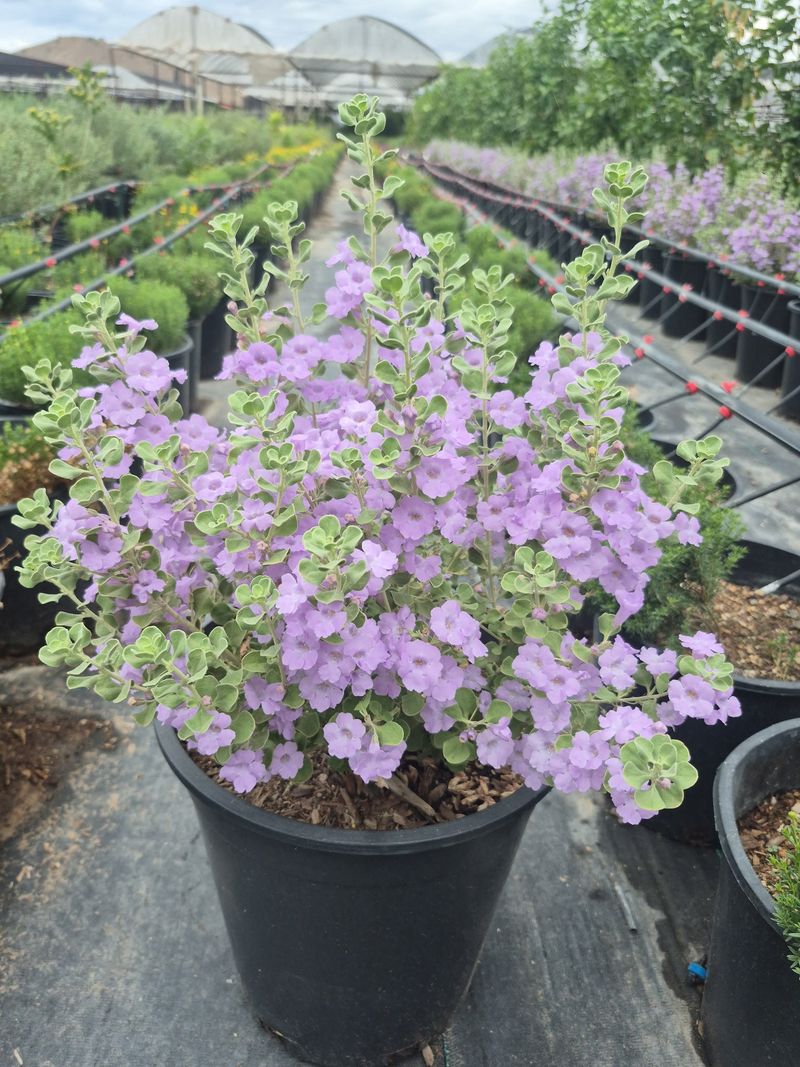
Old-timers in Phoenix swear Texas ranger can predict the rain. Right before or after a monsoon storm, the shrub often bursts into purple flowers almost overnight, which is why some folks call it the barometer bush.
Leucophyllum is a Chihuahuan Desert native with silvery or green leaves that look good all year. Compact varieties like Lynn’s Legacy or Heavenly Cloud fit nicely in large containers.
When the blooms hit, bees swarm the plant in a happy, buzzing crowd.
This shrub can handle full sun and reflected heat better than many potted plants. That makes it a solid choice for a hot corner of the yard where you want color without constant watering.
Over time, a single plant can soften a bare wall or screen an ugly utility box.
Plant it in fall so the roots have months to settle before summer. It takes frost in stride, so no blankets needed.
Use a 20-gallon pot or larger with fast-draining mix.
The biggest mistake people make is overwatering or shearing it into tight balls. Let it keep a natural shape and water deeply but rarely.
You will get more blooms and a healthier, longer-lived plant.